
Ford Motor(F)

Search documents
福特汽车(F.US)涨4%
Ge Long Hui A P P· 2025-09-26 15:19
Group 1 - Ford Motor Company's stock price increased by 4%, reaching its highest level since July 2024 [1]

Ford Motor Company (F) Unveils $30K Electric Pickup on New Universal EV Platform
Yahoo Finance· 2025-09-26 14:43
Core Insights - Ford Motor Company is undergoing a significant transformation focusing on electric vehicles, digital manufacturing, and corporate innovation [2][5] - The company has introduced the Universal EV Platform and plans to launch a $30,000 battery-electric pickup by 2027, which aims to enhance production efficiency and flexibility [3][5] - A global brand campaign, "Ready Set Ford," has been launched to improve customer loyalty and address operational challenges amid a record year for recalls [4] Company Developments - The Henry Ford II World Center in Dearborn is set to replace the historic Glass House headquarters, promoting collaboration among engineering, design, and technology teams [2] - The new Universal EV Platform will utilize a modular "assembly tree" process, reducing assembly time by up to 40% and improving cost efficiency [3] - The upcoming electric pickup will be Ford's first software-defined vehicle, allowing for over-the-air updates and app integration, addressing previous manufacturing inefficiencies [3] Market Positioning - Ford's combination of modular manufacturing and software-defined vehicles positions the company for long-term competitiveness in the global automotive market [5]
Ford or Stellantis: Which Auto Giant Should Be in Your Portfolio?
ZACKS· 2025-09-26 13:31
Industry Overview - The auto industry is at a turning point, with legacy automakers defending profits from gas-powered vehicles while investing billions into EVs, software, and new mobility [1] - Higher tariffs are impacting margins, and competition is intensifying [1] Ford Analysis - Ford has a strong home base and solid liquidity, with $46 billion in liquidity, including $28 billion in cash, which supports its EV and tech initiatives [2][5] - The Ford Pro segment, covering commercial vehicles, software, and services, is performing well, with paid subscriptions up 24% year over year to 757,000 [4] - Ford's vehicle lineup remains robust, particularly with F-series trucks and various SUV models [3] - Despite challenges, including $12 billion in losses from its EV division and $800 million in tariff costs, Ford is pivoting to a new low-cost EV platform [6] - Ford's dividend yield above 5% is attractive for income investors, with plans to return 40–50% of free cash flow to shareholders [5] Stellantis Analysis - Stellantis is facing significant challenges, with U.S. sales declining for eight consecutive quarters due to delayed launches and high prices [7] - Financially, Stellantis reported a 13% revenue drop to €74.3 billion in the first half of 2025, swinging to a net loss of €2.3 billion [8] - The leadership change adds uncertainty, with new CEO Antonio Filosa expected to outline a turnaround plan in early 2026 [9] - Stellantis projects €1.5 billion in tariff costs for 2025, with a net financial position slipping to €9 billion and net debt rising to €6.5 billion [10] Competitive Landscape - Ford's stock has increased by 17% year to date, while Stellantis shares have dropped over 28% [11][15] - Stellantis is lagging in EV development and has pulled back from hydrogen fuel cells and advanced driver-assistance systems, which may hinder its competitiveness [12] - The Zacks Consensus Estimate for Stellantis' 2025 EPS implies a 57% decline year over year, while Ford's EPS estimates have been revised upward [16][17] Conclusion - Ford is navigating its challenges by reshaping its EV strategy and leveraging its strong balance sheet, while Stellantis is struggling with financial setbacks and execution challenges [18] - Until Stellantis presents a credible recovery strategy, Ford appears to be the more stable investment option [19]


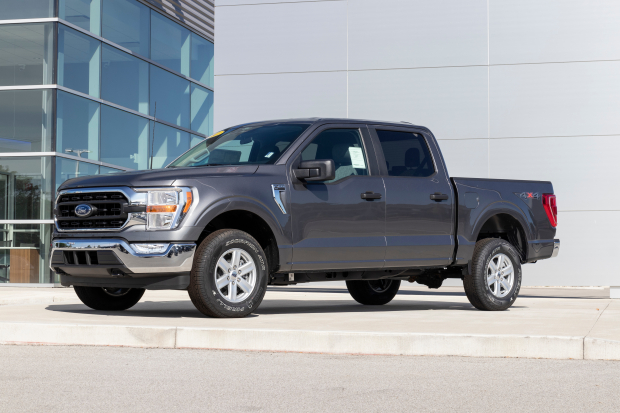
2026款福特锐界L升级而来,22.98万元起
Zhong Guo Qi Che Bao Wang· 2025-09-26 09:39
Core Viewpoint - The 2026 Ford Edge L has officially launched on September 26, featuring upgrades in luxury, comfort, safety, and intelligence, enhancing the driving experience with a competitive starting price of 229,800 yuan [2] Luxury and Comfort Upgrades - The 2026 Ford Edge L introduces half-aniline full-grain luxury leather seats, made from top-grade full-grain leather, similar to materials used in million-dollar luxury cars, enhancing comfort and luxury [6] - The vehicle features a heating function for the steering wheel and second-row seats, providing added comfort during winter, which is typically found in high-end models [8] - The interior space offers a 2-2-3 or 2-3-2 seating layout, with electric adjustments for the second-row seats and a "zero-gravity mode" for enhanced comfort, catering to family travel needs [17] Safety and Intelligence Upgrades - The 2026 Ford Edge L is equipped with a leading 540° transparent cockpit and enhanced 360° panoramic imaging system, improving visibility and safety during driving, especially on slopes [9] - The vehicle's safety features include a robust structure made of over 50% high-strength steel and excellent ratings in collision tests, ensuring passenger safety [9] - The model includes L2-level driving assistance features, such as ACC and AEB, which reduce driving stress and enhance safety [15] Performance and Efficiency - The Ford Edge L offers both fuel and hybrid versions, with the hybrid model featuring a powerful 2.0T EcoBoost engine, achieving 0-100 km/h in 7.1 seconds and a low fuel consumption of 6 L/100 km [16] - The vehicle's intelligent four-wheel drive enhances driving stability and off-road capabilities, addressing concerns about charging infrastructure for hybrid models [16] Market Positioning - The upgrades in the 2026 Ford Edge L reflect the company's commitment to a "value-oriented" product strategy, catering to the growing trend of family travel and providing a luxurious experience [20]

汽车早报|小米YU7交付已超4万台 博世集团计划裁员1.3万人
Xin Lang Cai Jing· 2025-09-26 00:38
Group 1: Automotive Sales and Developments - In August 2025, the pickup truck market sold 40,000 units, remaining flat year-on-year and down 3% month-on-month, maintaining a mid-high level over the past five years [1] - Xiaomi's YU7 model has exceeded 40,000 deliveries within three months of its launch [1] - Xiaomi Auto has introduced a customization service, allowing for up to 40 customized vehicles per month, with a minimum customization cost of over 100,000 yuan [1] - Aion's M9 model has initiated an upgrade to Huawei's Qian Kun Intelligent Driving ADS 4, enhancing its active safety features [1] Group 2: Corporate Announcements and Collaborations - Seres has received approval from the China Securities Regulatory Commission for the issuance of up to 331,477,235 overseas listed foreign shares (H-shares) [2] - Xiaopeng Motors plans to mass-produce and deliver the world's first "car + airplane" combination flying car by 2026, having invested billions in the development of seven prototype models [2] - Mercedes-Benz and Momenta are set to launch an intelligent driving assistance system, which will first be featured in the new pure electric CLA model [2] - CATL and Shouqi Group have signed a strategic cooperation agreement to promote electric vehicle transformation and related services [2] Group 3: Personnel Changes and Recalls - Mercedes-Benz announced a management change, appointing Michael Schiebe as a board member responsible for production, quality, and supply chain management, effective December 1 [3] - Ford is recalling 4,632 vehicles in the U.S. due to a risk of engine fires in certain 2020 models [3] - Hyundai is recalling 7,855 vehicles in the U.S. due to a risk of windshield trim pieces detaching [4] - Bosch Group plans to cut approximately 13,000 jobs in its automotive parts business, primarily affecting operations in Germany, to be completed by 2030 [4]




发动机可能起火 福特在美召回4632辆汽车
Cai Jing Wang· 2025-09-25 22:57
Group 1 - The core issue is that Ford Motor Company is recalling a total of 4,632 vehicles, specifically the 2020 models of the Expedition and Lincoln Navigator, due to the risk of engine fires [1] Group 2 - The recall is initiated by the National Highway Traffic Safety Administration (NHTSA) [1] - The recall highlights safety concerns related to engine performance in specific vehicle models [1] - This incident may impact Ford's reputation and consumer trust in their vehicle safety standards [1]
陈晓波挂帅,福特中国整合销售渠道,能否实现品牌突围?
3 6 Ke· 2025-09-25 10:28
Core Points - Ford China has established a new subsidiary, Ford Automotive Sales and Service (Shanghai) Co., Ltd., to oversee marketing, sales, and after-sales service for Ford passenger cars and pickups in China [2] - Chen Xiaobo has been appointed as the president of the new subsidiary, bringing extensive experience from his previous roles in Ford's joint ventures in China [2] - Jiangling Motors has signed a distribution service contract with Ford Sales Service Company for the distribution of Ford-branded vehicles produced by Jiangling [2] Summary by Sections Ford's Strategy in China - The establishment of a unified sales channel aims to enhance Ford's business performance in China, where the company has faced challenges [2] - Ford's sales in China have been significantly impacted by the performance of its joint ventures, particularly Jiangling Ford, which has seen declining sales figures from 48,000 units in 2022 to 39,000 in 2023 and projected 35,000 in 2024 [4] Joint Ventures and Performance - Jiangling Motors has a long-standing partnership with Ford, initially focusing on commercial vehicles and later expanding into passenger cars [3] - Jiangling Ford's revenue has fluctuated, with reported figures of 124 million yuan in 2022, 643 million yuan in 2023, and 5.323 billion yuan in 2024, while net profits have been negative during the same period [4] Long-term Partnerships - Changan Ford, established in 2001, has been a key player in Ford's passenger vehicle segment in China, contributing nearly half of Ford's total sales in the region [6] - Changan Ford achieved profitability in 2024, reporting revenue of 48.33 billion yuan and a net profit of 2.09 billion yuan, a significant turnaround from a loss of 2.06 billion yuan in 2023 [7] Market Position and Future Outlook - Ford's recent restructuring efforts include the formation of a fully-owned subsidiary to streamline sales and service operations, aiming to improve brand image and customer satisfaction [11] - The new strategy includes a focus on core business areas, localizing electric vehicle development, and expanding export operations, with a reported profit of approximately 600 million USD (about 4.27 billion yuan) in 2024 [10][8] - The integration of sales channels is expected to create a more cohesive brand experience for consumers, with plans to establish a unique "Ford Horizon" lifestyle system [12]


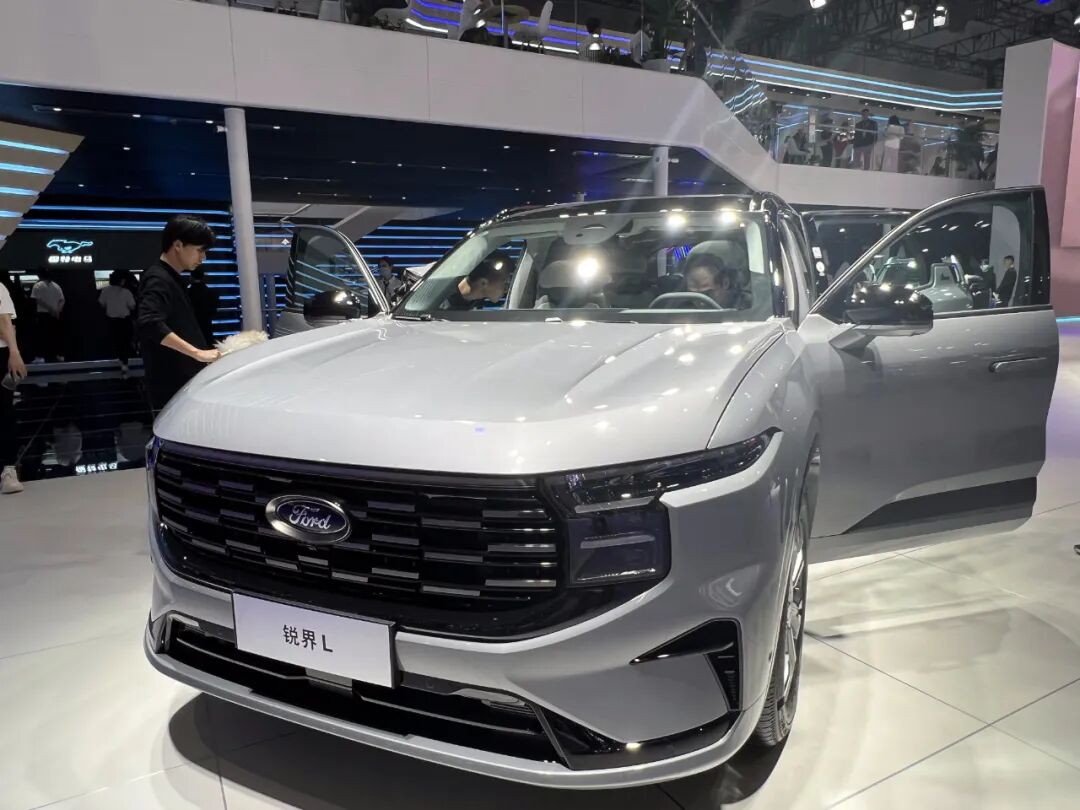
福特在华渠道“二合一”,如何“收编”福特纵横成关键
经济观察报· 2025-09-25 10:26
Core Viewpoint - Ford is restructuring its sales channels in China by establishing a wholly-owned subsidiary, Ford Sales Service Company, to manage marketing, sales, and service for its passenger cars and pickup trucks in the Chinese market, marking a significant shift in its operational strategy [2][5]. Group 1: Company Restructuring - On September 23, Ford China announced the establishment of Ford Sales Service Company, which will officially start operations on October 1 [2]. - Chen Xiaobo has been appointed as the president of Ford Sales Service Company, previously holding key positions in Changan Ford and other marketing roles [2]. - The new company will unify the sales of Changan Ford, Ford imported vehicles, and Jiangling Ford, which includes models like Changan Ford Edge and Explorer, as well as Jiangling Ford's Lingrui and F-150 Raptor [3][4]. Group 2: Financial Performance and Challenges - Jiangling Ford Technology Company has been operating at a loss since its inception, with revenues of 1.24 million, 6.43 million, and 53.23 million from 2022 to 2024, and net losses of 1.06 million, 8.39 million, and 6.77 million respectively, totaling approximately 16.22 million in losses over three years [4]. - As of mid-2023, Jiangling Ford Technology Company reported total assets of about 875 million and a negative net asset of 1.42 billion [4]. Group 3: Strategic Implications - The establishment of Ford Sales Service Company aligns with CEO Jim Farley's strategy to reduce investment in China and focus on high-return businesses, indicating a strategic retreat in the Chinese market [5]. - The integration of sales channels is seen as a necessary step to streamline operations and improve profitability, as the previous fragmented sales structure was no longer suitable for Ford's strategy in China [4][5].
Ford establishes new subsidiary in China
Yahoo Finance· 2025-09-25 09:06
Core Viewpoint - Ford Motor is establishing a wholly-owned subsidiary in China to enhance its sales, marketing, and aftersales operations, aiming to improve customer experience and expand its product portfolio, particularly in new energy vehicles [1][3]. Group 1: Subsidiary Establishment - The new subsidiary will be located in Shanghai and is set to begin operations in early October [2]. - It will manage Ford's passenger and light commercial vehicle post-production business, consolidating marketing, sales, and service activities under one management structure [2]. Group 2: Strategic Goals - Ford aims to build a vibrant and sustainable retail and service network in China as part of its global brand upgrade strategy [3]. - The company plans to enhance the customer experience in both sales and aftersales, with a strong focus on expanding its product offerings in new energy vehicles (NEVs) [3]. Group 3: Leadership - The new subsidiary will be led by Chen Xiaobo, who has prior experience in senior sales and marketing roles at Changan Ford and Renault China, reporting directly to Ford China's CEO Wu Shengbo [4].
福特将在美国召回11.55万辆汽车
Cai Jing Wang· 2025-09-25 07:33
据路透社9月24日报道,美国国家公路交通安全管理局发布信息显示,因转向柱上部轴可能脱落,存在 导致转向失控的风险,福特将在美国召回11.55万辆汽车。(中国汽车报) ...