
GLOBALFOUNDRIES(GFS)

Search documents
这类芯片,全球首颗
半导体行业观察· 2025-07-20 04:06
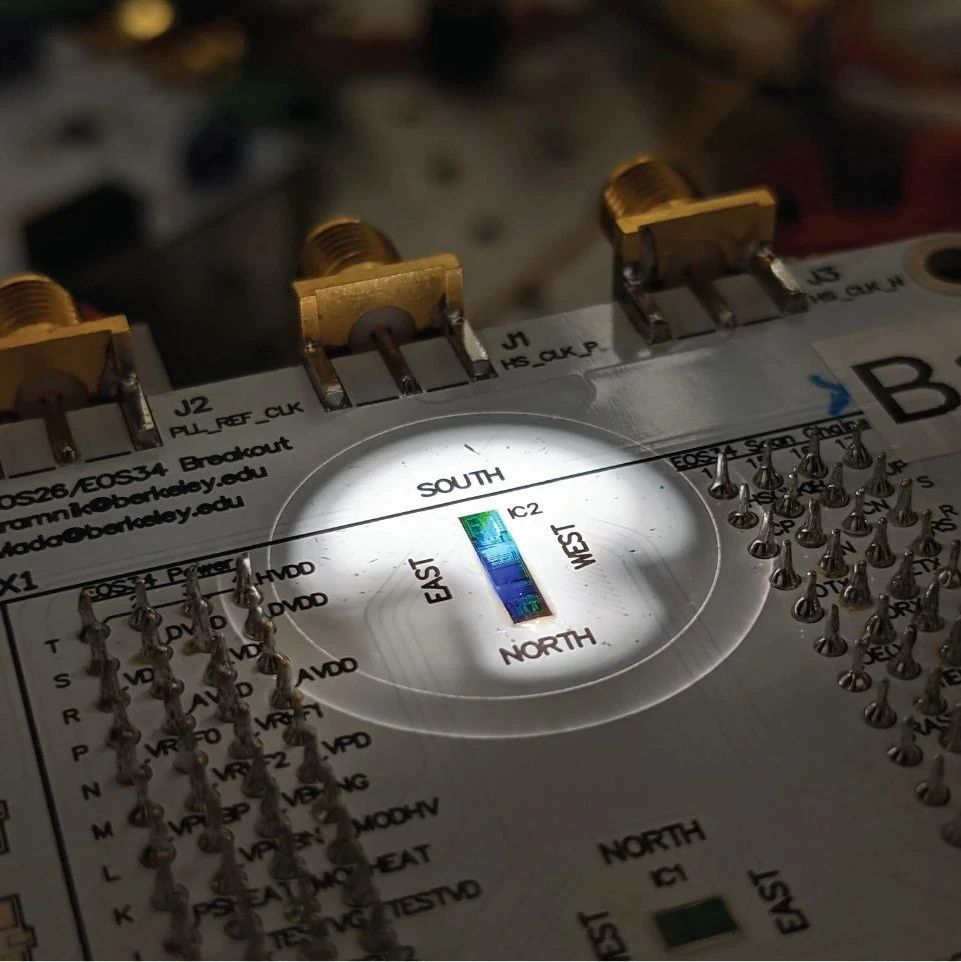
Core Viewpoint - A multidisciplinary academic team has successfully integrated quantum light sources and electronic devices into a single silicon chip, marking a significant advancement in quantum technology [3][4]. Group 1: Technological Breakthrough - The researchers developed the first chip that integrates electronic, photonic, and quantum components, utilizing standard 45-nanometer semiconductor manufacturing processes [3][4]. - This integrated technology enables the chip to produce a continuous stream of correlated photon pairs, which are fundamental for many quantum applications [4]. Group 2: Future Implications - The breakthrough signifies an important step towards the mass production of "quantum light factory" chips and the development of more complex quantum systems composed of multiple interconnected chips [4]. - The research indicates that quantum computing, communication, and sensing could transition from concept to reality over the next few decades [4]. Group 3: System Design and Stability - The chip features a system that actively stabilizes the quantum light sources, specifically the silicon micro-ring resonators, which are sensitive to temperature and manufacturing variations [6][7]. - Each chip contains 12 parallel-operating quantum light sources, with integrated photodiodes to monitor and maintain the alignment of the incident laser [7]. Group 4: Collaborative Efforts - The project required interdisciplinary collaboration among fields such as electronics, photonics, and quantum measurement, essential for transitioning quantum systems from the lab to scalable platforms [4][8]. - The chip is manufactured using a commercial 45-nanometer complementary metal-oxide-semiconductor (CMOS) platform, developed in collaboration with various institutions and companies [7][8]. Group 5: Industry Impact - The advancements in silicon photonics and quantum technology are expected to serve as a foundation for technologies ranging from secure communication networks to advanced sensing and ultimately quantum computing infrastructure [8]. - Several researchers involved in the project have moved into the industry, reflecting the growing momentum of silicon photonics and its potential in expanding AI computing infrastructure and scalable quantum systems [8].


格罗方德与RISC-V芯片公司MIPS达成最终收购协议
Zheng Quan Shi Bao Wang· 2025-07-10 12:12
Core Viewpoint - GlobalFoundries has announced the acquisition of MIPS, a leading supplier of AI and processor IP, to enhance its customizable IP product portfolio and differentiate its process technology through IP and software capabilities [1][2]. Group 1: Acquisition Details - The acquisition is strategic, aimed at expanding GlobalFoundries' capabilities to provide flexible solutions for clients, particularly in automotive, industrial, and data center infrastructure applications [2]. - MIPS has a 40-year history and has shifted its focus multiple times, recently concentrating on real-time computing scenarios, especially in the edge AI sector, with its RISC-V architecture [2][3]. - The acquisition is expected to be completed by the second half of 2025, pending regulatory approvals, and MIPS will operate as an independent business unit under GlobalFoundries [3]. Group 2: Technology and Market Impact - MIPS has introduced the Atlas product line, which expands its RISC-V based processor IP offerings designed for real-time and application processing, as well as specialized AI edge processing [1]. - The RISC-V architecture is open-source, efficient, and modular, supporting various data widths and applicable across academic, industrial, and embedded systems [2]. - MIPS CEO believes that joining GlobalFoundries will enhance credibility and stability, accelerating MIPS' roadmap and enabling it to seize new opportunities in automotive and AI applications [3].
GlobalFoundries to Acquire MIPS to Accelerate AI and Compute Capabilities
Globenewswire· 2025-07-08 12:30
Core Insights - GlobalFoundries (GF) has announced a definitive agreement to acquire MIPS, a leading supplier of AI and processor IP, which will enhance GF's portfolio of customizable IP offerings [1][2] - The acquisition aims to provide more flexible solutions for customers, aligning with the growing demands of AI platforms across various markets, particularly in automotive, industrial, and datacenter applications [2][3] - MIPS will continue to operate as a standalone business within GF after the acquisition, which is expected to be completed in the second half of 2025, pending regulatory approvals [3] Company Overview - MIPS has a 40-year heritage in RISC computing innovation and specializes in compute subsystems for autonomous platforms in automotive, industrial, and embedded markets [4] - MIPS technology is based on the open RISC-V instruction set architecture, which allows for simplified adoption of Physical AI in various applications [4] - GlobalFoundries is a leading semiconductor manufacturer with a global footprint, focusing on delivering high-performance, power-efficient products for high-growth markets [5]

GlobalFoundries Announces Conference Call to Review Second Quarter 2025 Financial Results
Globenewswire· 2025-07-02 12:30
Core Viewpoint - GlobalFoundries will host a conference call on August 5, 2025, to discuss its second quarter 2025 financial results [1][2]. Group 1: Conference Call Details - The conference call is scheduled for August 5, 2025, at 8:30 a.m. ET [1][2]. - Interested parties can register to join the conference call [2]. - Financial results and a webcast of the conference call will be available on GlobalFoundries' Investor Relations website [2]. Group 2: Company Overview - GlobalFoundries is a leading manufacturer of essential semiconductors used globally [3]. - The company focuses on delivering power-efficient, high-performance products for various high-growth markets, including automotive and IoT [3]. - GlobalFoundries has a global manufacturing footprint across the U.S., Europe, and Asia, emphasizing security, longevity, and sustainability [3].
订单转向中芯国际,台湾联电要搞6nm?
Guan Cha Zhe Wang· 2025-07-02 10:39
Core Viewpoint - United Microelectronics Corporation (UMC) is exploring the feasibility of entering advanced chip production, specifically targeting 6nm technology, to enhance its growth potential in a market dominated by TSMC, Samsung, and Intel [1][2]. Group 1: Company Strategy and Developments - UMC is assessing future growth drivers, including the potential production of 6nm chips suitable for advanced connectivity applications and AI accelerators [1]. - The company is considering expanding its collaboration with Intel in 12nm chip production, potentially incorporating 6nm technology into this partnership [1][2]. - UMC's CFO indicated that substantial progress in advanced manufacturing technology will depend on partnerships to alleviate financial burdens [2]. Group 2: Market Position and Competition - UMC is currently the fourth largest chip foundry globally, with a market share of 4.7%, following TSMC, Samsung, and SMIC [3][4]. - As of Q1 2025, UMC's revenue decreased by 5.8%, reflecting competitive pressures from local Chinese manufacturers and the rise of SMIC, which has overtaken UMC to become the third largest foundry [2][3]. - The global foundry market is highly concentrated, with the top five companies accounting for 90.2% of the market share [3]. Group 3: Financial Considerations and Challenges - Entering the 6nm production space may require significant capital investment, estimated at around $5 billion, which poses a challenge for UMC [7]. - UMC's capital expenditure for the current year is projected to be $1.8 billion, significantly lower than SMIC's ongoing expenditure of over $7 billion [7]. - The company is exploring a "light asset" model to share the financial burden of new technology investments with partners [7]. Group 4: Industry Trends and Future Outlook - By 2030, mainland China is expected to lead global semiconductor foundry capacity, potentially holding 30% of the market, which adds competitive pressure on UMC [5]. - The demand for mature semiconductor products is rebounding slower than expected, prompting UMC to seek new growth opportunities [7]. - The transition to advanced chip production is complicated by the need for cutting-edge equipment, such as EUV lithography machines, which are costly and may impact production quality if older technologies are used [8].



赴美建厂税收抵免升至35%!“大美丽法案”有望加速推进“芯片制造回流美国”
智通财经网· 2025-07-02 09:32
Group 1 - The U.S. government is advancing the localization of the semiconductor industry, with a recent Senate amendment increasing the tax credit for semiconductor companies from 25% to 35%, surpassing the previously proposed 30% [1] - This policy adjustment is an extension of the 2022 CHIPS and Science Act, which aims to accelerate investment by global semiconductor giants in the U.S. through $39 billion in special appropriations and $75 billion in loans [1] - Companies like Intel, TSMC, and Micron can benefit from the upgraded tax incentives if they complete advanced manufacturing capacity expansion in the U.S. by 2026 [1] Group 2 - The semiconductor industry is experiencing a notable acceleration in investment, with TSMC expanding its U.S. manufacturing footprint and companies like Nvidia and Micron increasing domestic investments [2] - The tariff investigations initiated by the Trump administration on semiconductor technology imports have created a sense of urgency for companies to establish manufacturing in the U.S. [2] - The amendment still requires final approval from the House of Representatives, and if passed, it would signify a new height in U.S. semiconductor industry support and a milestone in the strategy to "de-Asianize" the semiconductor sector [2]


SKYT's Fab-25 Buyout to Aid Wafer Services: What's the Path Forward?
ZACKS· 2025-06-24 17:01
Core Insights - SkyWater Technology (SKYT) is set to acquire Fab-25 from Infineon Technologies, with the deal expected to close on June 30, 2025, which will enhance its position in U.S. semiconductor manufacturing and meet the rising demand for domestically sourced chips [1][3][8] Group 1: Acquisition Details - The acquisition of Fab-25 is backed by a four-year supply agreement exceeding $1 billion, anticipated to generate $300 million in incremental revenues for fiscal 2025 [2][8] - Fab-25 is a 200 mm CMOS facility that will expand SkyWater's foundry capabilities, supporting critical applications in automotive, industrial, and defense sectors [3][8] - The integration of Fab-25 aligns with national onshoring priorities, enhancing SkyWater's relevance in the evolving global supply chain [3][4] Group 2: Competitive Landscape - SkyWater faces competition from Tower Semiconductor, which specializes in analog and mixed-signal ICs and has a strategic partnership with Semtech to scale SiGe wafer production for AI and 5G applications [5] - GlobalFoundries is another competitor, offering scalable 200 mm and 300 mm wafer production, serving high-demand sectors like automotive and defense, and providing broader industry reach and advanced process diversity [6] Group 3: Financial Performance and Valuation - SkyWater's shares have declined by 34.3% year-to-date, contrasting with the Zacks Electronics – Semiconductors industry's return of 5.2% [7] - The company trades at a forward 12-month price-to-sales ratio of 1.28, significantly lower than the industry's average of 8.18, indicating potential value for investors [9] - The Zacks Consensus Estimate for SkyWater's 2025 loss is projected at 1 cent per share, unchanged over the past 30 days, while the company reported earnings of 6 cents per share in 2024 [10]

大陆集团决定自研芯片,成立新公司
半导体行业观察· 2025-06-24 01:24
Core Viewpoint - Continental Group's automotive division has established the Advanced Electronic and Semiconductor Solutions (AESS) department to enhance resilience and ensure future success by developing automotive semiconductors internally, in partnership with GlobalFoundries (GF) [1][2]. Group 1: Strategic Initiatives - The establishment of AESS aims to design and validate semiconductors to meet internal demands, addressing the growing need for semiconductors in software-defined vehicles [1]. - The global automotive semiconductor market is projected to reach approximately €110 billion by 2032, necessitating increased investment in semiconductor development for long-term success [1]. - The move to create a fabless semiconductor company is intended to reduce geopolitical risks and enhance Continental's autonomy in the semiconductor field [1][2]. Group 2: Collaboration and Technology - GF will serve as the manufacturing partner for AESS, leveraging its advanced automotive-grade process technology and global manufacturing capabilities to support the development of innovative solutions for next-generation vehicles [2]. - The collaboration with GF is part of a broader strategy to enhance semiconductor production design and management capabilities, thereby improving market position and self-sufficiency [2]. Group 3: Organizational Impact - The new organizational structure is designed to support the automotive group's business by creating a resilient supply chain, improving product quality, and reducing time-to-market [3]. - AESS is expected to generate value through cost savings and efficiency improvements, which will enhance the company's cash flow [3]. - The establishment of AESS is seen as a way to solidify Continental's position as a leading automotive parts manufacturer and create new internal development opportunities [4].
半导体巨头,重塑供应链
半导体行业观察· 2025-06-13 00:46
Core Viewpoint - The article discusses the increasing importance of Southeast Asia in the global semiconductor supply chain, particularly in the context of capital investment uncertainties stemming from the Trump administration's policies. It highlights the region's advantages such as low labor costs, strategic location, and government support, which are attracting major semiconductor companies to invest in manufacturing and assembly operations [1][2]. Group 1: Southeast Asia's Role in Semiconductor Industry - Southeast Asia is becoming a key region for semiconductor supply chain restructuring post-Trump era, with companies planning to relocate or build new facilities in response to trade uncertainties [1]. - The region is gaining traction in assembly, testing, and packaging (ATP) due to favorable government policies and low production costs, making it a competitive player in semiconductor investments [1]. - Malaysia is emerging as a global supply chain hub, accounting for 13% of the global semiconductor backend processes, with significant investments from companies like Intel, Broadcom, and Micron [1][2]. Group 2: Major Investments and Developments - Intel is expanding its backend assembly lines in Malaysia, while Micron is establishing its second packaging and testing facility in Penang [2]. - Texas Instruments is investing $3.1 billion (approximately 4 trillion KRW) in Malaysia for production facilities, and Infineon is setting up a silicon carbide power semiconductor manufacturing plant [2]. - ARM has chosen Malaysia as its first production base, with the Malaysian government agreeing to pay $250 million in patent fees over ten years to support ARM's semiconductor production [2]. Group 3: Growth in Vietnam's Semiconductor Sector - Vietnam's semiconductor market has grown by 41%, increasing from $10.62 billion in 2016 to $15.01 billion in 2023, with a focus on packaging and testing [3]. - The Vietnamese government is investing in talent development, implementing a $1 billion project to train approximately 50,000 semiconductor engineers [3]. - Industry experts suggest that due to the long-term nature of semiconductor investments, Southeast Asia is viewed as a safer choice for companies looking to relocate production away from China amid ongoing U.S. semiconductor regulations [3].


国际产业新闻早知道:中美原则上达成协议框架,各国加大人工智能投资力度
Chan Ye Xin Xi Wang· 2025-06-11 05:41
Group 1: China and US Trade Agreement - China and the US have reached a preliminary agreement framework after two days of negotiations, which will be reported to their respective leaders [4] - The agreement aims to implement the Geneva consensus and address issues related to rare earths and magnets [4] Group 2: Argentina's Economic Measures - Argentina's central bank announced a $2 billion repurchase loan plan to strengthen foreign exchange reserves, with the agreement expected to be finalized on June 11 [8] - The country's risk index has dropped to its lowest level in four years, decreasing over 40% since the beginning of the year [10] - The central bank is transitioning to a market-determined interest rate system as part of significant monetary policy reforms [9][11] Group 3: AI Investments and Developments - Japan plans to enhance its intellectual property competitiveness through AI and advanced technologies, aiming to establish a robust IP system by 2025 [14][15] - The UK government announced a £1 billion investment to increase AI infrastructure and training for 7.5 million AI professionals over the next five years [21][23] - Amazon plans to invest at least $20 billion in Pennsylvania to expand its data center infrastructure for AI and cloud computing, creating 1,250 new high-skilled jobs [32] Group 4: Semiconductor Industry Insights - The global semiconductor market is projected to reach $700.9 billion by 2025, with an 11.2% year-on-year growth driven by demand in AI and cloud infrastructure [36] - Qualcomm announced a $2.4 billion acquisition of Alphawave to accelerate its entry into the data center market [37] - Global semiconductor IP market is expected to reach $8.49 billion in 2024, with a compound annual growth rate of 16.78% [38] Group 5: Automotive Industry Developments - General Motors plans to invest $4 billion in its US factories over the next two years to increase production of popular gasoline models in response to tariffs [44] - GAC Group aims to enter the Argentine market by the second half of 2025, expanding its presence in South America [46] - VinFast reported a 296% year-on-year increase in electric vehicle deliveries in Q1, despite a net loss of approximately $712 million [48][49] Group 6: Robotics and AI Technology - A Chinese research team developed the world's first fully tactile robotic hand, showcasing significant advancements in robotics technology [32][34] - The F-TAC Hand features high-resolution tactile sensors and is designed to enhance the adaptability of robots in uncertain environments [35] Group 7: International Cooperation and Agreements - Chinese Vice President Han Zheng met with French President Macron to discuss strengthening bilateral cooperation and multilateralism [6][7] - Meta signed a 20-year power supply agreement with Constellation Energy to meet the growing electricity demand from AI initiatives [65]



