
Alphabet(GOOG)

Search documents
Waymo Co-CEO on the Road to 1 Million Robotaxi Rides a Week
Youtube· 2026-02-11 22:24
Core Insights - Waymo has successfully raised $16 billion at a valuation of $126 billion, indicating strong investor confidence and support for its autonomous vehicle technology and expansion plans [2][17]. - The funding will enable Waymo to scale operations significantly, with plans to lay groundwork for services in over 20 cities within the next year [3][10]. - The company aims to quadruple its ride offerings by 2025, targeting 1 million paid trips per week by the end of 2026 [4][66]. Funding and Investor Confidence - The $16 billion funding round is seen as a vote of confidence from major investors, including Alphabet, Sequoia, DST, and Dragoneer, highlighting the belief in Waymo's potential [2][19]. - The majority of the funding will come from Alphabet, with new investors also participating, indicating a broad base of support for the company's vision [3][19]. Expansion Plans - Waymo is currently operating in six cities and plans to expand to over 20 cities this year, with Miami being one of the recent launches [4][6]. - The company is also focusing on international expansion, with plans to launch in London and Tokyo, leveraging partnerships to navigate regulatory landscapes [20][34]. Safety and Technology - Waymo has reported a significant reduction in serious injury-causing crashes, achieving a 90% decrease over 127 million miles driven, which underscores its commitment to safety [5][24]. - The company is investing in technology to enhance its fleet, including the introduction of new vehicle models like the Ioniq 5, while also focusing on cost reduction and unit economics [10][11]. Regulatory Challenges - Waymo is actively engaging with policymakers to demonstrate its safety impact and build trust, which is crucial for launching services in new cities [21][24]. - The company emphasizes the need for a federal regulatory framework to streamline operations across different jurisdictions, which currently presents challenges to scaling its services [26][27]. Market Demand and User Experience - There is a growing demand for Waymo's services, with users expressing interest in robotaxi options, particularly in cities where traditional transportation options are limited [30][31]. - Waymo's service is becoming integrated into everyday life, with users utilizing it for various activities, from errands to significant life events [15][16].



2月12日外盘头条:特朗普仍倾向与伊朗达成协议 非农数据大超预期 重挫美联储降息预期 关税收入飙升超300%
Xin Lang Cai Jing· 2026-02-11 21:56
Group 1: U.S. Economic Indicators - U.S. non-farm payrolls recorded the largest increase in over a year, with employers adding 130,000 jobs and the unemployment rate dropping to 4.3% [8][25] - The previous year's data was revised, showing an average of only 15,000 new jobs per month, significantly lower than the initially reported 49,000 [25] - Strong employment data has led traders to push back expectations for the Federal Reserve's interest rate cuts from March to July [8][15] Group 2: Federal Reserve Predictions - TD Securities has revised its forecast for the next Federal Reserve rate cut from March to June, expecting a total of 75 basis points reduction this year [15][31] - The anticipated policy easing is not due to worsening economic conditions but rather a normalization of monetary policy as inflation approaches target levels [32] Group 3: Corporate Developments - Google is integrating AI shopping features into its search engine and Gemini chatbot, allowing users to purchase products directly through AI-driven responses [10][27] - Apple faces delays in launching new features for its Siri virtual assistant, with updates originally planned for March now potentially pushed to May or September [12][29] Group 4: Tariff Revenue and Fiscal Health - U.S. customs tariff revenue surged to $30 billion in January, with a cumulative total of $124 billion for the fiscal year, marking a 304% increase compared to the same period in 2025 [18][34] - The fiscal deficit for January was approximately $95 billion, a decrease of about 26% year-over-year, with the total deficit for the fiscal year so far at $697 billion, down 17% from the previous year [18][34]


2月12日美股成交额前20:比尔盖茨称“从未接触过任何受害者”
Xin Lang Cai Jing· 2026-02-11 21:50
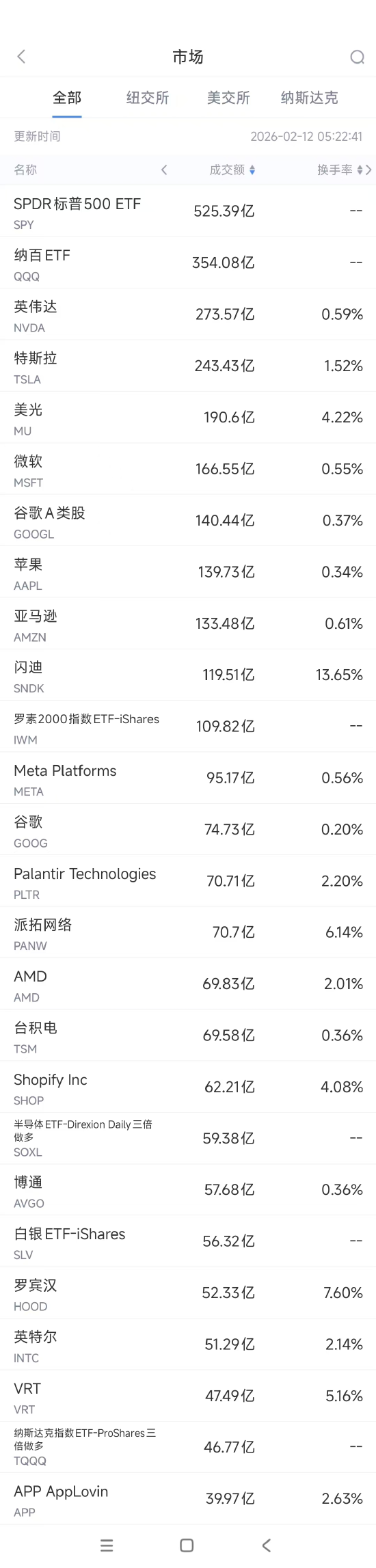
Group 1: Nvidia - Nvidia's stock rose by 0.78% with a trading volume of $27.357 billion, and UBS raised its target price from $235 to $245 [1] - Goldman Sachs increased its earnings forecast for Nvidia's Q4 FY2026 and maintained a target price of $250, emphasizing the visibility of revenue for 2027 as a key catalyst [1] - Over 90% of analysts rated Nvidia as "Buy" or "Hold," with an average target price of $260.26, reflecting optimistic expectations for AI computing demand [1] Group 2: Tesla - Tesla's stock increased by 0.80% with a trading volume of $24.343 billion, amid reports of the departure of Vice President Raj Jaganathan after 13 years with the company [10] - This departure is part of a recent trend of executive exits from Tesla and xAI [10] Group 3: Micron - Micron's stock surged by 9.94% with a trading volume of $19.06 billion, as Morgan Stanley raised its target price from $350 to $450 while maintaining an "Overweight" rating [10] - The new target price exceeds Micron's closing price of $410.34, aligning with a generally positive outlook from analysts [10] Group 4: Microsoft - Microsoft's stock fell by 2.15% with a trading volume of $16.655 billion, coinciding with Bill Gates' unexpected visit to Shanghai for an event [2][11] Group 5: Google - Google's Class A shares (GOOGL) declined by 2.39% with a trading volume of $14.044 billion, as the company introduced a new feature allowing consumers to purchase products directly through its AI-driven search engine and Gemini chatbot [11] - This initiative is part of Google's broader strategy to monetize user interactions with AI [11] Group 6: SanDisk and Palantir - SanDisk's stock rose by 10.65% with a trading volume of $11.951 billion, contributing to a general increase in storage sector stocks [12] - Palantir's stock fell by 2.75% with a trading volume of $7.071 billion, although Daiwa Capital Markets upgraded its rating from Neutral to Buy, while lowering the target price from $200 to $180 [12] Group 7: Shopify - Shopify's stock decreased by 6.70% with a trading volume of $6.221 billion, as the company positions "agent commerce" as an expansion channel rather than a product feature [12] - The company's president noted that orders from AI-driven searches are approximately 15 times higher than the same period last year, indicating significant growth potential [12]




320亿美元买下以色列Wiz!谷歌史上最大一笔收购案获欧盟批准
Xin Lang Cai Jing· 2026-02-11 21:25
Group 1 - The European Commission has unconditionally approved Google's acquisition of Israeli cloud security company Wiz for $32 billion, marking Google's largest acquisition to date and setting a record for Israeli tech company acquisitions [1] - The acquisition has also received approval from the U.S. DOJ/FTC and is expected to be completed by 2026, with Wiz joining Google Cloud while maintaining independent operations [1] - Wiz, founded in 2020, has quickly become one of the most valuable cybersecurity startups globally, with a valuation exceeding $10 billion and an annual recurring revenue (ARR) of $500 million, serving over 25% of the Fortune 500 companies [1] Group 2 - The acquisition of Wiz will address Google's shortcomings in enterprise-level cloud security capabilities, enhancing its competitive strength against leading vendors [2] - It will provide a comprehensive cloud service and security solution, attracting more enterprise customers to migrate to Google Cloud and accelerating the integration of cloud security with multi-cloud deployment trends in the AI era [2]
Prediction: This Will Be the Best AI Stock to Own for the Next 5 Years
Yahoo Finance· 2026-02-11 21:24
Core Viewpoint - Alphabet is considered one of the best AI stocks to invest in for the next five years, with a significant 68% increase in share price over the past year, reaching a market capitalization of one trillion dollars [1][2]. Group 1: Market Position and Product Dominance - Alphabet's dominance extends beyond Google Search, with YouTube as the leading streaming service and billions of users on products like Gmail, Sheets, and Chrome [5]. - Approximately 75% of the world's smartphones run on Alphabet's Android software, providing a substantial competitive edge in the AI space [5]. Group 2: Data Utilization and Investment Strategy - The vast amount of first-party data generated from its products and services enhances Alphabet's AI capabilities, allowing for aggressive investments in growth opportunities [6]. - Alphabet's financial strength enables rapid movement and investment in AI, making it difficult for competitors to match its advantages [6]. Group 3: Financial Performance and Growth - Alphabet's latest earnings report indicates strong performance, with Google Search revenue increasing nearly 17% year-over-year, reaching $224.5 billion in 2025, up from $175 billion in 2023 [7]. - The Google Cloud segment is experiencing accelerated growth, with fourth-quarter cloud revenue at $17.66 billion, a nearly 48% increase from the previous year [8]. - Gemini AI has over 750 million monthly active users, and Waymo raised $16 billion at a $126 billion valuation for expansion into over 20 new cities [8]. Group 4: Future Earnings Potential - Analysts project that Alphabet's earnings will grow by almost 16% annually over the next three to five years, with shares currently trading at 28 times this year's earnings estimates, indicating potential for significant portfolio impact [9].
美股三大股指收盘普跌 美光科技涨近10%
Mei Ri Jing Ji Xin Wen· 2026-02-11 21:13
Market Performance - The three major U.S. stock indices closed mixed on Wednesday, with the Dow Jones Industrial Average down by 0.15%, the Nasdaq down by 0.16%, and the S&P 500 down by 0.03% [1] Company Movements - Nvidia and Apple both saw gains of nearly 1% [1] - Google and Microsoft experienced declines of over 2% [1] - Amazon fell by more than 1% [1] - Meta had a slight decline [1] - Broadcom and Tesla saw minor increases [1] - Caterpillar rose by over 4% [1] - Micron Technology surged by nearly 10% [1]


Apple: The Last Free Cash Flow Standing Is A Double-Edged Sword (NASDAQ:AAPL)
Seeking Alpha· 2026-02-11 21:02
Almost all of Apple's ( AAPL ) big tech peers are set to see their free cash flows approach zero in 2026, as they invest heavily in AI. Amazon ( AMZN ) is looking at $200 billion of capex, Alphabet (I aim to invest in companies with perfect qualitative attributes, buy them at an attractive price based on fundamentals, and hold them forever. I hope to publish articles covering such companies approximately 3 times per week, with extensive quarterly follow-ups and constant updates.I manage a concentrated portf ...

美股科技股,集体上涨


Di Yi Cai Jing Zi Xun· 2026-02-11 20:51
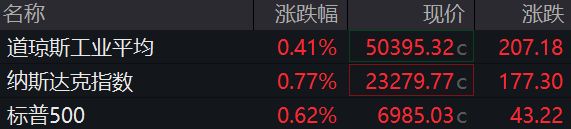
Group 1 - Major tech stocks experienced a broad increase, with SanDisk rising over 8%, Oracle up 2%, and NVIDIA increasing by more than 1% [1][2] - Other notable gainers included Tesla, Broadcom, Apple, and Amazon, all showing positive movement [1] - The three major U.S. stock indices opened higher, with the Nasdaq up 0.77%, the Dow Jones up 0.41%, and the S&P 500 up 0.62% [3] Group 2 - Chinese concept stocks mostly rose, with Kingsoft Cloud increasing by over 11%, Bilibili up more than 3%, and Century Internet and Beike both rising over 2% [2][4] - Storage-related stocks rebounded, with Micron Technology rising over 6% and Western Digital increasing by more than 4% [4]
Barclays Starts Moderna, Inc. (MRNA) Neutral as Biotech Outlook Improves
Insider Monkey· 2026-02-11 20:13
Core Insights - Generative AI is viewed as a transformative technology by Amazon's CEO Andy Jassy, indicating its potential to reinvent customer experiences [1] - Elon Musk predicts that humanoid robots could create a market worth $250 trillion by 2040, reshaping the global economy [2] - Major firms like PwC and McKinsey recognize AI's potential to unlock multi-trillion-dollar opportunities [3] Industry Trends - The AI revolution is characterized by a powerful breakthrough that is redefining work, learning, and creativity, attracting significant interest from hedge funds and top investors [4] - A smaller, under-owned company is identified as holding the key to the AI revolution, suggesting a competitive edge over larger rivals [4][6] - Billionaires and industry leaders, including Bill Gates and Warren Buffett, are positioning themselves around AI, indicating its importance as a technological advancement [8] Investment Opportunities - There is a strong belief that investors will regret not owning certain stocks related to AI advancements in the near future [9] - A detailed report on a groundbreaking AI company is available, highlighting its technology and growth potential [10] - Subscription to a premium newsletter offers access to exclusive insights and stock picks, emphasizing the urgency to invest in AI-related opportunities [12][14]


Will Tech Stocks Bounce Back or Should You Sell Them Instead?
Yahoo Finance· 2026-02-11 20:07
Market Overview - The S&P 500 Index is near record highs, while the Dow Jones Industrial Average Index closed above 50,000 for the first time [1] - Tech stocks, particularly the Magnificent 7, are experiencing significant declines, with Microsoft leading the drop at 25% from its peak [2] Company Performance - Apple is down about 5% from its all-time highs and did not participate in the AI rally, which explains its relative stability [2] - Alphabet has seen a 9% decline from its record highs, while other Magnificent 7 stocks are down in double digits [2] Capital Expenditure Trends - Hyperscalers' capital expenditure is projected to reach $700 billion this year, raising concerns about cash flow and balance sheet pressures for tech companies [4] - Tech giants are shifting from buybacks to raising debt capital for funding capex, with Alphabet recently issuing over $30 billion in bonds, including a 100-year bond [5] Sector Outlook - UBS downgraded the tech sector to "Neutral" from "Attractive," citing concerns over expected capex slowdown, AI-led disruptions, and stretched valuations in tech hardware [6][7] - Despite the downgrade, UBS remains optimistic about AI's potential to create efficiencies in sectors like healthcare and finance [6]