Alphabet(GOOGL)

Search documents
Will Greg Abel Reverse Warren Buffett’s ‘Mistake’ as Berkshire Hathaway’s New CEO?
Yahoo Finance· 2025-12-31 15:56
Beginning in 2026, Greg Abel will become Berkshire Hathaway’s (BRK.A) (BRK.B) CEO, taking over the baton from long-time CEO Warren Buffett. It is not just another leadership transition at an enterprise but the end of an era as the “Oracle of Omaha” hangs up his boots. Buffett would go down in history as among the best—if not the best—investors of all time. Known for his value investing credentials and witty quotes, the nonagenarian’s investment principles are followed by many investors, including this writ ...

Citizens Raises Alphabet Price Target on Accelerating Search and AI Momentum
Financial Modeling Prep· 2025-12-31 15:55
Core Viewpoint - Citizens raised its price target on Alphabet to $385 from $340 while maintaining a Market Outperform rating, driven by improving search fundamentals and multiple medium-term growth drivers [1] Group 1: Price Target and Rating - Citizens increased Alphabet's price target to $385 from $340, maintaining a Market Outperform rating [1] - The firm's reassessment of estimates and valuation was prompted by Alphabet's shares more than doubling from their May lows [2] Group 2: Revenue Growth and Catalysts - Citizens believes Google could further accelerate search revenue in the fourth quarter of fiscal 2025, which is a key near-term question for investors [2] - Medium-term catalysts identified include Gemini, Google Cloud, Waymo, and custom TPUs, expected to support broader results inflection in 2026 and 2027 [3] Group 3: Search Performance and Advertising - Query growth in search appears to be accelerating due to AI Overviews, AI Mode, and Gemini, leading to higher engagement [3] - Smart Bidding Exploration is expanding Google's advertising load by connecting advertisers to user intent rather than keywords, increasing the proportion of queries linked to ads [3] Group 4: Q3 Performance and Future Expectations - The third quarter marked the first full period with Smart Bidding Exploration, and the fourth quarter is expected to benefit similarly, supported by a stable macro backdrop for holiday advertising spend [4]



Market Closes Out Strong 2025 Amidst Modest Year-End Trading
Stock Market News· 2025-12-31 15:07
Market Overview - The U.S. stock market is concluding a strong year with major indices showing impressive annual growth, driven by resilient corporate earnings and enthusiasm for artificial intelligence [1][2] - The S&P 500 is on track for an annual gain exceeding 17%, while the Nasdaq Composite has surged approximately 21% for the year, largely due to strong performance in the AI sector [2][3] - The Dow Jones Industrial Average is set to close the year with a gain of around 13.7% [3] Commodity Market - Commodity markets have shown notable activity, with gold rising 1.4%, copper gaining 4.4%, and silver posting a significant jump of 10.9% [4] Corporate Developments - Nvidia has seen its stock surge around 180% this year due to strong demand for its new H200 AI chips, with the company seeking to ramp up production [9] - Other tech sector performers include Western Digital with a 260% gain, Seagate Technology up 210%, and Micron Technology rising 178% [9] - Vanda Pharmaceuticals' shares rose significantly after FDA approval of its motion sickness drug, marking a milestone for the company [10] - Ferrexpo faces ongoing challenges due to the conflict in Ukraine and liquidity issues, despite strong global mining markets [11] - Wealth manager Walker Crips reported widening first-half losses ahead of its takeover by PhillipCapital [11] - Major companies like Apple, Microsoft, Tesla, and Alphabet continue to be closely monitored, with Apple showing a slight gain of 0.13% and Tesla down 3.27% [12] Future Outlook - The market remains poised for continued innovation and growth, particularly in AI and technological advancements, as investors look ahead to upcoming economic data and corporate earnings in 2026 [13]






Alphabet Isn't Dead, It's Our Top 2026 Pick (NASDAQ:GOOGL)
Seeking Alpha· 2025-12-31 14:00
Core Insights - The article emphasizes the importance of building a thoughtful investment portfolio that balances strong growth potential with solid fundamentals, focusing on high-quality businesses primarily in the U.S. and Europe [1]. Group 1: Investment Strategy - The company prioritizes investing in businesses with staying power, industry-leading profitability, low leverage, and growth potential [1]. - The focus is on portfolio strategy and capital allocation, aiming for long-term financial independence through careful investment choices [1]. Group 2: Market Position - The article highlights the significance of selecting companies that are worth holding for the long haul, indicating a preference for sustainable business models [1].

Alphabet Isn't Dead, It's Our Top 2026 Pick
Seeking Alpha· 2025-12-31 14:00
Group 1 - The article emphasizes the importance of building a thoughtful investment portfolio that balances strong growth potential with solid fundamentals [1] - The focus is on high-quality businesses primarily located in the U.S. and Europe, characterized by industry-leading profitability, low leverage, and growth potential [1] - The investment strategy is centered around capital allocation and identifying businesses that are worth holding for the long term, highlighting the significance of financial independence [1]
Citizens上调谷歌母公司Alphabet目标价至385美元
Ge Long Hui· 2025-12-31 13:55
Core Viewpoint - Analysts at Citizens Financial Group, led by Andrew Boone, have assigned a "Buy" rating to Alphabet, the parent company of Google, and raised the target price from $340 to $385, indicating a positive outlook for the company's stock performance through 2026 [1] Summary by Category - **Analyst Rating** - Citizens Financial Group analyst Andrew Boone has given Alphabet a "Buy" rating [1] - **Target Price Adjustment** - The target price for Alphabet has been increased from $340 to $385 [1] - **Future Outlook** - The upward momentum in Alphabet's stock price is expected to continue until 2026 [1]
为了让企业用好AI,云厂商们操碎了心
3 6 Ke· 2025-12-31 13:35
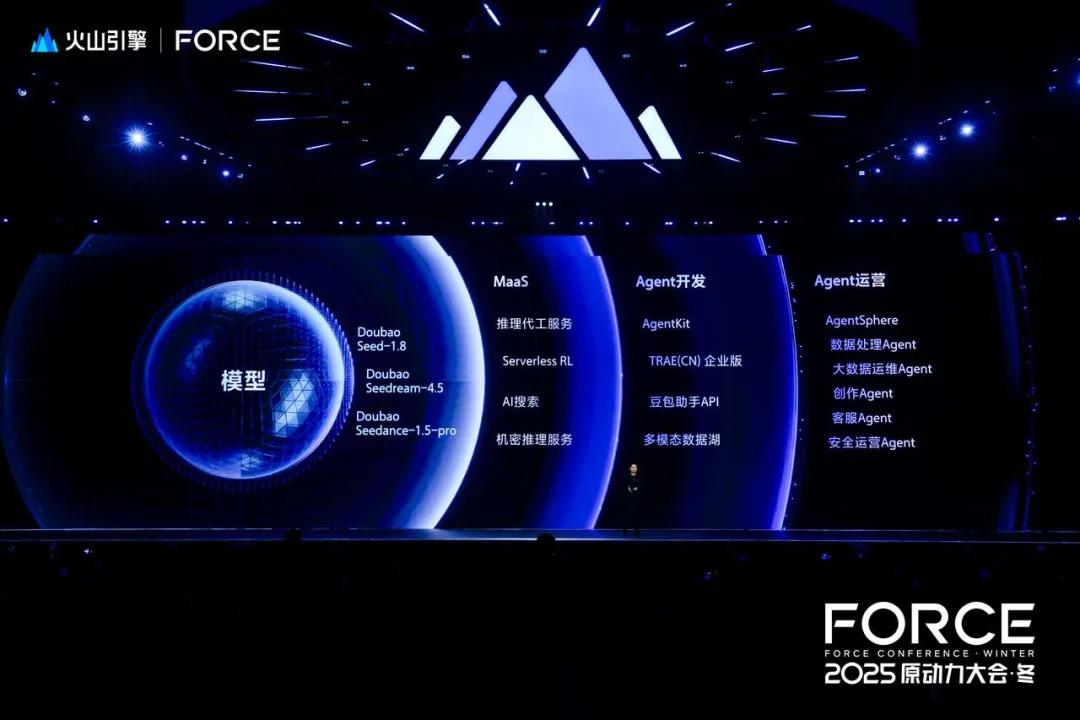
Core Insights - The article emphasizes the transformative impact of AI on the cloud market, highlighting that AI is becoming a core growth driver for cloud vendors as more industries recognize its potential to optimize business efficiency and create value [3][4][6] - Cloud vendors are shifting from being infrastructure providers to AI capability providers, with the development of Agents seen as a method to unlock the value of Tokens [6][11] - There is a growing demand for reliable and low-barrier Agent development platforms to help enterprises transition from concept validation to large-scale application [3][4][6] Group 1: Market Growth and Opportunities - AI-driven growth has created new business opportunities for cloud vendors, with Alibaba Cloud's AI-related revenue experiencing triple-digit year-on-year growth for nine consecutive months [1] - AWS anticipates that future Token revenue from MaaS platforms will be comparable to its EC2 computing product revenue [1] - Google Cloud's annual revenue exceeds $50 billion, largely driven by AI [1][3] Group 2: Agent Development and Implementation - The article discusses the need for a comprehensive framework for Agent development, which includes tools for model customization, Agent development, operation, and security governance [3][4][7] - Companies like Firefly Engine and AWS are actively providing solutions to lower the barriers for Agent development, emphasizing ease of use and security [7][9] - The development of Agents is expected to lead to significant efficiency improvements, as evidenced by case studies where projects were completed in a fraction of the time previously required [4][6] Group 3: Challenges in Agent Adoption - Despite the optimistic outlook, many enterprises face significant obstacles when moving from concept validation to production, with 93% of customers encountering major challenges [6] - The challenges stem from data and engineering aspects, where the requirements for large-scale applications differ significantly from those in the concept validation phase [6][11] Group 4: Strategic Shifts Among Cloud Vendors - Cloud vendors are increasingly focusing on developing foundational models that are tailored for Agent development, with companies like Tencent and Baidu making organizational adjustments to enhance their model capabilities [11][13] - The shift towards MaaS business models is becoming a core metric for cloud vendors, with Firefly Engine viewing AI Token usage as a key performance indicator [13] - Alibaba Cloud aims to position itself as a leading player in the AI era, with a focus on comprehensive AI cloud solutions [13]



2026年五大猜想:入口争夺大年
GOLDEN SUN SECURITIES· 2025-12-31 13:32
证券研究报告 | 行业策略 gszqdatemark 2025 12 31 年 月 日 海外市场 2026 年五大猜想:入口争夺大年 猜想一:模型能力有望持续突破。展望未来,我们认为 AI 模型能力仍处于持续进 化通道,2026 年有望在加强多模态推理与生成能力、提升超长上下文处理能力及 降低模型幻觉率等维度上取得突破。在应用场景方面,这有望促进内容产业工业 化、世界模型演进,也有望加速智能体迭代、及支撑 AI 向更专业的行业级与科研 级应用延伸。 猜想二:AI 应用进入流量入口争夺大年。1)在 C 端入口的争夺上,头部互联网 厂商如阿里巴巴、字节跳动、腾讯等凭借领先的模型能力与丰富的业务生态,具备 先发优势。2)B 端应用方面,AI Coding、AI 营销、AI4S 有望成为率先突围的领 域。我们预计 2026 年,C 端入口的争夺会演化为软硬结合与生态丰富度的竞争, 而 B 端应用的渗透率会随着模型多模态、上下文处理、幻觉率优化等能力的提升 而持续加速。 猜想三:端侧智能硬件迎来安卓时刻。展望 2026,我们认为,端侧硬件中,1)手 机和 PC 市场或因存储成本上涨而带来终端销量承压,但折叠机等创新点仍 ...

How the Mag 7’s 2025 Laggards Could Turn Into 2026 Winners
Investing· 2025-12-31 13:12
Market Analysis by covering: Microsoft Corporation, Alphabet Inc Class A, Apple Inc, Amazon.com Inc. Read 's Market Analysis on Investing.com ...

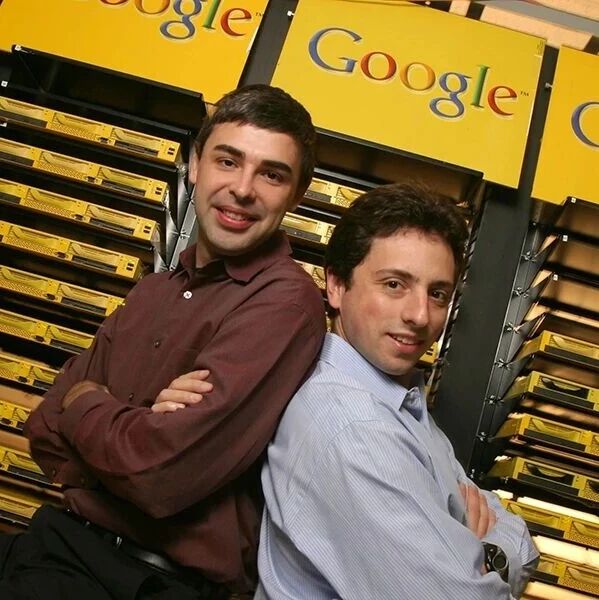
Gemini正将谷歌创始人25年前的设想变为现实
财富FORTUNE· 2025-12-31 13:06
Core Insights - The article discusses the evolution of Google from its inception to its current advancements in artificial intelligence, particularly focusing on the Gemini AI product, which aligns with co-founder Larry Page's vision for an ultimate search engine that understands user intent and provides accurate answers [2][5]. Group 1: Historical Context - Google was founded by Larry Page and Sergey Brin in 1998, with Page serving as the first CEO until 2001 [2]. - The company initially gained a 25% market share in search by 2000, a significant increase from its early days, but still far from its current dominance of approximately 90% [3]. - In 2000, Google's search advertising revenue was $80 million, which is projected to approach $200 billion by 2024 [3]. Group 2: Vision for AI - Larry Page expressed in a 2000 interview that artificial intelligence would be the ultimate form of Google, capable of understanding everything on the internet and providing precise answers [4]. - The recent launch of Gemini is seen as the closest realization of Page's vision for an advanced search engine [5]. Group 3: Gemini AI Developments - Google has integrated its latest language model, Gemini 3 Flash, into its AI mode search tool, enhancing its ability to provide high-quality answers to complex user queries [6]. - Gemini's multimodal reasoning capabilities allow it to interpret and reason based on text, images, audio, video, and code within a single prompt, significantly improving its performance [6]. - The model can manage user tasks within the Google ecosystem, such as handling emails and providing programming suggestions, showcasing its advanced functionality beyond traditional search engines [6].