
Intel(INTC)

Search documents
Intel Poised for a Major Comeback: Apple Deal Could Be a Game-Changer
The Motley Fool· 2025-12-02 11:20
One analyst expects Apple to become a major customer of Intel's foundry services.While nothing is official or guaranteed, Intel (INTC 1.36%) may be on track to win Apple (AAPL +1.52%) as a major foundry customer. In a recent post on X, Analyst Ming-Chi Kuo noted that visibility around Intel becoming an advanced node supplier had "improved significantly."According to Kuo, Apple's experience with an early process design kit (PDK) for Intel's 18A-P process, an enhanced version of its Intel 18A process, has met ...


英特尔先进封装发威
半导体芯闻· 2025-12-02 10:18
Core Viewpoint - Intel is advancing its AI semiconductor packaging technology at the Amkor factory in Incheon, South Korea, marking the first time it has outsourced this process, which was previously developed exclusively in its own fabs [1][2]. Group 1: AI Semiconductor Packaging Technology - Intel has established the advanced packaging technology "EMIB" at the Amkor K5 factory, which was chosen for its advanced equipment and infrastructure to support major North American tech companies like Nvidia and Apple [1][2]. - EMIB is a 2.5D packaging technology that connects different semiconductors, enhancing performance and cost-effectiveness compared to traditional silicon interposers [1][2]. - The next-generation EMIB technology, "EMIB-T," is set to enter mass production next year, integrating through-silicon vias (TSV) to improve speed and performance, which is crucial for AI semiconductor applications [2][4]. Group 2: Advanced Packaging Techniques - Intel has announced breakthroughs in multiple chip packaging technologies, including EMIB-T, which enhances chip size and power delivery capabilities, supporting new technologies like HBM4/4e [3][4]. - The new EMIB-T technology improves power efficiency and communication speed between chips, addressing voltage drop issues present in traditional EMIB connections [4][5]. - EMIB-T supports larger chip packaging sizes up to 120x180 mm and is compatible with organic or glass substrates, which are key directions for Intel's future packaging strategy [5][6]. Group 3: Thermal Management Innovations - Intel is addressing thermal challenges associated with increased chip packaging sizes and power consumption by introducing a new decoupled heat sink technology that improves thermal interface material coupling [5][6]. - The company is also developing a new thermal bonding process specifically for large packaging substrates, enhancing yield and reliability while supporting smaller EMIB connection pitches [6][7]. Group 4: Competitive Positioning in Chip Packaging - Intel's comprehensive and competitive packaging technology is essential for providing a full range of chip production solutions, allowing integration of chips from various suppliers into a single package [7]. - The company is expanding its packaging services to external clients, including major industry players like AWS and Cisco, as well as government projects, which are crucial for rapid revenue generation in its foundry business [7].
公司问答丨卓易信息:全资子公司南京百敖软件有限公司是中国大陆唯一获得英特尔授权的独立BIOS供应商
Ge Long Hui· 2025-12-02 08:52
Core Viewpoint - The company, through its wholly-owned subsidiary Nanjing Bai'ao Software Co., Ltd., is the only independent BIOS supplier authorized by Intel in mainland China, indicating a significant partnership and unique market position [1] Group 1 - The company confirmed its relationship with Intel in response to an investor inquiry, highlighting its status as the sole authorized independent BIOS supplier in mainland China [1] - The specific cooperation details between the company and its clients will be disclosed through statutory information channels, including regular reports and relevant announcements [1]

卓易信息:子公司为中国大陆唯一获得英特尔授权的独立BIOS供应商。
Xin Lang Cai Jing· 2025-12-02 08:08
Core Viewpoint - The company, 卓易信息, is the only independent BIOS supplier in mainland China authorized by Intel, highlighting its unique position in the market [1] Company Summary - 卓易信息's subsidiary has received authorization from Intel, making it the sole independent BIOS supplier in mainland China [1]
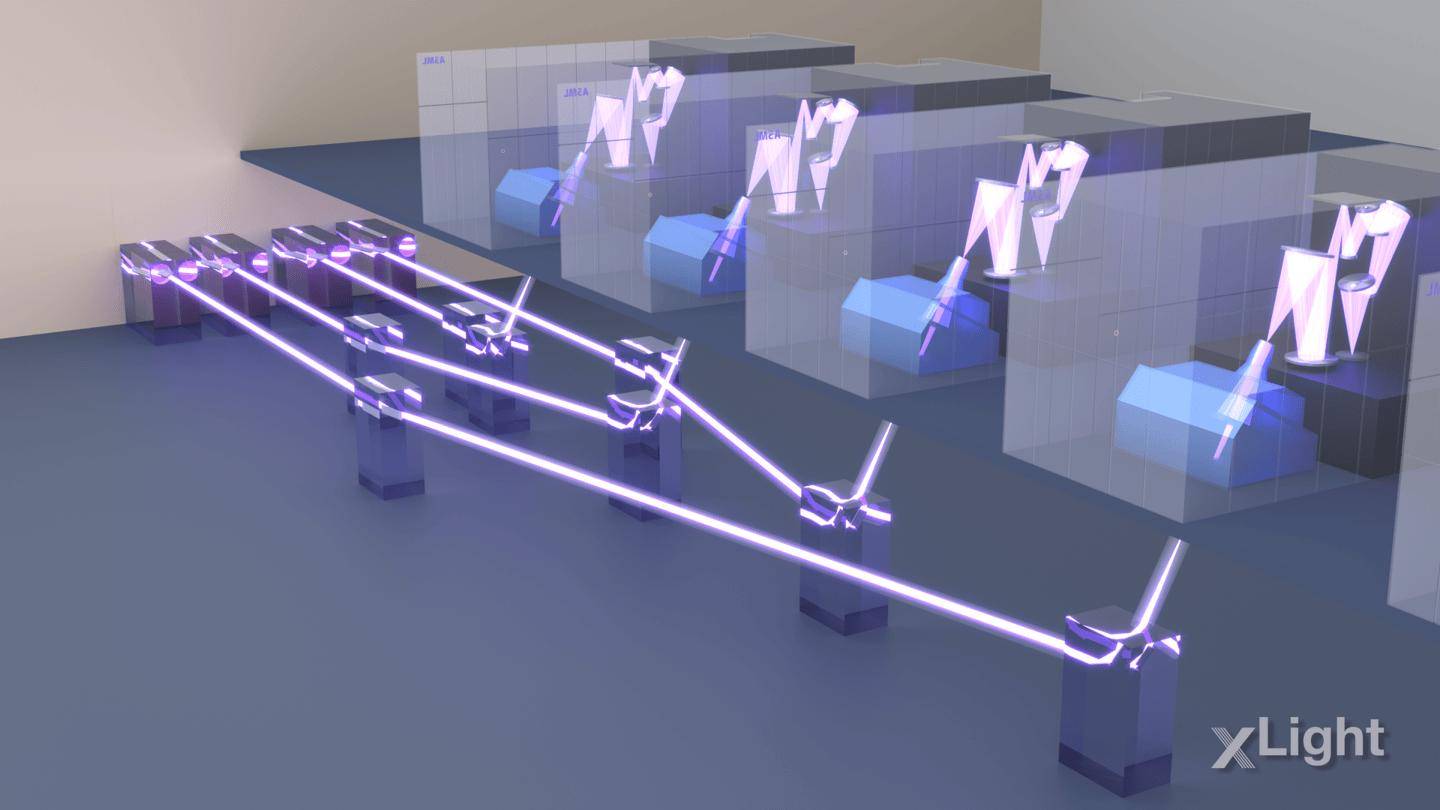
美国政府拟投资1.5亿美元入股半导体初创企业xLight
Sou Hu Cai Jing· 2025-12-02 06:54
Core Viewpoint - The U.S. government is set to become a shareholder in a semiconductor startup named xLight, led by Pat Gelsinger, former CEO of Intel, marking a significant investment in domestic chip manufacturing efforts [1][3]. Investment Details - The U.S. Department of Commerce announced a non-binding letter of intent to invest up to $150 million in xLight, which focuses on developing advanced and cost-effective chip manufacturing methods [3]. - This investment will come from the CHIPS and Science Act and will be made in equity form, allowing the federal government to hold shares in the company [3]. Strategic Importance - This transaction represents the first agreement reached by the CHIPS Research and Development Office under the Trump administration, highlighting efforts to reclaim leadership in semiconductor manufacturing [3]. - Currently, most advanced semiconductors are produced outside the U.S., primarily by Taiwan's TSMC and South Korea's Samsung [3]. Technological Advancements - xLight is developing free-electron laser technology as an alternative light source for extreme ultraviolet (EUV) lithography machines, which are essential for cutting-edge chip manufacturing [4]. - The technology aims to enhance the performance of equipment produced by ASML, the global leader in EUV lithography systems, and is expected to significantly reduce capital expenditures and operational costs for semiconductor fabs [4]. Leadership and Background - Pat Gelsinger, who resigned as Intel's CEO due to the company's poor performance and lag in the AI chip race, became the executive chairman of xLight in March [5]. - Gelsinger has been a key advocate for the CHIPS Act and has acknowledged past mistakes made by Intel in technology leadership [5][7]. - He believes xLight has the potential to advance Moore's Law and enhance domestic technological capabilities while increasing wafer production efficiency [8].
Intel expands Malaysia semiconductor operations with new investment boost
Invezz· 2025-12-02 06:38
Core Viewpoint - Intel is making a significant investment of 860 million ringgit in Malaysia to enhance its semiconductor assembly and testing operations, reinforcing Malaysia's role in the global semiconductor supply chain [2][5]. Investment and Expansion - The new investment aims to expand assembly and testing operations, which are critical stages in semiconductor production [4]. - Intel's existing commitments include a nearly completed 12 billion ringgit advanced packaging plant in Penang, with 99% of construction finished [6]. Malaysia's Semiconductor Role - Malaysia currently handles approximately 13% of the global market for chip packaging, assembly, and testing, which is vital for the country's export activities [7]. - The semiconductor sector accounts for around 40% of Malaysia's national exports, highlighting its economic significance [7]. Geopolitical Context - The investment comes amid global competition for semiconductor production capacity, as countries seek to diversify and secure their supply chains [3][8]. - Recent geopolitical tensions have prompted nations to reduce reliance on single-country production hubs, positioning Malaysia as a stable base for advanced semiconductor work [8]. Strategic Importance - Intel's renewed investment underscores the importance of Southeast Asia in chip production, as operational costs and established electronics ecosystems attract multinational companies [10]. - Malaysia is working to secure a stronger position in the evolving semiconductor landscape by attracting high-value activities in advanced packaging and testing [11].
英特尔(INTC.US)斥资2亿美元加码马来西亚,强化东南亚芯片封装中心
智通财经网· 2025-12-02 04:17
Core Viewpoint - Intel (INTC.US) is set to invest an additional 860 million ringgit (approximately 208 million USD) in Malaysia, enhancing the country's role in the global semiconductor supply chain [1] Group 1: Investment Details - The investment commitment was made during a meeting between Malaysia's Prime Minister Anwar Ibrahim and Intel CEO Pat Gelsinger on December 2 [1] - Intel has already invested 12 billion ringgit in an advanced packaging facility in Penang, which is currently 99% completed [1] - In 2021, Intel pledged to invest 7 billion USD in building a factory in Penang [1] Group 2: Malaysia's Semiconductor Industry - Malaysia accounts for approximately 13% of the global chip packaging, assembly, and testing market, which is the final stage of semiconductor manufacturing [1] - The semiconductor industry drives about 40% of Malaysia's export output [1] - Malaysia is actively working to strengthen its position in the global supply chain amid competition from major economies enhancing their semiconductor capabilities [1] Group 3: Global Context - The Trump administration emphasized the necessity for the U.S. to establish a complete domestic semiconductor supply chain, encouraging local companies to expand within the U.S. despite lower manufacturing costs in Asia [1]
英特尔相中马来西亚,追加投资8.6亿林吉特
Sou Hu Cai Jing· 2025-12-02 04:03
Core Viewpoint - Intel is committing to an additional investment of 860 million ringgit (approximately 1.473 billion RMB) to establish Malaysia as its global packaging and testing operations center [1]. Group 1: Investment and Operations - Intel has been operating in Malaysia, including an advanced packaging factory in Penang with an investment of 12 billion ringgit (approximately 20.551 billion RMB), which is currently 99% complete [3]. - In 2021, Intel pledged to invest 7 billion USD (approximately 49.551 billion RMB) to build a production base in Penang [3]. - The recent investment decision was made during a meeting between Malaysia's Prime Minister Anwar Ibrahim and Intel's CEO Lip-Bu Tan, reflecting confidence in Malaysia's long-term development plans [4]. Group 2: Market Position and Economic Impact - Malaysia holds about 13% of the global market share in chip packaging, assembly, and testing, which are the final stages of semiconductor manufacturing [3]. - The semiconductor industry contributes 40% to Malaysia's total export revenue [3]. - As major economies compete to strengthen their domestic semiconductor capabilities, Malaysia is actively enhancing its strategic position in the global supply chain [3].
越秀证券每日晨报-20251202
越秀证券· 2025-12-02 03:22
Market Performance - The Hang Seng Index closed at 26,033, up 0.67% for the day and up 29.78% year-to-date [1] - The Hang Seng Tech Index rose by 0.82% to 5,644, with a year-to-date increase of 26.33% [1] - The Shanghai Composite Index increased by 0.65% to 3,914, with a year-to-date rise of 16.77% [1] - The Dow Jones Index fell by 0.90% to 47,289, with a year-to-date increase of 11.15% [1] Currency and Commodity Overview - The Renminbi Index stands at 97.920, with a 1-month increase of 0.38% and a 6-month increase of 1.79% [2] - Brent crude oil is priced at $63.570 per barrel, down 0.98% over the past month but up 3.13% over the past six months [2] - Gold is priced at $4,256.22 per ounce, with a 1-month increase of 6.37% and a 6-month increase of 25.87% [2] Company News - Kangji Medical's privatization plan has been approved by the Grand Court, with the plan expected to take effect on December 5, 2025 [19] - HashKey Holdings has passed the listing hearing with plans to raise $500 million and seek a listing this month [16] - The real estate crisis in China continues, with major data providers instructed to halt the release of sales data for property companies [17] Economic Indicators - China's official manufacturing PMI for November recorded at 49.2, below market expectations of 49.3 [13] - The non-manufacturing PMI for November was reported at 49.5, also below expectations of 50 [10] - Hong Kong's retail sales value for October increased by 6.9% year-on-year, with online sales rising over 27% [15]




X @Bloomberg
Bloomberg· 2025-12-02 02:53
Investment & Expansion - Intel to invest an additional $208 million in Malaysia to enhance its assembly and testing operations [1] - This investment reinforces Malaysia's significance in the global semiconductor supply chain [1] Geopolitical Implications - The investment provides a boost to Malaysia's critical role in the global semiconductor supply chain [1]