
MNSO(MNSO)

Search documents
名创优品叶国富:中国品牌要承担起文化表达的责任
Xin Lang Ke Ji· 2025-11-21 14:19
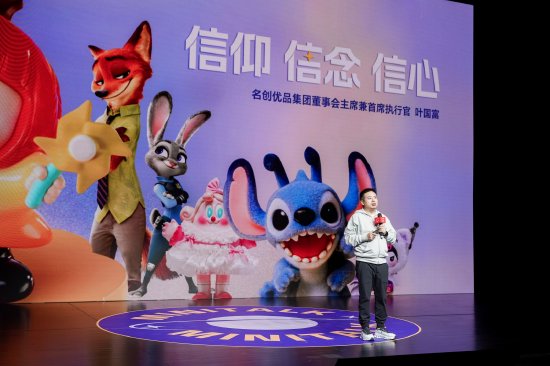
Core Viewpoint - The founder and CEO of Miniso Group, Ye Guofu, emphasized the importance of corporate culture as the foundation for global branding, stating that Chinese brands must take on the responsibility of cultural expression in the new era [1] Group 1: Corporate Vision and Mission - Miniso aims to become a global leading IP operation platform, with a mission centered around "being born for happiness" and telling Chinese stories through IP to reach the world stage [1] - The company believes that cultural expansion is not just a strategic move but a responsibility for this generation of Chinese brands [1] Group 2: Event Highlights - The first MINI TALK value story sharing conference attracted nearly 100 Miniso employees from global markets, with 14 employees advancing to the finals [1] - The event featured a unique format combining "value speeches and stand-up comedy," showcasing the company's commitment to innovative cultural activities [1] Group 3: Cultural Initiatives - Miniso released its first collection of outstanding personal stories titled "Miniso People," documenting how 10 exemplary employees translate values into visible actions across various scenarios such as product development and overseas operations [1]

名创优品(09896):国内同店增长提速,TOPTOY延续翻倍势头
Xinda Securities· 2025-11-21 14:12
Investment Rating - The investment rating for Miniso (9896.HK) is not explicitly stated in the provided documents, but the report indicates a positive outlook based on strong performance metrics and growth potential. Core Insights - Miniso reported a revenue of 15.19 billion yuan for the first three quarters of 2025, representing a year-over-year increase of 23.7%. The adjusted net profit for the same period was 2.046 billion yuan, with an adjusted net profit margin of 13.5% [1][2] - The company's same-store sales growth in China reached low double-digit levels in October 2025, indicating a strong recovery and growth trajectory [2] - The TOP TOY segment showed exceptional performance with a revenue increase of 87.9% year-over-year, contributing significantly to overall growth [1][2] Summary by Sections Financial Performance - For Q3 2025, Miniso achieved a revenue of 5.797 billion yuan, a year-over-year increase of 28.2%. Domestic revenue was 2.909 billion yuan (yoy +19.3%), while overseas revenue was 2.312 billion yuan (yoy +27.7%). TOP TOY's Q3 revenue was 575 million yuan (yoy +111.4%) [2] - The adjusted operating profit margin for Q3 was 17.6%, showing a narrowing decline of 2.1 percentage points, indicating improved profitability [3] Store Expansion - As of the end of Q3 2025, Miniso had a total of 8,138 stores globally, with 4,407 in China and 3,424 overseas. The company opened 718 new stores year-over-year, with 75.7% of new openings in overseas markets [3] Profit Forecast - The forecast for net profit attributable to the parent company for 2025-2027 is 2.703 billion yuan, 3.438 billion yuan, and 4.232 billion yuan, respectively, with corresponding P/E ratios of 16.4X, 12.9X, and 10.5X [4][6]
Miniso lifts quarterly revenue 28% as store network surpasses 8,000 outlets
Yahoo Finance· 2025-11-21 13:40
Core Insights - Miniso reported Q3 2025 sales of 5.79 billion yuan ($814.3 million), marking a 28% increase year-on-year, surpassing the company's guidance of 25% to 28% growth [1][5] Financial Performance - Same-store sales growth (SSSG) improved across all operating segments, achieving mid-single digit growth for the group [1] - For the Miniso brand, SSSG was in the mid-single digit range, driven by high-single-digit growth in mainland China and low-single-digit growth internationally [2] - Gross profit rose 27.6% year-on-year to 2.59 billion yuan, with a gross margin of 44.7%, slightly down from 44.9% a year earlier [2] - Operating profit was 846.6 million yuan, slightly below the previous year's 852.6 million yuan, but adjusted operating profit increased 14.8% year-on-year to 1.02 billion yuan, with an adjusted operating margin of 17.6% [3] - Profit for the period decreased to 443.2 million yuan from 648.3 million yuan a year earlier, while adjusted net profit rose 11.7% to 766.8 million yuan [3] - Adjusted earnings before interest, taxes, depreciation, and amortization (EBITDA) reached 1.35 billion yuan, up 18.8% year-on-year [3] Cash Flow and Expansion - Net cash generated from operating activities was 1.29 billion yuan, resulting in an operating cash flow to adjusted net profit ratio of 1.7 [4] - Miniso expanded its store network to 8,138 locations as of September 30, 2025, with a net addition of 718 stores over the past year [4] - The Miniso brand accounted for 7,831 stores, reflecting an increase of 645 net new locations year-on-year [4] - The Top Toy network grew to 307 stores, with a net addition of 73 stores during the same period [5] Strategic Goals - The CEO of Miniso expressed satisfaction with achieving significant milestones, including quarterly revenue surpassing 5 billion yuan for the first time and exceeding 8,000 global store counts [5] - The company aims for full-year positive SSSG for Miniso mainland China in 2025 [5]

名创优品千万年薪招募IP人才,TOP TOY营收增长111%
Mei Ri Jing Ji Xin Wen· 2025-11-21 13:12
Core Insights - Miniso has launched the "IP Genius Youth Program," offering annual salaries ranging from 1 million to 10 million yuan to attract top IP creation talents globally, aiming to enhance original IP incubation and build its own IP matrix [1] - The initiative is intended to draw young talents for original IP development [1] - Miniso reported its Q3 2025 financial results, revealing that its toy brand TOP TOY achieved revenue of 570 million yuan, marking a 111% year-on-year growth [1] Group 1 - The "IP Genius Youth Program" aims to strengthen Miniso's original IP capabilities [1] - The salary range for the program is set between 1 million and 10 million yuan [1] - TOP TOY's revenue growth indicates a successful expansion in the toy market [1]
美股前瞻 | 三大股指期货涨跌不一 比特币重挫 城堡证券看好标普500反弹至7000点
智通财经网· 2025-11-21 11:54
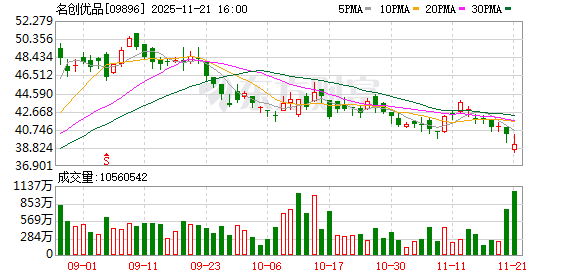
Market Movements - As of November 21, U.S. stock index futures showed mixed results, with Dow futures up 0.44% and S&P 500 futures up 0.13%, while Nasdaq futures were down 0.07% [1] - European indices also experienced declines, with Germany's DAX down 0.60%, UK's FTSE 100 down 0.28%, and France's CAC40 down 0.03% [2][3] - WTI crude oil fell by 2.03% to $57.80 per barrel, and Brent crude oil decreased by 1.69% to $62.31 per barrel [3][4] Cryptocurrency Insights - Bitcoin saw a significant drop, falling below $82,000 and reaching a low of $81,111, marking its lowest point since April 7, with a decline of over 9% [5] Stock Market Predictions - Castle Securities predicts that the S&P 500 could reach 7,000 points by year-end, driven by market positioning and favorable seasonal factors [6] - Bridgewater's Dalio warns that the market shows signs of a bubble similar to 1929 and 2000, but advises against hasty selling [7] - Goldman Sachs indicates that Nvidia's strong earnings did not alleviate risk concerns, leading to a protective stance among investors [8] Federal Reserve Outlook - Morgan Stanley has retracted its prediction for a December rate cut, citing strong employment data that suggests economic resilience [9] - Hassett, a candidate for Fed chair, warns that pausing rate cuts now would be ill-timed due to potential GDP impacts from government shutdowns [10] Company News - Ross Stores reported a 7% increase in same-store sales for Q3, exceeding expectations, and raised its annual earnings guidance [11] - Walmart highlighted a widening gap between low-income and high-income consumers, indicating increasing financial strain on the former [12] - GE Healthcare announced a $2.3 billion acquisition of Intelerad to enhance its cloud and AI capabilities in medical imaging [13] - Joby Aviation has filed a lawsuit against Archer Aviation for alleged trade secret theft by a former employee [14] - Miniso reported a 28.17% increase in revenue for Q3, with adjusted net profit rising by 11.7% [15]






名创优品发布“IP天才少年计划”全球招募创作人才
Zheng Quan Ri Bao· 2025-11-21 10:38
Core Insights - MINISO has launched the "IP Genius Plan" to recruit top IP creators globally with annual salaries ranging from millions to tens of millions, aiming to enhance original IP incubation and build its own IP matrix [1] Group 1: Recruitment Strategy - The "IP Genius Plan" will be open for recruitment year-round, with no restrictions on nationality, educational background, or major [1] - The focus is on creativity, aesthetic ability, and artistic influence, targeting creators who have made a mark in their professional fields [1] Group 2: Creator Qualifications - Applicants must have notable achievements, such as winning professional awards or having their works exhibited or collected by professional institutions [1] - Candidates should also possess keen perception and a strong desire for expression [1] Group 3: Benefits for Selected Creators - Successful candidates will receive a competitive salary, a free creative environment, and access to a top-tier mentorship system [1] - MINISO will provide global ecological resource support, creating a comprehensive creative incubation and operation platform for creators [1]
名创优品:第三季度收入同比增长28.2%
Di Yi Cai Jing· 2025-11-21 09:59
Core Insights - Miniso reported a 28.2% year-on-year increase in revenue for the third quarter, reaching 5.7966 billion yuan [1] - The adjusted net profit grew by 11.7% year-on-year, amounting to 766.8 million yuan [1] Financial Performance - Revenue for the third quarter was 5.7966 billion yuan, reflecting a significant growth compared to the previous year [1] - Adjusted net profit reached 766.8 million yuan, indicating a positive trend in profitability [1]
名创优品三季度营收同比增长28% 全球门店突破8000家
Zheng Quan Shi Bao Wang· 2025-11-21 09:04
Core Insights - MINISO reported a total revenue of 5.8 billion yuan for Q3 2025, marking a 28% year-on-year increase, with the MINISO brand revenue at 5.22 billion yuan (up 23%) and TOP TOY brand revenue at 570 million yuan (up 111%) [2] - The gross profit for the quarter was 2.59 billion yuan, reflecting a 28% increase, with a gross margin of 44.7%. Adjusted net profit reached 770 million yuan, a 12% increase, with an adjusted net profit margin of 13.2% [2] - As of the end of Q3 2025, MINISO's global store count exceeded 8,000, with same-store sales showing positive growth [2] Revenue Breakdown - MINISO brand revenue in mainland China was 2.91 billion yuan, a 19% year-on-year increase, primarily driven by same-store sales [2] - The overseas market generated 2.31 billion yuan in revenue, up 28% year-on-year, with the U.S. market seeing a 65% increase [2] - Same-store sales in October continued to show double-digit growth [2] Store Expansion - As of September 30, 2025, MINISO had 7,831 global stores, including 4,407 in mainland China and 3,424 overseas, with net additions of 102 and 117 stores respectively in the quarter [3] - The MINISO LAND store format is expanding in major cities, with 17 locations opened in key domestic markets [3] IP Development - MINISO has signed contracts with 16 toy artists for its own IP development and is collaborating with Disney's "Zootopia" for a major product launch [4] - TOP TOY brand revenue reached 570 million yuan in Q3 2025, a significant 111% increase, with 307 global stores, including 15 overseas [4] - TOP TOY's flagship store in Guangzhou and its first store in Japan have opened, achieving notable sales figures [4]
最高年薪达千万!名创优品发布“IP天才少年计划”全球招募设计师
Xin Lang Ke Ji· 2025-11-21 09:01
Core Insights - MINISO has launched the "IP Genius Youth Program" to recruit top IP design talents globally, offering annual salaries ranging from millions to tens of millions [1] - The program aims to enhance original IP incubation and build a proprietary IP matrix, transitioning towards a leading global IP operation platform [1] Recruitment Details - The program will be open year-round, with no restrictions on nationality, educational background, or major [1] - The focus will be on creativity, aesthetic ability, and artistic influence, with candidates required to have notable achievements in their fields, such as winning professional awards or having their work exhibited or collected by professional institutions [1] Benefits for Selected Candidates - Successful candidates will receive a competitive salary, a free creative environment, top-tier mentorship, and support from MINISO's global ecosystem [1] - Promising original IPs will benefit from a complete incubation process, from concept to product [1]
名创优品发布“IP天才少年计划”全球招募设计师 最高年薪达千万
Zheng Quan Shi Bao Wang· 2025-11-21 07:47
人民财讯11月21日电,11月21日,名创优品(09896.HK)发布"IP天才少年计划",以百万至千万年薪面向 全球招募顶尖IP设计人才,以加强原创IP孵化,构建自有IP矩阵,向全球领先的IP运营平台升级。该计 划将常年开放招募,不限国籍、不限院校、不限专业,重点关注创造力、审美力与艺术影响力。 ...