Microsoft(MSFT)

Search documents
意大利对微软启动调查,指控其游戏存在“误导性与强制性”销售行为
Xin Lang Cai Jing· 2026-01-16 11:54
Core Viewpoint - The Italian Competition Authority has initiated two investigations into Microsoft's Activision Blizzard games, "Diablo Immortal" and "Call of Duty," for alleged misleading and coercive sales practices [1] Group 1: Investigations and Allegations - The investigations focus on the claim that these games, while advertised as "free-to-play," contain in-game purchases that may mislead consumers [1] - The authority suggests that the company's practices could violate consumer protection laws, particularly regarding the duty of care in an industry sensitive to gaming addiction risks [1] Group 2: User Interface and Consumer Behavior - The investigations will examine potentially deceptive user interface designs that may encourage consumers to increase gameplay frequency, extend playtime, and accept promoted paid features [1]


意大利对微软启动调查
Ge Long Hui A P P· 2026-01-16 11:54
Core Viewpoint - The Italian Competition Authority has initiated two investigations into Microsoft's Activision Blizzard games, specifically "Diablo Immortal" and "Call of Duty," for alleged misleading and coercive sales practices [1] Group 1 - The investigations focus on the sales behavior of the two games, which are accused of being misleading and coercive [1]
Microsoft's Activision Blizzard Probed by Italian Regulator Over In-Game Purchases
WSJ· 2026-01-16 11:48
Core Viewpoint - The U.S. gaming publisher is under scrutiny for potentially violating consumer protection laws through practices that encourage excessive gaming [1] Group 1 - The regulator has indicated that the gaming publisher's practices may be misleading to consumers [1] - There are concerns that these practices could lead to negative impacts on gamers' well-being [1] - The investigation highlights the increasing regulatory focus on the gaming industry regarding consumer protection [1]


AI is baked into health care. Now CEOs are focusing on patient and staff outcomes
Fortune· 2026-01-16 11:07
Group 1: AI in Healthcare - AI is becoming integral to enhancing patient experiences in healthcare, as noted by UCSF Health CEO Suresh Gunasekaran, who emphasizes the transformation in medical education and practice due to AI [1] - Providence CEO Erik Wexler highlights the significant impact of AI on addressing staff shortages and rising costs in healthcare, describing it as "life-changing technology" [2] - The potential for AI to reduce healthcare costs is welcomed by many Americans, with healthcare expected to account for nearly 19% of U.S. GDP this year, reflecting ongoing affordability challenges [2] Group 2: Economic Context and Business Outlook - U.S. Chamber of Commerce President Suzanne P. Clark points out persistent issues of affordability and access to healthcare, drawing parallels to economic conditions during the 1976 bicentennial [3] - Clark notes a threefold increase in GDP, a 40% rise in median household income, and transformative technologies as indicators of progress despite challenges [4] - The focus for business leaders in the AI era is on accelerating adoption while managing costs, with a call for AI to improve access, quality, and reduce staff burden in healthcare [4]

受够了Copilot的“霸王条款”?GitHub全球宕机遭怒骂,引爆开发者“大逃离”
3 6 Ke· 2026-01-16 10:57
Core Insights - GitHub experienced a significant outage, leading to widespread complaints from developers who were unable to access the platform and faced disruptions in their workflows [4][6] - The cause of the outage has not been detailed by GitHub, but speculation points towards issues related to the Copilot feature, which has prompted some developers and companies to migrate their code repositories to alternative platforms [3][10] Developer Reactions - Many developers expressed frustration over the outage, highlighting the dependency on GitHub for their projects and the impact on their development processes [4][6] - There is a growing sentiment among developers that GitHub's reliance on Copilot is problematic, with some suggesting that it may be responsible for the recent outages [6][10] Migration Trends - Gentoo Linux has announced plans to migrate its repositories away from GitHub, citing the forced use of Copilot as a primary reason for this decision [7][8] - The migration will be phased, starting with the core gentoo.git repository, and will explore various alternative platforms such as Codeberg, GitLab, and self-hosted solutions [8][9] Copilot Controversy - The introduction of Copilot has raised concerns regarding its compliance with open-source licensing, as developers fear it may utilize their code without proper attribution [7][10][12] - Developers have reported instances where Copilot's suggestions were intrusive and disrupted their normal coding practices, leading to calls for alternatives to GitHub [10][12]
数据中心背后民怨沸腾,微软给马斯克上了一课
创业邦· 2026-01-16 10:14
Core Viewpoint - The article discusses the growing tension between tech giants' data center expansions and local community resources, highlighting Microsoft's new commitments to responsible infrastructure development as a potential model for the industry [5][6][10]. Group 1: Microsoft's Commitments - Microsoft President Brad Smith announced the "Community-First AI Infrastructure" plan, which includes five commitments: no electricity subsidies, reduced water usage, no tax breaks, job creation, and community feedback [6][9]. - The company promises not to raise local electricity prices and to cover additional electricity costs incurred by data centers, while also investing in local water systems to offset water usage [9][10]. - Microsoft has already implemented some of these commitments in Arizona, collaborating with local authorities to reduce freshwater loss and testing closed-loop cooling systems to minimize water consumption [9][10]. Group 2: Data Center Investment Trends - Major tech companies are engaged in an unprecedented data center investment race, with projected capital expenditures reaching $400 billion by 2025, primarily for AI infrastructure [12]. - The total capital expenditure for the five largest cloud service providers is expected to exceed $600 billion this year, marking a 36% increase from the previous year [12][13]. - Data center electricity consumption is projected to rise dramatically, with estimates suggesting it could exceed 400-426 terawatt-hours by 2030, accounting for 6.7-12% of the total U.S. electricity consumption [13][15]. Group 3: Community Concerns - Communities are increasingly concerned about the rising electricity costs and resource burdens associated with data centers, with wholesale electricity prices in densely populated areas increasing by up to 267% over five years [15][16]. - The water consumption of data centers is also alarming, with estimates indicating that by 2028, water usage for cooling could double, reaching between 129 million to 258 million tons [16]. - Local residents express dissatisfaction with the limited long-term job opportunities provided by data centers, as they typically require only 50 to 100 full-time employees once operational [16][20]. Group 4: Case Studies - Arizona exemplifies the resource tension, where data centers consume significant resources while nearby communities, such as the Navajo Nation, lack basic electricity [18][20]. - The approval process for data center projects in Arizona has faced community protests due to concerns over water usage and environmental impact, highlighting the conflict between short-term economic benefits and long-term community welfare [20][21]. - In contrast, Elon Musk's xAI company in Tennessee has taken extreme measures to meet energy demands, including deploying portable gas turbines without necessary permits, raising significant environmental concerns [23][24]. Group 5: Industry Response and Future Outlook - The article emphasizes the need for a new social contract between tech companies and communities, where companies must bear the costs of their resource consumption and contribute positively to local economies [35][36]. - Microsoft's commitments serve as a potential framework for the industry, but the article questions whether other tech giants will follow suit and whether these commitments will be fulfilled [36].

数据中心背后民怨沸腾,微软给马斯克上了一课
虎嗅APP· 2026-01-16 09:52
Core Viewpoint - The article discusses the growing tension between tech giants, particularly Microsoft, and local communities regarding the construction of data centers, emphasizing the need for responsible practices that benefit both technological advancement and community welfare [4][6][26]. Group 1: Microsoft's Community-Focused AI Infrastructure Plan - Microsoft President Brad Smith announced the "Community-First AI Infrastructure" plan, which includes five commitments: no electricity subsidies, reduced water usage, no tax breaks, job creation, and community feedback [5]. - The company aims to ensure that the benefits of AI infrastructure development outweigh the costs for local residents, promising not to raise local electricity prices and to cover additional electricity costs incurred by data centers [5][25]. - Microsoft has already implemented some of these commitments in Arizona, collaborating with local authorities to repair pipeline leaks and reduce freshwater loss [5][8]. Group 2: The Data Center Investment Surge - Major tech companies are engaged in an unprecedented data center investment race, with projected capital expenditures reaching $400 billion by 2025, primarily for AI infrastructure [8]. - The total capital expenditure for the five largest cloud service providers is expected to exceed $600 billion this year, marking a 36% increase from the previous year [8][9]. - Data centers' electricity consumption is projected to rise dramatically, with estimates suggesting that by 2026, consumption will exceed 250 terawatt-hours, and by 2030, it could reach 400-426 terawatt-hours, accounting for 6.7%-12% of the total U.S. electricity consumption [9][10]. Group 3: Community Challenges Amid Data Center Growth - Communities are facing significant challenges due to the rapid expansion of data centers, including rising electricity prices and water resource depletion [9][10]. - In areas with dense data center activity, wholesale electricity prices have surged by up to 267% over five years, with residential electricity costs projected to rise by 13% in 2025 [9][10]. - The water consumption for cooling data centers is also alarming, with estimates suggesting that by 2028, it could double to between 129 million and 258 million tons [10]. Group 4: Local Community Reactions - In Arizona, local residents have expressed strong opposition to data center projects due to concerns over water usage and environmental impact, leading to the rejection of certain proposals [13]. - The disparity between resource consumption by data centers and the lack of basic utilities for nearby communities, such as the Navajo reservation, highlights the inequities created by tech investments [12]. Group 5: Other Tech Giants' Practices - Other tech companies like Google and Meta are also facing scrutiny for their resource consumption, with Google using approximately 24.2 million tons of water globally in 2023, 95% of which was for data centers [21]. - Critics argue that the water compensation strategies employed by these companies are insufficient and that transparency regarding water usage is lacking [22]. Group 6: The Need for a New Social Contract - The article emphasizes the necessity for a new social contract between tech companies and communities, where the costs of resource consumption are shared more equitably, and local benefits are prioritized [26]. - Microsoft's commitments serve as a potential model for other tech giants, suggesting that responsible practices can lead to a more sustainable relationship with local communities [28].
Trump Eyes Major Plan To Make Big Tech Shoulder Their Own Data Center Power Costs: Report - Alphabet (NASDAQ:GOOGL)
Benzinga· 2026-01-16 08:09
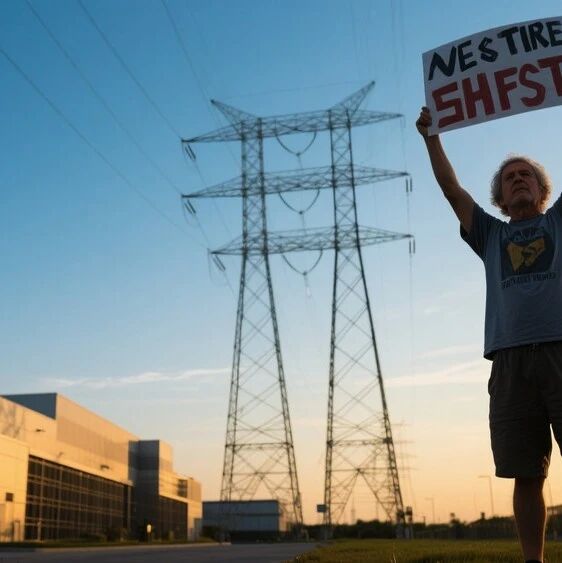
Core Insights - The Trump administration plans to propose an emergency auction for PJM Interconnection to allow tech giants to bid on 15-year contracts for new power plants, potentially leading to $15 billion in construction [1][2]. Group 1: Government and Regulatory Actions - The National Energy Dominance Council is expected to sign the directive at the White House, with several governors present [2]. - The proposed auction aims to address rising electricity costs and support the construction of new power plants across the PJM grid [1][2]. Group 2: Corporate Responses and Strategies - Microsoft has committed to measures to mitigate electricity costs for residents affected by its data centers, emphasizing a "community-first" approach [3]. - The company aims to create local employment opportunities and reduce water usage in its operations [3]. - Trump's pressure on tech companies is aimed at ensuring they contribute to the costs associated with their data centers, which are integral to the AI sector [4]. Group 3: Industry Trends and Challenges - The AI revolution is seen as capable of absorbing additional costs, with potential shifts in data center investments to states with lower costs and faster interconnections [5]. - Google has identified transmission barriers and connection wait times as significant challenges for data center expansion, despite announcing a $25 billion investment in data centers and AI infrastructure in the PJM grid [6].


Cognitive Analytics Market to Surpass USD 81.46 Billion by 2033, Driven by AI Adoption and Real-Time Decision Intelligence | SNS Insider
Globenewswire· 2026-01-16 07:30
Market Overview - The global Cognitive Analytics Market was valued at USD 7.90 billion in 2025 and is projected to reach USD 81.46 billion by 2033, with a CAGR of 33.99% from 2026 to 2033 [1] - The U.S. Cognitive Analytics Market was valued at USD 2.17 billion in 2025 and is expected to grow to USD 22.03 billion by 2033, with a CAGR of 33.61% from 2026 to 2033 [3] Growth Drivers - The market is expanding due to increasing demand for data-driven decision-making, real-time insights, and the growing acceptance of AI and machine learning across various industries [1][3] - Factors contributing to the U.S. market growth include high AI adoption, advanced digital infrastructure, robust business expenditures, and cloud integration [3] Segmentation Analysis By Enterprise Type - Large Enterprises held a 61% market share in 2025, driven by large data volumes and complex business processes, while small and medium enterprises are expected to grow the fastest from 2026 to 2033 due to lower entry barriers from cloud-based solutions [4] By Application - Customer Management accounted for 31% of the market share in 2025, focusing on enhancing customer experience and retention, while Fraud Detection and Security is anticipated to grow the fastest from 2026 to 2033 due to increasing cyber threats [5] By End-User - The BFSI sector dominated with a 28% share in 2025, relying heavily on advanced analytics for fraud prevention and risk assessment, while Retail is expected to experience the fastest growth from 2026 to 2033 as companies leverage cognitive analytics for demand forecasting and personalized promotions [6][7] By Deployment - Cloud deployment led with a 64% market share in 2025 and is projected to grow at the fastest rate from 2026 to 2033, attributed to its scalability and cost efficiency [8] Regional Insights - North America held the largest revenue share of approximately 38% in 2025, benefiting from early AI adoption and a strong presence of major technology providers [9] - The Asia Pacific region is expected to grow at the fastest CAGR of about 15.22% from 2026 to 2033, driven by rapid digital transformation and increasing AI investments [10] Market Trends - There is a rising enterprise focus on data-driven decision-making using AI-powered insights, which enhances operational efficiency and competitive advantage through real-time analysis of consumer behavior and market trends [11] Key Players - Major companies in the cognitive analytics market include Google LLC, Oracle Corporation, IBM Corporation, Microsoft Corporation, and Amazon Web Services, among others [13]




Italy probes Microsoft's unit over sale practices for 'Call of Duty' and 'Diablo' video games
Reuters· 2026-01-16 07:20
Core Viewpoint - Italy's competition authority has initiated two investigations into Microsoft's Activision Blizzard unit for allegedly engaging in "misleading and aggressive" sales practices related to the video game "Diablo" [1] Group 1 - The investigations focus on the sales practices of the Activision Blizzard unit, which are claimed to be misleading and aggressive [1] - The specific video game under scrutiny is "Diablo," indicating a targeted approach by the competition authority [1]