NIKE(NKE)

Search documents
深夜雪崩!美股遭遇“黑色星期五”
Sou Hu Cai Jing· 2025-04-04 23:58
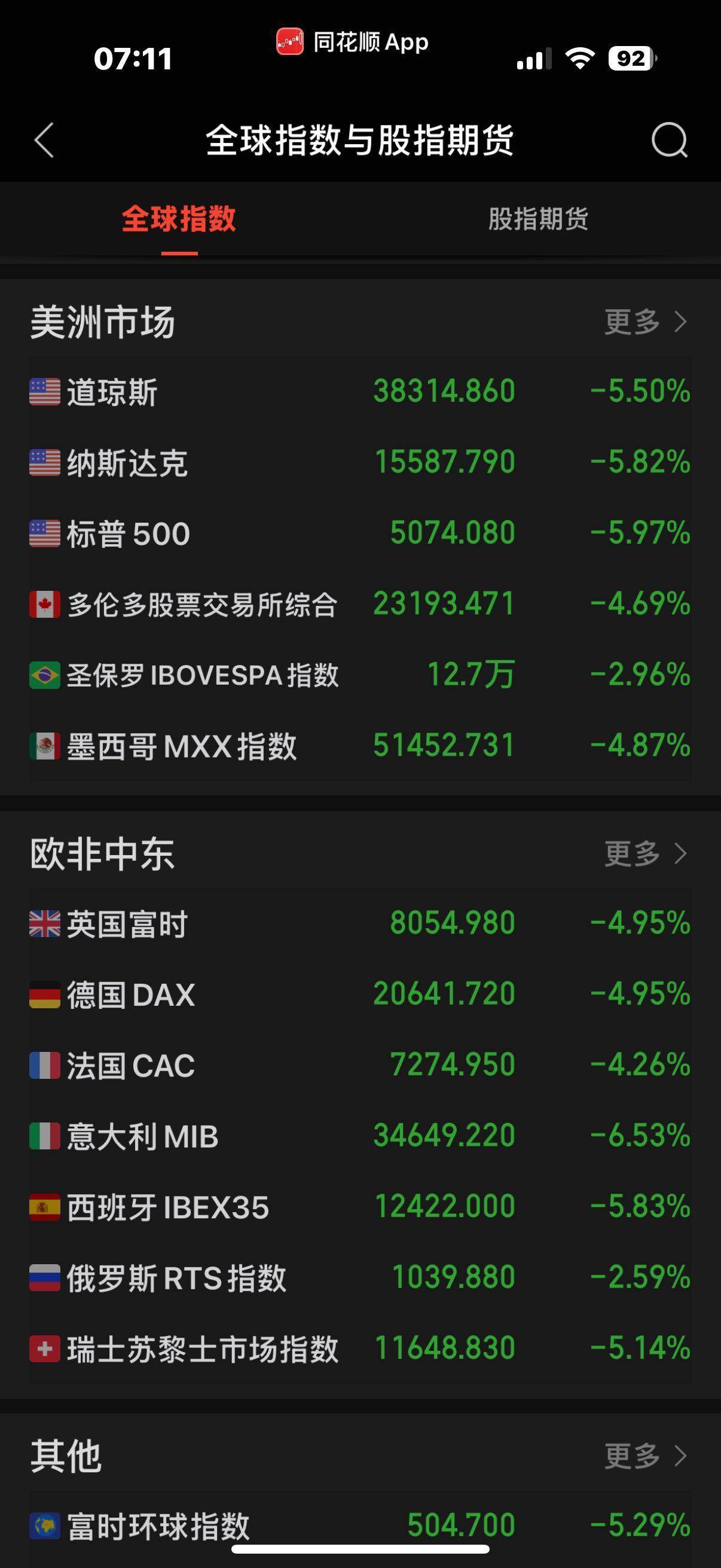
Core Viewpoint - The U.S. stock market experienced a significant decline due to escalating trade tensions and concerns over inflation, leading to a loss of over $3 trillion in market value for major tech companies in just two days [1][9]. Group 1: Market Performance - The U.S. stock indices fell by more than 5%, marking one of the worst trading days in recent years, with the S&P 500 dropping 5.97% and the Dow Jones Industrial Average plummeting 2,231 points [4][9]. - The technology sector was particularly hard hit, with the "Tech Seven" companies losing over $2 trillion in market capitalization in a single day [13]. - European markets also suffered, with the Stoxx 600 index falling 5.12%, the largest drop since the onset of the COVID-19 pandemic [14][17]. Group 2: Economic Indicators - Federal Reserve Chairman Jerome Powell indicated that inflation pressures from unilateral tariffs could persist for several quarters, leading to a cautious stance on monetary policy [8][18]. - Despite a stronger-than-expected increase in non-farm payrolls, the unemployment rate unexpectedly rose to 4.5%, raising concerns about the labor market [8][18]. - The market is closely watching upcoming U.S. CPI data and Federal Reserve meeting minutes for any signs of policy shifts that could impact market stability [18]. Group 3: Sector-Specific Impacts - Major tech stocks like Tesla and Apple saw significant declines, with Tesla dropping 10.4% and Apple falling 7.3% [11][13]. - The semiconductor sector also faced severe losses, with the Philadelphia Semiconductor Index down 7.6% [13]. - Commodity markets experienced widespread declines, with crude oil prices falling nearly 10% and gold prices dropping over 3% [13]. Group 4: Global Economic Outlook - The ongoing trade war and the Fed's policy deadlock have led to a loss of investor confidence in global economic recovery [17]. - Analysts warn that continued trade protectionism and delayed monetary policy responses could push the global economy into a recession [18].


Why Nike Stock Rose in a Brutal Day for the Market
The Motley Fool· 2025-04-04 22:47
Core Viewpoint - Nike's stock showed resilience by gaining 3% despite a significant sell-off in the broader market, indicating potential investor confidence amid tariff uncertainties [1][2]. Group 1: Stock Performance - Nike's stock closed up 3% on a day when the S&P 500, Nasdaq Composite, and Dow Jones Industrial Average fell by 6%, 5.8%, and 5.5% respectively, highlighting its relative strength [1]. - The stock's performance is attributed to positive developments regarding tariffs, particularly a productive call between President Trump and Vietnam's leaders [2][3]. Group 2: Tariff Developments - President Trump mentioned a "very productive call" with Vietnam's General Secretary, suggesting potential for a new trade agreement that could reduce tariffs on Vietnamese goods to zero [3]. - Nike has shifted much of its production from China to Vietnam, making the tariff situation a critical factor for its business operations [3][4]. - A 46% tariff on goods from Vietnam is set to take effect on April 9, which could lead to significant price increases for Nike's products, potentially affecting consumer demand [4]. Group 3: Future Outlook - The outcome of trade negotiations between the U.S. and Vietnam is becoming a crucial catalyst for Nike's business performance and valuation [5].

Why Nike Stock Plummeted 15% Earlier This Week -- but Is Now Rebounding
The Motley Fool· 2025-04-04 16:58
Core Viewpoint - Nike's shares experienced significant volatility due to new tariffs imposed by the U.S. on key manufacturing countries, but have shown some recovery as of Friday [1][2]. Group 1: Stock Performance - Nike's stock dropped 15% earlier in the week but has recovered slightly, now down 9% for the week [1]. - The initial decline was triggered by tariffs of 46%, 32%, and 34% on Vietnam, Indonesia, and China, which are responsible for 95% of Nike's footwear production [2]. Group 2: Tariff Impact - The tariffs are expected to negatively impact Nike's earnings, with an estimated damage of $1.69 to earnings per share according to Stifel analyst Jim Duffy [2]. - Vietnam, which accounts for 50% of Nike's footwear and 28% of its apparel, is seeking to negotiate a reduction of its tariffs to 0%, which could alleviate some concerns for investors [3]. Group 3: Market Sentiment and Valuation - The stock is currently trading at its lowest price-to-sales ratio since 2009, indicating potential value for risk-tolerant investors [4]. - Nike remains a dominant brand in the footwear and apparel market, particularly among Gen Z consumers, which may attract interest from investors despite current volatility [4].

美股一日蒸发超3万亿美元!
Xin Lang Cai Jing· 2025-04-04 12:09
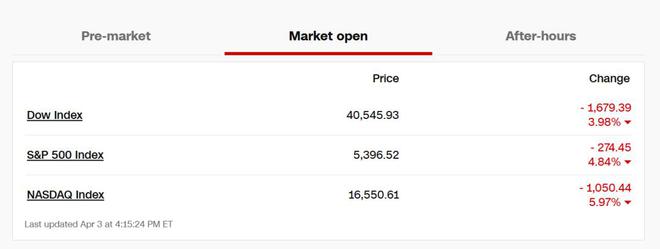
Group 1: Market Reaction - The U.S. stock market experienced a significant decline following the announcement of the "reciprocal tariffs" by President Trump, with all three major indices hitting their largest single-day drops in five years [2][4] - The Dow Index fell by 1,679.39 points, a decrease of 3.98%, marking its largest single-day drop since June 2020 [3][4] - The S&P 500 Index dropped by 1,050.44 points, down 4.84%, also the largest single-day decline since June 2020 [3][4] - The NASDAQ Index saw a decline of 5.97%, the largest drop since March 2020 [3][4] - Approximately $3.1 trillion in market value was wiped out in a single day, the largest loss since March 2020 [5] Group 2: Individual Stock Performance - Major companies faced severe stock price declines, with Apple Inc. down 9.25%, Meta Platforms Inc. down 8.96%, and Nike Inc. down 14.44% [6] - NVIDIA Corp. saw a decrease of 7.81%, while Tesla Inc. dropped by 5.47% [6] Group 3: Commodity Market Impact - Oil prices fell sharply, with WTI crude oil futures dropping over 7%, reaching their lowest level in three years [7] - Gold prices also experienced a decline, with COMEX gold down 0.89% on April 3, although it later recovered slightly [10] - Silver prices saw a significant drop of 7.86% on the same day [10] Group 4: European Market Response - European stock markets reacted negatively, with the FTSE 100 Index down over 1.5%, the CAC Index down over 3.3%, and the DAX Index down over 3% [10] - The European Union plans to implement countermeasures against the U.S. tariffs, with a vote scheduled for April 9 regarding a 25% tariff on steel and aluminum [12]

NIKE(NKE) - 2025 Q3 - Quarterly Report
2025-04-03 20:23
Financial Performance - NIKE, Inc. revenues for Q3 fiscal 2025 were $11.3 billion, a decrease of 9% compared to $12.4 billion in Q3 fiscal 2024[90]. - Net income for Q3 fiscal 2025 was $794 million, a decline of 32% from $1.172 billion in Q3 fiscal 2024[95]. - Earnings before interest and taxes (EBIT) for Q3 fiscal 2025 was $826 million, down 39% from $1.352 billion in Q3 fiscal 2024[93]. - For the first nine months of FY2025, NIKE, Inc. revenues totaled $35.2 billion, an 8% decrease from $38.8 billion in the same period of FY2024[101]. - Total revenues for the three months ended February 28, 2025, decreased by 4% to $4,864 million compared to $5,070 million in the same period last year[118]. - Total NIKE Brand EBIT decreased by 41% to $1,257 million for the three months ended February 28, 2025, compared to $2,128 million in the prior year[117]. - Reported EBIT decreased 26%, reflecting lower revenues and increased selling and administrative expenses driven by higher demand creation expenses[132]. Revenue Breakdown - NIKE Direct revenues were $4.7 billion for Q3 fiscal 2025, down 12% from $5.4 billion in Q3 fiscal 2024, representing approximately 43% of total NIKE Brand revenues[90]. - NIKE Brand revenues, accounting for over 90% of total revenues, decreased 9% on a reported basis and 6% on a currency-neutral basis, driven by declines in the Jordan Brand, Men's, Kids', and Women's categories[98]. - NIKE Brand wholesale revenues decreased 7% on a reported basis and 4% on a currency-neutral basis, impacted by lower revenues in Greater China, EMEA, and Asia Pacific & Latin America[98]. - NIKE Direct revenues were $4.7 billion in Q3 FY2025, down 10% from $5.4 billion in Q3 FY2024, primarily due to a 15% decline in NIKE Brand Digital sales[99]. - Greater China revenues decreased by 17% to $1,733 million for the three months ended February 28, 2025, compared to $2,084 million in the same period last year[128]. - APLA revenues decreased 4% on a currency-neutral basis, primarily due to lower revenues in Southeast Asia and India, with NIKE Direct revenues down 4% due to digital sales declines of 8%[135]. - Converse revenues decreased 16% on a currency-neutral basis, driven by revenue declines in all territories, with unit sales down 10% and ASP down 6% due to higher discounts[142]. Cost and Margin Analysis - Gross margin for Q3 fiscal 2025 decreased by 330 basis points to 41.5%, compared to 44.8% in Q3 fiscal 2024[90]. - Gross profit for Q3 FY2025 was $4.675 billion, a 16% decrease from $5.562 billion in Q3 FY2024, with a gross margin of 41.5%, down 330 basis points year-over-year[100]. - Gross margin contracted by 210 basis points primarily due to lower ASP and higher inventory obsolescence reserves[122]. - Gross margin contraction of approximately 470 basis points for Converse, primarily due to lower ASP, partially offset by lower product costs[142]. - The effective tax rate for Q3 FY2025 was 5.9%, a significant decrease from 16.5% in Q3 FY2024, primarily due to a one-time, non-cash deferred tax benefit[111]. Expenses and Investments - Demand creation expense increased by 8% to $1.088 billion in Q3 fiscal 2025, compared to $1.011 billion in Q3 fiscal 2024[95]. - Total selling and administrative expenses for Q3 FY2025 were $3.887 billion, an 8% decrease from $4.226 billion in Q3 FY2024, with demand creation expenses increasing by 8%[103]. - Selling and administrative expenses increased by 12% driven by higher operating overhead and demand creation expenses[122]. - Cash provided by operations was $3,235 million for the first nine months of fiscal 2025, down from $4,810 million for the same period in fiscal 2024[156]. - Cash used by investing activities was an outflow of $289 million for the first nine months of fiscal 2025, compared to an inflow of $1,184 million for the same period in fiscal 2024[157]. - Cash used by financing activities was an outflow of $4,176 million for the first nine months of fiscal 2025, a decrease from $4,468 million in the same period of fiscal 2024[158]. Shareholder Returns - NIKE returned approximately $1.1 billion to shareholders in Q3 fiscal 2025 through dividends and share repurchases[90]. - The company repurchased 34.4 million shares for $2,753 million at an average price of $80.02 per share under the $18 billion share repurchase plan[159]. Market Conditions and Risks - External factors such as geopolitical dynamics and fluctuating foreign exchange rates are creating uncertainty and volatility in the operating environment[88]. - The impact of foreign exchange rate fluctuations on consolidated revenues was a detriment of approximately $310 million for the three months ended February 28, 2025[153]. - The company has not experienced difficulty accessing capital or credit markets in fiscal 2025, although future volatility may increase costs[165]. - There have been no material changes in market risk disclosures compared to the previous Annual Report[174]. Strategic Initiatives - NIKE plans to reduce the supply of certain footwear products while shifting focus to new and innovative products[91]. - The company is repositioning NIKE Brand Digital as a full-price platform and reinvesting in wholesale distribution[91].
Nike Stock Sinks to 6-Year Low After Tariff Announcements
Schaeffers Investment Research· 2025-04-03 14:43
Core Viewpoint - Nike Inc is facing significant stock pressure due to President Trump's tariff announcement, which imposes high levies on goods manufactured in China and Vietnam [1] Group 1: Stock Performance - Nike's stock has dropped 11.3% to $57.62, marking its lowest level since November 2017 and extending a bear gap post-earnings [2] - The stock is experiencing a year-to-date deficit of 23.5% [2] Group 2: Supply Chain Impact - The company manufactures approximately 50% of its footwear in China and a substantial portion of its apparel in Vietnam, making it vulnerable to the new tariffs of 54% and 46% respectively [1] Group 3: Options Trading Activity - Following the tariff news, options traders have significantly increased activity, with over 72,000 calls and 82,000 puts traded, which is five times the average intraday volume [3] - The most popular contract being traded is the April 55 put, indicating a bearish sentiment among traders [3]
Unfortunate News for Nike Stock Investors
The Motley Fool· 2025-04-03 14:00
Core Insights - The article discusses the investment position of Parkev Tatevosian, CFA, and mentions that The Motley Fool has positions in and recommends Nike [1] Company Position - Parkev Tatevosian has no position in any of the stocks mentioned [1] - The Motley Fool has a disclosure policy regarding its investment positions [1] Compensation and Affiliations - Parkev Tatevosian is an affiliate of The Motley Fool and may receive compensation for promoting its services [1] - If subscriptions are made through his link, he will earn additional income that supports his channel [1]

Markets Shudder: Here's What Stocks Are Losing The Most In Tariff Selloff
Forbes· 2025-04-03 13:14
Core Viewpoint - The announcement of aggressive tariffs by President Donald Trump has led to a significant decline in stock markets, with major indexes facing their worst daily losses in years [1]. Market Impact - The Dow Jones Industrial Average fell by 2.8%, or 1,190 points, the S&P 500 decreased by 3.3%, and the Nasdaq dropped by 4.4%, marking the worst day for all three indexes since September 2022 [2]. - The "magnificent seven" tech companies experienced substantial losses, with Apple down 8%, Alphabet down 3%, Amazon down 6%, Meta down 7%, Microsoft down 2%, Nvidia down 6%, and Tesla down 4% [2]. Sector Performance - Retail stocks also suffered, with Walmart, Costco, and Home Depot losing 2% or more, while Lululemon and Nike saw declines close to 10% due to their manufacturing reliance on China and Vietnam, which are heavily targeted by the new tariffs [3]. - Financial services companies faced declines as well, with American Express down 7%, JPMorgan Chase down 5%, and Robinhood down 8% [3]. Bond Market Reaction - U.S. government bonds rallied as investors sought safer assets, leading to a decline in yields for the benchmark 10-year Treasury by more than 15 basis points to just above 4%, the lowest level since before the election [4]. Specific Company Analysis - Apple is particularly affected, facing an estimated $39.5 billion in tariff costs, which could result in a 32% hit to earnings. Analysts speculate that a carveout for Apple may be necessary due to its significant non-U.S. manufacturing [5]. - The total market value loss for the "magnificent seven" was approximately $784 billion, with Apple's loss alone accounting for $263 billion [6]. Strategic Outlook - Wall Street strategists have raised concerns about the likelihood of a bear market, with UBS setting a target of 5,300 for the S&P, indicating a potential further decline of 4% from premarket levels. Bank of America's top equity strategist noted the absence of a clear tariff playbook [7].



消费符号与经济周期:从口红到Lululemon的百年演变
创业邦· 2025-04-03 09:58
Core Viewpoint - The article discusses the evolution of five significant consumer symbols over the past century, illustrating how they reflect economic cycles and the interplay of technological breakthroughs, business models, and cultural recognition, termed as the "innovation multiplier effect" [4][6]. Economic Cycles and Consumer Symbols - Economic cycles are characterized by the periodic adjustment of social resource allocation efficiency, driven by different factors such as technological revolutions, capital changes, and supply-demand dynamics [6]. - The article identifies three main economic cycles: - Kondratiev cycle (long-term, 50-60 years) driven by technological and institutional changes - Juglar cycle (medium-term, 7-11 years) focused on fixed asset updates - Kitchin cycle (short-term, 3-5 years) related to inventory adjustments [6]. - The current historical moment is marked by the resonance of these three cycles, leading to the emergence of unique consumer symbols [6]. Five Major Consumer Symbols 1. **Lipstick (1920-1930s)**: - Represents the "comfort economics" during the recession, with lipstick sales increasing by 50% despite a 25% unemployment rate in 1929 [9][12]. - The production cost of lipstick decreased by 80% due to advancements in synthetic dye technology, making it an affordable luxury [12]. 2. **Ford Model T (1908-1927)**: - Symbolizes industrial recovery and economies of scale, with production time reduced from 728 hours to 12.5 hours through assembly line techniques [13][14]. - By 1921, the Model T accounted for 56.6% of global automobile production, contributing 15% to the GDP growth of the 1920s [14]. 3. **Nike Air Jordan (1984-2020s)**: - Represents cultural dominance during the globalization boom, with Nike leveraging strategic sponsorships to gain market share in the NBA [15][19]. - Nike's focus on cultural empowerment through targeted sponsorships allowed it to become the leading sports brand [19]. 4. **iPhone (2007-present)**: - Acts as a technological revolutionary symbol, with the tech industry market cap increasing by 433% from 2009 to 2018, largely driven by Apple [20][21]. - The introduction of the iPhone 4 marked a significant shift in smartphone penetration and redefined market standards for consumer electronics [21]. 5. **Lululemon (2000-present)**: - Embodies the rise of self-care consumerism in the post-pandemic era, with a CAGR of 25% in revenue and net profit, positioning it as the second-largest sportswear company after Nike [22][25]. - Lululemon's success is attributed to its innovative product offerings and deep understanding of its target market, leading to high customer loyalty and profitability [22][24]. Insights from Consumer Symbols - Each consumer symbol reflects the historical context and market dynamics of its time, demonstrating how they adapt to economic cycles [26]. - The article emphasizes that while consumer symbols may experience peaks and troughs, their resilience often stems from meeting specific market demands, as seen with Lululemon and lipstick during economic downturns [26]. - The enduring pursuit of a better life remains a constant driver of economic innovation, regardless of the cyclical nature of the economy [26].


Nike Stock Trades at a Once-in-a-Decade Valuation. Is It a Buy?
The Motley Fool· 2025-04-03 08:15
Core Viewpoint - Nike is experiencing a decline in revenue and profits, leading to a significant drop in stock valuation, which is now at a historically low level, but the brand's strength and new leadership may provide a path for recovery [1][2][3][4]. Financial Performance - Revenue for Nike is down 9% year-over-year through the fiscal third quarter of 2025, while demand creation expenses have increased by 8% [1] - Net income has fallen by 28% to $3 billion in fiscal 2025 compared to the same period in fiscal 2024 [2] - Nike's stock is currently valued at just below 2 times sales, the lowest since 2013 [2] Brand Strength - Nike boasts nearly $50 billion in annual revenue and operates in almost 200 countries with over 40,000 distribution points, indicating strong brand recognition [5] - The brand's competitive advantage is significant, suggesting that if Nike can leverage this, it may rebound from its current challenges [6] Leadership Changes - New CEO Elliott Hill, who has extensive experience with Nike, is expected to bring renewed energy and focus to the company [7] - Hill's previous work on marketing the Jordan brand may enhance Nike's product pipeline and partnerships [8] Profit Margin and Growth Potential - Current operating margin is around 10%, below the historical average of 12%, indicating potential for improvement [10] - A recovery in profit margins could lead to favorable stock performance, but sustainable top-line growth is necessary for long-term success [11][12] Market Position and Challenges - Nike remains the market-share leader in athletic apparel, but the market is mature with limited growth potential [13] - Less than half of Nike's revenue comes from North America, complicating projections for international growth amid rising global trade complexities [14]