Nissan Motor(NSANY)

Search documents
刚刚!日股跳涨,突破40000点整数关
Zheng Quan Shi Bao· 2025-07-23 01:49
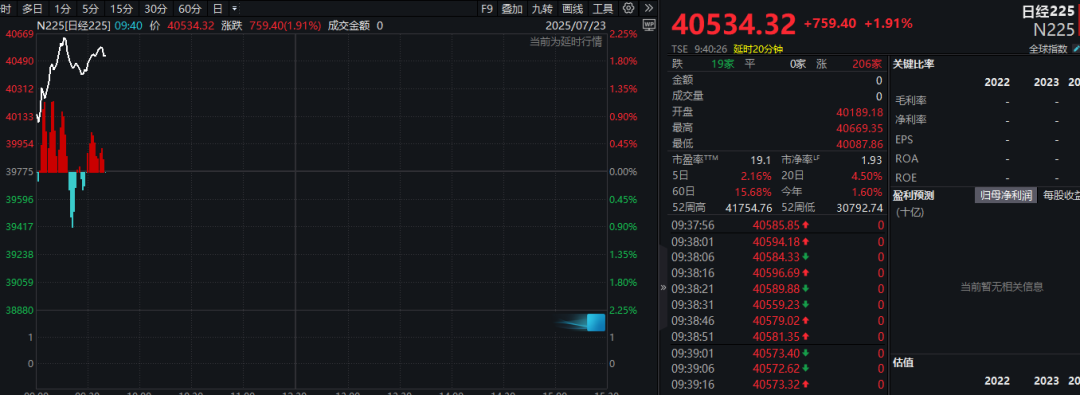
Group 1 - The US and Japan have reached a trade agreement, reducing the reciprocal tariff rate from 25% to 15%, with Japan committing to invest $550 billion and open its agricultural market, including rice [1] - Following the announcement, the Japanese stock market experienced a significant surge, with the Nikkei 225 index surpassing the 40,000-point mark, showing an intraday increase of over 2% [2] - The Tokyo Stock Exchange index also saw a notable rise, breaking the 2,900-point threshold with an increase exceeding 2.4% [4] Group 2 - Japanese automotive stocks were the highlight of the market surge, with Mazda's stock rising over 17%, Subaru's over 14%, Toyota's over 10%, Honda's over 9%, and Nissan's over 9% [5] - The automotive sector is crucial to Japan's economy, and the previous announcement of a 25% tariff on Japanese automotive exports had been a significant point of contention in US-Japan trade negotiations [5]





刚刚!日股跳涨,突破40000点整数关!
证券时报· 2025-07-23 01:28
Core Viewpoint - The article discusses the recent trade agreement between the United States and Japan, which includes a reduction in tariffs and significant Japanese investment in the U.S. [1] Group 1: Trade Agreement Impact - The U.S. and Japan have reached a trade agreement that lowers the reciprocal tariff rate from 25% to 15% [1] - Japan is set to invest $550 billion in the U.S. and will open its market for rice and other agricultural products [1] Group 2: Market Reaction - Following the announcement, the Japanese stock market experienced a significant surge, with the Nikkei 225 index surpassing the 40,000-point mark, showing an intraday increase of over 2% [2][4] - Major automotive stocks in Japan saw substantial gains, with companies like Mazda, Subaru, Toyota, Honda, and Nissan reporting increases of over 9% to 17% [10] Group 3: Sector Performance - The automotive sector was highlighted as a key driver of the market rally, with collective gains among major car manufacturers [9][10] - Other large companies in Japan, including TDK, Yamaha, and Panasonic, also saw their stock prices rise significantly [6]

日本东证汽车指数涨幅扩大至4.8%。日产汽车股价一度上涨6.4%,此前美日达成贸易协议。
news flash· 2025-07-23 00:14
日产汽车股价一度上涨6.4%,此前美日达成贸易协议。 日本东证汽车指数涨幅扩大至4.8%。 ...
日产汽车股价上涨5.9%,因日本与美国达成贸易协议。
news flash· 2025-07-23 00:08
Core Viewpoint - Nissan's stock price increased by 5.9% due to the trade agreement reached between Japan and the United States [1] Group 1 - The trade agreement is expected to positively impact Nissan's operations and market position [1] - The increase in stock price reflects investor confidence in Nissan's future performance following the trade deal [1]
亏损300亿关厂解难题,这家跨国巨头为何选择这条“单向车道”?
Zhong Guo Qi Che Bao Wang· 2025-07-22 02:13
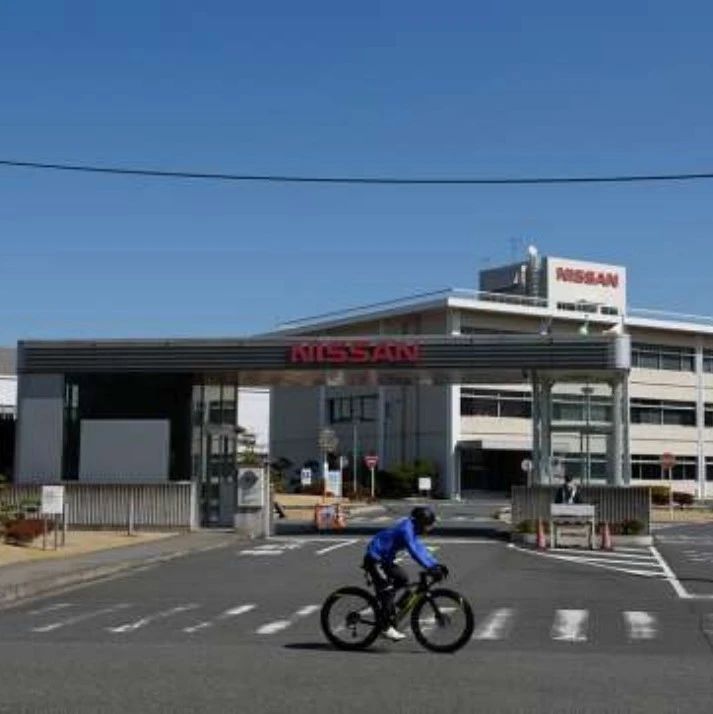
Core Viewpoint - Nissan is planning to close its flagship factory in Zama, Kanagawa Prefecture by the end of the fiscal year 2027, transferring production to its Kyushu plant in Fukuoka to reduce costs and capacity as part of a broader restructuring effort [2][3] Group 1: Financial Challenges - The Zama factory currently employs approximately 2,400 workers, and Nissan is attempting to cut costs to address its rapidly deteriorating financial and operational situation [3] - Nissan reported a fiscal year loss of 670.9 billion yen (approximately 4.5 billion USD) as of March, a significant decline from a profit of 426.6 billion yen in the previous fiscal year [5] - The company is facing increased competition in the global market, declining sales in certain regions, and high restructuring costs, which have contributed to its financial struggles [5] Group 2: Restructuring Plans - Under the new CEO Ivan Espinosa, Nissan plans to reduce its global workforce by about 15%, which equates to nearly 20,000 jobs, and consolidate its 17 factories into 10 [6] - The annual production capacity is expected to decrease from 3.5 million units to 2.5 million units as part of these restructuring efforts [6] - Previous merger talks with Honda were abandoned, and Nissan is now seeking funding support and strategic partnerships [6] Group 3: Technological Advancements - To achieve a turnaround, Nissan must focus on technological breakthroughs, particularly in solid-state battery development, which could provide a significant competitive advantage in the electric vehicle market [7] - The company needs to increase investment in research and development for battery materials and structural innovations to enhance energy density, safety, and charging performance [7] Group 4: Market Strategy - Industry experts suggest that Nissan should abandon its "global car" strategy and adopt a regionally customized product approach, particularly focusing on the North American market's demand for electric pickup trucks [8] - The company should prioritize the development of electric pickup models that meet local consumer needs, emphasizing practicality, comfort, and competitive pricing [8] Group 5: Ecosystem and Collaboration - Nissan is encouraged to restructure its ecosystem through supply chain and alliance innovations to enhance competitiveness [8] - The company should actively seek partnerships to share resources and co-develop advanced electric platform technologies, potentially collaborating with tech firms to address software deficiencies [8][9]

特朗普签署稳定币相关法案|首席资讯日报
首席商业评论· 2025-07-20 04:12
Group 1: Regulatory Developments - The U.S. government has established a regulatory framework for digital stablecoins with the signing of the "Genius Act" by President Trump, which includes the creation of a federal "Strategic Bitcoin Reserve" and a "National Digital Asset Reserve" [1] - Morgan Stanley's report indicates that U.S. consumers may pay an additional $2.7 trillion in tariffs over the next decade due to government policies, which are being criticized as effectively a tax increase [2] Group 2: Industry Updates - Crypto UK has criticized the UK Labour Party's call to ban political donations in cryptocurrency, viewing it as a political maneuver against the growing acceptance of digital assets [3] - Xiaomi has officially opened its headquarters in Shenzhen, marking its fourth regional headquarters in China, focusing on research and development [4][5] - Nissan has announced plans to cease production at its Oppama plant by the end of 2027, following a similar decision for its Tsukuba plant, and is engaging with stakeholders to ensure a smooth transition [8] Group 3: Market and Consumer Initiatives - The 2025 Guangxi "Village BA" basketball finals have commenced, showcasing local vitality and promoting the integration of sports with rural industries [9] - The EU has released guidelines for general artificial intelligence model providers to help companies comply with the upcoming AI regulations [10] - The 2025 World Humanoid Robot Games will take place in Beijing, with over a hundred teams already registered [11] - China's market regulatory authority has held discussions with major platforms like Ele.me, Meituan, and JD.com to ensure compliance with e-commerce laws and promote healthy competition [12] - Shanghai is set to issue sports consumption vouchers for nationwide consumers, with discounts up to 800 yuan on purchases of 2000 yuan [13] - JD.com has warned users about fraudulent digital currencies impersonating its brand, clarifying that its stablecoin is still in the sandbox testing phase [14][15]


7月18日电,日产汽车将于2027年年底在Oppama工厂停止汽车生产活动。
news flash· 2025-07-18 15:13
智通财经7月18日电,日产汽车将于2027年年底在Oppama工厂停止汽车生产活动。 ...
日产汽车:6月中国销量为53,843台
news flash· 2025-07-17 07:24
智通财经7月17日电,日产汽车中国区发布2025年6月销售业绩。2025年6月,日产汽车中国区含乘用车 和轻型商用车两大事业板块在内的6月销量为53,843台。东风日产(包括日产、启辰和英菲尼迪品牌) 销量为49,033台。轻型商用车事业板块(郑州日产)销量为4,810台。2025年1-6月,日产汽车中国区含 乘用车和轻型商用车两大事业板块在内的累计销量为279,546台。 日产汽车:6月中国销量为53,843台 ...
亏损300亿,日本汽车巨头关闭旗舰工厂
汽车商业评论· 2025-07-16 15:24
Core Viewpoint - Nissan is closing its Oppama plant in Kanagawa Prefecture, Japan, to reduce costs and streamline operations as part of its restructuring efforts [3][4][15]. Group 1: Plant Closure Details - The Oppama plant, which employs approximately 2,400 workers, will cease production by the end of the fiscal year 2027, specifically in March 2028 [4]. - This decision aligns with Nissan's previous plans to close certain factories and is expected to significantly impact the local economy [4][10]. - Production from the Oppama plant will be transferred to Nissan's Kyushu plant in Fukuoka Prefecture [3]. Group 2: Financial Context - Nissan has been facing severe financial difficulties, reporting a fiscal year loss of 670.9 billion yen (approximately $4.5 billion) as of March, a stark contrast to a profit of 426.6 billion yen in the previous fiscal year [12]. - The company has been adversely affected by declining sales in China and other markets, high restructuring costs, and inventory issues [12][15]. Group 3: Restructuring Plan - The closure of the Oppama plant is part of Nissan's "Re:Nissan" restructuring plan, which includes a global workforce reduction of about 15%, equating to 20,000 jobs, and consolidating production from 17 factories to 10 [15]. - The annual production capacity is expected to decrease from 3.5 million units to 2.5 million units as a result of these changes [15]. Group 4: Historical Significance - The Oppama plant has a long history, having been operational since 1961 and was the site of the production of Nissan's first mass-produced electric vehicle, the Leaf [8]. - The plant has been a significant economic contributor to the local area, providing thousands of jobs and supporting numerous local suppliers and businesses [10]. Group 5: Leadership and Future Outlook - CEO Ivan Espinosa emphasized the necessity of these changes to overcome current challenges and return to growth, while expressing sympathy for affected workers [6][12]. - Despite the closure, other nearby Nissan facilities will remain operational, and the company aims to continue supporting the local community [12].