Oracle(ORCL)

Search documents
Is Oracle Corporation (ORCL) One of The AI Stocks Analysts are Betting on?
Yahoo Finance· 2025-11-28 06:21
Oracle Corporation (NYSE:ORCL) is one of the AI stocks analysts are betting on. On November 26, HSBC maintained its Buy rating on Oracle Corporation (NYSE:ORCL) with a $382 price target, highlighting the company’s efforts to explore funding options for cloud infrastructure expansion. Is Oracle Corporation (ORCL) One of The AI Stocks Analysts are Betting on? While Oracle has not yet detailed a specific plan, HSBC noted that capital-intensive projects could use structures such as special purpose vehicles o ...

大空头的观点解析
傅里叶的猫· 2025-11-28 03:32
Core Viewpoints - Michael Burry emphasizes that the primary indicator of a bubble is supply-side greed, which leads to over-expansion and ultimately market crashes, rather than demand shortages or profit deficiencies [7][11][12] - The current AI boom mirrors the 1990s internet bubble, with significant investments in AI infrastructure that may not align with actual demand [12][13] Group 1: Historical Analysis of Bubbles - The internet bubble of the 1990s was driven by excessive capital investment in data transmission infrastructure, leading to a supply-demand imbalance [7][8] - Major companies like AT&T and MCI invested heavily in infrastructure, but the actual demand for broadband was not met, resulting in a significant market crash by 2002 [8][11] - Similar patterns of over-investment leading to market corrections have been observed in the real estate bubble of the 2000s and the shale oil revolution of the 2010s [11] Group 2: Current AI Landscape - Major tech companies plan to invest nearly $3 trillion in AI infrastructure over the next three years, raising concerns about potential overcapacity [12] - OpenAI's projected spending of $1.4 trillion over eight years, with revenues not even close to covering this expenditure, highlights the unsustainable nature of current valuations [12] - The rapid pace of technological advancement in AI, particularly with companies like NVIDIA, raises questions about the longevity and economic viability of older chip models [22][23] Group 3: Financial Practices and Risks - Burry points out that major tech firms are extending the depreciation periods of their assets, which artificially inflates reported profits [20][21] - This accounting practice can lead to significant risks, as seen in the case of Baidu, which had to write down substantial asset values after extending depreciation periods [25] - The rapid obsolescence of technology, particularly in data centers, poses a risk of "zombie assets" that may not generate expected returns [24] Group 4: Clarifications on Misinterpretations - Burry clarifies that his positions in options against companies like Palantir and NVIDIA have been misrepresented in the media, emphasizing the importance of accurate reporting [26] - He distinguishes between criticizing accounting practices and directly accusing companies of fraud, asserting that his concerns are about industry-wide practices rather than specific companies [26]



性能提升超35倍,金仓数据库助基金TA系统效能倍增
Jin Tou Wang· 2025-11-28 00:43
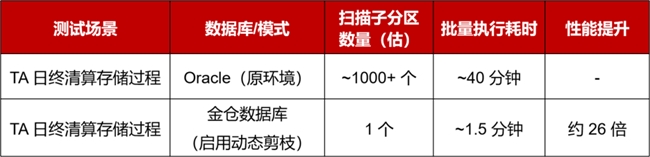
Core Insights - The article highlights the significant performance improvements achieved by a leading fund company through the migration from Oracle database to Kingbase database, particularly in the context of the increasingly competitive fund industry [1][2][3] Group 1: System Performance Enhancements - The Kingbase database effectively addressed two critical issues: "massive data processing delays" and "transaction detail query lags," resulting in a substantial enhancement in system performance [1] - In the end-of-day clearing process, the Kingbase database utilized "dynamic partition pruning" technology, which allowed the system to automatically identify date parameters and process only the relevant partitions, drastically reducing memory usage and processing time [1] - Actual performance testing showed that the clearing time was reduced from 40 minutes with Oracle to just 1.5 minutes with Kingbase, achieving an efficiency improvement of approximately 26 times [2] Group 2: Query Optimization - The Kingbase database implemented an intelligent query optimization mechanism that merged repeated query operations and prioritized index usage, leading to a significant reduction in query response times [2][3] - For example, the response time for retrieving the latest 10 transactions dropped from 2.8 seconds with Oracle to 80 milliseconds with Kingbase, representing an improvement of about 35 times [3] - This transition from Oracle to Kingbase is characterized as a comprehensive upgrade of the fund company's core system processing capabilities, rather than a simple replacement [3] Group 3: Industry Implications - The successful migration demonstrates the potential for financial institutions to enhance user experience and system efficiency while maintaining compliance, positioning Kingbase as a trusted partner in the digital transformation of the asset management industry [3]
U.S. Markets Observe Thanksgiving Holiday After Midweek Rally Driven by Rate Cut Hopes and Tech Gains
Stock Market News· 2025-11-27 21:07
Market Overview - The U.S. stock market is closed on November 27, 2025, for Thanksgiving, following a strong performance midweek with major indexes extending their winning streak [1] - Major U.S. benchmark indices posted solid gains on November 26, 2025, with the Dow Jones Industrial Average rising 0.67%, S&P 500 advancing 0.69%, and Nasdaq Composite increasing by 0.82% [2] Investor Sentiment - The market's upward trajectory is attributed to increasing investor confidence in a potential Federal Reserve interest rate cut in December, with an 83% to 85% probability of a 25-basis-point reduction [3] - Positive sentiment is further supported by strong performance in the technology sector and a notable surge in the cryptocurrency market, particularly Bitcoin reaching $91,500 [3] Upcoming Events - The focus shifts to the abbreviated trading session on November 28, 2025, with no major economic reports scheduled for release [4] - The Federal Reserve's meeting on December 9-10 is significant, with expectations for an interest rate cut, supported by the "Beige Book" report indicating little change in economic activity [5] Market Projections - Major financial institutions, such as JPMorgan, project continued market strength, forecasting the S&P 500 to reach 7,500 by the end of 2026, with potential growth past 8,000 if aggressive rate cuts are implemented [6] - Anticipated earnings growth for U.S. companies is projected at 13% to 15% over the next two years [6] Corporate Developments - In the technology sector, Nvidia and Microsoft were key drivers of the midweek rally, with Nvidia rising 1.4% and Microsoft gaining 1.8% [8] - Alphabet's stock surged by 6.3% earlier in the week due to enthusiasm surrounding its new Gemini AI model, although it experienced a 1% dip on Wednesday [8] - Dell Technologies closed up 5.83%, while Oracle jumped 4% after a bullish view from Deutsche Bank [8] - Other notable movements included Teradyne Inc. rising 6.98% and Newmont Goldcorp Corp. gaining 4.93%, while Deere & Company fell 5.7% due to a downbeat forecast [9] Corporate Announcements - HP Inc. plans to cut 4,000 to 6,000 jobs globally by 2028 to streamline operations and integrate AI into product development [10] - Asahi Group Holdings Ltd. reported a cyber-attack potentially leaking personal information of over 1.5 million customers [10] - Wipro announced a strategic alliance to advance research in various AI technologies [11] - IMPACT Silver Corp. reported a 24% increase in Q3 2025 revenue, driven by higher silver prices [11] - Azad India Mobility saw a 240% jump in Profit After Tax for Q2 FY26 due to rising demand for electric mobility [11]



Hedge Fund and Insider Trading News: Boaz Weinstein, David Tepper, Michael Burry, Ray Dalio, Peter Thiel, Bill Ackman, OneWater Marine Inc (ONEW), and More
Insider Monkey· 2025-11-27 18:20
Core Insights - Generative AI is viewed as a transformative technology by Amazon's CEO Andy Jassy, indicating its potential to significantly enhance customer experiences across the company [1] - Elon Musk predicts that by 2040, the humanoid robot market could be valued at $250 trillion, driven by an ecosystem of AI innovators [2][3] - Major firms like PwC and McKinsey recognize the multi-trillion-dollar potential of AI, suggesting a broad consensus on its economic impact [3] Company and Industry Analysis - A breakthrough in AI technology is believed to be redefining work, learning, and creativity, attracting significant interest from hedge funds and top investors [4] - There is speculation about an under-owned company that may play a crucial role in the AI revolution, with its technology posing a threat to competitors [4][6] - Prominent figures in technology and investment, including Bill Gates and Warren Buffett, are positioning themselves around AI, highlighting its potential to improve various sectors such as healthcare and education [8]

Oracle Corporation (ORCL) Cloud Infrastructure’s Role in Shaping the AI Landscape
Yahoo Finance· 2025-11-27 13:18
Core Insights - Sands Capital Select Growth Strategy reported a portfolio return of 6.3% (net) for Q3 2025, underperforming the benchmark's 10.5% gain, driven by strong corporate earnings and AI enthusiasm [1] - Oracle Corporation (NYSE:ORCL) is highlighted as a key stock, with a one-month return of -25.55% and a 12.18% gain over the last 52 weeks, closing at $204.96 per share with a market cap of $584.298 billion [2][4] Company Analysis - Oracle Corporation is emerging as a leader in AI infrastructure, transitioning from a second-tier competitor to a primary provider for major AI companies, supported by significant customer commitments from firms like OpenAI [3] - The long-term growth potential for Oracle increasingly relies on its cloud infrastructure business, despite its established database and ERP software segments contributing to current revenues [3] - The number of hedge funds holding Oracle shares increased from 97 to 124 in the second quarter, indicating growing interest, although some analysts suggest other AI stocks may offer better upside potential [4]
全球TOP 10的顶级富豪,为什么一半都要“挤”在这个地方?
虎嗅APP· 2025-11-27 09:46
Core Insights - The article discusses the concentration of wealth among five tech billionaires residing in California's Midpeninsula, highlighting their combined wealth exceeding $1.1 trillion, which is comparable to the GDP of a medium-developed country [6][7]. Group 1: The Five Tech Billionaires - Larry Ellison (Oracle) represents the first wave of tech wealth, having built a strong foundation in enterprise software, which continues to generate stable cash flow despite challenges in the cloud era [9][10]. - Sergey Brin and Larry Page (Google/Alphabet) commercialized the search behavior through AdWords, establishing a significant revenue stream by organizing internet information [11][12]. - Mark Zuckerberg (Meta) capitalized on the human need for connection, transforming social networks into a lucrative "attention economy" through targeted advertising [13][14]. - Jensen Huang (Nvidia) exemplifies the AI revolution, with Nvidia's GPUs becoming essential for AI model training, leading to explosive wealth growth [14][15]. Group 2: Silicon Valley's Unique Ecosystem - Knowledge spillover effects from institutions like Stanford University create a seamless connection between research and industry, fostering continuous innovation [18][19]. - Venture capital in Silicon Valley provides not just funding but also strategic support, encouraging bold and disruptive innovations [20][21]. - The engineer culture in Silicon Valley promotes data-driven decision-making and challenges conventional norms, attracting top talent [23]. Group 3: Wealth Concentration and Social Impact - The concentration of wealth in Silicon Valley has led to significant social disparities, with the wealth gap expanding at twice the national average [33][35]. - The rising cost of living has made it difficult for low-income families to afford housing, with a family of four needing an annual income of $159,550 to be considered "low income" [37][39]. - The phenomenon of "Silicon Valley folding" illustrates the social divide, where the affluent and service workers coexist in stark contrast [41][42]. Group 4: Tech Philanthropy - Tech billionaires are increasingly engaging in "tech philanthropy," with initiatives like the Chan Zuckerberg Initiative aiming to address social issues through a business-like approach [49][50]. - Critics argue that this model allows wealthy individuals to influence public policy without democratic oversight, raising concerns about accountability [51][52]. - The article questions whether such philanthropy genuinely addresses the societal problems created by their business models, emphasizing the need for a more inclusive approach to wealth distribution [54].
全球TOP 10的顶级富豪,为什么一半都要“挤”在这个地方?
Sou Hu Cai Jing· 2025-11-27 07:44
Core Insights - The article discusses the concentration of immense wealth among a few tech billionaires residing in California's Midpeninsula, highlighting the socio-economic implications of this wealth concentration [5][24]. Group 1: Wealth Concentration - Half of the top ten billionaires globally reside in the Midpeninsula, with a combined wealth exceeding $1.1 trillion, comparable to the GDP of a medium-developed country [5][24]. - The wealth of these tech giants is rooted in their foundational companies, which have established significant market positions and revenue streams [5][11][12]. Group 2: Individual Billionaires - Larry Ellison (Oracle) represents the enterprise software revolution, maintaining a strong cash flow despite challenges in the cloud era [5][7]. - Larry Page and Sergey Brin (Google) commercialized the search behavior through AdWords, exemplifying the internet platform revolution [5][9]. - Mark Zuckerberg (Meta) capitalized on social connectivity, transforming user engagement into revenue through targeted advertising [5][11]. - Jensen Huang (Nvidia) has seen explosive wealth growth due to the AI revolution, positioning Nvidia as a key player in AI model training [5][12][18]. Group 3: Silicon Valley Ecosystem - The unique ecosystem of Silicon Valley fosters knowledge spillover, particularly through institutions like Stanford University, which connects academic research with industry needs [14][16]. - Venture capital in Silicon Valley is characterized by a willingness to take risks and provide smart money, supporting bold innovations [14][16]. - The engineering culture in Silicon Valley promotes data-driven decision-making and a rebellious spirit, attracting top talent [16][18]. Group 4: Socio-Economic Issues - The wealth concentration has led to a widening wealth gap, with the top 0.1% of families owning 71% of the wealth, exacerbating social inequalities [24][26]. - Rising living costs in Silicon Valley have made it increasingly difficult for lower-income families to afford housing, leading to a phenomenon termed "Silicon Valley folding" [24][26][29]. - The local government's financial struggles are partly due to Proposition 13, which limits property tax growth, affecting public services [31][32]. Group 5: Philanthropy and Social Responsibility - Tech billionaires are engaging in "tech philanthropy," using their wealth to address social issues through initiatives like the Chan Zuckerberg Initiative [37][39]. - Critics argue that this form of philanthropy allows a few wealthy individuals to influence public policy without democratic oversight, raising concerns about accountability [39][40]. - The article questions whether the innovations and wealth generated by these billionaires consider the external costs and contribute to a more equitable society [42][44].

俄回应“和平计划”:绝无可能作出任何让步;香港大埔火灾已致44人遇难,警方拘捕3人



Sou Hu Cai Jing· 2025-11-27 04:26
Market Overview - US stock market continued its strong performance with major indices rising for four consecutive trading days, driven by a rebound in technology stocks and increased probability of a Federal Reserve rate cut in December [2][4] - The Dow Jones Industrial Average rose by 314.67 points (0.67%) to close at 47,427.12, the Nasdaq Composite increased by 0.82% to 23,214.69, and the S&P 500 climbed 0.69% to 6,812.61 [2] Stock Performance - Notable technology stocks showed mixed results: Tesla and Microsoft rose by 1.7%, Nvidia by 1.3%, while Amazon and Meta declined by 0.2% and 0.45% respectively [3] - Dell surged by 5.8% due to strong demand for AI data center servers, exceeding quarterly earnings expectations [3] - Oracle's stock increased by 4.0%, with Deutsche Bank projecting minimal impact on earnings despite the exclusion of OpenAI-related revenue [3] Economic Indicators - Initial jobless claims fell by 6,000 to 216,000, the lowest level since April, while continuing claims showed an upward trend, indicating a challenging labor market [4] - Durable goods orders rose by 0.5% in September, matching expectations but slowing from August's growth, with weak demand in the civilian aircraft sector offsetting gains in other categories [4] - Retail sales increased by 0.2% in September, a slowdown from the revised 0.6% growth in August [4] Federal Reserve Insights - The Federal Reserve's Beige Book indicated ongoing economic struggles, with low hiring intentions and persistent inflation concerns [4][5] - The CME FedWatch Tool shows an 84.9% probability of a 25 basis point rate cut in December, nearly doubling from the previous week [6] - Recent dovish comments from Fed officials have contributed to market optimism regarding potential rate cuts [6] Sector Highlights - Airline stocks experienced significant gains, with the S&P 1500 Airline Index rising by 3.4%, reflecting positive consumer health indicators ahead of the holiday shopping season [7] - Workday's stock fell over 8% after reporting third-quarter subscription revenue that met expectations [8] Commodity Performance - International oil prices saw slight increases, with WTI crude oil rising by 1.21% to $58.65 per barrel and Brent crude oil up by 1.04% to $63.13 per barrel [9] - Gold prices fluctuated upwards, with COMEX gold futures for November delivery increasing by 0.61% to $4,165.20 per ounce [10]

甲骨文股价一个月跌三成
Di Yi Cai Jing Zi Xun· 2025-11-27 04:23
2025.11.27 本文字数:1347,阅读时长大约2分钟 作者 |第一财经 钱童心 几个月前,当甲骨文与OpenAI公司签下千亿美元"天价"订单后,助推了该公司股价出现一波大幅上 涨,甲骨文市值一度逼近万亿美元。不过,近一个月来,由于市场担忧AI泡沫破裂,甲骨文的股价也 遭遇突然"失速"。 11月26日美股收盘,甲骨文股价反弹,上涨超过4%,不过盘后股价下跌超过2%。截至当天,甲骨文近 一个月股价下跌接近28%,最新市值已跌破6000亿美元,较此前的市值顶峰已蒸发约3000亿美元——这 相当于一家通用汽车或两家卡夫亨氏的市值。 摩根士丹利分析师认为,参与这些与甲骨文公司相关的建设贷款的贷款机构可能是近期甲骨文CDS交易 量激增的关键推动因素,而且这一趋势可能会持续下去。 甲骨文此前承诺它将在超大规模数据中心提供商中提供最低的前期成本和最快的盈利路径,因为它只是 数据中心的租户而非所有者。上个月,甲骨文在AI World大会上预计,到2030财年,该公司的云基础设 施收入将增长至1660亿美元,占2250亿美元总销售额的约75%。 甲骨文首席财务官Doug Kehring在投资人会上回应了关于AI泡沫的质疑 ...