Oracle(ORCL)

Search documents
TikTok Says New Joint Venture Will Enable Continued US Operations
PYMNTS.com· 2025-12-19 03:26
Core Insights - TikTok and its parent company ByteDance have established agreements with Oracle, Silver Lake, and MGX to create a new U.S. joint venture, ensuring the app's continued operation in the United States [1] - The transaction is expected to close on January 22, as stated by TikTok CEO Shou Zi Chew [2] Joint Venture Structure - The U.S. joint venture will be majority owned by American investors, governed by a seven-member board of directors, and will include provisions to protect American data and national security [3] - A consortium of new investors will hold 50% of the joint venture, with Oracle, Silver Lake, and MGX each holding 15%, while existing ByteDance affiliates will hold 30.1%, and ByteDance will retain 19.9% [4] Data Protection and Operations - The joint venture will manage data protection, algorithm security, content moderation, and software assurance, with U.S. user data stored in the U.S. by Oracle [5] - TikTok Global's U.S. entities will oversee global product interoperability, eCommerce, advertising, marketing, and other commercial activities [5] User Experience and Legislative Context - The joint venture aims to ensure that over 170 million Americans can continue using the platform without changes to their experience, while advertisers can still reach global audiences [6] - A law signed by former President Joe Biden in April 2024 mandated that TikTok would be banned unless ByteDance divested its stake within a year [6] - The law faced legal challenges and delays, particularly after the election of Trump, as various potential buyers sought to finalize a deal [7] - Trump's executive order in September deemed the joint venture framework a "qualified divestiture" that would address national security concerns [8]



美国众议院通过《Speed Act》 2026年?AI基建有望迈入加速阶段
Zhi Tong Cai Jing· 2025-12-19 03:14
Group 1 - The U.S. House of Representatives has passed the "Speed Act" aimed at simplifying the permitting process for AI infrastructure and energy systems, with a vote of 221 in favor and 196 against [1] - Major U.S. tech companies, including Micron, OpenAI, and Microsoft, have publicly supported the "Speed Act," which is expected to reduce the federal permitting risks associated with energy infrastructure for large data centers [2] - The "Speed Act" is designed to accelerate the construction of AI data centers by addressing external constraints related to obtaining power and energy infrastructure approvals, thereby reducing the "time-to-power" risk [2][3] Group 2 - The legislation will narrow and expedite the National Environmental Policy Act (NEPA) processes, allowing certain projects to bypass redundant reviews and focusing environmental impact analyses on direct effects [3] - The act is seen as a tool to facilitate faster energy supply projects, which are critical for the expansion of AI data centers, especially in regions with tight power loads [3] - However, the "Speed Act" does not address other significant bottlenecks faced by tech giants, such as local zoning issues, community resistance, and utility cost-sharing [4] Group 3 - The "Genesis Project," initiated by the White House, aims to enhance the application of emerging technologies, including AI, in scientific exploration and energy projects, with 24 leading AI companies, including Microsoft and Google, signing agreements to participate [4] - The project is expected to significantly boost the productivity of U.S. researchers by automating experimental design and accelerating simulation processes [4] Group 4 - A report from Bank of America indicates that the global AI arms race is still in its early to mid-stages, with Vanguard noting that the AI investment cycle may have only reached 30%-40% of its peak [5] - Major financial institutions believe that the investment wave in AI infrastructure, particularly in AI chip computing hardware, is just beginning, with potential investments reaching $3 trillion to $4 trillion by 2030 [5]




Down More About 45% From Recent Highs, Is Now the Time to Buy Oracle Stock?
The Motley Fool· 2025-12-19 03:06
Core Insights - Oracle's recent stock sell-off reflects concerns about the sustainability of its AI infrastructure investments despite strong revenue growth [1][2] - The company reported a 14% year-over-year revenue increase to $16.1 billion in fiscal Q2 2026, driven by a 34% rise in total cloud revenue [5][6] - Oracle's remaining performance obligations (RPOs) reached $523 billion, up 438% year-over-year, indicating strong long-term commitments from major clients [7] Financial Performance - Cloud infrastructure revenue surged 68% year-over-year to $4.1 billion, marking an acceleration from a 54% increase in the previous quarter [6] - Operating cash flow for fiscal Q2 was approximately $2.1 billion, but capital expenditures soared to about $12 billion, resulting in negative free cash flow of around $10 billion [9][10] - Total debt reached approximately $111 billion, significantly exceeding cash and cash equivalents of nearly $20 billion [11] Investment Outlook - Management has raised fiscal 2026 capital expenditure guidance from $35 billion to about $50 billion, indicating ongoing investment in AI infrastructure [10] - The stock is trading at a price-to-earnings ratio of about 35, reflecting market confidence in Oracle's ability to convert RPOs into revenue and profits [13] - The current market conditions present a potential buying opportunity for investors who believe in the long-term viability of Oracle's AI-driven cloud strategy [15]

密歇根州通过争议性协议 监管机构批准为甲骨文(ORCL.US)和OpenAI数据中心供电
Zhi Tong Cai Jing· 2025-12-19 03:04
Core Viewpoint - The Michigan regulatory agency has unanimously approved DTE Energy Co.'s request to provide power for a large-scale data center project planned by Oracle and OpenAI, despite public opposition [1][2]. Group 1: Project Details - DTE Energy's plan involves a $1.4 billion facility in Saline Township, which will require significant power supply [1]. - Oracle will cover most of the project's costs, including a minimum monthly fee and termination fees, as part of a financing deal worth approximately $14 billion [2]. - The data center is part of OpenAI's broader plan to build 8 gigawatts of capacity in the U.S., contributing to a total investment of over $450 billion in the next three years [2]. Group 2: Regulatory and Public Response - The Michigan Public Service Commission stated that the agreements protect the grid and the public, ensuring net financial benefits for DTE's other customers [1]. - The approval process has been contentious, with concerns raised about the potential for data centers to consume power at the expense of public services during emergencies [2]. - Public opposition was evident during the hearing, highlighting growing hostility towards data centers in certain regions of the U.S. [3].
China's ByteDance signs deal to form joint venture to operate TikTok US app
Yahoo Finance· 2025-12-19 01:52
Core Viewpoint - TikTok's Chinese owner, ByteDance, has signed binding agreements with three major investors to form a joint venture for operating TikTok's U.S. app, aiming to avoid a government ban and resolve ongoing uncertainties [1][2]. Group 1: Joint Venture Details - The joint venture will be led by American and global investors, with ByteDance retaining a 19.9% stake while investors will hold an 80.1% stake [4]. - The new entity, named TikTok USDS Joint Venture LLC, will be managed by Oracle, Silver Lake, and Abu Dhabi-based MGX, who will collectively own 45% of the new venture [5][6]. - The joint venture is designed to operate independently, overseeing U.S. data protection, algorithm security, content moderation, and software assurance [5]. Group 2: Historical Context - This agreement marks a significant milestone for TikTok, which has over 170 million users in the U.S., following years of regulatory battles that began in August 2020 [2]. - The deal aligns with previous discussions regarding divestiture requirements set forth by U.S. law, which aimed to separate TikTok's U.S. operations from its Chinese ownership [3].
港股开盘:恒指涨0.53%,恒生科指涨0.81%,科网股普涨,新能源车概念股活跃
Jin Rong Jie· 2025-12-19 01:33
Market Performance - The Hang Seng Index opened up 0.53% at 25,634.22 points, with the Hang Seng Tech Index rising 0.81% to 5,461.92 points, and the National Enterprises Index increasing by 0.58% to 8,893.1 points [1] - Major tech stocks saw gains, with Alibaba up 0.62%, Tencent up 0.83%, JD.com up 0.71%, Xiaomi up 0.6%, NetEase up 1.42%, Meituan up 0.79%, Kuaishou up 1.3%, and Bilibili up 1.2% [1] - New energy vehicle stocks were active, with Xpeng Motors and Li Auto showing strong performance [1] U.S. Market Overview - On the previous trading day, U.S. indices rose collectively, with the Dow Jones up 0.14% at 47,951.85 points, the S&P 500 up 0.78% at 6,774.76 points, and the Nasdaq up 1.38% at 23,006.36 points [2] - The U.S. November CPI increased by 2.7% year-on-year, significantly below the market expectation of 3.1%, while the core CPI rose by 2.6%, also lower than the expected 3% [2] - Major tech stocks in the U.S. saw collective gains, with Nvidia up 1.79%, Apple up 0.13%, Microsoft up 1.65%, Google up 1.93%, Amazon up 2.48%, Meta up 2.30%, and Tesla up 3.45% [2] Company News - Emperor Capital (00717.HK) reported total revenue of approximately HKD 730 million for the year ending September 30, 2025, representing a year-on-year increase of 37.3%, and a net profit of approximately HKD 147 million, up 121.4% year-on-year [3] - New Special Energy (01799.HK) plans to sell a 79.92% stake in Xinjiang Wind Power New Energy Partnership to facilitate a REITs issuance, with a transaction value of approximately HKD 1.337 billion [3] - Bay Area Development (00737.HK) signed a construction contract for the Shenzhen section with a contract value of RMB 1.448 billion [3]




What to Know About the Deal Giving American Investors a Big Stake in TikTok
Investopedia· 2025-12-19 01:31
Group 1 - TikTok has reached an agreement to form a joint venture with American investors, granting them a controlling stake in the platform [1][2] - The joint venture will include Oracle, Silver Lake, and MGX, who will collectively own a 45% stake, while ByteDance retains a 20% stake [1][2] - The agreement is expected to close on January 22, ending a prolonged effort by the U.S. government to force a sale of TikTok due to national security concerns [2][3] Group 2 - Oracle's shares rose over 5% in extended trading following the news of the joint venture, despite previous concerns about an AI bubble and reliance on a few major clients [4] - The joint venture comes ahead of a January deadline for TikTok to comply with U.S. ownership requirements or face a potential ban [3]
甲骨文百亿项目融资突然「告吹」,美国AI泡沫恐慌来袭?
Xin Lang Ke Ji· 2025-12-19 01:29
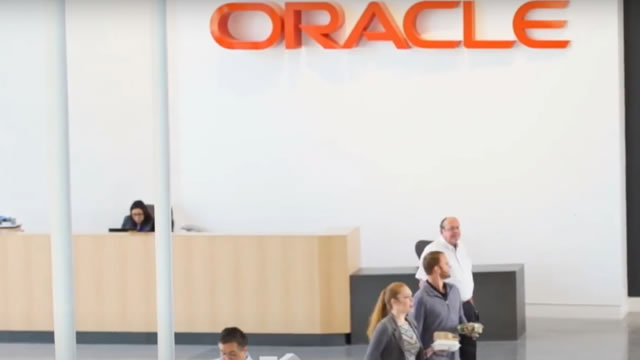
Core Viewpoint - Oracle's $10 billion data center project in Michigan has lost funding support from Blue Owl Capital, raising concerns about the AI bubble and leading to a nearly 45% drop in Oracle's stock price since its peak in early September [1][2]. Group 1: Project Financing and Market Reaction - The withdrawal of Blue Owl Capital is seen as a significant setback for Oracle, with the news amplifying market fears regarding the sustainability of AI investments [2][15]. - Oracle's stock price surged from approximately $122 on April 21 to over $320 in early September, but has since retraced all gains as investors shift focus from growth narratives to the costs of realizing those promises [8][9]. - Concerns have emerged regarding the reliability of OpenAI's commitments to Oracle, with analysts questioning whether OpenAI will fulfill its $300 billion power purchase agreement [17][18]. Group 2: Financial Performance and Analyst Concerns - Jim Chanos, a prominent short-seller, criticized Oracle's rapid asset expansion, indicating that the company's return on new capital investments is only about 8.5%, compared to Microsoft's nearly 40% [11]. - Analysts have pressed Oracle's management for clarity on AI investment costs, but the company has not provided definitive answers, leading to further skepticism [12]. - The market is reevaluating which companies can sustain prolonged delays in returns, especially as Oracle's traditional cash flow model is disrupted by heavy AI investments [22]. Group 3: Competitive Landscape and Strategic Positioning - OpenAI's partnerships with Microsoft and Amazon indicate a diversification of its computing resources, potentially diminishing Oracle's role in OpenAI's ecosystem [19]. - The competitive landscape is shifting, with Google and other well-capitalized firms accelerating their AI initiatives, raising questions about OpenAI's ability to maintain its lead [20]. - Oracle's heavy investment in AI infrastructure contrasts with its previous reliance on predictable cash flows from traditional software, making it more vulnerable to market fluctuations [22].
TikTok agrees to deal to cede control of U.S. business to American investor group
TechCrunch· 2025-12-19 00:56
Core Insights - TikTok has reached an agreement to transfer a significant portion of its U.S. operations to a group of American investors, concluding a prolonged conflict with the federal government [1][5] Group 1: Deal Structure - The new partnership is termed "TikTok USDS Joint Venture LLC," with major American investors including Oracle, Silverlake, and MGX, who will collectively own 45% of the U.S. operations [2] - ByteDance will retain a nearly 20% share in the new entity, which will manage the app's operations, including data protection and content moderation [2] - Oracle has been designated as the trusted security partner responsible for auditing compliance with national security terms upon completion of the transaction [2] Group 2: Timeline and Background - The deal is set to close on January 22, 2026 [3] - The arrangement reflects language from a previous executive order by President Trump, which also aimed to transfer TikTok's U.S. operations to American investors [4] - The U.S. government has consistently pushed for the separation of TikTok's U.S. business from its Chinese parent company, citing national security concerns [5]
Today was a reminder the market can still rally without tech, says Jim Cramer
Youtube· 2025-12-19 00:41
Consumer Spending and Market Dynamics - The recent consumer spending data indicates a potential beginning of a Santa Claus rally, with the Dow advancing 66 points and the NASDAQ surging 1.38% [2] - Consumer spending, which constitutes two-thirds of the economy, has shown signs of improvement, particularly as inflation rates decline [4][8] - Retail performance has been mixed, with Walmart performing well due to its strategy of keeping prices low, while other retailers like Nike are struggling [3][11] Inflation Trends - The core Consumer Price Index (CPI) has fallen to a four-year low, suggesting that inflation may have peaked and is starting to decline positively [8][9] - Various costs, including gasoline and used car prices, are decreasing, which could enhance consumer spending power [9][10] - Home prices are also reportedly coming down, with some average selling prices now below 2019 levels [10] Technology Sector Insights - The technology sector has faced skepticism regarding unlimited data spending, particularly with Oracle raising $18 billion for data center buildouts [5][6] - OpenAI is attempting to raise $100 billion at an increased valuation of $830 billion, which could support aggressive data center expansion and positively impact stocks like Nvidia and Broadcom [6][7] - The market has shown a broadening rally beyond tech, with significant gains in financials and autos, indicating a shift in investor sentiment [16][22] Retail Sector Performance - Retail stocks have seen positive movements, with companies like Darden, Texas Roadhouse, and Target reporting gains [12] - Amazon's e-commerce platform remains a significant contributor to its overall performance, despite the focus on Amazon Web Services [13] - The overall retail sector is poised for growth, coinciding with the holiday season and improving consumer sentiment [16]