PDD(PDD)
Search documents
PDD Holdings Files Annual Report on Form 20-F for Fiscal Year 2024
Globenewswire· 2025-04-28 21:13
Core Viewpoint - PDD Holdings Inc. has filed its annual report on Form 20-F for the fiscal year ended December 31, 2024, with the SEC, which is accessible on its investor relations website and the SEC's website [1] Group 1 - The annual report includes audited consolidated financial statements and is available free of charge to shareholders upon request [2] - PDD Holdings is a multinational commerce group that operates a portfolio of businesses aimed at integrating more businesses and individuals into the digital economy [3]
PDD(PDD) - 2024 Q4 - Annual Report
2025-04-28 21:01
[Company Overview and Corporate Structure](index=6&type=section&id=Item%203.%20Key%20Information) PDD Holdings is a multinational commerce group operating Pinduoduo in China and Temu globally, with primary revenue from online marketing and transaction services [Company Profile and Business Model](index=6&type=section&id=Our%20Company) PDD Holdings operates the Pinduoduo and Temu platforms, generating revenue primarily from online marketing and transaction services for third-party merchants - PDD Holdings is a multinational commerce group that owns and operates a portfolio of businesses, including the Pinduoduo and Temu platforms[24](index=24&type=chunk) - The Pinduoduo platform, known for its "team purchase" model, offers a wide range of merchandise and focuses on digital inclusion for agriculture[25](index=25&type=chunk)[26](index=26&type=chunk) - Temu, launched in September 2022, is a global online platform serving consumers in numerous countries by providing quality products at attractive prices[27](index=27&type=chunk) - Revenues primarily consist of transaction services and online marketing services provided to third-party merchants. For FY2024, substantially all revenues were derived from merchants in China[29](index=29&type=chunk) [VIE Corporate Structure](index=7&type=section&id=Our%20Holding%20Company%20Structure%20and%20Contractual%20Arrangements%20with%20the%20VIE) PDD Holdings operates parts of its business in mainland China through a Variable Interest Entity (VIE), Hangzhou Aimi, due to PRC restrictions on foreign investment in value-added telecommunications services - The company uses a VIE structure to operate in mainland China's restricted sectors. ADS holders do not have direct equity in the VIE, Hangzhou Aimi, but in the Cayman Islands holding company[33](index=33&type=chunk)[34](index=34&type=chunk) - Control over the VIE is established through contractual arrangements, including a shareholders' voting rights proxy, equity pledge, and exclusive option agreements[36](index=36&type=chunk)[37](index=37&type=chunk)[40](index=40&type=chunk) VIE Revenue Contribution Trend | Year | Revenue Contribution from VIE | | :--- | :--- | | 2022 | 56.2% | | 2023 | 45.7% | | 2024 | 22.5% | Condensed Financial Data for VIE and Subsidiaries (FY 2024) | Metric (FY 2024) | Amount (RMB in thousands) | | :--- | :--- | | **Revenues** | 121,108,780 | | **Net Income** | 22,921,391 | | **Total Assets (as of Dec 31, 2024)** | 217,009,461 | | **Total Liabilities (as of Dec 31, 2024)** | 124,142,846 | | **Net Cash from Operating Activities** | 15,819,139 | [Risk Factors](index=26&type=section&id=Item%203.%20Key%20Information%E2%80%94D.%20Risk%20Factors) The company faces significant risks across its business, corporate structure, multi-jurisdictional operations, and doing business in China, alongside specific risks related to its ADSs [Risks Related to Business and Industry](index=28&type=section&id=Risks%20Related%20to%20Our%20Business%20and%20Industry) The company faces intense competition, reliance on third-party logistics, brand reputation challenges due to counterfeit products, and complex, evolving global data privacy and consumer protection laws - The company faces intense competition from major e-commerce operators, traditional retailers, and other internet companies which may have greater resources[86](index=86&type=chunk) - The business is subject to complex and evolving data privacy and protection laws in all regions of operation, including China's PIPL, the EU's GDPR, and U.S. state laws like CCPA, which can result in significant compliance costs and penalties[87](index=87&type=chunk)[93](index=93&type=chunk)[95](index=95&type=chunk) - The company may incur liability for counterfeit, unauthorized, or illegal products sold on its platforms. The U.S. Trade Representative (USTR) has identified the Pinduoduo platform as a "notorious market" since 2019, which could damage its reputation[80](index=80&type=chunk)[100](index=100&type=chunk)[102](index=102&type=chunk) - The company is subject to consumer protection laws and has faced regulatory scrutiny. In March 2021, the operator of the Pinduoduo platform was fined **RMB1.5 million** by the SAMR for unfair pricing conduct[110](index=110&type=chunk)[113](index=113&type=chunk) [Risks Related to Corporate Structure](index=70&type=section&id=Risks%20Related%20to%20Our%20Corporate%20Structure) The company's reliance on a VIE structure for its China operations presents significant risks due to uncertain enforceability of contractual arrangements and potential government non-compliance penalties - If the PRC government finds the VIE structure non-compliant with regulations, the company could be subject to severe penalties, be forced to relinquish its interests in its China operations, and its ADSs could decline in value or become worthless[207](index=207&type=chunk)[211](index=211&type=chunk)[215](index=215&type=chunk) - The VIE and its subsidiaries contributed **22.5%** of consolidated total revenues in 2024. Control is based on contractual arrangements, which may not be as effective as direct ownership and face enforcement uncertainties in PRC courts[209](index=209&type=chunk)[221](index=221&type=chunk)[222](index=222&type=chunk) - The legal shareholders of the VIE, Mr. Lei Chen and Mr. Jiazhen Zhao, are company employees, which may lead to potential conflicts of interest that could adversely affect the business[226](index=226&type=chunk) [Risks Related to Multi-jurisdictional Operations](index=78&type=section&id=Risks%20Related%20to%20Our%20Multi-jurisdictional%20Operations) Global expansion through Temu exposes the company to geopolitical tensions, varied local laws, trade policy changes, and increased regulatory scrutiny, including potential elimination of the U.S. de minimis import exemption - Global operations are subject to risks from international geopolitical tensions, diverse local laws (trade, data privacy, consumer protection), currency fluctuations, and challenges in managing a global business[233](index=233&type=chunk)[234](index=234&type=chunk) - Changes in international trade policies, such as increased tariffs, could adversely impact business. Notably, the U.S. government adopted a new tariff structure in April 2025, and the de minimis exemption for imports from China and Hong Kong will be eliminated effective May 2, 2025[237](index=237&type=chunk)[239](index=239&type=chunk) - The company faces heightened regulatory scrutiny in multiple jurisdictions. The European Commission initiated a formal investigation into Temu under the Digital Services Act in October 2024, and the platform faces inquiries related to the UFLPA in the U.S.[240](index=240&type=chunk)[250](index=250&type=chunk) - Operations of the Temu platform were temporarily suspended in Vietnam (December 2024) and Uzbekistan (March 2025) pending completion of local registrations[197](index=197&type=chunk)[251](index=251&type=chunk) [Risks Related to Doing Business in China](index=89&type=section&id=Risks%20Related%20to%20Doing%20Business%20in%20China) Operating in China exposes the company to significant political, economic, and social uncertainties, evolving regulatory oversight, and restrictions on currency conversion and capital flows - The business is subject to significant oversight and discretion from the PRC government, which could result in material changes to operations and ADS value[273](index=273&type=chunk) - PRC regulations on currency conversion and capital flows may limit the ability of China subsidiaries to pay dividends or make other payments to the holding company, affecting overall liquidity[277](index=277&type=chunk)[283](index=283&type=chunk)[285](index=285&type=chunk) - Future offerings are subject to filing with the CSRC under the Filing Measures effective March 31, 2023. Failure to comply could result in penalties and restrictions[302](index=302&type=chunk)[474](index=474&type=chunk) - The PCAOB's ability to inspect the company's China-based auditor is crucial. While access was restored in late 2022, any future inability to inspect for two consecutive years could lead to a trading prohibition of the ADSs in the U.S. under the HFCA Act[304](index=304&type=chunk)[305](index=305&type=chunk)[307](index=307&type=chunk) [Risks Related to ADSs](index=107&type=section&id=Risks%20Related%20to%20Our%20ADSs) Investing in the company's ADSs involves risks such as high price volatility, potential dilution, lack of expected dividends, and less shareholder protection due to Cayman Islands incorporation and specific deposit agreement provisions - The trading price of the ADSs may be highly volatile due to market and industry factors, as well as company-specific announcements and performance[309](index=309&type=chunk) - The company does not expect to pay dividends in the foreseeable future, so investors must rely on price appreciation of the ADSs for a return on investment[319](index=319&type=chunk)[689](index=689&type=chunk) - As a Cayman Islands company, PDD is permitted to follow home country corporate governance practices, which may differ from Nasdaq standards and offer less protection to shareholders[335](index=335&type=chunk)[799](index=799&type=chunk) - The deposit agreements for the ADSs include a provision where holders waive the right to a jury trial for claims arising from the agreements, which could limit legal recourse[326](index=326&type=chunk) [Business and Operations](index=115&type=section&id=Item%204.%20Information%20on%20the%20Company) PDD Holdings operates Pinduoduo and Temu, focusing on a virtuous cycle of buyers and merchants, with revenue from online marketing and transaction services, emphasizing trust, technology, and social responsibility [Business Overview](index=117&type=section&id=B.%20Business%20Overview) PDD Holdings operates Pinduoduo, a social commerce platform in China, and Temu, a global e-commerce marketplace, generating revenue from online marketing and transaction services while prioritizing trust, technology, and agricultural initiatives - The Pinduoduo platform pioneered an innovative "team purchase" model, encouraging social sharing to achieve more attractive prices, fostering a highly engaged user base[354](index=354&type=chunk) - The Temu platform, launched in September 2022, has expanded globally to major economies including the U.S., Japan, and Germany, aiming to provide quality products at attractive prices[358](index=358&type=chunk) - The company implements strict trust and safety measures, including merchant identity verification and an AI-based screening system to identify and review questionable merchandise[364](index=364&type=chunk)[365](index=365&type=chunk) - A key corporate social responsibility focus is agriculture. The "10 Billion Agriculture Initiative" was launched in August 2021 to facilitate agri-tech advancement and promote digital inclusion for farmers[372](index=372&type=chunk) - As of December 31, 2024, the company had a technology team of more than **8,900 engineers**, reflecting a strong investment in R&D[376](index=376&type=chunk) [Regulatory Environment](index=123&type=section&id=Regulations) The company's global operations are subject to a complex and evolving regulatory landscape, including strict PRC laws on foreign investment, data security, anti-monopoly, and overseas listings, as well as international consumer protection and data privacy regulations - In China, foreign investment in value-added telecommunications services is restricted, necessitating the use of the VIE structure to operate platforms like Pinduoduo[387](index=387&type=chunk)[388](index=388&type=chunk) - The company is subject to extensive PRC laws on data security and privacy, including the Cybersecurity Law, the Data Security Law, and the Personal Information Protection Law (PIPL), which impose strict obligations on data handling and cross-border transfers[414](index=414&type=chunk)[417](index=417&type=chunk)[424](index=424&type=chunk) - The company is subject to anti-monopoly and anti-unfair competition laws in China, with guidelines specifically targeting the platform economy, prohibiting practices like coercive exclusivity and discriminatory pricing[437](index=437&type=chunk) - For overseas listings and offerings, the company must comply with the CSRC's Filing Measures, which took effect on March 31, 2023, requiring filing for any follow-on offerings[474](index=474&type=chunk) - Internationally, the company must adhere to regulations like the EU's Digital Services Act (DSA), under which Temu was designated a Very Large Online Platform, and various U.S. consumer protection and data privacy laws[478](index=478&type=chunk)[479](index=479&type=chunk) [Organizational and VIE Structure Details](index=155&type=section&id=C.%20Organizational%20Structure) PDD Holdings Inc., a Cayman Islands holding company, conducts its China business through a VIE, Hangzhou Aimi, legally owned by two PRC individuals who are company employees, with control maintained via contractual arrangements deemed valid by PRC legal counsel - The company's VIE, Hangzhou Aimi, is legally owned by Mr. Lei Chen (**86.6%**) and Mr. Jiazhen Zhao (**13.4%**), who are employees of the company[484](index=484&type=chunk) - A series of contractual arrangements, including a Shareholders' Voting Rights Proxy Agreement, Equity Pledge Agreement, and Exclusive Option Agreement, grant the company effective control over the VIE[486](index=486&type=chunk)[487](index=487&type=chunk)[488](index=488&type=chunk)[491](index=491&type=chunk) - The company's PRC legal counsel, King & Wood Mallesons, is of the opinion that the VIE structure and contractual arrangements are valid and enforceable under current PRC law, but acknowledges that uncertainties remain regarding interpretation and application[492](index=492&type=chunk)[493](index=493&type=chunk) [Operating and Financial Review](index=157&type=section&id=Item%205.%20Operating%20and%20Financial%20Review%20and%20Prospects) The company achieved significant revenue and net income growth in FY2024, driven by strong performance in online marketing and transaction services, despite substantial increases in operating expenses [Results of Operations](index=159&type=section&id=A.%20Operating%20Results) The company experienced substantial growth in FY2024, with total revenues increasing by **59.0%** to **RMB 393.8 billion** and net income surging by **87.3%** to **RMB 112.4 billion**, primarily driven by transaction services and increased user engagement Consolidated Statements of Comprehensive Income (2022-2024) | (RMB in thousands) | 2022 | 2023 | 2024 | | :--- | :--- | :--- | :--- | | **Total revenues** | 130,557,589 | 247,639,205 | 393,836,097 | | *Online marketing services and others* | 102,931,095 | 153,540,553 | 197,934,192 | | *Transaction services* | 27,626,494 | 94,098,652 | 195,901,905 | | **Operating profit** | 30,401,921 | 58,698,762 | 108,422,862 | | **Net income** | 31,538,062 | 60,026,544 | 112,434,512 | - In 2024, revenues from transaction services grew significantly to **RMB 195.9 billion** from **RMB 94.1 billion** in 2023, primarily due to an increase in the number of active merchants (from **14.2 million** to **15.8 million**) and higher average transaction services revenue per merchant[528](index=528&type=chunk) - Sales and marketing expenses increased to **RMB 111.3 billion** in 2024 from **RMB 82.2 billion** in 2023, mainly due to a **RMB 27.9 billion** increase in advertising, promotion, and coupon expenses to drive user growth and engagement[531](index=531&type=chunk) [Liquidity and Capital Resources](index=175&type=section&id=B.%20Liquidity%20and%20Capital%20Resources) The company maintains a strong liquidity position with **RMB 121.9 billion** in operating cash flow in 2024 and **RMB 331.6 billion** in cash and short-term investments, though a significant portion of cash is held in China subject to currency controls Summary Consolidated Cash Flow Data (2022-2024) | (RMB in thousands) | 2022 | 2023 | 2024 | | :--- | :--- | :--- | :--- | | **Net cash generated from operating activities** | 48,507,860 | 94,162,531 | 121,929,292 | | **Net cash used in investing activities** | (22,361,670) | (55,431,278) | (118,356,036) | | **Net cash generated from/(used in) financing activities** | 10,079 | (8,960,626) | 1,164 | - As of December 31, 2024, the company held **RMB 57.8 billion** in cash and cash equivalents and **RMB 273.8 billion** in short-term investments[566](index=566&type=chunk)[924](index=924&type=chunk) - A total of **RMB 172.2 billion** in cash, cash equivalents, restricted cash, and short-term investments is held in China. Access to these funds is subject to PRC regulations on currency conversion and capital flows[569](index=569&type=chunk) - Material cash requirements as of Dec 31, 2024 include **RMB 5.3 billion** for convertible bonds, **RMB 5.6 billion** for operating lease commitments, and **RMB 967.1 million** in capital expenditures for 2024[578](index=578&type=chunk)[579](index=579&type=chunk)[580](index=580&type=chunk)[581](index=581&type=chunk) [Critical Accounting Policies and Estimates](index=171&type=section&id=E.%20Critical%20Accounting%20Estimates) The company's financial reporting relies on critical accounting estimates, particularly for revenue recognition, classification of consumer incentives, valuation of share-based compensation, and income tax judgments - Revenue Recognition: The company recognizes revenue from online marketing services based on impressions or clicks, and from transaction services when the service obligation to merchants is completed[557](index=557&type=chunk)[558](index=558&type=chunk)[560](index=560&type=chunk) - Incentives to Consumers: The company exercises judgment in classifying incentives like coupons and credits. If they are not considered payments to merchant-customers, they are recorded as "sales and marketing expenses"[561](index=561&type=chunk)[562](index=562&type=chunk)[898](index=898&type=chunk) - Share-Based Compensation: The company uses a binomial-lattice model to value options and considers a three-year post-vesting lock-up period as an implicit service period, extending the total vesting term to seven years for certain grants[907](index=907&type=chunk)[967](index=967&type=chunk) - Income Taxes: The company must make judgments regarding the realization of deferred tax assets and potential unrecognized tax benefits[563](index=563&type=chunk)[905](index=905&type=chunk) [Corporate Governance and Management](index=181&type=section&id=Item%206.%20Directors%2C%20Senior%20Management%20and%20Employees) The company's leadership includes co-CEOs Lei Chen and Jiazhen Zhao, supported by a six-member board with independent directors, and a growing employee base, all operating under established governance practices [Directors and Senior Management](index=181&type=section&id=A.%20Directors%20and%20Senior%20Management) The company is led by Chairman and Co-CEO Lei Chen and Director and Co-CEO Jiazhen Zhao, with a six-member board including three independent directors bringing diverse expertise Board of Directors and Executive Officers | Name | Age | Position/Title | | :--- | :--- | :--- | | Lei Chen | 45 | Chairman of the Board of Directors and Co-Chief Executive Officer | | Jiazhen Zhao | 41 | Director and Co-Chief Executive Officer | | Anthony Kam Ping Leung | 64 | Independent Director | | Haifeng Lin | 48 | Director | | Ivonne M.C.M. Rietjens | 66 | Independent Director | | George Yong-Boon Yeo | 70 | Independent Director | | Jun Liu | 42 | Vice President of Finance | | Junyun Xiao | 45 | Senior Vice President of Operation | | Zhenwei Zheng | 41 | Senior Vice President of Product Development | [Compensation and Share Incentive Plans](index=187&type=section&id=B.%20Compensation) In fiscal year 2024, the company paid **US$2.3 million** in cash compensation to directors and executive officers and utilizes two share incentive plans with a significant number of outstanding equity awards - In the year ended December 31, 2024, the company paid an aggregate of **US$2.3 million** in cash to its directors and executive officers[611](index=611&type=chunk) - The company has two main equity incentive schemes: the 2015 Global Share Plan and the 2018 Share Incentive Plan[187](index=187&type=chunk)[625](index=625&type=chunk) Outstanding Equity Awards as of Dec 31, 2024 | Plan | Award Type | Outstanding | | :--- | :--- | :--- | | 2015 Plan | Options | 149,720,108 | | 2018 Plan | Options | 240,702,416 | | 2018 Plan | RSUs | 67,741,348 | [Board Practices and PDD Partnership](index=193&type=section&id=C.%20Board%20Practices) The Board of Directors, comprising six members, operates through three independent committees, while the PDD Partnership, once established, will gain the right to nominate executive directors and the CEO, ensuring long-term governance stability - The board has three committees: Audit, Compensation, and Nominating and Corporate Governance. Each committee has independent directors as members, with Mr. Anthony Kam Ping Leung chairing the Audit and Compensation committees, and Mr. George Yong-Boon Yeo chairing the Nominating committee[638](index=638&type=chunk)[639](index=639&type=chunk)[640](index=640&type=chunk)[641](index=641&type=chunk) - The PDD Partnership, once it consists of at least five partners, will have the right to nominate executive directors and the company's CEO candidate, a key governance feature[590](index=590&type=chunk)[594](index=594&type=chunk)[595](index=595&type=chunk)[596](index=596&type=chunk) - Directors owe fiduciary duties to the company under Cayman Islands law, which includes acting honestly and in good faith in the company's best interests[646](index=646&type=chunk) [Employees](index=198&type=section&id=D.%20Employees) As of December 31, 2024, the company had **23,465** employees, a significant increase from the previous year, with the largest functions being Sales, marketing and fulfillment, and Product development Employee Headcount by Function (as of Dec 31, 2024) | Function | Number of Employees | | :--- | :--- | | Sales, marketing and fulfillment | 11,206 | | Product development | 8,980 | | Platform operation | 1,278 | | Management and administration | 2,001 | | **Total** | **23,465** | - Total employee count grew from **17,403** at the end of 2023 to **23,465** at the end of 2024[650](index=650&type=chunk) [Shareholder and Related Party Information](index=201&type=section&id=Item%207.%20Major%20Shareholders%20and%20Related%20Party%20Transactions) The company's major shareholders include entities affiliated with its founder and Tencent, with a significant portion of shares held by its ADS depositary, and it engages in material related party transactions, notably with Tencent and a payment service provider [Major Shareholders](index=198&type=section&id=A.%20Major%20Shareholders) As of March 31, 2025, major shareholders include entities affiliated with founder Mr. Zheng Huang (**24.8%**), Tencent (**13.8%**), and the PDD Partnership (**6.5%**), with **54.5%** of shares held by the U.S. ADS depositary Principal Shareholders (as of March 31, 2025) | Shareholder | Ownership Percentage | | :--- | :--- | | Entities affiliated with Zheng Huang | 24.8% | | Entities affiliated with Tencent | 13.8% | | Entities affiliated with PDD Partnership | 6.5% | - As of March 31, 2025, Deutsche Bank Trust Company Americas, the ADS depositary, held **54.5%** of the company's total outstanding shares on behalf of ADS holders[659](index=659&type=chunk) [Related Party Transactions](index=201&type=section&id=B.%20Related%20Party%20Transactions) The company engages in significant related party transactions, including a strategic cooperation agreement with Tencent for services totaling **RMB 6.8 billion** in 2024, and facilitated the acquisition of a payment service provider by executive officers through an interest-free loan - The company has a strategic cooperation agreement with Tencent, a principal shareholder, for services including payment solutions, cloud services, and user engagement. In 2024, purchases from Tencent totaled **RMB 6.8 billion**[665](index=665&type=chunk)[666](index=666&type=chunk) - The company provided an interest-free loan of **RMB 710.6 million** to an entity controlled by executive officers Mr. Lei Chen and Mr. Zhenwei Zheng to acquire a controlling interest in Shanghai Fufeitong, a licensed payment service provider[668](index=668&type=chunk)[669](index=669&type=chunk) - Shanghai Xunmeng (a VIE subsidiary) has a business cooperation agreement with Shanghai Fufeitong for payment services and technical resources[671](index=671&type=chunk) [Legal Proceedings and Dividend Policy](index=203&type=section&id=Item%208.%20Financial%20Information) The company is involved in numerous global legal and regulatory proceedings, including investigations into Temu's compliance and a securities class action, and currently has no plans to pay cash dividends, intending to retain earnings for business expansion [Legal Proceedings](index=203&type=section&id=A.%20Consolidated%20Statements%20and%20Other%20Financial%20Information) The company is involved in various legal and regulatory proceedings globally, including a lawsuit by the Arkansas Attorney General, investigations by the European Commission and CPC Network regarding Temu's compliance, temporary operational suspensions in Vietnam and Uzbekistan, a consolidated securities class action, and litigation with competitor SHEIN - In October 2024, the European Commission initiated a formal investigation into the Temu platform for potential violations of the Digital Services Act (DSA)[678](index=678&type=chunk)[197](index=197&type=chunk) - A consolidated putative securities class action was filed against the company and several officers in 2024, alleging false and misleading statements concerning data security and compliance with the Uyghur Forced Labor Prevention Act (UFLPA)[683](index=683&type=chunk)[199](index=199&type=chunk) - The Temu platform's operations were temporarily suspended in Vietnam (Dec 2024) and Uzbekistan (Mar 2025) due to local registration and tax compliance matters[680](index=680&type=chunk)[197](index=197&type=chunk) - The company is engaged in mutual lawsuits with competitor SHEIN in U.S. court, with claims including intellectual property infringement and unfair competition[684](index=684&type=chunk)[199](index=199&type=chunk) [Dividend Policy](index=207&type=section&id=Dividend%20Policy) The company has no present plan to pay cash dividends, intending to retain all available funds and future earnings for business operations and expansion, with any future distributions subject to board discretion and PRC regulations on fund transfers - The company does not have any present plan to pay cash dividends and intends to retain earnings for business operations and expansion[689](index=689&type=chunk) - As a holding company, its ability to pay dividends depends on distributions from its subsidiaries, which are subject to PRC regulations restricting the payment of dividends[690](index=690&type=chunk) [Additional Information](index=209&type=section&id=Item%2010.%20Additional%20Information) The company's corporate structure includes a dual-class share system with anti-takeover provisions, and its taxation is influenced by its Cayman Islands incorporation and the potential for PRC resident enterprise classification, which could impact U.S. tax implications [Memorandum and Articles of Association](index=209&type=section&id=B.%20Memorandum%20and%20Articles%20of%20Association) The company operates with a dual-class share structure, where Class B shares carry ten votes and convert to Class A upon transfer, and its articles include anti-takeover provisions, while as a Cayman Islands company, it is not obligated to hold annual general meetings - The company has a dual-class share structure: Class A ordinary shares (1 vote each) and Class B ordinary shares (10 votes each)[699](index=699&type=chunk) - Class B shares are convertible into Class A shares at any time by the holder. They automatically convert to Class A shares if transferred to a person not affiliated with Mr. Zheng Huang[700](index=700&type=chunk) - The articles include anti-takeover provisions, allowing the board to issue preference shares without further shareholder vote[321](index=321&type=chunk)[721](index=721&type=chunk) [Taxation](index=216&type=section&id=E.%20Taxation) The company, incorporated in the Cayman Islands, is not subject to local income tax, but its PRC subsidiaries face a 25% enterprise income tax (with some at a preferential 15% rate), and there is a risk of being classified as a PRC resident enterprise or a U.S. Passive Foreign Investment Company (PFIC) - The company is a Cayman Islands exempted company and is not subject to Cayman Islands income or capital gains tax[728](index=728&type=chunk) - PRC subsidiaries are generally subject to a **25%** enterprise income tax. Certain subsidiaries, like Shanghai Xunmeng, are recognized as "high and new technology enterprises" and are eligible for a reduced **15%** rate until 2026[519](index=519&type=chunk)[979](index=979&type=chunk) - There is a risk of being classified as a PRC resident enterprise if the "de facto management body" is deemed to be in China, which would subject the company's global income to a **25%** PRC tax[295](index=295&type=chunk)[731](index=731&type=chunk) - For U.S. federal income tax purposes, the company does not believe it was a Passive Foreign Investment Company (PFIC) for 2024, but its status is a factual determination made annually and could change, which would have adverse tax consequences for U.S. holders[336](index=336&type=chunk)[741](index=741&type=chunk) [Market Risk Disclosures](index=228&type=section&id=Item%2011.%20Quantitative%20and%20Qualitative%20Disclosures%20about%20Market%20Risk) The company is exposed to significant foreign exchange risk due to its RMB-denominated operations and USD-denominated ADSs, as well as interest rate risk from its cash and debt investments, without the use of derivative instruments for hedging [Market Risk Analysis](index=228&type=section&id=Foreign%20exchange%20risk) The company faces substantial foreign exchange risk from RMB fluctuations against other currencies, impacting financial results, and interest rate risk primarily from its cash and debt investments, without employing derivatives for hedging - The company faces significant foreign exchange risk as a majority of its revenues and expenses are denominated in RMB, while its ADSs are traded in USD. Fluctuations in the RMB against the USD and other currencies can materially affect financial results[766](index=766&type=chunk)[769](index=769&type=chunk) - Interest rate risk primarily relates to interest income generated from cash, cash equivalents, and debt securities. The company has not used derivatives to manage this exposure[770](index=770&type=chunk) [Controls and Procedures](index=231&type=section&id=Item%2015.%20Controls%20and%20Procedures) As of December 31, 2024, management concluded that the company's disclosure controls and internal control over financial reporting were effective, a conclusion affirmed by the independent auditor [Internal Controls and Procedures](index=231&type=section&id=Management%27s%20Annual%20Report%20on%20Internal%20Control%20over%20Financial%20Reporting) Management concluded that the company's disclosure controls and internal control over financial reporting were effective as of December 31, 2024, a finding corroborated by an unqualified opinion from the independent registered public accounting firm - Management concluded that as of December 31, 2024, the company's disclosure controls and procedures were effective[785](index=785&type=chunk) - Based on the COSO 2013 framework, management concluded that the company's internal control over financial reporting was effective as of December 31, 2024[786](index=786&type=chunk) - The independent auditor, Ernst & Young Hua Ming LLP, audited and issued an unqualified opinion on the effectiveness of the company's internal control over financial reporting as of December 31, 2024[788](index=788&type=chunk)[833](index=833&type=chunk) [Financial Statements and Auditor's Report](index=236&type=section&id=Item%2017.%20Financial%20Statements) The company's consolidated financial statements for the three years ended December 31, 2024, received an unqualified opinion from Ernst & Young Hua Ming LLP, with a critical audit matter identified regarding the classification of consumer incentives [Auditor's Report and Critical Audit Matters](index=241&type=section&id=REPORT%20OF%20INDEPENDENT%20REGISTERED%20PUBLIC%20ACCOUNTING%20FIRM) Ernst & Young Hua Ming LLP issued an unqualified opinion on the company's consolidated financial statements and internal control over financial reporting, highlighting the classification of consumer incentives as a critical audit matter due to significant management judgment - Ernst & Young Hua Ming LLP issued an unqualified opinion on the consolidated financial statements and the company's internal control over financial reporting as of December 31, 2024[823](index=823&type=chunk)[833](index=833&type=chunk) - A Critical Audit Matter was identified relating to the classification of incentives provided to consumers. Auditing this area was complex due to the judgment required to determine if incentives represent implicit obligations to consumers on behalf of merchants, which affects whether they are treated as a reduction of revenue or as marketing expenses[827](index=827&type=chunk)[828](index=828&type=chunk) [Consolidated Financial Statements](index=245&type=section&id=Consolidated%20Financial%20Statements) As of December 31, 2024, PDD Holdings reported total assets of **RMB 505.0 billion**, total liabilities of **RMB 191.7 billion**, and shareholders' equity of **RMB 313.3 billion**, with **RMB 393.8 billion** in total revenues and **RMB 112.4 billion** in net income for the year Consolidated Balance Sheet Highlights (as of Dec 31, 2024) | (RMB in thousands) | Amount | | :--- | :--- | | **Total Assets** | 505,034,316 | | *Current Assets* | 415,648,232 | | **Total Liabilities** | 191,721,192 | | *Current Liabilities* | 188,422,853 | | **Total Shareholders' Equity** | 313,313,124 | Consolidated Income Statement Highlights (Year ended Dec 31, 2024) | (RMB in thousands) | Amount | | :--- | :--- | | **Total Revenues** | 393,836,097 | | **Operating Profit** | 108,422,862 | | **Net Income** | 112,434,512 | Consolidated Cash Flow Highlights (Year ended Dec 31, 2024) | (RMB in thousands) | Amount | | :--- | :--- | | **Net cash from operating activities** | 121,929,292 | | **Net cash used in investing activities** | (118,356,036) | | **Net cash from financing activities** | 1,164 |
Shein, Temu respond to US tariffs with sharp price increases
Proactiveinvestors NA· 2025-04-28 19:25
Group 1 - Proactive provides fast, accessible, informative, and actionable business and finance news content to a global investment audience [2] - The news team covers medium and small-cap markets, as well as blue-chip companies, commodities, and broader investment stories [3] - Proactive's content includes insights across various sectors such as biotech, pharma, mining, natural resources, battery metals, oil and gas, crypto, and emerging technologies [3] Group 2 - Proactive is committed to adopting technology to enhance workflows and content production [4] - The company utilizes automation and software tools, including generative AI, while ensuring all content is edited and authored by humans [5]
Temu adds ‘import charges' after Trump tariffs
TechCrunch· 2025-04-28 18:18
Group 1 - Temu is implementing import charges of approximately 145% due to President Trump's tariffs on goods from China [1][2] - The import fees are exceeding the cost of products, with some prices more than doubling; for instance, a summer dress priced at $18.47 will cost $44.68 after adding $26.21 in import charges [1] - Shein has also increased prices but is not applying an import charge, indicating a different pricing strategy [1] Group 2 - The price hikes for U.S. customers were announced by Temu and Shein a few weeks prior to April 25, in response to the tariffs [2] - The 145% tariff on Chinese products and the termination of a customs exemption for goods under $800 have significantly disrupted the business models of both Temu and Shein [2]
Shein, Temu Prices Surge as High as 377% Ahead of Tariff Increases
CNET· 2025-04-28 17:58
Core Insights - Recent US tariff changes have led to significant price increases for products sold by Chinese e-commerce companies Temu and Shein, with some items experiencing price hikes of up to 377% [1][2] - The elimination of the "de minimis" exemption, which allowed goods under $800 to enter the US duty-free, has disrupted the business models of fast-fashion retailers, resulting in higher costs for consumers [1][3] Company-Specific Summaries - Shein has implemented notable price adjustments across various categories, with beauty and health products increasing by an average of 51%, home and kitchen goods by 30%, and women's clothing by 8% [2] - Specific examples of price increases include a kitchen towel rising from $1.28 to $6.10 (a 377% increase) and a meat shredder increasing from $2.91 to $9.02 (a 219% increase) [2] - Temu, owned by PDD Holdings, has also raised prices, attributing the increases to higher operating costs resulting from the new tariffs [2] Industry Trends - The changes in tariffs and the removal of the "de minimis" rule are part of a broader trend affecting US shoppers, who are facing rising costs on imported goods [3] - The new tariff environment is expected to continue impacting the pricing strategies of fast-fashion retailers, leading to increased prices for consumers [3]
Temu adds 'import charges' of about 145% after Trump tariffs, more than doubling price of many items
CNBC· 2025-04-28 16:15
Core Viewpoint - Temu, a Chinese e-tailer, has introduced significant import charges of approximately 145% due to new tariffs imposed by President Trump, which could drastically increase the total cost of products for consumers [1][4]. Pricing Impact - The import charges can exceed the price of the products themselves, with examples showing a summer dress priced at $18.47 costing $44.68 after a 142% surcharge, and a child's bathing suit priced at $12.44 costing $31.12 after a 150% fee [2]. - A handheld vacuum cleaner listed at $16.93 now costs $40.11 when factoring in a 137% markup due to import charges [2]. Company Response - Temu has stated that these import charges cover customs-related processes and costs, indicating that the listed amount may not reflect the actual fees paid to customs authorities [3]. - The company acknowledged that recent changes in global trade rules and tariffs have increased its operating expenses, leading to price adjustments starting April 25, 2025 [5]. Competitive Landscape - Rival discount retailer Shein has also raised prices but has not implemented additional import charges, instead including tariffs in the prices displayed at checkout [4]. - Both Temu and Shein had previously warned of price increases following the imposition of a 145% tariff on many imports from China [4]. Market Position - Temu's popularity in the U.S. has surged since its launch in 2022, primarily due to its low prices on various products, which allowed consumers to purchase items without significant financial strain [5][6]. - However, the new import fees may align Temu's prices more closely with U.S. competitors like Amazon, Walmart, and Target, potentially diminishing its competitive edge [6]. Advertising and Market Ranking - Following the announcement of the tariffs, Temu has significantly reduced its online advertising spending in the U.S., resulting in a drop in its app store ranking from the top 10 to No. 73 [7]. - Shein has also experienced a decline in its app store ranking, falling from 15 to 54 [7].
多渠道合力托举、调产品转内销 外贸商家化解关税暴击
Bei Jing Shang Bao· 2025-04-28 13:43
Core Insights - Foreign trade merchants are adjusting their strategies in response to rising tariffs from the U.S., leading to significant inventory pressures and a shift towards domestic sales channels [1][10] - Companies are collaborating with e-commerce platforms and live-streaming agencies to clear inventory and innovate product offerings to meet domestic consumer demands [1][6] Group 1: Impact of U.S. Tariffs - The surge in U.S. tariffs has led to some American clients canceling orders, resulting in significant inventory accumulation for companies, with one merchant reporting nearly 1 million yuan worth of goods stuck in warehouses [3][9] - Companies that previously relied heavily on U.S. markets are now pivoting to domestic e-commerce, with one company noting a shift in sales ratio from 3:7 (domestic to international) to a more balanced approach [4][6] Group 2: E-commerce Platform Support - Major e-commerce platforms like Taotian, 1688, Pinduoduo, and JD.com are offering support to help foreign trade merchants transition to domestic sales, including incentives such as traffic and commission rewards [6][7] - JD.com's Jingxi has launched a plan to support 10,000 foreign trade factories in shifting to domestic sales, emphasizing the importance of keeping production lines operational to avoid significant losses [6][7] Group 3: Product Adaptation and Innovation - Merchants are adapting their product designs to cater to domestic consumer preferences, with one company modifying umbrella designs to appeal to local tastes [4][5] - Companies are also innovating their product lines, such as introducing new types of garbage bags to attract overseas consumers, demonstrating a focus on product differentiation [5][7] Group 4: Challenges in Domestic Market - Despite efforts to enter domestic markets, certain product categories face challenges due to differing consumer preferences, particularly in outdoor goods that may not resonate with local buyers [9][10] - Some merchants are resorting to deep discounts to clear excess inventory, indicating difficulties in transitioning to domestic sales effectively [9][10] Group 5: Future Outlook - Companies are closely monitoring policy changes regarding tariffs, with some expressing a willingness to shift focus back to international markets if tariffs are reduced [8][10] - The impending changes to U.S. customs policies, including increased tariffs on low-value packages, are causing uncertainty and prompting merchants to reconsider their strategies [10]
中证海外中国五年规划指数报1602.09点,前十大权重包含中芯国际等
Jin Rong Jie· 2025-04-28 08:33
Core Viewpoint - The China Overseas Five-Year Plan Index has shown a recent decline of 6.82% over the past month, but has increased by 12.88% over the last three months and 13.97% year-to-date, reflecting the performance of listed companies benefiting from China's Five-Year Plan [1] Group 1: Index Performance - The China Overseas Five-Year Plan Index opened at 1602.09 points and has a base date of June 29, 2007, with a base point of 679.999 [1] - The index has experienced a monthly decline of 6.82%, a three-month increase of 12.88%, and a year-to-date increase of 13.97% [1] Group 2: Index Holdings - The top ten holdings of the index include Alibaba (18.02%), Tencent Holdings (15.72%), Meituan-W (7.17%), Pinduoduo (6.2%), BYD Company (4.45%), JD.com (2.71%), SMIC (2.06%), BeiGene Ltd (1.8%), Xpeng Motors (1.42%), and Kuaishou-W (1.41%) [1] - The index's market distribution shows that 60.71% of holdings are listed on the Hong Kong Stock Exchange, 24.79% on the New York Stock Exchange, and 13.79% on the Nasdaq Global Select Market [2] Group 3: Industry Breakdown - The industry composition of the index indicates that consumer discretionary accounts for 53.46%, communication services for 18.78%, healthcare for 9.63%, and industrials for 7.89% [2] - Other sectors include consumer staples (3.89%), materials (3.60%), information technology (2.49%), and utilities (0.28%) [2] Group 4: Index Adjustment Mechanism - The index samples are adjusted biannually, with adjustments implemented on the next trading day following the second Friday of June and December [3] - Weight factors are generally fixed until the next scheduled adjustment, with special circumstances allowing for temporary adjustments [3]
取消仅退款,有助于提振消费吗?
Hu Xiu· 2025-04-28 03:14
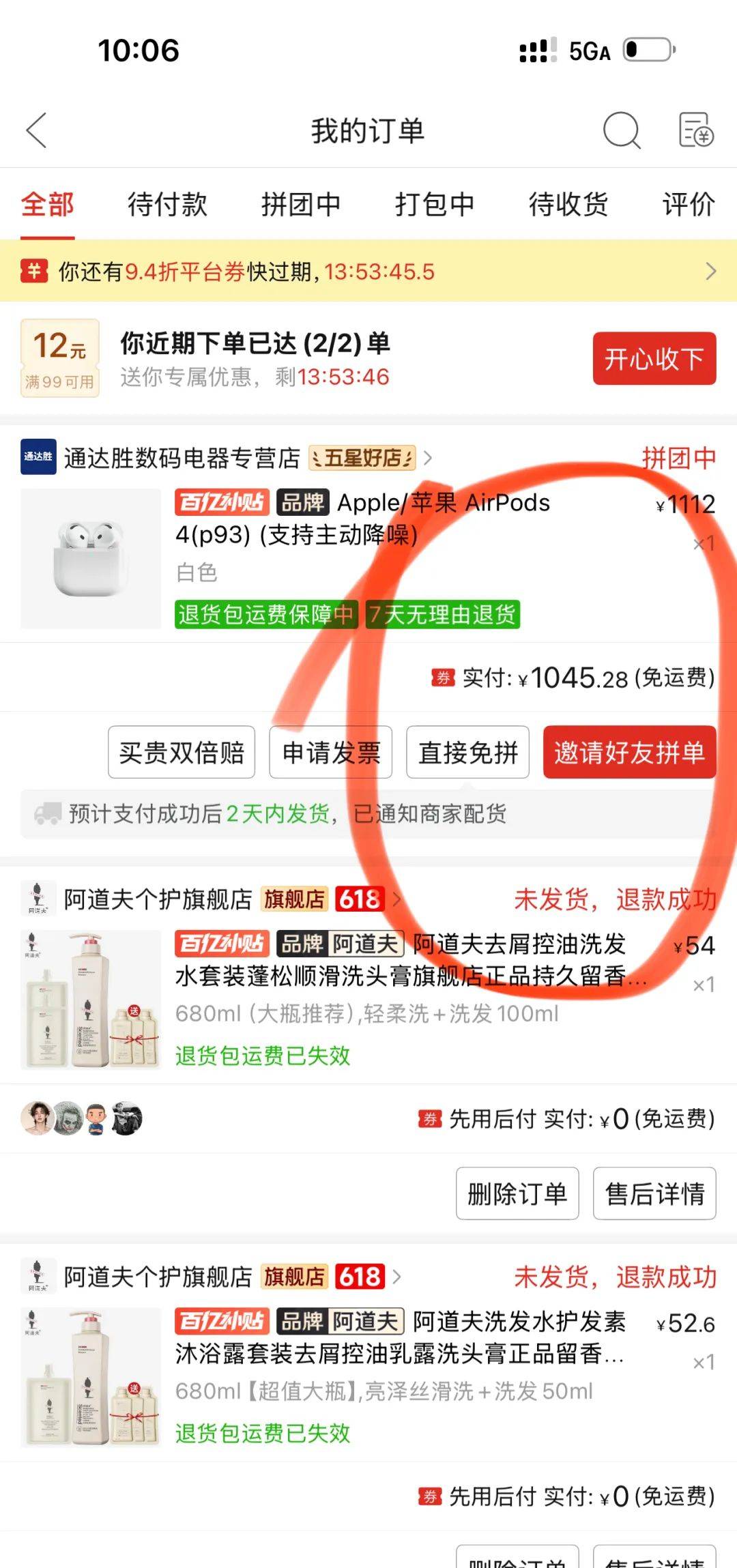
Core Viewpoint - The article discusses the significant shift in China's e-commerce landscape, particularly the potential cancellation of the "return-only refund" policy, which has been a crucial consumer protection mechanism [2][3][4]. Group 1: E-commerce Policy Changes - Major e-commerce platforms such as Pinduoduo, Taobao, Douyin, Kuaishou, and JD.com are set to eliminate the "return-only refund" option, leaving refund decisions to individual merchants [3][4]. - The absence of public announcements from these platforms regarding the cancellation of the policy suggests a covert implementation of this change [4]. Group 2: Consumer Complaints and Issues - In 2024, consumer complaint organizations in China received 1.76 million complaints, a 32.62% increase from the previous year, with after-sales service issues accounting for 29.67% of complaints [6][7]. - Issues related to product quality and false advertising also contribute significantly to consumer grievances, indicating a persistent problem in the e-commerce sector [6][8]. Group 3: Implications for Consumer Rights - The removal of the "return-only refund" policy raises concerns about how consumers will protect their rights when faced with unsatisfactory products [29][30]. - The article highlights the long and arduous process consumers face when seeking refunds, often leading to frustration and abandonment of claims [10][11]. Group 4: Comparison with International Practices - In contrast, Amazon has expanded its "returnless refund" policy, which has been shown to increase brand trust by 20% and boost loyalty consumer spending by 1.7 times compared to regular consumers [26][27]. - The article suggests that U.S. retailers are not deterred by refund abuse ("sheep shearing") because they prioritize long-term consumer trust and satisfaction [27]. Group 5: Future of Consumer Protection - The article questions the effectiveness of current consumer protection mechanisms in China, suggesting that without the "return-only refund" policy, consumers may struggle to assert their rights [29][30]. - The ongoing evolution of consumer rights in China reflects a broader struggle between consumer protection and merchant interests, with potential implications for overall market trust and consumer spending [31][33].
搭平台助销售 外贸优品变国民优选
Bei Jing Qing Nian Bao· 2025-04-27 17:35
Core Viewpoint - The "Foreign Trade Quality Products China Tour" initiative aims to facilitate the transition of foreign trade enterprises to domestic sales, focusing on key industries in ten major provinces to stabilize foreign trade and expand consumption [1] Group 1: Event Highlights - The event features a showcase of foreign trade products, with significant consumer interest noted, as exemplified by a customer in Beijing expressing enthusiasm for locally produced ceramics [1] - Sales representatives from participating companies report strong daily sales, with one company achieving an average daily sales of 1,000 yuan for its ready-to-eat rice products, which are exported to 152 countries [1] - The initiative allows companies like Newcom to promote their brands without incurring venue fees, enhancing their confidence in entering the domestic market [1] Group 2: Support Measures - Beijing's Commerce Bureau is supporting enterprises in building online marketing systems and enhancing digital operational capabilities, with financial support up to 1 million yuan [2] - Various retail chains, including Yonghui Supermarket and CR Vanguard, are opening "green channels" for foreign trade enterprises to facilitate domestic sales [2] - E-commerce platforms such as JD.com and Pinduoduo are providing financial support and dedicated sections for foreign trade products to assist in their domestic sales efforts [2] Group 3: Challenges and Solutions - Many foreign trade enterprises face challenges in adapting to the domestic market and lack operational experience, prompting e-commerce companies to offer hands-on assistance [3] - Specific examples include a Guangxi company that has shifted its product offerings to meet domestic consumer needs, with projections indicating an increase in domestic sales from 20% to 40% by 2025 [4] - Various platforms are establishing online "direct channels" for foreign trade enterprises to facilitate their transition to domestic sales, including personalized support and community building [4]