
Starbucks(SBUX)

Search documents
Why Is Yum (YUM) Down 3.1% Since Last Earnings Report?
ZACKS· 2025-05-30 16:37
It has been about a month since the last earnings report for Yum Brands (YUM) . Shares have lost about 3.1% in that time frame, underperforming the S&P 500.Will the recent negative trend continue leading up to its next earnings release, or is Yum due for a breakout? Before we dive into how investors and analysts have reacted as of late, let's take a quick look at its most recent earnings report in order to get a better handle on the important catalysts.How Have Estimates Been Moving Since Then?It turns out, ...



SBUX vs. BROS: Which Coffee Stock Has the Stronger Brew for 2025?
ZACKS· 2025-05-30 13:46
Industry Overview - The U.S. coffee market is projected to remain resilient in 2025, driven by strong consumer loyalty, daily ritual-driven demand, and increasing mobile ordering and digital rewards adoption [2] - The global coffee market is expected to grow from $145.84 billion in 2025 to $201.41 billion by 2032, reflecting a steady CAGR of 4.72% [4] - Innovations in eco-friendly brewing, ready-to-drink formats, and sustainable packaging are reshaping consumer behavior, while regional dynamics like rising North American home consumption and European export demand are broadening the industry's reach [3] Starbucks Corporation (SBUX) - Starbucks is implementing a turnaround strategy called "Back to Starbucks," focusing on enhancing customer and employee experiences through improved store operations, labor deployment, and menu offerings [6] - A new green apron service model is being rolled out across thousands of U.S. stores to improve peak-hour throughput and customer interactions [7] - The company is making significant changes to store design to reclaim its "third place" identity, aiming to drive higher in-store engagement [8] - Internationally, Starbucks is seeing momentum in key markets like the U.K., Japan, and Canada, with early signs of stabilization in China [9] - Despite long-term growth ambitions, Starbucks faces near-term challenges, including a decline in global comparable store sales and intensified margin pressures [11] - The Zacks Consensus Estimate for Starbucks' fiscal 2025 sales suggests a year-over-year increase of 2%, while EPS indicates a decline of 23.6% [17] - Starbucks stock has gained 6.8% in the past year, underperforming its industry and the S&P 500 [20] - Starbucks is trading at a forward 12-month price-to-sales (P/S) ratio of 2.49X, below the industry average of 4.06X [23] Dutch Bros Inc. (BROS) - Dutch Bros aims to reach 2,029 shops by 2029, executing a disciplined expansion plan supported by strong leadership and market planning [12] - The company is innovating through vibrant limited-time offerings (LTOs) and a personalized loyalty program, Dutch Rewards, which accounts for the majority of transactions [14] - Dutch Bros is gaining traction with its Order Ahead platform, effectively capturing morning demand [15] - The company is focused on maintaining quality while scaling, improving throughput, and moving toward capital-light lease models [16] - The Zacks Consensus Estimate for Dutch Bros' 2025 sales and EPS suggests year-over-year increases of 23.5% and 24.5%, respectively [18] - Dutch Bros shares have surged 95.5% in the past year [20] - Dutch Bros is trading at a forward 12-month P/S multiple of 6.61X [23] Comparative Analysis - Both Starbucks and Dutch Bros are navigating a resilient coffee industry, leveraging innovation and strategic expansion [26] - Dutch Bros stands out with its rapid growth trajectory and superior earnings momentum, appealing to younger consumers [26] - Starbucks offers unmatched global scale and a comprehensive turnaround plan, but faces near-term headwinds that could impact investor confidence [27] - Dutch Bros holds the edge as the more compelling coffee stock for 2025, backed by stronger growth estimates and elevated investor sentiment [28]

Why Is Starbucks (SBUX) Up 7.4% Since Last Earnings Report?
ZACKS· 2025-05-29 16:36
Core Viewpoint - Starbucks shares have increased by approximately 7.4% since the last earnings report, outperforming the S&P 500, but there are concerns about whether this positive trend will continue leading up to the next earnings release [1] Group 1: Earnings Report and Estimates - Fresh estimates for Starbucks have trended downward over the past month, with the consensus estimate shifting down by 24.4% [2] - The stock has received a Zacks Rank of 4 (Sell), indicating expectations of below-average returns in the coming months [4] Group 2: VGM Scores - Starbucks currently holds a subpar Growth Score of D and a Momentum Score of F, placing it in the bottom 40% for the value investment strategy [3] - The overall aggregate VGM Score for Starbucks is F, suggesting a lack of attractiveness across multiple investment strategies [3]
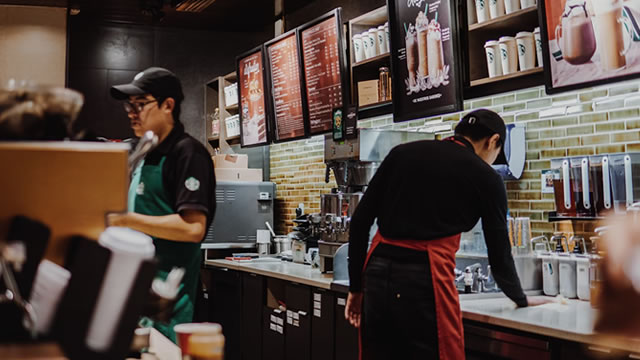
我在游戏里学冲咖啡,转头发现咖啡市场已经卷上天了
3 6 Ke· 2025-05-29 01:06
Core Insights - The Chinese coffee market is experiencing rapid growth, with the industry size expected to double from 136.4 billion yuan in 2020 to 202.8 billion yuan in 2024 [4][8] - The rise in coffee consumption is driven by faster lifestyles and social media trends, with consumers increasingly seeking out aesthetically pleasing coffee experiences [4][8] - The market is characterized by diverse consumption scenarios, including chain coffee shops, independent cafes, fast food outlets, tea shops, convenience stores, and self-service coffee machines [8][10][12] Market Dynamics - Chain coffee brands dominate the market, accounting for over 60% of the total coffee shops in China, with the number of coffee shops expected to exceed 1 million by 2024 [10][15] - Major players like Luckin Coffee and Starbucks are expanding aggressively, leveraging digital marketing and loyalty programs to retain customers [10][17] - Independent and specialty coffee shops focus on unique experiences and high-quality offerings, but face challenges in scaling and maintaining profitability [10][25] Competitive Landscape - The competition in the coffee market is intense, with both international brands like Starbucks and local brands like Luckin Coffee vying for market share [15][17] - Luckin Coffee has positioned itself as a cost-effective option, while new entrants like Kudi Coffee are adopting aggressive expansion strategies [19][21] - The market is witnessing a high closure rate of coffee shops, with over 4.5 million stores disappearing in 2024, indicating a challenging environment for many brands [27] Future Trends - The coffee market is expected to continue evolving, with a focus on supply chain management and operational efficiency becoming critical for survival [28][29] - Downstream markets are emerging as new growth areas, but brands must adapt to different consumer preferences and behaviors in these regions [31] - Digitalization and multi-channel marketing are essential for brands to understand consumer needs and enhance the overall customer experience [33][35]

Starbucks: Long-Term Investors Could Be Rewarded Despite Market Scepticism
Seeking Alpha· 2025-05-27 11:30
Group 1 - The focus is on growth and dividend income as a strategy for retirement planning [1] - The portfolio is structured to generate monthly dividend income that grows through reinvestment and annual increases [1] Group 2 - The article expresses personal opinions and is not intended as investment advice [2] - It emphasizes the importance of conducting individual research before making investment decisions [2]

消费者买奶茶时,有哪些习惯?
Hu Xiu· 2025-05-27 02:14
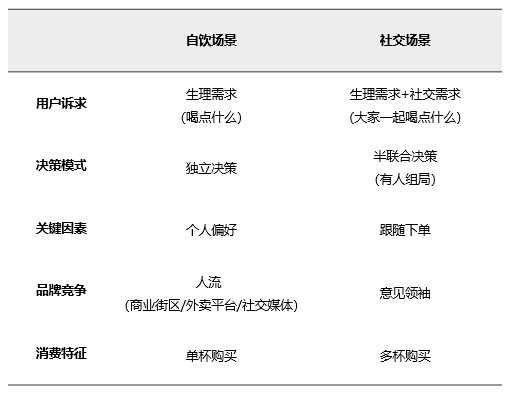
User Consumption Scenarios - The two classic consumption scenarios for milk tea are self-drinking and social drinking, with distinct user demands and decision-making processes [3][4][5] - In the self-drinking scenario, users make independent decisions based on personal preferences, while in the social scenario, group dynamics influence brand choices [6][10] - Peak ordering times for milk tea on delivery platforms occur between 14:00 and 16:00, indicating a strong social consumption trend during afternoon breaks [3][6] Competitive Analysis - In the self-drinking scenario, milk tea competes with ready-to-drink (RTD) beverages, with acceptable price ranges for milk tea being 10-15 yuan in urban areas [9][12] - The social scenario presents more complex competition, as users are willing to pay a premium (15-30 yuan) for products that fulfill both physiological and social needs [10][12] - The competition landscape includes not only direct milk tea brands but also RTD beverages and coffee, necessitating a broader analysis of pricing strategies [12][13] Product Structure - Milk tea products can be categorized into two main attributes: product attributes (easily replicable and deliverable) and service attributes (localized and dependent on human interaction) [14][18] - The trend indicates a shift towards product attributes in milk tea, with brands attempting to increase service attributes for higher pricing, though this may limit market reach [19][20] Cultural Context - The relationship between product and culture is complex, with tea and coffee cultures not significantly influencing the milk tea market in China [21][25][28] - Brands emphasizing cultural narratives may limit their appeal to broader consumer bases, as most users prioritize taste over cultural associations [29] Product Extension - Brands are encouraged to focus on internal product extensions (new flavors) rather than external (new product categories) to meet user demands effectively [33][34] - The rapid introduction of new products in the milk tea market reflects intense competition, with brands launching numerous new items to attract consumers [41] User Consumption Habits - Milk tea consumption is characterized by a tendency towards variety-seeking, with users willing to try new flavors and products [40][41] - The market is entering a phase of intense competition, leading to a rapid increase in new product launches as brands strive to maintain consumer interest [41] Brand Collaborations - The trend of frequent brand collaborations (149 instances in 2024) serves to enhance brand visibility and attract new consumer segments [42][43] - Collaborations can activate consumer interest in the milk tea category, particularly in the self-drinking scenario where impulsive purchases are common [49] Brand Case Study: Heytea - Heytea's fluctuating market position reflects challenges in maintaining user value amidst increasing competition and changing consumer preferences [50][53] - The brand's reliance on collaborations and pricing strategies indicates a need to clarify its market positioning to sustain growth [53] Membership and Loyalty Programs - The development of membership programs in the tea beverage market is still in its early stages, with many brands struggling to implement effective loyalty strategies [55][56] - A successful membership model requires a shift from customer acquisition to retention, emphasizing the importance of stable consumer relationships [56] Local Economic Model - The local economic model for milk tea shops focuses on meeting specific consumer needs within a defined area, with delivery services expanding market reach [57][58] - Brands are increasingly adopting strategies to enhance order efficiency and customer service capabilities to compete effectively in the market [58] Market Overlap Analysis - Analysis of store overlap among major brands reveals significant competition dynamics, particularly between brands like Luckin Coffee and Bawang Chaji [63][64] - Understanding the competitive landscape and store proximity can inform strategic decisions for market positioning and expansion [64][65]

Starbucks: Operating Margins Plunge Amid Reignition Attempts
Seeking Alpha· 2025-05-26 05:49
Group 1 - The company aims to invest in firms with strong qualitative attributes, purchasing them at attractive prices based on fundamentals, and holding them indefinitely [1] - The investment strategy focuses on managing a concentrated portfolio to avoid underperformers while maximizing exposure to high-potential winners [1] - The company plans to publish articles on selected companies approximately three times a week, including extensive quarterly follow-ups and constant updates [1] Group 2 - The analyst has a beneficial long position in the shares of CMG, indicating a personal investment interest [2] - The article reflects the analyst's own opinions and is not influenced by compensation from any company mentioned [2] - There is no business relationship between the analyst and any company whose stock is discussed in the article [2]
比尔·阿克曼,一个激进的“价值投机者”
Hu Xiu· 2025-05-24 05:15
Core Insights - The article discusses the investment journey of Bill Ackman, highlighting his evolution from a value investor to a more aggressive activist investor, and his recent shift towards long-term investments. Group 1: Investment Philosophy - Ackman identifies as a value investor but is often described as an "aggressive value investor" or "value speculator" due to his active involvement in company management and transformation [5][7][8]. - His investment strategy includes concentrated holdings, deep research, and a willingness to push for change within companies [27]. Group 2: Key Investments and Strategies - Ackman's notable investment in General Growth Properties during the financial crisis yielded a return of 26 times his initial investment of $60 million, showcasing his ability to identify undervalued assets [36]. - His investment in Canadian Pacific Railway involved a proxy battle to replace the CEO, resulting in a significant increase in stock price from $49 to $220 between September 2011 and December 2014 [44]. - During the COVID-19 pandemic, Ackman made a strategic move by investing $27 million in credit protection, which led to a profit of $2.6 billion in less than a month, demonstrating his market timing and risk management skills [72][75]. Group 3: Lessons from Failures - Ackman's investment in Valeant Pharmaceuticals resulted in a loss of over $4 billion, highlighting the risks associated with aggressive growth strategies and reliance on price increases [57]. - His battle with Herbalife, which lasted over five years, ended in a significant loss of nearly $1 billion, illustrating the challenges of short-selling and the impact of market dynamics [66]. Group 4: Future Aspirations - Ackman aims to transform Howard Hughes Corporation into a diversified holding company, aspiring to create a "modern Berkshire Hathaway" by acquiring quality businesses and establishing an insurance operation [86][90]. - He has expressed a desire to evolve from an activist investor to a builder of long-term value, indicating a shift in his investment approach [79][89].
Starbucks Stock Analysis: Buy, Sell, or Hold?
The Motley Fool· 2025-05-22 09:31
Core Insights - The article discusses the investment position of Parkev Tatevosian, CFA, and mentions that The Motley Fool has positions in and recommends Starbucks [1] Company Analysis - Parkev Tatevosian has no position in any of the stocks mentioned, indicating a neutral stance on the specific stocks discussed [1] - The Motley Fool, an investment advisory service, has a vested interest in Starbucks, suggesting a positive outlook on the company's performance [1]

星巴克,抢不回“铁王座”
3 6 Ke· 2025-05-22 03:41
Core Viewpoint - The article discusses the competitive landscape of the coffee market in China, highlighting Starbucks' resilience and strategies to adapt to market challenges, including price wars and changing consumer preferences [1][2]. Group 1: Starbucks' Performance - In Q2 2025, Starbucks reported a 5% year-on-year increase in revenue to $739.7 million, with a consistent double-digit operating profit margin [1]. - The number of Starbucks stores in China reached 7,758, marking a 9% year-on-year growth and contributing to about one-third of global new store openings [1][3]. - This marks the first positive growth in performance for Starbucks in China after four consecutive quarters of same-store sales decline [1][3]. Group 2: Market Strategies - Starbucks is focusing on localizing its offerings by expanding into lower-tier cities, having opened 790 stores in the 2024 fiscal year, a record high [3]. - The company is enhancing its online delivery capabilities through partnerships with platforms like Meituan and JD, while also engaging in price competition on platforms like Ele.me [3]. - Starbucks has introduced a "sugar-free revolution" with its new product line "True Taste Sugar-Free," allowing customers to customize sweetness levels, reflecting a shift towards health-conscious offerings [4][5]. Group 3: Competitive Landscape - The coffee market in China is characterized by aggressive pricing strategies, with competitors like Luckin Coffee and Kudi offering significantly lower prices, challenging Starbucks' traditional pricing model [1][9]. - Luckin Coffee has optimized its supply chain, reducing inventory turnover days to 18, which is half the industry average, and achieving a self-operated store profit margin of 17.1% [10]. - The rise of local brands and the shift in consumer preferences towards value and taste have intensified competition, leading to a decline in Starbucks' market share [8][11]. Group 4: Future Opportunities - The Chinese coffee market is projected to exceed 220 billion yuan by 2025, indicating significant growth potential for Starbucks [12]. - Starbucks can enhance its supply chain efficiency and focus on quality-price balance to regain lost customers [15]. - Strengthening its membership program and leveraging its "third space" concept can help Starbucks create unique consumer experiences and foster brand loyalty [15][16].