Starbucks(SBUX)

Search documents
Starbucks Workers Strike on Red Cup Day. The Stock Could Be Ready to Break Out Anyway.
Barrons· 2025-11-13 16:22
Core Points - The coffee chain reports that only 4% of its workforce consists of union members [1] Company Summary - The coffee chain's workforce composition indicates a low level of union representation, with only 4% of employees being union members [1]


“星巴克们”集中抛售中国业务?真相是他们换了一种打法
第一财经· 2025-11-13 15:39
Core Viewpoint - Recent trends indicate a significant shift in foreign investment strategies in China, particularly in the consumer goods sector, as companies like Starbucks and Burger King sell stakes to local investors, reflecting a broader trend of foreign brands adapting to the competitive landscape in China [5][12]. Group 1: Foreign Investment Changes - Starbucks announced the sale of 60% of its Chinese operations to local capital, while Burger King followed suit by selling a majority stake to a Chinese entity [4]. - The ongoing rumors about potential sales of other foreign brands, including Haagen-Dazs, Costa, and IKEA, highlight a growing concern regarding foreign brands' performance in the Chinese market [6][7]. - The trend of foreign brands divesting their Chinese operations is attributed to stagnant growth and declining profits amid fierce market competition [9][10]. Group 2: Market Performance and Strategy - Haagen-Dazs has experienced a double-digit decline in traffic in China, while Decathlon's growth has slowed significantly, prompting a shift towards higher-end products [10]. - IKEA's sales in China dropped from 12.07 billion yuan to 11.15 billion yuan, a nearly 10 billion yuan decrease year-on-year, indicating substantial pressure on its performance [10]. - Despite challenges, Starbucks reported a revenue increase of 5% in China for the 2025 fiscal year, with a strong single-store profitability, positioning it as one of the healthiest markets internationally [11]. Group 3: Local Adaptation and Future Outlook - The shift towards local ownership is seen as a necessary adaptation for foreign brands to thrive in the increasingly competitive Chinese market [12][14]. - The trend of localizing operations and management is becoming a common strategy among foreign brands, allowing them to reduce costs and better align with local consumer preferences [14]. - The partnership between CPE Yuanfeng and Burger King aims to expand the latter's store count from approximately 1,250 to over 4,000 by 2035, indicating a long-term commitment to growth in the Chinese market [15].
Starbucks’ Horrible Future
Yahoo Finance· 2025-11-13 15:15
Core Insights - Starbucks Corp. is experiencing a decline in stock performance, with its best year likely behind it in 2021, marked by a series of CEO changes [1][4] - The latest CEO, Brian Niccol, has not succeeded in reversing the company's fortunes, as evidenced by a significant drop in stock price from a peak of $117 to $87 [2][6] Group 1: CEO Performance and Strategy - Brian Niccol was anticipated to be a turnaround leader due to his previous success at Taco Bell and Chipotle, but his strategies have not yielded tangible results [5] - Niccol's approach has focused on returning Starbucks to its community coffeehouse roots, emphasizing friendly service and quick order fulfillment [5] - The company has divested 40% of its operations in China for $4 billion, a move that raises concerns about its future growth potential, especially as China was expected to be a key market [6] Group 2: Financial Performance - For the fiscal year ending September 29, Starbucks reported a revenue increase of 3% to $37.2 billion, but earnings per share fell from $3.31 to $1.63 [7] - Niccol claims that the "Back to Starbucks" strategy is taking hold, although this assertion lacks supporting evidence [7] Group 3: Labor Relations - Starbucks workers are planning strikes in 40 cities, which, while affecting a small number of stores, has garnered significant media attention and reflects negatively on the company [7]
“星巴克们”集中抛售中国业务?真相是他们换了一种打法
Di Yi Cai Jing· 2025-11-13 14:16
Core Insights - Recent trends indicate a shift in foreign brands' operational strategies in China, with companies like Starbucks and Burger King selling significant stakes to local investors, raising concerns about foreign brands' future in the Chinese market [1][2][6] Group 1: Foreign Brands' Strategic Adjustments - Starbucks announced the sale of 60% of its Chinese operations to local capital, while Burger King followed suit by selling a majority stake to a Chinese entity [1][2] - The ongoing rumors about potential sales of other foreign brands, including Haagen-Dazs and Decathlon, reflect a broader trend of foreign brands reassessing their positions in the Chinese market [2][3] - Industry experts suggest that these moves are part of a localization strategy, driven by increased competition and declining performance of some foreign brands in China [3][4] Group 2: Performance Challenges - Haagen-Dazs has experienced a double-digit decline in traffic in China, while Decathlon's growth has slowed significantly, prompting a shift towards higher-end products [4] - IKEA's sales in China dropped from 12.07 billion yuan to 11.15 billion yuan, a nearly 10 billion yuan decrease year-on-year, highlighting the pressures faced by foreign retailers [4] - Burger King's store count in China has been in decline, contrasting with competitors like McDonald's, which have adapted more effectively to the local market [4] Group 3: Market Dynamics and Consumer Preferences - A report by Accenture indicates that by 2025, domestic brands will surpass international brands in consumer preference across various sectors, including beauty and electronics [7] - The competitive landscape is shifting, with local brands gaining ground due to better pricing and product offerings, forcing foreign brands to adapt to changing consumer demands [7][8] - Experts emphasize that foreign brands are not exiting the Chinese market but are instead adjusting their operational models to better align with local market conditions [8] Group 4: Investment and Future Outlook - The recent transaction involving Burger King China includes a $350 million investment from CPE Yuanfeng to support expansion and operational improvements, indicating a commitment to growth in the local market [8] - Shanghai continues to attract foreign investment, with a notable increase in the number of foreign enterprises, particularly in high-tech and financial sectors, suggesting a robust environment for foreign brands [9]
Starbucks' Horrible Future
247Wallst· 2025-11-13 14:15
Starbucks Corp. (NASDAQ: SBUX) share prices suggest the company's best year is well behind it, in 2021. ...
Here are the cities where more than 1,000 Starbucks baristas are said to be striking
MarketWatch· 2025-11-13 14:13
Core Viewpoint - The coffee chain's 'Red Cup Day' is affected by a strike involving baristas at 65 stores across more than 40 cities, although the company claims the impact is minimal [1] Group 1 - The strike involves baristas from 65 stores, indicating a significant level of employee unrest within the company [1] - The company asserts that the impact of the strike is only a fraction of its overall operations, suggesting resilience in its business model [1]
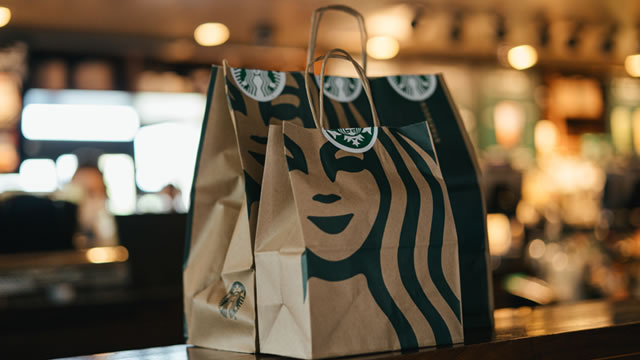
瑞幸大股东要从可口可乐手里买Costa?
Guo Ji Jin Rong Bao· 2025-11-13 13:53
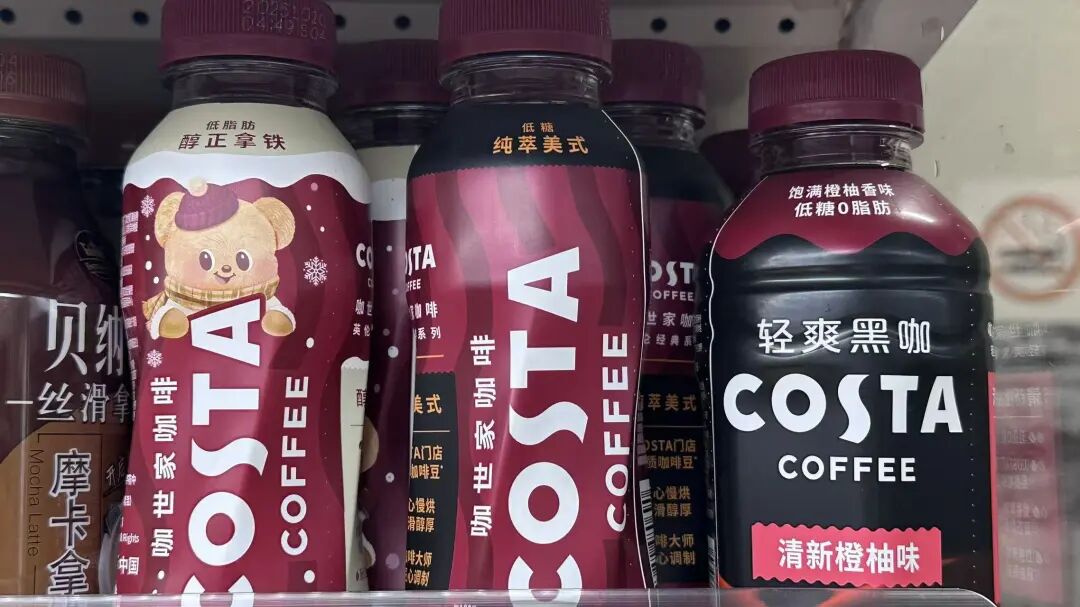
近期,市场有消息称,瑞幸咖啡最大股东大钲资本,正在考虑竞购可口可乐旗下咖啡连锁品牌Costa Coffee的可能性。知情人士表示,该交易尚在初步阶 段,Costa的潜在估值或达10亿英镑(13亿美元)。 对大多数中国消费者来说,Costa的存在感并不强。 窄门餐眼数据显示,截至10月18日,瑞幸门店总数超2.7万家,平均每月新增约600家门店,而Costa在国内仅341家营业门店,其中超40%位于江浙沪。 2025年年初,可口可乐首次传出有意出售Costa的消息;8月,有知情人士透露,可口可乐已与包括私募股权公司在内的潜在竞标者展开初步谈判,报价预 计于初秋进行。除了大钲资本,KKR也曾出现在此次意向收购方名单中。 有意布局高端市场 大钲资本是否会正式推进竞购尚未有定论,但在此之前,今年7月其还被曝有意收购星巴克中国业务股权,这透露出其有意继续扩大咖啡版图的野心。 大钲资本目前已是"中国咖啡之王"背后的核心资本力量。 作为瑞幸最早且最大的外部机构投资方,大钲资本目前持有其31.3%的股份和53.6%的投票权,大钲资本董事长黎辉还于今年4月正式出任瑞幸董事长一 职。大钲资本不仅是瑞幸财务造假风波后起死回生的关键 ...

氪星晚报 |星巴克工会发起无限期罢工,波及至少40座城市;京东集团:第三季度营收2991亿元,同比增长14.9%;
3 6 Ke· 2025-11-13 13:37
Group 1: Company Developments - JD Technology has received authorization for a patent related to a virtual reality-based contactless humanoid robot and brain-like predictive control method, which enhances efficient humanoid motion control through a console and VR equipment [1] - BYD has begun large-scale application of AMR intelligent logistics robots in its electronic business, aiming to improve production efficiency and strengthen its manufacturing competitiveness [2] - Xiaomi's venture capital arm, Hanting Venture Capital, has invested in RoboParty, a company focused on humanoid robots, indicating a strategic move into the robotics sector [4] - JD Group reported a third-quarter revenue of 299.1 billion yuan, a year-on-year increase of 14.9%, with significant growth in new business revenues [5] - Yongtai Technology has established long-term partnerships with leading companies in the lithium battery materials sector, including CATL and BYD, enhancing its market position [6] Group 2: Labor and Market Dynamics - Starbucks Workers United initiated an indefinite strike affecting at least 65 stores in 40 cities, potentially disrupting the company's holiday sales season due to unresolved collective bargaining agreements [3] Group 3: Financial Updates - Bilibili reported a third-quarter revenue of 7.69 billion yuan, a 5% year-on-year increase, with adjusted net profit rising by 233% [3] - "Andao Pharmaceutical" completed a C-round financing of over 400 million yuan, with funds aimed at accelerating clinical research for its drug candidates [7] Group 4: Product Launches and Innovations - DJI's new Osmo Action 6 camera has surpassed 100,000 pre-orders on JD's platform, indicating strong market interest [8] - Dongfeng Motor is set to mass-produce solid-state batteries by September 2026, which are expected to enable electric vehicles to achieve a range of 1,000 kilometers [9]


劳资谈判没谈拢,星巴克美国工会在“红杯日”大促之际发起罢工
Xin Lang Cai Jing· 2025-11-13 13:32
Core Points - Starbucks Workers United announced a nationwide strike starting from 65 stores, aiming to be the largest and longest strike in Starbucks history [1] - The strike coincides with Starbucks' "Red Cup Day," a busy promotional event for the company [1] - A Starbucks spokesperson stated that the strike has had minimal impact so far, affecting less than 1% of stores [1] Financial and Operational Context - In April, the union voted against a proposal for a guaranteed annual raise of at least 2%, citing that it did not address healthcare and other economic benefits, nor did it provide immediate raises [1] - In September, Starbucks announced plans to close hundreds of stores in the U.S. and Canada, resulting in approximately 900 layoffs [1] - The latest plan indicates a 1% reduction in the total number of Starbucks stores in the U.S. and Canada [1]
Starbucks strike hits Red Cup Day as union pushes for new contracts
Invezz· 2025-11-13 13:31
Core Viewpoint - Starbucks experienced a significant coordinated walkout involving over 1,000 unionized baristas across the United States, coinciding with one of the company's peak business days, known as Red Thursday [1] Group 1 - The walkout was organized by unionized baristas, indicating a strong collective action among employees [1] - The timing of the strike aligns with a critical sales period for Starbucks, potentially impacting the company's revenue during a busy season [1]