
SoftBank(SFTBY)

Search documents
日本首富孙正义清仓英伟达!“大空头”也下血本做空 机构警告AI泡沫太大 黄仁勋最新发声
Mei Ri Jing Ji Xin Wen· 2025-11-11 13:47
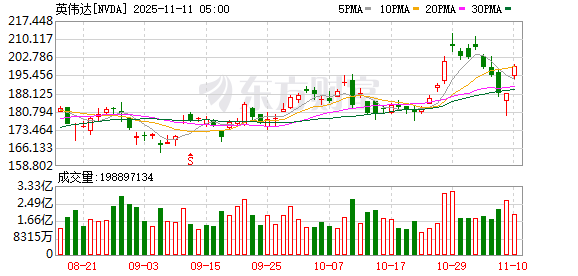
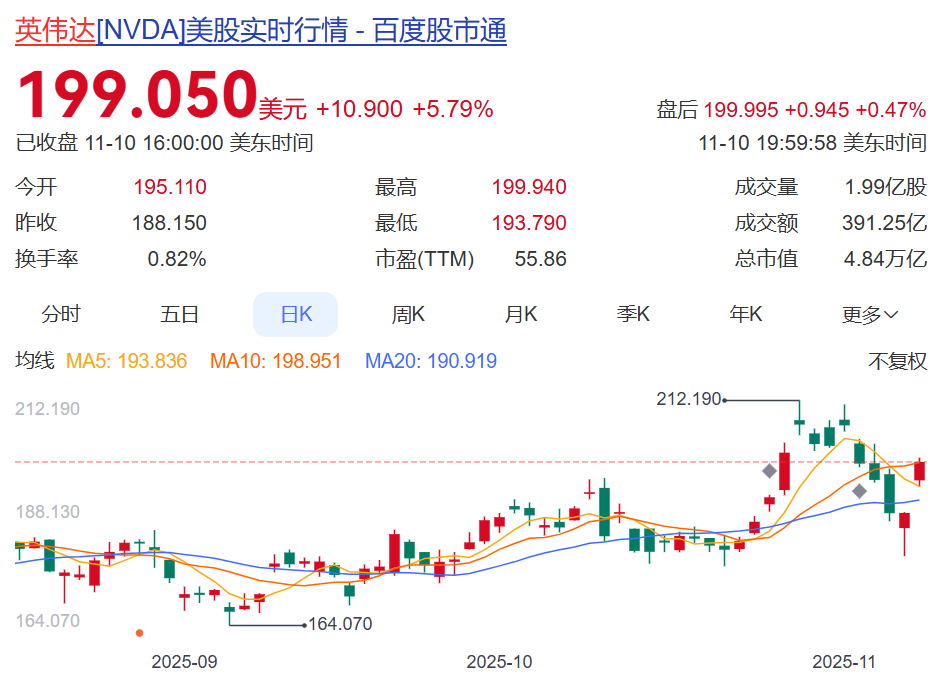
Core Viewpoint - SoftBank Group has sold all its shares in Nvidia for $5.83 billion, with founder Masayoshi Son planning to invest heavily in the AI sector to enhance influence [2][3]. Group 1: SoftBank's Actions - SoftBank sold its entire stake in Nvidia for $5.83 billion, which is part of a broader strategy to invest in AI [2][3]. - The company also sold $9.17 billion worth of T-Mobile shares between June and September [3]. - SoftBank has committed to an additional investment of $22.5 billion in OpenAI, to be completed through Vision Fund 2 by December [3]. Group 2: Nvidia's Market Performance - Nvidia's stock price surged by 5.79% on November 10, with a year-to-date increase of over 48%, bringing its market capitalization to $4.84 trillion [2]. - Nvidia's founder Jensen Huang has also sold over $1 billion in Nvidia stock since June [2]. Group 3: Market Sentiment and Risks - Recent indicators suggest that AI investments have reached extreme levels, with market risks accumulating rapidly [2]. - Michael Burry's hedge fund has taken a significant short position against Nvidia and Palantir, holding over $1 billion in put options, indicating skepticism about AI stocks [5][10]. - Analysts warn that the current AI investment frenzy may be approaching a critical point, with potential implications for the U.S. and global economies [2][19]. Group 4: Financial Performance of SoftBank - SoftBank reported a net profit of 2.5 trillion yen for the second quarter, significantly exceeding market expectations [4]. - The company's revenue for the first quarter of the 2025-2026 fiscal year was 1.82 trillion yen, a 7% year-on-year increase, with a pre-tax profit of 689.94 billion yen, up 205.7% [3][4].


重心转向OpenAI,软银清仓英伟达套现58亿美元:无法判断是否处于AI泡沫中
Feng Huang Wang· 2025-11-11 13:42
Group 1 - SoftBank Group has sold all of its shares in Nvidia, totaling 32.1 million shares for $5.8 billion, shifting focus towards OpenAI [1][2] - The company reported a profit of 2.5 trillion yen for the second quarter of the fiscal year 2025, exceeding market expectations [1] - SoftBank's Vision Fund recorded a quarterly profit of 2.38 trillion yen, primarily due to investments in OpenAI and PayPay [1] Group 2 - SoftBank's CEO Masayoshi Son is actively seeking profit opportunities in AI and embodied intelligence, reducing investments in other areas [2] - The company has significant stakes in Arm and OpenAI, and recently acquired ABB's robotics business for $5.375 billion [2] - Analysts suggest that the sale of Nvidia shares does not indicate a fundamental strategic shift, but rather a reallocation of funds towards AI-related investments [2]
日本首富孙正义,清仓英伟达,套现超400亿元!“大空头”也下血本做空,机构警告AI泡沫太大,黄仁勋最新发声
Mei Ri Jing Ji Xin Wen· 2025-11-11 13:31
Core Viewpoint - SoftBank Group announced the sale of its entire stake in NVIDIA for $5.83 billion, as founder Masayoshi Son plans to invest heavily in artificial intelligence [1][6]. Group 1: SoftBank's Actions - SoftBank sold all its NVIDIA shares for $5.83 billion, aiming to build influence in the AI sector [1][6]. - The company also sold $9.17 billion worth of T-Mobile shares between June and September [6]. - SoftBank plans to invest an additional $22.5 billion in OpenAI, with the investment to be completed by December through Vision Fund 2 [6]. Group 2: NVIDIA's Market Performance - As of November 10, NVIDIA's stock price surged by 5.79% in a single day, with a year-to-date increase of over 48%, bringing its total market capitalization to $4.84 trillion [1]. - NVIDIA's stock has seen significant growth, with SoftBank previously increasing its stake from $1 billion to approximately $3 billion before the recent sale [7]. Group 3: Market Sentiment and Risks - Recent indicators suggest that AI investments have reached extreme levels, raising concerns about market risks accumulating rapidly [5]. - Michael Burry's hedge fund, Scion Asset Management, disclosed holding over $1 billion in put options against NVIDIA and Palantir, indicating a bearish outlook on these AI stocks [8][11]. - Analysts warn that the current AI investment frenzy may be approaching a critical point, with potential implications for both the U.S. and global economies [5][20]. Group 4: AI Market Valuation Concerns - OpenAI's annual revenue is reported at $12 billion, with a loss of $8 billion, raising questions about the sustainability of its valuation amid heavy investments [21]. - The concentration of market capitalization among the top five U.S. companies has reached a 50-year high, with concerns that current valuations are extreme compared to historical standards [20]. - Some analysts believe the current AI bubble could be 17 times larger than the internet bubble of the early 2000s, highlighting significant risks in the sector [22].
Paramount cuts costs, SoftBank sells its Nvidia stake, Warren Buffett's new tradition and more in Morning Squawk
CNBC· 2025-11-11 13:07
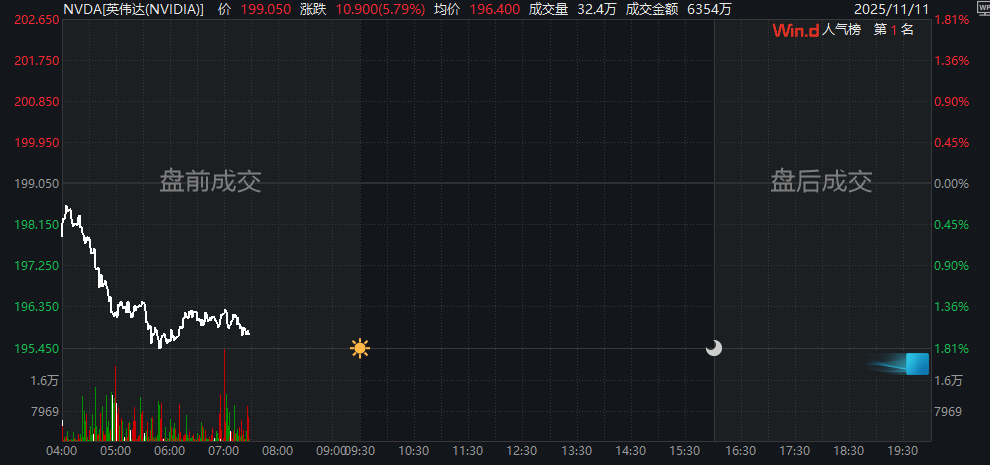
Group 1: Market Reactions and Trends - The Senate's approval of an agreement to potentially end the government shutdown led to a surge in the three major indexes, recovering from significant losses the previous week [1][6] - The tech-heavy Nasdaq Composite experienced its largest one-day rally since May, indicating a renewed interest in the artificial intelligence sector [6] Group 2: Corporate Actions - SoftBank sold its entire stake in Nvidia for $5.83 billion, with Nvidia shares dropping nearly 2% in premarket trading [2][3] - SoftBank is shifting focus towards OpenAI while still engaging with Nvidia through AI projects like the Stargate initiative [3] - Paramount Skydance announced cost-cutting measures, including layoffs affecting approximately 1,600 employees, and plans to raise prices for its Paramount+ streaming service in Q1 2026 [4][5][7] Group 3: Air Travel Industry - Air travel is facing challenges due to the government shutdown, with over 6% of U.S. flights canceled recently [8] - Demand for private flights has increased, although the FAA has limited private flights at 12 major U.S. airports due to staffing issues [10] Group 4: Philanthropic Initiatives - Berkshire Hathaway's CEO Warren Buffett plans to accelerate the distribution of his $149 billion fortune to his children's foundations while retaining a significant amount of Class A shares to instill confidence in his successor, Greg Abel [12][13]


软银清仓英伟达股权:套现58亿美元 加速推进AI投资计划
Sou Hu Cai Jing· 2025-11-11 12:50
Core Insights - SoftBank Group sold all its shares in NVIDIA for $5.83 billion to fund its envisioned AI investment projects, raising questions among investors about the rationale behind such significant investments in uncertain future technologies [2] - NVIDIA's market capitalization reached $5 trillion, making it the first company to achieve this milestone just three months after surpassing $4 trillion, with plans to invest $100 billion in OpenAI and build AI data centers [2] - SoftBank's recent sale of NVIDIA shares highlights the need for funding to advance various projects, including AI data centers and robotics manufacturing in the U.S. [2] Financial Performance - SoftBank reported a net profit of 2.5 trillion yen (approximately $16.2 billion) for the second fiscal quarter, significantly exceeding analysts' expectations of 418.2 billion yen [3] - The company's investment in OpenAI has contributed to a market value increase of $14.6 billion since the investment began [3] - Analysts predict that SoftBank is on track to achieve its highest annual profit since 2020 [3] Strategic Moves - SoftBank's investments in prominent AI companies, including OpenAI and ByteDance, have boosted its book earnings and led to a 78% increase in its stock price over the last three months, marking its best performance since Q4 2005 [4] - The company plans a 1-for-4 stock split on January 1 to make its shares more accessible to retail investors in Japan [4] - SoftBank is committed to investing $22.5 billion in OpenAI by December 2024 and has agreed to acquire Ampere Computing LLC for $6.5 billion and ABB's robotics division for $5.4 billion [4]
英伟达,突传利空!
Zheng Quan Shi Bao· 2025-11-11 12:48
Core Viewpoint - SoftBank unexpectedly announced the liquidation of its Nvidia shares, cashing out $5.83 billion (approximately 41.5 billion RMB) in October, which has led to a decline in Nvidia's stock price [1][4]. Financial Performance - SoftBank's latest financial report shows a revenue of 3.74 trillion yen and a net profit of 2.92 trillion yen for the first half of the year. The second quarter revenue was 1.92 trillion yen, exceeding market expectations of 1.89 trillion yen, while net profit reached 2.50 trillion yen, significantly surpassing the forecast of 418.23 billion yen [3]. - The reported net profit is the second highest for SoftBank in the same period, only behind the 3.03 trillion yen recorded in the second quarter of 2022 [3]. Investment Decisions - In addition to the Nvidia sale, SoftBank also sold 40 million shares of T-Mobile, valued at $9.17 billion [4]. - SoftBank announced a revised agreement with OpenAI to invest an additional $22.5 billion through its Vision Fund II, aiming to enhance collaboration in AI technology development and infrastructure [3][4]. - The total investment in OpenAI will amount to $30 billion, following a previous investment of $7.5 billion [3]. Impact on Earnings - SoftBank's investments in OpenAI have significantly boosted its earnings, contributing 21.56 billion yen in investment income, which accounts for 54.9% of total investment income. This has led to a 469.5% year-on-year increase in Vision Fund earnings and a 190.9% increase in net profit for the parent company [3].
三大股指期货涨跌不一,美国政府有望周三重启,软银清仓英伟达
Zhi Tong Cai Jing· 2025-11-11 12:21
1.11月11日(周二)美股盘前,美股三大股指期货涨跌不一。截至发稿,道指期货跌0.07%,标普500指数期货涨0.19%,纳指期货涨0.41%。 | 2.截至发稿,德国DAX指数跌0.02%,英国富时100指数涨0.82%,法国CAC40指数涨0.57%,欧洲斯托克50指数涨0.36%。 | | --- | | 3.截至发稿,WTI原油涨0.70%,报60.55美元/桶。布伦特原油涨0.76%,报64.55美元/桶。 | | | | 市场消息 今天美国部分市场休市。受退伍军人节假期(11月11日)影响,美国债市今日休市一日,美国股市照常交易。美国API和EIA原油库存数据分别推迟至北京时间 11月13日(周四)05:30和11月14日(周五)01:00公布,敬请各位投资者留意。 美国参议院通过临时拨款法案,待众议院表决,政府停摆有望于周三结束。美国政府停摆已创下41天的历史纪录,在参议院通过一项由八名中间派民主党人 支持的临时拨款法案后,停摆有望最早于周三结束。周一,参议院以60比40的投票结果通过了《持续拨款与延期法案》,但该法案仍需共和党控制的众议院 批准。众议院议长迈克.约翰逊表示,他预计该方案将很快 ...

光大新鸿基:告重
光大新鸿基· 2025-11-11 12:19
Market Overview - US stock markets experienced a decline, with the Dow Jones down 1.21% to 46,987.10, the S&P 500 down 1.63% to 6,728.80, and the Nasdaq down 3.04% to 23,004.54[5][6] - The Hang Seng Index rose 1.29% to 26,241.83, while the National Enterprises Index increased by 1.08% to 9,267.56[5][3] Commodity and Currency Markets - New York crude oil fell 2.02% to $59.75 per barrel, while New York gold rose 0.33% to $4,009.80 per ounce[5][3] - The US Dollar Index decreased by 0.20% to 99.60, with the Euro rising 0.25% to 1.1566 and the Australian Dollar falling 0.79% to 0.6493[3][31] Economic Indicators - The University of Michigan's consumer confidence index dropped to 50.3, the lowest since June 2022, with inflation expectations slightly rising to 4.7%[8][24] - US companies announced 153,000 layoffs in October, a significant increase of over 1.8 times month-on-month, marking the largest October layoffs since 2003[8][24] Bond Market Insights - The US government shutdown continues, impacting market stability; the 2-year Treasury yield is at 3.591%, while the 10-year yield is at 4.116%[26] - Hong Kong plans to issue tokenized bonds, with previous issuances totaling HKD 6.8 billion since 2023, aiming to enhance its status as a financial hub[26] Investment Strategies - AI-themed funds are highlighted as a key strategy for capturing future trends, emphasizing the importance of technology innovation and ethical standards[21] - Investors are advised to remain cautious and await clearer market directions before making significant investment decisions[18]


美股前瞻 | 三大股指期货涨跌不一,美国政府有望周三重启,软银清仓英伟达
智通财经网· 2025-11-11 12:18
Market Overview - US stock index futures showed mixed performance ahead of the market opening, with Dow futures down 0.07%, S&P 500 futures up 0.19%, and Nasdaq futures up 0.41% [1] - European indices also displayed varied results, with Germany's DAX down 0.02%, UK's FTSE 100 up 0.82%, France's CAC40 up 0.57%, and the Euro Stoxx 50 up 0.36% [2] - WTI crude oil rose by 0.70% to $60.55 per barrel, while Brent crude increased by 0.76% to $64.55 per barrel [2] Government and Economic Policies - The US Senate passed a temporary funding bill, which is expected to end the government shutdown that has lasted for 41 days, pending approval from the House of Representatives [3] - The passage of the bill is anticipated to lead to the release of delayed economic reports, including September's employment data and key inflation reports for October [4] Corporate Earnings and Performance - Sea Limited reported Q3 revenue of $5.99 billion, exceeding Wall Street's expectation of $5.65 billion, driven by strong performance from its e-commerce platform Shopee [9] - Vodafone's total revenue for the first half of the 2026 fiscal year grew by 7.3% to €19.61 billion, with service revenue in Germany increasing by 8.1% [10] - AST SpaceMobile's Q3 revenue was $14.73 million, falling short of expectations, with a net loss of $123 million [11] - SoftBank's Q2 profit surged to ¥2.5 trillion ($162 billion), significantly exceeding analyst expectations, aided by the sale of its Nvidia shares for $5.8 billion [12] - Sony's Q2 revenue reached ¥3.108 trillion, up 5% year-over-year, leading to an upward revision of its annual profit forecast [13] - Gemini's first earnings report post-IPO revealed a larger-than-expected loss, with Q3 revenue of $50.6 million [14] - CoreWeave adjusted its fiscal year revenue guidance downward due to delays in data center construction, projecting sales between $5.05 billion and $5.15 billion for 2025 [15] - Occidental Petroleum's Q3 profit exceeded expectations, driven by increased production despite a decline in oil prices [16] - Yalla Technology's Q3 revenue was $89.6 million, slightly above market expectations, but the number of paying users decreased by 9.7% [17] - Tesla is preparing to expand its Texas Gigafactory to produce 10 million units of its humanoid robot, Optimus, by 2027 [18]

软银清仓英伟达,套现超58亿美元
Shang Hai Zheng Quan Bao· 2025-11-11 12:15
软银集团此次官宣清仓英伟达股票的时点颇为微妙。当下,市场对AI投资的担忧情绪正在升温,由此 引发了市场对AI投资是否存在潜在泡沫的激烈辩论。 而机构的一些数据显示,美国科技巨头发行的债券或正在遭到投资者抛售。根据美国银行发布的数据, 由包括Alphabet、Meta、微软和甲骨文等正在建设庞大数据中心的公司在内的所谓"超大规模运算企 业"发行的一篮子债券,相较美国国债的收益率利差已升至0.78个百分点,为今年4月市场震荡以来的最 高水平,较9月的0.5个百分点明显扩大。而利差扩大折射出了投资者对科技公司通过债务市场为其人工 智能基础设施投资融资的担忧正在不断强化。 那么,AI投资是否会重蹈此前互联网泡沫破灭的覆辙?花旗集团在最新研报中表示,尽管存在围绕AI 资本支出泡沫的债务和循环融资组合的担忧,但由于CoWoS产能限制,AI供应在2026年之前都将低于 需求,并可能在2027年的某个时点才能赶上。这一判断意味着,旺盛的需求是真实存在的,而非投机炒 作的产物。 高盛发布研报称,当下AI热潮与21世纪初的狂热景象愈发相似的风险正在上升。随着AI投资热潮持 续,上世纪90年代积累的失衡风险可能会愈发明显。不过,该 ...