Seek .(SKLTY)

Search documents
中国大模型首登《自然》封面,AI医学的DeepSeek时刻还远吗?
Di Yi Cai Jing· 2025-09-18 07:02
Group 1: AI in Drug Development - AI has become a significant focus for multinational pharmaceutical companies, with substantial investments aimed at transforming the drug discovery process and generating breakthroughs in understanding biological data [3][4] - The global proportion of clinical trials initiated by Chinese companies has increased from approximately 3% to 30% by 2024, positioning China as the second-largest clinical trial market [3] - AI is expected to drive a new wave of drug development, becoming a crucial force in the transformation of new drug research and development [3][4] Group 2: AI Applications in Medical Diagnosis - Major medical institutions in China are actively promoting the integration of large models and AI agents in clinical applications, exemplified by the launch of the "Meta-Medical Simulation Laboratory" by Fudan University and technology companies [5] - AI is changing the paradigm of diagnosis and treatment, with significant advancements in areas such as heart rate screening, imaging analysis, and risk assessment [6] - The application of AI in medicine involves three key aspects: data quality, computational power, and algorithm optimization, which are essential for effective clinical application [6] Group 3: Challenges and Considerations - Despite the potential of AI in drug discovery, there are significant challenges, including a 90% failure rate in clinical trials and the need to address complex biological and regulatory issues [4] - Ethical considerations are paramount, with the understanding that physicians remain the primary decision-makers in clinical settings, and the responsibility for medical actions lies with them [6]


DeepSeek声明:防范冒用“深度求索”名义实施诈骗
Mei Ri Jing Ji Xin Wen· 2025-09-18 06:56
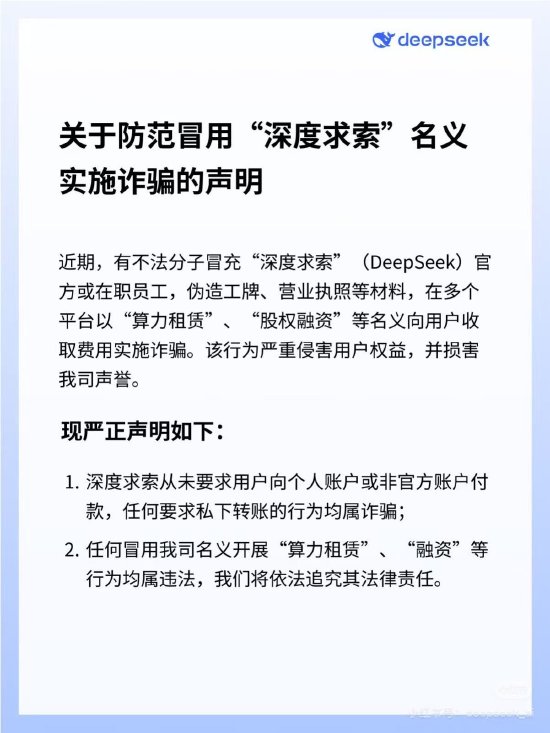
1.深度求索从未要求用户向个人账户或非官方账户付款,任何要求私下转账的行为均属诈骗; 2.任何冒用我司名义开展"算力租赁"、"融资"等行为均属违法,我们将依法追究其法律责任。 每经AI快讯,9月17日,深度求索(DeepSeek)发布官方声明: 近期,有不法分子冒充"深度求索"(DeepSeek)官方或在职员工,伪造工牌、营业执照等材料,在多个 平台以"算力租赁"、"股权融资"等名义向用户收取费用实施诈骗。该行为严重侵害用户权益,并损害我 司声誉。 ...
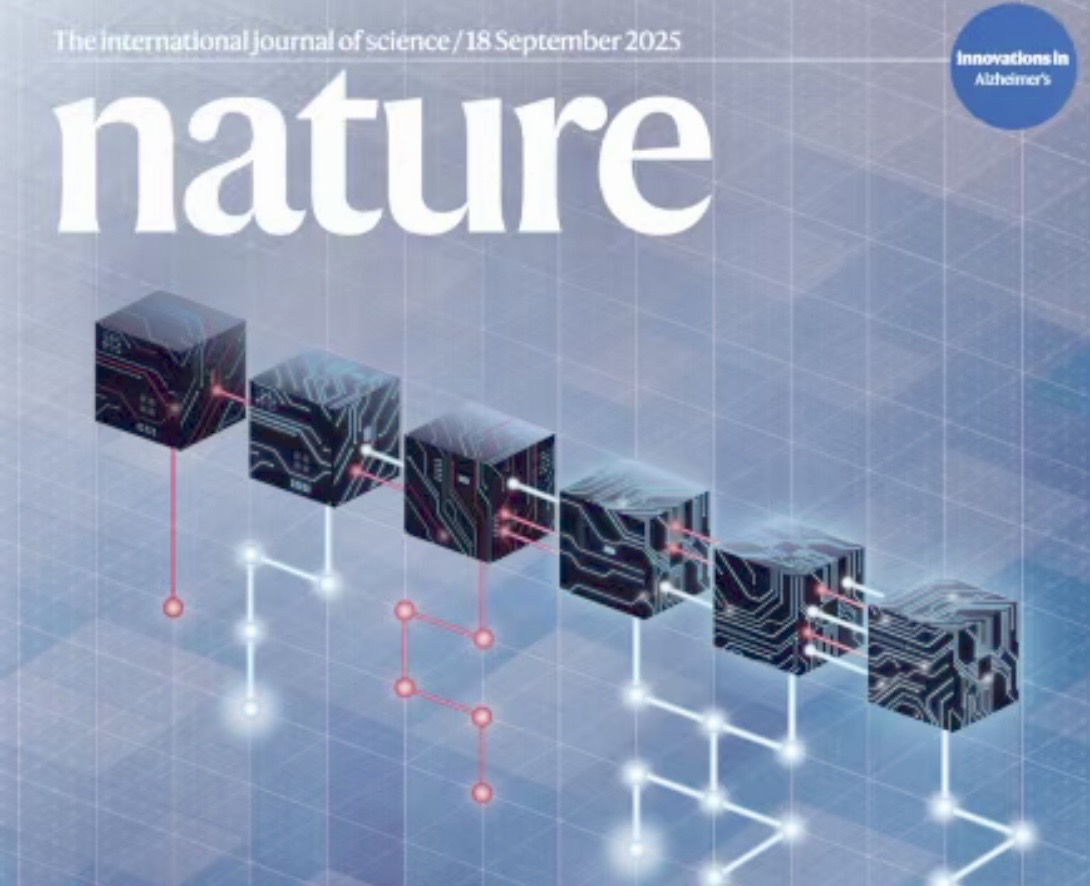
DeepSeek登《Nature》封面,梁文锋带队,首次回应“蒸馏”争议
Feng Huang Wang· 2025-09-18 06:17
Core Insights - The article highlights a significant achievement in China's AI sector with the publication of the DeepSeek-R1 model, which demonstrates a breakthrough in reducing the cost of training large language models while enhancing their reasoning capabilities [1][10]. Cost Efficiency - DeepSeek-R1's inference cost is remarkably low at $294,000, which is significantly less than the estimated $100 million spent by OpenAI on GPT-4 and the tens of millions by other tech giants [6]. - Even when including the approximately $6 million for the foundational model training, the total cost remains substantially lower than that of international competitors [6]. Methodological Innovation - The research team employed a pure reinforcement learning framework and introduced the Group Relative Policy Optimization (GRPO) algorithm, rewarding the model based solely on the correctness of final answers rather than mimicking human reasoning paths [6][10]. - This unconventional training approach led to the emergence of advanced behaviors such as self-reflection and self-verification, allowing the model to generate extensive reasoning chains [7]. Performance Metrics - DeepSeek-R1-Zero achieved an impressive accuracy rate of 77.9% in the American Mathematics Invitational Exam (AIME 2024), which further improved to 86.7% with self-consistency decoding, surpassing the human average [7]. - The model's performance extends beyond mathematics and programming tasks, demonstrating fluency and consistency in writing and question-answering tasks [7]. Leadership and Vision - The success of DeepSeek-R1 is attributed to the leadership of Liang Wenfeng, who has a background in machine learning and a vision for AI's transformative potential [8]. - Liang's approach to team building emphasizes capability over experience, focusing on nurturing young talent to drive innovation [9]. Industry Implications - The research represents a methodological declaration that emphasizes a sustainable path for AI evolution, moving away from reliance on vast labeled datasets and high funding barriers [10]. - The competition in AI is expected to shift from a focus on data and computational power to one centered on algorithmic and intellectual innovation, with DeepSeek-R1 setting the stage for this new era [11].
DeepSeek发布防诈骗声明:有不法分子冒用公司名义开展“算力租赁”“融资”,将追究其法律责任
Xin Lang Ke Ji· 2025-09-18 05:53
Core Points - DeepSeek has issued a statement regarding fraudulent activities where individuals impersonate the company or its employees, using forged identification and business licenses to scam users under the guise of "computing power leasing" and "equity financing" [1][2][3] - The fraudulent actions have severely harmed user rights and damaged the company's reputation [1][2] Company Policy - DeepSeek has never requested users to make payments to personal or unofficial accounts; any such requests for private transfers are considered scams [3] - Any activities that misuse the company's name for "computing power leasing" or financing are illegal, and the company will pursue legal action against such actions [3] User Advisory - Users are advised to obtain official information and updates through the official website (deepseek.com) and verified accounts [1] - The company's official webpage and app products are currently free; for API services, users should recharge through the official platform, with the official payment account name being "Hangzhou DeepSeek Artificial Intelligence Basic Technology Research Co., Ltd." [1] - In case of suspicious situations, users should verify through the official email or report to law enforcement [1]
DeepSeek,打破历史!中国AI的“Nature时刻”
Zheng Quan Shi Bao· 2025-09-18 05:24
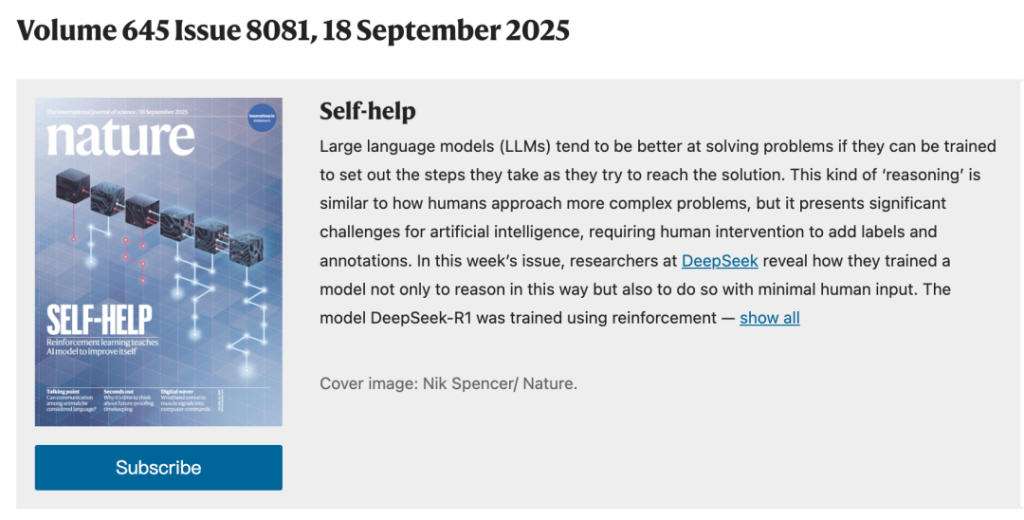
Core Insights - The DeepSeek-R1 inference model research paper has made history by being the first Chinese large model research to be published on the cover of the prestigious journal Nature, marking a significant recognition of China's AI technology in the international scientific community [1][2] - Nature's editorial highlighted that DeepSeek has broken the gap of independent peer review for mainstream large models, which has been lacking in the industry [2] Group 1: Research and Development - The DeepSeek-R1 model's research paper underwent a rigorous peer review process involving eight external experts over six months, emphasizing the importance of transparency and reproducibility in AI model development [2] - The paper disclosed significant details about the training costs and methodologies, including a total training cost of $294,000 (approximately 2.09 million RMB) for R1, achieved using 512 H800 GPUs over 198 hours [3] Group 2: Model Performance and Criticism - DeepSeek addressed initial criticisms regarding the "distillation" method used in R1, clarifying that all training data was sourced from the internet without intentional use of outputs from proprietary models like OpenAI's [3] - The R1 model has been recognized for its cost-effectiveness compared to other inference models, which often incur training costs in the tens of millions [3] Group 3: Future Developments - There is significant anticipation regarding the release of the R2 model, with speculation that delays may be due to computational limitations [4] - The recent release of DeepSeek-V3.1 has introduced a mixed inference architecture and improved efficiency, indicating a step towards the "Agent" era in AI [4][5] - DeepSeek's emphasis on using UE8M0 FP8 Scale parameter precision in V3.1 suggests a strategic alignment with domestic AI chip development, potentially enhancing the performance of future models [5]
DeepSeek首次回应“蒸馏OpenAI”质疑
Di Yi Cai Jing· 2025-09-18 04:34
Core Insights - DeepSeek's research paper, "DeepSeek-R1: Incentivizing Reasoning Capability in LLMs via Reinforcement Learning," has been published in the prestigious journal Nature, highlighting significant advancements in AI reasoning capabilities [1][11]. Group 1: Research and Development - The initial version of DeepSeek's paper was released on arXiv in January, and the Nature publication includes more detailed model specifications and reduced anthropomorphism in descriptions [5]. - DeepSeek-R1's training cost was reported to be $294,000, with specific costs for different components outlined, including $202,000 for DeepSeek-R1-Zero training and $82,000 for SFT data creation [9]. - The training utilized A100 GPUs for smaller models and expanded to 660 billion parameters for the R1 model, demonstrating a scalable approach to model development [8][10]. Group 2: Model Performance and Validation - DeepSeek-R1 has become the most popular open-source inference model globally, with over 10.9 million downloads on Hugging Face, marking it as the first mainstream large language model to undergo peer review [11]. - The research emphasizes that significant reasoning capabilities can be achieved through reinforcement learning without relying heavily on supervised fine-tuning, which is a departure from traditional methods [13]. - The model's training involved a reward mechanism that encourages correct reasoning, allowing it to self-validate and improve its performance on complex tasks [13]. Group 3: Industry Implications - The findings from DeepSeek's research could set a precedent for future AI model development, particularly in enhancing reasoning capabilities without extensive data requirements [11][13]. - The independent peer review process adds credibility to the model's performance claims, addressing concerns about potential manipulation in AI benchmarking [11].
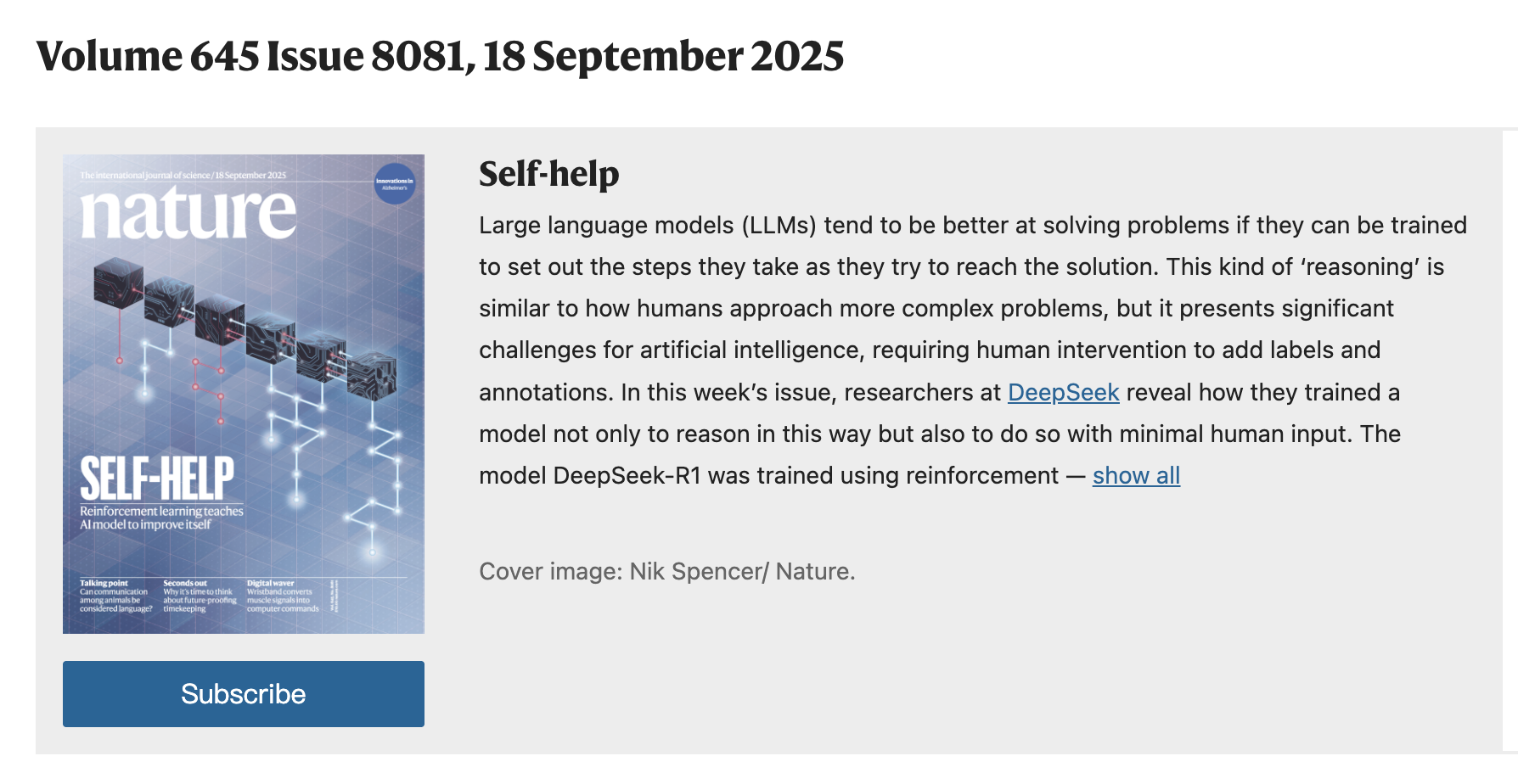
DeepSeek登上国际权威期刊Nature封面;华为预测2035年AI存储容量需求将比2025年增长500倍
Mei Ri Jing Ji Xin Wen· 2025-09-18 03:02
Market Performance - As of September 17, the Shanghai Composite Index rose by 0.37% to close at 3876.34 points, the Shenzhen Component Index increased by 1.16% to 13215.46 points, and the ChiNext Index gained 1.95% to 3147.35 points [1] - The Kweichow Moutai Semiconductor ETF (588170) increased by 3.64%, while the Semiconductor Materials ETF (562590) rose by 3.32% [1] - In the overnight U.S. market, the Dow Jones Industrial Average increased by 0.57%, while the Nasdaq Composite Index fell by 0.33% and the S&P 500 Index decreased by 0.10% [1] Industry Insights - The DeepSeek-R1 inference model research paper, led by Liang Wenfeng, was published in the prestigious journal Nature, marking it as the first mainstream large language model to undergo peer review [2] - Huawei released the "Smart World 2035" series of reports, predicting a significant increase in total computing power by 2035, with a 500-fold increase in AI storage capacity demand compared to 2025 [2] - The Zhangjiang Artificial Intelligence Innovation Town in Shanghai aims to gather over 500 AI companies by 2027 and achieve a scale of 100 billion yuan by 2030, supported by a 2 billion yuan fund initiated by Hillhouse Capital and local state-owned enterprises [3] - Tianfeng Securities anticipates a structural prosperity in the global semiconductor industry driven by rapid growth in AI computing demand, accelerated terminal intelligence, and the recovery of automotive electronics [3] Related ETFs - The Kweichow Moutai Semiconductor ETF (588170) tracks the Shanghai Stock Exchange's semiconductor materials and equipment index, focusing on semiconductor equipment (59%) and materials (25%) [4] - The Semiconductor Materials ETF (562590) also emphasizes semiconductor equipment (59%) and materials (24%), benefiting from the expansion of semiconductor demand driven by the AI revolution [4]
国际期刊发表DeepSeek大规模推理模型训练方法 揭示AI背后的科学
Zhong Guo Xin Wen Wang· 2025-09-18 02:55
Core Insights - DeepSeek, a Chinese company focused on large language models (LLM) and artificial general intelligence (AGI), has gained attention for its open-source AI model DeepSeek-R1, which employs a large-scale inference model training method [1] - The training method was published in the prestigious journal Nature, revealing that the reasoning capabilities of LLMs can be enhanced through pure reinforcement learning, thereby reducing the human input required for performance enhancement [1] - The model outperformed traditional LLMs in tasks related to mathematics, programming competitions, and graduate-level STEM problems [1] Group 1 - DeepSeek-R1 includes a supervised in-depth training phase to optimize the reasoning process, utilizing reinforcement learning instead of human examples to develop reasoning steps, which reduces training costs and complexity [2] - The model achieved scores of 77.9% and 79.8% in mathematical benchmark tests for DeepSeek-R1-Zero and DeepSeek-R1, respectively, and also excelled in programming competitions and graduate-level biology, physics, and chemistry problems [2] - A concurrent article in Nature highlighted some limitations of the current version of DeepSeek-R1, such as language mixing and sensitivity to prompt engineering, indicating areas for improvement in future versions [2] Group 2 - The DeepSeek-AI team concluded that future research should focus on optimizing the reward process to ensure reliable reasoning and task outcomes [3]
DeepSeek论文登上《自然》封面,R1成为首个严格学术审查大模型
Xin Lang Cai Jing· 2025-09-18 02:23
Core Insights - DeepSeek's R1 model has been recognized as the first major language model to be peer-reviewed and published in the prestigious journal Nature, marking a significant milestone in AI research [1][2] - The R1 model achieved over 10.9 million downloads on Hugging Face, making it the most popular open-source inference model globally [2] - DeepSeek's innovative approach utilizes pure reinforcement learning to enhance reasoning capabilities, diverging from traditional human-imitation methods [2][3] Company Developments - DeepSeek's R1 model was developed with a training cost of only $294,000, significantly lower than the costs associated with training AI models by OpenAI and Google, which can reach millions [2] - The company released an upgraded version, DeepSeek-V3.1, which features a mixed reasoning architecture, improved thinking efficiency, and enhanced agent capabilities [3] - DeepSeek was founded in 2023 in Hangzhou, backed by the quantitative firm Huansquare, with a team composed of experts from top universities and international institutions [3] Industry Context - The publication of DeepSeek's research is seen as a critical step in addressing the rampant speculation and unverified claims within the AI industry, emphasizing the importance of independent peer review [3] - The recognition of DeepSeek's work by Nature highlights China's advancements in foundational research in large models, contributing to the global AI landscape [2]
DeepSeek-R1论文登上《自然》封面,AI人工智能ETF(512930)涨超0.6%冲击3连涨
Xin Lang Cai Jing· 2025-09-18 02:04
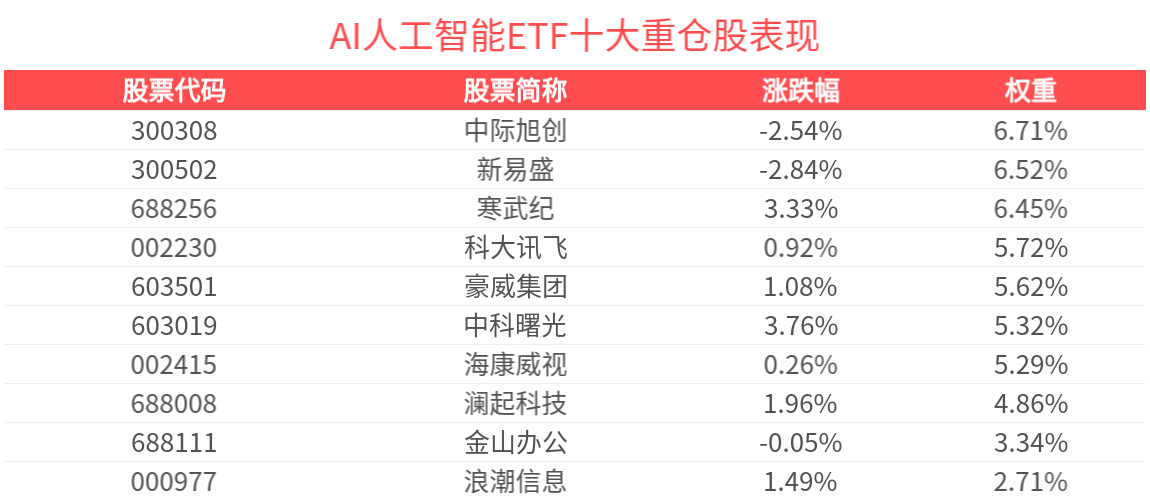
Group 1 - DeepSeek-R1 reasoning model research paper, led by Liang Wenfeng, has been published in the prestigious journal Nature, marking it as the first mainstream large language model to undergo peer review [1] - The latest paper provides more details on model training and addresses initial concerns regarding model distillation, highlighting the significance of independent peer review in the AI field [1] - The AI industry is experiencing a positive cycle driven by performance and capital expenditure, with the domestic AI ecosystem rapidly developing across various segments including large models, computing power, and applications [1] Group 2 - As of September 18, 2025, the CSI Artificial Intelligence Theme Index (930713) rose by 0.65%, with notable gains from stocks such as Jingsheng Electronics (up 9.99%) and Rockchip (up 5.82%) [2] - The AI Artificial Intelligence ETF (512930) also increased by 0.66%, achieving a three-day consecutive rise, with a latest price of 2.13 yuan and a weekly increase of 8.08% [2] - The management fee for the AI Artificial Intelligence ETF is 0.15%, and the custody fee is 0.05%, making it the lowest among comparable funds, while it has the highest tracking accuracy of 0.008% over the past three months [2] Group 3 - As of August 29, 2025, the top ten weighted stocks in the CSI Artificial Intelligence Theme Index accounted for 60.82% of the index, with companies like Xinyi Technology and Zhongji Xuchuang leading the list [3] - The top ten stocks include Xinyi Technology (300502), Zhongji Xuchuang (300308), and Cambricon (688256), among others, indicating a concentration of investment in these key players within the AI sector [3][5]