
Toyota(TM)

Search documents
丰田联手亿华通 再成立燃料电池公司!
Qi Cha Cha· 2025-09-22 01:48
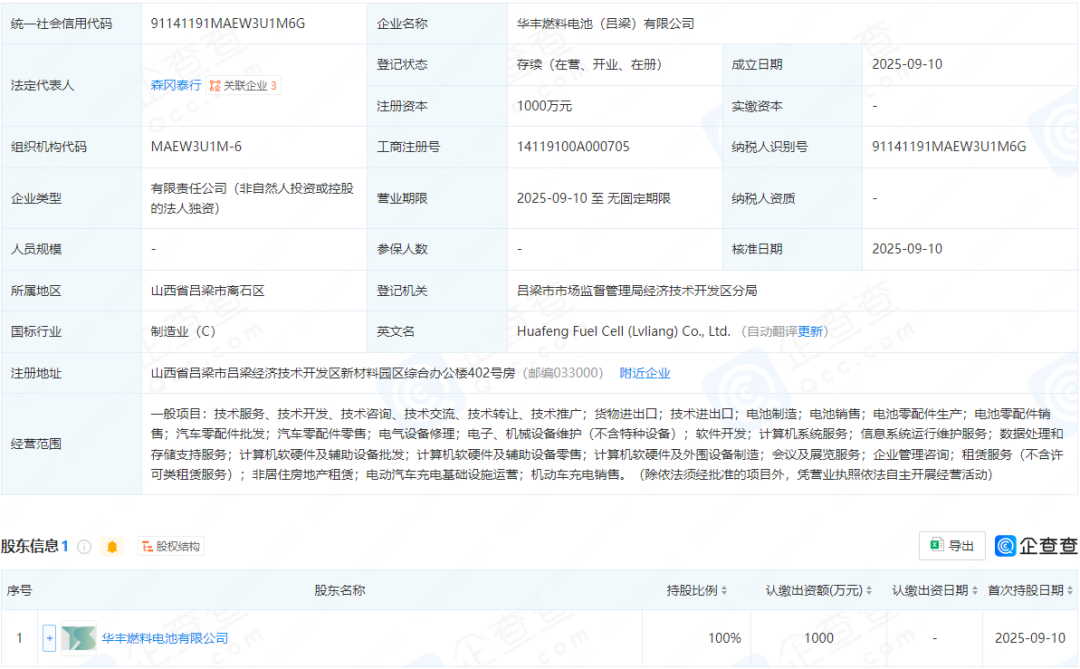
Group 1 - Huafeng Fuel Cell (Lvliang) Co., Ltd. was established on September 10, 2025, with a registered capital of 10 million yuan [1][2] - The company is engaged in battery manufacturing, sales, and production of battery components, as well as wholesale and retail of automotive parts [1][2] - Huafeng Fuel Cell (Lvliang) Co., Ltd. is wholly owned by Huafeng Fuel Cell Co., Ltd., which is jointly funded by Beijing Yihuatong Technology Co., Ltd. and Toyota Motor Corporation, each holding 50% [2][4] Group 2 - The establishment of Huafeng Fuel Cell Co., Ltd. in June 2021 aimed to promote the production and sales of fuel cell systems developed by United Fuel Cell System R&D (Beijing) Co., Ltd. to advance the hydrogen energy society and environmentally friendly mobility [4]


Toyota, BYD, and Yamaha Now Accept USDT Payments in Bolivia, Tether CEO Confirms
Yahoo Finance· 2025-09-21 13:57
Group 1: Adoption of USDT in Bolivia - Three major automakers, Toyota, BYD, and Yamaha, have begun accepting USDT payments in Bolivia, marking a significant milestone in cryptocurrency adoption [1] - The Central Bank of Bolivia reported crypto payment transactions totaling $294 million in the first half of 2025, representing a 630% increase from $46.5 million in 2024 [2] - The Bolivian government removed the crypto ban on June 25, allowing "virtual assets" to gain official status and enabling financial institutions to facilitate client transactions to crypto exchanges [3] Group 2: Regulatory Framework and Initiatives - The initiative to accept USDT payments has been facilitated within a regulated framework, as noted by Bolivia's financial regulator, ASFI [4] - Bolivia's Banco Bisa launched custodial services for Tether's USDT starting in October 2024, enhancing trading capabilities for customers [5] - A memorandum of understanding was signed between Bolivia's Central Bank and El Salvador's National Commission of Digital Assets to promote crypto development as a reliable alternative to traditional currencies [5] Group 3: Regional Trends in Stablecoin Adoption - Economic instability and currency weakness in Latin America have led to increased reliance on stablecoins like USDC and USDT as wealth protection tools [6] - Argentina, facing inflation above 100%, has adopted stablecoins to mitigate financial volatility, while Brazil has seen consistent growth due to clear regulations [7] - Mexico remains a leading crypto hub in the region, with Bitcoin and USDT being prominent in international transfers amid a 23% decline in the peso [8]

Global Markets Brace for Trade Talks, Visa Changes, and Geopolitical Tensions
Stock Market News· 2025-09-21 10:08
Trade Relations - India's Commerce and Industry Minister, Piyush Goyal, is visiting the U.S. to discuss a "mutually beneficial" trade agreement aimed at resolving tariff tensions, particularly regarding U.S. tariffs on Indian goods and oil imports from Russia [2][4] - The U.S. has imposed a 50% tariff on most Indian goods and an additional 25% tariff on Russian crude oil purchases, significantly affecting Indian exporters in labor-intensive sectors [3][4] - The goal is to finalize a bilateral trade agreement by autumn 2025, with a target to increase bilateral trade from $191 billion to $500 billion by 2030 [4] H-1B Visa Policy - A new executive order by U.S. President Donald Trump imposes a $100,000 one-time fee for H-1B worker visas, causing confusion among visa holders, particularly from India and China [5][6] - Major tech firms have advised employees to return to the U.S. before the deadline due to fears of potential re-entry restrictions [5][6] - The administration claims the H-1B program has been exploited to lower wages, while supporters argue it is essential for attracting skilled talent [6] Automotive Industry - Mitsubishi Motors achieved a significant victory in the Asia Cross Country Rally 2025, outperforming Toyota despite budget constraints [10][11] - This win marks Mitsubishi's first rally triumph in three years and highlights the company's strategic improvements under financial pressures [11]


Toyota: Hybrids Now, Solid-State And Autonomy Later - This Stock Is Undervalued
Seeking Alpha· 2025-09-20 01:23
Core Viewpoint - The article emphasizes the importance of momentum in navigating the technology landscape, particularly in the context of past market events and the current AI boom [1]. Group 1: Market Experience - The author has over two decades of experience in the market, specifically focusing on the technology, media, and telecommunications (TMT) sectors [1]. - The author has navigated significant market events, including the dot-com bubble, the credit default crisis of 2008, and the recent surge in artificial intelligence [1]. Group 2: Investment Strategy - The primary focus of the author's investment strategy revolves around risk mitigation and identifying momentum within the market [1].

丰田在转型上“假努力”,在老本儿上“真躺平”?
3 6 Ke· 2025-09-19 08:48
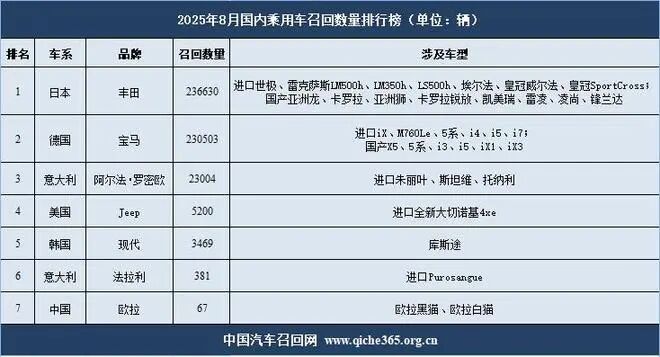
Core Viewpoint - The once-reliable brand image of Toyota, known for its durability, is fading due to a significant recall event, with 236,630 vehicles recalled in August, accounting for nearly half of the total recalls in China for that month [1][2]. Group 1: Recall and Quality Issues - In August, Toyota's recalls were primarily due to insufficient strength in front suspension coil springs and issues with the vehicle's instrument panel [1][2]. - Consumers express doubts about Toyota's quality, questioning the reliability of its vehicles amid the recall crisis [2]. Group 2: Electric Vehicle Transition Challenges - Toyota's struggles in the electric vehicle (EV) market are evident, with a significant decline in sales from 1.94 million units in 2021 to an expected 1.78 million in 2024 [3][6]. - The bZ4X, Toyota's first mass-produced electric model, has seen poor sales, with only 6,045 units sold from January 2024 to August 2025 [6][8]. - Subsequent models like the bZ3 and bZ5 have also underperformed, with bZ3 sales down 55% year-on-year and bZ5 selling only 1,409 units in its first month [8][10]. Group 3: Financial Performance and Profitability - Toyota's net profit for April to June 2023 was 841.3 billion yen, a 37% decline year-on-year, prompting a downward revision of its annual profit forecast by 44% to 2.66 trillion yen [13][15]. - The company has been reliant on its traditional fuel vehicle sales, which provide stable cash flow but hinder its transition to electric vehicles [15][22]. Group 4: Market Position and Consumer Sentiment - The market share of traditional fuel vehicles in China has dropped significantly, with a decrease of over 37 percentage points compared to 2021 [22]. - Consumers are increasingly favoring electric vehicles for their advanced features and experiences, leading to a decline in Toyota's brand premium [29][30]. Group 5: Strategic Responses - In response to the challenges, Toyota has initiated the construction of a new factory in Shanghai for electric vehicles, expected to produce 100,000 units annually starting in 2027 [30][33]. - The company is also shifting decision-making authority for China-specific models to local teams and collaborating with Chinese tech firms for smart features [30][33].
仪表盘软件故障 丰田在美召回超59万辆汽车
Cai Jing Wang· 2025-09-19 07:45
Group 1 - The core issue involves Toyota recalling 591,400 vehicles in the U.S. market due to a malfunction in the dashboard display that fails to show critical information, potentially increasing the risk of accidents or injuries [1] Group 2 - The recall highlights concerns regarding vehicle safety and the importance of dashboard functionality in preventing accidents [1] - This incident may impact Toyota's reputation and consumer trust in the brand, as safety recalls can lead to negative perceptions among potential buyers [1] - The National Highway Traffic Safety Administration (NHTSA) is involved in overseeing the recall process, emphasizing regulatory scrutiny in the automotive industry [1]
多家跨国巨头纷纷推出“氢新计划”,背后有何玄机?
Huan Qiu Wang Zi Xun· 2025-09-19 06:58
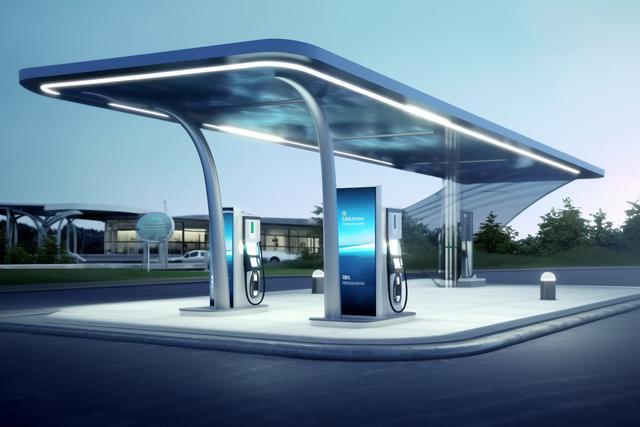
Core Viewpoint - The automotive industry is increasingly focusing on hydrogen fuel cell technology as a strategic pivot towards sustainable energy solutions, with major companies like Renault, BMW, and Toyota unveiling new hydrogen initiatives at the 2025 Munich Auto Show [2][4]. Group 1: Hydrogen Fuel Cell Developments - Renault showcased the Embleme hydrogen fuel cell concept car, which boasts a range of 1000 kilometers and features lightweight materials and a low drag coefficient of 0.25 [3]. - BMW plans to launch commercial hydrogen fuel cell vehicles by 2028, collaborating with Toyota to reduce overall fuel cell technology costs [3][4]. - Toyota has initiated the "TOKYO H2" project in partnership with the Tokyo government, aiming to introduce hydrogen fuel cell vehicles into the taxi market [3]. Group 2: Strategic Considerations - The shift towards hydrogen fuel cell vehicles is seen as a response to the limitations of relying solely on electric vehicles, particularly concerning lithium resource constraints [5][6]. - Hydrogen energy is recognized for its high energy density, with 1 kilogram of hydrogen equating to approximately 3 kilograms of gasoline, making it a viable alternative for automotive power [6]. - The development of hydrogen fuel cell vehicles is central to the future of clean energy transportation, as it supports a diversified energy structure [6]. Group 3: Competitive Landscape - The competition in the automotive sector is intensifying, with hydrogen fuel cell technology offering a chance for companies to reshape market dynamics [8]. - If hydrogen technology plans are successfully implemented, significant cost reductions in hydrogen production are anticipated by 2035, allowing companies to reduce dependency on battery manufacturers [8]. - The transition to hydrogen energy is expected to transform the entire industry, with predictions indicating that hydrogen could meet 18% of global energy demand by 2050, with transportation accounting for 30% of that [8]. Group 4: Infrastructure and Future Outlook - The development of hydrogen fuel cell vehicles faces challenges, particularly in infrastructure such as hydrogen refueling stations [9]. - Countries are addressing these challenges by enhancing infrastructure and integrating renewable energy projects to lower hydrogen costs [9]. - Experts believe that a dual approach of "electric and hydrogen" technologies is essential for the sustainable development of the automotive industry [9].
丰田召回 bZ4X、进口 RZ 等纯电汽车超 3.7 万辆
Bei Jing Shang Bao· 2025-09-19 06:25
Core Points - The National Market Supervision Administration of China announced a recall plan involving multiple Toyota brands due to safety concerns related to vehicle software and design issues [1][2][3] Group 1: Recall Details - From September 22, 2025, a total of 7,945 units of the domestic bZ4X produced between November 15, 2022, and August 24, 2023, will be recalled [1] - From September 22, 2025, a total of 7,211 units of the domestic Platinum 4X produced between December 4, 2023, and August 28, 2025, will be recalled [1] - From September 26, 2025, a total of 8,909 units of imported RZ vehicles produced between August 12, 2022, and June 5, 2024, will be recalled [2] - From September 22, 2025, a total of 8,268 units of the domestic bZ4X produced between September 6, 2022, and July 15, 2023, will be recalled [2] - From September 22, 2025, a total of 647 units of the domestic C-HR EV produced between July 19, 2021, and February 21, 2022, will be recalled [2] - From September 26, 2025, a total of 3,254 units of imported UX vehicles produced between August 5, 2021, and December 1, 2022, will be recalled [3] - From September 22, 2025, a total of 1,288 units of the domestic Yize E hybrid vehicles produced between July 16, 2021, and July 27, 2022, will be recalled [3] Group 2: Safety Issues - The recalled vehicles have a software issue in the air conditioning control unit that may lead to a failure in defogging and defrosting performance, posing a safety risk [2] - The design flaw in the electric heating water heater may cause the heating element to fail, affecting the vehicle's heating and defogging capabilities, which also presents a safety hazard [3] Group 3: Remedial Actions - Toyota companies will provide free upgrades to the air conditioning control computer's internal program for the affected vehicles to eliminate safety risks [2] - Affected vehicles with the heating element issue will receive free replacements of the improved electric heating water heater [3]
丰田召回部分国产及进口纯电动汽车,将通过挂号信等方式通知
Bei Jing Ri Bao Ke Hu Duan· 2025-09-19 01:57
Core Points - GAC Toyota, Toyota Motor (China) Investment Co., Ltd., and FAW Toyota have filed a recall plan with the State Administration for Market Regulation due to safety concerns related to certain vehicle models [1][2][4] Group 1: Recall Details - Recall number S2025M0154V: Starting from September 22, 2025, a total of 7,945 units of domestically produced bZ4X vehicles manufactured between November 15, 2022, and August 24, 2023, will be recalled [1] - Recall number S2025M0155V: Starting from September 26, 2025, a total of 8,909 units of imported RZ vehicles manufactured between August 12, 2022, and June 5, 2024, will be recalled [1] - Recall number S2025M0156V: Starting from September 22, 2025, a total of 8,268 units of domestically produced bZ4X vehicles manufactured between September 6, 2022, and July 15, 2023, will be recalled [1] - Recall number S2025M0157V: Starting from September 22, 2025, a total of 647 units of domestically produced C-HR EV vehicles manufactured between July 19, 2021, and February 21, 2022, will be recalled [2] - Recall number S2025M0158V: Starting from September 26, 2025, a total of 3,254 units of imported UX vehicles manufactured between August 5, 2021, and December 1, 2022, will be recalled [2] - Recall number S2025M0159V: Starting from September 22, 2025, a total of 1,288 units of domestically produced Yize E vehicles manufactured between July 16, 2021, and July 27, 2022, will be recalled [2] Group 2: Safety Issues - The recalled vehicles have issues with the air conditioning control unit software, which may lead to a failure protection mode, affecting defogging and defrosting performance, posing safety risks [1] - The electric heating water heater in some vehicles has durability issues, which could lead to internal damage and affect the heating performance, also posing safety risks [2] Group 3: Remedial Actions - GAC Toyota, Toyota Motor (China) Investment Co., Ltd., and FAW Toyota will provide free upgrades to the air conditioning control computer's internal program for the affected vehicles to eliminate safety hazards [2] - The companies will also replace the electric heating water heater with an improved version for the affected vehicles to address safety concerns [2] Group 4: Customer Notification - The companies will notify affected users through registered mail and provide customer service contact numbers for inquiries regarding the recall [3]
汽车早餐 | 陈伟任辰致汽车科技集团有限公司董事长、党委书记;房车新国标发布,明年3月1日起实施;特斯拉重新设计车门把手
Zhong Guo Qi Che Bao Wang· 2025-09-19 01:00
Group 1: Electric Vehicle Infrastructure - As of August 2025, the total number of electric vehicle charging infrastructure (guns) in China reached 17.348 million, representing a year-on-year growth of 53.5% [2] - Public charging facilities accounted for 4.316 million, with a year-on-year increase of 37.8%, and a total rated power of 196 million kilowatts, averaging about 45.48 kilowatts [2] - Private charging facilities reached 13.032 million, showing a year-on-year growth of 59.6%, with a reported electricity capacity of 115 million kilovolt-amperes [2] Group 2: Robotics and Automation - The Ministry of Science and Technology is promoting the accelerated application of humanoid robots in automotive manufacturing, logistics handling, and power inspection, establishing a solid foundation for a trillion-dollar industry [3] - Best's wholly-owned subsidiary, Yuhua Precision Machinery, is fully entering the linear motion components field, targeting high-end equipment, automation, humanoid robotics, and intelligent connected vehicles [13] - Junsheng Electronics has launched new robotic components, including AI head assemblies, universal controllers, battery packs, and wireless charging systems [14] Group 3: Automotive Sales and Market Trends - The China Automobile Dealers Association forecasts that the total terminal sales of passenger cars in September will reach 2.2 million units, driven by seasonal demand and promotional activities [5] Group 4: Corporate Developments - NIO has completed a $1.16 billion equity issuance, with net proceeds intended for investment in core technology research and development for smart electric vehicles, expanding charging networks, and strengthening its balance sheet [11] - Chen Wei has been appointed as the chairman and party secretary of Chenzhi Automotive Technology Group, effective immediately [10] Group 5: Safety and Recalls - Hyundai is recalling over 568,000 vehicles in the U.S. due to potential issues with seatbelt buckles not locking properly [8] - Toyota is recalling 591,400 vehicles in the U.S. due to dashboard software malfunctions that may increase the risk of accidents [9] Group 6: New Manufacturing Initiatives - Rivian is advancing its factory plan in Georgia, with the first phase expected to start next year and production of customer vehicles targeted for 2028, aiming for an annual capacity of 400,000 vehicles [6]


