TSMC(TSM)

Search documents
AI Demand Lifts Semiconductor Stock; Bullish Bets Build
Schaeffers Investment Research· 2025-12-31 16:39
Core Viewpoint - Taiwan Semiconductor Manufacturing Co (TSMC) shares have increased by 2% to $305.55 following Nvidia's encouragement for TSMC to increase production of H200 AI chips to meet rising demand from China [1] Group 1: Stock Performance - TSMC shares have stabilized above the $300 level after pulling back from a record high of $313.98 on December 10, achieving six consecutive positive trading sessions [2] - The stock is up 127% from its year-to-date low of $134.25 on April 9 and is projected to close 2025 with a 54.6% gain [2] Group 2: Options Activity - Options traders are leaning bearish, indicated by TSMC's Schaeffer's put/call open interest ratio (SOIR) of 2.22, which ranks in the 98th percentile of its annual range [3] - Today's options activity shows 42,000 calls traded, which is double the typical volume, compared to 33,000 puts, with the most active being the weekly 1/2 307.50-strike call [3] Group 3: Volatility Expectations - TSMC's Schaeffer's Volatility Index (SVI) is at 35%, which is higher than just 9% of all readings from the past year, indicating that near-term option traders are pricing in relatively low volatility expectations [4]


台积电(TSM.US)涨超1% 传英伟达追加H200芯片订单
Zhi Tong Cai Jing· 2025-12-31 16:23
周三,台积电(TSM.US)涨1.59%,报304.34美元。据报道,消息人士表示,为满足客户强劲的需求,英 伟达正就新款H200芯片订单接洽台积电;英伟达目前H200芯片库存仅有70万颗,而订单量已达200万 颗;台积电预计将于2026年第二季度开始扩大产能。 ...
Is TSMC (TSM) One of the Best Stocks for the Next Decade?
Yahoo Finance· 2025-12-31 16:13
Taiwan Semiconductor Manufacturing Co. Ltd. (NYSE:TSM) is one of the best stocks for the next decade. Wall Street analysts continue to be bullish on TSMC. Earlier on December 7, Bernstein raised the firm’s price target on Taiwan Semiconductor Manufacturing Co. Ltd. (NYSE:TSM) to $330 from $290 with an Outperform rating. The firm highlighted that TSMC is ramping up its Chip-on-Wafer-on-Substrate capacity to 125,000 wafers per month by the end of 2026. While an increase, Bernstein noted that this capacity w ...
Mixed options sentiment in Taiwan Semi with shares up 0.62%
Yahoo Finance· 2025-12-31 15:35
Core Viewpoint - Taiwan Semiconductor Manufacturing Company (TSM) shows mixed options sentiment with a slight increase in share price, indicating a modestly bullish outlook ahead of its earnings report [1] Options Market Summary - TSM shares increased by $1.88, or 0.62%, reaching approximately $302.80 [1] - Options volume is consistent with the average, with 24,000 contracts traded, and puts leading calls, resulting in a put/call ratio of 1.12, slightly above the typical level of 1.11 [1] - Implied volatility (IV30) decreased by 0.1 to 33.73, which is below the 52-week median, suggesting an expected daily price movement of $6.43 [1] - The put-call skew has flattened, indicating a modestly bullish sentiment in the market [1] Earnings Outlook - TSM is scheduled to report earnings after the market close, with options markets pricing in a 50% probability of a price movement greater than 0.0% or $0.00 [1]
电子行业研究:掘金 AI硬件浪潮:聚焦算力基础、国产突破与存储大周期
SINOLINK SECURITIES· 2025-12-31 15:31
Investment Rating - The report maintains a positive outlook on the AI industry chain and core computing hardware, with a focus on AI copper-clad boards, PCBs, semiconductor equipment, and domestic computing power benefiting from the AI sector [1][2][3]. Core Insights - The capital expenditure (CAPEX) of the four major North American cloud service providers (CSPs) continues to grow, with a positive outlook for future spending. The total CAPEX for Microsoft, Amazon, Google, and Meta reached $97.3 billion in Q3 2025, a year-on-year increase of 65% [1][13]. - The demand for AI computing power is expected to remain strong, driven by the increasing need for ASICs and GPUs. The global market for ASICs is projected to grow at a compound annual growth rate (CAGR) of 54% from 2025 to 2029 [1][41]. - The semiconductor equipment industry is poised for growth due to the expansion of storage capacity and the push for domestic control, with significant opportunities for domestic equipment manufacturers [2][3]. Summary by Sections Section 1: Continued Optimism for the AI Industry Chain - The high CAPEX of cloud providers is expected to be sustainable, with Microsoft, Amazon, Google, and Meta showing strong growth in capital expenditures [1][13]. - AI server demand is projected to increase significantly, with a 20% year-on-year growth expected in 2026, driven by CSP investments in AI infrastructure [1][34]. Section 2: Semiconductor Equipment Industry - The storage expansion cycle, combined with the need for domestic control, is expected to benefit the semiconductor equipment supply chain. The introduction of 3D DRAM technology and increased stacking layers in NAND will drive demand for advanced manufacturing equipment [2][3]. Section 3: Domestic Computing Power Opportunities - Domestic cloud providers have significant room for increased capital expenditure, with major players like Alibaba planning to invest $58 billion in AI hardware infrastructure over the next three years [2][3]. Section 4: AI Edge Applications and Hardware Innovations - Apple's AI strategy focuses on hardware integration and edge AI applications, with expectations for growth in AI/AR glasses and related technologies [3][3]. Investment Recommendations - The report suggests a favorable outlook for AI copper-clad boards, PCBs, core computing hardware, semiconductor equipment, and domestic computing power, anticipating continued growth in these sectors through 2026 [3].




美股异动 | 台积电(TSM.US)涨超1% 传英伟达追加H200芯片订单
智通财经网· 2025-12-31 14:47
智通财经APP获悉,周三,台积电(TSM.US)涨1.59%,报304.34美元。据报道,消息人士表示,为满足 客户强劲的需求,英伟达正就新款H200芯片订单接洽台积电;英伟达目前H200芯片库存仅有70万颗, 而订单量已达200万颗;台积电预计将于2026年第二季度开始扩大产能。 ...
Here’s the tech stock that could set the pace for 2026, and it’s not even a U.S. company
Yahoo Finance· 2025-12-31 14:31
C.C Wei, Chairman and CEO of Taiwan Semiconductor Manufacturing, an important player in the tech space. - i-hwa cheng/Agence France-Presse/Getty Images The last day of trading for 2025 is pointing to less of a bang to end the year, with tech leading the way south in a week that hasn’t exactly inspired confidence that investors will get a Santa Rally bump at the start of January. However, lots of traders are already gone for the year, which has delivered a 17% plus gain for the S&P 500 SPX, so judging wha ...
Nvidia scrambles to supply H200 chips as China demand soars
Proactiveinvestors NA· 2025-12-31 14:18
About this content About Angela Harmantas Angela Harmantas is an Editor at Proactive. She has over 15 years of experience covering the equity markets in North America, with a particular focus on junior resource stocks. Angela has reported from numerous countries around the world, including Canada, the US, Australia, Brazil, Ghana, and South Africa for leading trade publications. Previously, she worked in investor relations and led the foreign direct investment program in Canada for the Swedish government ...
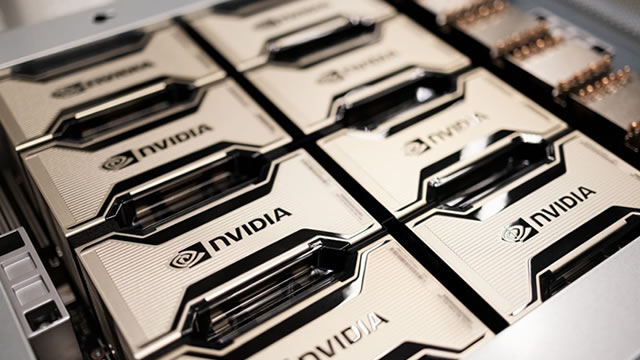
Nvidia Asks TSMC To Boost H200 Production Amid China Demand
Investors· 2025-12-31 14:06
stocks they discuss. We make no representations or warranties regarding the advisability of investing in any particular securities or utilizing any specific investment strategies. Information is subject to change without notice. For information on use of our services, please see our Terms of Use. *Real-time prices by Nasdaq Last Sale. Real-time quote and/or trade prices are not sourced from all markets. Ownership data provided by LSEG and Estimate data provided by FactSet. IBD, IBD Digital, IBD Live, IBD We ...
Here's the tech stock that could set the pace for 2026, and it's not in the U.S.
MarketWatch· 2025-12-31 12:06
A hot Taiwan chip maker could be ready to flag signals on where tech is going in 2026, says Miller Tabak + Co.'s Matt Maley. ...