TSMC(TSM)

Search documents
高管跳槽引爆争议:英特尔(INTC.US)驳斥台积电(TSM.US)泄密指控,先进制程角力加剧
智通财经网· 2025-11-27 09:13
Core Viewpoint - Intel denies allegations from TSMC regarding the leakage of trade secrets by former TSMC executive Lo Wen-jen, emphasizing its commitment to protecting intellectual property and welcoming Lo's return to the company [1][2]. Group 1: Allegations and Responses - TSMC has filed a lawsuit against Lo Wen-jen, claiming he may have leaked confidential information to Intel, prompting an investigation by Taiwan's Ministry of Economic Affairs [2]. - Intel's CEO Lip-Bu Tan refuted any speculation of wrongdoing, asserting that the company respects all chip manufacturing intellectual property [2][3]. Group 2: Industry Context - Intel and TSMC have a complex relationship, where Intel is both a customer and a competitor to TSMC, which holds a dominant position in the semiconductor foundry market [3]. - TSMC's market capitalization exceeds $1.15 trillion, making it the leading chip foundry globally, far surpassing Intel's historical prominence in the semiconductor industry [2]. Group 3: Intel's Strategic Shift - Intel is focusing on advanced process technology to compete with TSMC and Samsung, aiming to develop cutting-edge chips at 2nm and below [4][5]. - The company is transitioning to a foundry model, targeting high-end chip manufacturing for major clients like NVIDIA and AMD, with the success of its 18A and 16A technologies being crucial for its turnaround [5].


3nm提前落地、DRAM需求爆发,阿斯麦盈利大反转来了?
Hua Er Jie Jian Wen· 2025-11-27 06:48
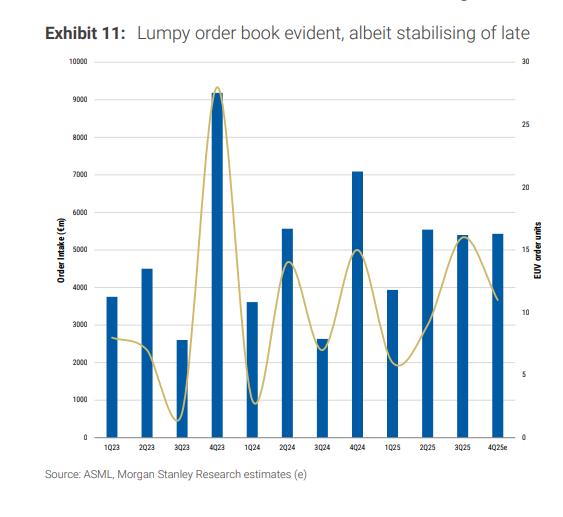
Core Insights - ASML is emerging from a prolonged 14-month downturn, with new growth drivers identified in the demand for DRAM and advanced logic chips, leading to a positive growth outlook for the fiscal years 2026-2027 [1] Group 1: DRAM Market Dynamics - The strong demand in the DRAM market is evident, with ASML maintaining solid demand during the transition from 1a and 1b nodes to 1γ/1c nodes, which is crucial for enhancing lithography intensity [2] - Each technological node evolution increases the number of EUV lithography layers required, with the 1c node needing 5-6 layers, indicating sustained demand for EUV lithography systems [2] - Samsung and SK Hynix are expected to have clear demand in fiscal year 2026, supported by strong price increases in commodity DRAM [2] Group 2: Advancements in 3nm Technology - TSMC is testing the original graphic performance of 3nm technology, with potential adoption at its Arizona facility possibly occurring earlier than the initially planned 2028 [3] - ASML benefits from TSMC's 3nm process technology, which relies on ASML's EUV lithography machines to produce more powerful, energy-efficient, and smaller chips [3] - The growth of AI is indirectly creating demand for ASML, with NVIDIA's record quarterly revenue indicating strong interest in its Blackwell series GPUs, which is expected to drive TSMC's expansion of 3nm capacity and increase orders for EUV lithography machines [3] Group 3: Market Recovery and Valuation Reassessment - ASML is moving out of a lengthy downturn, with previous cycles typically compressing its two-year forward P/E ratio from 30-35x to 18-22x within 8-10 months; however, this cycle has lasted over 14 months due to geopolitical uncertainties [5] - The downturn was primarily due to weak spending from foundries other than TSMC, such as Intel and Samsung, along with concerns about lithography intensity and pricing pressure, which have now largely dissipated [5] - The report indicates that the average selling price (ASP) of EUV is expected to rise due to TSMC's adoption of computational lithography, with evidence of a "memory super cycle" emerging from rising commodity DRAM prices and advancements in Samsung's HBM3e/HBM4 [5] Group 4: Profitability and Business Challenges - Despite a positive outlook, ASML faces challenges, particularly in its DUV business, which is expected to see a year-on-year sales decline of approximately 15% due to weakened demand in a key Asian market [6] - ASML's profit margins are expected to remain resilient, supported by higher EUV sales and contributions from its installed base management business [6] - The forecast for ASML's gross margin in fiscal year 2026 is 52.3%, only slightly down from 52.7% in 2025, demonstrating the company's ability to control margins during a challenging DUV year [6] Group 5: Investment Outlook - Based on the positive outlook, Morgan Stanley has raised its target price for ASML from €975 to €1000 and maintains an "overweight" rating, viewing the recent stock price decline as an attractive entry point [6]


集邦咨询:预计2026年全球AI Server出货同比增长逾20% AI芯片液冷渗透率达47%
Zhi Tong Cai Jing· 2025-11-27 06:37
Core Insights - The global AI server shipments are expected to grow by over 20% year-on-year in 2026, driven by increased capital expenditure from North American CSPs and the rise of sovereign cloud initiatives [1][2] - The competition in the AI chip market is intensifying, with companies like AMD and various Chinese firms enhancing their self-developed ASIC capabilities, challenging NVIDIA's dominance [1][2] Group 1: AI Chip and Cooling Technologies - The thermal design power (TDP) of AI chips is projected to rise from 700W for NVIDIA's H100 and H200 to over 1,000W for upcoming models, necessitating liquid cooling systems in server cabinets, with a forecasted penetration rate of 47% for liquid cooling in AI chips by 2026 [2] - Microsoft is introducing new microfluidic cooling technologies for next-generation chip packaging, while the market is expected to transition from liquid-to-air (L2A) to liquid-to-liquid (L2L) cooling designs [2] Group 2: Memory and Data Transfer Innovations - HBM and optical communication technologies are becoming critical for overcoming bandwidth limitations in AI computing, with HBM4 expected to enhance I/O bandwidth and local bandwidth for AI chips [3][4] - The introduction of 800G/1.6T pluggable optical modules is underway, with expectations for higher bandwidth SiPh/CPO platforms to be integrated into AI switches starting in 2026 [4] Group 3: NAND Flash and Storage Solutions - NAND Flash suppliers are accelerating the development of specialized solutions to address the performance gap in AI training and inference workloads, including storage-class memory (SCM) SSDs and Nearline QLC SSDs [5][6] - QLC technology is anticipated to achieve a 30% market penetration in enterprise SSDs by 2026, significantly reducing the cost of storing large AI datasets [6] Group 4: Energy Storage Systems - AI data centers are evolving towards large-scale clusters, with energy storage systems transitioning from emergency backup to core energy solutions, expected to grow from 15.7 GWh in 2024 to 216.8 GWh by 2030, reflecting a CAGR of 46.1% [7] - North America is projected to become the largest market for AI data center energy storage, driven by major cloud providers [7] Group 5: Power Infrastructure and Semiconductor Demand - Data centers are shifting to 800V HVDC architectures to enhance efficiency and reliability, with third-generation semiconductors (SiC/GaN) expected to penetrate 17% of data center power supply by 2026 [8] Group 6: Advanced Semiconductor Technologies - The transition to 2nm GAAFET technology is underway, emphasizing higher transistor density and heterogeneous integration to meet the demands of AI applications [9] Group 7: Humanoid Robots and Market Growth - The global shipment of humanoid robots is projected to increase by over 700% in 2026, focusing on AI adaptability and application-specific designs [10][11] Group 8: Display Technology Advancements - OLED technology is set to accelerate in laptops, with Apple expected to introduce OLED panels in MacBook Pro by 2026, leading to a significant increase in OLED penetration in the laptop market [12][13] Group 9: Autonomous Driving and Robotaxi Expansion - The penetration rate of L2 and above advanced driver-assistance systems is expected to exceed 40% by 2026, with Robotaxi services expanding globally beyond just China and the US [15]



台积电前高管转投英特尔惹争议
Sou Hu Cai Jing· 2025-11-27 06:22
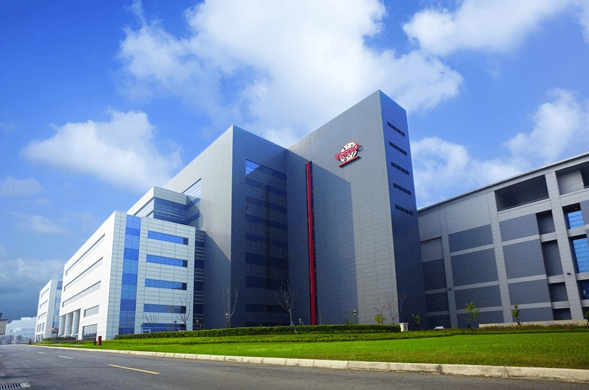
Core Points - The former senior vice president of TSMC, Luo Wei-ren, plans to join Intel as an executive vice president, prompting TSMC to file for a temporary injunction to prevent his transition [2] - The case has garnered significant attention, particularly regarding whether Luo can retain his status as an "Academician of the Industrial Technology Research Institute" [2] - TSMC's legal action is based on concerns over potential leakage of core technologies if Luo joins a competitor, citing employment contracts and non-compete clauses as legal grounds [2][3] Group 1 - TSMC has filed a request with the Intellectual Property and Commercial Court to prohibit Luo Wei-ren from taking up his new position at Intel, with the court confirming the case has been accepted [2] - The Ministry of Economic Affairs has initiated procedures to revoke Luo's academician status, indicating that his actions may violate security and trade secret laws [2] - TSMC emphasizes the need to protect trade secrets and has requested the court to keep related information confidential until the case is clarified [2] Group 2 - Prior to his retirement, Luo allegedly instructed subordinates to compile technical briefs covering TSMC's advanced processes, including 2nm and A16 technologies, and is suspected of taking confidential documents with him [3] - Luo joined TSMC in 2004 and has been instrumental in key technology development, holding over 1,500 patents and playing a crucial role in overcoming the 10nm process technology bottleneck [3] - His leadership in the "Night Owl Project" established a continuous R&D operation model, significantly supporting TSMC's success in critical process nodes [3]
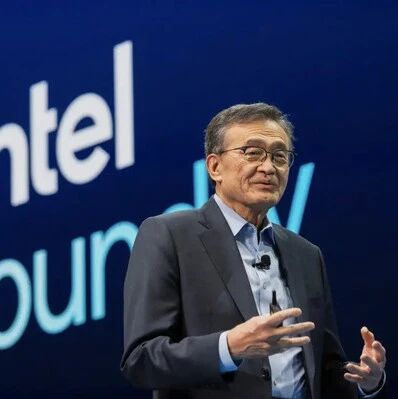
英特尔CEO陈立武:完全支持罗唯仁,台积电的指控毫无根据!
Sou Hu Cai Jing· 2025-11-27 06:17
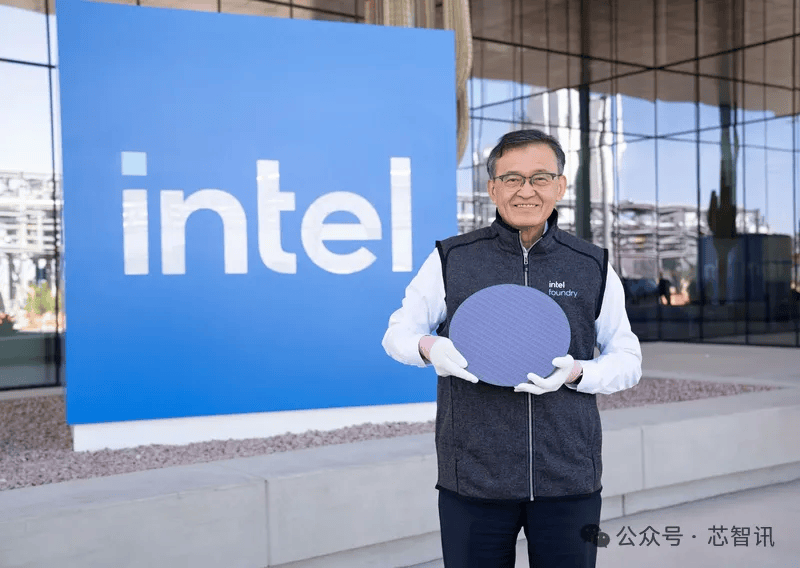
Group 1 - TSMC has filed a lawsuit against former senior vice president Luo Wei-ren for allegedly taking confidential information related to 2nm and advanced processes to Intel [2][3] - Intel CEO Pat Gelsinger expressed full support for Luo, stating that the accusations from TSMC are baseless and emphasizing the company's commitment to respecting intellectual property [2] - Gelsinger highlighted Luo's return to Intel after 18 years, where he was responsible for wafer process technology development, and dismissed the allegations as rumors and speculation [2] Group 2 - TSMC's lawsuit is based on the employment contract signed with Luo, which includes confidentiality and non-compete clauses, asserting that he violated these agreements by joining Intel shortly after leaving TSMC [3] - TSMC believes there is a high likelihood that Luo may have used or disclosed its trade secrets to Intel, prompting the legal action for breach of contract and potential damages [3]
员工跳槽引发巨头激烈对峙!台积电:罗唯仁涉嫌将2nm等先进制程机密泄露给英特尔,英特尔回击:毫无依据
Ge Long Hui· 2025-11-27 05:01
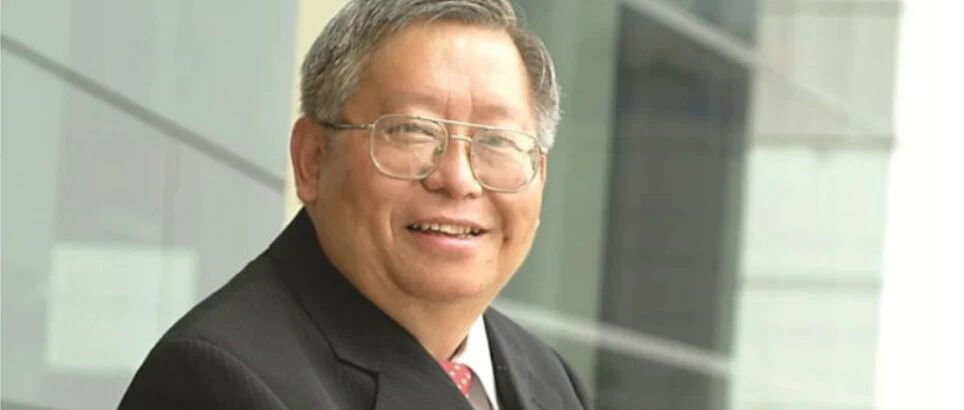
Core Viewpoint - Intel has responded to TSMC's lawsuit, emphasizing its strict policies against the use or transfer of third-party confidential information and intellectual property [1] Group 1 - TSMC has filed a lawsuit against Intel, accusing former senior vice president Luo Wei-ren of violating confidentiality agreements and non-compete obligations [1] - The lawsuit alleges that Luo Wei-ren leaked advanced process secrets, including those related to 2nm technology, to Intel [1] - Intel asserts its commitment to upholding confidentiality and compliance with corporate policies [1]

台积电:禁止罗唯仁赴任英特尔!
国芯网· 2025-11-27 04:39
Core Viewpoint - The article discusses the legal actions taken by TSMC against former executive Luo Wei-ren, who has transitioned to Intel, highlighting concerns over potential trade secret leaks and the implications for Taiwan's semiconductor industry [1][3]. Group 1: Legal Actions and Implications - TSMC has filed for a "temporary status injunction" to prevent Luo Wei-ren from joining Intel, citing risks of leaking company secrets [1][3]. - The case has garnered significant attention, particularly regarding the potential impact on Luo's status as an "Academician" at the Industrial Technology Research Institute [3]. - The Taiwanese economic department has initiated procedures to revoke Luo's academic title, indicating that his actions may violate the "Security Law" and "Trade Secrets Law" [3]. Group 2: Background on Luo Wei-ren - Luo Wei-ren joined TSMC in 2004 and has held several key technical positions over his 21-year tenure, contributing to over 1,500 patents [4]. - He played a crucial role in overcoming the 10nm process development challenges and led the "Night Hawk Project," which established a continuous R&D system [4].
英特尔:台积电指控毫无根据!
国芯网· 2025-11-27 04:39
Core Viewpoint - The article discusses the legal dispute between TSMC and Intel regarding the alleged transfer of intellectual property by former TSMC executive, Luo Weiren, to Intel, with Intel's CEO publicly supporting Luo and denying the accusations [3]. Group 1: Legal Dispute - TSMC has filed a lawsuit against Luo Weiren, claiming that his move to Intel could lead to the leakage of advanced chip technology, particularly related to 2nm process technology [3]. - Intel's CEO, Chen Lifeng, has publicly stated that TSMC's accusations are baseless and emphasized the company's support for Luo [3]. - Intel asserts that it has strict policies in place to prevent the use or transfer of any third-party confidential information or intellectual property [3]. Group 2: Company Background - Luo Weiren previously worked at Intel for 18 years, focusing on wafer processing technology before joining TSMC [3]. - The article highlights the competitive nature of the semiconductor industry, where the transfer of key personnel can raise concerns about intellectual property and competitive advantages [3].
员工跳槽引发激烈对峙:台积电称已泄密,英特尔回击
Di Yi Cai Jing· 2025-11-27 04:16
Core Viewpoint - The semiconductor industry is currently facing a significant controversy involving Intel and TSMC, centered around allegations of trade secret theft related to advanced manufacturing processes [1][2]. Group 1: Legal Dispute - TSMC has filed a lawsuit against former senior vice president Luo Wei-ren, accusing him of violating confidentiality agreements and transferring proprietary information about 2nm technology to Intel [1]. - Intel has responded by asserting that it has strict policies in place to prevent the use or transfer of third-party confidential information, labeling TSMC's claims as unfounded rumors [2]. Group 2: Technological Developments - Intel's 18A process technology, which utilizes RibbonFET transistors and PowerVia technology, has commenced mass production in Arizona, achieving a 30% increase in transistor density and a 15% performance improvement at the same energy consumption compared to the previous generation [2]. - The differences between Intel's and TSMC's process technologies are highlighted, with Intel being an early adopter of High-NA EUV technology, which TSMC has not yet implemented [2]. Group 3: Market Dynamics - The global pure wafer foundry industry is projected to see a 33% year-on-year revenue growth in Q2 2025, driven primarily by the application of advanced processes in AI GPU sectors [3]. - Intel's ability to enhance the yield of its 18A process to commercial levels within the next 1-2 years is critical, as failure to do so may result in losing its competitive edge in the high-end foundry market to TSMC and Samsung [3].
员工跳槽引发激烈对峙:台积电称已泄密,英特尔回击
第一财经· 2025-11-27 04:09
Core Viewpoint - The article discusses a legal dispute between TSMC and Intel, focusing on allegations of trade secret theft involving a former TSMC executive who allegedly shared confidential information with Intel [3][4]. Group 1: Legal Dispute - TSMC has filed a lawsuit against former senior vice president Luo Wei-ren for allegedly violating confidentiality agreements and transferring advanced process secrets to Intel [3][4]. - Intel has responded to the allegations, asserting that it has strict policies against using third-party intellectual property and that its technology differs fundamentally from TSMC's [5][6]. Group 2: Technology and Market Implications - Intel's 18A process technology, which has begun mass production in Arizona, utilizes RibbonFET transistors and PowerVia technology, achieving a 30% increase in transistor density and a 15% performance improvement at the same energy consumption compared to previous generations [6]. - The global pure wafer foundry industry saw a 33% year-on-year revenue growth in Q2 2025, driven by advanced processes in AI GPU applications, highlighting the competitive landscape [7]. Group 3: Strategic Importance of Luo Wei-ren - Luo Wei-ren, who retired from TSMC in July 2025, is seen as a key figure for Intel to accelerate its technology deployment, as he has extensive industry experience [6][7].