TSMC(TSM)

Search documents
黄仁勋亲赴台积电“要产能”,称“冇有台积电(TSM.US)、就冇有英伟达(NVDA.US)”
智通财经网· 2025-11-09 03:10
Core Insights - The CEO of Nvidia, Jensen Huang, is actively seeking increased chip supply from TSMC to meet the strong demand driven by the AI boom, highlighting TSMC's critical role in the AI supply chain [1][2] - Huang's visit to Taiwan and his request for more wafer supply from TSMC indicate Nvidia's confidence in the future demand for AI products [1][2] - Nvidia's growth is closely tied to TSMC's production capacity, with Huang stating, "Without TSMC, there is no Nvidia" [1][3] Supply Chain Challenges - Nvidia's primary goal during Huang's visit to Taiwan was to secure more wafers for its Blackwell series chips, as demand for Nvidia's products is currently immense [2] - TSMC's advanced manufacturing capabilities are in high demand globally, with CEO C.C. Wei noting that the company's capacity remains "very tight" [2] - Nvidia aims to become a major customer for TSMC's 3nm process, potentially accounting for about 30% of TSMC's total output [2] Strategic Dependency - Huang's statement about the dependency on TSMC reflects the evolution of Nvidia's strategy, as the company is now competing for the latest chip technologies [3] - This marks Huang's fourth visit to Taiwan this year, indicating a deepening relationship between Nvidia and TSMC [3] - Strengthening ties with TSMC is crucial for Nvidia to maintain its market dominance amid fierce competition in the AI sector [3]


帮主郑重:黄仁勋急赴台积电抢芯片,A股中长线该盯啥?
Sou Hu Cai Jing· 2025-11-09 02:42
Core Insights - Huang Renxun's frequent visits to TSMC indicate a strong demand for Nvidia's new chips, driven by the explosive growth of the AI industry [4][5] - The shortage of storage chips highlights ongoing demand in the semiconductor supply chain, which is crucial for long-term investment strategies in A-shares [4][5] Industry Dynamics - Nvidia's latest chip requirements are soaring, with both GPU and CPU demands increasing significantly, reflecting the broader AI industry's rapid expansion [4] - Huang Renxun's statement about the diverse applications of Nvidia's GPUs, including AI, scientific research, and quantum computing, underscores the company's competitive advantage and resilience against potential competition from companies like Google and Amazon [4] Investment Strategy - Long-term investment in A-shares should focus on companies with technological barriers and strong performance that align with the growth of the AI industry, particularly in semiconductor manufacturing and storage sectors [5] - The ongoing demand in the AI supply chain suggests that companies involved in chip manufacturing and related industries will continue to see sustained growth, making them attractive for long-term investment [5]

黄仁勋亲赴台积电“要产能”,称“没有台积电、就没有英伟达”
Hua Er Jie Jian Wen· 2025-11-09 01:22
Core Insights - Nvidia is actively seeking to secure more chip supply from TSMC due to strong demand driven by the AI boom, highlighting TSMC's critical role in the AI supply chain [1][2] - Nvidia's CEO Jensen Huang expressed confidence in the company's growth, stating that their business is becoming stronger month by month, and emphasized the importance of TSMC in Nvidia's success [1][3] - TSMC's advanced manufacturing capabilities are in high demand globally, with Nvidia aiming to become a major customer for TSMC's 3nm process, potentially accounting for about 30% of TSMC's total output [2] Supply Chain Dynamics - The visit to Taiwan by Huang was primarily to secure more wafers for Nvidia's Blackwell series chips, as capacity constraints are a significant challenge in meeting the high market demand for Nvidia's products [1] - Huang's statement "Without TSMC, there is no Nvidia" underscores the deep strategic dependence Nvidia has on TSMC for both semiconductor manufacturing and advanced packaging services [3] - Nvidia's relationship with TSMC is deepening, with Huang's fourth visit to Taiwan this year indicating a strong commitment to maintaining this partnership amid increasing competition in the AI accelerator market [3]
黄仁勋亲赴台积电“讨要更多芯片” 回应存储短缺、涨价等问题
财联社· 2025-11-08 23:42
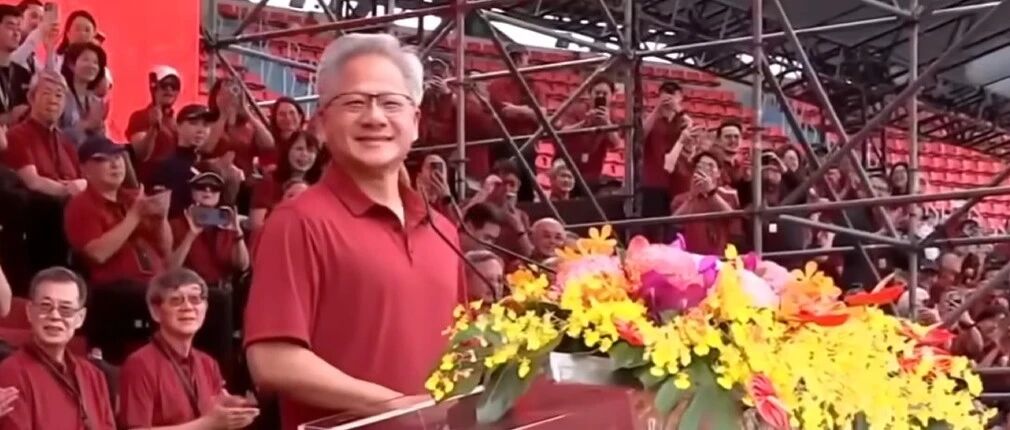
Core Viewpoint - The close relationship between NVIDIA and TSMC is highlighted through CEO Jensen Huang's frequent visits, indicating strong collaboration in chip production and development [1][6]. Group 1: Company Visits and Relationships - Jensen Huang visited TSMC for the third time in three months, emphasizing the strong ties between the two companies [1]. - Huang attended TSMC's annual sports meeting, a rare event for external executives, where he expressed gratitude towards TSMC employees for their role in building NVIDIA [3][5]. Group 2: Chip Demand and Production - Huang noted that NVIDIA's latest Blackwell chips are experiencing "very strong demand," leading to increased wafer requirements from TSMC [6]. - Huang mentioned that NVIDIA manufactures GPUs, CPUs, and networking devices, which are all related to the Blackwell chips [6]. Group 3: Market Dynamics and Supply Chain - TSMC's CEO, C.C. Wei, indicated that Huang is seeking more chips, but specific quantities remain confidential [8]. - Huang acknowledged the ongoing strong growth in the industry, which is causing various shortages, including memory chips [8]. - Huang stated that NVIDIA has received advanced chip samples from leading memory manufacturers SK Hynix, Samsung, and Micron, who are expanding production to support NVIDIA [8]. Group 4: Competitive Landscape - Huang emphasized that NVIDIA's business model is distinct from companies like Google and Amazon, asserting that the versatility of NVIDIA's GPU architecture surpasses that of ASIC chips [9]. - The GPU architecture is applicable not only in AI computations but also in scientific, physical, and quantum fields, which is a core competitive advantage for NVIDIA [9].
1 Surprising Way Taiwan Semiconductor Manufacturing (TSMC) Makes Money
The Motley Fool· 2025-11-08 23:02
Core Insights - The rise of artificial intelligence (AI) has significantly impacted the technological landscape, with major companies increasingly tied to this technology [1] - Taiwan Semiconductor Manufacturing Company (TSMC) has emerged as a key player, producing approximately 90% of the world's advanced semiconductors, particularly for AI and high-performance computing (HPC) [2] - TSMC's market capitalization has increased by over $1 trillion since early 2023 due to unprecedented demand for high-end processors [3] Revenue Breakdown - TSMC's primary revenue source is from high-performance computing (HPC), which accounted for 57% of its third-quarter sales [4] - The smartphone segment, previously TSMC's largest revenue generator, has seen a resurgence, contributing 30% to third-quarter sales, aided by the success of Apple's iPhone 17 [5][7] Financial Performance - In the third quarter, TSMC reported revenue of $33.1 billion, reflecting a 41% year-over-year increase and a 10% sequential growth, with earnings per American depositary receipt (ADR) rising 39% to $2.92 [8] - TSMC's stock is currently priced at 30 times trailing-12-month earnings, which is a discount compared to the S&P 500's multiple of 31 [8]


刚刚!两大利好,突袭!
Zhong Guo Ji Jin Bao· 2025-11-08 16:17
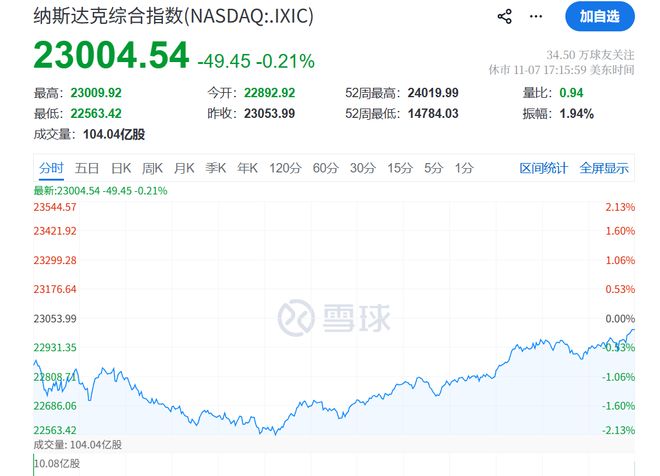
【导读】两个利好消息 中国基金报记者 泰勒 大家好周末好,简单看两则利好消息。 美国政府停摆最新消息 | 最高:23009.92 | 今开:22892.92 | 52周景高:24019.99 | 量比:0.94 | | | --- | --- | --- | --- | --- | | 最低:22563.42 | 昨收:23053.99 | 52周最低: 14784.03 | 振幅:1.94% | | | 成交量:104.04亿股 | | | | | | 关时 五日 | 日K 周K 月K 季K 年K 120分 60分 30分 15分 5分 1分 | | 区间统计 全屏显示 | | | 最新:23004.54-49.45-0.21% | | | | | | 23544.57 | | | | 2.13% | | 23421.92 | | | | 1.60% | | 23299.28 | | | | 1.06% | | 23176.64 | | | | 0.53% | | 23053.99 | | | | 0.00% | | 22931.35 | | | | | | 22808.74 | | | | -1.06%6 ...
刚刚!两大利好 突袭!
Zhong Guo Ji Jin Bao· 2025-11-08 16:10
【导读】两个利好消息 大家好周末好,简单看两则利好消息。 美国政府停摆最新消息 英伟达CEO向台积电请求更多晶圆 周末,英伟达首席执行官黄仁勋表示,鉴于人工智能需求依然强劲,他已向台积电请求增加芯片供给。 黄仁勋表示:"业务非常强劲,而且按月增长,越来越强。"他称,英伟达的三家AI存储芯片供应商—— SK海力士、三星电子和美光科技——都已扩大"巨大产能"为公司提供支持。 台积电首席执行官魏哲家周六也表示,黄仁勋确实提出了增加晶圆的请求。魏哲家说,台积电预计未来 每年都将继续创下销售纪录。 本周,超大盘科技股在一阵对AI的冷静期中遭受重挫。投资者情绪受到OpenAI融资问题以及迈克尔·伯 里旗下Scion Asset Management做空英伟达的影响而受挫。 黄仁勋对AI需求的乐观也得到同行呼应。高通公司首席执行官安蒙本周早些时候表示,外界低估了这 项新技术的规模会有多大。 魏哲家在10月份对分析师表示,台积电的产能依然非常紧张,公司正努力缩小供需缺口。 周五晚间,美股三大指数盘中大跌,随后在盘中低点上演大逆转,大幅反弹。原因是尾盘出现了一则消 息,市场寄望美国国会更接近达成协议、结束美国史上最长的政府关门 ...
刚刚!两大利好,突袭!
中国基金报· 2025-11-08 16:05
美国政府停摆最新消息 【导读】两个利好消息 中国基金报记者 泰勒 大家好周末好,简单看两则利好消息。 有分析师表示:"政府关门带来了进一步风险,持续时间越长,其对实体经济的影响就越明显。" 英伟达CEO向台积电请求更多晶圆 周五晚间,美股三大指数盘中大跌,随后在盘中低点上演大逆转, 大幅反弹。 原因是尾盘出现了一则消息,市场寄望美国国会更接近 达成协议、结束美国史上最长的政府关门。 当地时间周五,美股收盘收复了跌幅,标普500指数中将近400只成份股上涨。尽管参议院共和党人否决了民主党将诉求缩减为"延长即 将到期的医疗补贴一年"的提议,但双方开始互相出价被视为积极进展。纳斯达克100指数收复了周五大部分跌幅,但本周仍创下自4月 以来最差表现。 | 最高: 23009.92 | 今开:22892.92 | 52周最高: 24019.99 | 量比:0.94 | | --- | --- | --- | --- | | 最低: 22563.42 | 昨收:23053.99 | 52周最低: 14784.03 | 振幅: 1.94 | | 成交量: 104.04亿股 | | | | 受政府关门拖累、对经济前景的担忧加 ...

Nvidia CEO Jensen Huang seeks more chip supply from TSMC as AI demand surges
Invezz· 2025-11-08 12:20
Core Insights - Nvidia's CEO Jensen Huang has requested additional chip supplies from TSMC due to the rapid growth in demand for AI technologies [1] Company Summary - Nvidia is experiencing a surge in demand for its AI technologies, prompting the need for increased chip supplies from TSMC [1] Industry Summary - The semiconductor industry, particularly companies like TSMC, is under pressure to meet the rising demand driven by advancements in artificial intelligence [1]
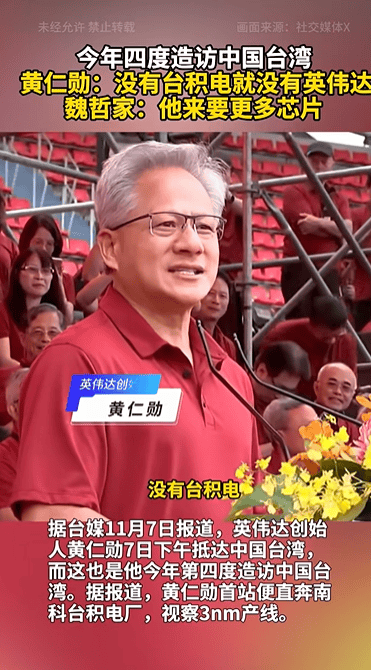
黄仁勋直奔台积电厂:没有台积电就没有英伟达;台积电CEO魏哲家:他来要更多芯片
Sou Hu Cai Jing· 2025-11-08 10:03
此前据科创板日报报道,11月7日下午,英伟达创始人兼首席执行官黄仁勋抵达中国台南机场时称:"因为事业发展非常强劲,所以我特地回来鼓励我的台 积电朋友们要加油。" 黄仁勋表示,他会在台南停留5小时,之后前往台北,在台北待上几个小时后回家。他证实,明天将参加台积电的运动会。黄仁勋还称,尽管非常期待逛 夜市,但本次行程真的没有时间。 另据环球时报援引《金融时报》报道,黄仁勋5日峰会期间接受采访说,"中国将在AI竞赛中获胜"。他批评了西方的现行做法,称这是阻碍进步的"犬儒主 义"。他特别提到美国各州的AI新规可能导致"50条新规范"的出台,他将这种做法与中方的能源政策进行对比,提到中国本地科技公司能够以更低成本运 行国产的AI芯片。 报道提到,自从中国DeepSeek公司凭借其大语言模型惊艳世界以来,美国对中国在AI领域取得进步的担忧已持续一整年。美国"商业内幕"称,黄仁勋最新 表态加大了对美国可能落后的警告力度。 据参考消息援引台媒11月7日报道,英伟达创始人黄仁勋7日下午抵达中国台湾,而这也是他今年第四度造访中国台湾。据报道,黄仁勋首站便直奔南科台 积电厂,视察3nm产线。 10月8日黄仁勋参加台积电运动会时表示 ...