
众擎机器人

Search documents
超578亿元!2025年人形机器人融资全景回顾
机器人圈· 2026-01-14 09:27
Core Insights - The article highlights a significant increase in financing events and amounts in the humanoid robotics sector, projecting over 215 financing events and a total financing amount exceeding 578 billion RMB by 2025, marking a substantial growth compared to 2024 [3][5]. Financing Overview - The number of financing events in the humanoid robotics industry is expected to rise from 67 in 2024 to 215 in 2025, representing an increase of approximately 221% [5]. - The total financing amount is projected to grow from 110 billion RMB in 2024 to 578 billion RMB in 2025, indicating a growth rate of about 425% [5]. Notable Financing Events - RoboForce (USA) secured 10 million USD in seed funding on January 6, 2025 [6]. - Fourier (China) raised nearly 800 million RMB in an E-round on January 7, 2025 [6]. - Neura (Germany) received 120 million EUR in a B-round on January 15, 2025 [6]. - Apptronik (USA) raised 350 million USD in an A-round on February 13, 2025 [7]. - The financing event list includes various companies from different countries, showcasing a diverse investment landscape in the humanoid robotics sector [6][7].

国泰海通|汽车:中国人形机器人公司在CES 2026上表现亮眼
国泰海通证券研究· 2026-01-13 13:20
Core Viewpoint - The humanoid robot industry is entering its early commercialization phase, necessitating attention to marginal changes affecting both domestic and overseas quality companies [1] Group 1: Industry Progress - Recent advancements in humanoid robot enterprises in both domestic and international markets indicate a potential resonance between the two, accelerating the global commercialization of humanoid robots [2] - At CES 2026, over 28 Chinese humanoid robot companies showcased their technologies, representing more than half of the exhibitors in the humanoid robot sector, highlighting China's technological capabilities [2] - Notable products included Zhiyuan Robot's full product line and interactive demonstrations from companies like Zhongqing Robot, showcasing the industry's innovation and engagement [2] Group 2: International Developments - Several overseas companies also made significant strides in humanoid robotics at CES 2026, including LG's CLOiD for home tasks and Boston Dynamics' new Atlas robot with advanced capabilities [3] - Boston Dynamics' Atlas features 56 degrees of freedom and can autonomously change its battery, indicating a leap in robotic functionality and potential applications in various industries [3] Group 3: Market Dynamics - New Jian Transmission has initiated its listing guidance, with plans to assist in its IPO application, emphasizing its role as a core component supplier for Tesla's humanoid robot [4] - The company specializes in manufacturing various components, indicating a growing supply chain for humanoid robotics in the automotive sector [4]

国泰海通 · 晨报260114|有色金属、汽车
国泰海通证券研究· 2026-01-13 13:20
Precious Metals - Geopolitical factors are supporting gold prices, with the situation in Venezuela and the Middle East playing a significant role. Strong U.S. unemployment data is also noted. Central bank gold purchases and rising gold ETF holdings are expected to continue supporting gold prices through 2026 [2] - Silver prices are following gold trends, with a decrease in London silver leasing rates and an increase in inventory [2] - Platinum prices are expected to strengthen due to anticipated U.S. tariffs [2] Copper - U.S. employment data shows mixed results but reflects economic resilience. Ongoing strikes at the Mantoverde copper mine in Chile are causing supply disruptions, leading to a bullish outlook for copper prices. The market is advised to monitor the impact of Trump's nomination for the next Federal Reserve chair on copper prices [3] - Supply constraints are expected to persist, while demand may be affected by high prices. However, low inventory levels in non-U.S. regions and a return to Monroe Doctrine strategies are likely to enhance price elasticity [3] Aluminum - Strong macroeconomic performance is driving aluminum prices to maintain high levels. Increased daily production due to new projects in China and Indonesia is noted, alongside a slight increase in operating rates for domestic aluminum processing companies [3] Tin - Supply bottlenecks remain, providing strong support for tin prices. Delays in the resumption of mining in Myanmar and uncertainties in Indonesia's RKAB approval process are limiting supply elasticity. Despite adjustments in the Federal Reserve's interest rate path, tin prices are supported by liquidity expectations and demand from the semiconductor industry [3] Energy Metals - Lithium inventory accumulation and rising production are noted, with marginally weakening demand. A reduction in export tax rebates for battery products may lead to front-loaded demand, making seasonal demand stronger than expected [4] - Cobalt prices remain high due to tight upstream raw material supplies, while cobalt companies are extending their reach into downstream electric new energy sectors to enhance competitive advantages [4] - Rare earth prices are rebounding due to policy support and pre-holiday stocking demand, with significant increases in medium and heavy rare earth prices [4] Robotics Industry - Chinese humanoid robot companies showcased significant advancements at CES 2026, with over 28 companies participating, highlighting China's technological capabilities in this field [9] - Notable products included the full range of offerings from Zhiyuan Robotics and interactive demonstrations from other companies, indicating a strong presence in the global market [9] - International competitors like LG and Boston Dynamics also made strides in humanoid robotics, showcasing innovative applications and capabilities [10] Company Developments - Xinjian Transmission has initiated its listing guidance with CITIC Securities as the advisory institution. The company specializes in manufacturing gear components and is a core supplier for Tesla's humanoid robot [11]

国泰海通:中国人形机器人公司在CES 2026表现亮眼 全球范围内商业化进程有望加速
Zhi Tong Cai Jing· 2026-01-13 07:05
Group 1 - The humanoid robot industry is entering its initial commercialization phase, with significant progress observed in both domestic and international markets, indicating a potential acceleration in the global commercialization process of humanoid robots [1] - At CES 2026, over 4,000 companies participated, with nearly 25% being Chinese exhibitors, particularly in the humanoid robot sector, where at least 28 Chinese companies showcased their innovations, demonstrating China's technological capabilities [1] - Notable Chinese companies like Zhiyuan Robotics and Yushu Technology presented their flagship products, including the Lingxi X2 and the G1 humanoid robot, which showcased advanced functionalities and interactive capabilities [1] Group 2 - Several international companies also made strides in humanoid robotics at CES 2026, with LG introducing its first humanoid robot CLOiD for home applications, and Boston Dynamics unveiling the new electric Atlas robot with advanced features [2] - The Atlas robot, equipped with 56 degrees of freedom and a battery life of 4 hours, is set to collaborate with Google DeepMind for future enhancements, indicating a strong focus on innovation in the robotics field [2] Group 3 - Hangzhou Xinjian Electromechanical Transmission Co., Ltd. has initiated its listing guidance, with plans to prepare for an IPO, highlighting its role as a core component supplier for Tesla's humanoid robot, Optimus [3] - The company specializes in manufacturing various components, including worm gears and electric drive joints, and is recognized as a "little giant" enterprise in China [3]

CES 2026观察:“物理AI时刻”要靠中国制造落地
Jing Ji Guan Cha Wang· 2026-01-10 11:01
Group 1: Physical AI and Computing Power - The core theme of CES 2026 is the emergence of "Physical AI," where AI technology is transitioning from generating text or video to interacting with physical hardware [4][10] - AMD's chairwoman, Lisa Su, highlighted the increasing demand for computing power, predicting a 100-fold increase in global computing capacity over the next five years [3][4] - The presence of over 200 Chinese companies at CES indicates a strong support for the "Physical AI moment," showcasing various AI applications in physical products [4][23] Group 2: Robotics Innovations - The robotics sector at CES has shifted focus from mere physical movement to specific job functions and operational scenarios, with Chinese companies leading this evolution [5][9] - Companies like Pasoni and Fourier Intelligence showcased advanced robots capable of performing intricate tasks, such as ice cream making and automotive part sorting, demonstrating significant advancements in robotic dexterity [5][6] - The global sales of robots are projected to reach approximately $45 billion by 2026, with expectations to exceed $60 billion by 2030, driven by rising labor costs and efficiency in Chinese manufacturing [8][9] Group 3: Smart Glasses and AR Technology - Chinese companies are aggressively entering the AR/AI glasses market, aiming to redefine the concept of a "second screen" beyond smartphones [11][12] - Innovations include the launch of the world's first dual-lens AR glasses with eSIM functionality by Thunderbird Innovation, allowing users to make calls and connect to the internet without a smartphone [12][13] - The global market for smart glasses is expected to see significant growth, with sales projected to reach around $10.7 billion by 2026, reflecting an over 80% year-on-year increase [18][23] Group 4: Display and Chip Technology - Companies like Tianma Microelectronics and TCL Huaxing are pushing the boundaries of display technology, with innovations such as large-scale OLED screens and advanced automotive displays [19][20] - Lenovo and NVIDIA announced a partnership to enhance AI infrastructure, aiming to quadruple their business collaboration over the next few years [22] - The trend in AI chip development is moving towards high computing power, low energy consumption, and integration, with significant growth expected in AI terminal sales by 2028 [22][23]




中国科技企业闪耀CES,以创新和品牌力突围
2 1 Shi Ji Jing Ji Bao Dao· 2026-01-10 00:10
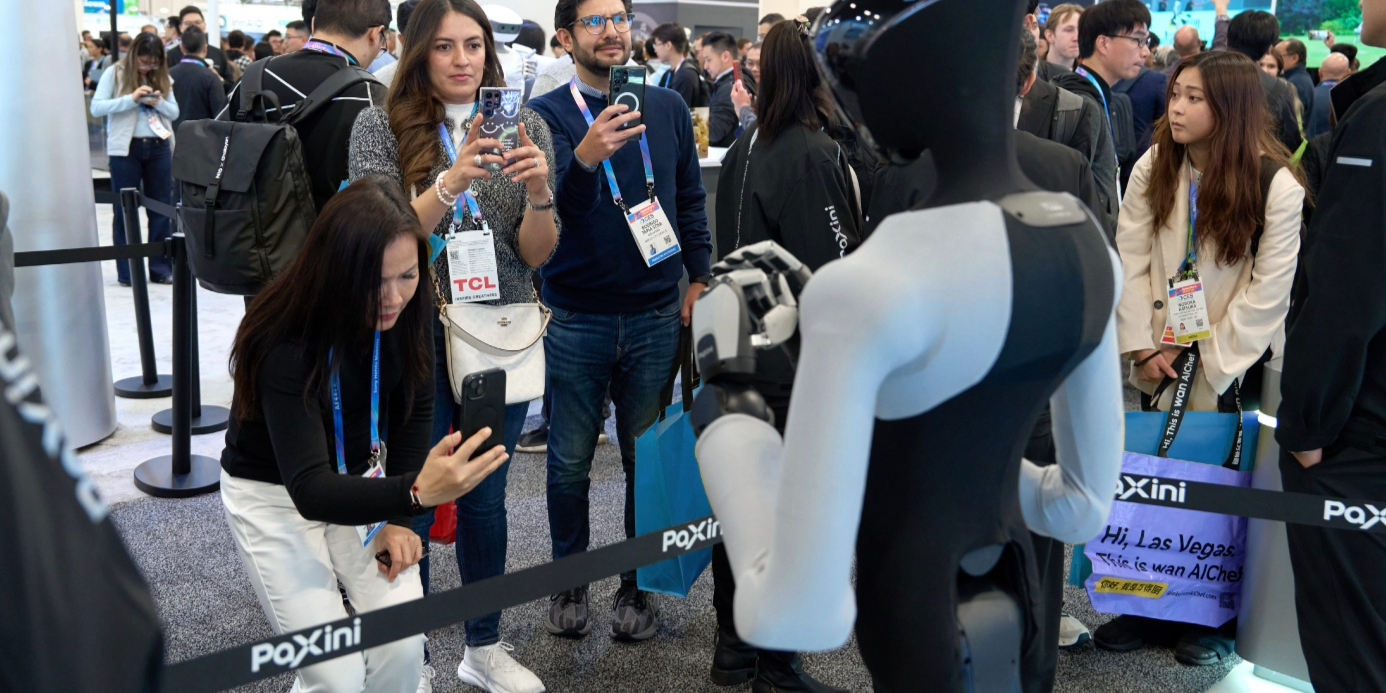
Group 1 - The core viewpoint of the articles highlights the increasing presence and competitiveness of Chinese technology companies at the CES 2026, showcasing a shift from traditional manufacturing roles to a more diversified global strategy that emphasizes technology, design, and localized operations [1][4]. - Chinese companies are exhibiting a strong focus on AI integration, with nearly all exhibitors emphasizing AI in their presentations, indicating a trend towards practical applications rather than just theoretical concepts [2][3]. - The number of Chinese humanoid robot exhibitors at CES 2026 exceeds 20, surpassing the total from the US, Japan, South Korea, and Europe combined, demonstrating a significant cluster effect in this sector [2]. Group 2 - In the first three quarters of 2025, China's export of high-tech products reached 37.5 trillion yuan, marking an 11.9% increase and contributing over 30% to the overall export growth during the same period [1]. - The global market for robotic vacuum cleaners is dominated by Chinese brands, which accounted for over 60% of the market share in terms of shipment volume in 2025 [5]. - Chinese technology companies are increasingly focusing on brand building after achieving significant sales milestones, with many adopting interactive marketing strategies to enhance brand visibility and consumer engagement [6][7]. Group 3 - The CES serves as a window into technological trends and reflects the journey of Chinese companies expanding into overseas markets, with a notable increase in brand recognition and a shift away from the "low-price label" to a "technology leader" image [4][6]. - The rapid iteration cycles of Chinese companies, averaging six months to a year for product updates, contrast with European companies that typically require two to three years, allowing for quicker market responsiveness [4][6]. - Challenges remain for Chinese companies in navigating diverse market environments, including varying consumer preferences, regulatory requirements, and external uncertainties, which necessitate comprehensive long-term strategic planning [7][8].
深圳在2026美国CES上,4大核心赛道超过350家深企集中亮相 |深商
Sou Hu Cai Jing· 2026-01-09 20:02
Core Insights - Shenzhen enterprises showcased over 350 innovative products at CES 2026, highlighting advancements in embodied intelligence, new energy, smart wearables, and smart imaging, demonstrating their strong technological capabilities and future-defining potential [1][13] Group 1: Embodied Intelligence - Shenzhen's progress in embodied intelligence is notable, with companies like Zhongqing Robotics presenting innovative products such as the PM01 and the T800 humanoid robot, marking a shift from laboratory concepts to industrial applications [2][4] - RoboSense's delivery robot successfully completed a complex task involving nearly 20 steps autonomously, showcasing advancements in robotics [3] Group 2: Smart Energy - In the smart energy sector, Shenzhen companies are integrating energy storage with robotics, exemplified by Huabao New Energy's innovative products like the Jackery Solar Gazebo and the Jackery Explorer 1500 Ultra, which highlight advancements in the "light-storage+" ecosystem [6][8] Group 3: Smart Wearables - Smart glasses emerged as a key focus at CES, with Shenzhen's RayNeo unveiling the world's first dual-lens AR glasses supporting eSIM functionality, allowing for a phone-independent experience [8][10] Group 4: Smart Imaging - Shenzhen's Insta360 gained attention with its Antigravity A1 drone, which won the Best Creative Award in the drone category, showcasing its innovative approach to immersive aerial photography [9][12] Group 5: Innovation Ecosystem - Shenzhen has transitioned from being labeled as a low-cost manufacturer to a leader in innovation, driven by a robust AI hardware ecosystem and a focus on independent innovation, resulting in a significant shift in its global market presence [13][14] - The city has established a comprehensive innovation ecosystem that integrates innovation chains, industrial chains, financial chains, and talent chains, fostering a conducive environment for original achievements and effective technology transfer [14] Group 6: Global Competitive Landscape - Shenzhen is becoming a critical node in the global smart hardware ecosystem, with over 2,200 AI-related companies and nearly 300 "city + AI" application scenarios, enhancing its local supply chain capabilities [15][16] - The city is reshaping the global competitive landscape across various sectors, including low-altitude economy, new energy vehicles, and autonomous driving, supported by leading companies like Huawei and BYD [15][16]
去年全球人形机器人出货1.3万台 中国厂商领跑
Zheng Quan Ri Bao· 2026-01-09 16:41
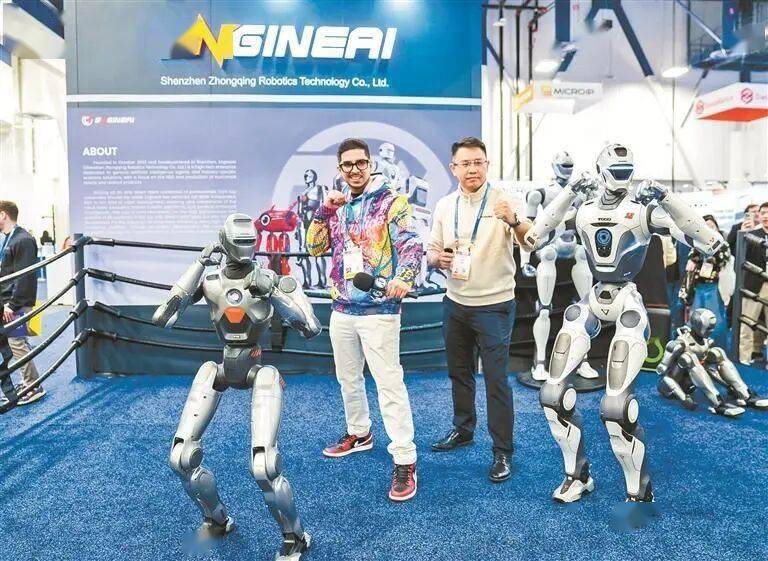
近日,权威市场研究机构Omdia发布的《通用具身机器人市场雷达报告》显示,2025年,全球人形机器 人市场迈入快速增长阶段,全年总出货量达1.3万台。 中国厂商已成为人形机器人行业的主导力量。根据Omdia数据,出货量排名前六的品牌均来自中国,依 次为智元创新(上海)科技股份有限公司(以下简称"智元机器人")、宇树科技股份有限公司(以下简 称"宇树科技")、优必选、乐聚机器人、众擎机器人、傅利叶。 其中,智元机器人以超过5100台的年度出货量,占据全球人形机器人市场39%的份额,出货量与市场份 额均位居全球第一;宇树科技以4200台的出货量紧随其后,二者合计占据71%的市场份额。Omdia预 计,未来10年,人形机器人市场将迎来指数级增长,到2035年全球出货量有望达到260万台。 中国机器人CR教育培训标准委员会委员魏国红对《证券日报》记者表示,当前,国内人形机器人市场 头部效应显著,壁垒初步形成,其中智元机器人与宇树科技构成的"第一梯队",形成了显著的市场和品 牌壁垒。这种高度集中的格局表明,在产业爆发初期,技术集成度、产品成熟度与商业化落地速度已成 为竞争的关键。 在迈睿资产管理有限公司首席执行官王浩宇 ...

果然财经|今年美国“科技春晚”被中国人形机器人“玩成主场”
Xin Lang Cai Jing· 2026-01-09 11:20
在美国拉斯维加斯国际消费类电子产品展(CES)上,中国人形机器人企业几乎承包了今年的美国"科 技春晚"。据不完全统计,CES展会共有人形机器人展位38个,其中21个展位来自中国企业,包括宇树 科技、智元机器人、众擎机器人等知名机器人企业,悉数亮相。 特别声明:以上文章内容仅代表作者本人观点,不代表新浪网观点或立场。如有关于作品内容、版权或其它问 题请于作品发表后的30日内与新浪网联系。 ...
中国科技企业闪耀CES:撕下低价标签 以创新和品牌力突围
2 1 Shi Ji Jing Ji Bao Dao· 2026-01-09 09:38
Core Insights - The presence of Chinese technology companies at CES 2026 has significantly increased, showcasing a shift from traditional supply chain roles to a more diversified global strategy focused on technology, design, and localized operations [1][4]. Group 1: Chinese Companies at CES - A total of 207 Chinese companies participated in CES 2026, occupying over 4,900 square meters of exhibition space, marking a strong presence in the global tech landscape [1]. - The focus of the exhibition has shifted towards AI-driven technologies, with nearly all exhibitors highlighting AI as a core component of their offerings [2]. Group 2: AI and Robotics - Chinese companies are leading in the robotics sector, with over 20 humanoid robot exhibitors, surpassing the total from the US, Japan, South Korea, and Europe combined [2]. - Innovations in practical applications of AI are evident, with products like delivery robots and advanced cleaning robots demonstrating significant functional capabilities [3]. Group 3: Market Position and Product Competitiveness - By the first three quarters of 2025, Chinese brands accounted for over 60% of the global market share in robotic vacuum cleaners, indicating a strong competitive position [5]. - Chinese technology firms are increasingly recognized for their technological advancements and design quality, allowing them to command a price premium in overseas markets [5]. Group 4: Brand Development and Market Expansion - As Chinese tech companies achieve significant sales milestones, they are increasingly focusing on brand building, utilizing interactive marketing strategies to enhance consumer engagement [6]. - The transition to brand-focused strategies is expected to further boost sales, particularly in high-value product categories [6]. Group 5: Challenges and Strategic Considerations - Companies face challenges related to varying market conditions, cultural differences, and regulatory requirements across different regions [7]. - The external environment's uncertainty poses risks, but stabilizing conditions could enhance the competitive advantages of Chinese tech firms [7].