传音控股

Search documents
影视合作拉紧中非文化交流纽带(国际视点)
Ren Min Ri Bao· 2026-02-09 00:56
Group 1 - The core viewpoint of the articles highlights the increasing popularity and acceptance of Chinese films, particularly animated films, in African countries, exemplified by the success of "Boonie Bears: Back to Earth" in South Africa [1][2] - The film "Boonie Bears: Back to Earth" has set box office records in South Africa, indicating a growing interest among local audiences for Chinese cinema [2] - Various Chinese films have been released in Africa, enriching local viewing options and fostering deeper cultural exchanges, with many viewers expressing a desire to visit China to experience its culture [2] Group 2 - The Chinese market is also opening up to African films, with events like the Beijing International Film Festival showcasing African cinema, enhancing cultural exchange [3] - Collaborative projects between Chinese and African media institutions have produced notable works, such as "Welcome to Mai Le Village," which tells stories of Chinese aid in Africa and has gained significant attention [4] - The increasing internet penetration and population in Africa present opportunities for the growth of the Chinese short drama market, with successful adaptations like "The Return of the God of War" achieving high conversion rates in Nigeria [6] Group 3 - There is a strong emphasis on talent exchange and cooperation between China and Africa, with training programs for African filmmakers in China, enhancing understanding of the Chinese film industry [7] - The development of joint productions and cultural exchanges is seen as a bridge to strengthen ties between the two regions, promoting mutual understanding and shared values [7] - The ongoing collaboration in the film industry is viewed as a significant driver for cultural exchange, with hopes for more Chinese films to be introduced to African audiences [7]
深圳创新“四姐妹”上榜胡润500强前十,迈瑞缩水760亿
Nan Fang Du Shi Bao· 2026-02-06 14:33
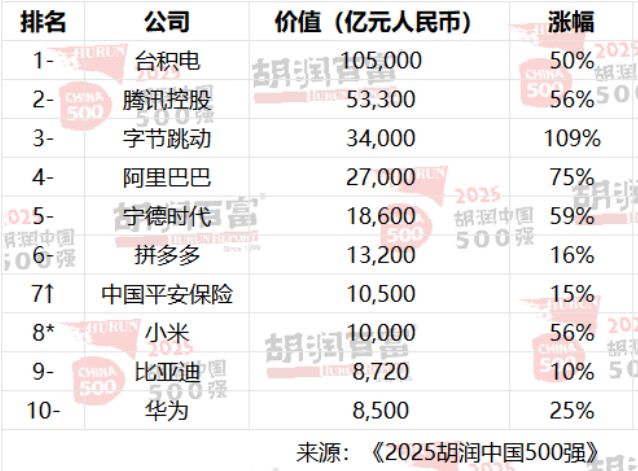
Core Insights - The latest Hurun China 500 list reveals the rankings of 500 non-state-owned enterprises in China, with a notable increase in the entry threshold to 34 billion RMB, a rise of nearly 30% compared to the previous year [1] - The list features 95 new entrants primarily from sectors such as consumer electronics, AI computing power, and new energy, while 99 companies dropped off the list, indicating a trend of fluctuation among companies [1] Group 1: Company Performance - Tencent's value reached 5.3 trillion RMB, marking a 50% increase, driven by strong performances in gaming, advertising, and fintech [2][3] - The "Shenzhen Four Sisters"—Huawei, BYD, Tencent, and China Ping An—are all in the top 10, with values of 850 billion RMB, 872 billion RMB, and 1.05 trillion RMB respectively, reflecting the resilience of Shenzhen's economy [3] - DJI, headquartered in Shenzhen, saw its value double due to its strong position in the consumer drone market and growth in overseas markets [5] Group 2: Industry Trends - The real estate sector saw a decline, with the number of listed companies dropping from 19 to 12 [1] - The Yangtze River Delta region has 161 companies in the Hurun China 500, accounting for 32% of the total, while the Guangdong-Hong Kong-Macau Greater Bay Area has 108 companies, representing 22% [4] - The report highlights that sectors such as AI computing, consumer electronics, innovative pharmaceuticals, and entertainment are key drivers of high-quality development in China's private economy [5]




传音控股(688036):“非洲之王”利润腰斩!成本暴涨,对手偷家,护城河见底
市值风云· 2026-02-06 11:04
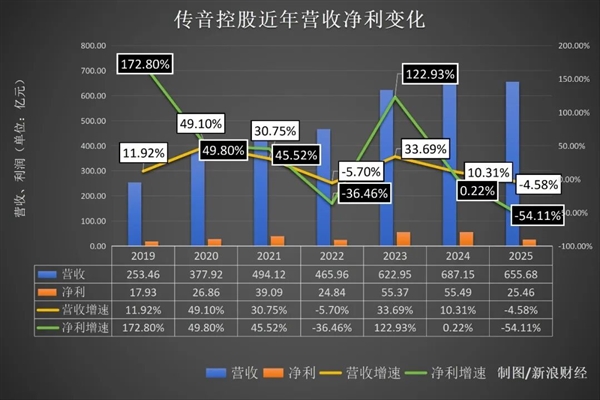
Investment Rating - The report indicates a significant decline in the investment outlook for Transsion Holdings, with a projected net profit drop of 54.11% to 2.546 billion yuan for 2025, raising concerns about its market position and future growth potential [2][35]. Core Insights - Transsion Holdings, known as the "King of Africa," has seen its profits halved due to soaring costs and increased competition, particularly from Chinese rivals entering the African market [2][35]. - The company's revenue for 2025 is expected to decline by 4.58% to 65.568 billion yuan, marking a departure from previous growth trends [34]. - Transsion's market share in Africa remains strong at over 40%, but its growth rate has slowed significantly, with competitors like Xiaomi and Honor rapidly increasing their market presence [11][28]. Summary by Sections Company Overview - Transsion Holdings primarily focuses on mobile phone sales, with nearly 94% of its total revenue of 68.715 billion yuan in 2024 derived from this segment [6][34]. - The company has established a strong foothold in the African market, where it has a market share exceeding 40% in smartphones, and ranks third globally in mobile phone shipments with a 14% market share [11][34]. Competitive Landscape - The competitive dynamics in the African smartphone market have shifted, with major Chinese brands like Xiaomi and Honor aggressively targeting this previously overlooked region, leading to increased pressure on Transsion [24][28]. - Transsion's growth has been hindered by rising costs in the supply chain, particularly for storage components, which have significantly impacted its profit margins [15][18]. Future Prospects - Transsion is attempting to pivot towards AI technology as a new growth narrative, with plans to integrate AI features into its products and develop an AI ecosystem [40][42]. - Despite these ambitions, the company faces challenges in differentiating its AI offerings from those of established competitors, raising questions about the viability of its new strategy [46][48]. - The diversification into other product lines, such as tablets and smart home devices, has shown some growth but still represents a small portion of total revenue, indicating a need for further development to achieve scale [48][50].

“非洲之王”利润腰斩!传音控股:成本暴涨,对手偷家,护城河见底
市值风云· 2026-02-06 10:09
Core Viewpoint - Transsion Holdings is facing significant challenges as its profitability declines sharply, with a projected net profit of 2.546 billion yuan for 2025, a year-on-year drop of 54.11%, alongside a slight revenue decrease of 4.58% [3][20][24]. Group 1: Company Overview - Transsion Holdings primarily operates in the mobile phone market, with nearly 94% of its 67.715 billion yuan revenue in 2024 coming from mobile phone sales [5][6]. - The company has established a strong presence in Africa, holding over 40% market share in the African smartphone market and ranking first in Pakistan and Bangladesh with market shares of over 40% and 29.2%, respectively [6][7]. - Transsion's success is attributed to its localized product offerings and extensive marketing network, which have created a strong customer base in Africa [9]. Group 2: Financial Performance - The company's gross margin has declined from 21.3% in 2024 to 18.59% in Q3 2025, marking a five-year low, with net profit margins dropping to 4.4% [11]. - The average gross margin for the first three quarters of 2025 was 19.5%, indicating that the company earns less than 50 yuan in net profit for each smartphone sold at around 1,000 yuan [11]. - Transsion's revenue for 2025 is expected to be 65.568 billion yuan, reflecting a 4.58% decline from the previous year, breaking its previous growth trend [20]. Group 3: Market Competition - The competitive landscape in Africa has intensified, with major Chinese brands like Xiaomi and Honor increasing their focus on the region, leading to a slowdown in Transsion's growth [13][15]. - In 2024, Transsion's shipment growth rate in Africa slowed to 10%, while competitors like Xiaomi and realme experienced growth rates of 38% and 89%, respectively [15]. - By 2025, Transsion's ranking in the global smartphone market has dropped, with the company no longer appearing in the top five, indicating increased competition and market share erosion [18]. Group 4: Strategic Initiatives - In response to declining performance, Transsion is pivoting towards AI technology, emphasizing its commitment to AI development in its recent IPO application, with plans to integrate AI features into its products [25][26]. - The company aims to create an AI ecosystem to enhance user engagement and generate continuous revenue, although its current AI capabilities are still in the early stages compared to competitors [30][31]. - Transsion is also diversifying its product offerings beyond smartphones, including tablets, TWS earbuds, and smart home devices, which generated 4.68 billion yuan in revenue in 2024, but still represent less than 10% of total revenue [31][32].
中证粤港澳大湾区发展主题指数下跌0.74%,大湾区ETF(512970)成立以来超越基准年化收益达3.32%
Xin Lang Cai Jing· 2026-02-06 01:40
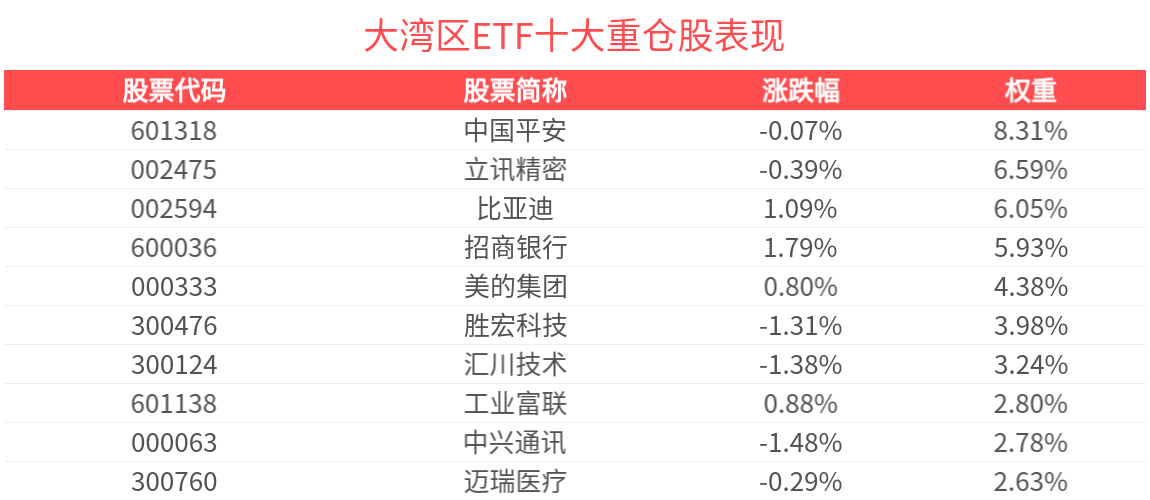
Core Viewpoint - The performance of the China Securities Guangdong-Hong Kong-Macao Greater Bay Area Development Theme Index and its related ETF reflects the market dynamics and investment opportunities within the Greater Bay Area, with notable fluctuations in constituent stocks and overall index performance [1][2]. Group 1: Index Performance - As of February 5, 2026, the China Securities Guangdong-Hong Kong-Macao Greater Bay Area Development Theme Index (931000) decreased by 0.74% [1]. - The Greater Bay Area ETF (512970) also saw a decline of 0.47%, with the latest price at 1.5 yuan [1]. - Over the past six months, the Greater Bay Area ETF has accumulated a rise of 15.97% [1]. Group 2: Stock Performance - Among the constituent stocks, Huayin Securities led with a gain of 10.02%, while Jiejia Weichuang experienced the largest drop at 12.39% [1]. - The top ten weighted stocks in the index account for 44.55% of the total index weight, with China Ping An, Luxshare Precision, and BYD being the top three [2]. Group 3: Trading and Liquidity - The trading volume for the Greater Bay Area ETF was 57.35 million yuan, with an intraday turnover rate of 0.66% [1]. - The average daily trading volume over the past week was 99.55 million yuan [1]. Group 4: Risk and Return Metrics - The maximum drawdown for the Greater Bay Area ETF this year is 5.52%, with a relative benchmark drawdown of 0.02% [1]. - The ETF's Sharpe ratio over the past year is reported at 1.51 [1]. - The tracking error for the ETF over the last three months is 0.022% [1].
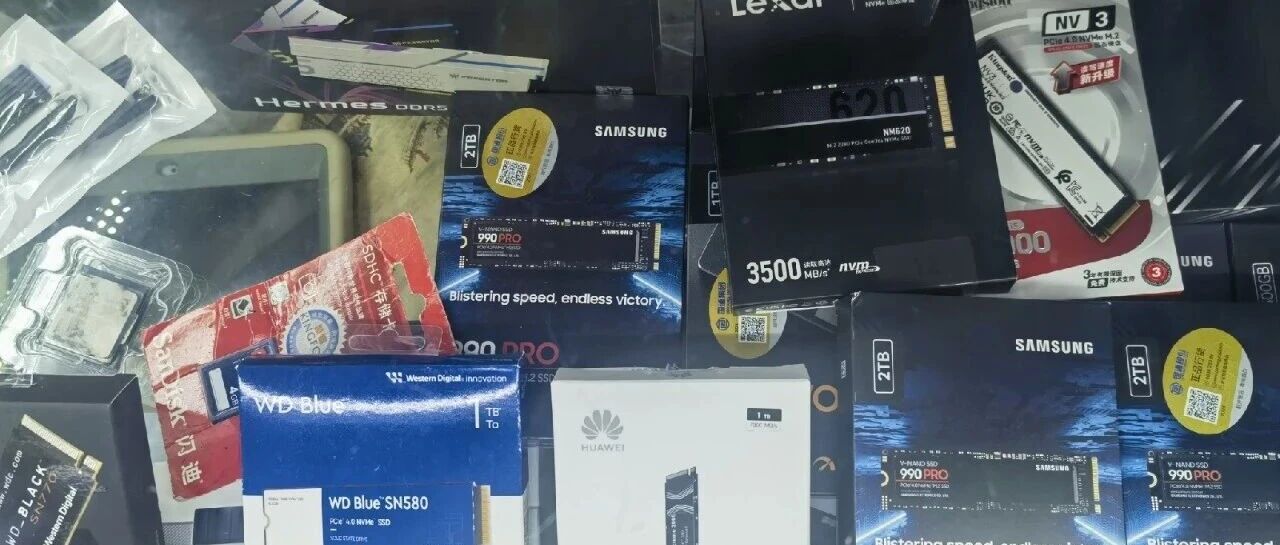
内存条三个月涨三倍,电脑装机成本激增近半
Di Yi Cai Jing· 2026-02-05 13:42
Group 1 - The price of computer components, particularly storage products like SSDs and memory, has significantly increased, leading to higher consumer costs for building PCs [2][4][5] - In the past three months, memory prices have surged by approximately three times, while SSD prices have doubled [2][5] - The cost of essential components now constitutes 35% to 50% of the total budget for a basic office computer, forcing consumers to compromise on CPU specifications to accommodate storage costs [4][5] Group 2 - Despite rumors of tight CPU supply and price increases, consumer-grade CPU prices have stabilized after an initial rise [3][5] - The ongoing price hikes in storage components are attributed to structural shortages driven by the large-scale application of AI [5][11] - Market research indicates that the global laptop shipment volume is expected to decline by 14.8% in the first quarter due to rising storage costs and supply chain pressures [11] Group 3 - Different consumer electronics brands exhibit varying abilities to absorb the impact of rising storage prices, with lower-end brands facing greater risks [7][11] - Apple is expected to leverage its supply chain advantages to capture market share amidst the turmoil, potentially avoiding price increases for its next iPhone model [12] - The price of NAND Flash and DRAM has risen significantly, with estimates of a 90% to 95% increase for DRAM and a 55% to 60% increase for NAND Flash in the first quarter [8][12] Group 4 - Companies are adjusting their product strategies, including reducing storage configurations to manage costs, but this may not significantly alleviate the impact of volatile storage prices [9][12] - The overall market for consumer electronics is anticipated to shrink due to the pressures from rising component costs, particularly affecting smaller manufacturers with limited supplier relationships [11][12] - Recent price increases have also affected other components like motherboards, although the extent of these increases is less pronounced compared to storage products [6][11]

果然财经|传音2025年利润腰斩,50元手机扛不住存储涨价
Qi Lu Wan Bao· 2026-02-05 12:18
Group 1 - The core viewpoint of the article is that Transsion Holdings is forecasting a significant decline in both revenue and net profit for 2025, with net profit expected to be halved, marking the worst performance since its listing [1][8]. - The decline in performance is attributed to multiple factors, primarily the increase in storage prices, which has negatively impacted costs and gross margins [1][8]. - Transsion's overall average selling price for smartphones is reported to be only 332.1 yuan, while the average price for feature phones is as low as 50.1 yuan [1][8].

内存条三个月涨三倍,电脑装机成本激增近半
第一财经· 2026-02-05 11:08
Core Viewpoint - The rising prices of computer components, particularly storage products, are significantly increasing consumer costs for building PCs, with some components experiencing price increases of up to three times in the last three months [3][8]. Group 1: Price Trends in Computer Components - The price of 1TB solid-state drives has risen to between 950 yuan and 1100 yuan, up from 600 to over 900 yuan [3]. - Over the past three months, memory prices have increased by approximately three times, while solid-state drive prices have doubled [3][8]. - A typical office computer's storage and memory costs now account for 35% to 50% of the total build cost, necessitating compromises on CPU specifications to stay within budget [6][7]. Group 2: Impact on Consumer Behavior - The increase in component prices has led to a decrease in customer orders, with one vendor reporting a drop from assembling 8-10 computers a day to just one every three days [9]. - Consumers are now finding it difficult to build a decent office computer within a budget of 3000 yuan, which previously sufficed [7]. Group 3: Market Dynamics and Manufacturer Responses - TrendForce has raised its price forecast for storage components, predicting a 90%-95% increase in DRAM contract prices and a 55%-60% increase in NAND Flash prices in the first quarter [11]. - Some consumer electronics manufacturers are reducing storage configurations in their products due to rising costs, but this strategy may not significantly alleviate the impact of price volatility [12]. - Smaller manufacturers with limited supplier relationships and a higher proportion of low-end models are expected to face greater risks in the current market environment [15]. Group 4: Competitive Landscape - Companies like Apple, which are positioned in the high-end market, are expected to leverage supply chain advantages to capture market share amidst rising component prices [15]. - The disparity in the ability to absorb rising costs among manufacturers is evident, with lower-end brands like Transsion Holdings projected to see a significant drop in net profit due to increased component costs [15].
实地走访华强北:内存条三个月涨三倍,电脑装机成本激增近半
Di Yi Cai Jing· 2026-02-05 10:37
Core Viewpoint - The rapid increase in prices of computer components, particularly storage products, is significantly raising the cost of assembling computers, leading to a decline in consumer demand and affecting the overall market dynamics [1][4][10]. Group 1: Price Increases in Computer Components - The price of 1TB solid-state drives has risen from 600-900 RMB to 950-1100 RMB within a week, with memory prices increasing approximately threefold over the past three months [1][3]. - A typical office computer that previously could be assembled for under 2000 RMB now costs around 3000 RMB, with some configurations exceeding 5000 RMB due to rising component costs [3][4]. - The cost of storage components now accounts for 35%-50% of the total assembly cost of a basic office computer, necessitating compromises on CPU specifications to stay within budget [2][3]. Group 2: Market Dynamics and Consumer Behavior - The surge in storage prices has led to a decrease in the number of computers assembled by retailers, with one merchant reporting a drop from assembling 8-10 computers a day to one every three days [1][4]. - Retailers are primarily serving repeat customers, with new consumer orders declining due to the increased costs [4]. - The overall market for consumer electronics is expected to shrink, with a projected 14.8% decrease in global laptop shipments in the first quarter due to rising component costs [10]. Group 3: Impact on Manufacturers and Pricing Strategies - Manufacturers are facing challenges in passing on increased costs to consumers, as raising prices could further suppress demand, particularly for lower-end models [5][10]. - Companies like Apple may leverage their supply chain advantages to maintain market share and avoid price increases on new products, while also compensating for losses through service offerings [11]. - The ongoing price increases in storage components are attributed to structural shortages driven by the scaling of AI applications, affecting the supply of consumer-grade CPUs as well [3][10].
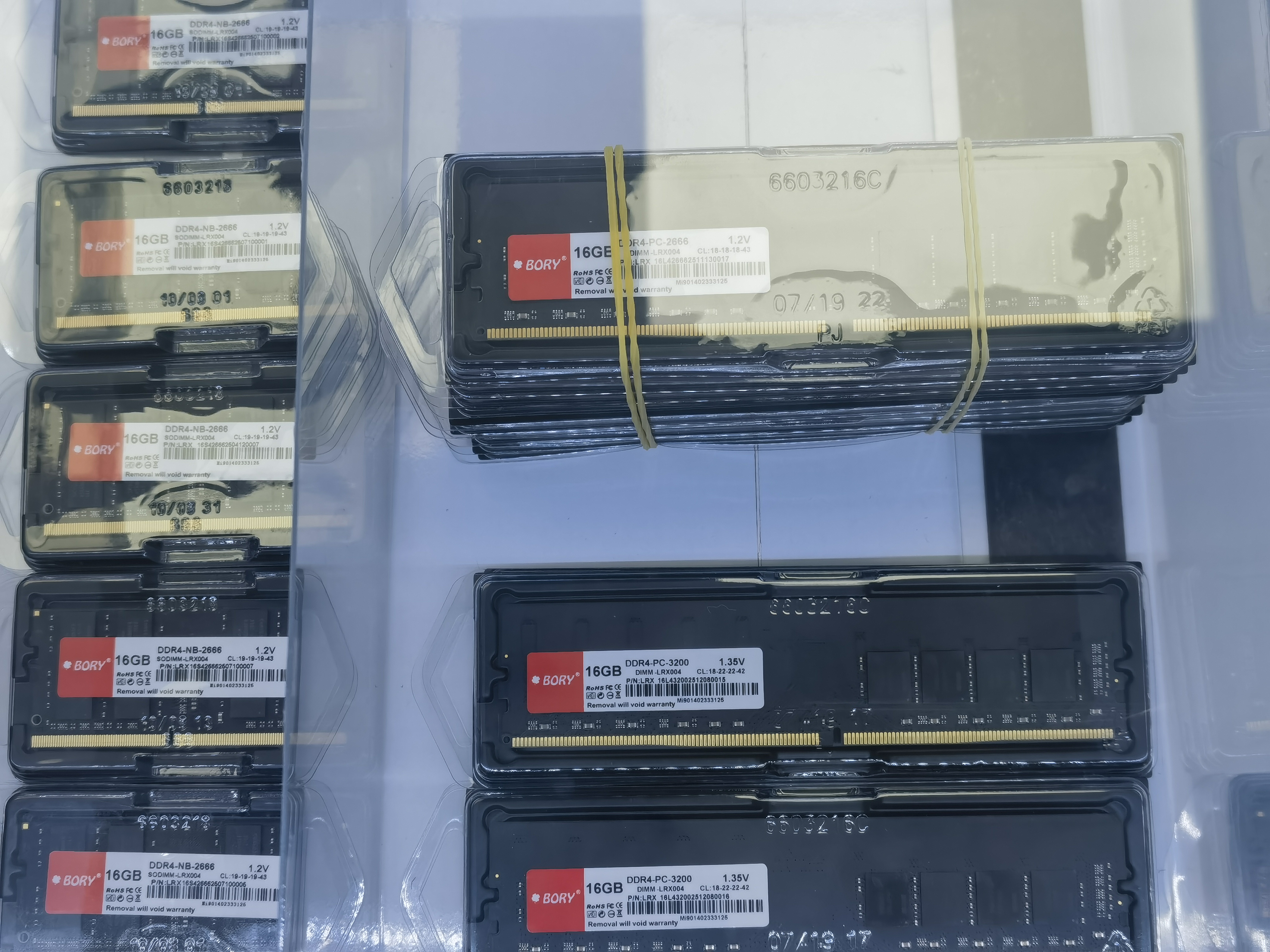
非洲手机之王传音即将退位?利润腰斩 50元手机扛不住存储涨价
Xin Lang Ke Ji· 2026-02-05 08:53
Core Viewpoint - Transsion Holdings is expected to experience a decline in both revenue and net profit in 2025, with net profit projected to be halved, marking the worst performance since its IPO in 2019 [1][5][6]. Financial Performance - The company forecasts a revenue of approximately 65.568 billion yuan for 2025, a decrease of about 31.47 billion yuan or 4.58% year-on-year [2]. - The expected net profit for 2025 is around 2.546 billion yuan, down by approximately 30.03 billion yuan or 54.11% compared to the previous year [2][5]. Market Competition - Transsion remains the market leader in Africa, but faces increasing competition from Xiaomi and Honor, which have shown growth rates of 34% and 158% respectively in the third quarter of 2025 [1][8]. - The overall smartphone market is experiencing sluggish growth, particularly in emerging markets, with a projected global smartphone shipment growth of only 2% in 2025 [7][8]. Cost Pressures - The company attributes its poor performance to rising storage prices, which have increased by over 40% due to demand from AI data centers, impacting product costs and gross margins [7][8]. - Transsion's average smartphone price in 2025 is reported to be 332.1 yuan, with feature phones averaging only 50.1 yuan, indicating a focus on the low-end market [9][10]. Diversification Efforts - To mitigate risks, Transsion is exploring new business areas such as mobility and energy storage, although these segments currently contribute only 8.8% to total revenue [12][14]. - The company has established a mobility division and is expanding into electric two-wheelers and energy storage products, but these initiatives are still in early stages and have not yet significantly impacted overall revenue [11][12].