
天地科技

Search documents
2025年中国采煤机行业发展历程、市场政策、产业链图谱、市场规模、竞争格局及发展趋势分析:市场集中度较高,“强者恒强”趋势明显[图]
Chan Ye Xin Xi Wang· 2025-11-23 01:24
Core Viewpoint - The coal mining machinery market in China is expected to reach a scale of 4.32 billion yuan in 2024, with a year-on-year growth of 11.63%, driven by the increasing demand for mechanized coal mining and technological advancements in the industry [1][10]. Overview - Coal mining machines are essential for underground coal extraction, significantly improving efficiency, output, and safety [2][5]. - The primary types of coal mining machines are drum-type and shearer machines, with drum-type being the most widely used [3]. Development History - Since the reform and opening up, China has introduced advanced hydraulic traction coal mining machines from Germany and the UK, leading to the development of domestic electric traction machines in the 1990s [3][4]. - By the 2000s, domestic machines began to dominate the market, meeting the needs of large-scale coal mines [3]. Market Policies - The Chinese government has implemented various policies to support the development of the coal machinery industry, focusing on safety, technological innovation, and digital transformation [4][5]. Industry Chain - The coal mining machine industry consists of upstream suppliers of raw materials and components, midstream design and manufacturing, and downstream coal mining operations [6][8]. - The production cost structure is primarily composed of direct materials, accounting for over 80% of total costs [8][9]. Current Development - The coal mining machinery market is experiencing significant growth, with a projected market size of 4.32 billion yuan in 2024, reflecting a strong demand for intelligent and efficient mining solutions [10][11]. - The industry is moving towards smart technologies, including AI and remote control capabilities, which are becoming standard features in high-end mining machines [10][11]. Competitive Landscape - The market is highly concentrated, with the top 50 companies producing 726 coal mining machines in 2024, representing 91.55% of the total production [11][12]. - Key players include TianDi Technology, Xian Coal Mining Machinery, and others, with TianDi Technology being a leader in technological innovation and market share [12][13]. Future Trends - Future advancements in coal mining machines will integrate cutting-edge technologies such as 6G, quantum computing, and brain-machine interfaces, aiming for zero emissions and high efficiency [14].


煤炭行业周报:10月煤炭产量同环比双降,印尼拟削减26年产量目标-20251120
East Money Securities· 2025-11-20 05:15
Investment Rating - The report maintains an investment rating of "Outperform the Market" for the coal industry, indicating a projected increase in stock prices relative to the benchmark index [2]. Core Insights - In October, coal production in China saw a decline both year-on-year and month-on-month, with a total output of 407 million tons, representing a decrease of 2.3% year-on-year and 1.2% month-on-month. Cumulatively, from January to October, coal production reached 3.973 billion tons, reflecting a year-on-year increase of 1.5% [1]. - The demand for electricity, pig iron, and cement in October showed mixed results, with electricity production increasing by 7.3% year-on-year, while pig iron and cement production decreased by 7.9% and 15.8%, respectively. Cumulatively, from January to October, electricity and pig iron production saw slight declines of 0.4% and 1.8%, while cement production fell by 6.7% [1]. - The National Development and Reform Commission (NDRC) has emphasized the need to stabilize energy production and supply, particularly during peak demand periods, and to ensure the safety of energy supply during adverse weather conditions [1]. - The China Coal Industry Association forecasts that Indonesia's coal production will decrease to 750 million tons in 2025, a 10.3% year-on-year decline, with a target reduction for 2026 set below 700 million tons. This is expected to tighten the supply further, especially as domestic production faces limitations due to regulatory measures [1]. - The report anticipates that coal prices will remain volatile but generally upward due to tight supply and strong winter demand, with the Qinhuangdao coal price reported at 827 RMB per ton as of November 14, reflecting a 2.4% increase month-on-month [1]. Summary by Sections Production and Demand - October coal production in China was 407 million tons, down 2.3% year-on-year and 1.2% month-on-month. Cumulative production from January to October was 3.973 billion tons, up 1.5% year-on-year [1]. - Demand for electricity rose by 7.3% year-on-year in October, while pig iron and cement production fell by 7.9% and 15.8%, respectively [1]. Regulatory Environment - The NDRC has called for measures to ensure stable energy supply and safety during peak demand periods, particularly in winter [1]. Price Trends - Coal prices are expected to remain under upward pressure due to tight supply conditions, with the Qinhuangdao coal price at 827 RMB per ton as of mid-November [1].
东方财富证券:25Q3煤炭供给边际同比明显收缩 关注行业反内卷政策逻辑演绎
智通财经网· 2025-11-19 08:38
Core Viewpoint - The coal industry is expected to enter a long-term upward cycle due to a solidified price floor and limited growth in new coal production capacity, despite a decrease in coal production and imports in 2025 [1][2][4]. Group 1: Coal Supply - In the first nine months of 2025, domestic coal production increased by 2% year-on-year, but there was a significant decline in production following the release of the National Energy Administration's document No. 108 in July, with production in July, August, and September showing year-on-year decreases of -3.8%, -3.2%, and -1.8% respectively [1]. - In Q3 2025, coal production in Shanxi, Inner Mongolia, Shaanxi, and Xinjiang was 32.9 million tons, 30.9 million tons, 20.3 million tons, and 12.3 million tons respectively, with a quarter-on-quarter change of -1.6%, -0.3%, +0.1%, and -12.3% [1]. Group 2: Coal Imports - In the first nine months of 2025, coal imports totaled 34.6 million tons, a decrease of 11.1% year-on-year. Specifically, imports of Indonesian coal were 14.3 million tons, down by 2.525 million tons or 15% year-on-year [2]. - Imports of Mongolian coal reached 6.192 million tons, an increase of 130,000 tons or 2.1% year-on-year, but the proportion of imported coking coal decreased from 71.6% to 67.4% [2]. Group 3: Coal Demand - Short-term demand for coal is structurally weak due to a slowdown in electricity consumption growth and competition from renewable energy sources, with total thermal power generation in the first nine months of 2025 at 4,696.9 billion kWh, down 1.2% year-on-year [3]. - The steel sector shows resilience, with cumulative profits of key steel enterprises reaching 96 billion yuan, a year-on-year increase of 1.9 times [3]. - Chemical coal demand remains high but is slowing, with an average weekly coal consumption of 6.9 million tons in the first nine months of 2025, up 12.7% year-on-year [3]. - The building materials sector continues to be affected by real estate, with coal consumption of 18.6 million tons in the first nine months of 2025, down 4.6% year-on-year, but the decline is less severe than the 9.1% drop in the same period of 2024 [3]. Group 4: Industry Policy and Outlook - The "anti-involution" policy in the coal industry aims to control production release through capacity utilization rates, balancing supply and demand to support coal prices, with ongoing supply constraints expected [4]. - The central government's focus on regulating disorderly competition and promoting capacity governance is seen as crucial for the industry's recovery [4]. Group 5: Investment Recommendations - Companies to watch include China Shenhua (601088.SH), Shaanxi Coal (601225.SH), and China Coal Energy (601898.SH) for their long-term benefits from a solidified coal price floor [5]. - In the context of rising coal prices, companies like Yanzhou Coal (600188.SH), Jinkong Coal (601001.SH), and Shanxi Coal International (600546.SH) are recommended for their valuation recovery potential [5]. - Coking coal companies such as Lu'an Environmental Energy (601699.SH) and Pingmei Shenma (601666.SH) are expected to benefit from the steel industry's "anti-involution" [6].

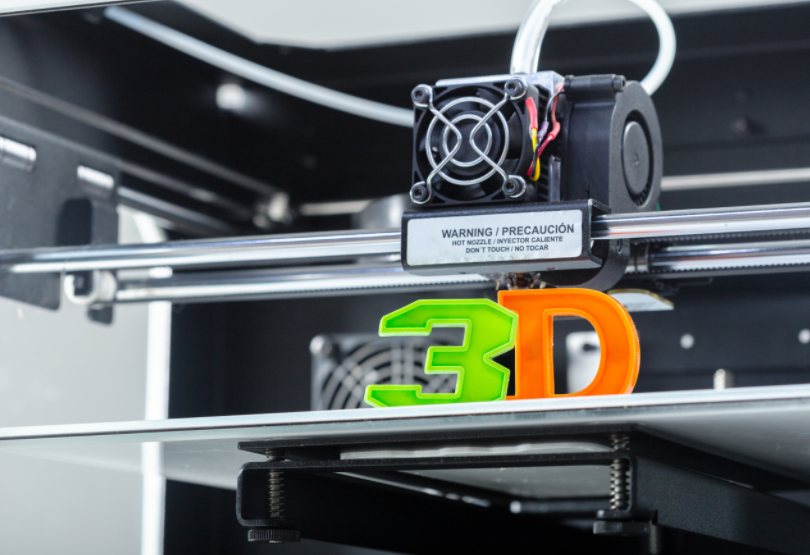
3D打印引爆风口,机构“淘金”绩优概念股
Huan Qiu Wang· 2025-11-19 02:52
Group 1 - The 3D printing industry is experiencing a new wave of capital influx, with major companies like DJI entering the consumer-grade 3D printing market, indicating strong growth potential and industry prospects [1][2] - DJI's investment in the smart company specializing in light curing and fused deposition technology is expected to enhance market competitiveness and drive technological upgrades in the industry [1] - Other tech giants such as Meituan and Tencent are also deepening their investments in the 3D printing sector, with Meituan investing in Snapmaker and Tencent backing the company Creality, which aims to become the first publicly listed consumer-grade 3D printing company [1][2] Group 2 - The global 3D printing market is projected to reach approximately 170 billion RMB by 2024, with a compound annual growth rate of 18.5% over the next decade [2] - In the first quarter of 2025, global shipments of entry-level 3D printers are expected to exceed 1 million units, with Chinese suppliers contributing 95% of the market share [2] - In China, the production of 3D printing equipment increased by 40.5% year-on-year in the first three quarters, significantly outpacing growth in industrial robots and new energy vehicles [4] Group 3 - The demand for 3D printing is being driven by the IP economy and the trend of personalized collectibles, positioning 3D printing as a solution for the high demand for customized products [4] - A-share 3D printing concept stocks have shown strong performance, with over 90% of stocks in the sector experiencing price increases this year, and notable companies like Tiangong Co. seeing stock prices rise by approximately 374% [4] - Among 27 high-growth companies, 15 have recently attracted significant institutional interest, indicating a renewed recognition of the investment value in the 3D printing industry [5][6]
创力集团回复定增问询:定价基准日11个月后才申报,认购资金八成源于质押贷款
2 1 Shi Ji Jing Ji Bao Dao· 2025-11-18 02:02
南方财经11月18日电,创力集团(603012.SH)近日就其向特定对象发行股票(即定增)事宜回复了上海 证券交易所的问询函,针对市场关注的定价合理性及认购对象资金安排等问题作出了详细说明。 本次发行的唯一认购对象为石良希100%控股的铨亿(杭州)科技有限公司,该公司为参与本次认购专 门设立,尚未开展实际业务。其认购资金计划来源于实际控制人自有资金及银行并购贷款,并购贷款额 度不超过1.6亿元,占总募资额的比例最高达80%。目前,铨铨亿科技已获得兴业银行上海分行的贷款 意向函。不过公司提示,该笔并购贷款尚需经金融机构内部审批,且融资环境可能变化,存在足额筹集 风险;同时,发行完成后实际控制人股权质押比例可能升至68.68%,控制权稳定性存在一定不确定 性。 据公司2025年11月14日公告,公司已经将拟募集资金总额不超过1.9亿元调整为1.6亿元。 据悉,本次定增的定价基准日为2024年11月14日,直至2025年10月24日才提交申报文件。关于定价基准 日后长期未申报的原因,公司解释称,主要是因实际控制人石良希需要时间落实认购资金的相关融资安 排,并与金融机构进行多轮细节沟通和合规论证。此外,公司在此期间结 ...
继续看涨煤价和看多板块,回调即再布局良机
Xinda Securities· 2025-11-16 06:52
Investment Rating - The investment rating for the coal mining industry is "Positive" [2] Core Viewpoints - The current phase is seen as the beginning of a new upward cycle for the coal economy, with a resonance between fundamentals and policies, making it an opportune time to accumulate coal sector investments [4][12] - The coal price is expected to rise due to factors such as cold weather and low inventory levels at ports, which may drive demand quickly [4][12] - The coal sector remains undervalued, with a strong potential for price recovery and high dividend yields, making it a favorable investment opportunity [4][12] Summary by Sections Coal Price Tracking - As of November 15, the market price for Qinhuangdao port thermal coal (Q5500) is 827 CNY/ton, up 19 CNY/ton week-on-week [3][29] - The price for coking coal at Jing Tang port is 1830 CNY/ton, an increase of 30 CNY/ton week-on-week [3][31] Supply and Demand Tracking - The capacity utilization rate for thermal coal mines is 91.2%, up 0.1 percentage points week-on-week, while for coking coal it is 86.28%, up 2.5 percentage points [4][12] - Daily coal consumption in inland provinces increased by 12.3 thousand tons/day (+3.8%), while consumption in coastal provinces decreased by 8.0 thousand tons/day (-4.26%) [4][12] Inventory Situation - Coal inventory in coastal provinces increased by 464 thousand tons week-on-week, while inland provinces saw an increase of 2.517 million tons [4][12] Company Performance - The coal sector's performance is highlighted by companies such as China Shenhua, Shaanxi Coal and Chemical Industry, and Yanzhou Coal Mining Company, which are noted for their stable operations and strong earnings [13][14]



天地科技(600582.SH):公司尚未涉足雅下水电工程
Ge Long Hui· 2025-11-13 11:15
Group 1 - The company, Tiandi Technology (600582.SH), has stated on its investor interaction platform that it has not yet engaged in the Yaxia hydropower project [1]
天地科技:部分非煤业务已实现技术与产品落地,如采煤机向铝土矿拓展,掘进机向钾盐矿等非煤矿山拓展等
Mei Ri Jing Ji Xin Wen· 2025-11-13 10:09
Core Viewpoint - The company is actively innovating and implementing technologies for the development and utilization of deep special underground space resources, with a focus on geothermal energy and expanding its non-coal mining equipment business [1] Group 1: Development of Underground Resources - The company has initiated multiple technological innovations and practices in the field of deep special underground space resource development [1] - The subsidiary, Beijing Zhongmei, provides technical support for efficient underground space development through its deep well construction technology [1] - The Xi'an Research Institute has established a comprehensive deep detection capability for resource exploration and development, focusing on efficient heat exchange technology for mid-deep buried pipes [1] Group 2: Non-Coal Mining Equipment Progress - The company is actively expanding its advantages in the coal mining sector to non-coal mining, achieving certain results [1] - Some non-coal business areas have successfully implemented technology and products, such as extending coal mining machinery to bauxite and tunneling machines to potash and gold mines [1]
煤炭专题:布局PPI转正关键时点
Xinda Securities· 2025-11-10 07:45
Investment Rating - The coal industry is rated as "Positive" [2] Core Viewpoints - The coal industry is currently in a new round of prosperity cycle that started in 2021, with price fluctuations gradually returning to a reasonable range [3][11] - The impact of coal prices on the Producer Price Index (PPI) is significant, with expectations that coal PPI will turn positive by the second quarter of 2026 [3][41] - The supply-demand situation in the coal market is expected to remain balanced, with regional disparities, driven by policies that restrict supply and increasing mining costs [3][12] Summary by Sections 1. Coal Supply and Demand Review and Outlook - The coal market has experienced a significant price increase since 2021 due to global economic recovery and structural mismatches in supply and demand [11] - From 2023 to June 2025, coal prices have declined to recent lows due to a phase of supply-demand loosening, but have stabilized since July 2025 due to policy constraints [3][11] - The demand for coal is expected to remain stable, supported by electricity generation and industrial needs, despite a peak in overall coal demand [16][19] 2. Correlation Analysis between Coal and PPI - The coal mining sector has a weight of approximately 2.3% in the PPI index, and coal price fluctuations have a strong transmission effect on PPI [38][39] - The coal industry has been a significant contributor to PPI changes, especially during periods of PPI recovery [41][44] 3. Historical Opportunities in Coal Sector during PPI Recovery - Historical data shows that the coal sector has experienced significant price increases during previous PPI recovery phases, particularly in 2016 and 2021 [3][4] - The coal sector's performance is often led by small to mid-cap companies with high growth potential during the early stages of PPI recovery [4] 4. Investment Recommendations - The report suggests focusing on companies that benefit from rising coal prices, such as Shanxi Coking Coal, Lu'an Environmental Energy, and Shenhua Shares [4] - Companies with stable performance and dividend attributes, such as Shaanxi Coal and China Coal Energy, are also recommended for investment [4]
旺季需求临近,煤价涨势未休 | 投研报告
Zhong Guo Neng Yuan Wang· 2025-11-10 02:15
Core Insights - The report indicates a significant increase in coal prices, with Qinhuangdao port's thermal coal price rising to 808 RMB/ton, a weekly increase of 40 RMB/ton [1][2] - The report highlights a mixed trend in coal consumption, with coastal provinces experiencing an increase while inland provinces saw a decrease [4] - The overall sentiment in the coal industry remains optimistic, with expectations of continued price increases due to supply constraints and seasonal demand [5][6] Thermal Coal Prices - As of November 8, the market price for Qinhuangdao port thermal coal (Q5500) is 808 RMB/ton, up 40 RMB/ton week-on-week [1][2] - Prices for thermal coal from various production areas have also increased, with Shaanxi Yulin's thermal block coal (Q6000) at 760 RMB/ton (+50 RMB/ton) and Inner Mongolia Dongsheng's large block premium coal (Q5500) at 634 RMB/ton (+42.8 RMB/ton) [2] Coking Coal Prices - Coking coal prices have also risen, with the price for main coking coal at Jing Tang port reaching 1800 RMB/ton, an increase of 60 RMB/ton [3] - The price for premium coking coal from Linfen is now 1670 RMB/ton, up 60 RMB/ton week-on-week [3] Consumption Trends - Coastal provinces have seen a weekly increase in coal consumption by 7,000 tons/day (+3.88%), while inland provinces experienced a decrease of 9,400 tons/day (-2.82%) [4] - The overall coal inventory in coastal provinces decreased by 104.20 million tons (-3.09%), indicating tighter supply conditions [4] Industry Outlook - The coal industry is entering a new upward cycle, supported by fundamental and policy factors, with a recommendation for low-cost coal sector investments [5] - The report emphasizes the importance of high-quality coal companies with strong cash flow and dividend yields, suggesting that the coal sector remains undervalued [5][6] - The anticipated seasonal demand increase and low inventory levels at ports and power plants are expected to drive further price increases in the coming months [5]