生益电子

Search documents
每日收评短线情绪持续回暖,全市场连续两日逾百股涨超9%,商业航天概念卷土重来
Sou Hu Cai Jing· 2026-01-22 17:20
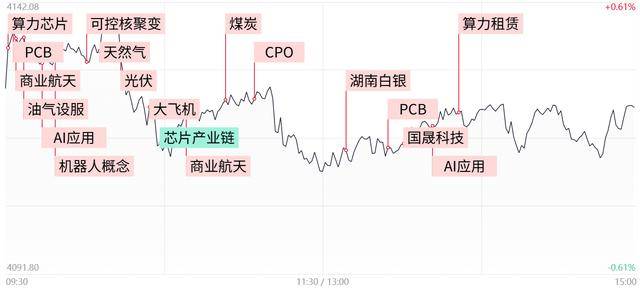
Market Overview - The market experienced a rebound in the afternoon, with all three major indices turning positive, and the ChiNext Index showing strong performance. The total trading volume in the Shanghai and Shenzhen markets reached 2.69 trillion yuan, an increase of 91 billion yuan compared to the previous trading day. Over 3,500 stocks rose across the market [1][7]. Sector Performance Commercial Aerospace - The commercial aerospace sector saw a significant rebound, with multiple stocks hitting the daily limit. Companies such as Triangular Defense, Keshun Shares, and Giant Lifting Equipment achieved limit-up status. Recent updates from three commercial aerospace companies regarding their IPO progress have contributed to this surge. Analysts predict that 2026 could be a prosperous year for China's commercial aerospace industry, with the market size for commercial rocket launch services expected to grow from 10.26 billion yuan in 2025 to 47.39 billion yuan by 2030, reflecting a CAGR of approximately 35.8% [2][6]. Oil and Gas - The oil and gas sector continued its strong performance, with stocks like Intercontinental Oil and Blue Flame Holdings reaching their daily limits. The Brent crude oil price was reported at $64.92 per barrel, up 5.85% from the beginning of the month. Analysts suggest that the current low levels of strategic oil reserves in the U.S. and OECD countries, combined with rising oil prices, indicate that oil is undervalued compared to other commodities [3][6]. PCB (Printed Circuit Board) - The PCB sector also showed strength, with stocks such as Chongda Technology and Pengding Holdings hitting their daily limits. A report indicated that due to tight supply and soaring prices of raw materials, a Japanese semiconductor materials company announced a price increase of over 30% for certain PCB materials starting March 1. The demand for AI-related PCBs is expected to drive significant growth in this sector [3][6]. Individual Stocks - In terms of individual stocks, short-term sentiment improved, with notable performances from Fenglong Shares, which achieved a rare 17 consecutive limit-ups, and Jiamei Packaging, which recorded 17 limit-ups over 25 days. Other stocks like Guosheng Technology and Galaxy Electronics also saw significant gains. The upcoming earnings announcements in late January are expected to play a crucial role in guiding market trends, with investors likely to seek opportunities in growth sectors with strong earnings visibility [5][6]. Market Sentiment - The overall market sentiment is recovering, with a decrease in the number of stocks experiencing significant declines. However, the market is still characterized by rotation among sectors, and investors are advised to be cautious and look for buying opportunities during pullbacks in popular sectors [7].

PCB产业链协同新进展!CSTM/FC51/TC04两项团体标准通过技术审查
Xin Lang Cai Jing· 2026-01-21 10:26
Core Insights - On January 16, 2026, the China Materials and Testing Standardization Committee successfully held a group standard review meeting, marking the transition of two standards, "Copper Surface Bonding Performance Specification for High-Speed Printed Circuit Boards" and "Deep Plating Capability Testing Method for Printed Circuit Board Via," from drafting to the preparation stage for formal release [2][19] Group 1: Standards Development - The two standards fill a gap in the testing and evaluation criteria for high-speed printed circuit boards, providing essential technical support and quality assessment for high-end electronic circuit manufacturing [2][19] - The expert group, consisting of representatives from various industry associations and research institutions, conducted a thorough review of the standards, focusing on technical indicators, testing methods, and text expression [4][21] - The successful approval of these standards signifies a move towards more precise and standardized practices in the electronic circuit chemical industry, promoting process optimization and quality upgrades in the high-end PCB sector [6][23] Group 2: Industry Impact - The new standards will provide normative evaluation requirements for electronic circuit chemicals used in AI server PCBs, high-speed PCBs, and multilayer PCBs, enhancing China's standard-setting authority in the global high-speed PCB market [6][23] - Guangdong Guanghua Technology Co., Ltd., founded in 1980, aims to lead in high-performance electronic chemicals and specialized chemical services, contributing to national technological innovation and high-quality industry development [8][25]


生益电子股价跌5.04%,华夏基金旗下1只基金位居十大流通股东,持有882.84万股浮亏损失4228.8万元
Xin Lang Cai Jing· 2026-01-20 06:47
Group 1 - The core point of the news is that Shengyi Electronics experienced a decline of 5.04% in its stock price, reaching 90.21 yuan per share, with a trading volume of 1.114 billion yuan and a turnover rate of 1.46%, resulting in a total market capitalization of 75.039 billion yuan [1] - Shengyi Electronics, established on August 2, 1985, is located in Dongguan City, Guangdong Province, and specializes in the research, production, and sales of various printed circuit boards, with 96.35% of its revenue coming from this main business [1] - The company has a minor revenue contribution of 3.65% from other supplementary businesses [1] Group 2 - Among the top ten circulating shareholders of Shengyi Electronics, a fund under Huaxia Fund has entered the list, specifically the Huaxia SSE STAR 50 ETF (588000), which acquired 8.8284 million shares, accounting for 1.06% of the circulating shares [2] - The Huaxia SSE STAR 50 ETF (588000) was established on September 28, 2020, with a latest scale of 75.62 billion yuan, and has achieved a year-to-date return of 12.07%, ranking 648 out of 5542 in its category [2] - Over the past year, the fund has delivered a return of 55.42%, ranking 1029 out of 4235 in its category, and since its inception, it has achieved a return of 10.16% [2] Group 3 - The fund manager of Huaxia SSE STAR 50 ETF (588000) is Rong Ying, who has been in the position for 10 years and 79 days, managing a total fund asset size of 135.549 billion yuan [3] - During the manager's tenure, the best fund return was 155.76%, while the worst return was -7.58% [3]

上市厦企延江股份今日复牌!盘中一度触及20%涨停
Sou Hu Cai Jing· 2026-01-19 03:08
Core Viewpoint - Yanjiang Co., Ltd. plans to acquire 98.54% of Yongqiang Technology's equity through a combination of issuing shares and cash payment, which is expected to constitute a major asset restructuring and related party transaction, but will not result in a restructuring listing [1]. Group 1: Acquisition Details - The acquisition involves issuing shares at a price of 8.85 yuan per share, which is not less than 80% of the average trading price over the last 60 trading days [4]. - The company will also raise matching funds by issuing shares at a price of 9.94 yuan per share, not less than 80% of the average trading price over the last 20 trading days [4]. Group 2: Yongqiang Technology Overview - Yongqiang Technology aims to become a leading enterprise in high-end integrated circuit interconnection materials, having developed products suitable for AI computing power, high-speed communication, advanced packaging, and 5G/6G applications [5]. - The company has an annual production capacity of 10 million square meters of high-frequency and BT-type substrate electronic information interconnection materials [5]. Group 3: Strategic Implications - Following the transaction, Yanjiang Co., Ltd. will expand its business into the high-end electronic information interconnection materials sector, focusing on technology research and development, and new product applications [7]. - The company has established a mature overseas business operation system with subsidiaries in the USA, Singapore, Egypt, and India, which will support Yongqiang Technology's operations and development [8].


台积电大幅提升2026年资本开支
2026-01-19 02:29
Summary of Conference Call Records Company: TSMC (Taiwan Semiconductor Manufacturing Company) Key Points - **Revenue Growth and Profitability** TSMC expects revenue growth of over 30% in 2026, despite the negative impact on gross margin from ramping up 2nm process technology. The gross margin is projected to remain between 62% and 65% due to price increases and improved capacity utilization [1][4]. - **Capital Expenditure Plans** TSMC plans to allocate $52 billion to $56 billion for capital expenditures in 2026, representing a year-over-year increase of over 32%. This expenditure will primarily focus on advanced processes (70%-80%) and advanced packaging (10%-20%) [1][6]. - **Business Structure Transformation** The business structure is shifting towards high-performance computing (HPC), which is expected to account for approximately 55% of revenue by Q4 2025. The revenue share from advanced processes (3nm, 5nm, 7nm) has reached a historical high of 77% [1][5]. - **AI Business Outlook** TSMC anticipates that AI business growth will exceed 50% in the coming years, driven by strong demand and collaboration with clients like NVIDIA and AMD. The company believes that the current AI demand is robust and not a bubble [1][7]. - **Emerging Market Opportunities** Applications like ChatGPT are creating new demand in advertising and other sectors, contributing to future market growth [1][8]. Company: Jiangfeng Electronics Key Points - **Global Market Expansion** Jiangfeng Electronics is expanding its ultra-pure target material business globally, targeting major clients like SK Hynix and Samsung. The company has seen significant growth, exceeding 50% since 2019, and is focusing on developing electrostatic chuck projects [1][9]. - **Market Size Projections** The global market for electrostatic chucks is expected to reach approximately $2.4 billion by 2030, with Jiangfeng addressing material bottlenecks through its Northwest Industrialization Project [1][9]. Company: Guangli Technology Key Points - **Expansion into Semiconductor Equipment** Guangli Technology is transitioning from IoT production monitoring devices to semiconductor packaging equipment, including dicing saws and laser dicing machines. The company is making progress in customer acquisition and aims to compete with Japanese firm DISCO [1][10]. - **Breakthroughs in Core Components** Domestic companies have made significant breakthroughs in semiconductor equipment and core components, particularly in air spindles and blades, demonstrating rapid localization progress [1][11]. Industry Dynamics Key Points - **Price Increases in Semiconductor Sector** Recent price increases have been observed among packaging companies like ASE, driven by cost pressures and surging AI demand. For instance, MICC's leading company, Yageo, announced a price increase of about 10% [1][12]. - **Storage Industry Developments** The storage sector is gaining attention, with companies like Hefei Changxin and Changchun making progress in their IPOs. AI servers are driving increased demand for storage, with Micron's acquisition leading to a 23% increase in DRAM prices in Q1 2026 [1][14]. - **Future Predictions for Semiconductor Industry** The semiconductor industry is expected to continue its upward trajectory driven by AI, with significant developments in domestic production capabilities across design, manufacturing, and packaging sectors [1][15]. PCB Sector Insights Key Points - **Market Performance** The PCB sector is viewed positively, with companies like Shenghong Technology and Huitian Technology expected to experience short-term performance fluctuations. However, risks related to technology development and demand may impact future performance [1][16].

NV-Rubin架构最新更新−上游材料
2026-01-19 02:28
Summary of Conference Call Records Industry Overview - The conference call primarily discusses the **upstream materials** industry, focusing on the **PCB (Printed Circuit Board)** supply chain and related technologies, particularly in the context of **NV (presumably a company)** and its suppliers. Key Points and Arguments Material Selection and Supply Chain Stability - **CPX** may downgrade from **M9** to **M8** materials to reduce costs and enhance supply chain stability, despite M9 having completed testing. This shift is due to supply and quality issues with M9, leading to a preference for M8 to align with a mature supply chain [1][3] - The **CPS** and **Switch modules** have confirmed designs, with ongoing tests for various backplane materials, including combinations of M9 and PTFE1 [2] Design Trends - The current trend in **mid-board design** remains focused on standard designs, with a shift towards using ordinary stair fabrics or second-generation stair fabrics to minimize application issues. If electrical performance is insufficient, a Q fabric solution may be considered [5] - The **Switch Tree module** is evaluating a transition from HVRP4 to VIP3 to optimize systems and reduce material risks, indicating flexibility in design adjustments [6] Performance Implications of Material Downgrades - Downgrading materials may lead to slight decreases in electrical performance, but adjustments in copper foil or fabric can meet performance requirements. This is crucial as the market struggles to meet high-end material demands in large volumes [7] Supplier Dynamics - **Shengyi Technology** has emerged as a major beneficiary in the domestic market due to issues with **Taiwan's Taisil** and has begun small-scale supply. **Nanya Technology** is undergoing re-testing, with results expected by mid-February [9] - **H Company** is currently producing models 910B and 910C, with a monthly demand of approximately 800,000 to 900,000 CCLs, corresponding to about 150,000 chips per month [11] Market Trends and Competitive Landscape - The **North American market** is increasingly favoring domestic supply chains, with companies like Google and Nvidia preferring suppliers from mainland China but requiring assembly outside the mainland [12] - The competition in the PCB supply chain is expected to intensify as companies aim to lower costs and offer incentives to PCB manufacturers. The rise in copper foil prices has led to strong performance from domestic producers like Jinbao and Tongguan, achieving domestic substitution [4][16] Future Demand and Production Challenges - The demand for new materials in PCB production is projected to reach 1.4 times that of M8 once commercialized, with production capacity expected to meet this demand, although uncertainties remain regarding chip supply [23] - Transitioning from sample production to mass production for domestic copper foil is generally smooth, requiring about a quarter for stability and parameter optimization [25] Collaboration and Technological Developments - **Hua Zheng** has limited progress in collaboration with authoritative bodies, focusing more on safety projects like the PTS1 scheme. The company is reassessing its materials due to increased demand for PTFE [10] - The development of **drilling technology** is influenced by fabric types, with Q fabric significantly increasing drill bit consumption and processing time, which could affect efficiency [17] Challenges in Material Compatibility - Issues with **Taiwan's Taisil** have raised concerns about quality, with ongoing investigations into the use of alternative copper foils. The reputation of **Mitsui** remains stable despite these challenges, as compatibility issues between different companies' formulations complicate assessments [26][28] Conclusion - The conference call highlights significant shifts in material selection, supply chain dynamics, and competitive strategies within the PCB industry. The focus on cost reduction, supplier flexibility, and technological advancements will shape future market trends and opportunities.

台积电CapEx指引印证AI需求,关注算力产业链上游机遇 | 投研报告
Zhong Guo Neng Yuan Wang· 2026-01-19 02:15
Group 1: TSMC Performance and Projections - TSMC reported a net profit of NT$505.7 billion for Q4 2025, a year-on-year increase of 35.0%, exceeding market expectations of NT$467.0 billion [3] - The company anticipates a nearly 30% growth in sales (in USD) for 2026, driven by strong customer demand [3] - TSMC plans to increase its capital expenditure for 2026 to between $52 billion and $56 billion, indicating a significant rise in spending over the next three years [3] Group 2: Semiconductor Industry Trends - The semiconductor sector has seen substantial growth, with the Shenwan Electronics Secondary Index showing year-to-date increases of 16.51% for semiconductors and 13.30% for other electronics [1] - The 8-inch wafer foundry prices are expected to rise due to steady growth in AI-related Power IC demand and increased orders for 2026 [4] - The utilization rate of 8-inch wafer foundries is projected to improve, supported by rising demand for AI applications, which will drive both volume and price increases in the semiconductor supply chain [4] Group 3: Stock Performance of Key Companies - Notable stock performance this week includes TSMC up by 5.80%, while Qualcomm saw a decline of 10.33% [2] - Other companies like Micron Technology and Intel also experienced gains of 5.12% and 3.10% respectively, while major players like Apple and Tesla faced declines [2]
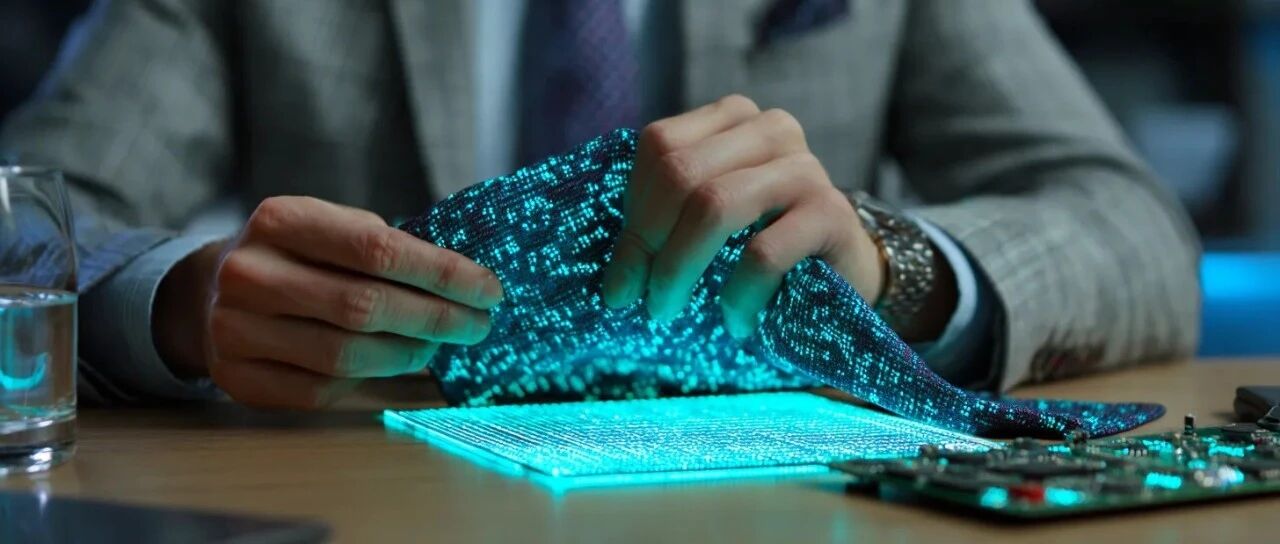
一块布,卡了英伟达的脖子?
首席商业评论· 2026-01-18 04:41
Core Viewpoint - The article emphasizes the critical role of high-end electronic fabric in the AI computing power revolution, highlighting that Japanese companies dominate this market, controlling nearly 70% of the global high-end electronic fabric market, which is essential for AI chip performance [4][6][9]. Group 1: Japanese Dominance in High-End Electronic Fabric - Japanese companies such as Nitto Denko, Asahi Kasei, and AGC dominate the high-end electronic fabric market, which is crucial for AI computing power [6][9]. - These companies have established a significant competitive advantage through decades of research and development, creating a robust patent network that covers the entire production process [9][10]. - The high cost of entry into this market, with investments in production facilities reaching up to 1.5 billion yuan, deters potential competitors, allowing Japanese firms to maintain their market position [9][10]. Group 2: Chinese Companies' Response and Innovations - Chinese companies have begun to challenge the Japanese monopoly, with firms like Honghe Technology and Linzhou Guangyuan making significant advancements in ultra-thin and low-dielectric electronic fabrics [10][11]. - Honghe Technology successfully produced 9-micron ultra-thin electronic fabric in 2021, breaking the long-standing foreign monopoly [10][11]. - Linzhou Guangyuan achieved mass production of low-dielectric fabric in 2021, marking a significant milestone in the industry [11][12]. Group 3: Material Revolution and Future Opportunities - The next generation of quartz electronic fabric is emerging as a critical material for AI applications, providing an opportunity for Chinese companies to leapfrog in technology [12][19]. - Companies like Feilihua are leading the charge in developing M9-level quartz fabric, which has been certified by NVIDIA, thus providing an alternative to Japanese suppliers [12][14]. - The ongoing material revolution is seen as essential for China's technological independence and advancement in various high-tech sectors, including aerospace, new energy, and semiconductors [19][20].
生益电子:近年来公司持续强化海外营销服务网络,完善国际化市场布局
Zheng Quan Ri Bao Wang· 2026-01-16 11:41
Core Viewpoint - The company is enhancing its overseas marketing service network and improving its international market layout to provide high-quality products and services to both domestic and international customers, thereby continuously increasing its competitiveness [1]. Group 1 - The company has been strengthening its overseas marketing service network in recent years [1]. - The company is focused on improving its international market layout [1]. - The company aims to provide high-quality products and services to domestic and international customers [1].
一块布,卡了英伟达的脖子?
创业邦· 2026-01-16 10:14
Core Viewpoint - The article emphasizes the critical role of high-end electronic fabric in supporting AI computing power, highlighting the dominance of Japanese companies in this sector and the emerging competition from Chinese firms. Group 1: Importance of Electronic Fabric - Electronic fabric is likened to the chassis of a supercar, essential for the performance of AI servers, which rely on advanced chips [7][10] - High-end electronic fabric is made from electronic-grade glass fiber, integrating cutting-edge materials science [8] Group 2: Market Dynamics - Japanese companies like Nitto Denko, Asahi Kasei, and AGC dominate nearly 70% of the global high-end electronic fabric market, creating an oligopoly [9] - These companies do not manufacture AI chips but control a crucial segment of AI computing power [10] Group 3: Competitive Landscape - Chinese companies are primarily engaged in the mid-to-low-end market, lacking the technological advancements of their Japanese counterparts [12] - Japanese firms have built a formidable barrier to entry through decades of research and development, creating a dense patent network [17] Group 4: Innovation and Breakthroughs - Chinese companies are beginning to challenge the Japanese monopoly, with firms like Honghe Technology successfully producing ultra-thin electronic fabric [32] - The development of low-dielectric fabric has also seen breakthroughs from companies like Linzhou Guangyuan, marking a significant shift in the competitive landscape [36] Group 5: Material Revolution - The next generation of quartz electronic fabric is emerging as a critical material for AI, with companies like Feilihua leading the charge in this new material revolution [40] - The article underscores the importance of material science in technological advancements, asserting that breakthroughs in materials are essential for the evolution of high-end manufacturing in China [56]