
博通

Search documents
取代高通博通,苹果自研再度发力
半导体行业观察· 2025-03-02 02:43
Core Viewpoint - Apple is transitioning from Qualcomm to its own modem technology, starting with the C1 modem in the iPhone 16e, aiming for complete internal processing of network functions in the future [1][3]. Modem Development - The C1 modem debuted in the iPhone 16e, focusing on efficiency but lacking support for 5G mmWave and all wavelengths of existing Qualcomm modems. It is described as the "most energy-efficient modem on iPhone" [3]. - The C2 modem, codenamed Ganymede, is expected to launch in the iPhone 18 series in 2026, featuring mmWave support and download speeds of 6 Gigabits per second [3]. - The C3 modem, codenamed Prometheus, is planned for release alongside the iPhone 19 series in 2027, aiming to surpass Qualcomm's performance and support next-generation satellite networks [4]. Networking Chips - Apple is also working on replacing Broadcom's networking chips, with a new chip codenamed Proxima expected to debut in updated versions of HomePod mini and Apple TV later this year, supporting Wi-Fi 6E [6]. - This new networking chip is anticipated to enhance connectivity between Apple devices and reduce costs [7]. Integration Plans - After the modem transition, Apple is considering integrating its cellular modem into the main Apple Silicon chip, which could provide cost and efficiency benefits, although this is projected to be realized by 2028 [9].



速递|美国计划全面禁止英伟达芯片在华销售,字节与博通的AI芯片项目或已暂停
Z Finance· 2025-03-01 11:21
Core Viewpoint - The tightening of U.S. restrictions on China's semiconductor industry is expected to escalate, potentially leading to a complete ban on AI chips entering China, which will significantly impact companies like NVIDIA and ByteDance [1][2]. Group 1: U.S. Restrictions on Semiconductor Exports - The U.S. government is preparing for significant new AI and export licensing restrictions against China, which may result in a total ban on all AI chips entering the country [1]. - NVIDIA's H20 and B20 chips, which are currently allowed in China, could be affected by these new restrictions, with NVIDIA projected to ship approximately 1 million H20 chips in 2024, generating over $12 billion in revenue [1]. - Following previous restrictions, NVIDIA has adjusted its product strategy by introducing downgraded versions of its chips for the Chinese market, including the H20, L20, and L2 [1][2]. Group 2: ByteDance's AI Chip Development Strategy - ByteDance is accelerating its self-developed AI chip strategy to reduce reliance on NVIDIA and enhance technological independence, planning to invest over $12 billion in AI infrastructure by 2025 [2]. - ByteDance was reported to be collaborating with Broadcom on a 5nm AI chip, which would comply with U.S. export restrictions, although the company has denied these reports [2][3]. - The collaboration with Broadcom is expected to significantly lower procurement costs and ensure a stable supply of high-end chips [2]. Group 3: Data Center Utilization and Future Challenges - ByteDance aims to utilize data centers in Southeast Asia to access NVIDIA chips, planning large-scale orders through leasing agreements to enhance its overseas AI capabilities [3][4]. - The company has already invested $8.8 billion in data centers in Thailand and is a significant customer of Malaysian data centers [4]. - New U.S. regulations are expected to close the loophole that allows Chinese companies to access high-performance chips through overseas data centers, further complicating their operations [5].


Altman:我们GPU不够用了
硬AI· 2025-02-28 14:02
点击 上方 硬AI 关注我们 Sam Altman表示,GPT-4.5 是"庞大"且"昂贵"的。由于GPU不足,GPT-4.5模型只能分批向不同类型的ChatGPT用户开 放。 作者 |鲍亦龙 编辑 | 硬 AI 在人工智能领域风头正劲的 OpenAI,如今却陷入了硬件资源的 "泥沼"。 2月28日在社交媒体上,CEO Sam Altman大倒苦水,称公司因 GPU 供应不足,不得不 "挤牙膏" 式地 分阶段推出GPT-4.5模型。 硬·AI Sam Altman表示,GPT-4.5 是"庞大"且"昂贵"的,而由于目前面临的GPU短缺问题,需要增加"数万 个"GPU才能支持更多用户访问。 从本周四开始,GPT-4.5只能首先向ChatGPT Pro用户开放,随后在下周才能向ChatGPT Plus用户群体 开放。"我们业务增长很快,现在GPU库存告罄,"Altman表示,"下周我们将增加数万个 GPU。" 其实,OpenAI 的 "硬件之困" 早已露出苗头。 去年10月份,在 Reddit AMA 上 ,Sam Altman 就承认计算能力不足是产品按时出货的 "拦路虎" 。 面对下一代 AI 模型为啥这么久 ...

2024 在中国的美国企业特别报告
胡润· 2025-02-28 05:15
Investment Rating - The report does not explicitly provide an investment rating for the industry or companies involved Core Insights - The report tracks the performance of American companies in China, highlighting that 70 sample companies generated over $2.5 trillion in global revenue in the 2023 fiscal year, with a stable contribution rate of 12% from the Chinese market, indicating resilience and growth potential [5][6][30] - The Chinese market is the second-largest market for 40% of the sample companies, with total revenue exceeding $300 billion in 2023, despite a year-on-year decline of 3.7% [6][30] - The report emphasizes the importance of adapting to local market demands and regulatory changes, with companies like Procter & Gamble integrating sustainability into their business models and Merck focusing on data security [6][30] Summary by Sections Section 1: Review of American Companies in China - In 2023, the number of newly established foreign-invested enterprises in China increased by 39.7%, with a total of 54,000 new companies [15][16] - The actual use of foreign capital reached $163.25 billion, ranking China as the second-largest recipient of foreign investment globally [15][16] - The report notes that the U.S. accounted for approximately 2.1% of the actual investment in China, ranking ninth among investment sources [16][19] Section 2: Industry Trends - The report categorizes industries into five main categories, with significant growth observed in the consumer sector, healthcare, and energy chemicals, while the industrial sector showed contraction [44][50] - The consumer sector in China has seen a compound annual growth rate (CAGR) of over 19% over the past four years, significantly outpacing global growth [55] - The healthcare sector is highlighted as a key growth area, with a 2% increase in revenue in China, contrasting with a global decline of 2% [59] Section 3: Outlook for American Companies in China - The report discusses the strategic actions of typical American companies in China, focusing on local market adaptation and innovation [6][30] - It identifies key market environments to watch, emphasizing the importance of regulatory compliance and sustainable business practices [6][30] Appendix: Revenue Data and Growth Rates - The report includes detailed revenue data for 70 sample companies, showing a median revenue of $2.16 billion and an average of $4.39 billion from the Chinese market [30][31] - It provides insights into revenue growth rates across various sectors, with notable increases in the semiconductor and consumer electronics industries [34][35][38]


PCIE,博通的新芯片路线图
半导体行业观察· 2025-02-28 03:08
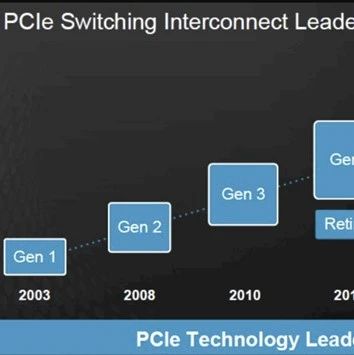
Core Viewpoint - The article discusses the evolution and significance of PCI-Express technology, particularly the upcoming PCI-Express 6.0, which aims to enhance bandwidth and reduce latency for AI and HPC systems. The transition to this new standard is crucial for meeting the demands of modern computing environments, especially in AI server architectures [1][2][3]. Group 1: PCI-Express Evolution - PCI-Express bandwidth increases every three years, with the latest version, PCI-Express 6.0, expected to double the data rate while maintaining latency [1][2]. - The transition to PAM-4 encoding in PCI-Express 6.0 allows for higher data rates but introduces challenges such as increased error rates, necessitating advanced error correction techniques [3][4]. - Broadcom has been a key player in the development of PCI-Express switches and retimers, with their latest products supporting both PCI-Express 5.0 and 6.0 standards [6][7]. Group 2: Market Demand and Applications - The demand for PCI-Express switches and retimers has surged, driven by the need for higher bandwidth in AI servers, which often require multiple GPUs and accelerators [7][8]. - A typical AI server equipped with eight GPUs utilizes four PCI-Express switches, highlighting the importance of high channel counts for performance [7]. - The complexity of AI server architectures necessitates robust PCI-Express solutions to facilitate communication between various components without a central CPU [8][9]. Group 3: Future Prospects - The introduction of PCI-Express 6.0 is seen as a pivotal step for the industry, with expectations for widespread adoption in AI server manufacturing by late 2024 [6][11]. - There is speculation about the potential for new architectures that could further enhance bandwidth beyond current PCI-Express capabilities, possibly resembling Nvidia's NVLink technology [9][10][11]. - The article emphasizes the need for a coherent telemetry system to support the growing complexity of AI ecosystems, which Broadcom aims to address through its interoperability development platform [8].
芯片巨头,昨夜重挫!
证券时报· 2025-02-28 00:17
Core Viewpoint - Nvidia's stock price has significantly dropped, leading to a decline in the overall market, particularly affecting major tech stocks and the semiconductor sector [1][2][5]. Group 1: Nvidia's Performance - Nvidia's stock fell by 8.48%, closing at $120.15 per share, with its market capitalization dropping below $3 trillion to $2.93 trillion [4][2]. - The company reported Q4 2025 revenue of $39.3 billion, a 78% increase year-over-year, and a net profit of $22.09 billion, exceeding market expectations [6]. - For the entire fiscal year 2025, Nvidia's revenue reached $130.5 billion, reflecting a 114% year-over-year growth [6]. Group 2: Market Reactions - The decline in Nvidia's stock triggered a collective drop in the semiconductor sector, with companies like AMD and Supermicro experiencing significant losses [5]. - Major tech stocks, referred to as the "Seven Sisters," including Tesla, Amazon, and Google, also saw declines, with Tesla down 3.04% and Amazon down 2.62% [8]. - Investor sentiment has turned negative, with reports indicating a rise in panic among investors, as reflected in the drop of consumer confidence indices [9]. Group 3: Future Outlook - Nvidia's CEO expressed optimism about the demand for AI-driven computing, suggesting that future needs may exceed current capabilities by millions of times [6]. - The CFO indicated that supply constraints are expected to ease, potentially leading to a surge in growth in the upcoming quarter [7]. - Despite strong earnings, market outlook remains mixed, with analysts noting a shift in expectations regarding AI growth prospects [7].

中概股,昨夜大涨!
证券时报· 2025-02-27 00:22
Core Viewpoint - The article highlights the recent fluctuations in the U.S. stock market, particularly focusing on the performance of major indices and specific companies, while also addressing economic indicators and geopolitical developments. Market Performance - On February 26, U.S. stock indices showed mixed results, with the Dow Jones falling by 188.04 points (0.43%) to 43,433.12, while the Nasdaq rose by 48.87 points (0.26%) to 19,075.26, and the S&P 500 increased by 0.81 points (0.01%) to 5,956.06 [3] - The Nasdaq China Golden Dragon Index saw a significant increase of 3.66% [12] Economic Indicators - A concerning signal was emitted from the U.S. Treasury market as the 10-year Treasury yield fell below the 3-month Treasury yield, indicating an inverted yield curve, which is a reliable predictor of economic recession [4] - Recent disappointing retail sales and weak consumer confidence data have raised concerns about a potential slowdown in the U.S. economy [5] Company Highlights - Nvidia's stock rose by 3.67% with a trading volume of $38.336 billion, reporting a 78% year-over-year revenue increase to $39.3 billion, and a net profit growth of 80% to $22.091 billion [10] - Tesla's stock fell by 3.96%, marking a cumulative decline of 19.3% over five days, attributed to underwhelming updates on its Full Self-Driving system and a nearly 50% drop in European sales [8][10] - Alibaba's stock increased by 3.78%, with a trading volume of $5.63 billion, following the open-sourcing of its cloud-based visual generation model [14] Sector Performance - In the S&P 500, seven out of eleven sectors declined, with consumer staples and healthcare leading the losses at 1.86% and 0.69%, respectively, while technology and utilities sectors saw gains of 0.89% and 0.37% [9] - Major tech stocks mostly rose, with AMD up over 12%, Broadcom up over 5%, and Nvidia up over 3%, while Apple fell by 2.70% amid political pressure regarding its diversity policies [9][10]

英伟达,凌晨重磅!黄仁勋感叹:需求惊人
21世纪经济报道· 2025-02-26 23:16
业绩超预期! 北京时间周四清晨,全球AI龙头英伟达发布截至1月2 6日的2 0 2 5财年第四财季报告。 英 伟 达 在 第 四 财 季 实 现 营 收 3 9 3 . 3 1 亿 美 元 , 较 去 年 同 期 增 长 7 8% , 分 析 师 事 前 预 期 为 3 8 0 . 5 亿 美 元;其中数据中心营收为3 5 5 . 8亿美元,同比增长9 3 . 3 2%; 第四财 季净利润2 2 0 . 6 6亿 美元 ,同比上 升 7 2% , 对 应 每 股 净 利 0 . 8 9 美 元 , 分 析 师 事 前 预 期 为 每 股 0 . 8 4美元; | GAAP | | | | | | | --- | --- | --- | --- | --- | --- | | ($ in millions, except earnings | Q4 FY25 | Q3 FY25 | Q4 FY24 | Q/Q | Y/Y | | per share) | | | | | | | Revenue | $39.331 | $35,082 | $22,103 | Up 12% | Up 78% | | Gross m ...

芯片行业,面临巨大转变
半导体芯闻· 2025-02-26 10:04
Core Viewpoint - The semiconductor industry is undergoing significant upheaval, with potential splits and acquisitions involving Intel by Broadcom and/or TSMC, the rise of Arm as a chip manufacturer, and increasing geopolitical tensions impacting the supply chain and technological innovation [1][9]. Intel's Decline and Potential Acquisition - Intel, once a leader in the semiconductor market, is facing major challenges due to manufacturing missteps and intense competition, attracting interest from Broadcom and TSMC for potential acquisitions [3]. - Broadcom is closely monitoring Intel's chip design and marketing operations, considering a partnership for Intel's manufacturing business before proceeding with an acquisition [3]. - TSMC is also contemplating controlling Intel's factories as part of an investment consortium, reflecting a trend towards specialization in chip manufacturing and design within the industry [3]. - Following news of potential acquisitions, Intel's stock surged by 16% on a Tuesday, although it later retreated, ending the week with a 5.3% increase [3]. Supply Chain Vulnerabilities and Geopolitical Considerations - The complexity and international integration of the semiconductor supply chain are increasingly evident, with experts noting that vertical integration is no longer feasible due to technological complexities [4]. - The U.S. government is pushing for domestic semiconductor manufacturing while limiting technology transfers to China, raising questions about its policies in light of potential TSMC acquisitions of Intel facilities [5]. - Any transaction involving TSMC taking over Intel's factories would require U.S. government approval, especially in the context of the $53 billion subsidy program established by the CHIPS Act in 2022, of which Intel is a significant beneficiary [5]. Arm's Ambitions and Market Disruption - Arm, known for licensing chip designs, plans to produce its own chips, marking a significant shift in its business model that could disrupt the semiconductor industry [6]. - The upcoming chips are expected to serve as central processing units (CPUs) for large data center servers, with production outsourced to manufacturers like TSMC [6]. - There is skepticism regarding Arm's decision to enter chip production, as it may conflict with existing clients who rely on Arm's designs [6]. - Amazon's collaboration with Intel to produce AI architecture chips on Intel's advanced 18A process node highlights the competitive dynamics in the market [6]. Opportunities and Aspirations in Europe - Europe is striving to enhance its position in the semiconductor industry, with initiatives announced by leaders like Macron and von der Leyen, including a €109 billion plan for France [8]. - The rise of RISC-V architecture presents challenges to established players like Intel, Arm, and Nvidia, creating opportunities for job creation in chip design in Barcelona [8]. - The call for public support to protect and promote better chip development in Europe reflects a strategic vision for the region's semiconductor future [8]. Competition and Innovation - The potential divergence of Intel and Arm into chip manufacturing could intensify competition in the semiconductor industry [9]. - If Broadcom acquires Intel's chip design business, it could emerge as a major player in the CPU market, potentially fostering innovation [9]. - Arm's entry into chip manufacturing may disrupt the CPU market, offering energy-efficient designs as attractive alternatives to Intel's chips, although it faces challenges of competing with its own customers [9].

Arista Networks, Inc.(ANET):4Q业绩超预期,25年收入指引稍弱
HTSC· 2025-02-21 07:02
Investment Rating - The investment rating for Arista Networks is maintained as "Buy" with a target price of $119.75 [7][8]. Core Insights - Arista Networks reported Q4 2024 revenue of $1.93 billion, a year-over-year increase of 25% and a quarter-over-quarter increase of 7%, exceeding Bloomberg consensus estimates [1]. - The company achieved a GAAP net profit of $801 million in Q4 2024, up 31% year-over-year and 7% quarter-over-quarter, also surpassing expectations [1]. - The company is optimistic about its AI-related revenue, projecting $1.5 billion for 2025, despite a slight decline in revenue contribution from major client Meta [2][3]. Revenue and Profitability - For 2024, Arista's data center cloud network segment revenue is expected to be $1.255 billion, accounting for 65% of total revenue, with a market share of over 40% in 100G/200G/400G segments [2]. - The company’s Q4 2024 Non-GAAP gross margin was 64.2%, slightly above the previous guidance of 63%-64% [3]. - The full-year 2025 revenue guidance is set at $8.2 billion, reflecting a year-over-year growth of 17%, which is slightly below previous expectations [3]. Financial Forecasts - The projected net profit for Arista Networks from 2025 to 2027 is $3.213 billion, $3.796 billion, and $4.406 billion respectively, with an upward adjustment of 8% to 11% compared to previous forecasts [4]. - The expected PE ratio for 2025 is 47x, with a target price of $119.75 based on this valuation [4]. Market Position and Growth Drivers - Arista Networks is positioned as a leader in high-end switching, benefiting from the increasing penetration of Ethernet in AI clusters [1][3]. - The company is expected to continue expanding its customer base, particularly in North America, driven by new investments in computing power [3].
