工商银行

Search documents
工商银行:加强防范贵金属市场价格波动风险
Cai Jing Wang· 2026-02-02 03:30
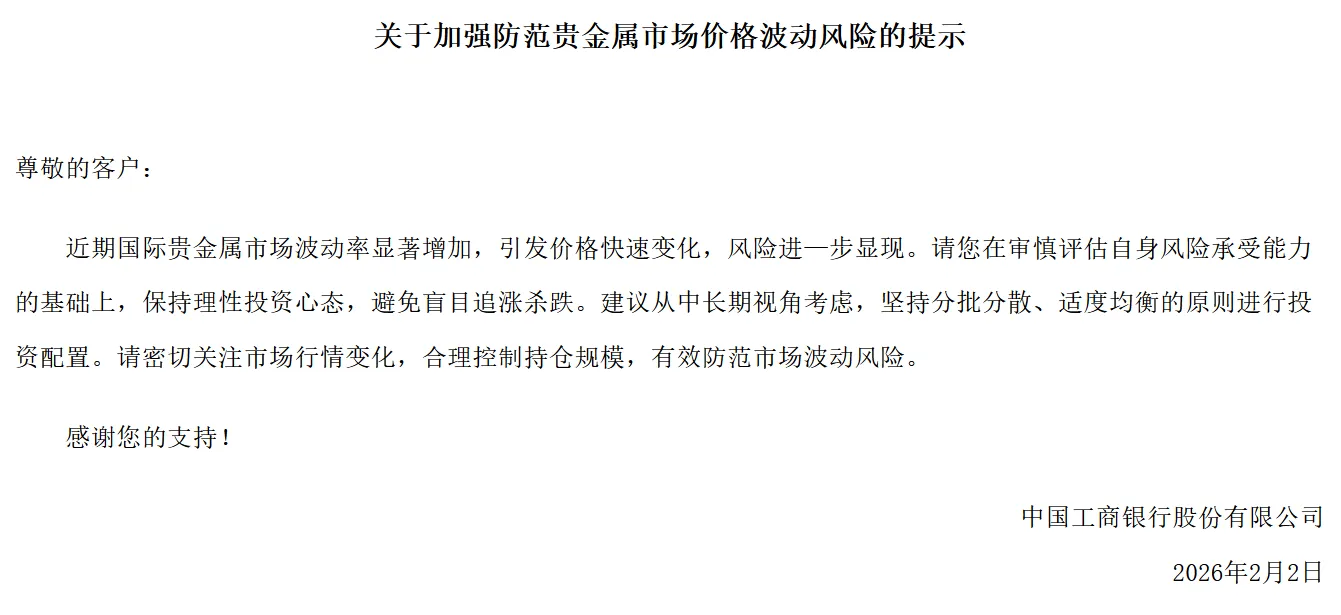
2月2日,工商银行发布关于加强防范贵金属市场价格波动风险的提示。工商银行表示,近期国际贵金属市场波动率显著增加,引发价格快速变化,风险进— 步显现。请客户在审慎评估自身风险承受能力的基础上,保持理性投资心态,避免盲目追涨杀跌。建议从中长期视角考虑,坚持分批分散、适度均衡的原则 进行投资配置。请密切关注市场行情变化,合理控制持仓规模,有效防范市场波动风险。 (工商银行) ...


中国工商银行将对如意金积存业务进行调整及修订
Jin Tou Wang· 2026-02-02 03:26
Core Viewpoint - The Industrial and Commercial Bank of China (ICBC) is adjusting its gold accumulation business rules and sales processes to enhance service quality and efficiency, effective from February 7, 2026 [1][2][3] Group 1: Business Time Adjustment - The business hours for ICBC's gold accumulation and floating price physical gold product sales will be adjusted, with physical branches opening no earlier than 9:10 AM and electronic banking channels operating from 9:10 AM to 10:30 PM daily [1] Group 2: Transaction Limit Management - ICBC will implement transaction limits for the gold accumulation business on weekends and public holidays, including daily accumulation/redemption limits and single transaction limits, which will be dynamically set [2] Group 3: Agreement Revision - ICBC has revised the gold accumulation business agreement to the 2026 version, with a public consultation period until February 6, 2026. Customers who do not cancel their accounts or continue operations after this period will be deemed to accept the new agreement [3]
金价暴跌,深圳水贝挤满了人,扎堆买金!多家银行提示风险
Sou Hu Cai Jing· 2026-02-02 03:23
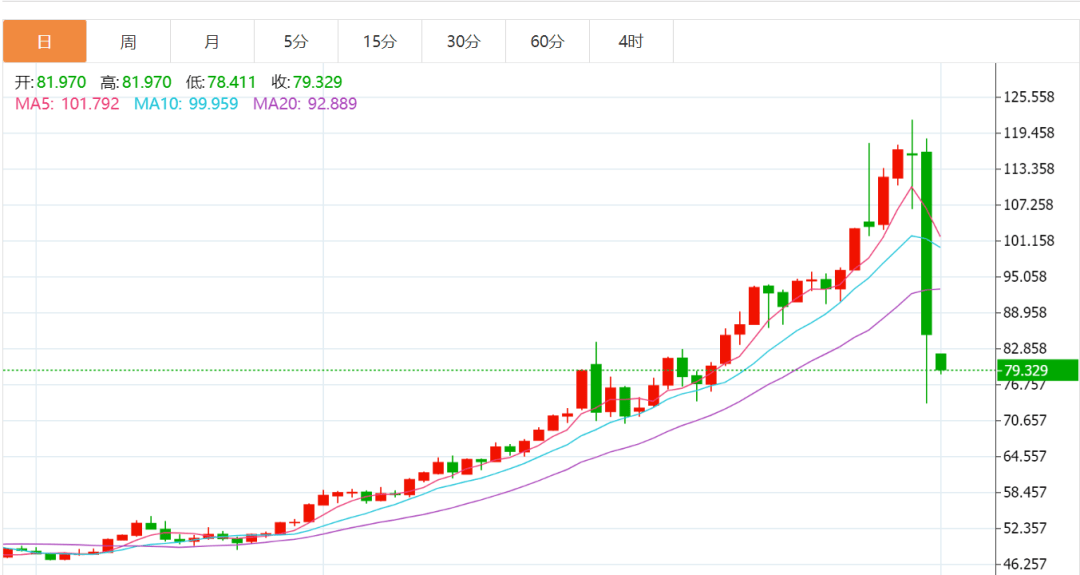
据智通财经报道,现货白银周一盘初跌幅扩大至5%,报79.4美元/盎司。 现货黄金跌1.4%。 | 月 | રસ્ત્ર | 1 ટસ્ટે | 30分 | ୧୦સ્ત્ર | 4时 | 日 | 周 | | --- | --- | --- | --- | --- | --- | --- | --- | | 开:4832.91 高:4940.59 低:4772.39 收:4936.14 | 5678.77 | MA5: 4759.37 MA10: 4673.20 MA20: 4547.11 | | | | | | | 5550.42 | | | | | | | | | 5422.07 | | | | | | | | | 5268.06 | 5165.38 | | | | | | | | 5037.03 | | | | | | | | | 4908.69 | 4808.34 | | | | | | | | PARTY CARD | | | | | | | | | 4651.99 | | | | | | | | | 4523.65 | | | | | | | | | 4395.30 | | | | | | | | | ...


金价银价创纪录暴跌,深圳水贝挤满“抄底客”!五大行紧急出手
Huan Qiu Wang· 2026-02-02 03:07
Market Overview - The precious metals market experienced extreme volatility, with international gold prices plummeting from historical highs, leading to significant impacts on domestic futures, stocks, funds, and consumer markets [1] - On January 30, international gold prices fell sharply, losing over 11% in a single day, while silver prices dropped by 31.37%, marking the worst single-day performance since March 1980 [1] - Weekly performance showed a cumulative decline of 4.71% for gold and 22.50% for silver [1] Price Movements - Domestic gold prices also saw a significant drop, with the Shanghai Gold Exchange spot gold price falling to 1070.01 RMB per gram, a decrease of around 10% [3] - Major brands adjusted their gold jewelry prices from over 1700 RMB per gram to between 1500-1600 RMB per gram [3][4] - For instance, Chow Sang Sang reported a drop in the price of its gold jewelry from 1708 RMB to 1618 RMB per gram within two days [3] Consumer Behavior - Following the price drop, there was a surge in consumer interest in purchasing gold, particularly in Shenzhen's Shui Bei market, where prices fell below 1200 RMB per gram [6] - Many consumers expressed that buying gold now is significantly cheaper compared to previous days [6] Investor Reactions - Investors are increasingly concerned about further declines in precious metal prices, leading many to sell gold and silver items to cash out [10] - Reports indicated that some businesses experienced a rapid decline in gold buyback prices, with a drop from 1142 RMB to 1081 RMB per gram in just one day [10] - The volatility in gold prices has led to a cautious approach among investors, with many hesitating to sell due to fears of missing potential price recoveries [10] Market Supply Dynamics - Some suppliers in Shenzhen's Shui Bei market reported shortages of gold bars, attributing this to the recent price drop and the reluctance of suppliers to sell at lower prices [12] - Suppliers indicated that they are not willing to sell gold bars during such volatile conditions, leading to a decrease in available inventory [12] Banking Sector Adjustments - Several major banks, including ICBC, ABC, and CCB, have adjusted their gold investment services in response to the market volatility, issuing risk warnings to investors [14][16] - ICBC announced changes to its gold accumulation business, including limits on transactions during non-trading days [15] - CCB raised the minimum amount for personal gold accumulation to 1500 RMB, reflecting the increased market risks [16][19]

迈向数字文明的资本有序扩张生态阈值模型
Jing Ji Guan Cha Wang· 2026-02-02 02:55
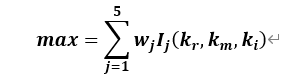
Core Viewpoint - The article introduces a novel theoretical framework called the Capital Ordered Expansion Ecological Threshold Model, aimed at balancing the dynamic interaction between digital capital vitality and sustainable civilization development in the context of the global digital economy [1]. Group 1: Theoretical Foundation - The model is rooted in the "Threefold Five-Dimensional" integration framework, emphasizing the need for a healthy "ecological interval" to prevent systemic risks arising from the interrelated nature of capital relationships, movement characteristics, and benefit essence in the digital age [2]. - The model identifies three bottom-line constraints: social equity (α), ecological sustainability (β), and data sovereignty security (γ), which must be maintained to avoid systemic collapse [2]. - The model aims to maximize five dimensions of interests through a coordinated framework, ensuring that no single dimension expands unchecked [2]. Group 2: Model Core - The core of the model is a target function designed to achieve the maximization of five-dimensional interests, expressed mathematically [3]. - The model incorporates governance philosophies and technical logic, such as clarifying data property rights and ensuring algorithm transparency and accountability [4]. Group 3: Decision Variables - The model defines three key decision variables: Kr (relationship variables), Km (movement variables), and Ki (benefit variables), which represent policy levers aimed at optimizing production relationships, capital movement forms, and benefit distribution patterns, respectively [5][8]. - Specific examples include the introduction of employee stock ownership in companies like China Unicom and Eastern Airlines to adjust internal capital and labor relations [8]. Group 4: Five-Dimensional Interest Function - The model specifies five measurable dimensions of interests, including subjective interests (Is), objective interests (Io), process interests (Ip), time interests (It), and spatial interests (Isp), each with its own key indicators [6][9]. - For instance, the implementation of data rights in Shenzhen has led to increased income for delivery workers, reflecting an enhancement of subjective interests [9]. Group 5: Constraints and Governance - The optimization of the target function is bounded by four rigid constraints, which form the model's lifeline: social equity (α), ecological sustainability (β), data sovereignty security (γ), and a coordination degree constraint (δ) [10][11]. - The model emphasizes the importance of maintaining a dynamic harmony index (δ) of at least 0.7 to ensure effective policy coordination across the three dimensions [13]. Group 6: Global Significance of China's Approach - The Capital Ordered Expansion Ecological Threshold Model represents a theoretical innovation and a "Chinese solution" for global digital governance, transcending both technological utopianism and market fundamentalism [11]. - The model provides a practical governance toolbox that translates abstract concepts of fairness, sustainability, and security into quantifiable indicators, facilitating precise management [11]. - It embodies the concept of a "community with a shared future for mankind," reflecting a commitment to global development and long-term sustainability [12].
涉黄金业务调整,六大行公告!
Jing Ji Wang· 2026-02-02 02:27
Core Viewpoint - Recent fluctuations in gold prices have prompted major banks to take urgent measures to control risks associated with gold-related businesses [1] Group 1: Bank Responses - Industrial and Commercial Bank of China (ICBC) issued a risk warning on February 1, advising clients to maintain a rational investment mindset and avoid impulsive trading due to significant price volatility [2] - Agricultural Bank of China (ABC) announced an increase in margin requirements for gold trading contracts from 44% to 60% starting January 30, emphasizing the need for clients to manage their positions carefully [3] - Bank of China (BOC) highlighted the uncertainties in the precious metals market and urged clients to conduct transactions based on their financial status and risk tolerance [4] - China Construction Bank (CCB) raised the minimum investment amount for gold accumulation business to 1500 yuan, advising clients to enhance their risk awareness amid increased market volatility [5] - Bank of Communications and Postal Savings Bank also issued trading alerts, with the latter increasing margin requirements for various gold contracts from 80% to 120% [6] Group 2: Market Outlook - The chief economist of Zhaolian emphasized the need for investors to have appropriate risk tolerance amid increased short-term volatility in gold prices, while the long-term upward trend in gold prices remains intact [7]
中国银行_存款流失_规模几何_流向何方_是否持续-China Banks_ Deposit outflow_ how much_ to where_ will it continue_
2026-02-02 02:22
Summary of Key Points from the Conference Call Industry Overview - **Industry**: Chinese Banking Sector - **Context**: The report discusses the implications of significant deposit maturities in 2026 and the potential outflow of deposits from banks to financial investments. Core Insights and Arguments 1. **Deposit Growth and Outflow Concerns**: Chinese households accumulated approximately Rmb8 trillion in excess savings from 2020 to 2025, leading to a retail deposit growth of Rmb17 trillion per year in 2022-2023. Concerns have risen regarding the potential unwinding of this deposit growth in 2026 due to a large volume of maturing deposits and reduced attractiveness of time deposit rates after several cuts since 2022 [2][3][4]. 2. **Maturity Cycle Peak**: 2026 is expected to be the peak year for maturing deposits, with an estimated Rmb55-60 trillion (about 18% of total deposits) set to mature. This concentration of longer-tenor deposits will create significant outflow pressure [3][9]. 3. **Limited Impact on Consumption**: Despite the accumulation of excess savings, consumer sentiment remains cautious, leading to limited spending. Most maturing deposits are expected to be rolled over into new time deposits rather than being used for consumption [4][12]. 4. **Reallocation to Financial Investments**: It is estimated that Rmb2-4 trillion of maturing deposits may migrate into various financial products, including WMPs (Rmb600 billion-1.3 trillion), mutual funds (Rmb300-600 billion), equities (Rmb400-800 billion), and insurance products (Rmb200-500 billion) [11]. 5. **Implications for Banks**: The maturity wave is projected to lower overall funding costs by approximately 14 basis points due to the repricing of high-rate deposits. This could enhance fee income generation for banks, although outflow risks remain a concern, particularly for banks with high loan-to-deposit ratios [5][13]. 6. **Stock Performance Outlook**: Despite the positive effects of deposit repricing, bank stocks may continue to underperform in a strong equity market due to moderate profit growth expectations and sector rotation pressures. High dividend yield banks and those with fast growth and high ROE are viewed favorably [5][14]. Additional Important Insights 1. **Household Saving Rates**: The household saving rate averaged 33% during 2020-2022 and 32% during 2023-2025, higher than the pre-COVID normal of around 30%. This indicates a significant accumulation of excess savings during the pandemic [7]. 2. **Regulatory and Market Factors**: Regulatory tightening and financial market turmoil have contributed to a shift in asset allocation from investments in WMPs and equities to bank deposits, as banks offered more attractive time deposit rates [8]. 3. **Future Consumption Growth**: The report anticipates modest household consumption growth in 2026, with limited release of excess savings for consumption purposes due to ongoing cautious sentiment [12]. 4. **Deposit Rate Cuts**: Following seven rounds of rate cuts since April 2022, demand deposit rates have fallen significantly, which may lead to increased outflow pressure in 2026 as higher-rate deposits reprice to current lower levels [10]. 5. **Long-term Outlook**: The report suggests that while the banking sector may face challenges, the overall impact of deposit maturities will be manageable, and banks with strong fundamentals may still perform well in the medium term [5][14].
我们的2025 | 申万宏源大投行业务全景回顾
申万宏源证券上海北京西路营业部· 2026-02-02 02:03
编者荐语: 转载自申万宏源发布。 以下文章来源于申万宏源发布 ,作者申万宏源证券 申万宏源发布 . 申万宏源证券官方发布 6 中资离岸债承销数量排名中资券商 第5 + 服务科技金融 + 聚焦创新驱动,点燃科技引擎 i 服务科技领域境内股权融资17单、募集资金 规模70.88亿元,同比大幅增长 9 发行科技创新债券142只、规模522.99亿元, 同比分别增长167.92%和161.58% ✪ 「申万宏源大投行业务全景回顾」 2025年,是全面完成"十四五"规划目标的"收 官之年",申万宏源大投行业务深化科技化、产 业化、国际化、一体化的转型发展方向,坚守功 能性定位,构筑服务国家战略新生态。 数说2025: 以金融之力 赋能局质量发展大局 新三板累计挂牌家数、定向发行次数保持行业 e 第1 2 A股IPO发行上市5单,排名 1;其中创业 板3单,排名第3 并购重组财务顾问交易规模1,392亿元,排名 B 算3 债券主承销债券923只、金额3.545亿元,稳居 S 行业第一梯队,其中熊猫债(国际机构债)承销 只数排名第3,金融债承销只数排名并与 港股IPO保荐数量、承销数量均排名中资券商 5 IPO 助力科技领 ...


五大维度评分均提高约13分,70家优质机构构建全链条服务网
Nan Jing Ri Bao· 2026-02-02 02:00
Core Insights - Nanjing's comprehensive score for the construction of the national-level sci-tech financial reform pilot zone increased from 82.46 to 95.49 over three years, reflecting a significant improvement of 13.03 points [1] - The establishment of 70 high-quality specialized sci-tech financial organizations has created a professional and comprehensive service system [1] Group 1: Evaluation Results - The evaluation report indicates that Nanjing's sci-tech financial reform pilot zone has shown a "five-dimensional collaborative and comprehensive leap" with significant improvements of approximately 13 points across five dimensions: financial service capability, technological innovation capability, industrial development capability, sci-tech financial environment, and sci-tech infrastructure [2] - The average annual growth rate across these dimensions reached 7.62%, demonstrating the deep integration of the "finance-technology-industry-environment-infrastructure" ecosystem [2] Group 2: Financial Metrics - By 2024, the loan balance for sci-tech enterprises in Nanjing is projected to reach 4,381.49 billion yuan, maintaining a double-digit growth rate [3] - The total investment from government-guided funds increased from 474.84 billion yuan to 874.54 billion yuan, with an annual growth rate of 42%, leveraging social capital at a ratio of 1:3.5 [3] - The issuance of sci-tech bonds in the exchange market has seen an annual growth rate of 80%, establishing a multi-channel funding supply structure of "credit + equity + bonds" [3] Group 3: Innovation and Industry Growth - Nanjing's R&D investment intensity remains stable at a high level of 3.9%, with effective invention patents increasing by 39.3% to 158,512, leading to a per capita patent ownership of 167.01, ranking among the top in the country [3] - The coupling degree between industry and finance continues to deepen, with the new power (smart grid) industry's revenue growth reaching 56.7%, and the software and information service industry approaching a scale of one trillion yuan [3] Group 4: Risk Management Innovations - Nanjing has made significant progress in innovating risk-sharing mechanisms, with technology insurance products covering the entire lifecycle of tech enterprises, providing risk coverage exceeding one trillion yuan [4] - The balance of risk-sharing products like "Ningke Loan" has nearly doubled over three years, and the scale of intellectual property pledge financing has doubled in two years to reach 15.783 billion yuan [4] Group 5: Specialized Financial Organizations - Nanjing has over 8,000 high-tech enterprises and more than 12,000 tech SMEs, with a growing demand for specialized financial services due to the common challenges of "light assets, high risks, and financing difficulties" faced by these enterprises [5] - The establishment of a standardized evaluation guide for specialized sci-tech financial organizations has led to the selection of 70 high-quality institutions, covering various sectors including policy banks, state-owned commercial banks, and private investment funds [5] Group 6: Future Directions - Nanjing aims to deepen sci-tech financial reforms by implementing dynamic management, establishing a review and exit mechanism for specialized organizations, and focusing on core indicators such as sci-tech loan issuance and service enterprise numbers [7] - The city plans to enhance collaboration and innovation in key industries like integrated circuits, biomedicine, and artificial intelligence, while also promoting policy coordination to lower service risks and stimulate internal motivation [8]
黄金、白银继续大跌!刚买的金饰能退吗?多品牌声明
Nan Jing Ri Bao· 2026-02-02 01:41
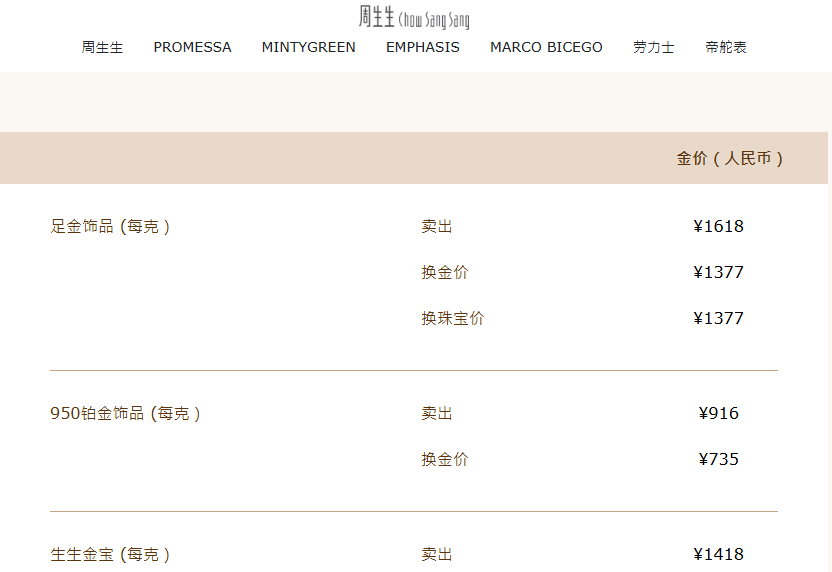
北京时间2月2日早间,现货黄金、白银大跳水,现货白银日内跌幅扩大至10%,报76.89美元/盎司。现货黄金向下跌破4700美元,日内下跌3.33%。 31日,国内黄金饰品价格继续回调。周生生官网发布数据显示,足金饰品报1618元/克,该店于29日足金饰品报1708元/克,两日跌去90元/克。 黄金价格大跌,多品牌设置退货手续费 在过去几天,现货黄金价格经历了"过山车"般的行情,受金价下跌影响,国内品牌金饰价格相应回调。 老庙黄金官网发布数据显示,足金饰品报1546元/克,该店于29日足金饰品报1706元/克,两日跌去160元/克。 而线上方面退货规则相对复杂,不同平台和品牌有所区别。大多数平台和品牌都不接受投资金类产品如金币、金条的退货;针对黄金首饰,部分品牌提出 了签收后24-48小时内退货的限制(需不影响二次销售)。 面对市场波动剧烈可能产生的摇摆心理,部分品牌/平台设置了相关退货规定:生成物流单号/发货后再退款,需扣除订单金额1%-5%的手续费及快递运保 费。部分品牌则表示,金条付款成功后15分钟内可申请退款,逾期将直接拒绝退款。 记者发现,有黄金品牌柜台销售人员在社群中发布声明称:不能因为金价降了就要 ...