宝洁公司

Search documents
美国经济疲态显现 关税负面影响加剧
Yang Shi Xin Wen· 2025-08-03 23:41
Core Insights - The negative impacts of the tariff policies implemented by the Trump administration are becoming increasingly evident, with multiple signs of economic weakness emerging in the U.S. economy, including a cooling labor market and weak consumer demand [1][2] Economic Data Summary - The U.S. labor market has shown clear signs of cooling, with the unemployment rate rising by 0.1 percentage points to 4.2% in July, and non-farm payrolls adding only 73,000 jobs, which is below market expectations [1] - Revisions to previous months' job growth show a significant downward adjustment, with May and June's non-farm payrolls revised down by a total of 258,000 jobs [1] - The hiring rate has dropped to its lowest point in seven months, and the worker turnover rate has decreased to 2%, indicating a sustained weakening of labor market vitality [1] Economic Expert Opinions - Economists suggest that the negative effects of the tariff policies are accelerating, with rising inflation pressures and policy uncertainty impacting economic activity [2] - The tariffs are suppressing consumer spending and causing businesses to adopt a wait-and-see approach, which is dragging down economic activity [2] - Consumers have not fully absorbed the impact of tariffs on their income and purchasing power, leading to a decline in spending momentum, particularly in non-essential categories like furniture [2] Company Impact - Companies such as Whirlpool and Procter & Gamble are directly affected by the tariffs, with Apple CEO Tim Cook warning of an $1.1 billion loss in the current quarter due to tariffs [2] - The economic challenges are evident as the U.S. economy faces significant hurdles at the start of the second half of the year, compounded by escalating trade tensions and tariffs imposed on various trading partners [2]

无论业绩好坏,美国消费股都在跌!高盛看不懂:为何逢低抛售?
Hua Er Jie Jian Wen· 2025-08-03 22:28
Core Viewpoint - The current earnings season for U.S. consumer stocks has led to an unusual sell-off, despite strong earnings reports, indicating deep-seated market concerns about the sustainability of consumer strength [1][2]. Group 1: Earnings Performance - 83% of the 317 S&P 500 companies that have reported earnings exceeded expectations, yet stock prices generally fell post-announcement [1]. - Companies like Procter & Gamble (PG) and PepsiCo (PEP) experienced initial stock price increases after reporting strong earnings, but ultimately saw declines in the following days [3]. Group 2: Market Sentiment - The prevailing market environment suggests a tactical "sell-the-news" approach, with investors opting to take profits rather than establish new long positions [2]. - Negative earnings surprises have led to significant stock price drops, with companies like Philip Morris International (PM) and Chipotle Mexican Grill (CMG) facing severe sell-offs following disappointing results [4]. Group 3: Exceptions to the Trend - A few companies managed to resist the broader sell-off, including Las Vegas Sands (LVS), Wingstop (WING), and Builders FirstSource (BLDR), which showed resilience due to specific business strengths [5]. - Despite these exceptions, the overall sentiment in the consumer sector remains pessimistic, with investors wary of future economic uncertainties [5].




化妆品医美行业周报:淡季国货抖音持续高增,国际美妆25Q2反攻-20250803
Shenwan Hongyuan Securities· 2025-08-03 12:41
Investment Rating - The report suggests a positive outlook for domestic brands and a recovery for international beauty brands in the Chinese market, indicating potential investment opportunities in the cosmetics and medical beauty sectors [2][3]. Core Insights - The cosmetics and medical beauty sector underperformed the market, with the Shenwan Beauty Care Index declining by 3.3% from July 25 to August 1, 2025, while the Shenwan Cosmetics Index fell by 2.6% [3][4]. - Domestic brands showed strong growth during the off-season, with notable increases such as Han Shu up 58%, Proya up 23%, Marubi up 72%, and Kefu Mei up 28%, indicating resilience in the market [7][17]. - International beauty brands, represented by L'Oréal, are recovering in the Chinese market, with a 3% growth in Q2 2025, supported by promotional events like the 618 shopping festival [7][24]. - The report highlights the success of Lin Qingxuan, a high-end domestic skincare brand, which saw revenue grow from 690 million yuan in 2022 to 1.21 billion yuan in 2024, showcasing the potential of domestic brands [13][14]. Summary by Sections Industry Performance - The beauty and medical aesthetics sector has shown weaker performance compared to the overall market, with specific indices declining [3][4]. - The report notes that the cosmetics market is transitioning from quantity to quality, with a significant increase in e-commerce sales, which accounted for 47% of cosmetics sales in 2024, up from 22% in 2016 [9][30]. Key Company Highlights - L'Oréal's sales in China for H1 2025 reached approximately 186.19 billion yuan, with a 3% year-on-year increase, indicating a recovery in the Chinese market [24]. - Procter & Gamble reported a record net sales of approximately 604.95 billion yuan for the 2025 fiscal year, with the beauty segment achieving a net sales of approximately 107.66 billion yuan, reflecting a 2% growth [25]. - Lin Qingxuan's product matrix includes 188 SKUs, with a focus on high-quality natural ingredients, and it has established a strong supply chain and distribution network [14][16]. Market Trends - The report emphasizes the growing market for high-end skincare products, with the market size expected to increase from 749 billion yuan in 2019 to 1,144 billion yuan by 2024, indicating a compound annual growth rate (CAGR) of 13.8% [14][15]. - The domestic brands are gaining market share, with the top ten brands in the skincare market now evenly split between domestic and international brands, reflecting a shift in consumer preferences [30][31].


无论业绩好坏,美国消费股都在跌!高盛看不懂:为何“逢低抛售”?
美股IPO· 2025-08-03 11:43
Core Viewpoint - Despite a strong overall performance in the second quarter earnings season for U.S. companies, the consumer sector has experienced an unusual phenomenon where stock prices have generally declined after earnings announcements, raising concerns about the sustainability of consumer strength [1][3]. Group 1: Earnings Season Performance - The earnings season has shown robust results, with 83% of the 317 S&P 500 companies that reported earnings exceeding expectations [3]. - However, the consumer stocks have not benefited from this strong performance, leading to a wave of unusual sell-offs [3][4]. Group 2: Market Reactions - A tactical "sell-the-news" environment is suggested by the widespread decline in stock prices, indicating that investors are taking profits on any rebound rather than building new long positions [4]. - High-profile companies like Procter & Gamble (PG) and PepsiCo (PEP) experienced initial stock price increases after reporting strong earnings, but ultimately saw declines in the following days [6]. Group 3: Impact of Negative News - Companies that reported disappointing earnings faced severe stock price drops, indicating a low tolerance for negative signals in the current market sentiment [7]. - For instance, Philip Morris International (PM) saw an 8% drop on the day of its earnings announcement, continuing to decline in the following days [7]. Group 4: Exceptions to the Trend - A few companies managed to resist the selling pressure, particularly those in specific sectors such as Las Vegas Sands (LVS) and Wingstop (WING), which showed strong stock performance post-earnings [8]. - However, these exceptions did not alter the overall weak sentiment in the consumer sector [9].

全球贸易史上的黑暗一天
Zhong Guo Xin Wen Wang· 2025-08-03 10:58
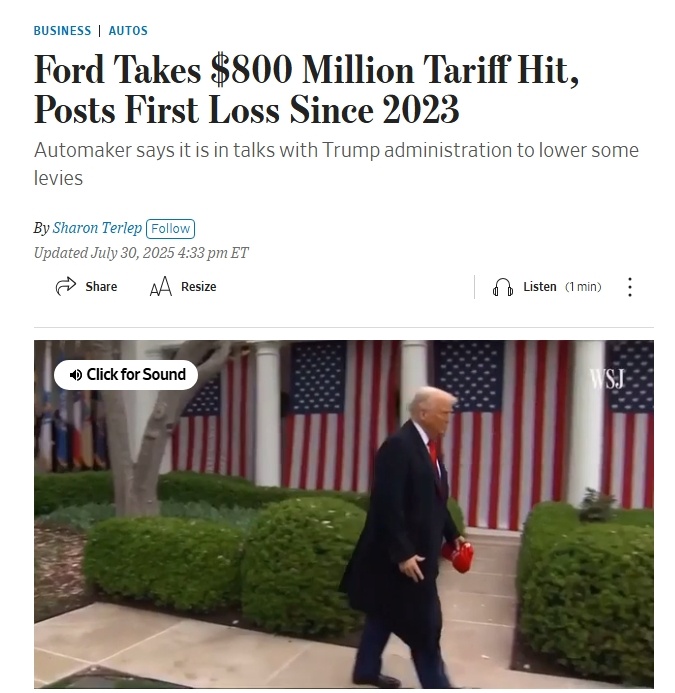
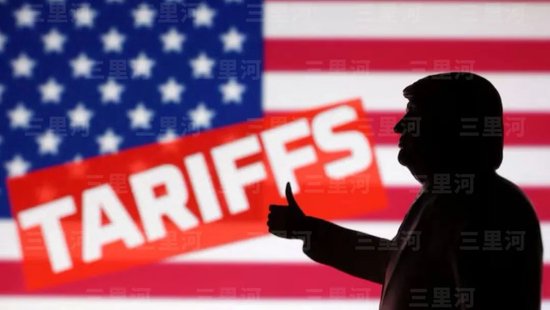
Group 1: Tariff Implementation - The new tariff rates will increase to 15% for most countries and regions, with some major trade partners receiving lower rates between 10% and 20% due to investment commitments to the U.S. [2] - Countries that did not make sufficient concessions in recent negotiations face significantly higher tariffs, such as Canada at 35% and Brazil at 50% [4] Group 2: Historical Context - The new tariffs will raise the U.S. actual tariff rate to 17%, the highest since the Smoot-Hawley Tariff Act of 1933, which exacerbated the Great Depression [5][6] - The actual tariff rate was only 1.2% last year, indicating a dramatic shift in trade policy that could reshape multinational production and trade cost structures [7] Group 3: Impact on U.S. Companies - U.S. companies are becoming the largest "taxpayers" under the new tariff regime, with tariff revenue soaring to $27 billion in June, nearly four times that of the previous year [8] - Companies like Ford and Hasbro are already adjusting their financial forecasts due to increased costs from tariffs, with Ford estimating an additional $800 million in expenses [9] Group 4: Consumer Impact - Retail giants like Walmart and Target are currently managing costs through inventory but are expected to raise prices as tariffs take effect, with a significant portion of manufacturers already beginning to pass on costs [9][10] - The inflationary effects of the tariffs are anticipated to become more pronounced in the fourth quarter of this year and into the first quarter of next year, impacting consumer prices directly [10] Group 5: Economic Outlook - The new tariffs are expected to erode corporate profits and market confidence, leading to potential cuts in investment and hiring by U.S. companies [10] - The overall economic impact is still being assessed, but early signs indicate that the tariffs are reigniting inflation and could slow economic growth [10]
无论业绩好坏,美国消费股都在跌!高盛看不懂:为何“逢低抛售”?
Hua Er Jie Jian Wen· 2025-08-03 08:20
这一现象与财报季的整体强劲表现形成鲜明对比。据统计,在已公布业绩的317家标普500指数公司中, 83%的公司利润超出预期。 Feiler在报告中指出,这种价格走势令多数投资者感到意外。因为许多公司都提到了7月份趋势的改善, 同时投资者在非必需消费品和必需消费品领域的仓位相对较轻。此外,市场此前因税收法案的影响,对 2026年上半年的消费前景抱有一定乐观情绪。如今的股价表现,无疑给这种乐观预期泼了一盆冷水。 这种普遍的股价回落现象,暗示着一种战术性的"卖出新闻"(sell-the-news)市场环境,并引发了对消 费板块未来走势的担忧。投资者似乎在利用任何反弹机会获利了结,而不是建立新的多头头寸。 业绩超预期也难逃抛售 一个看似强劲的财报季,却未能给美国消费股带来应有的提振,反而引发了一轮反常的抛售。 美国消费股正遭遇一个反常的财报季,无论业绩好坏,股价普遍在财报公布后承压下挫。这种"利好出 尽即是利空"的模式,反映出市场对消费者实力可持续性的深层疑虑,即便整体盈利数据表面光鲜。 8月1日,据高盛消费品专家Scott Feiler在一份给客户的报告中观察,一个共同的主题正在消费领域浮现 ——"无论是好消息还是 ...
美股市场速览:市场突发回撤,大盘价值刚性较优
Guoxin Securities· 2025-08-03 07:04
Investment Rating - The report maintains a "Weaker than Market" rating for the U.S. stock market [1] Core Insights - The U.S. stock market experienced a sudden pullback influenced by non-farm employment data, with the S&P 500 declining by 2.4% and the Nasdaq by 2.2% [3] - Among sectors, large-cap value stocks outperformed large-cap growth and small-cap stocks, indicating a preference for stability in turbulent market conditions [3] - The report highlights that three sectors saw gains while 21 sectors faced declines, with utilities, food and staples retailing, and media and entertainment being the only sectors to rise [3] Summary by Sections Price Trends - The S&P 500 fell by 2.4% and the Nasdaq by 2.2% this week, with large-cap value stocks declining by 1.8% compared to a 3.1% drop in large-cap growth stocks [3] - Utilities (+1.6%), food and staples retailing (+0.9%), and media and entertainment (+0.2%) were the only sectors to increase, while transportation (-5.9%), materials (-5.1%), and retail (-4.8%) faced the largest declines [3] Fund Flows - The estimated fund flow for S&P 500 constituents was -$16.95 billion this week, a significant increase from the previous week's -$2.2 billion [4] - Media and entertainment (+$1.59 billion), utilities (+$0.27 billion), and food and staples retailing (+$0.042 billion) saw inflows, while healthcare equipment and services (-$3.47 billion) and financials (-$4.15 billion) experienced the largest outflows [4] Earnings Forecast - The report indicates a 0.6% upward adjustment in the 12-month EPS forecast for S&P 500 constituents, with 18 sectors seeing an increase and 5 sectors experiencing downgrades [5] - Retail (+3.3%), media and entertainment (+2.0%), and technology hardware (+1.5%) led the upward revisions, while healthcare equipment and services faced a significant downgrade of -3.6% [5]




国泰海通:国际美护品牌二季度增速回暖 中国区市场全面增长
智通财经网· 2025-08-03 05:59
Group 1: Market Overview - Recent financial reports from international beauty leaders like L'Oréal and Procter & Gamble indicate a sequential improvement in growth rates for overseas brands in the Chinese market, particularly in functional skincare and medical aesthetics [1] - The beauty sector is experiencing significant changes, with a notable rise in domestic brands, highlighting a clear growth trend and increasing brand differentiation [1] Group 2: L'Oréal Performance - L'Oréal reported a sales figure of €22.47 billion for 1H25, reflecting a year-on-year growth of 3.0%, with Q1 and Q2 growth rates of 2.6% and 3.7% respectively [2] - The net profit for L'Oréal reached €3.783 billion, showing a 1.0% year-on-year increase [2] - The professional hair division led growth with a 6.5% increase, while mass skincare, premium cosmetics, and skin science segments grew by 2.8%, 2.0%, and 3.1% respectively [2] - The Chinese market showed a 3% year-on-year growth in Q2, with skin science and professional hair products performing particularly well [2] Group 3: Procter & Gamble Performance - Procter & Gamble's Q2 sales amounted to $20.889 billion, a 2% year-on-year increase, with net profit rising by 15% to $3.626 billion [3] - The beauty segment saw a slight increase of 0.2% year-on-year, while net profit in this division grew by 4% [3] - The skincare business in China continued to grow, although this was offset by a decline in North America, resulting in flat overall sales for the skincare segment [3] Group 4: Galderma Performance - Galderma reported a net sales figure of $2.448 billion for 1H25, marking a 12.2% year-on-year increase, with Q2 growth at 15.8% [4] - The company raised its full-year sales guidance to 12-14%, up from the previous 10-12% [4] - The injection aesthetics, daily skincare, and skin treatment segments grew by 9.8%, 7.7%, and 26.9% respectively, with botulinum toxin sales increasing by 14.7% [4] - Strong performance was noted in key markets such as Brazil, Canada, and mainland China, particularly in the injection aesthetics business [4]

The Motley Fool's Just-Released Report Shows U.S. Inflation Is at 2.7%. Here's How 2 Consumer Goods Staples Are Faring.
The Motley Fool· 2025-08-02 10:27
Core Viewpoint - Consumer staple companies may benefit from higher inflation due to their ability to pass on cost increases to customers, but consumer resistance to price hikes is a concern [2]. Group 1: PepsiCo - PepsiCo's second-quarter revenue increased by 2%, driven entirely by higher prices, which contributed 4 percentage points, while lower volume subtracted about 1.5 percentage points [5]. - Adjusted operating income for PepsiCo fell by 3%, indicating that price hikes were insufficient to offset rising costs [5]. - PepsiCo's share price dropped by 16.9% over the past year, contrasting with a 16.8% gain in the S&P 500 index during the same period [6]. - The price-to-earnings (P/E) ratio for PepsiCo increased from 19 to 26, which is still lower than the S&P 500's P/E of 30, suggesting potential for patient investors [7]. Group 2: Procter & Gamble - Procter & Gamble's fiscal third-quarter adjusted sales grew by only 1%, with higher prices accounting for the entire increase and volumes remaining flat [9]. - In the fourth quarter, adjusted sales increased by 2%, with higher prices and mix each contributing 1 percentage point, while volume remained constant [10]. - Procter & Gamble's stock price decreased by 7.9% over the past year, and its P/E multiple contracted from 28 to less than 25 [10].


花样翻新的“对等关税”最先伤到谁?
2 1 Shi Ji Jing Ji Bao Dao· 2025-08-02 04:30
Group 1: Impact of Tariffs on Automotive Industry - Ford Motor Company reported its first quarterly loss of 2023 in Q2, with a loss of $800 million and a net profit decline of $36 million, attributing the losses to the unilateral tariff policy [1] - General Motors, the largest automaker in the U.S., experienced a one-third drop in profits in Q2, resulting in losses exceeding $1 billion, and forecasts a potential annual profit reduction of $4 billion to $5 billion due to tariffs [4] Group 2: Price Increases Across Industries - U.S. wholesalers and distributors plan to collectively raise prices in response to tariff impacts, with the industry valued at $8.2 trillion being identified as a major victim of the trade policy [7] - Procter & Gamble announced a 5% price increase on about a quarter of its products starting in August to offset tariff-related cost pressures, despite significant domestic investments [8] - Food giants like Mondelez and Hershey warned of potential retail price changes for consumer goods, with Hershey's tariff costs reaching approximately $15 million to $20 million in Q2, leading to price adjustments and product downsizing strategies [10]