
联影医疗

Search documents
全球数字减影血管造影系统市场前10强生产商排名及市场占有率
QYResearch· 2025-09-01 09:42
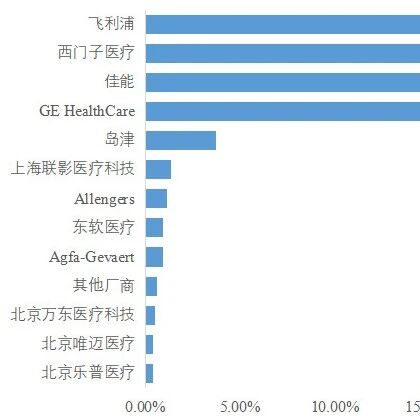
Core Viewpoint - The digital subtraction angiography (DSA) system market is projected to reach $7.974 billion by 2031, with a compound annual growth rate (CAGR) of 7.18% in the coming years [1][4]. Market Overview - Major manufacturers of DSA systems globally include Philips, Siemens Healthineers, and Canon, with the top five companies holding approximately 92.90% of the market share [4]. - The primary product type is the floor-mounted C-arm system, which accounts for about 51.50% of the market [5]. - Cardiovascular diseases represent the largest demand source, capturing around 67.60% of the market [10]. Key Drivers - **Aging Population and Disease Burden**: The acceleration of aging in China and the rising incidence of cardiovascular diseases are driving the demand for DSA in interventional surgeries [14]. - **Policy Support**: The Chinese government is encouraging domestic production of high-end medical equipment through policies like the "Healthy China 2030" plan, which includes funding and tax incentives [14]. - **Technological Integration and Upgrades**: The integration of AI and 3D reconstruction technologies is enhancing diagnostic efficiency and promoting the development of DSA towards precision and minimally invasive procedures [14]. Challenges - **Dependence on Core Components**: High-end DSA equipment relies on advanced components, and while domestic companies have made progress, they still lag behind international giants in key technologies [16]. - **Patent Barriers**: Domestic companies face potential patent infringement issues during R&D, which can hinder innovation [16]. - **Service and Maintenance Costs**: High maintenance costs and insufficient service network coverage for domestic companies compared to international brands pose challenges [17]. Industry Opportunities - **Government Initiatives**: The National Health Commission's guidance on promoting domestic high-end medical equipment development is expected to support local companies [18]. - **Market Expansion in Rural Areas**: The "Thousand County Project" aims for 90% of county-level hospitals to be equipped with DSA devices by 2027, with financial support covering 30%-40% of procurement costs [18]. - **Regulatory Support for Innovation**: The introduction of expedited approval processes for DSA devices with integrated AI functionalities is likely to enhance market entry for innovative products [18].

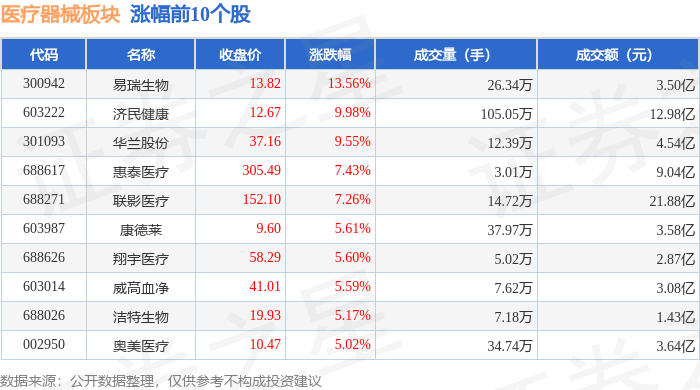
医疗器械板块9月1日涨1.87%,易瑞生物领涨,主力资金净流入6807.64万元
Zheng Xing Xing Ye Ri Bao· 2025-09-01 08:44
Market Performance - The medical device sector increased by 1.87% on September 1, with Yirui Biological leading the gains [1] - The Shanghai Composite Index closed at 3875.53, up 0.46%, while the Shenzhen Component Index closed at 12828.95, up 1.05% [1] Top Gainers in Medical Device Sector - Yirui Biological (300942) closed at 13.82, up 13.56% with a trading volume of 263,400 shares and a transaction value of 350 million [1] - Jimin Health (603222) closed at 12.67, up 9.98% with a trading volume of 1,050,500 shares [1] - Hualan Biological (301093) closed at 37.16, up 9.55% with a trading volume of 123,900 shares [1] - Huatai Medical (688617) closed at 305.49, up 7.43% with a trading volume of 30,100 shares [1] - United Imaging Healthcare (688271) closed at 152.10, up 7.26% with a trading volume of 147,200 shares [1] Top Losers in Medical Device Sector - Toukeng Life (300642) closed at 28.50, down 7.71% with a trading volume of 234,300 shares [2] - Blue Sail Medical (002382) closed at 5.99, down 3.07% with a trading volume of 288,400 shares [2] - Wuzhou Medical (301234) closed at 43.30, down 2.48% with a trading volume of 20,800 shares [2] Capital Flow Analysis - The medical device sector saw a net inflow of 68.08 million from institutional investors, while retail investors contributed a net inflow of 14.9 million [2] - The sector experienced a net outflow of 217 million from speculative funds [2] Individual Stock Capital Flow - Mindray Medical (300760) had a net inflow of 90.24 million from institutional investors, while it faced a net outflow of 128 million from speculative funds [3] - United Imaging Healthcare (688271) saw a net inflow of 87.93 million from institutional investors, with a net outflow of 130 million from speculative funds [3] - Jimin Health (603222) experienced a net inflow of 79.82 million from institutional investors, but a net outflow of 49.23 million from speculative funds [3]


重要时刻!A股最大医疗ETF(512170)触及9·24行情高点!实时成交突破10亿元!
Xin Lang Ji Jin· 2025-09-01 06:41
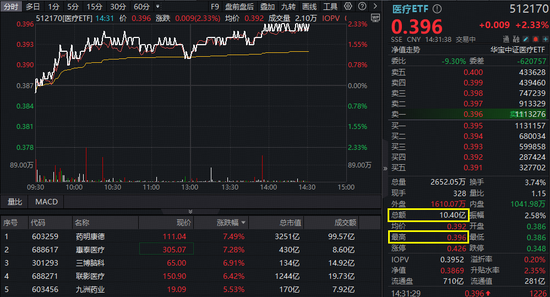
Group 1 - The core viewpoint highlights a significant upward trend in the medical sector, with major players like WuXi AppTec and United Imaging Healthcare experiencing substantial gains of over 7% and 6% respectively, alongside a notable increase in trading volume for the largest medical ETF in A-shares [1][3] - The medical ETF (512170) has shown a year-to-date increase of over 20%, indicating a strong recovery in the medical sector, yet it remains approximately 60% below its historical peak from 2021, suggesting considerable potential for further gains [3][4] - The current price-to-earnings (PE) ratio for the medical ETF's underlying index is around 36 times, which is still lower than 60% of the time over the past decade, indicating a favorable cost-performance ratio for investors [3][4] Group 2 - The ongoing bull market trend in A-shares presents an opportunity for low-valuation sectors like healthcare to experience a rebound, making it a focal point for investors [4][6] - The medical sector, particularly the medical ETF (512170) and its linked fund (012323), is emphasized as a key investment tool, focusing on medical devices (52%) and medical services (40%), which are closely related to AI healthcare [6][7] - The pharmaceutical sector is also highlighted, with a recommendation to consider the only pharmaceutical ETF (562050) and its linked fund (024986), which focuses on the top 50 pharmaceutical companies in A-shares, emphasizing innovative drugs (60%) while excluding medical and CXO sectors [7]

科创生物医药ETF(588250)涨超4%,创新药板块集体拉升
Xin Lang Cai Jing· 2025-09-01 05:54
Group 1 - The core viewpoint is that the innovative drug sector is experiencing significant growth, driven by strong mid-year performance from multiple companies and increased market liquidity and risk appetite [2][3] - The Shanghai Stock Exchange Sci-Tech Innovation Board Biopharmaceutical Index (000683) has risen by 4.02%, with notable increases in constituent stocks such as Maiwei Biotech (688062) up 20.00% and ZhiXiang JinTai (688443) up 11.60% [1][2] - The Sci-Tech Biopharmaceutical ETF (588250) closely tracks the performance of the Biopharmaceutical Index and has also seen a rise of 4.12%, with the latest price reported at 1.34 yuan [1][2] Group 2 - The top ten weighted stocks in the Biopharmaceutical Index account for 50.27% of the index, including companies like United Imaging Healthcare (688271) and BeiGene (688235) [3] - Investment strategies are recommended to focus on domestic clinical CROs benefiting from supportive policies, life sciences upstream companies with recovering overseas business, and companies involved in weight loss drugs, Alzheimer's treatments, ADCs, and AI concepts [2]

中报验证业绩反转,政策技术双驱动,医疗健康ETF(159828)早盘上涨2.35%,迎来复苏窗口
Sou Hu Cai Jing· 2025-09-01 04:56
Core Viewpoint - The healthcare sector is showing signs of recovery after a period of adjustment, driven by policy support and technological advancements, with innovative drugs and high-end medical equipment leading the growth [1][4]. Group 1: Market Performance - As of September 1, 2025, the healthcare ETF Taikang (159760) rose by 2.35%, with a trading volume of 2.7428 million yuan [1]. - The index tracking the National Certificate Public Health and Healthcare Index (980016) increased by 2.54%, with significant gains in constituent stocks such as Changchun High-tech (000661) up 10.00%, and Health元 (600380) up 9.98% [1]. - The healthcare industry is experiencing a "first suppressed, then rising" trend, with signs of bottoming out since the second quarter of 2025 [1]. Group 2: Policy and Innovation - The State Council approved the "Biopharmaceutical Full Industry Chain Open Innovation Development Plan" on August 18, 2025, promoting innovation across all stages from approval to production [2]. - The drug regulatory authority is accelerating the establishment of review centers, reducing the approval cycle for innovative drugs and devices to 30 working days, enhancing market entry efficiency [2]. - The shift in procurement policy from "lowest price" to "quality + reasonable price" has alleviated profit pressures on companies [2]. Group 3: Company Performance - Major companies like Heng Rui Medicine reported innovative drug and licensing revenues of 9.561 billion yuan, accounting for 60.66% of total revenue, and secured a $12 billion collaboration with GSK [3]. - Mindray Medical's AI devices saw a 35% increase in installation in overseas high-end markets [3]. - WuXi AppTec's TIDES business revenue surged by 141.6% year-on-year, with a 48.8% increase in orders on hand [3]. Group 4: Future Outlook - The healthcare sector is emerging from a two-year adjustment period, with innovative drugs and high-end equipment leading the charge [4]. - The healthcare ETF (159828) serves as a comprehensive investment tool, allowing investors to capitalize on structural opportunities arising from the industry's recovery [4]. - Upcoming catalysts include overseas licensing progress for innovative drug companies and clinical data disclosures at the World Lung Cancer Conference, which may further bolster market confidence [4].


仅差1厘!A股最大医疗ETF(512170)上探2%,逼近去年9·24行情高点!牛市补涨空间或仍大
Xin Lang Ji Jin· 2025-09-01 03:04
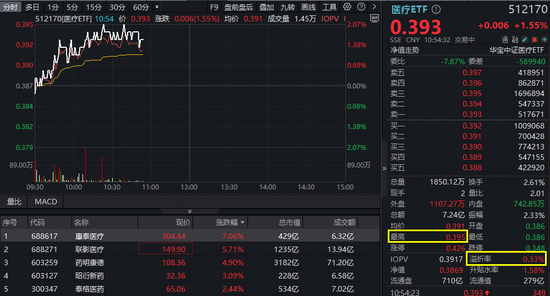
Group 1 - The medical sector is active, with the largest medical ETF (512170) reaching a peak price of 0.395 yuan, just 1 cent below the high of 0.396 yuan from September 24 of the previous year [1] - The ETF has seen a trading volume exceeding 720 million yuan, with a premium rate of 0.33% [1][3] - Key stocks in the ETF, including Huatai Medical, United Imaging, and WuXi AppTec, have shown significant gains, with increases of over 6%, 5%, and 4% respectively [2][3] Group 2 - The medical ETF (512170) passively tracks the CSI Medical Index, which has a current PE valuation of 36 times, still below 60% of the time over the past decade [3] - The recent China Medical Device Supervision International Conference emphasized support for high-end medical device innovation, with 52 innovative products approved this year [3] - The biopharmaceutical sector has shown marginal improvement in mid-year performance, with a 2% year-on-year increase in net profit for Q2 2025 [3]

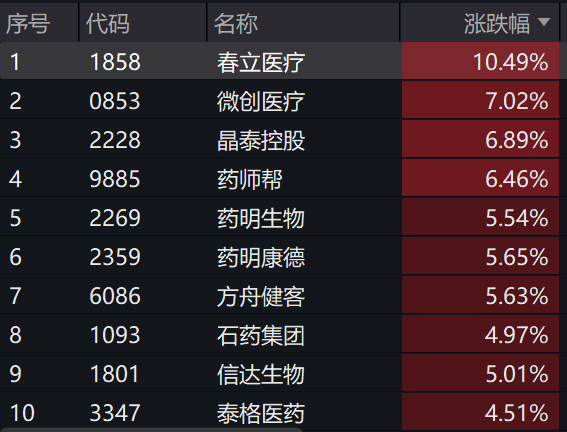
港股医疗ETF(159366)涨超2%,春立医疗领涨,医疗器械ETF(159883)冲击三连涨
Xin Lang Cai Jing· 2025-09-01 03:03
Group 1 - The China Securities Hong Kong Stock Connect Medical Theme Index (932069) has risen by 2.99%, with notable increases in constituent stocks such as Chunli Medical (01858) up 10.49%, MicroPort Medical (00853) up 7.02%, and Crystal Technology Holdings (02228) up 6.89% [1] - The Hong Kong Medical ETF (159366) has also seen an increase of 2.44% [1] - The China Securities All Index Medical Device Index (H30217) has increased by 1.46%, with significant gains from Ji Min Health (603222) up 9.98%, Hualan Biological Engineering (301093) up 7.81%, and Huatai Medical (688617) up 6.93% [2][3] Group 2 - The FDA has accepted Vibration-Controlled Transient Elastography (VCTE) as an alternative endpoint for assessing liver fibrosis in patients with Metabolic Associated Steatotic Liver Disease (MASH), marking a significant breakthrough in non-invasive diagnostic technology [4] - This advancement is expected to enhance drug development efficiency for MASH and provide growth opportunities for domestic companies in the non-invasive companion diagnostics field [4] - The pharmaceutical and biotechnology sector showed marginal improvement in Q2 2025, with the innovative drug and CXO sectors performing particularly well, as the CXO industry rebounded with a 14% year-on-year revenue increase and a 54% increase in net profit [4] Group 3 - The domestic medical device industry is gradually recovering from an adjustment period, with market demand showing signs of recovery [5] - In Q2 2025, the medical equipment sector experienced a 5.26% year-on-year revenue growth, and the medical consumables sector maintained stable growth [5] - The Hong Kong Medical ETF (159366) focuses on rare medical segment leaders and has a high CXO content, while the Medical Device ETF (159883) is the largest in A-shares, covering various sub-sectors of the medical device industry [5]

联影医疗20250831
2025-09-01 02:01
Summary of the Conference Call for 联影医疗 (United Imaging Healthcare) Company Overview - **Company**: 联影医疗 (United Imaging Healthcare) - **Industry**: Medical Equipment and Healthcare Technology Key Financial Performance - **Revenue Growth**: 2025 H1 revenue reached 6.016 billion CNY, a year-on-year increase of 12.79% [2][4] - **Net Profit**: Net profit attributable to shareholders was 999.8 million CNY, up 5.03% year-on-year [4][22] - **Domestic vs. Overseas Revenue**: Domestic revenue was 4.873 billion CNY (up 10.74%), while overseas revenue was 1.142 billion CNY (up 22.48%), accounting for 18.99% of total revenue [2][4] - **Regional Performance**: North America saw a significant revenue increase of 67%, while Europe grew by 94% [4][20] Research and Development - **R&D Investment**: R&D expenses accounted for 18.95% of total revenue, totaling 1.14 billion CNY, with over 3,300 R&D personnel [2][4] - **Patents**: The company has filed 9,700 patents, with over 83% being invention patents [2][4] - **Innovative Products**: Launched several world-class products, including a new generation of 3T MRI and photon technology CT, which have received regulatory approvals [5][25] Market Expansion and Strategy - **Global Market Presence**: The company has expanded into nearly 90 countries and regions, enhancing its global competitiveness through innovative product offerings and a robust after-sales service network [2][6] - **High-End Product Leadership**: Established a leading position in the ultra-high field MRI market with a 5.0T MRI, significantly increasing market share in China [2][6] - **Service Revenue Growth**: Service revenue grew by 32.21%, with overseas service revenue increasing by over 50% [2][15] Sustainability and ESG Initiatives - **Sustainability Strategy**: The UCT780 CT product received ISO carbon footprint verification, and the company achieved an MSCI ESG rating of A, reflecting its commitment to sustainable development [2][12] Future Outlook - **Growth Projections**: The company expects to accelerate growth in H2 2025, with a projected net profit margin between 16% and 18% for the full year [3][22] - **Market Trends**: Anticipates continued demand for high-end products in North America and Europe, with significant projects expected to drive revenue growth [20][21] Challenges and Responses - **Impact of Policies**: The company is navigating challenges from macroeconomic policies and geopolitical tensions, but has prepared adequately to mitigate risks [10][18] - **Cost Control**: Sales expenses are expected to remain around 15%, with management expenses projected to stay between 4% and 5% [22][23] Key Innovations and Technologies - **AI Integration**: The company has integrated AI into nearly all new products, enhancing operational efficiency and imaging quality [30][31] - **Future Product Launches**: Plans to release new ultrasound products and further enhance its MRI and CT product lines by the end of 2025 [25][39] Conclusion - **Overall Performance**: Despite challenges, the company has demonstrated robust growth and innovation, positioning itself as a leader in the medical equipment industry with a strong focus on R&D and global expansion [35][36]
新材料投资逻辑:战略自主与市场规律的双重博弈
材料汇· 2025-08-31 15:02
Core Viewpoint - The new materials industry is experiencing significant growth, with China's total output value expected to exceed 8 trillion yuan in 2024, maintaining double-digit growth for 14 consecutive years, while facing structural challenges in high-end technology reliance [2][7]. Global Competitive Landscape and China's Positioning - The global new materials industry has formed a stable competitive structure with the US, Japan, and Europe in the first tier, holding absolute advantages in core technologies and market share. China, along with South Korea and Russia, is in the second tier, rapidly catching up but still heavily reliant on imports for high-end polymers and electronic chemicals [4][5]. Investment Drivers in New Materials - The investment logic in the new materials sector is based on a "demand-policy-technology" triangle model, where market demand, supportive policies, and technological breakthroughs interact to determine investment value and timing [10]. Market Demand - The rapid expansion of the new energy vehicle industry is driving diverse demand for new materials, with revenue in structural materials expected to grow by 12.5% year-on-year in 2024 [11]. - The semiconductor and display industries are creating a growing market for high-end electronic chemicals, with significant progress in domestic production of photolithography materials [12]. Policy Support - China has established a comprehensive policy support system for the new materials industry, including financial backing through the Sci-Tech Innovation Board, which has seen 51 new materials companies raise over 43 billion yuan [13]. - The standardization efforts by the Ministry of Industry and Information Technology are crucial for promoting the industrialization of new materials [14]. Technological Breakthroughs - Domestic companies are making significant strides in high-end polymer materials, with breakthroughs in POE and PI production expected to reduce import dependency [16][23]. - Patent layout and intellectual property protection are critical for competitive advantage, with domestic firms strengthening their patent portfolios in key areas [17]. Investment Value in Specific Segments High-End Polymer Materials - High-end polymer materials are characterized by high import dependency, with POE and PI showing import reliance rates of 95% and 85% respectively, presenting clear investment opportunities for domestic production [20]. Carbon Fiber Materials - The carbon fiber sector is transitioning from capacity expansion to quality improvement, with a notable increase in the production of high-end T700/T800 grade products [25]. - The demand for carbon fiber in wind power and aerospace applications is expected to grow, providing investment opportunities in companies that can produce high-performance products [27]. Electronic Chemicals - The electronic chemicals sector is experiencing a "gradient replacement" trend, with varying levels of domestic production across different product categories, highlighting investment opportunities in companies that can meet the growing demand for high-purity materials [28]. Biobased New Materials - The biobased materials market is projected to grow significantly, driven by policy mandates and decreasing production costs, with a focus on biobased BDO and PA showing promising investment potential [35][36]. Superconducting Materials - The superconducting materials market is expected to reach $28 billion in 2024, with investment opportunities centered around high-temperature superconductors and their applications in energy and medical fields [38][39]. Solid-State Batteries - The solid-state battery market is anticipated to grow rapidly, with investment opportunities in electrolyte materials and high-nickel cathodes, as the industry shifts towards higher energy density and safety [40][44].

联影医疗(688271):国内业务企稳回升 海外保持快速增长
Xin Lang Cai Jing· 2025-08-31 12:36
Core Insights - The company reported a revenue of 6.016 billion yuan for the first half of 2025, representing a year-on-year increase of 12.79%, with a net profit attributable to shareholders of 999.8 million yuan, up 5.03% [1] - The second quarter of 2025 saw a revenue of 3.538 billion yuan, an increase of 18.60%, and a net profit of 628 million yuan, up 6.99% [1] - The company experienced a steady recovery in domestic demand and accelerated growth in overseas business, with medical imaging and radiation therapy equipment generating 4.890 billion yuan in revenue, a 7.61% increase [1] Revenue Breakdown - By product line, MR revenue reached 1.968 billion yuan (+16.81%), with a significant market share increase, while CT revenue was 1.515 billion yuan (-6.4%) [2] - MI revenue was 841 million yuan (+13.15%), maintaining the top market share in PET/CT for ten consecutive years, and RT revenue was 242 million yuan, with a substantial market share increase of nearly 18 percentage points [2] - Domestic revenue was 4.873 billion yuan (+10.74%), driven by policy implementation and a recovery in market procurement activities, while overseas revenue reached 1.142 billion yuan (+22.48%) [2] Strategic Initiatives - The company's "high-profile" strategy has shown significant results, covering over 70% of U.S. state-level administrative regions and establishing a comprehensive presence in major European economies [3] - The company invested 1.140 billion yuan in R&D in the first half of 2025, accounting for 18.95% of revenue, leading to the launch of over 140 products [3] - The company has achieved comprehensive independent R&D of core components in multiple product lines, ensuring supply chain security and cost advantages [3] Investment Outlook - The company is positioned as a leading domestic medical imaging equipment manufacturer, benefiting from new medical infrastructure policies and large equipment upgrades, with promising overseas market prospects [4] - The forecast for net profit attributable to shareholders for 2025-2027 is adjusted to 2.007 billion yuan, 2.519 billion yuan, and 3.154 billion yuan, reflecting year-on-year growth of 59.05%, 25.51%, and 25.21% respectively [4] - The current stock price corresponds to a PE ratio of 58, 46, and 37 for 2025-2027, maintaining a "recommended" rating [4]