
西部证券

Search documents
润和软件:创新业务持续增长 盈利能力持续提升
Zhong Zheng Wang· 2025-08-21 14:48
Group 1 - The company achieved operating revenue of 1.747 billion yuan in the first half of 2025, representing a year-on-year growth of 10.55% [1] - The net profit attributable to shareholders after deducting non-recurring gains and losses was 52.17 million yuan, with a year-on-year increase of 47.33%, indicating continuous improvement in profitability [1] - The innovative business centered around Harmony, Euler, and AI generated sales revenue of approximately 368 million yuan, growing by 8.96% year-on-year, accounting for 21.07% of total operating revenue [1] Group 2 - In the traditional advantageous business sector, particularly in the long-established fintech field, the company continues to deepen its layout and maintain industry-leading advantages [2] - The company has launched 13 commercial versions of the open-source Harmony operating system, ranking first in the community, and has empowered various industries including power, oil and gas, healthcare, mining, transportation, education, etc. [2] - The company has introduced the HopeOS standard version for the general market in the open-source Euler business, achieving commercial maturity in numerous fields such as finance, energy, emergency safety, tobacco, telecommunications, and research institutions [2] - The company is fully committed to AI, building a comprehensive technical system covering AI chips, servers, operating systems, and full-stack AI platforms, providing end-to-end large model solutions for industries like finance, energy, and retail [2] - Western Securities believes that the operating system is the soul of terminal devices, and the company, as a core participant in the Harmony ecosystem, is expected to benefit significantly [2]

西部证券股价下跌1.10% 收购国融证券获证监会核准
Sou Hu Cai Jing· 2025-08-21 12:49
Group 1 - The stock price of Western Securities is reported at 9.03 yuan as of August 21, 2025, with a decrease of 0.10 yuan, representing a decline of 1.10% from the previous trading day [1] - The company achieved an operating income of 6.712 billion yuan and a net profit attributable to shareholders of 1.403 billion yuan in 2024 [1] - In the first quarter of 2025, the net profit attributable to shareholders increased by 48.33% year-on-year to 291 million yuan [1] Group 2 - The China Securities Regulatory Commission has recently approved Western Securities to become the major shareholder of Guorong Securities, acquiring 64.6% of its shares [1] - This acquisition is expected to help Western Securities optimize its regional layout and strengthen its asset management business [1] - Post-merger, the total asset scale of the company is anticipated to approach 120 billion yuan [1] Group 3 - On August 21, 2025, the net outflow of main funds was 93.996 million yuan, accounting for 0.25% of the circulating market value [1] - Over the past five days, the cumulative net outflow of main funds reached 516.299 million yuan, representing 1.39% of the circulating market value [1]

A股突变!牛市将延续三年?
Zheng Quan Zhi Xing· 2025-08-21 08:27
Market Overview - The market experienced fluctuations with mixed performance across the three major indices, with the Shanghai Composite Index rising by 0.13% while the Shenzhen Component and ChiNext fell by 0.06% and 0.47% respectively [1] - Digital currency concept stocks surged, with several stocks hitting the daily limit, while oil and gas stocks also performed strongly [1][2] - High-position stocks saw significant declines, indicating a market trend of "high-low switching" [3] Digital Currency and Stablecoins - Digital currency stocks led the market rally, driven by recent developments in stablecoins, which are expected to enter a new expansion cycle potentially reaching trillions of dollars [2] - The payment sector is anticipated to be a core driver for the growth of stablecoins, with cross-border payments and real-world assets (RWA) expected to be key areas for development [2] Investment Trends and Market Dynamics - The current market rally is characterized by a return of existing investors rather than a significant influx of new retail investors, indicating a focus on capital flow and increased activity among existing participants [5] - Institutional investors, including private equity and hedge funds, are becoming more active, suggesting a shift towards an "institutional bull market" [6] - Foreign capital is increasingly entering the A-share market, with hedge funds buying Chinese stocks at a rapid pace, supported by a weak dollar trend [7] Future Market Outlook - The A-share market is expected to maintain an upward trajectory, with predictions of a bull market lasting two to three years, driven by low domestic interest rates and liquidity [8] - The investment focus is suggested to be on three main areas: technology AI breakthroughs, consumer stock valuation recovery, and the rise of undervalued assets [8][9]
A股突变,券商股集体走低
Zheng Quan Shi Bao· 2025-08-21 07:12
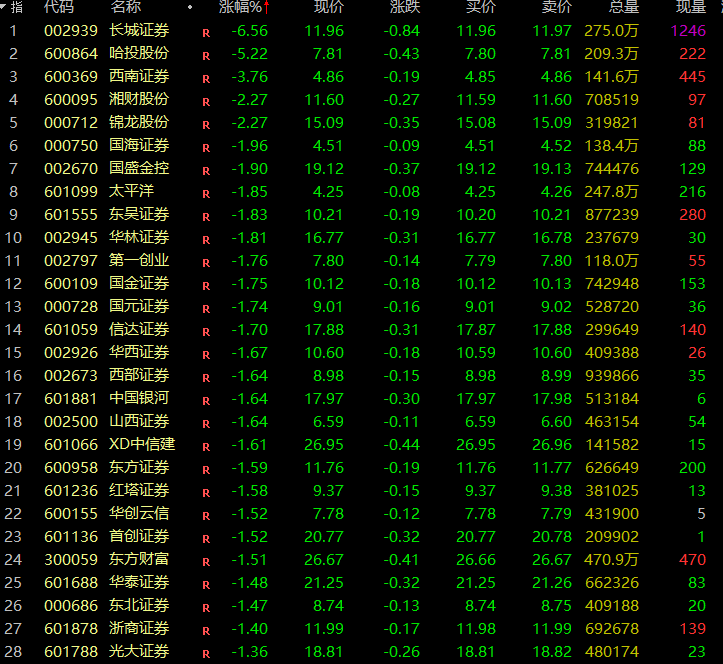
Market Overview - The A-share market experienced a sudden decline in the afternoon, with the Shanghai Composite Index dropping over 0.2% before recovering slightly, while the Shenzhen Component and ChiNext indices fell [2] - The trading volume in the Shanghai and Shenzhen markets exceeded 2 trillion yuan for the first time this year, marking the seventh consecutive trading day of such volume [2] Sector Performance - Securities stocks collectively faced a pullback, with notable declines including Changcheng Securities down over 6% and Hato Securities down over 5% [2][3] - Several high-priced stocks hit the daily limit down, including Lianhuan Pharmaceutical and Zhongdian Xindong, with others like Shunlian Bio and Sainuo Medical dropping over 8% [4] Banking Sector - In contrast, bank stocks showed strength in the afternoon, with Agricultural Bank of China and Postal Savings Bank reaching new historical highs during the session [2] Hong Kong Market - The Hang Seng Index fell over 0.5%, and the Hang Seng Tech Index dropped more than 1% [6] - AAC Technologies Holdings (02018.HK) saw a rapid decline of over 14% following the release of its interim results, despite reporting a revenue of 13.32 billion yuan, a year-on-year increase of 18.4% [6][8] Company Performance - AAC Technologies reported a gross margin of 20.7%, down 0.8 percentage points year-on-year, attributed to changes in product mix, while net profit attributable to shareholders increased by 63.1% to 876 million yuan due to improved profitability in optical business and rapid growth in precision structural components [8] - CICC noted that the overall valuation level of A-shares remains reasonable, but the rapid increase in trading volume may lead to short-term volatility [8]


行业并购重组再突破,券商ETF(512000)近3天获得连续资金净流入,最新规模突破280亿元创近半年新高!
Sou Hu Cai Jing· 2025-08-21 06:48
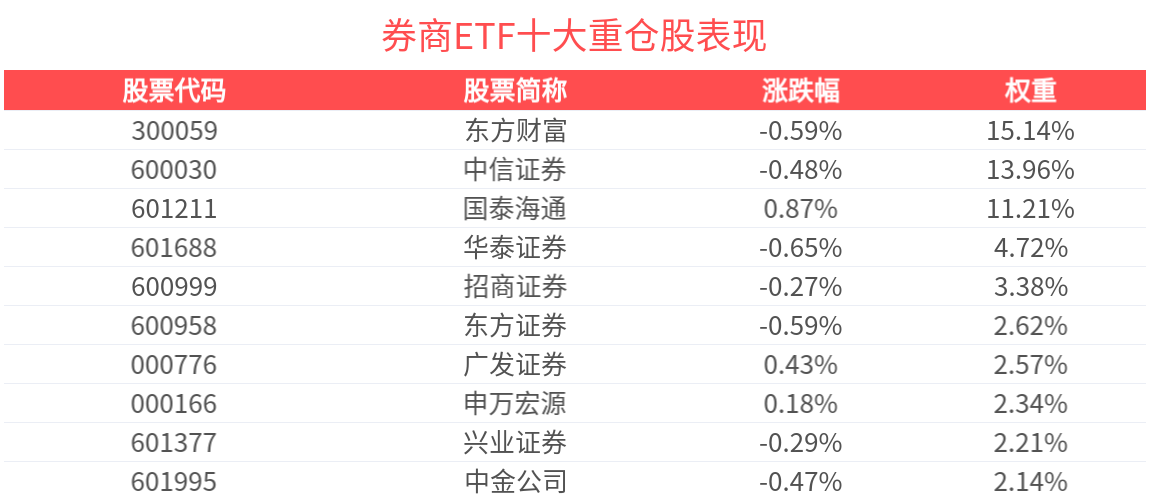
Market Performance - As of August 21, 2025, the CSI All Share Securities Company Index (399975) decreased by 0.40%, with mixed performance among constituent stocks [1] - Huaxin Securities (600621) led the gains with an increase of 2.14%, while Changcheng Securities (002939) experienced the largest decline [1] - The Broker ETF (512000) saw a cumulative increase of 4.88% over the past week as of August 20, 2025 [1] Liquidity and Trading Volume - The Broker ETF had a turnover rate of 4.31% during the trading session, with a total transaction volume of 1.224 billion yuan [1] - The average daily trading volume for the Broker ETF over the past week was 2.113 billion yuan, ranking it among the top two comparable funds [1] Fund Size and Inflows - The latest size of the Broker ETF reached 28.395 billion yuan, marking a six-month high and ranking second among comparable funds [1] - The ETF's share count reached 45.571 billion, a one-year high, making it the top fund in this category [1] - Over the past three days, the Broker ETF experienced continuous net inflows, with a peak single-day net inflow of 1.143 billion yuan, totaling 1.528 billion yuan in net inflows [1] Industry Insights - The China Securities Regulatory Commission approved the restructuring of Guorong Securities and West Securities, requiring a specific integration plan to be submitted within a year [2] - Shanxi Securities reported significant growth in brokerage and net interest income due to increased market activity, indicating a recovery in investment banking [2] - Huatai Securities noted a steady upward trend in the equity market since the beginning of the year, with improved trading volumes and a positive outlook for the sector [2] ETF Composition - The Broker ETF (512000) passively tracks the CSI All Share Securities Company Index, encompassing 49 listed brokerage stocks, with nearly 60% of its holdings concentrated in the top ten leading brokerages [4] - The ETF serves as an efficient investment tool, balancing investments in leading brokerages while also capturing the high growth potential of smaller firms [4]
买买买!是谁在做多市场?
天天基金网· 2025-08-21 05:08
Core Viewpoint - The article discusses the recent influx of incremental funds into the A-share market, highlighting the active participation of institutional investors compared to retail investors, and the overall market sentiment towards potential growth opportunities [2][3]. Group 1: Retail Investor Participation - Recent grassroots research indicates a moderate increase in retail investor accounts, primarily among younger generations, but no significant surge in online account openings has been observed [4][5]. - The current participation level of retail investors is estimated at around 120 points on a scale where last year's peak was 200-300 points, indicating a cautious approach rather than a rush to enter the market [4][5]. - Overall, retail investor enthusiasm remains subdued, with new account openings in July at 1.96 million, similar to April levels, suggesting a lack of concentrated inflow from outside investors [5][6]. Group 2: Active Funds Driving the Market - Institutional investors are identified as the main drivers of recent market uptrends, with a notable increase in institutional account openings compared to retail accounts [7][8]. - High-net-worth investors, including private equity and leveraged funds, are actively participating, with daily inflows of leveraged funds averaging 5.5 billion since July [7][8]. - The private equity sector has seen significant growth, with an average stock long position of 61.1% in June, reflecting increased confidence and investment activity [8]. Group 3: Foreign Investment Trends - Foreign capital is increasingly optimistic about the Chinese stock market, with global hedge funds rapidly buying Chinese stocks, primarily driven by long positions [9][10]. - South Korean investors have significantly increased their trading volume in Chinese stocks, with cumulative transactions reaching $5.514 billion by the end of July, surpassing last year's total [9][10]. - Despite growing interest, there remains a divergence in foreign investors' strategies regarding Chinese assets, with some expressing caution despite increased attention [9][10].

8个月内,6家券商撤回基金托管牌照申请
2 1 Shi Ji Jing Ji Bao Dao· 2025-08-21 04:23
Core Viewpoint - The recent announcement by the China Securities Regulatory Commission (CSRC) indicates a significant decline in the number of brokerages applying for fund custody qualifications, with only three institutions remaining in the queue, primarily due to heightened entry barriers established by new regulations [2][3][6]. Group 1: Regulatory Changes and Impact - The new fund custody regulations have raised the entry threshold, leading to a "withdrawal wave" among brokerages, with six out of seven previously applying brokerages retracting their applications within eight months [3][9]. - The new regulations require a minimum net asset of 300 billion yuan for securities firms, significantly higher than the previous requirement of 200 billion yuan, which has disqualified many smaller brokerages [10][11]. - The CSRC aims to shift the industry focus from "quantity expansion" to "quality competition" through stringent requirements and dynamic supervision [3][10]. Group 2: Current Market Landscape - As of now, only East Wu Securities remains in the queue for fund custody qualifications, with the other six withdrawn applications being from smaller brokerages with lower net asset scales [6][9]. - Currently, there are 68 institutions with fund custody qualifications in China, with 36 being banks and 30 being brokerages [7]. - The concentration of the fund custody market is increasing, with banks and a few large brokerages controlling approximately 80%-90% of the market [13]. Group 3: Future Trends and Strategies - The trend indicates a growing concentration in the fund custody industry, with larger brokerages capturing over 80% of the market share, while smaller firms are pushed towards low-margin businesses [14][15]. - Smaller brokerages may need to explore differentiated survival paths, such as collaborating with larger institutions for operational support and compliance monitoring [15]. - The market dynamics suggest that custody licenses are transitioning from being a "scarce resource" to a "capability certification," with larger firms leveraging technology to maintain their advantages [15].

8个月内,6家券商撤回基金托管牌照申请
21世纪经济报道· 2025-08-21 04:08
Core Viewpoint - The recent regulatory changes in the fund custody sector have led to a significant withdrawal of applications from small and medium-sized securities firms, indicating a shift from quantity expansion to quality competition in the industry [1][7][10]. Group 1: Regulatory Changes and Impact - The China Securities Regulatory Commission (CSRC) has published data showing that only three institutions are currently applying for fund custody qualifications, with Dongwu Securities being the only remaining securities firm in the queue [1][3]. - A total of six small and medium-sized securities firms have withdrawn their applications for fund custody qualifications within just over eight months, primarily due to the new regulations raising the entry barriers [1][7]. - The new regulations require a minimum net asset of 300 billion RMB for securities firms, which many smaller firms cannot meet, leading to their withdrawal from the application process [7][8]. Group 2: Industry Concentration and Trends - The fund custody industry is experiencing a concentration trend, with banks and a few large securities firms managing approximately 80%-90% of public and private investment funds [10]. - Among the seven securities firms that previously applied for fund custody qualifications, only Dongwu Securities meets the new net asset requirement, highlighting the increasing disparity between large and small firms [8][10]. - The market is witnessing a "stronger get stronger, weaker get marginalized" dynamic, as larger firms capture over 80% of the market share while smaller firms are forced to pivot to lower-margin businesses [12]. Group 3: Strategic Value of Custody Licenses - Obtaining a fund custody license provides securities firms with strategic advantages, allowing them to integrate various services and enhance their revenue structure through value-added services [11]. - The top five securities firms in terms of fund custody numbers account for 65.71% of the total, indicating a significant concentration in the private fund sector [12]. - Smaller firms that cannot meet the new regulatory requirements may need to explore differentiated survival strategies, such as partnering with larger firms for operational support [12].

增量资金买买买!是谁在做多市场?
证券时报· 2025-08-21 00:48
Core Viewpoint - The article discusses the recent trends in the A-share market, highlighting the lack of significant retail investor participation despite rising indices and increased trading volumes. It emphasizes that institutional investors, particularly private equity and high-net-worth individuals, are driving the market's upward momentum [1][5][6]. Group 1: Retail Investor Participation - Recent surveys indicate that retail investor participation remains cautious, with a moderate increase in new accounts primarily among younger demographics, particularly those born in the 1980s and 1990s [2][3]. - The current sentiment among retail investors is described as "120 points" on a scale where last year's peak was around "200 to 300 points," indicating that while there is some interest, it is far from the levels seen in previous market highs [2][4]. - The overall number of new retail accounts opened in July was 1.96 million, which is consistent with April's figures but lower than the numbers seen in February and March, suggesting a lack of a concentrated influx of retail capital [3][4]. Group 2: Active Capital Sources - Institutional investors are identified as the primary source of new capital in the market, with a notable increase in institutional account openings compared to retail accounts [5][6]. - High-net-worth individuals, private equity, and leveraged funds are actively participating in the market, with private equity seeing significant growth in both registered and active funds since the market's last major downturn [5][6]. - The average daily inflow of leveraged funds has been reported at 5.5 billion, indicating a strong appetite for risk among these investors [6]. Group 3: Foreign Investment Trends - Foreign capital is increasingly interested in the Chinese stock market, with significant buying activity reported from global hedge funds since late June, primarily driven by bullish sentiment [7][8]. - South Korean investors have notably increased their trading volume in Chinese stocks, with cumulative transactions reaching $5.514 billion by the end of July, surpassing the total for the previous year [7]. - Despite the growing interest, there remains a divergence in foreign investors' strategies, with some still hesitant to diversify their portfolios into Chinese assets [8].

增量资金买买买!是谁在做多市场?
Zheng Quan Shi Bao· 2025-08-21 00:12
Group 1: Market Overview - A-shares have seen a significant increase in trading volume, with daily turnover surpassing 2 trillion yuan, indicating heightened market activity [1] - The number of new retail investors entering the market has increased by approximately 20% in the past two months, but the overall growth remains moderate [1][2] - Institutional investors, particularly private equity and high-net-worth individuals, have shown a more active participation compared to retail investors [1][6] Group 2: Retail Investor Participation - Recent surveys indicate that retail investor participation remains cautious, with a score of around 120 out of 300 compared to previous peaks, suggesting a lack of urgency to enter the market [2][3] - The demographic of new retail investors is primarily younger individuals, particularly those born in the 1980s and 1990s, who are more responsive to market changes [2] - Despite some increase in new accounts, the overall number of retail investors remains below historical highs, reflecting a more conservative approach [3][4] Group 3: Active Capital Sources - Institutional investors are becoming the main source of new capital in the market, with a notable increase in new accounts since June [6][7] - Private equity funds have expanded significantly, with a reported average position of 61.1% in stocks, indicating a bullish sentiment among these investors [7] - The trading activity of speculative funds has also surged, with daily trading volumes reaching new highs, reflecting increased short-term trading interest [7] Group 4: Foreign Investment Trends - Foreign capital is increasingly flowing into the Chinese stock market, with significant purchases from global hedge funds since late June [8][9] - South Korean investors have notably increased their trading activity in Chinese stocks, with a cumulative trading volume of approximately $5.514 billion by the end of July [8] - Despite growing interest, there remains a divergence in foreign investors' strategies regarding Chinese assets, with some still cautious about full-scale investment [9]