A股增量资金

Search documents
超3100只个股下跌
第一财经· 2026-01-20 07:33
Market Overview - On January 20, A-shares experienced a high opening but closed lower, with the ChiNext index dropping over 2% at one point. The Shanghai Composite Index fell by 0.01%, the Shenzhen Component Index decreased by 0.97%, the ChiNext Index declined by 1.79%, and the Sci-Tech Innovation Index dropped by 1.65% [2][3]. Sector Performance - The chemical sector showed strong performance, with stocks such as Hongbaoli, Shandong Heda, Subote, and Hongqiang shares hitting the daily limit [4]. - Precious metals saw gains in the afternoon, with Hunan Silver and Zhaojin Gold reaching the daily limit [6]. Stock Highlights - Notable gainers included: - Meibang Technology (+29.94% to 17.49) - Yida Co. (+11.96% to 15.45) - Qicai Chemical (+10.71% to 18.50) - Subote (+10.05% to 11.94) - Shandong Heda (+10.00% to 17.49) [5][6]. Trading Volume - The total trading volume in the Shanghai and Shenzhen markets reached 2.78 trillion yuan, an increase of 69.4 billion yuan compared to the previous trading day, with over 3,100 stocks declining [6]. Capital Flow - Main capital inflows were observed in the real estate, banking, and cement sectors, while there were outflows from power equipment, communication, and aerospace sectors [8]. - Specific stocks with net inflows included Shanghai Electric (7.95 billion yuan), China Power Construction (7.08 billion yuan), and Shanzigao Technology (4.44 billion yuan) [9]. - Stocks facing significant net outflows included Xinyi Sheng (21.69 billion yuan), Zhongji Xuchuang (21.10 billion yuan), and Shenghong Technology (18.60 billion yuan) [10]. Institutional Insights - Guotai Junan expressed that the index is expected to experience strong range-bound fluctuations, advocating for a strategy focused on technology and cyclical sectors during pullbacks [11]. - Shanjin Asset Management emphasized that the fundamental logic for hard-core technology development remains unchanged [12]. - Huaxin Securities projected that the potential incremental capital scale for A-shares could reach approximately 3 trillion yuan by 2026, with public funds, insurance capital, and bank wealth management being the main contributors [13].






中信建投:2026年A股预计迎来可观量级的增量资金,有望推动慢牛行情的持续
Ge Long Hui· 2026-01-16 00:00
Group 1 - The core viewpoint of the report is that A-shares are expected to see significant incremental capital by 2026, which may sustain a slow bull market [1] - The first quarter is identified as a peak period for the maturity of time deposits, suggesting that funds may flow from insurance and wealth management channels into the equity market, marking the most abundant time for incremental capital throughout the year [1] - Long-term and medium-term funds are projected to account for about one-third of total capital inflows, becoming a key foundation for micro liquidity in A-shares [1] Group 2 - Public and private equity funds are expected to be the two major areas of marginal improvement, with their allocation preferences potentially influencing market style performance [1] - The main market contradiction in 2026 is anticipated to shift towards verifying economic prosperity and achieving performance results, with long-term funds providing a safety net [1] - Active funds such as public and private equity are likely to further strengthen the dual main line market trend of "technology + resource products," while sector rotation may accelerate [1]

中信建投:A股预计迎来可观量级的增量资金,有望推动慢牛持续
Xin Lang Cai Jing· 2026-01-16 00:00
Core Viewpoint - The A-share market is expected to welcome a significant amount of incremental funds in 2026, which may sustain a slow bull market. The first quarter is projected to be the peak period for the maturity of fixed deposits, with funds likely flowing from insurance and wealth management channels into the equity market, marking the most abundant time for incremental funds throughout the year [3][4][62]. Group 1: Incremental Funds Sources - Incremental funds are primarily sourced from the migration of household deposits and pressures from asset scarcity, with insurance premium income continuing to grow significantly. By Q3 2025, the equity allocation ratio is expected to rise to 15.5%, nearing historical highs, which could release over 840 billion yuan into the market [4][6][66]. - The total amount of fixed deposits maturing in 2026 is estimated to be around 45 trillion yuan, which will likely lead to increased allocations in wealth management and "fixed income+" products, contributing over 900 billion yuan in medium to long-term funds to the A-share market [4][14][17]. - Public funds are expected to see a net inflow of approximately 230 billion yuan in 2026, driven by the recovery of fund net values and the enhanced motivation of individual investors to enter the market [4][33][34]. Group 2: Market Dynamics - The market's main contradictions in 2026 will shift towards verifying economic prosperity and performance realization, with medium to long-term funds providing a safety net. Active funds from public and private sectors are anticipated to further strengthen the "technology + resource products" dual mainline market, with accelerated sector rotation [4][62][64]. - The "national team" funds are expected to see a significant reduction in inflows, with a projected net inflow of about 200 billion yuan in 2026, as their role shifts in a bull market environment [19][22][23]. - High-risk funds, represented by margin trading and private equity, are expected to remain active, with margin trading net inflows estimated at around 450 billion yuan and private equity assets projected to grow to 8.5 trillion yuan, contributing approximately 700 billion yuan in incremental funds [4][26][31]. Group 3: Global and Domestic Influences - Overseas funds are anticipated to strategically allocate to Chinese assets, with northbound capital expected to net inflow around 100 billion yuan in 2026, although this impact on the overall market is expected to be limited [4][36][39]. - The macro liquidity environment is favorable, with a global interest rate cut cycle entering its later stages, but the marginal improvement in policies is expected to gradually converge. The micro-funding situation is likely to improve significantly, supporting a strong performance in equities over fixed income [4][45][49].

中信建投:2026年A股预计迎来可观量级增量资金 有望推动慢牛行情持续
Zhi Tong Cai Jing· 2026-01-15 23:51
Core Viewpoint - The report from CITIC Securities indicates that A-shares are expected to see significant incremental capital in 2026, potentially sustaining a slow bull market [1][5] Group 1: Long-term Capital - Long-term capital is identified as a core source of incremental funds, with insurance premium income continuing to grow significantly, leading to an increase in equity allocation to 15.5% by Q3 2025, close to historical highs [2] - The combination of insurance and wealth management channels is expected to contribute over 900 billion yuan in long-term capital to the market in 2026 [2] Group 2: Public Fund Capital - The pressure for fund redemptions is believed to have passed, with public funds benefiting from net asset value recovery and a positive investment sentiment, leading to an expected net inflow of 230 billion yuan in 2026, primarily from passive funds [3] Group 3: Other Funding Channels - "National team" funds are expected to see a significant slowdown in inflows, with a projected net inflow of about 20 billion yuan in 2026, while ETFs are becoming the main allocation channel [4] - Margin trading and private equity funds remain active, with expected net inflows of 450 billion yuan from margin trading and a projected increase in private equity scale to 8.5 trillion yuan, contributing around 700 billion yuan in incremental funds [4] - Foreign capital is entering a "4.0 era," with global funds expected to strategically allocate to Chinese assets, anticipating a net inflow of about 100 billion yuan from northbound capital [4] Group 4: Market Focus in 2026 - The focus of the market in 2026 will shift towards verifying economic conditions and performance realization, with long-term capital providing a safety net and active funds reinforcing a "technology + resource" dual mainline market trend [5] - The current hot sectors in A-shares are awaiting performance realization, with thematic concepts and rebound sectors showing significant elasticity [5]
今年A股增量资金有多少?华泰:净流入或达1.6万亿,居民存款、散户资金占四成
Hua Er Jie Jian Wen· 2026-01-14 07:39
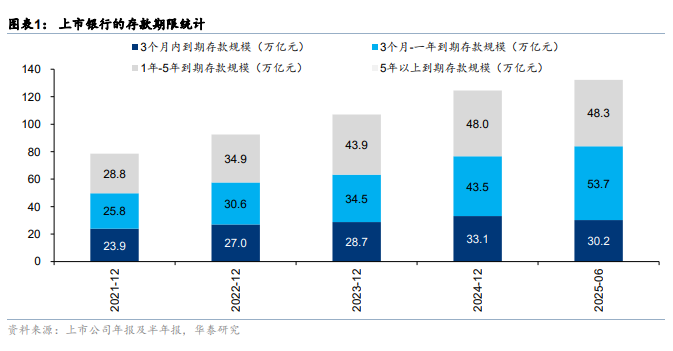
Core Viewpoint - The report from Huatai Securities predicts a net inflow of approximately 1.6 trillion yuan into the A-share market in 2026, driven by significant improvements in the funding supply side, with a total expected inflow of 2.6 trillion yuan after accounting for about 1 trillion yuan in funding needs [1][2]. Group 1: Funding Supply Side - The increase in funding supply is primarily attributed to the accelerated "migration" of household savings and the policy-driven entry of long-term funds [1]. - A historical high of 60 trillion yuan in one-year and above time deposits will mature in 2026, providing a substantial potential liquidity reservoir for the market [3]. - It is estimated that 8% of the maturing deposits will flow into non-monetary asset management products, with about 14% of that amount converting into stock market value, potentially contributing around 650 billion yuan to the A-share market [3]. Group 2: Risk Appetite Recovery - High-risk preference funds are expected to show strong inflow intentions, with an estimated net inflow of approximately 400 billion yuan from retail investors in 2026 [6]. - Leverage and private equity funds are anticipated to remain active, with net inflows of 200 billion yuan and 300 billion yuan respectively, contributing a total of 500 billion yuan [6][9]. - Insurance funds are projected to bring in about 800 billion yuan, as policies encourage leading insurance companies to increase their equity allocation [9]. Group 3: Funding Demand Side - The total funding demand for the A-share market in 2026 is expected to be around 1 trillion yuan, reflecting a relatively moderate growth trend [12]. - The IPO and private placement activities are gradually returning to normal, with an estimated IPO fundraising scale of about 200 billion yuan and private placements of around 500 billion yuan [12]. - Shareholder reduction behavior is expected to remain stable, with a projected net reduction scale of about 300 billion yuan, while the necessity for bottom-supporting buybacks is anticipated to decrease [12].
国信策略:2026年入市增量资金有望超两万亿
Xin Lang Cai Jing· 2026-01-08 23:30
Group 1 - The core conclusion indicates that in 2025, the A-share market shows distinct characteristics of incremental capital, with leveraged funds and private equity becoming the main forces entering the market, while public funds experienced net redemptions [1][29] - Current incoming funds are primarily sourced from high-net-worth individuals, and as the risk appetite of most residents gradually recovers from low levels, ordinary residents' funds are expected to become the main source of market entry in 2026 [1][29] - The macro and micro background of 2025 shares similarities with 2020, but the structure of incremental capital differs, with an estimated total incremental capital of 2 trillion yuan expected in 2026 as the process of resident funds entering the market progresses [1][29] Group 2 - The report highlights that the A-share market is expected to enter the second half of a bull market in 2026, driven by the recovery of fundamentals and the further entry of resident funds [2][30] - In 2025, the A-share market saw a significant performance, with the Wind All A Index rising by 28% throughout the year, supported by abundant liquidity [3][32] - The inflow of funds in 2025 can be divided into two phases, with the first half characterized by a recovery in market sentiment and various funds entering the market due to policy support and industrial catalysts [3][32] Group 3 - In the first half of 2025, the main sectors attracting incremental funds included technology and dividend sectors, with significant inflows into banks and materials [4][33] - By the third quarter of 2025, the market experienced a surge, primarily driven by private equity and leveraged trading, with a notable increase in risk appetite among investors [6][36] - The third quarter saw substantial inflows into sectors such as non-ferrous metals, electronics, and new energy, reflecting the ongoing demand for these industries [7][37] Group 4 - The report indicates that the entry of resident funds into the market is still in its early stages, primarily coming from high-net-worth individuals, as the majority of residents have not yet made significant market entries [11][41] - Evidence suggests that the risk appetite of residents is gradually improving, with a notable increase in the willingness to invest in high-risk assets such as stocks and funds [9][42] - Despite the recovery in risk appetite, many residents remain cautious, with a significant portion of their funds still allocated to low-risk products [15][46] Group 5 - The forecast for 2026 anticipates a net inflow of incremental capital reaching 2 trillion yuan, driven by active retail funds, continued high inflows from insurance capital, and improvements in public and foreign capital [19][52] - The report outlines that the inflow of funds will come from various sources, including retail investors, leveraged funds, and domestic institutional funds, while outflows will primarily be directed towards equity financing and capital reductions [48][49] - The overall funding inflow situation in 2025 is similar to that of 2020, but the structure of incremental capital has changed significantly, with leveraged funds and private equity playing a more prominent role [20][49]
A股增量资金空间测算-居民存款与机构资金潜力展望
2026-01-08 16:02
Summary of Key Points from the Conference Call Industry Overview - The focus is on the A-share market in China, particularly regarding the inflow of incremental funds and the impact of various financial instruments and investor behaviors on the stock market. Core Insights and Arguments - **Incremental Funds from Resident Deposits**: It is estimated that the scale of resident deposit migration will reach between 1 trillion to 4 trillion yuan by 2026, with an annual inflow of approximately 1 trillion yuan into the stock market. This migration is expected to enhance M2 growth, providing additional funds for the stock market [1][2] - **Insurance Funds as a Stable Investment Source**: Insurance funds are projected to contribute over 1 trillion yuan annually to the stock market. By Q3 2025, the equity asset allocation of life and property insurance companies has significantly increased, indicating a strong trend towards stock and fund holdings [1][5] - **Growth of Private and Public Funds and ETFs**: The rapid development of private equity, public funds, and ETFs is noted, with ETFs attracting many investors due to their flexibility and low costs. The annual growth potential in these areas is estimated to be between 1 trillion to 2 trillion yuan [1][6][12] - **IPO Contributions to Market Liquidity**: A-share IPOs are expected to inject several hundred billion yuan into the market annually, particularly benefiting hard manufacturing and hard technology companies during favorable market conditions [3][10] - **Impact of Resident Deposit Migration on Stock Market**: The migration of resident deposits is a crucial indicator, with significant increases in non-bank financial institution deposits suggesting that funds are gradually entering the stock market. The ratio of new resident deposits to GDP is expected to decline, indicating more funds will be available for investment [4][15] - **Long-term Role of Insurance Funds**: Insurance funds are seen as a key driver for medium to long-term capital entering the market. The allocation towards technology stocks has increased, with expectations of substantial funds waiting to enter the market in the coming years [5][8] - **Market Outlook and Slow Bull Trend**: The A-share market is anticipated to enter a slow bull phase, with long-term funds gradually allocating to equity assets. The market is expected to rely on technology and new consumption sectors in 2025, shifting focus to manufacturing in 2026 [1][7] - **Contributions from Active Funds and Private Equity**: Active funds in the secondary market contribute approximately 100 billion yuan, while private equity could bring in over 1 trillion yuan annually, especially considering stock price increases [11] - **Financing Balance and Market Expansion**: The financing balance is currently high but not at peak levels seen in 2015, indicating potential for upward movement. The annual incremental space for financing balance is estimated at around 100 billion yuan [13][14] Other Important Insights - **Investment Behavior Trends**: The gradual shift of long-term funds into equity assets is a notable trend not seen in the past two decades, with policy direction favoring a slow bull market rather than a rapid rise [7] - **Sector-Specific Investment Focus**: Future allocations by insurance funds are expected to diversify beyond financial stocks to include leading companies in sectors with favorable economic conditions [8][9]
2026年牛市展望系列1:市增量资金有望超两万亿
Guoxin Securities· 2026-01-08 07:45
Group 1 - The core conclusion indicates that in 2025, the A-share market will see significant inflows from active funds such as leveraged and private equity funds, while insurance capital will also play a substantial role, contrasting with the overall net redemption of actively managed public funds [1][2][3] - The report suggests that the current inflow of funds is primarily from high-net-worth individuals, and as the risk appetite of most residents gradually recovers from a low point, ordinary residents are expected to become the main source of market funds in 2026 [1][3] - The macroeconomic and microeconomic context of 2025 shares similarities with 2020, but the structure of incremental funds differs, leading to an estimated total inflow of 2 trillion yuan in 2026 as resident funds enter the market [1][4] Group 2 - In 2025, the main source of incremental funds in the A-share market will be active funds, with a notable inflow of 4.2 billion yuan from insurance capital and approximately 7 billion yuan from leveraged funds since July [2][19] - The report highlights that the inflow of funds in the first half of 2025 was characterized by a recovery in market sentiment, with significant contributions from retail investors and foreign capital, alongside a notable increase in insurance and ETF investments [2][14] - The report indicates that the incremental funds in 2025 primarily flowed into technology and dividend sectors, with insurance capital showing a marked increase in allocation to banking and transportation sectors [2][14] Group 3 - The report emphasizes that the process of resident funds entering the market is still in its early stages, with indications that the current inflow is largely from high-net-worth individuals, as the majority of residents have not yet shown significant signs of entering the market [3][33] - It notes that while there is a warming trend in the risk appetite of residents, many remain cautious, with a significant portion of their funds still allocated to low-risk products [3][36] - The report also points out that the overall risk appetite of residents remains low, which may hinder a broader influx of resident funds into the market [3][41] Group 4 - The report forecasts that in 2026, the A-share market is expected to see a net inflow of 2 trillion yuan, driven by increased participation from retail investors and sustained high inflows from insurance capital [4][55] - It outlines that the inflow of funds will be supported by a combination of retail active funds, insurance capital, and improved conditions for public and foreign funds, with an estimated 10 billion yuan from retail and 7 billion yuan from insurance capital [4][57] - The report anticipates that the overall dividend scale will continue to grow, with an expected inflow of approximately 9.5 billion yuan in 2026, reflecting a trend of increasing dividend payouts by listed companies [4][57]

服务器液冷+空芯光纤+高速铜缆+电源线+连接器,这家公司获净买入!
摩尔投研精选· 2025-12-23 10:50
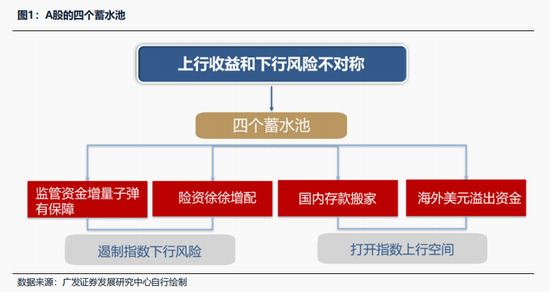
Group 1 - The core narrative for incremental capital in A-shares for 2025 includes regulatory and insurance capital mitigating downside risks, while domestic deposit migration and overseas dollar overflow open up upside potential for the index [1] - The outlook for 2026 is expected to be an enhanced version of 2025, with continued support from insurance capital and regulation, alongside anticipated inflows from residents' deposits (especially from high-net-worth individuals) and foreign capital [1] - Factors supporting the resident side include the mitigation of downside risks by insurance capital and regulation, a gradual reduction in the impact on residents' balance sheets, further liquidity of residents' funds in 2026, and limited high-yield assets competing with deposits in this cycle [1] Group 2 - On the foreign capital side, the overall "cake" of global funds is expected to grow, with downward pressure on the dollar and an anticipated bottoming improvement in A-share fundamentals by 2026 [2]


广发证券:2026年更像是加强版的2025年 居民存款搬家与外资入市更值得期待
Xin Lang Cai Jing· 2025-12-21 11:30
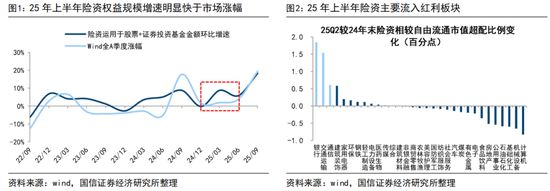
Group 1 - The core narrative for A-share incremental funds in 2025 is "asymmetric upside returns and limited downside risks," supported by regulatory measures and insurance capital to curb index declines, while domestic deposit migration and overseas dollar inflows create upward potential for indices [1][47][169] - Insurance capital's allocation demand for A-shares has increased, with insurance positions reaching 15.5% in Q3 2025, the second highest on record [9][127] - The market's expectation for deposit migration is high, but residents are still in the early stage of risk appetite recovery, showing more willingness to invest in fixed income and index products rather than stocks [11][59][129] Group 2 - Looking ahead to 2026, the trend of deposit migration is expected to strengthen, particularly among high-net-worth individuals, with foreign capital also anticipated to become a significant incremental source [24][188] - Factors supporting resident capital inflow include regulatory and insurance backing that reduces market volatility, a gradual easing of household balance sheet pressures, and a higher degree of liquidity in deposits [25][145][189] - The competition for deposits from high-yield assets is diminishing, which indirectly enhances the attractiveness of the stock market [34][199] Group 3 - The current A-share market is at a turning point in its profit cycle, with expectations for fundamental improvements in 2026, which could attract more foreign capital [42][207] - Global capital availability is expected to increase, driven by downward pressure on the dollar, which will enhance demand for non-dollar asset allocations [40][203] - The recent trend shows that high-net-worth individuals are accelerating their deposit migration, with private equity fund registrations reaching 386 billion yuan from January to October 2025, indicating a return to levels seen in 2021 [38][201]