vivo

Search documents
魔幻2025:换机热情下滑,“跳级”真能救市?
3 6 Ke· 2025-11-05 09:38
Core Insights - The smartphone market in 2025 is experiencing significant changes, with Xiaomi and Apple adopting contrasting strategies to address consumer behavior and market dynamics [1][3][9] - Xiaomi's launch of the Xiaomi 17 series, directly competing with Apple's iPhone 17, has generated considerable market interest despite initial criticism [1][5] - Apple is reportedly considering skipping the iPhone 19 and launching the iPhone 20, reflecting a shift in high-end smartphone marketing strategies [2][10] Xiaomi's Strategy - Xiaomi's decision to skip the 16 series and launch the 17 series has led to over 20% sales growth compared to the previous generation, with the Pro series seeing sales increase by approximately three times [1][3] - The unique back screen design of the Xiaomi 17 Pro Max has attracted a new user base, showcasing the power of emotional consumption and user-generated content [5][6] - Xiaomi plans to maintain the back screen design in future models and is launching a dedicated short drama app to enhance user engagement and brand loyalty [8][6] Apple's Strategy - Apple has adopted a conservative approach by significantly upgrading the iPhone 17 base model, focusing on value and practicality rather than flashy innovations [9][10] - The decision to potentially skip the iPhone 19 and launch the iPhone 20 is seen as a strategic move to create buzz and signify a shift towards future-focused branding [10][12] - Apple's planned staggered release of new models aims to balance market performance and extend product lifecycle value, reflecting a careful consideration of market dynamics [12][13] Market Trends - The global smartphone market is projected to see only a 1% increase in shipment volume in 2025, but the average selling price is expected to rise by 5%, indicating a shift towards value-driven purchasing [13][14] - The competition between domestic brands and international giants is intensifying, prompting manufacturers to innovate in branding, product design, and marketing strategies [13][14] - The industry is at a critical juncture where understanding consumer psychology and building ecosystems will be essential for future growth [14]


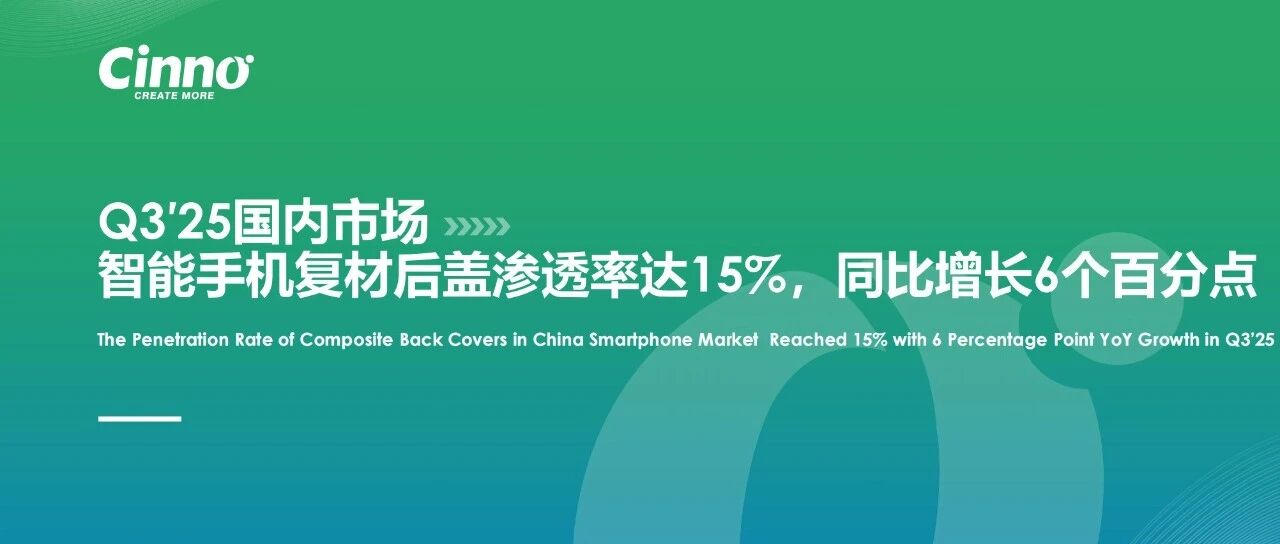
Q3'25国内市场智能手机复材后盖渗透率达15%,同比增长6个百分点
CINNO Research· 2025-11-05 08:58
Core Insights - The penetration rate of composite material back covers in the domestic smartphone market reached 15% in Q3 2025, representing a year-on-year increase of 6 percentage points [2]. Group 1: Market Trends - The report covers the changes in the penetration rates of various materials used for smartphone front and back covers in the Chinese market from Q1 2023 to Q3 2025 [3]. - It provides a detailed analysis of the sales volume and market share of different specifications of smartphone back covers across major brands in China [2][3]. Group 2: Brand-Specific Analysis - The report includes data on the sales volume and market share of Honor smartphones' back cover specifications from Q1 2023 to Q3 2025 [3]. - It also details the brand share of glass back covers in the Chinese smartphone market during the same period [3]. - The analysis extends to the brand share of composite material back covers in the market from Q1 2023 to Q3 2025 [3]. - Additionally, it presents the average price trends of different back cover specifications in the market over the specified period [3]. - Specific brand analyses include sales volume and market share for Apple, Huawei, Vivo, Xiaomi, and OPPO smartphones' back cover specifications from Q1 2023 to Q3 2025 [3].
广东东莞:喜迎十五运,打造“赛事+文旅”融合发展新样板
Huan Qiu Wang· 2025-11-05 03:00
Core Points - The 15th National Games will open in Guangzhou, Guangdong on November 9, marking the first time Hong Kong and Macau co-host a major sports event, with Dongguan hosting four events [2][3] - Dongguan aims to showcase its modern image and comprehensive strength through the event, emphasizing the integration of culture, tourism, and sports for high-quality development [2][3] Event Preparation and Urban Development - Dongguan has implemented seven major actions to enhance urban appearance, traffic, sanitation, and safety in preparation for the National Games, including a 100-day campaign starting September 20 [4] - The city has upgraded 134 pocket parks and improved 9,430 square meters of road landscaping, enhancing the environment around key event areas [4] Technological Integration and Accessibility - Dongguan is leveraging technological innovation in the Special Olympics, incorporating AI and big data into venue construction and showcasing smart rehabilitation devices [5] - The city is promoting barrier-free services, enhancing public transport facilities to support a more inclusive environment for disabled individuals [5] Volunteer Engagement - A total of 3,906 volunteers have been recruited to support the event, showcasing Dongguan's community spirit and youth engagement [6] Sports Events and Cultural Activities - The men's basketball competition will take place from November 4 to 12, featuring 14 teams and 168 athletes, while the weightlifting events will occur from November 10 to 20 [7][9] - Dongguan is hosting a basketball culture exhibition to celebrate its rich basketball heritage and promote local culture [8] Tourism and Cultural Integration - Dongguan has launched a series of tourism activities themed around the National Games, including six unique travel routes that connect event venues with local attractions [10][11] - The city is promoting a "Follow the National Games" campaign to enhance visitor experiences and encourage cultural exploration [12][14] Economic Impact and Consumer Engagement - The event is expected to stimulate local consumption through various promotional activities, integrating dining, accommodation, and entertainment [14][15] - Dongguan is offering special deals and experiences for visitors, including cultural performances and food guides to enhance the overall visitor experience [15][16] Community and Cultural Events - Various cultural events and activities are planned during the National Games, including music festivals and heritage showcases, to enrich the cultural landscape of Dongguan [18]

不上不下的中端手机,正陷入“进退两难”
3 6 Ke· 2025-11-04 23:53
Core Insights - The global smartphone market is experiencing a rebound, with sales growth of approximately 4% to 7% year-on-year, primarily concentrated in high-end and low-end segments, while the mid-range market is losing growth opportunities [1][3] - The mid-range segment, which includes 500 million users in China, is highly competitive, with brands focusing on high performance and cost-effectiveness [1][4] - The shift from an incremental to a saturated market is evident, as the average selling price of smartphones is projected to be $356 in 2024, while 70% of consumers are resistant to price increases [3][4] Market Dynamics - The mid-range smartphone market is under unprecedented pressure due to the influx of new models, with 396 new models expected in 2024, most of which are mid-range [4][6] - Price wars are intensifying, leading to a decline in the perceived value of mid-range devices, as many models are seeing price reductions of 200 to 400 yuan compared to previous generations [7][9] - High-end smartphones are also reducing prices, further eroding the competitive edge of mid-range devices, as consumers can access high-end features at lower prices [8][9] Consumer Behavior - Consumers are increasingly price-sensitive, preferring low-cost practical options or being attracted to discounted high-end models, which complicates the mid-range market's dynamics [9][10] - The gaming segment is becoming a focal point for mid-range brands, with several new models emphasizing gaming performance to attract younger consumers [10][12] - The demand for smartphones among younger users is growing, with a significant portion of the market being captured by brands that cater to gaming and social media needs [12][13] Profitability Challenges - Despite a stable production increase in the smartphone industry, profitability is declining, with major brands like Xiaomi and Huawei reporting significant drops in profit margins [14][15] - Rising component costs, particularly for memory chips, are squeezing margins, leading to a dilemma where brands must choose between raising prices or absorbing costs [16][20] - Companies are exploring strategies to enhance product value through technology investments and expanding user bases to offset rising costs [21][22]

“非洲手机之王”三季度净利降45%
Nan Fang Du Shi Bao· 2025-11-04 23:12
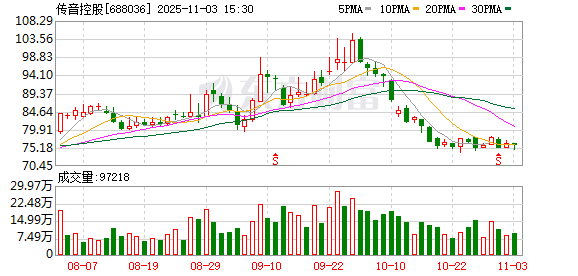
Core Insights - The company, Transsion Holdings, reported significant revenue growth in Q3 2025, reaching 20.466 billion RMB, a year-on-year increase of 22.60%. However, this revenue growth did not translate into profit, with net profit attributable to shareholders declining by 11.06% to 0.935 billion RMB, indicating a situation of "increased revenue but decreased profit" [2][4] - Over the first three quarters of 2025, the company faced intensified profit pressure, with total revenue of 49.543 billion RMB, a slight decrease of 3.33% year-on-year, and net profit down by 44.97% to 2.148 billion RMB [2][4] Revenue and Profit Analysis - The Q3 report highlighted a stark contrast in profitability, with net profit for the first three quarters of 2025 significantly down by 44.97% compared to the previous year, while the net profit excluding non-recurring gains and losses fell by 46.71% to 1.731 billion RMB [4][5] - The company attributed the decline in total profit and net profit to increased market competition and supply chain costs, which led to reduced revenue and gross profit [4][5] Market Competition - Transsion Holdings is facing fierce competition in its primary market, Africa, with Xiaomi and other Chinese brands aggressively targeting its market share. Xiaomi's market share in Africa rose to 13.8%, a 2.6 percentage point increase year-on-year [5][6] - Other competitors, including Honor, Samsung, OPPO, and vivo, are also expanding their presence in the African market, further squeezing Transsion's market space [5][7] Cash Flow and R&D Investment - Despite the pressure on profits, the company reported a remarkable increase in operating cash flow, with a net cash flow from operating activities of 3.285 billion RMB, up 164.66% year-on-year [8][9] - The company has also increased its R&D investment by 17.26% to 2.139 billion RMB in the first three quarters of 2025, indicating a strategic focus on innovation and product upgrades [8][9][10] - In Q3 alone, R&D spending reached 777 million RMB, a year-on-year increase of 21.22%, reflecting the company's commitment to strengthening its competitive position through technological advancements [10]

AI手机发展重心转向端侧 移动终端生态迎变革
Zheng Quan Shi Bao· 2025-11-04 17:51
Core Insights - The future of mobile technology is predicted to see the disappearance of traditional smartphones and apps within the next 5-6 years, with AI assistants becoming the main interface for human-computer interaction [1] - Mobile companies are shifting their focus from cloud collaboration to edge computing, enhancing AI capabilities directly on devices [3][4] Group 1: AI Development Trends - The rise of generative AI, particularly after the success of ChatGPT, has led mobile companies to invest heavily in AI technologies, with the first AI smartphones launched in late 2023 [2] - Companies like vivo and OPPO are prioritizing edge models, with vivo introducing a 3B (30 billion parameters) edge multimodal inference model, moving away from large cloud models [3][5] Group 2: User-Centric AI - Edge models are designed to create personalized data models based on user data, ensuring privacy and efficiency, which is crucial for personalized intelligence [4][10] - The integration of AI into user habits is emphasized, with companies like vivo implementing seamless AI features that operate without user intervention [6][7] Group 3: Ecosystem Transformation - The shift towards edge computing will redefine the mobile ecosystem, with companies aiming to control user data and flow to third-party applications [7][8] - Huawei has established an AI collaboration ecosystem through its HarmonyOS, while other companies like OPPO and Honor are also developing their own AI ecosystems [8] Group 4: Challenges Ahead - The transition to edge AI faces challenges, including compatibility between cloud and mobile architectures, as well as the need for sufficient device power and memory [9][10] - The core value of edge AI lies in its ability to access private user data, which is a significant differentiator from traditional apps [10][11]
身家猛涨50亿,“中国巴菲特”豪捐1500万元股票
Sou Hu Cai Jing· 2025-11-04 14:10
Core Insights - Duan Yongping, known as "China's Buffett," donated 10,000 shares of Kweichow Moutai stock valued at 15 million yuan to Jiangxi Water Conservancy and Electric Power University [2][3] - The donation is part of Duan's long-standing commitment to educational philanthropy, having donated over 1 billion yuan to various universities over the past 20 years [2][5] - Kweichow Moutai has a history of consistent dividends, with an estimated dividend of 515,600 yuan from the donated shares based on last year's payout [2][5] Company and Industry Overview - Kweichow Moutai has distributed a total of 336.11 billion yuan in dividends to date, with a cash dividend of 64.67 billion yuan planned for 2024 and a payout ratio of 75% [4][5] - Despite a slight revenue growth of 6.32% to 130.90 billion yuan and a net profit increase of 6.25% to 64.63 billion yuan in the first three quarters, the company faces challenges in maintaining growth amid a declining market for high-end liquor [10] - The price of Moutai's flagship product has dropped significantly, from 2,220 yuan per bottle at the beginning of the year to 1,640 yuan, reflecting market pressures [10] - Moutai's management is actively seeking diversification strategies to alleviate performance pressures, including exploring new product lines in wine and health beverages [10][11]


互联网行业 2025 年 11 月投资策略:AI 驱动海外巨头三季报亮眼,关注巨额资本开支下 ROI 表现
Guoxin Securities· 2025-11-04 12:31
Market Overview - The Hang Seng Tech Index decreased by 8.6% in October, while the Nasdaq Internet Index remained flat with a monthly increase of 0.6% [11] - The valuation of the Hang Seng Tech Index remained stable with a PE-TTM of 22.85x, positioned at the 29.2% percentile since its inception [16] - The Nasdaq Index also maintained its valuation with a PE-TTM of 42.30x, at the 74.09% percentile over the past decade [18] AI Developments - Google launched the Veo 3.1 video generation model, enhancing character consistency and multi-scene storytelling capabilities [22] - OpenAI's ChatGPT ecosystem reached 800 million weekly active users, marking a significant milestone in AI adoption [27] - Microsoft introduced its first self-developed image generation model, MAI-Image-1, entering the top ten in the LMArena rankings [30] Industry Dynamics - The domestic gaming revenue in Q3 2025 declined by 4% year-on-year, while the number of domestic game approvals remained high [47] - In the fintech sector, the reserve funds of payment institutions grew by 5% year-on-year in September [49] - E-commerce platforms reported significant growth during the Double Eleven sales event, with Douyin e-commerce seeing a 500% increase in live sales [53] Investment Strategy - The report suggests focusing on AI-driven companies, recommending Tencent, Alibaba, Kuaishou, Baidu, Meitu, and Tencent Music, which are expected to benefit from improved operational efficiency [3] - The report emphasizes the importance of monitoring the return on investment (ROI) from significant capital expenditures (CAPEX) by major companies [3] Key Company Earnings Forecasts - Tencent Holdings is rated "Outperform" with a projected EPS of 23.69 for 2025 and a PE of 24.78 [4] - Alibaba is also rated "Outperform" with a projected EPS of 0.00 for 2025 and a PE of 22.12 [4] - Kuaishou is rated "Outperform" with a projected EPS of 4.07 for 2025 and a PE of 16.88 [4]
手机厂商鏖战非洲:传音前三季净利下降,小米等加速抢食市场
Nan Fang Du Shi Bao· 2025-11-03 14:59
Core Insights - The report highlights a significant revenue growth for the company in Q3 2025, reaching 20.466 billion RMB, a year-on-year increase of 22.60%, but this growth did not translate into profit, with net profit declining by 11.06% to 0.935 billion RMB, indicating a "revenue growth without profit" situation [2][4] - Over the first three quarters of 2025, the company faced intensified profit pressure, with total revenue of 49.543 billion RMB, a slight decrease of 3.33%, and net profit down by 44.97% to 2.148 billion RMB, nearly halving [2][4] Revenue and Profit Analysis - The company's Q3 report reveals a stark contrast between revenue growth and profit decline, with net profit for the first three quarters significantly impacted by market competition and supply chain costs [4][5] - The decline in net profit is attributed to reduced operating income and gross profit, as competition in the African market intensifies with other Chinese smartphone manufacturers expanding their presence [4][5] Market Competition - The African market, previously a stronghold for the company, is now facing fierce competition from global smartphone giants, with Xiaomi making significant inroads, increasing its market share to 13.8% in the first half of 2025 [5][6] - Other brands like Honor, Samsung, OPPO, and vivo are also intensifying their efforts in the African market, further squeezing the company's market space [5][6] Cash Flow and R&D Investment - Despite the profit decline, the company reported a remarkable increase in operating cash flow, reaching 3.285 billion RMB, a year-on-year surge of 164.66%, attributed to reduced procurement payments [8][9] - The company has also increased its R&D investment to 2.139 billion RMB in the first three quarters, a growth of 17.26%, indicating a strategic focus on innovation and product upgrades during a challenging market environment [9][10]

手机厂商鏖战非洲:传音前三季净利下降 小米等加速抢食市场
Nan Fang Du Shi Bao· 2025-11-03 14:56
Core Insights - The core viewpoint of the article highlights the significant revenue growth of Transsion Holdings in Q3 2025, but this growth has not translated into profit, indicating a challenging market environment and increased competition in Africa [2][3]. Financial Performance - In Q3 2025, Transsion achieved a revenue of 20.466 billion RMB, marking a year-on-year increase of 22.60%. However, the net profit attributable to shareholders was 0.935 billion RMB, a decline of 11.06% [2]. - For the first three quarters of 2025, the total revenue was 49.543 billion RMB, a slight decrease of 3.33% year-on-year, while the net profit dropped significantly by 44.97% to 2.148 billion RMB [3][4]. - The net profit excluding non-recurring items was 1.731 billion RMB, reflecting a more severe decline of 46.71% [3]. Market Competition - The competitive landscape in Africa is intensifying, with other Chinese smartphone manufacturers aggressively entering the market, challenging Transsion's previously dominant position [4][6]. - Xiaomi has shown notable growth, ranking third in the African market with a market share increase of 2.6 percentage points to 13.8% in the first half of 2025 [4][5]. - Other brands like Honor, Samsung, OPPO, and Vivo are also expanding their presence, further squeezing Transsion's market share, particularly in the low-end and mid-range segments [4][5]. Cash Flow and R&D Investment - Despite the profit decline, Transsion reported a significant increase in operating cash flow, reaching 3.285 billion RMB, a year-on-year surge of 164.66% [7]. - The company attributed this cash flow improvement to a substantial reduction in payments for raw material purchases [7]. - R&D investment for the first three quarters of 2025 totaled 2.139 billion RMB, up 17.26% year-on-year, indicating a strategic focus on innovation despite profit pressures [8][9]. - In Q3 alone, R&D spending reached 0.777 billion RMB, reflecting a growth rate of 21.22% [9].