众擎机器人

Search documents
中国科技企业闪耀CES:撕下低价标签,以创新和品牌力突围
2 1 Shi Ji Jing Ji Bao Dao· 2026-01-09 09:35
Group 1 - The core viewpoint of the articles highlights the increasing presence and influence of Chinese technology companies at the CES 2026, showcasing a shift from traditional manufacturing roles to a more diversified global strategy that emphasizes technology, design, and localized operations [1][2][4] - Chinese companies are exhibiting a strong focus on AI integration, with nearly all exhibitors emphasizing AI in their presentations, indicating a trend towards practical applications rather than just theoretical concepts [2][3] - The number of Chinese humanoid robot exhibitors at CES 2026 exceeds 20, surpassing the total from the US, Japan, South Korea, and Europe combined, demonstrating a significant cluster effect in this sector [2] Group 2 - The export of high-tech products from China reached 37.5 trillion yuan in the first three quarters of 2025, marking an 11.9% increase and contributing over 30% to the overall export growth during the same period [1] - Chinese brands are shedding the "low-price label" and establishing a reputation for "technological leadership," supported by initiatives like the Belt and Road and favorable cross-border e-commerce policies [4][5] - In the robot sector, Chinese brands dominate the global market for vacuum robots, holding over 60% of the market share, with prices in overseas markets being 20%-30% higher than in China, indicating a willingness among consumers to pay a premium for perceived quality [5] Group 3 - The trend of enhancing brand power is becoming evident as Chinese tech companies invest in brand building after achieving significant sales milestones, with a focus on interactive marketing methods to engage consumers [6][7] - Challenges remain for Chinese companies as they navigate different market environments, cultural preferences, and regulatory requirements, which necessitate a comprehensive and resilient long-term strategy for overseas expansion [7] - The ability of Chinese tech firms to overcome core technological challenges while successfully integrating into diverse cultural and regulatory landscapes will determine their long-term success in global markets [7]
智元第一,宇树第二!中国人形机器人企业领跑全球
Zhong Guo Zheng Quan Bao· 2026-01-09 08:30
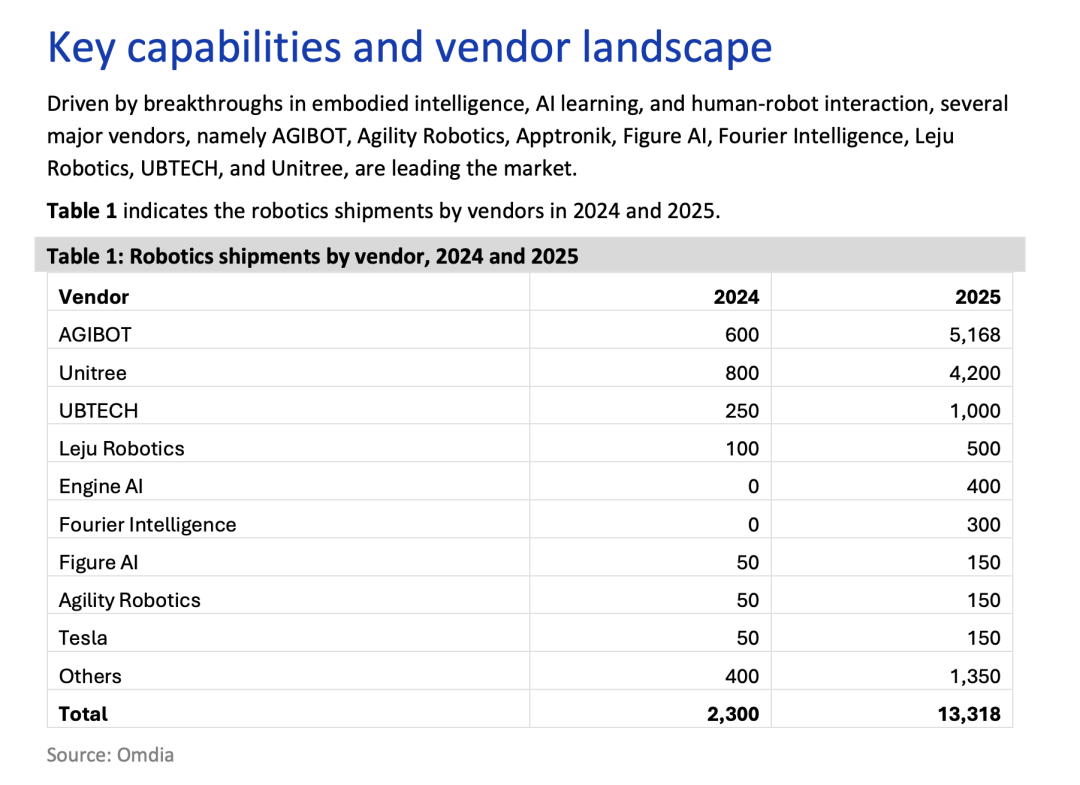
Core Insights - The report by Omdia highlights the dominance of Chinese manufacturers in the humanoid robot market, with Zhiyuan leading with over 5,100 units shipped, capturing 39% of the global market share [1] - By 2025, the top six humanoid robot manufacturers will all be Chinese, collectively accounting for 86.9% of global shipments [1] Group 1: Market Performance - In 2024, total shipments of humanoid robots are projected to be 2,300 units, increasing to 13,318 units in 2025 [2] - The report indicates that the humanoid robot index rose by 1.66%, with significant stock price increases for companies like Jizhi Co. and Hongxun Technology [3] Group 2: Industry Developments - At CES 2023, several Chinese humanoid robot companies showcased their products, including Zhiyuan's launch of the Genie Sim 3.0 platform, which enhances model training and application [4] - Other companies like Unitree and Fourier Intelligence also presented their latest humanoid robots and solutions, indicating a strong presence in the market [4][5] Group 3: Future Projections - Omdia predicts exponential growth in the humanoid robot market, with global shipments expected to reach 2.6 million units by 2035 [6] - Companies like Zhiyuan and Tesla are positioned as leaders in the industry, driving rapid development and innovation [6] Group 4: Strategic Investments - Companies are actively investing in humanoid robotics, with Hongrun Construction and Guoji Precision Engineering announcing partnerships and new product lines aimed at enhancing their market positions [7] - The domestic humanoid robot shipment is expected to rise to 62,500 units by 2026, marking a significant milestone for the industry [7]


CES硬核科技刷屏,广东力量秀出“中国方案”
21世纪经济报道· 2026-01-09 07:53
Core Viewpoint - The CES 2026 showcased significant advancements in technology, particularly highlighting the strong presence and innovation of Guangdong enterprises in the global tech landscape [1][2]. Group 1: Guangdong's Presence at CES - Guangdong had a remarkable representation at CES, with 837 companies from mainland China and 530 from Guangdong, including 370 from Shenzhen, making up 44.2% of the mainland exhibitors [1]. - The event highlighted Guangdong's innovation in various sectors, including smart hardware, AI-integrated products, and robotics, establishing the region as a key player in global tech innovation [1][2]. Group 2: Robotics and AI Innovations - The emergence of embodied intelligent robots was a focal point, with companies like SUTENG showcasing their autonomous delivery robot capable of performing nearly 20 complex tasks [3][5]. - The robotics industry is transitioning from mere demonstrations to practical applications, with companies like ZHONGQING making strides in real-world scenarios such as logistics and public services [5][6]. Group 3: Energy Solutions and Smart Technologies - Energy tech companies presented solutions for smart and decentralized energy management, including products like the Explorer 1500 Ultra and innovative outdoor solar solutions [8][9]. - The integration of AI in energy solutions is aimed at enhancing efficiency and supporting the transition to automated driving technologies [8][9]. Group 4: Globalization and Market Strategy - Guangdong enterprises are evolving from simple product exports to comprehensive global strategies that include technology, branding, and ecosystem development [12][15]. - Companies like TCL and CHUANGXIANG SANWEI are focusing on localizing their operations and building service ecosystems in international markets to enhance brand recognition and customer engagement [12][13]. Group 5: Shifting Market Dynamics - The narrative of Guangdong companies has shifted from being followers to leaders in the global tech arena, with a focus on technological innovation and brand influence [17][19]. - The efficient supply chain in Guangdong is a critical factor enabling rapid product iteration and technological advancements, positioning these companies favorably in the competitive landscape [21].
收评:沪指16连阳站上4100点 AI应用方向领涨 卫星互联网延续活跃态势
Xin Hua Cai Jing· 2026-01-09 07:47
Market Performance - The Shanghai Composite Index closed at 4120.43 points, up 0.92%, marking a 16-day consecutive rise [1] - The Shenzhen Component Index rose 1.15% to 14120.15 points, while the ChiNext Index increased by 0.77% to 3327.81 points [1] - The total trading volume for the Shanghai market was approximately 12.892 billion yuan, and for the Shenzhen market, it was about 18.336 billion yuan [1] Sector Performance - AI application sectors led the market, with significant gains in various related concepts such as Kimi, Sora, and AIGC [1] - Other active sectors included satellite internet, commercial aerospace, and space big data, along with notable increases in small metals, precious metals, and duty-free shops [1] Institutional Insights - The market is showing an upward trend, with many sectors supported at the 60-day moving average, indicating a new round of bullish momentum [2] - Long-term investment opportunities are suggested in high-growth sectors such as semiconductors, consumer electronics, artificial intelligence, and commercial aerospace [2] - A recent improvement in the overall industry prosperity index and PMI supports the positive outlook for the market [2][3] Policy Developments - The "Guidelines for the Construction and Application of Industrial Green Microgrids (2026-2030)" were issued to promote green energy applications in industrial sectors [4] - The guidelines emphasize a minimum of 60% self-consumption of renewable energy for new industrial projects [4] Robotics Market - A report indicates that by 2025, the top six companies in global humanoid robot shipments will be Chinese, with a total expected shipment of 13,000 units [5] - The leading company, Zhiyuan, is projected to capture 39% of the market share with over 5,100 units shipped [5] Company News - MiniMax, an AGI company, saw its stock price surge by 90.9% upon its listing on the Hong Kong Stock Exchange, reaching a market capitalization of approximately 91.94 billion HKD [7] - The company raised about 5.54 billion HKD through its IPO, which will be allocated for model upgrades and AI product development [7]
CES硬核科技刷屏,广东力量秀出“中国方案”
2 1 Shi Ji Jing Ji Bao Dao· 2026-01-09 06:05
Core Insights - The CES 2023 showcased significant technological innovations, particularly highlighting the strong presence of Guangdong companies, which accounted for a substantial portion of the exhibitors [1][10] - The event emphasized the transition of robotics and AI technologies from experimental stages to practical applications, with Guangdong firms leading this shift [3][4][14] Group 1: Guangdong's Presence at CES - A total of 3,302 companies participated in CES 2023, with 837 from mainland China, 127 from Taiwan, and 98 from Hong Kong; Guangdong alone had over 530 exhibitors, including 370 from Shenzhen, representing 44.2% of mainland China's participation [1] - Guangdong companies showcased a range of innovative products, including smart robots, 3D printing technologies, and AI-integrated devices, reflecting their growing influence in global tech innovation [1][10] Group 2: Robotics and AI Innovations - The event featured significant advancements in embodied intelligent robots, with companies like SUTENG showcasing a delivery robot capable of performing complex tasks autonomously, highlighting the practical applications of AI in logistics and service sectors [3][4] - The robotics industry is moving towards large-scale validation, with companies focusing on real-world productivity rather than just technological demonstrations, indicating a maturation of the sector [4][5] Group 3: Energy Technology and Smart Solutions - Energy technology firms presented solutions for smart and decentralized living, with products like the Explorer 1500 Ultra and Jackery Solar Gazebo, which integrate energy independence into household infrastructure [5][6] - The emergence of intelligent charging networks for autonomous vehicles was also highlighted, showcasing the integration of AI in future transportation solutions [6] Group 4: Globalization and Market Strategy - Guangdong companies are increasingly adopting comprehensive globalization strategies, moving beyond simple product exports to include technology, brand, and ecosystem development [7][10] - Companies like TCL and EcoFlow are focusing on localizing operations and building service ecosystems in international markets to enhance brand recognition and customer engagement [8][9] Group 5: Supply Chain and Innovation - The robust supply chain ecosystem in Guangdong is a critical factor in the rapid iteration and commercialization of innovative products, enabling companies to achieve significant technological breakthroughs [13][14] - The emphasis on R&D investment and the efficiency of the supply chain have strengthened the competitive position of Guangdong firms in the global market [13]
2025一级市场回顾 | 人工智能赛道涌入656亿 机器人、大模型分化 北京获投企业数领跑
Xin Lang Cai Jing· 2026-01-09 05:57
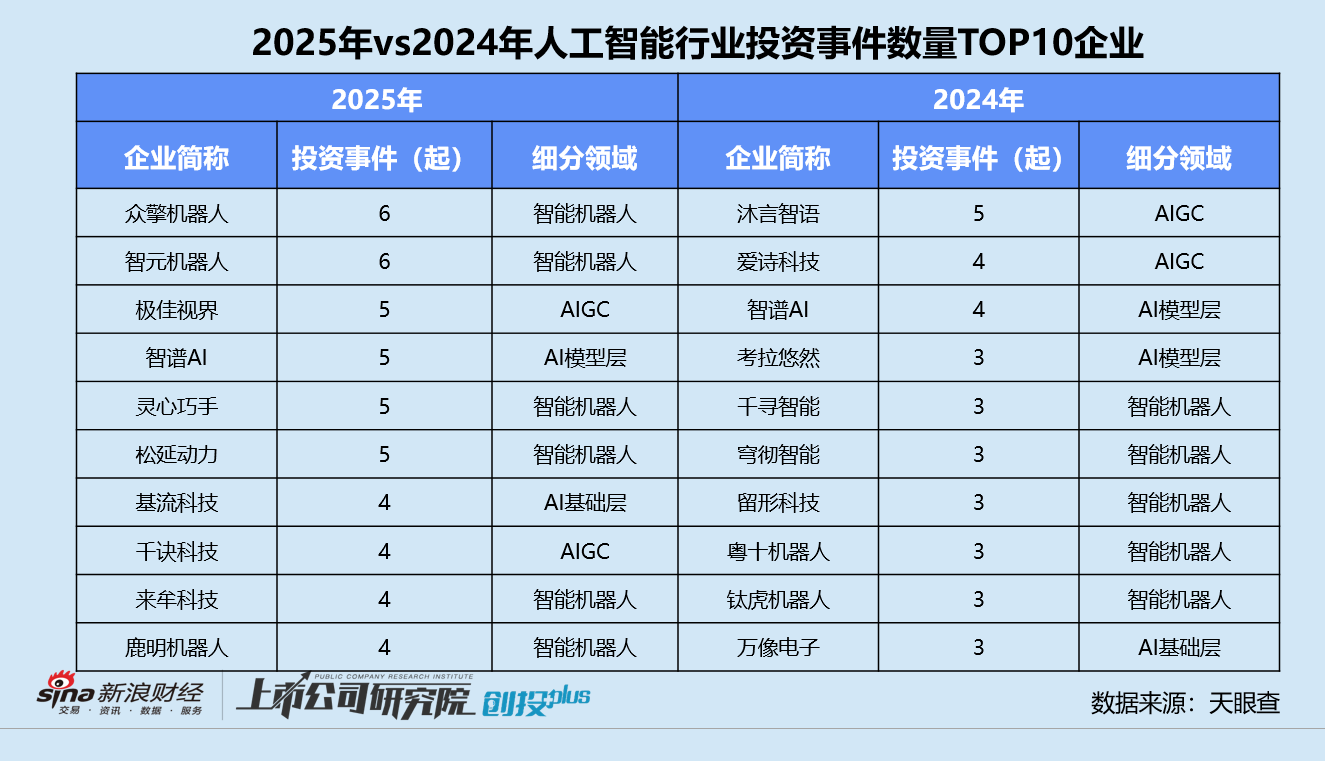
出品:新浪财经创投Plus 作者:易舍 2025年,一级市场在深刻的变局中演进,由人工智能引领的颠覆性技术浪潮席卷全球。资本向少数头部项目集聚,OpenAI、xAI、Anthropic等头部人工智能 企业年内累计投资额高达400亿美元、250亿美元、165亿美元。 据公开数据统计,2025年1月1日至12月31日(简称:统计区间),国内一级市场共有5599家公司完成6343起投资事件,同比分别增长2.6%、7.5%;披露总 投资额达4400.99亿元,较2024年全年下降20.5%。而人工智能作为贯穿全年的投资"主旋律",行业中共有788家公司获得1015起投资,披露投资额合计656.04 亿元。相较之下,2024年共有478家人工智能公司获得553起投资,披露投资额合计391.51亿元。 统计区间内,共有151家人工智能公司获得2轮以上融资,约占19.2%。其中,人形机器人研发商「众擎机器人」和「智元机器人」以6起投资事件领跑,具 身智能公司「极佳视界」、「灵心巧手」、「松延动力」,及基础大模型企业「智谱AI」皆获得5轮融资。对比2024年,融资2轮以上的人工智能公司只有 59家,占比约12.3%,人工智能 ...
广东AI硬件全链出海 众擎机器人亮相国际消费类电子产品展
2 1 Shi Ji Jing Ji Bao Dao· 2026-01-09 03:39
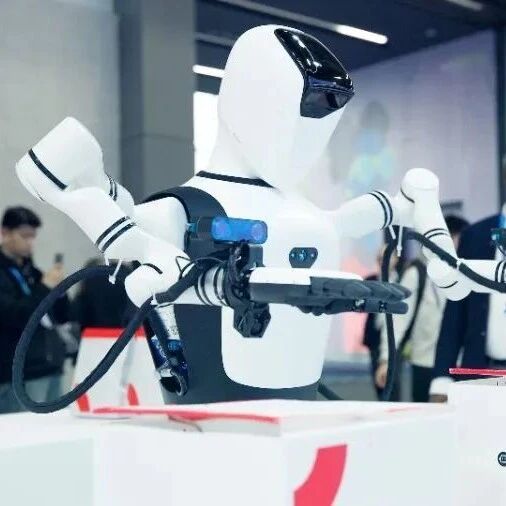
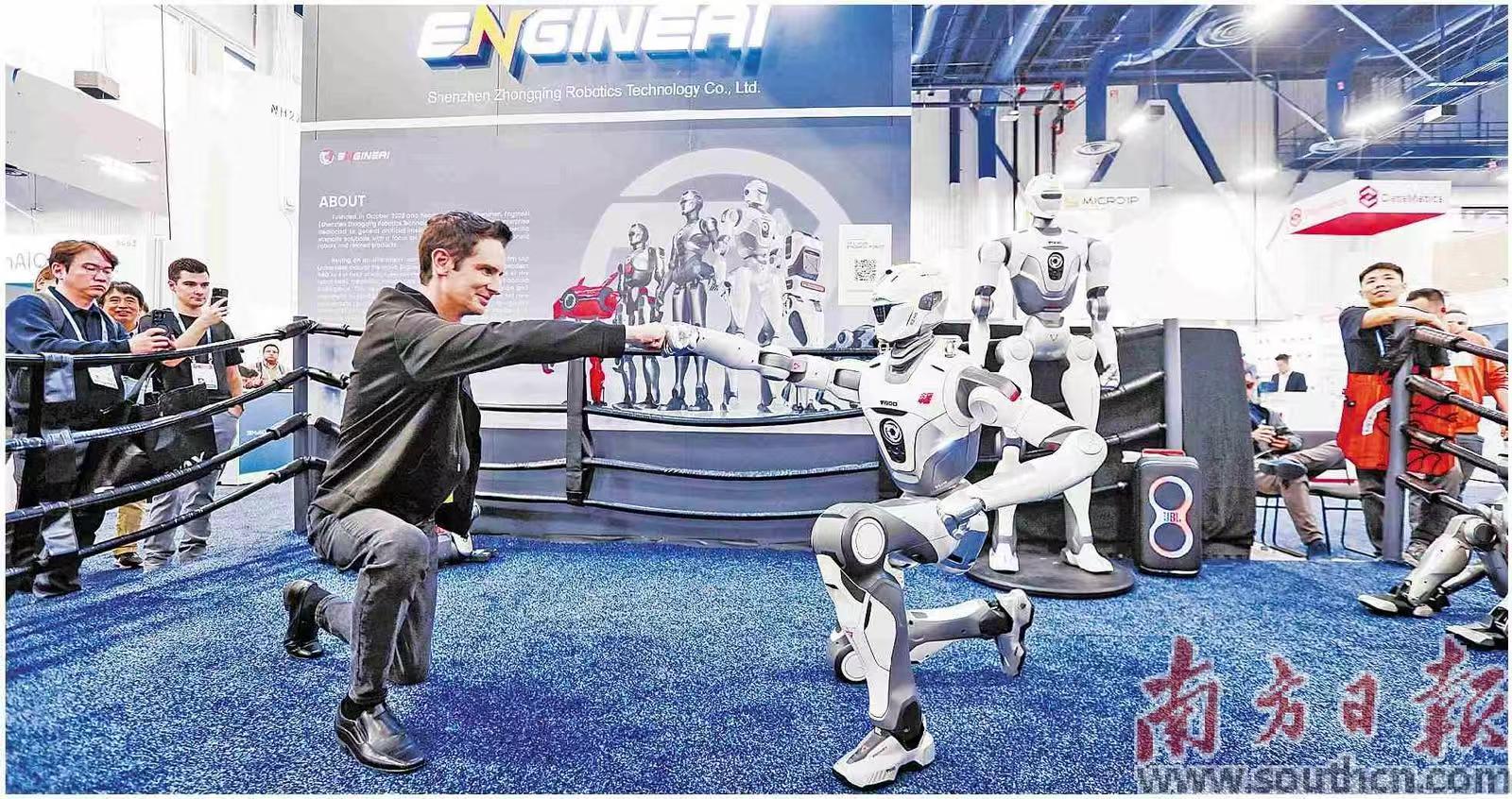
Core Insights - The article highlights the emergence of AI as a foundational element in consumer electronics, with a significant growth forecast for AI technology hardware in 2026 [2][3]. Group 1: Company Highlights - Shenzhen Zhongqing Robot Technology Co., Ltd. showcased its humanoid robot T800 at CES 2026, attracting considerable attention with its interactive capabilities [2][5]. - The T800 robot features advanced technology, including a peak torque of 450N·m, equivalent to the power of a high-end car engine, and a solid-state battery with a 4-5 hour runtime [6][7]. - The company has completed multiple technical validations for the T800, anticipating sales of dozens to hundreds of units in 2026 [7]. Group 2: Industry Trends - The CES 2026 event emphasizes the integration of AI into physical products, marking a shift from conceptualization to practical applications [5][8]. - Guangdong AI hardware companies are moving towards global markets, focusing on real product offerings and collaborative solutions with international partners [4][11]. - The article notes a growing interest from international clients in Chinese robotics technology, indicating a rising global demand for these innovations [11]. Group 3: Supply Chain and Globalization - Guangdong's efficient supply chain, characterized by a "half-hour supply chain" model, allows for rapid response to global customization demands [12][15]. - Companies are not merely exporting products but are engaging in global ecosystem building, enhancing their competitive edge in the AI hardware market [16][17]. - The article mentions that AI is no longer seen as a standalone product but as a core operating system driving various devices, reshaping the competitive landscape [17][18]. Group 4: Future Outlook - The article suggests that the year 2026 will be pivotal for AI hardware, with companies aiming to optimize product matrices and align with global market needs [16][21]. - Guangdong enterprises are positioned to redefine "Chinese innovation" in the global market, leveraging their technological strengths and ecological strategies [21].
股市必读:模塑科技(000700)1月8日董秘有最新回复
Sou Hu Cai Jing· 2026-01-08 16:46
董秘最新回复 投资者: 董秘您好,请问贵公司在人形机器人领域与国内头部机器人公司宇树机器人、众擎机器人、 智元机器人等是否存在合作?贵公司在汽车零部件领域是特斯拉的供应商,以后是否也有可能进入特斯 拉机器人供应链? 截至2026年1月8日收盘,模塑科技(000700)报收于14.82元,上涨0.82%,换手率11.49%,成交量105.46 万手,成交额15.6亿元。 交易信息汇总资金流向 投资者: 公司在脑机接口方面怎么布局。 投资者: 请问截止2025年12月31日股东人数是多少? 来自交易信息汇总:1月8日主力资金净流入6675.7万元,呈现明显吸筹迹象。 董秘: 尊敬的投资者您好:基于商业保密要求,公司不便透露具体客户信息,请以公司公告为准。感 谢您的关注! 投资者: 贵公司很多医疗方向的子公司,请问这些医疗公司或医院或医疗投资公司,有没有脑机这方 面的或者临床工作或研究或技术储备或这相关行业的战略投资 董秘: 尊敬的投资者您好:公司下属明慈医院为心血管三级专科医院,公司目前没有脑机相关业务、 技术及投资。感谢您的关注! 董秘: 尊敬的投资者您好:公司目前没有脑机相关业务,感谢您的关注! 董秘: 尊敬 ...

CES,被中国人形机器人“玩儿成主场”
2 1 Shi Ji Jing Ji Bao Dao· 2026-01-08 13:38
Core Insights - Humanoid robots have become the main attraction at CES 2023, with Chinese companies dominating the exhibition space [1][2] - A total of 38 humanoid robot booths were reported, with 21 from Chinese enterprises, showcasing their advancements and capabilities [1] - Companies are leveraging CES to enhance their visibility and demonstrate their technological prowess in humanoid robotics [4][5] Group 1: Company Participation - Notable Chinese companies such as Yushu Technology, ZhiYuan Robotics, and ZhongQing Robotics showcased their products, including dynamic demonstrations of their humanoid robots [2][3] - Other companies, not primarily focused on humanoid robots, also presented their robotic solutions, indicating a broader interest in robotics technology [2][5] - New entrants in the industry are using CES to establish their brand presence and showcase their innovations [4] Group 2: Technological Advancements - The humanoid robots displayed at CES have shown improvements in motion control, with enhanced dynamic capabilities and reduced error rates [7] - Yushu Technology's G1 robot has undergone significant algorithm updates, improving its stability and ability to perform complex movements [7] - The industry is witnessing a shift towards more sophisticated applications of humanoid robots, with potential for commercialization in various sectors [8] Group 3: Market Trends - The U.S. market remains open to humanoid robots, providing opportunities for Chinese companies to expand their presence [8] - Companies are exploring partnerships with U.S. firms for personalized development of robotic solutions [8] - Despite advancements, the practical applicability and versatility of humanoid robots are still under exploration, with ongoing research into artificial general intelligence (AGI) [9]
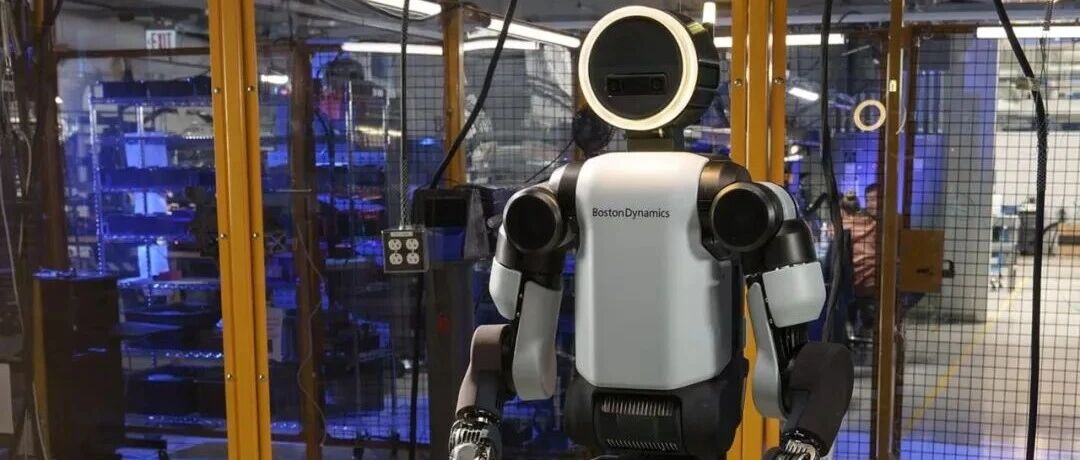
美国CES,又被中国人形机器人包围了
机器人圈· 2026-01-08 10:13
Core Insights - The article highlights the significant presence of Chinese companies at CES 2026, particularly in the humanoid robot sector, showcasing a shift from isolated technology displays to a complete industrial chain structure [6][14]. Group 1: Chinese Companies at CES 2026 - A total of 598 exhibitors related to robotics participated in CES 2026, with 149 coming from China, accounting for nearly one-fourth of the total [3]. - In the humanoid robot segment, 38 exhibitors were recorded, with 21 from China, representing over half of the participants [3]. - Notable Chinese exhibitors included Yushu Technology, which showcased the mass production version of the G1 humanoid robot, and Cloud Deep Technology, which presented the upgraded X30 series [7][9]. - Other companies like ZhiYuan Robotics and ZhongQing Robotics displayed a range of humanoid and bionic robots, emphasizing their capabilities in various applications [7][12]. Group 2: Global Competitors - American companies, such as Boston Dynamics and Hyundai, focused on the industrial application of humanoid robots, with the Atlas robot demonstrating advanced motion capabilities [15][17]. - Korean firms, represented by the K-Humanoid Alliance, showcased their ambitions in humanoid robotics, emphasizing collaboration between research institutions and industry [18][19]. - European companies, including NEURA Robotics and Humanoid, targeted industrial applications, highlighting their engineering prototypes and modular systems [23][25]. Group 3: Industry Trends and Future Directions - The article notes a shift in the perception of humanoid robots, moving from feasibility discussions to practical applications in various sectors, including industrial, household, and service environments [31]. - Different countries are adopting distinct strategies: China focuses on product showcases and mass production, the U.S. emphasizes industrial deployment and system capabilities, Korea integrates research and industry through alliances, and Europe approaches the market through industrial humanoid robots [31].