
峰飞航空

Search documents
eVTOL技术路线之争 复合翼与倾转旋翼引领低空经济竞逐
Huan Qiu Wang Zi Xun· 2025-08-23 05:07
Core Viewpoint - The eVTOL (electric Vertical Take-Off and Landing) industry is experiencing intense competition in key technological routes, with compound wings and tilt-rotor designs emerging as the most representative directions for urban air mobility systems [1][3]. Group 1: Market Overview - As of June 2025, among 31 key global eVTOL manufacturers, compound wing configurations account for approximately 42%, while tilt-rotor designs follow closely with a 35% share [3]. - The compound wing and tilt-rotor designs are the focal points of industry and capital interest due to their significant advantages in technological maturity and application potential [3]. Group 2: Technical Advantages - The compound wing eVTOL features a design that allows for independent operation of vertical take-off and horizontal cruising systems, resulting in high reliability and good aerodynamic efficiency [4]. - In terms of safety, the compound wing's independent lift and propulsion systems enhance operational resilience in complex urban environments, allowing for rapid activation of backup lift units in case of disturbances [4]. - The compound wing also demonstrates superior energy efficiency and range capabilities compared to other configurations [4]. Group 3: Tilt-Rotor Characteristics - The tilt-rotor eVTOL, known as the "airborne transformer," utilizes mechanical tilting mechanisms to transition power units from vertical to horizontal flight, achieving higher flight speeds [4]. - Tilt-rotor designs are noted for their strong payload capacity and clearer certification paths, making them suitable for short-distance commuting and high-end tourism markets [4]. Group 4: Challenges and Development - Tilt-rotor designs face challenges related to mechanical complexity and potential increases in failure rates, necessitating multiple redundancy designs to meet safety standards [5]. - Both compound wing and tilt-rotor technologies are currently developing in parallel, each with its own strengths, with the compound wing being more suitable for high-frequency urban air traffic networks and the tilt-rotor excelling in speed and payload capacity [5]. - The industry consensus indicates that eVTOL technology is in a critical phase of technical challenges and certification, with no single technology route currently surpassing others across all dimensions [5].

低空经济行业专题系列三:低空经济乘风而至,产业机遇前景广阔
Guoxin Securities· 2025-08-22 12:36
Investment Rating - The investment rating for the low-altitude economy industry is "Outperform the Market" [1] Core Viewpoints - The low-altitude economy is expected to experience significant growth, with the market size projected to exceed 1 trillion yuan by 2026, reaching 10,644.6 billion yuan, and further expanding to 25 trillion yuan by 2030 and 35 trillion yuan by 2035 [4][64] - The industry is currently in its early stages of development, with a focus on safety and gradual expansion of application scenarios, including low-altitude tourism and emergency services [6][79] Summary by Sections 1. Overview of Low-Altitude Economy - The low-altitude airspace typically refers to airspace below 1,000 meters, which can extend to 3,000 meters based on regional characteristics. Electric Vertical Takeoff and Landing (eVTOL) aircraft generally operate below 300 meters [3][22] 2. Necessity for Developing Low-Altitude Economy - China leads the global drone industry, accounting for approximately 70% of related patent applications and being the largest exporter of civil drones. The market potential for low-altitude economy is vast, with various commercial scenarios anticipated [4][30] 3. Industry Development Constraints - Key constraints include insufficient management precision, low technological maturity, and inadequate infrastructure. The industry is actively exploring solutions to overcome these challenges [5][74] 4. Trends in Large-Scale Commercialization - The development of low-altitude economy will follow a phased approach, prioritizing cargo transport before passenger transport, and focusing on safety and risk control [6][79] 5. Market Space and Growth Projections - The low-altitude economy market size reached 5,059.5 billion yuan in 2023, with a year-on-year growth rate of 33.8%. The growth is driven primarily by the manufacturing of low-altitude vehicles and operational services [64][67] 6. Application Scenarios - The low-altitude economy encompasses various application scenarios, including production operations, transportation, cultural tourism, and security. Each category has distinct characteristics and market demands [55][58]

中信海直股价微涨0.64% 参与全球首次eVTOL海上运输飞行
Sou Hu Cai Jing· 2025-08-13 14:56
Core Viewpoint - The company, CITIC Offshore Helicopter, is making significant strides in the low-altitude economy by partnering with Peak Aviation to commercialize the use of electric vertical takeoff and landing (eVTOL) aircraft for logistics on offshore oil platforms [1] Group 1: Company Overview - As of August 13, 2025, CITIC Offshore Helicopter's stock price is 23.45 yuan, reflecting a 0.64% increase from the previous trading day [1] - The company reported a trading volume of 638 million yuan and a turnover rate of 3.52%, with a total market capitalization of 18.192 billion yuan [1] - CITIC Offshore Helicopter's main business includes general aviation services, covering sectors such as offshore oil, power line inspection, and emergency rescue [1] Group 2: Strategic Developments - The company has signed a strategic agreement with Peak Aviation and CITIC Financial Leasing for the intention to purchase 100 eVTOL aircraft [1] - The successful completion of the first-ever transportation flight to an offshore oil platform using the Kai Rui Ou model marks a significant milestone in the company's exploration of the low-altitude economy [1] Group 3: Financial Insights - On August 13, the net outflow of main funds was 12.1041 million yuan, with a cumulative net outflow of 84.3442 million yuan over the past five days [1]

eVTOL航空器全球竞速:国内加速商业化,海外争夺话语权
2 1 Shi Ji Jing Ji Bao Dao· 2025-08-13 12:04
Core Insights - The domestic eVTOL (electric Vertical Take-Off and Landing) aircraft market is accelerating in terms of airworthiness certification and commercialization, with significant milestones achieved in August [1][3][4] - The low-altitude economy is experiencing robust activity, with a 50.8% year-on-year increase in procurement activities related to low-altitude economic products and services in the first quarter of this year [1] - China and the U.S. are not only focusing on domestic market development but are also seeking opportunities in overseas markets, indicating a global competitive landscape [2] Commercialization Acceleration - The successful completion of the first-ever sea logistics flight using the eVTOL aircraft "Kai Rui Ou" marks a significant step in low-altitude logistics applications [3][4] - The aircraft demonstrated operational capabilities by completing a journey of over 150 kilometers under challenging conditions, retaining over 40% battery power upon landing [3] - Strategic partnerships have been formed, including a procurement order for 100 eVTOL aircraft, aimed at accelerating real-world commercial applications [3][4] Industry Development - The eVTOL supply chain in China is evolving into a comprehensive development pattern, characterized by upstream breakthroughs, midstream collaboration, and downstream standard-setting [7] - The industry is currently facing challenges, including the need for systematic planning in scenario cultivation and the lack of innovative measures in support policies [8] - The commercial viability of eVTOL operations is contingent upon establishing standardized workflows and infrastructure to support regular flights [8] Global Competition - Companies like Archer are forming international alliances to streamline the certification and deployment of eVTOL aircraft globally, indicating a collaborative approach to market entry [9] - Domestic eVTOL companies are exploring international markets, with significant orders such as a $1 billion deal for 350 eVTOL aircraft in the Middle East [10] - The Middle East presents a lucrative market for eVTOL operations, with substantial investments planned for air traffic networks [10] Future Outlook - By 2025, companies like Peak Fly Aviation aim to establish several typical application scenarios, with expectations for large-scale commercialization by 2026 [11]
制造成长周报(第26期):2025世界机器人大会开幕,多家企业发布人形机器人新品-20250811
Guoxin Securities· 2025-08-11 07:19
Investment Rating - The report maintains an "Outperform" rating for the industry, particularly focusing on humanoid robots and AI infrastructure [4][8]. Core Insights - The humanoid robot sector is rapidly evolving, with significant advancements showcased at the 2025 World Robot Conference, highlighting the industry's potential for growth and innovation [3][16]. - The report emphasizes the importance of supply chain positioning and value capture in humanoid robotics, recommending a focus on key suppliers and companies with strong market positions [4]. - AI infrastructure is expected to see sustained capital expenditure growth driven by increasing demand, particularly benefiting sectors like gas turbines and chillers [4]. Industry Dynamics - The 2025 World Robot Conference opened in Beijing, featuring over 200 companies and 1500 exhibits, showcasing advancements in humanoid robotics and their applications [16]. - The report notes the rapid development of the domestic robot industry, with improvements in capabilities such as sorting, handling, and performing tasks like music and shopping [3]. - The low-altitude economy is progressing with infrastructure initiatives, including the successful completion of the first offshore oil platform supply flight using drones [27]. Company Dynamics - Key companies highlighted for humanoid robotics include: - **Joint suppliers**: Hengli Hydraulic, Huichuan Technology, and Bluesky Technology for joint modules [4]. - **Dexterous hands**: Zhaowei Electromechanical and Leisai Intelligent [4]. - **Reduction gears**: Green Harmonic and Jindi Co., Ltd. [4]. - AI infrastructure companies to watch include Hanbell Precise Machinery, Ice Wheel Environment, and Yingliu Co., Ltd. [4]. Key Company Earnings Forecasts and Valuations - The report provides earnings forecasts and investment ratings for several companies, including: - Green Harmonic (688017.SH): Outperform, with a projected EPS of 0.50 for 2025 [8]. - Huichuan Technology (300124.SZ): Outperform, with a projected EPS of 2.01 for 2025 [8]. - Bluesky Technology (688360.SH): Outperform, with a projected EPS of 0.99 for 2025 [8]. - The report also highlights the performance of companies in the humanoid robot sector, noting significant market movements and growth potential [15].



峰飞航空吨级eVTOL海上石油平台首飞,无锡苏州协同立法护航低空经济 | 投研报告
Zhong Guo Neng Yuan Wang· 2025-08-11 02:42
Core Insights - The low-altitude economy is gaining momentum in China, supported by new regulations and significant industry developments [2] Policy Support - On July 30, Jiangsu Province's legislative body approved the "Suzhou Low Altitude Economy Promotion Regulations" and "Wuxi Low Altitude Economy Development Promotion Regulations," effective from October 1 [2] - On August 6, the U.S. Department of Transportation proposed new drone regulations to eliminate the case-by-case approval for remote drone flights, allowing commercial drones to operate beyond visual line of sight (BVLOS), which is expected to reduce operational costs for companies like Alphabet's Wing and Walmart [2] Industry Dynamics - On August 3, a new property management company, Leishikang, was established in Wuhan with a registered capital of 20 million yuan, pioneering a model that integrates low-altitude technology with smart property and urban emergency services [2] - On August 5, Shandong Guoxing Low Altitude Economy Group was officially registered with a capital of 500 million yuan, aiming to integrate resources within the low-altitude industry in the province [2] - On August 3, China National Offshore Oil Corporation, CITIC Offshore Helicopter, and Fengfei Aviation announced the successful first flight of a domestically developed 2-ton electric vertical takeoff and landing aircraft (eVTOL) for offshore oil platform logistics, marking a significant advancement in low-altitude logistics applications [2] - On August 8, a low-altitude economy industrial park in Shaoxing, Zhejiang, introduced 18 projects with a total investment exceeding 26.6 billion yuan, focusing on drone systems and large fixed-wing aircraft development [2] Company Dynamics - The low-altitude economy is witnessing a comprehensive development from macro-level national planning to local subsidies and micro-level infrastructure and application scenarios [2] - Recommended stocks benefiting from this trend include Wolong Electric Drive and Green Energy Huichong, with specific sectors highlighted: - Low-altitude manufacturing: Wanfeng Aowei, Zongshen Power [2] - Low-altitude infrastructure: Lais Information, Shenzhen Urban Transport [2] - Low-altitude operations: Shenzhen Airport, CITIC Offshore Helicopter, Xiangyuan Cultural Tourism, Lingnan Holdings, and Xiyu Tourism [2] Market Performance - From August 4 to August 8, the average change in A-share related to the low-altitude economy was +4.2%, with notable gainers including: - Shanhe Intelligent (+22.1%) - Xiyu Tourism (+21.6%) - Xice Testing (+11.2%) - Green Energy Huichong (+10.9%) - Pulit (+9.9%) [3] - Decliners included: - Haopeng Technology (-10.1%) - Hengtai Kaichuang (-3.8%) - Lais Information (-2.3%) [4]
城记 | 沪昆同城化迈入新阶段 淀山湖镇探索跨区域研发共同体
Xin Hua Cai Jing· 2025-08-06 07:15
Core Insights - The article highlights the ongoing development of the life and health industry in the Yeshan Lake area, showcasing the collaboration between Shanghai and Kunshan in transforming medical research into practical applications [1][2][4] Group 1: Industry Development - The second Lake District Life and Health Scientist Conference was held on July 26, marking a significant step in the industrialization of medical research outcomes [1] - The Kunshan Extraordinary Life Science Innovation Center has attracted over 30 projects and more than 100 high-level talents, with the Kunshan LingSi Life Health Innovation Research Institute introducing over 50 scientific teams [2][3] - The establishment of the Fudan University Experimental Animal Center Kunshan Branch aims to enhance the platform's support in drug pharmacology, cell biology, and molecular biology [2][3] Group 2: Strategic Focus Areas - Future focus areas for the Yeshan Lake life science sector include xenotransplantation, regenerative medicine, and AI healthcare, with xenotransplantation technology being a key topic at the conference [3] - The region is positioned to become a new growth pole in Suzhou's biopharmaceutical landscape, complementing the existing strengths of the Suzhou Industrial Park [3][4] Group 3: Economic and Ecological Integration - The Yeshan Lake area is leveraging its ecological advantages and proximity to Shanghai to develop a "dual-core effect" in innovation and business [3][5] - The region's economic evolution reflects a shift from agriculture to industrial and now to a landscape economy, emphasizing the importance of tourism and innovation [5][6] Group 4: Collaborative Ecosystem - The integration of Shanghai's top-tier research capabilities with Yeshan Lake's flexible industrial environment is fostering a collaborative innovation model [7][8] - The Yeshan Lake area is transitioning from a low-cost production base to a research and development community, enhancing its role in the Yangtze River Delta integration [7][8] Group 5: Infrastructure and Investment - The establishment of various innovation and entrepreneurship hubs, such as the Peak Fly Green Aviation Industrial Park and the Iridium Factory, is underway, with significant projects in the eVTOL sector [8] - The region has seen substantial investments, including a $100 million strategic investment agreement with Ningde Times and a projected doubling of output from the Weimen Industrial expansion project [8]
吨级eVTOL在深完成全球首次海上平台物资运输
Sou Hu Cai Jing· 2025-08-06 06:06
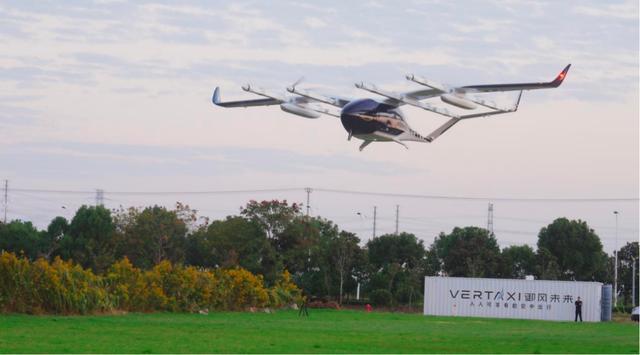
深圳商报·读创客户端记者 肖晗 8月3日,中国海油、中信海直及峰飞航空联合宣布,我国自主研发的2吨级电动垂直起降航空器(eVTOL)——峰飞航空凯瑞鸥,成功实现全球首次海上石 油平台物资运输飞行,这一突破不仅创新了远海物资补给模式,更标志着我国在海陆低空物流场景应用中迈出关键一步。 此次试飞由中国海油联合中信海直、峰飞航空共同实施。执飞机型为我国自主研发的全球首款获得型号合格证、生产许可证和单机适航证的2吨级 eVTOL"凯瑞鸥"。它装载新鲜水果和紧急药品等物资,从深圳陆地起降点起飞,经过58分钟的跨海域飞行,降落在距离深圳海岸线150公里的惠州19-3平 台,成功完成了运输任务。 长期以来,中国海油在南海海域的海上石油平台物资运输主要依赖船运,单程耗时约10小时,难以满足紧急物资调度与应急保障需求。紧急物资和人员则由 直升机运送,但飞行成本较高。相比传统依赖船舶和直升机的运输方式,eVTOL在运营成本、响应速度、环保性、舒适性以及适应有限起降空间方面具有 显著优势。 据中国海油深圳分公司协调部副经理任永怡介绍,此次试飞将创新的航空技术、成熟的运营经验与真实的海上作业需求深度融合,形成"研制+运营+场 景"低 ...


深圳,剑指“全球低空经济第一城”
21世纪经济报道· 2025-08-05 11:27
Core Viewpoint - Shenzhen aims to become the "first city of low-altitude economy" with a comprehensive plan to develop its low-altitude infrastructure and industry, targeting an industry scale of over 130 billion yuan by 2026 [3][5]. Group 1: Infrastructure Development - The plan includes the construction of over 1,200 low-altitude takeoff and landing points and the opening of more than 1,000 commercial flight routes by 2026 [3][5]. - Shenzhen will build two general airports and adapt existing helicopter landing points for eVTOL use, with a total of 283 takeoff and landing sites planned [8][9]. - A logistics takeoff point network will be established, adding 159 new logistics-specific takeoff points, totaling 205, to enhance the delivery network [9]. Group 2: Core Functional Centers - Four core functional centers will support the ambitious industry scale: a global headquarters R&D center, a high-end intelligent manufacturing center, a full-scenario demonstration verification center, and a one-stop solution supply center [5][6]. - The R&D center aims to establish a "1+5+4" research infrastructure network by the end of 2026, focusing on key technologies in the low-altitude economy [5]. - The full-scenario demonstration verification center will ensure that over 50% of urban areas are covered by eVTOL and helicopter services, with a goal of 70% population coverage for air logistics [6]. Group 3: Technological Integration - The low-altitude intelligent integration system (SILAS) will be developed to manage airspace and flight approvals, supporting over 10,000 flying vehicles simultaneously by 2026 [6][9]. - Advanced technologies such as 5G and satellite communication will create an integrated network for low-altitude operations, enhancing flight safety and efficiency [9]. Group 4: Challenges and Solutions - The plan acknowledges challenges such as the need for airspace resource reform and the expansion of funding channels for infrastructure investment [11][12]. - Shenzhen aims to establish a collaborative mechanism for low-altitude airspace management and seeks to broaden funding sources through social investment and government support [12].

深圳重注低空经济,千亿产值剑指“全球第一城”
2 1 Shi Ji Jing Ji Bao Dao· 2025-08-05 07:24
Core Insights - Shenzhen aims to become the "first city of low-altitude economy" with a comprehensive plan to develop its low-altitude infrastructure and industry by 2026, targeting an industry scale exceeding 130 billion yuan [1][2] - The plan includes the establishment of over 1,200 low-altitude takeoff and landing points and more than 1,000 commercial flight routes, alongside the creation of the world's first low-altitude intelligent integration system (SILAS) [1][2] Group 1: Strategic Framework - The plan outlines four core functional centers to support the ambitious industry scale, including a global headquarters R&D center, a high-end intelligent manufacturing center, a full-scenario demonstration verification center, and a one-stop solution supply center [2][3] - The R&D center will focus on key technologies such as flight control algorithms, high-energy density batteries, low-power chips, and lightweight materials, aiming to cultivate globally competitive enterprises [2] - The full-scenario center aims to cover over 50% of urban areas with helicopter and eVTOL services, providing logistics and medical supply delivery to a significant portion of the population [2] Group 2: Infrastructure Development - The plan emphasizes the construction of a comprehensive low-altitude infrastructure network, including two general airports and 283 takeoff and landing points across various urban areas [4] - A total of 205 dedicated logistics takeoff points will be established, enhancing the community delivery network and integrating with a tiered logistics hub system [4] - The low-altitude intelligent integration system (SILAS) will serve as a central management system for airspace, supporting the operation of over 10,000 flying vehicles and managing 3 million drone cargo flights annually [3][5] Group 3: Challenges and Solutions - The plan acknowledges the need for airspace resource reform, aiming for over 75% of the airspace below 120 meters to be suitable for drone operations by 2026 [6] - Funding channels will be expanded, with a focus on social investment and the introduction of tools such as special bonds, REITs, and industrial funds to support infrastructure development [7] - Regulatory standards will be improved, including the establishment of a drone inspection and airworthiness certification research institution to enhance the standardization and certification processes for new aviation vehicles [7]