闻泰科技

Search documents
闻泰科技:2025年年度业绩预告
Zheng Quan Ri Bao Wang· 2026-02-08 13:48
证券日报网讯1月30日,闻泰科技(600745)发布公告称,公司预计2025年度实现归属于母公司所有者 的净利润-1350000万元到-900000万元,将出现亏损。 ...

半导体行业双周报(2026、01、23-2026、02、05):存储芯片公司25Q4业绩表现亮眼-20260206
Dongguan Securities· 2026-02-06 05:14
2026 年 2 月 6 日 刘梦麟 SAC 执业证书编号: S0340521070002 电话:0769-22110619 邮箱: liumenglin@dgzq.com.cn 周 报 陈伟光 S0340520060001 电话:0769-22119430 邮箱: chenweiguang@dgzq.com.cn 资料来源:东莞证券研究所,iFind 相关报告 投资要点: 本报告的风险等级为中高风险。 本报告的信息均来自已公开信息,关于信息的准确性与完整性,建议投资者谨慎判断,据此入市,风险自担。 请务必阅读末页声明。 半导体行业 超配(维持) 半导体行业双周报(2026/01/23-2026/02/05) 行 业 存储芯片公司 25Q4 业绩表现亮眼 半导体行业指数近两周涨跌幅:截至2026年1月22日,申万半导体行业指数 近两周(2026/1/23-2026/2/5)累计下跌7.68%,跑输沪深300指数6.55个 百分点;2026年以来申万半导体行业指数累计上涨9.77%,跑赢沪深300指 数8.90个百分点。 SAC 执业证书编号: 半导体行业(申万)指数走势 行业新闻与公司动态:(1)铠侠:在AI ...
2025年A股1442家公司预亏,行业“亏损王”浮出
Di Yi Cai Jing Zi Xun· 2026-02-04 15:12
Core Insights - Nearly 50% of the 2957 A-share listed companies that disclosed their 2025 annual performance forecasts are expected to incur losses [2][3] - The real estate sector is identified as the most affected, with Vanke A (000002.SZ) being the largest loss-maker, projecting a net loss of approximately 82 billion yuan [6][7] Provincial Distribution of Losses - The provinces with the highest proportion of companies expecting losses are Hainan (44.44%), Jilin (41.67%), and Qinghai (40%) [4][5] - Guangdong has the highest number of companies expecting losses at 257, followed by Beijing (172), Jiangsu (160), and Zhejiang (133) [3][4] Industry Analysis - The IT services and software development sectors have the highest number of companies forecasting losses, with 60 companies each, followed by the real estate sector with 54 companies [6] - The top ten companies with the highest expected losses include five from the real estate sector, with Vanke A leading the list [6][7] Notable Loss-Makers - Vanke A is projected to incur a net loss of about 82 billion yuan due to decreased project settlement scale and increased business risks [6][7] - Other significant loss-makers in the real estate sector include China Fortune Land Development (华夏幸福) with expected losses between 16 billion to 24 billion yuan and Greenland Holdings (绿地控股) with losses of 16 billion to 19 billion yuan [7] - In the retail sector, M.K. Home (美凯龙) is expected to report a loss of 15 billion to 22.5 billion yuan, primarily due to investment property valuation losses [7][8] Sector-Specific Losses - The home appliance sector's largest loss-maker is Shenzhen Konka (深康佳A), projecting losses of 12.58 billion to 15.57 billion yuan [8] - The vaccine leader Zhifei Biological Products (智飞生物) is also expected to report a first-time loss of 10.7 billion to 13.73 billion yuan due to decreased public vaccination willingness [8] - In the photovoltaic sector, Tongwei Co. (通威股份) is projected to incur losses of 9 billion to 10 billion yuan due to industry oversupply and rising raw material costs [9]




2025年A股1442家公司预亏,行业“亏损王”浮出
第一财经· 2026-02-04 14:59
Core Viewpoint - In the 2025 annual performance forecast disclosure for A-share listed companies, nearly half of the 2957 companies are expected to report losses, indicating a significant downturn in various sectors, particularly in real estate [5][6]. Group 1: Overall Performance Forecast - A total of 2957 A-share listed companies disclosed their performance forecasts, with 623 companies expecting profit increases and 378 expecting profit decreases [5][6]. - Among the companies, 1442 are expected to incur losses, accounting for 49% of those disclosing forecasts, while 1863 companies (63%) are either expecting losses or profit reductions [6]. - The provinces with the highest number of companies forecasting losses include Guangdong (257), Beijing (172), and Jiangsu (160) [7]. Group 2: Provincial Distribution of Losses - Hainan province has the highest loss ratio, with 44.44% of its companies (12 out of 27) expecting losses [9]. - Jilin and Qinghai follow with loss ratios of 41.67% and 40%, respectively [9]. - Other provinces with significant loss ratios include Liaoning (39.29%) and Xinjiang (37.10%) [9]. Group 3: Industry-Specific Losses - The IT services and software development sectors have the highest number of companies forecasting losses, with 60 companies each, followed by the real estate sector with 54 companies [11]. - Vanke A is identified as the "loss king" of A-shares, expecting a net profit loss of approximately 82 billion yuan due to declining project settlement scales and increased business risks [11][12]. - Other notable companies with high expected losses include China Fortune Land Development (160-240 billion yuan) and Greenland Holdings (160-190 billion yuan), both from the real estate sector [12]. Group 4: Notable Losses in Other Sectors - The retail sector's "loss king" is Meikailong, expecting a net profit loss between 150 billion and 225 billion yuan, primarily due to losses in investment properties [13]. - In the home appliance sector, Shenkangjia A anticipates a loss of 125.81 billion to 155.73 billion yuan, driven by increased impairment provisions and declining sales [13]. - The vaccine industry is also facing challenges, with Zhifei Biological Products forecasting a loss of 106.98 billion to 137.26 billion yuan due to decreased public willingness to receive vaccinations [13].




A股2025亏损画像:1442家公司预亏 行业“亏损王”浮出
Di Yi Cai Jing· 2026-02-04 13:19
Core Viewpoint - Nearly half of the 2957 A-share listed companies that disclosed their 2025 annual performance forecasts are expected to incur losses, indicating a significant downturn in the market [1][2]. Provincial Distribution - The provinces with the highest proportion of companies expecting losses are Hainan (44.44%), Jilin (41.67%), and Qinghai (40%) [3][4]. - Guangdong has the highest number of companies expecting losses at 257, followed by Beijing (172), Jiangsu (160), and Zhejiang (133) [3]. Industry Analysis - The real estate sector is identified as the most affected, with Vanke A (000002.SZ) projected to be the "loss king" with an expected net profit loss of approximately 82 billion yuan [6][7]. - Other industries with significant losses include IT services, semiconductors, and chemical pharmaceuticals, with the number of companies expecting losses in these sectors ranging from 40 to 60 [6][8]. Notable Companies - Vanke A leads the losses in the real estate sector, followed by China Fortune Land Development (华夏幸福) with expected losses between 16 billion to 24 billion yuan, and Greenland Holdings (绿地控股) with losses estimated at 16 billion to 19 billion yuan [6][7]. - In the retail sector, M.K. Home (美凯龙) is projected to incur losses between 15 billion to 22.5 billion yuan, primarily due to investment property valuation losses [7]. - In the electronics sector, Deep Kangjia A (深康佳A) is expected to report losses of 12.58 billion to 15.57 billion yuan, attributed to increased impairment provisions and declining revenue [7]. Sector-Specific Losses - The photovoltaic industry is also facing challenges, with Tongwei Co. (通威股份) expected to incur losses of 9 billion to 10 billion yuan due to supply surplus and rising raw material costs [8]. - In the semiconductor sector, Wentai Technology (闻泰科技) anticipates losses of 9 billion to 13.5 billion yuan, influenced by significant investment losses and asset impairments [8].
A股2025亏损画像:1442家公司预亏,行业“亏损王”浮出
Di Yi Cai Jing· 2026-02-04 13:07
Core Viewpoint - Nearly half of the A-share listed companies are expected to report losses for the 2025 fiscal year, with significant regional and industry disparities in the distribution of these losses [2][3]. Group 1: Regional Distribution of Losses - A total of 2,957 A-share companies disclosed their performance forecasts, with 1,442 companies expected to incur losses, representing 49% of the total [3]. - Hainan, Jilin, and Qinghai have the highest proportions of companies forecasting losses, exceeding 40%, with Hainan at 44.44% [4][5]. - Guangdong has the highest number of loss-making companies at 257, followed by Beijing (172), Jiangsu (160), and Zhejiang (133) [4]. Group 2: Industry Analysis - The real estate sector is the most affected, producing the highest number of loss-making companies, including the "loss king" Vanke A, which is expected to report a loss of approximately 82 billion yuan [7][8]. - Other industries with significant losses include IT services, semiconductors, and chemical pharmaceuticals, with 60, 50, and 40-50 companies respectively forecasting losses [7]. - The top ten companies with the highest expected losses include five from the real estate sector, with notable losses from China Fortune Land Development and Greenland Holdings [7][8]. Group 3: Specific Company Losses - Vanke A's losses are attributed to a significant decline in project settlement scale and increased business risks, leading to credit and asset impairment provisions [7]. - Other major loss-makers include China Fortune Land Development, expected to lose between 16 billion to 24 billion yuan, and Greenland Holdings, with losses projected between 16 billion to 19 billion yuan [8]. - In the retail sector, M.K. Home is expected to report losses of 15 billion to 22.5 billion yuan due to investment property valuation losses [8]. - Semiconductor company Wentech Technology anticipates losses of 9 billion to 13.5 billion yuan, primarily due to significant investment losses and asset impairments [9].

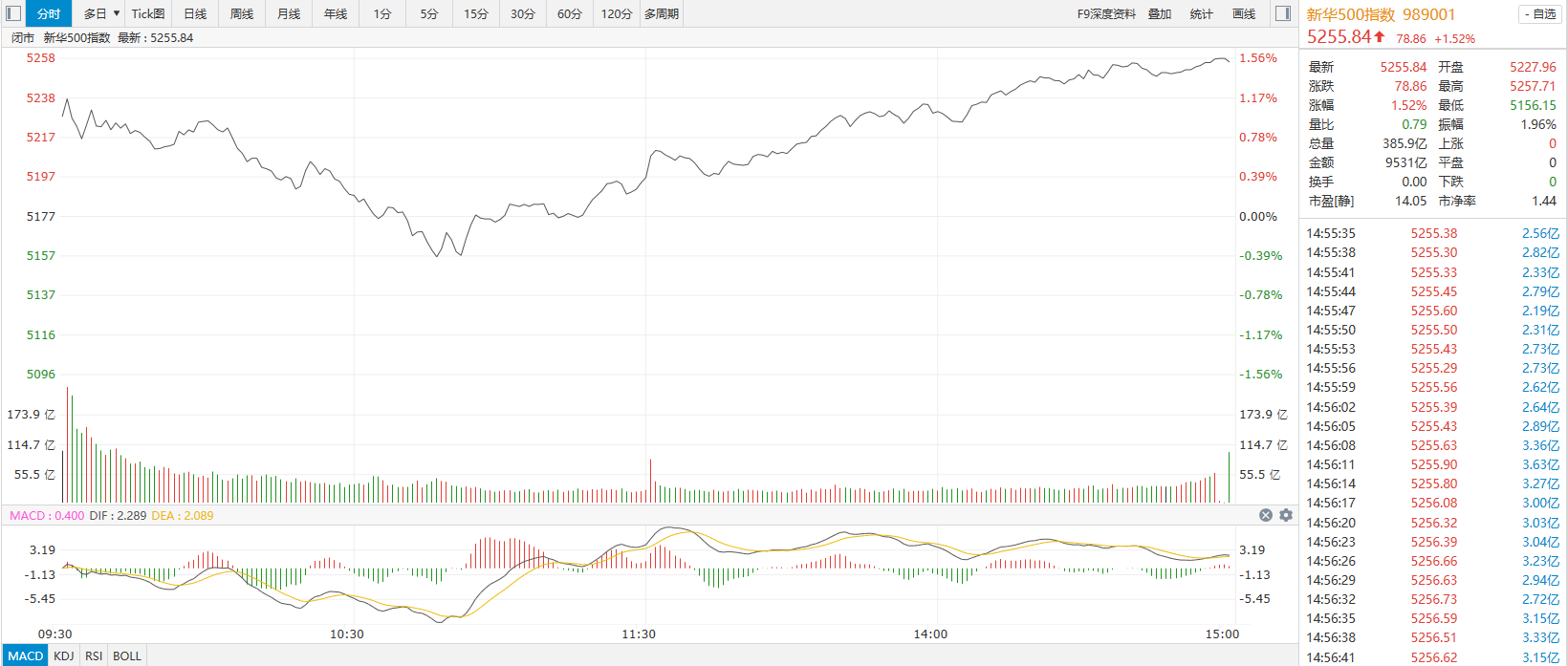
【新华500】新华500指数(989001)3日涨1.52%
Xin Hua Cai Jing· 2026-02-03 07:37
Group 1 - The Xinhua 500 Index (989001) closed at 5255.84 points on February 3, with an increase of 1.52% [1] - During the trading session on February 3, the index opened high but experienced a pullback, briefly turning negative before rising significantly in the afternoon [2] - The index reached a high of 5257.71 points and a low of 5156.15 points during the day, with a total trading volume of 953.1 billion yuan, which was a decrease compared to the previous trading day [2] Group 2 - Notable gainers among the constituent stocks included Jingcheng Machinery Electric, JinkoSolar, Maiwei Co., and Xingyu Co. [2] - Conversely, stocks such as Huatai Securities, Small Commodity City, Bank of China, and Wentai Technology experienced significant declines [2]
闻泰科技2025年业绩由盈转亏
Jing Ji Guan Cha Wang· 2026-02-03 07:27
据经济观察报-经济观察网 2026年1月30日晚间,闻泰科技(维权)发布2025年业绩预告。2025年前三 季度,闻泰科技尚盈利15.13亿元,但预计全年归母净利润亏损90亿元 - 135亿元,短短数月业绩由盈转 亏,波动幅度巨大。2025年第四季度,公司子公司安世半导体及安世半导体控股收到荷兰相关部门的部 长令和法院裁决,虽部长令被暂停,但法院裁决生效,公司对安世的控制权仍受限,预计确认较大金额 的投资、资产减值损失,对年度业绩造成较大影响。 ...
光大期货金融期货日报-20260203
Guang Da Qi Huo· 2026-02-03 03:11
Report Industry Investment Rating - The investment rating for stock index futures is "volatile" [1] - The investment rating for treasury bond futures is "relatively strong" [1] Core View - The A-share market is experiencing high valuations in hot sectors, with the dynamic PE of the CSI 500 index exceeding twice the standard deviation of the past 5 years. The "stock-bond seesaw effect" is evident, and regulatory authorities are emphasizing market stability. High-valuation sectors may face capital outflow pressure, and volatility is expected to increase around the Spring Festival [1] - Treasury bond futures show mixed performance, and the bond market lacks strong upward momentum under the backdrop of continuous policy support. Interest rates are expected to remain range-bound [1][2] Summary by Directory Research View - **Stock Index Futures**: The market adjusted with all three major indices down over 2%, and nearly 4,700 stocks falling. High valuations, regulatory emphasis on stability, and measures to cool the market may lead to capital outflows from high-valuation sectors and increased volatility [1] - **Treasury Bond Futures**: The 30-year contract rose 0.18%, while the 10-year and 5-year contracts declined slightly. The central bank conducted 750 billion yuan of 7-day reverse repurchases, resulting in a net withdrawal of 755 billion yuan. The bond market lacks strong upward momentum, and interest rates are range-bound [1][2] Price Changes - **Stock Index Futures**: IH, IF, IC, and IM all declined, with IC dropping 5.49% and IM down 4.71% from January 30 to February 2, 2026 [3] - **Stock Indices**: All major indices, including the Shanghai Composite 50, CSI 300, CSI 500, and CSI 1000, decreased, with the CSI 500 falling 3.98% [3] - **Treasury Bond Futures**: TS remained flat, TF and T declined slightly, and TL rose 0.13% [3] Market News - **Overall Trend**: The market adjusted throughout the day, with all three major indices down over 2%. Nearly 4,700 stocks fell, and trading volume reached 2.61 trillion yuan [1][5] - **Industry Sectors**: Only the power grid equipment and brewing sectors rose, while precious metals, non-ferrous metals, oil and gas, and semiconductor chips led the decline [5] - **Hot Concepts**: Power grid equipment stocks and liquor stocks rose, while precious metals, oil and gas, and semiconductor chip stocks declined significantly [5] Chart Analysis - **Stock Index Futures**: Charts show the historical price trends and basis trends of IH, IF, IC, and IM [7][8][9] - **Treasury Bond Futures**: Charts display the price trends, basis trends, inter - period spreads, and cross - variety spreads of treasury bond futures, as well as the yields of treasury bonds and the capital interest rates [14][15][16] - **Exchange Rates**: Charts present the exchange rate trends between the US dollar, euro, pound, yen, and the RMB, including spot and forward exchange rates [22][23][24] Member Introduction - Zhu Jintao, a master's degree holder from Jilin University, serves as the director of macro - financial research at Everbright Futures Research Institute [29] - Wang Dongying, an index analyst with a master's degree from Columbia University, focuses on stock index futures, including macro fundamentals, key industry sectors, index financial reports, and market capital tracking [29]
重生之我在大A开超市...
Xin Lang Cai Jing· 2026-02-02 12:52
Group 1 - The market witnessed significant volatility in February, with a notable decline in gold and silver prices, attributed to market reactions to potential changes in U.S. Federal Reserve leadership and monetary policy [8][6]. - Gold prices dropped from 5600 to 4682, while silver experienced a nearly 40% intraday pullback, indicating severe market stress and liquidity issues [6][8]. - The decline in gold is not fundamentally driven but rather a result of liquidity squeeze and increased implied volatility, with the market reacting to Trump's nomination of a Fed chair with a history of advocating for interest rate cuts and balance sheet reductions [8][10]. Group 2 - The telecommunications sector is facing increased tax burdens as the VAT rate for telecom services is set to rise from 6% to 9%, which will impact revenue and profit margins for major operators [14][15]. - Major telecom companies, including China Unicom, China Telecom, and China Mobile, experienced significant stock price declines following the announcement, with China Unicom's H-shares dropping over 11% at one point [14][15]. - The adjustment in tax policy may lead to a shift in industry dynamics, potentially reducing inefficient competition and encouraging a focus on technological innovation and high-quality services [14]. Group 3 - The real estate sector is under severe pressure, exemplified by Vanke's projected net loss of 82 billion, marking a 65.7% increase in losses compared to the previous year, which is expected to be the largest annual loss in A-share history [12][13]. - This situation reflects the broader challenges facing the real estate industry, with recovery dependent on both individual company strategies and overall market stabilization [12][13]. Group 4 - The liquor industry, particularly high-end brands like Moutai, is showing signs of recovery with price stabilization and potential for valuation improvement, despite ongoing challenges [17][18]. - The liquor sector is characterized by low expectations, low valuations, and low holdings, with public fund holdings in liquor stocks at a historical low of 3.93% [17][18]. - Analysts suggest that 2026 may present a bottoming opportunity for the industry, with expectations of a recovery phase beginning to emerge [18][19].