Blue Owl

Search documents
Ares Management Corporation (ARES) Presents at Citizens Financial Services Conference 2025 Transcript
Seeking Alpha· 2025-11-18 18:58
Industry Overview - The alternative asset management industry has shown incredible growth and strong investment performance over the past decade [2] - The industry is characterized by resilience, even in the face of double-digit drawdowns in stock prices [2] Key Players - Marc Lipschultz, co-CEO of Blue Owl, has a background in founding the legacy credit business at Blue Owl and previously worked at KKR [3] - Kip DeVeer, Co-President of Ares, has extensive experience, having previously run ARCC and served as Head of Credit [3]



Ares Management (NYSE:ARES) 2025 Conference Transcript
2025-11-18 18:02
Summary of Ares Management and Blue Owl Conference Call Industry Overview - The conference focused on the alternative asset management industry, particularly private credit and direct lending, highlighting its resilience and growth potential [1][2][3] Key Companies Discussed - **Ares Management (NYSE: ARES)** - Co-President: Kipp deVeer - **Blue Owl** - Co-CEO: Mark Lipschultz Core Insights and Arguments Ares Management - Ares has five credit businesses: two direct lending businesses in the U.S. and Europe, an asset-based finance business, a loan and high-yield business, and an opportunistic credit business [3][4] - The firm has experienced significant growth, with a focus on strategic initiatives and operational improvements [6][7] - Ares emphasizes the importance of scale in credit, allowing for better origination and underwriting capabilities [20][21] - The firm operates a capital-light, fee-driven business model, focusing on high cash flow and high dividend returns [30][32] Blue Owl - Blue Owl has evolved from a direct lending business to include asset-based lending and digital infrastructure, maintaining a focus on capital solutions and downside protection [10][11][12] - The firm has achieved substantial growth, with its real assets business growing from $12.5 billion to $45 billion in assets [13] - Blue Owl's strategy emphasizes serving both individual and institutional investors equally [12] Important Trends and Observations - The alternative asset management industry has seen a shift towards capital-light, fee-driven models, which are becoming more prevalent among firms like Ares and Blue Owl [28][29] - Volatility in the market is viewed positively, as it allows firms to deploy capital into higher-quality companies and better spreads [33][34][36] - The firms have developed expertise in managing assets during volatile markets, which has historically led to accelerated growth [34][35] Risk Management and Portfolio Diversification - Ares and Blue Owl maintain diversified portfolios with low leverage, which helps mitigate risks during economic downturns [53][54][56] - The average position size in Ares' portfolio is sub-20 basis points, providing a significant equity cushion [53] - The firms emphasize the importance of maintaining high credit standards and rigorous underwriting processes to ensure portfolio durability [44][45] Software Lending and AI Impact - The software lending sector is highlighted as a high-performing area within the portfolios, with low default rates and strong performance metrics [81][82] - The firms are cautious about the risks associated with AI but believe that their selected software companies have strong fundamentals and market positions [85][90] Conclusion - Both Ares and Blue Owl are positioned well within the alternative asset management industry, leveraging their scale, diversified portfolios, and strategic focus on capital-light models to navigate market volatility and capitalize on growth opportunities [62][63][64]
科技股、币圈、黄金“三杀”,美股跌破关键支撑位,美国市场遭遇“全面抛售”
华尔街见闻· 2025-11-18 00:45
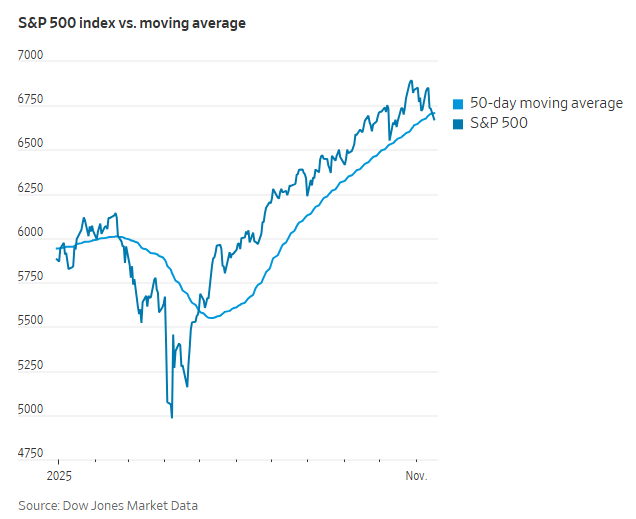
Core Viewpoint - A significant sell-off has swept through the U.S. financial markets, affecting nearly all asset classes, driven by concerns over the sustainability of the AI boom and economic outlook [1][2]. Market Performance - Major stock indices, including the S&P 500 and Nasdaq, closed below their 50-day moving averages for the first time in 138 trading days, breaking the longest consecutive rise since May [2][3]. - The Dow Jones Industrial Average experienced its worst three-day performance since April, closing down 1.2% or 557 points [3]. - The S&P 500 index fell below the critical level of 6725 points, raising concerns of a potential 10% market correction [13][16]. Sector Analysis - Technology stocks were heavily impacted, with most of the "Big Tech" companies, including Nvidia and Meta, seeing declines. Despite Berkshire Hathaway increasing its stake in Alphabet, it did not uplift the overall sector sentiment [12]. - The "most shorted stocks" index has dropped to a two-month low, indicating waning confidence in previously popular stocks [15]. Credit Market Concerns - The widening credit spreads for investment-grade and high-yield corporate bonds reflect increasing investor concerns over default risks [19]. - Amazon's $15 billion bond issuance faced higher risk premiums despite strong demand, signaling caution in the credit market [21]. - Credit default swap spreads for AI-related companies, including Oracle and CoreWeave, have widened, indicating rising credit concerns [22][24]. Cryptocurrency and Gold Market - Bitcoin's price fell below $92,000, erasing its gains for the year and forming a "death cross" technical pattern [8][26]. - Gold prices dropped to around $4,000 per ounce, losing its status as a safe-haven asset, with silver also declining below $50 [6][27]. Macroeconomic Environment - The current market pessimism is rooted in high uncertainty regarding macroeconomic conditions and monetary policy, with the Federal Reserve's path remaining unclear [31][32]. - Concerns over the private credit market have emerged, with warnings about potential "junk loans" reminiscent of the pre-2008 financial crisis [35].



科技股、币圈、黄金“三杀”,美股跌破关键支撑位,美国市场遭遇“全面抛售”
美股IPO· 2025-11-18 00:34
Market Overview - The S&P 500 index has fallen below the critical support level of 6725 points, indicating a potential risk of a 10% correction [15] - The Nasdaq and S&P 500 indices have both closed below their 50-day moving averages for the first time in 138 trading days, breaking the longest consecutive rising streak since May [3][10] - The Dow Jones Industrial Average experienced its worst three-day performance since April, closing down 1.2% or 557 points [3] Asset Performance - Gold futures have dropped to $4068.30 per ounce, with spot gold prices nearing the $4000 level [5][29] - Bitcoin has plummeted below $92,000, reversing its year-to-date gains and forming a "death cross" pattern [7][27] - The volatility index (VIX) has surged to its highest level since April, reflecting increasing investor anxiety [7] Technology Sector Impact - The technology sector has been particularly hard hit, with major tech stocks like Nvidia, Meta, and Amazon experiencing declines [12] - Despite Berkshire Hathaway increasing its stake in Alphabet, the overall sentiment in the tech sector remains weak, especially after Berkshire reduced its holdings in Apple [12] - The index tracking large tech stocks has reached its lowest closing point in nearly a month [13] Credit Market Concerns - The widening credit spreads for investment-grade and high-yield corporate bonds indicate growing investor concerns about default risks [20] - Amazon's $15 billion bond issuance faced higher pricing spreads than existing bonds, suggesting increased risk premiums demanded by investors [22] - Concerns about credit quality are spreading among AI-related companies, with rising credit default swap (CDS) spreads for firms like Oracle and CoreWeave [23][25] Macroeconomic Uncertainty - The market is facing heightened uncertainty regarding macroeconomic conditions and monetary policy, with traders reducing bets on a December rate cut by the Federal Reserve [31] - Mixed economic data, including a decline in non-residential construction spending and unexpected increases in overall construction spending, complicate the outlook for Fed policy [31] - Concerns about the private credit market have emerged, with warnings about potential "junk loans" reminiscent of the 2008 financial crisis [35]

科技股、币圈、黄金“三杀”,美股跌破关键支撑位,美国市场遭遇“全面抛售”
Hua Er Jie Jian Wen· 2025-11-18 00:21
Market Overview - A significant sell-off swept through the U.S. financial markets on November 17, affecting nearly all asset classes, including tech stocks, cryptocurrencies, and gold, amid growing concerns over the sustainability of the AI boom and economic outlook [1][2] - The S&P 500 and Nasdaq Composite indices closed below their 50-day moving averages for the first time in 138 trading days, breaking the longest consecutive rise since May [1][5] - The Dow Jones Industrial Average experienced its worst three-day performance since April, closing down 1.2% or 557 points [1] Technology Sector Impact - The tech sector was particularly hard hit, with major stocks like Nvidia, Meta, and Amazon declining, despite Berkshire Hathaway increasing its stake in Alphabet, which saw a 3.1% rise [7] - The index tracking large tech stocks fell to its lowest closing point in nearly a month, indicating a weakening market sentiment [8][10] Credit Market Concerns - The sell-off in equities coincided with increasing pressure in the credit market, as credit spreads for investment-grade and high-yield corporate bonds widened, indicating rising concerns over corporate default risks [15][17] - Amazon's $15 billion bond issuance faced scrutiny, with the final pricing reflecting higher risk premiums, highlighting investor caution regarding tech giants' heavy borrowing for AI infrastructure [17][18] Cryptocurrency and Gold Performance - The cryptocurrency market was also severely impacted, with Bitcoin dropping below $92,000, erasing its gains for the year and forming a "death cross" technical pattern [3][22] - Gold prices fell to around $4,000 per ounce, losing its status as a safe-haven asset, while silver also dropped below the critical $50 mark [1][27] Economic Indicators and Investor Sentiment - Investor sentiment is clouded by macroeconomic uncertainties, with the Federal Reserve's policy path remaining unclear, leading to reduced expectations for a rate cut in December [26][30] - Mixed economic data, including a decline in non-residential construction spending and better-than-expected manufacturing surveys, have contributed to the cautious market outlook [28]
X @Bloomberg
Bloomberg· 2025-11-17 22:22
Blue Owl’s shares have fallen to their lowest level since December 2023, after the alternative asset manager restricted investors from redeeming capital from one of its oldest private credit funds https://t.co/VSGtWfvrpr ...
AI烧钱烧到“藏债”?巨头拉华尔街搞暗操作,万亿缺口快兜不住了
Sou Hu Cai Jing· 2025-11-16 13:49
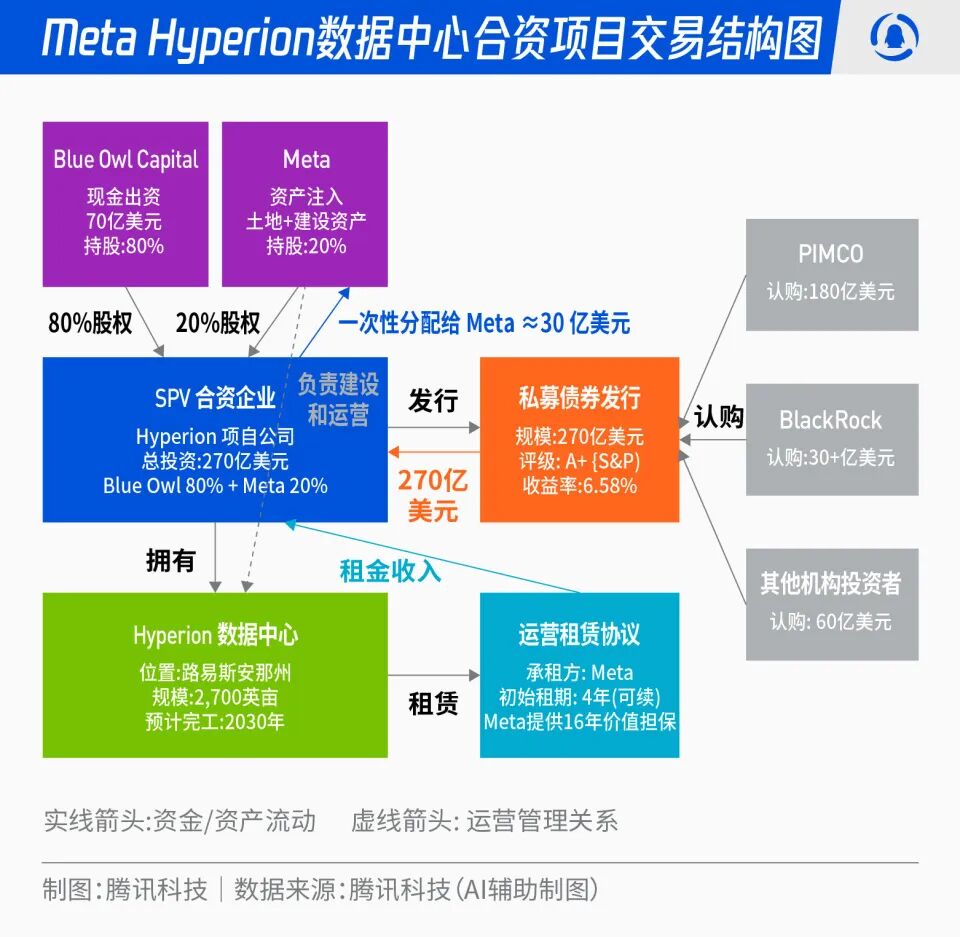
Core Insights - The AI industry is facing significant financial challenges despite its perceived success, with major companies like Meta, OpenAI, and xAI resorting to complex financing strategies to manage their substantial debts [1][20]. Financing Strategies - Meta's financing strategy involved a partnership with Blue Owl, where Meta contributed $13 billion for a 20% stake while Blue Owl invested $30 billion for 80%, leading to a $270 billion bond issuance that Meta does not directly account for on its balance sheet [3][5]. - OpenAI's Stargate data center project, in collaboration with Oracle and SoftBank, relies on a $380 billion bank loan, with ongoing concerns about the remaining $50 billion in loans that have yet to be sold [5][7]. - xAI's financing has escalated to $220 billion, with increased debt interest rates reflecting rising risks associated with their chip purchases [9][10]. Market Risks - The AI-related debt levels are unprecedented, with a significant increase in the scale of debt compared to previous credit cycles, raising concerns about the sustainability of these financial structures [12][18]. - The rapid evolution of AI technology poses a risk that current assets may depreciate quickly, potentially leading to bad debts if the market shifts [14][20]. Funding Gaps - The projected funding requirement for AI data centers has risen from $5 trillion to $5.2 trillion, with the funding gap expanding from $1.4 trillion to $1.6 trillion, indicating a critical financial shortfall [16][18]. - Private credit institutions have become more selective, reducing their lending to AI projects by 30% and demanding higher collateral, reflecting a cautious approach to financing in the sector [16][18]. Conclusion - The AI sector's reliance on complex financing and off-balance-sheet strategies may not be sustainable in the long term, as the industry must focus on genuine technological advancements and sustainable business models rather than temporary financial maneuvers [20].
Do You Believe in Upside Potential of KKR (KKR)?
Yahoo Finance· 2025-11-10 13:46
Core Insights - Greenhaven Road Capital reported a third-quarter 2025 return of approximately -9%, with year-to-date returns also at -9% [1] - The fund's performance was negatively impacted by a lack of direct investment in AI, no overlap with major indices like the S&P 500 and Russell 2000, and insufficient holdings in small, high-growth, unprofitable companies that have benefited from the AI landscape [1] Company Analysis: KKR & Co. Inc. - KKR & Co. Inc. (NYSE: KKR) is highlighted as a holding in Greenhaven Road Capital's portfolio, with a one-month return of 0.73% and a 52-week loss of 22.18% [2] - As of November 7, 2025, KKR's stock closed at $121.32 per share, with a market capitalization of $112.286 billion [2] - The alternative asset management sector, including KKR, is currently out of favor, with concerns primarily related to traditional private equity and private credit affecting share prices [3]

270亿美元与扎克伯格的财技:花别人的钱,买自己的算力
3 6 Ke· 2025-11-03 11:59
Core Viewpoint - Meta's recent financial report reveals a strong revenue growth of 26% year-over-year, reaching approximately $51.2 billion, but also indicates a significant increase in capital expenditures projected for 2025 and beyond, raising concerns about the return on investment from these expenditures [1][2] Financial Performance - Meta's Q3 revenue was approximately $51.2 billion, marking a historical high with a 26% year-over-year increase [1] - A one-time tax impact of about $15.9 billion resulted in a GAAP EPS of only $1.05, falling short of market expectations [1] Capital Expenditure Plans - Capital expenditures for 2025 have been raised to $70-72 billion, with indications that 2026 will see even higher absolute spending [1] - Investments are primarily directed towards AI infrastructure, cloud spending, and AI talent compensation [1] Financing Structure of the Hyperion Project - The Hyperion data center project involves a total investment of $27 billion, with Blue Owl contributing approximately 80% and Meta 20% [1][5] - The financing is structured through a Special Purpose Vehicle (SPV) that issues $27 billion in A+ rated bonds and $2.5 billion in equity, isolating the financial risks from Meta's balance sheet [5][6] Risk Management and Investor Appeal - Meta retains operational control of the data center while converting capital expenditures into operating expenses, thus alleviating balance sheet pressure [7][8] - The introduction of a Residual Value Guarantee (RVG) mechanism ensures that if the asset's value falls below a certain threshold after 16 years, Meta will cover the difference, providing additional security for bondholders [6][10] Investment Opportunities - The structured financing allows investors to gain exposure to AI infrastructure with predictable cash flows, appealing to long-term capital such as insurance and pension funds [9][10] - The investment structure offers a higher yield compared to traditional bonds, with a risk premium of 225 basis points over U.S. Treasuries due to the unique risks associated with the project [8][9] Industry Implications - The trend towards asset securitization in the AI sector mirrors the real estate investment trust (REIT) model, potentially leading to a new class of investment products termed AI infrastructure-backed securities (AIBS) [13][16] - Successful implementation of this financing model could catalyze a significant expansion in AI infrastructure, driven by financial innovation rather than just capital availability [16]

Blue Owl's co-CEO: Private credit ecosystem is very healthy
Bloomberg Television· 2025-10-31 20:27
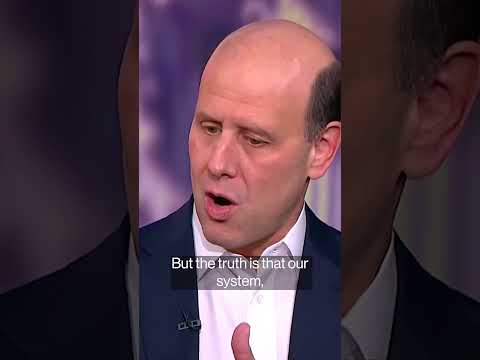
there's almost this kind of this mass hysteria taking hold about about credit in general, private credit in particular, and it's just not anchored in any facts. It's anchored by repeating a few anecdotes uh and then kind of just creating the well, hey, you never know. Um and and some of that is, you know, intentional.Some of it, I'm sure, is quite sincere by people that just don't just aren't sure. But the truth is that our system, the private credits, not just blew out, our our peers are very good at what ...