
华熙生物

Search documents
帮主郑重:国货美妆逆袭!中国登顶全球化妆品消费王座的三大狠招
Sou Hu Cai Jing· 2025-08-03 10:32
Core Insights - The Chinese cosmetics market has surpassed Europe and the US, becoming the largest globally, with total sales expected to exceed 1,073.8 billion yuan in 2024, accounting for 20% of global sales [1][6] - Domestic brands have gained a significant market share, surpassing foreign brands for the first time, capturing 55% of the market [1][6] Group 1: Consumer Demographics - The Z generation (ages 18-35) is responsible for 60% of cosmetics consumption, with 78.9% of young consumers preferring products with Chinese elements [3] - The silver-haired demographic (ages 55+) is also a key consumer group, particularly in anti-aging products, with higher spending than younger consumers [3] - The male cosmetics market is growing at an annual rate of 21.8%, reaching a scale of 30 billion yuan, driven by products focused on oil control and convenience [3] Group 2: Sales Channels - Online sales have revolutionized the cosmetics market, with half of all sales occurring online, and platforms like Douyin and Taobao/Tmall accounting for 50% of this online market [4] - Live streaming and social media platforms like Xiaohongshu are significantly influencing product sales and brand visibility [4] - Domestic brands are successfully leveraging social e-commerce to expand internationally, with examples like Huaxizi entering Southeast Asia [4] Group 3: R&D and Competitive Edge - Domestic brands are increasing their R&D investments, with a ratio of 3.1%, surpassing international giants at 2.3% [5] - Brands like Proya and Winona are innovating with advanced ingredients and medical-grade technologies, enhancing their competitive position [5] - The number of domestic brands with sales exceeding 5 billion yuan is increasing, from 7 to 9, indicating a growing presence in the market [5] Group 4: Market Challenges and Future Outlook - Despite the increase in market share, domestic brands face challenges in brand premium, with average revenues of 4.1 billion yuan, only 73% of that of US brands [5] - The high-end market remains dominated by international brands like Chanel and Lancôme, indicating a need for domestic brands to elevate their positioning [5] - Future strategies should focus on R&D investment exceeding 3% and potential cross-industry acquisitions to enhance market competitiveness [6]


大单频现 人形机器人商业化加速
经济观察报· 2025-08-03 04:23
Core Viewpoint - The humanoid robot industry is transitioning from a phase of technical demonstrations to commercial implementation, marked by significant business contracts and increased financing activities [1][4]. Group 1: Industry Developments - The efficiency of humanoid robots is currently around 40% compared to human workers, with ongoing efforts to improve this metric [2]. - Major contracts have been awarded in the humanoid robot sector, including a procurement project worth 90.51 million yuan by UBTECH and a total of 124 million yuan for a project involving Zhiyuan Robotics and Yushu Technology [3]. - The capital market is witnessing increased activity, with companies like Yushu Technology and Zhiyuan Robotics pursuing IPOs and financing rounds [4][7]. Group 2: Technological Advancements - UBTECH's latest humanoid robot, WalkerS2, features a pioneering hot-swappable battery system that allows for continuous operation, addressing the need for robots to work up to 16 hours a day [6]. - The industry is focusing on real-world applications, with demonstrations of robots performing tasks in various settings, such as factories and service environments [6]. Group 3: Market Trends - The humanoid robot industry is experiencing rapid growth, with estimates of 50% to 100% growth in the first half of the year [7]. - Companies are increasingly looking to integrate capital from various sectors, including cloud computing and automotive, to enhance their operational capabilities and market reach [8]. Group 4: Business Models - The industry is diversifying its business strategies, with some companies adopting platform-based approaches to empower developers and researchers, while others focus on deep specialization in specific verticals [9][12]. - The "robot as a service" (RaaS) model is emerging, allowing customers to rent robotic services instead of purchasing robots outright [11]. Group 5: Challenges and Solutions - Cost remains a significant barrier to widespread adoption, with the need for effective integration of diverse hardware components being a critical challenge [17]. - Data quality and availability are also major hurdles, with companies exploring solutions to gather high-quality, real-world data to improve robot performance [18]. Group 6: Future Outlook - The path to large-scale commercialization of humanoid robots is expected to be a long-term endeavor, requiring patience and ongoing advancements in technology and regulatory frameworks [20].

大单频现 人形机器人商业化加速
Jing Ji Guan Cha Wang· 2025-08-02 07:57
Core Insights - The efficiency of humanoid robots is currently around 40% compared to human workers, with ongoing efforts to improve this metric [2] - The humanoid robot industry is transitioning from a technology showcase phase to a commercialization phase, marked by significant contracts and IPO activities [3][4] - Continuous operation capability is crucial for industrial robots, with advancements like the autonomous battery swap system enabling 24/7 operation [4][5] Industry Developments - Recent contracts include a procurement project worth approximately 90.51 million yuan for robot equipment by UBTECH and a total of 124 million yuan for humanoid robot services by Zhiyuan Robotics and Yushu Technology [3] - The humanoid robot sector is experiencing rapid growth, with an estimated 50% to 100% increase in the first half of the year, and a surge in new product launches [6] - Major companies are exploring diverse business models, including "robot as a service" (RaaS) and platform-based strategies to enhance customer engagement [11][10] Technological Innovations - The latest humanoid robot from UBTECH, WalkerS2, features a pioneering hot-swappable battery system that allows for quick battery changes without human intervention [4] - Companies are focusing on practical applications and customer pain points to drive product development, moving away from merely showcasing technical specifications [14][15] Market Dynamics - The humanoid robot market is characterized by varied strategies, including platform-based approaches and deep vertical integration in specific industries [9][12] - Investment is shifting towards the entire supply chain, with significant capital flowing into both hardware and software components to enhance integration and reduce costs [7][15] Challenges and Future Outlook - High costs and the complexity of integrating diverse components remain significant barriers to widespread adoption of humanoid robots [15] - Data scarcity and the need for high-quality, real-world data are critical challenges that companies are beginning to address through innovative data collection initiatives [16] - The path to large-scale commercialization of humanoid robots is expected to be gradual, requiring advancements in model capabilities, cost reductions, and ethical considerations [17][18]


被前高管“捅刀”,华熙生物陷入“举报门”
3 6 Ke· 2025-08-01 11:07
Core Viewpoint - Huaxi Biological is facing significant challenges from both internal and external sources, including allegations of financial fraud from a former executive, declining sales of key products, and increased competition in the beauty industry [1][3][10]. Internal Challenges - A former core executive of Huaxi Biological has accused the company of financial fraud, claiming to have compiled 450,000 words of internal complaints, although specific details were not disclosed [3][4]. - Huaxi Biological responded by revealing that the accuser had previously been investigated for embezzling 9 million yuan and had written a letter of apology [2][4]. - This incident marks the fourth time in recent years that Huaxi Biological has faced internal accusations, indicating a pattern of internal strife [3][6]. - The company has experienced significant personnel changes, with entire departments being dissolved and key brands like "Kuaidi" suffering from management instability [7][8]. Financial Performance - Huaxi Biological reported a substantial decline in revenue and net profit, with a year-on-year revenue drop of 11.6% and a net profit decrease of 70.59% for 2024 [6][8]. - The company's flagship brands, "Runbaiyan" and "Kuaidi," saw revenue declines of 22.7% and 41.6%, respectively, in 2024 [6][8]. - In the first quarter of the current year, revenue continued to decline by 20.77% year-on-year, indicating ongoing financial pressure [6]. External Competition - Huaxi Biological is facing increased competition from competitors like Juzhi Biological, which specializes in collagen products, while Huaxi's hyaluronic acid products are being labeled as "outdated" by market analysts [10][11]. - The company has publicly criticized these market reports, arguing that they misrepresent the value of hyaluronic acid [10][11]. - There is a growing skepticism regarding the efficacy of both hyaluronic acid and collagen in skincare products, with recent consumer reports questioning the scientific basis for their benefits [13][14]. Strategic Adjustments - In response to internal and external pressures, Huaxi Biological is focusing on restructuring and anti-corruption measures, aiming to stabilize its operations and improve performance [9][15]. - Despite financial challenges, the company has maintained its investment in research and development, with a reported R&D expenditure of 466 million yuan in 2024, which is 8.68% of its revenue [9].


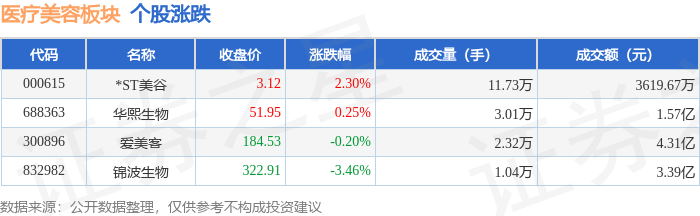
医疗美容板块8月1日涨0.06%,*ST美谷领涨,主力资金净流出1180.44万元
Zheng Xing Xing Ye Ri Bao· 2025-08-01 08:33
证券之星消息,8月1日医疗美容板块较上一交易日上涨0.06%,*ST美谷领涨。当日上证指数报收于 3559.95,下跌0.37%。深证成指报收于10991.32,下跌0.17%。医疗美容板块个股涨跌见下表: | 代码 | 名称 | 收盘价 | 涨跌幅 | 成交量(手) | 成交额(元) | | --- | --- | --- | --- | --- | --- | | 000615 | *ST美谷 | 3.12 | 2.30% | 11.73万 | 3619.67万 | | 688363 | 华熙生物 | 56'15 | 0.25% | 3.01万 | 1.57 Z | | 300896 | 爱美客 | 184.53 | -0.20% | 2.32万 | 4.31亿 | | 832982 | 锦波生物 | 322.91 | -3.46% | 1.04万 | 3.39亿 | 从资金流向上来看,当日医疗美容板块主力资金净流出1180.44万元,游资资金净流入977.47万元,散户 资金净流入202.97万元。医疗美容板块个股资金流向见下表: | 代码 | | | 名称 主力净流入(元) 主力净占比 游资净流入(元 ...


工信部公示,新和成、凯赛生物等首批36家入选
DT新材料· 2025-07-31 16:05
Core Viewpoint - The Ministry of Industry and Information Technology of China has officially announced the first batch of "Biomanufacturing Iconic Products," which includes 36 products from various companies, marking a significant step in technological innovation and industrial upgrading in the biomanufacturing sector [1]. Summary by Relevant Sections Biomanufacturing Iconic Products - The list includes 36 companies such as Beijing Shulang Biotechnology, Micro Yuan Synthesis, and Qilu Pharmaceutical, showcasing the diversity and innovation within the biomanufacturing industry [1]. - The products range from biopharmaceuticals to food additives, indicating a broad application of biomanufacturing technologies across different sectors [1]. Notable Products - Ethanol Clostridium protein produced by Beijing Shulang is a feed protein supplement derived from microbial fermentation using industrial waste gases [4]. - Alotose, produced by Micro Yuan Synthesis, is a low-calorie sweetener that enhances production efficiency through microbial fermentation [4]. - Polyhydroxyalkanoate (PHA) from Beijing Microstructure is a biodegradable material that can replace plastics, reducing environmental pollution [4]. - CAR-T cell therapy product, Nakiolun, developed by Huyuan Biotechnology, shows significant advancements in cancer treatment [4]. - Various other products include natural extracts, amino acids, and vaccines, highlighting the innovative approaches in biomanufacturing [4][5][6][7]. Industry Significance - The announcement reflects the government's commitment to promoting the biomanufacturing industry, which is crucial for technological advancement and economic growth [1]. - The diversity of products indicates a growing trend towards sustainable and environmentally friendly manufacturing practices within the industry [1].



拆解美团医美供应链
Hua Er Jie Jian Wen· 2025-07-31 14:18
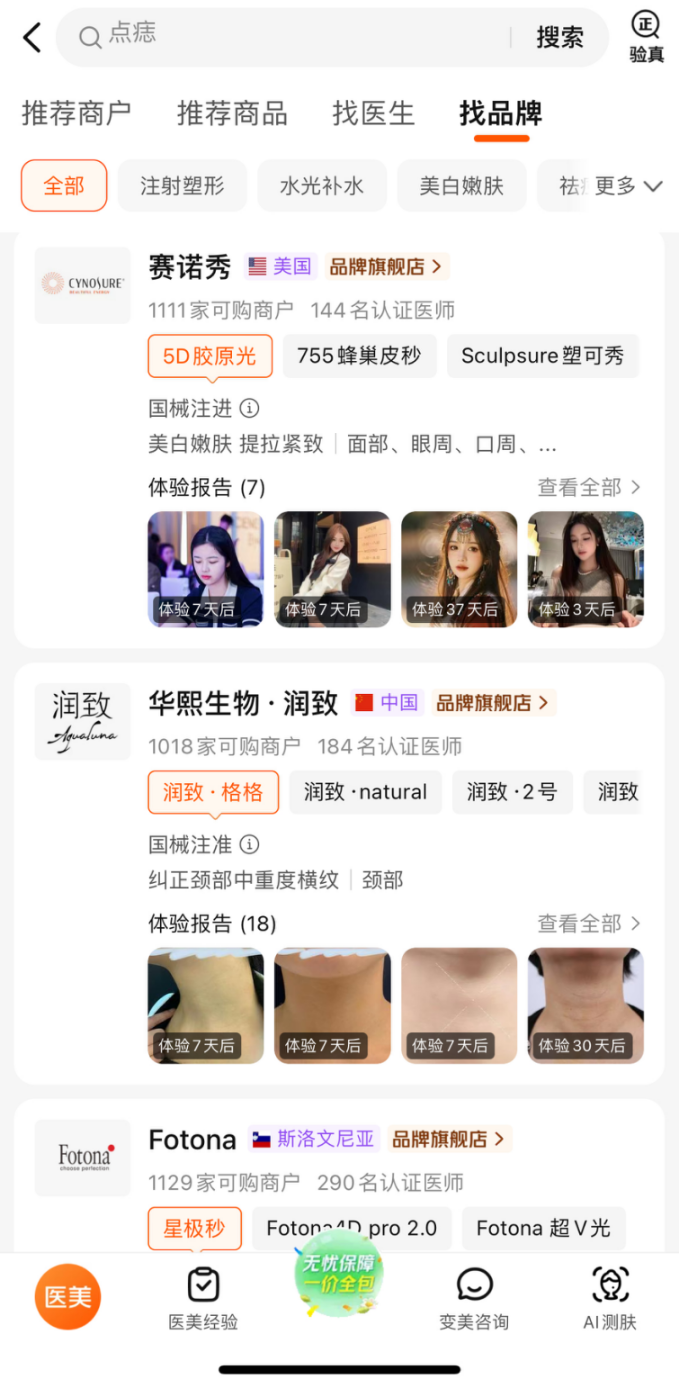
Core Insights - The collaboration between Jinbo Biological and Meituan marks a significant shift from previous conflicts, indicating a reconciliation in the medical aesthetics market [1][12] - The medical aesthetics supply chain is undergoing changes, with more upstream material suppliers partnering with Meituan to enhance market presence and consumer access [2][15] Industry Dynamics - The medical aesthetics supply chain and distribution channels are being upgraded, allowing upstream suppliers to engage more directly with consumers through platforms like Meituan [3][4] - Previously, upstream suppliers had limited interaction with consumers, primarily selling to downstream medical institutions. Now, they are leveraging Meituan to enhance visibility and brand recognition [4][13] Market Changes - Meituan is evolving into a procurement agent for many small and medium-sized medical institutions, helping balance product authenticity and cost factors [5][17] - The collaboration has led to a new equilibrium among platforms, consumers, upstream suppliers, and downstream institutions, although challenges remain due to competitive pricing pressures [6][19] Historical Context - The conflict between Jinbo Biological and Meituan originated from concerns over unauthorized product listings and pricing strategies, which were exacerbated by Meituan's subsidy programs [9][10] - Following a strategic partnership signed in July, Jinbo Biological's products are now featured on Meituan's subsidy platform, although this has led to a decrease in retail prices [12][11] Competitive Landscape - The medical aesthetics market is highly competitive, with institutions needing to attract customers through low pricing, which can pressure upstream suppliers [7][19] - Meituan's model allows for better pricing strategies for small institutions, which previously struggled with procurement costs and authenticity issues [18][17] Future Outlook - The sustainability of the current balance among stakeholders in the medical aesthetics market remains uncertain, warranting ongoing observation [8][19] - Meituan's ability to maintain its competitive edge while managing pricing pressures will be crucial for its long-term success in the medical aesthetics sector [19][20]

36项!工信部公示首批生物制造标志性产品名单,有哪些企业?
合成生物学与绿色生物制造· 2025-07-31 13:10
Core Viewpoint - The Ministry of Industry and Information Technology of China has officially announced the "First Batch of Iconic Products in Biological Manufacturing," which includes 36 products, marking a significant step in technological innovation and industrial upgrading in the biological manufacturing sector [1][3]. Summary by Sections Iconic Products List - The list includes 36 companies such as: - Shoulang Biotechnology - Micro元合成 - KaiLaiYing - Qinhongdao Huaheng Biotechnology - Qilu Pharmaceutical - JinSai Pharmaceutical - And others [3][5]. Product Details - Each product listed has specific applications and innovations: - **Ethanol Clostridium Protein**: Produced from industrial waste gases, beneficial for animal feed [5]. - **Alotose**: A low-calorie sweetener produced through microbial fermentation, enhancing production efficiency [5]. - **Nakiol Injection**: A CAR-T cell therapy for treating acute lymphoblastic leukemia, showing improved safety and efficacy [5]. - **Vitamin B**: Produced via fermentation, offering higher efficiency compared to traditional extraction methods [7]. - **Recombinant Human Serum Albumin**: Produced using rice cell technology, meeting clinical needs effectively [9]. Industry Significance - The announcement reflects the government's strong emphasis on the development of the biological manufacturing industry, showcasing the potential for innovation and growth in this sector [1][3]. Upcoming Events - The "SynBioCon 2025" conference will be held from August 20-22, focusing on AI in biological manufacturing, green chemistry, and future food and agriculture [11][12].

美容护理CFO薪酬PK: 贝泰妮CFO王龙年薪282万元 公司净利润连续两年大幅下滑、多项营运能力指标下滑
Xin Lang Zheng Quan· 2025-07-31 11:04
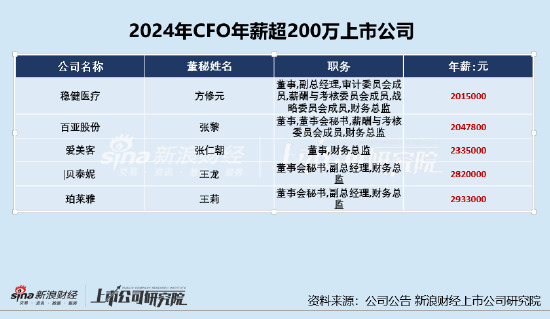
Core Insights - The total salary scale for CFOs in A-share listed companies reached 4.27 billion yuan in 2024, with an average annual salary of 814,800 yuan [1] - The highest annual salary for a CFO in the beauty and skincare industry was 2.93 million yuan, paid to Wang Li of Proya, while the lowest was 342,600 yuan, paid to the former CFO of Two Faces Needle [1][2] - The beauty and skincare industry CFOs' average salary was reported at 770,000 yuan, with nearly 12 companies having CFO salaries exceeding 1 million yuan [2] Salary Breakdown - The CFOs of the following companies received salaries exceeding 2 million yuan: - Fang Xiuyuan from Sturdy Medical: 2.015 million yuan - Zhang Li from Baiya: 2.048 million yuan - Zhang Renzhao from Aimeike: 2.335 million yuan - Wang Long from Beitaini: 2.82 million yuan - Wang Li from Proya: 2.933 million yuan [2][3] Company Performance Indicators - Beitaini experienced revenue growth without profit increase, with multiple profitability indicators declining, including sales gross margin and return on equity [4] - Sturdy Medical showed an increase in accounts receivable growth rate exceeding revenue growth rate, with a continuous rise in the accounts receivable to revenue ratio and a decline in sales gross margin [3][4] - Aimeike's revenue and net profit growth rates significantly slowed down, with several profitability indicators also declining [3][4] Age Demographics of CFOs - The youngest CFOs in the industry are Zou Fei from Shuiyang and Wang Yucong from Qingsong, both aged 35, while the oldest is Dong Ye from Zhongshun Jierou, aged 61 [4]
美容护理CFO薪酬PK: 爱美客CFO张仁朝年薪233.5万元 公司多项盈利能力指标下滑
Xin Lang Zheng Quan· 2025-07-31 10:57
Core Insights - The total salary scale for CFOs in A-share listed companies reached 4.27 billion yuan in 2024, with an average annual salary of 814,800 yuan [1] - The highest annual salary for a CFO in the beauty and skincare industry was 2.93 million yuan, paid to Wang Li of Proya [2][3] - The beauty and skincare industry CFOs' average salary was reported at 770,000 yuan, with nearly 12 companies having CFO salaries exceeding 1 million yuan [2] Salary Breakdown - The top five CFO salaries in the beauty and skincare sector are as follows: - Proya: 2.93 million yuan - Beitaini: 2.82 million yuan - Aimeike: 2.34 million yuan - Baiya: 2.04 million yuan - Sturdy Medical: 2.02 million yuan [2][3] - Companies with CFO salaries exceeding 2 million yuan include Sturdy Medical, Baiya, Aimeike, Beitaini, and Proya [2] Industry Performance - Aimeike experienced a significant slowdown in revenue and net profit growth, with declines in multiple profitability indicators, including sales gross margin and return on equity [1][3] - Beitaini also reported a decline in profitability metrics, with decreasing sales gross margin and return on equity, alongside a drop in operational efficiency indicators [4] - Sturdy Medical's accounts receivable growth outpaced revenue growth, leading to an increase in the accounts receivable to revenue ratio and a decline in sales gross margin [3]