
WalkerS2

Search documents
兴业证券:2026年值得关注的十大产业趋势
智通财经网· 2026-02-18 03:45
Group 1: AI Applications - The global AI competition is intensifying, with model iterations driving deeper application scenarios, and the focus is on whether significant capital expenditures by tech giants can lead to commercial applications [2][3] - The competitive landscape for AI applications is shifting from dominance by OpenAI to a more multipolar environment, with major players like Google and Meta integrating AI into their ecosystems [3] - In China, AI applications are experiencing a breakthrough, with major tech companies accelerating model iterations and application deployments, leading to a transformation from model landing to scenario monetization [5] Group 2: AI Computing Power - Overseas, major cloud service providers are maintaining high capital expenditures, with a projected increase of 67% in 2026, reflecting a strong demand for AI computing power [7][8] - In China, leading tech companies are increasing capital expenditures and accelerating the iteration of domestic large models, promoting the performance of domestic chips amid tightening supply from foreign sources [9] Group 3: Storage - The demand for storage is entering a new super cycle driven by AI training and inference needs, with AI servers consuming significantly more memory than traditional servers [11][16] - Supply constraints are expected to persist, leading to continued high prices for storage components, as major manufacturers shift production focus to advanced memory types [16] Group 4: Commercial Aerospace - Commercial aerospace is becoming a key battleground in US-China competition, with significant policy support and funding initiatives in both countries to accelerate industry development [19][21] - Domestic companies are achieving breakthroughs in satellite mass production and reusable rocket technologies, transitioning from technical validation to commercialization [22] Group 5: Humanoid Robots - Major overseas companies are ramping up production plans for humanoid robots, benefiting domestic component suppliers, with Tesla aiming for a production capacity of 500,000 units by 2026 [27][30] - Chinese manufacturers are leading in humanoid robot shipments, with significant contracts and production milestones achieved in 2025 [30] Group 6: Intelligent Driving - Domestic policies are expected to facilitate the commercialization of L3 autonomous driving in 2026, with several manufacturers preparing to launch L3 models [32][33] - Tesla's Full Self-Driving (FSD) technology is setting the direction for autonomous driving, with significant advancements in AI capabilities [35] Group 7: Energy Storage - The expansion of AI computing power in North America is driving electricity demand, with domestic power equipment expected to accelerate exports [37][40] - China's "14th Five-Year Plan" includes significant investments in the power grid and energy storage, creating a favorable environment for industry growth [40][43] Group 8: Chemicals - The chemical industry is undergoing a transformation driven by policies aimed at supply-side reform, with a focus on optimizing supply structures and reducing excess capacity [44][47] - New economic sectors are boosting demand for chemical materials, particularly in AI, renewable energy, and robotics, leading to a favorable outlook for new materials [47][48]


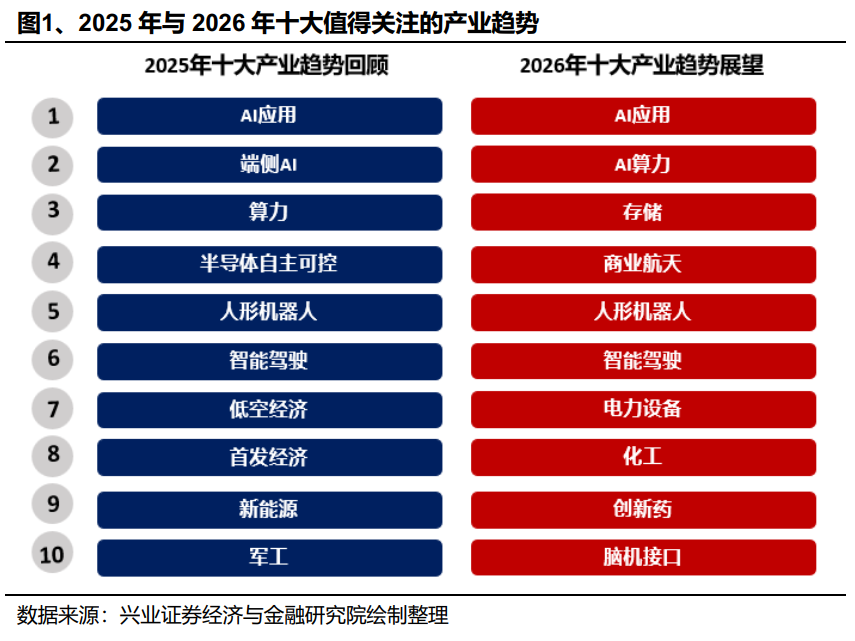
【兴证策略】2026年值得关注的十大产业趋势
Xin Lang Cai Jing· 2026-02-18 02:55
Group 1: AI Applications - The global AI competition is intensifying, with significant capital expenditures from tech giants expected to lead to deeper application scenarios in 2026 [1][2] - The competitive landscape for AI applications is shifting from a dominance of OpenAI to a more multipolar environment, with companies like Google and Meta making significant advancements [2] - Domestic AI applications are reaching a tipping point, with major tech companies accelerating their investments and model iterations, leading to a resonance between model development and application penetration [5] Group 2: AI Computing Power - Major cloud service providers in North America are projected to increase their capital expenditures significantly, with a combined guidance of approximately $598.7 billion for 2026, reflecting a 67% year-on-year growth [7][8] - Domestic companies are also ramping up capital expenditures and accelerating the iteration of local models, driven by the need for domestic chip performance improvements [7][8] Group 3: Storage - The demand for storage is entering a new super cycle driven by AI training and inference needs, with AI servers consuming 8-10 times more DRAM and NAND than traditional servers [12][13] - The supply-demand imbalance in the storage sector is expected to persist, with global storage prices rising over 40% in Q4 2025 [13][17] Group 4: Commercial Aerospace - Commercial aerospace is becoming a key battleground in US-China competition, with significant policy support and funding initiatives in place to accelerate the industry [20][21] - Domestic companies are achieving breakthroughs in satellite mass production and reusable rocket technologies, transitioning from technology validation to commercial scale [23] Group 5: Humanoid Robots - Major overseas companies like Tesla and FigureAI are ramping up production plans for humanoid robots, which is expected to benefit domestic component suppliers [25][28] - Chinese manufacturers are leading in humanoid robot shipments, with significant orders and production milestones achieved in 2025 [29] Group 6: Intelligent Driving - The rollout of policies in China is expected to facilitate the commercialization of L3 autonomous driving in 2026, with several manufacturers already launching L3 models [32][33] - Tesla's Full Self-Driving (FSD) technology continues to lead the market, with ongoing enhancements expected to drive the commercialization of Robotaxi services [32] Group 7: Energy Storage - The aging power grid in North America is creating opportunities for domestic power equipment exports, particularly in gas turbines and high-voltage equipment [36][37] - China's "14th Five-Year Plan" includes significant investments in the power grid and energy storage, with a focus on high-value areas [37] Group 8: Chemicals - The chemical industry is undergoing a transformation driven by supply-side reforms, with a focus on optimizing supply structures and reducing excess capacity [41][43] - New economic sectors are driving demand for chemical materials, particularly in AI, renewable energy, and robotics, which are expected to sustain high demand in 2026 [43][46]
量产在即!特斯拉官宣一季度推出第三代Optimus机器人,马斯克喊话:中国是最大竞争对手【附人形机器人行业市场分析】
Sou Hu Cai Jing· 2026-02-02 03:42
Group 1 - Tesla released its Q4 and full-year 2025 financial report, highlighting pressure on core financial metrics while announcing key production milestones for the humanoid robot Optimus Gen3 [2] - The production line at the Fremont factory is expected to start in late 2026, with a long-term goal of producing 1 million units annually. The plan includes producing 50,000 to 100,000 units in 2026, with public sales starting in 2027 [2] - Elon Musk identified China as Tesla's biggest competitor in the humanoid robot sector, emphasizing China's strong capabilities in AI and manufacturing [2][3] Group 2 - Musk stated that Tesla is currently the only company capable of addressing three core challenges in humanoid robot development: replicating human hand dexterity, achieving real-world AI capabilities, and completing large-scale production [3] - The upgraded production capacity plan for Optimus Gen3 is expected to catalyze the A-share humanoid robot supply chain, increasing demand for upstream core components such as batteries, sensors, and chips [3] - The recognition of Chinese manufacturers' technological capabilities by Musk is likely to boost market confidence and attract more capital and resources into the humanoid robot sector [3] Group 3 - China has placed significant emphasis on the humanoid robot industry, with the release of the "Guiding Opinions on the Innovative Development of Humanoid Robots" in October 2023, positioning humanoid robots as a disruptive product with potential global impact [4] - The humanoid robot sector is expected to enter a production boom by 2025, with companies like UBTECH and Yushun achieving significant order volumes and production capacities [4] - The industry is transitioning from the research phase to commercialization, as evidenced by the successful mass production of various humanoid robot models [4] Group 4 - The Chinese humanoid robot market is projected to exceed 8.2 billion yuan by 2025, with the industry entering a phase of scaled development and expected to capture over 30% of the global market share [5] - The global humanoid robot market is anticipated to experience explosive growth, with an estimated shipment of 18,000 units in 2025, reflecting a year-on-year increase of approximately 508% [6] - Demand for humanoid robots is diversifying across various sectors, including entertainment, research, and logistics, indicating substantial growth potential in the market [6]

优必选斥资16.65亿元入主锋龙股份 人形机器人开始“借道A股”
Shen Zhen Shang Bao· 2025-12-25 23:22
深圳商报首席记者袁静娴 2025年末,人形机器人再迎来一则重大消息。 12月24日,"人形机器人第一股"优必选(9880.HK)发布公告,以"协议转让+要约收购"的组合方式共 收购深交所上市公司锋龙股份(002931)(002931.SZ)93957518股(占锋龙股份公司股份总数 43%)。 根据公告,本次控制权变更方案中的股份转让价格、要约收购价格均为17.72元/股(相比12月17日锋龙 股份停牌前19.68元/股折让10%),以此计算,合计总对价达16.65亿元。 交易完成后,优必选将成为锋龙股份的控股股东,其董事会主席、执行董事兼CEO周剑将成为锋龙股份 的实际控制人。周剑目前也是优必选单一第一大股东,直接持股比例达20.61%。 优必选表示,收购事项在战略上符合双方的长期目标,并能创造协同效应,加速公司人形机器人的开发 与商业化。 在优必选收购锋龙股份之前,今年的机器人与人工智能赛道,已出现数例并购案例。今年7月,智元机 器人入主上纬新材(688585.SH);12月,分别传来中昊芯英拿下天普股份(605255) (605255.SH)、七腾机器人控股胜通能源(001331)(001331.SZ) ...

人形机器人概念拉升 昊志机电、超捷股份双双创新高
Zheng Quan Shi Bao Wang· 2025-12-25 02:53
人形机器人概念25日盘中发力走高,截至发稿,昊志机电逼近涨停,创历史新高;强瑞技术、拓斯达涨 超14%,超捷股份涨超13%亦创出新高,瑞可达涨超10%。 国元证券指出,2025年成为全球人形机器人由"技术展示期"迈向"产品化与订单验证期"的关键一年,国 内外路径呈现出明显分化。展望2026年,投资机会围绕整机、关键零部件与核心模组、进化演进路径方 向三条主线展开。整机端关注已进入量产或明确具备持续订单来源的人形机器人厂商,海外关注以特斯 拉、Figure、1XTechnologies为代表,国内以宇树、智元、优必选、小鹏等具备一定量产能力且经过订 单验证的企业或产品表现优异代表企业链条;关键零部件与模组层面,2026年看好行业格局优化与主机 厂放量形成共振受益的核心供应商;人形机器人能力演进方向关注大脑泛化能力以及末端灵巧手迭代受 益厂商。 消息面上,人形机器人龙头股优必选24日晚间公告,拟以"协议转让+要约收购"的组合方式共收购深交 所上市公司锋龙股份约43%的股份。优必选表示,这是公司完善产业链布局、强化核心竞争力的重要举 措。未来,优必选将依托自身在人形机器人领域的技术优势与商业化经验,结合锋龙股份的制 ...
港股异动 优必选(09880)早盘涨超5% 公司与卓世科技达成合作 5年内部署1万台人形机器人
Jin Rong Jie· 2025-12-04 04:04
Core Viewpoint - UBTECH (09880) has signed a strategic cooperation framework agreement with ZHOSHI Technology, focusing on "industry models + embodied intelligence" with plans to deploy 10,000 robots over the next five years and pursue billions in commercial orders [1] Group 1: Company Developments - UBTECH's stock rose over 5% in early trading, currently up 3.75% at HKD 113.4, with a trading volume of HKD 710 million [1] - On November 28, UBTECH won a bid for a humanoid robot data collection and training center project in Jiujiang, Jiangxi, with a contract value of HKD 143 million [1] - The latest model, Walker S2, will be used in the aforementioned project, and total order value for the Walker series robots has reached HKD 1.3 billion for the year 2025 [1]
人形机器人“订单狂欢”?机器人主题掀涨停潮!机器人ETF基金(159213)涨近3%,资金跑步进场!如何理解人形机器人行情?
Xin Lang Cai Jing· 2025-09-18 03:00
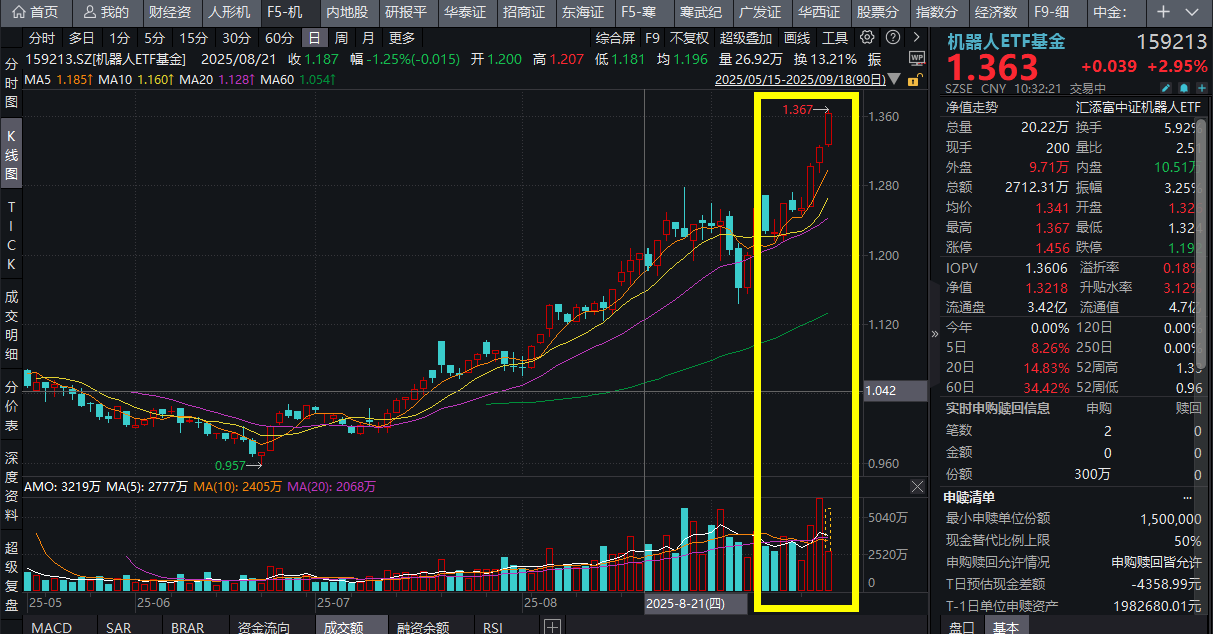
Group 1 - The core viewpoint of the articles highlights the resurgence of the robotics sector in the A-share market, with significant investments flowing into robotics ETFs and notable orders for humanoid robots from both domestic and international companies [1][2][3] - The Robot ETF (159213) has seen a nearly 3% increase, marking its fourth consecutive rise, with a net subscription of 3 million shares during the trading session [1] - Tesla has signed a letter of intent with PharmAGRI to deploy up to 10,000 Optimus Gen3+ humanoid robots in various operational areas, indicating strong demand for humanoid robots in the market [1][3] Group 2 - The investment landscape for the robotics sector is characterized by two phases: thematic investment and industrial trend investment, with the current phase being identified as an early stage of industrial trend investment [2] - The report from Huatai Securities indicates that the market's confidence in humanoid robots is growing, with expectations for rapid penetration rates already factored into current valuations [2] - Major players in the humanoid robotics market are transitioning from shallow commercialization to deeper market engagement, with challenges remaining in mass production and practical application [3][6] Group 3 - The articles mention significant orders in the humanoid robotics sector, including a 2.5 billion yuan contract for the Walker S2 humanoid robot, setting a new record for single orders in the global humanoid robotics industry [1][3] - The current landscape shows that while there are many companies involved in humanoid robotics, few have achieved a commercial closed loop, with most focusing on small-scale strategic collaborations and data collection [6] - The anticipated market for humanoid robots is expected to expand from government and educational applications to broader commercial markets, with the potential for significant growth in consumer applications [6][8]
中国人形机器人产业“大展宏图”
Zhong Guo Xin Wen Wang· 2025-09-05 02:10
Group 1 - The humanoid robot industry is experiencing a surge in large orders, with companies like UBTECH securing a 250 million yuan contract, marking the largest single contract in the global humanoid robot market [1] - Other companies, such as Zhiyuan Robotics and Yushu Technology, have also won significant contracts, indicating a growing trend in the commercialization of humanoid robots [1][2] - The industry is predicted to see annual shipment volumes double in the coming years, potentially reaching hundreds of thousands to millions of units within 2 to 3 years if technological breakthroughs occur [2] Group 2 - Significant capital is flowing into humanoid robot companies, with 87 financing events reported in the first half of 2025, amounting to approximately 10.9 billion yuan [3] - The capital market is increasingly favoring humanoid robots, with companies like Zhiyuan Robotics investing 2.1 billion yuan to acquire a listed company, and Yushu Technology starting its IPO process with a valuation of 12 billion yuan [4] - Morgan Stanley forecasts that the humanoid robot market could exceed 5 trillion USD by 2050, with a compound annual growth rate of over 50% [4] Group 3 - Humanoid robots are expanding their applications beyond being seen as "large toys," moving into diverse fields such as manufacturing, home services, logistics, and education [4] - Companies like Yushu Technology and UBTECH are developing humanoid robots capable of complex tasks, indicating a shift towards practical industrial applications [4] - The integration of advanced technologies such as AI and high-end manufacturing positions humanoid robots as a disruptive product in the tech landscape [4] Group 4 - China is establishing a competitive edge in the humanoid robot sector, with two-thirds of global robot patent applications originating from the country [5] - Over one-third of the top 100 global humanoid robot companies are based in China, supported by favorable policies and a robust industrial foundation [5] - The Chinese government has set ambitious goals for the humanoid robot industry, aiming for advanced global competitiveness by 2027 [5] Group 5 - The humanoid robot industry in China is poised to replicate the growth trajectory of the electric vehicle sector, driven by the convergence of technology, capital, and industry [6] - Each order, financing event, and patent application contributes to shaping the future landscape of the humanoid robot industry [6]
人形机器人将从“演员”变“同事”
21世纪经济报道· 2025-08-12 04:48
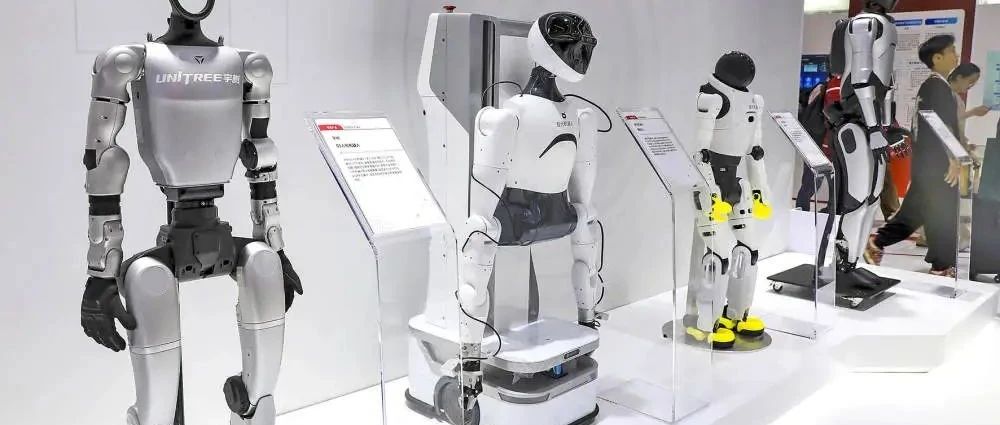
Core Insights - The 2024 World Robot Conference (WRC) showcased a significant increase in humanoid robots, with 27 models exhibited and over 200 participating companies, marking a substantial growth from the previous year [1][2] - The event attracted 1.3 million registered visitors, indicating a broad interest from various demographics, including industry professionals and the general public [2] - Many exhibitors emphasized the transition of robots from performance roles to practical applications in labor, aiming to enhance productivity [2][10] Group 1: Humanoid Robots and Performances - The main attractions at WRC included leading humanoid robot companies, with notable performances from robots like Yushutech's G1, which demonstrated advanced boxing skills and improved motion fluidity [4][6] - The event highlighted the evolution of robots from video demonstrations to live performances, showcasing their enhanced capabilities and stability [6][10] - Companies like ZhiJing and others displayed robots capable of complex movements, indicating advancements in robotic control and interaction [5][6] Group 2: Industrial Applications and Labor Potential - A growing number of exhibitors focused on demonstrating the labor potential of robots, with companies like UBTECH showcasing multiple models designed for various tasks, including sorting and guiding [8][10] - Robots with wheeled bases or AGVs were increasingly presented, emphasizing their stability and suitability for industrial applications [9][10] - The ultimate goal for many companies is to integrate humanoid robots into factory settings, with aspirations for them to perform household tasks in the future [10][12] Group 3: Commercialization and Market Expansion - The commercialization of service robots is progressing, with companies like Yunji and Qinglang showcasing their successful implementations in hospitality and other sectors [12][14] - Despite advancements, many humanoid robots still face challenges in versatility and adaptability to complex tasks, limiting their current applications [12][14] - The industry is exploring the integration of embodied intelligence and multimodal AI to enhance robot capabilities, with several companies presenting their developments in this area [13][14]
世界机器人大会上的变与不变:人形机器人将从“演员”变“同事”
2 1 Shi Ji Jing Ji Bao Dao· 2025-08-11 13:16
Core Insights - The 2024 World Robot Conference (WRC) showcased a significant increase in humanoid robots, with 27 models exhibited and over 200 participating companies, marking a substantial growth from the previous year [1][2] - The event attracted 1.3 million registered visitors, indicating a broad interest from both industry professionals and the general public [2] - Many exhibitors emphasized the transition of robots from performance roles to practical applications in labor, highlighting a shift in focus towards productivity [2][4][10] Group 1: Exhibition Highlights - The number of humanoid robot manufacturers exceeded 50, with a total of 1,500 exhibits, an increase of 600 from last year, and over 100 new product launches [1] - Notable performances included the UTree G1 robot demonstrating advanced boxing skills and the Acceleration Evolution robot showcasing improved soccer-playing capabilities [5][6] - The BionicBee robot from Festo demonstrated advanced capabilities in autonomous flight, challenging previous perceptions of micro-robot capabilities [6] Group 2: Industry Trends - Companies like UBTECH showcased multiple robots designed for practical applications, including sorting and guiding, indicating a growing focus on robots as laborers [8] - The emergence of robots with wheeled bases or AGVs for enhanced stability and load capacity reflects a trend towards adapting robots for factory environments [9] - The commercial viability of humanoid robots is expanding, with companies like Cloudwise and Qilin Robot demonstrating successful implementations in service sectors [11] Group 3: Challenges and Future Directions - Despite advancements, humanoid robots still face limitations in versatility and adaptability to complex tasks, with many applications remaining single-scenario focused [12] - The industry is grappling with challenges in embodied intelligence, as current models struggle to scale effectively compared to large language models [12][13] - Companies are actively pursuing advancements in VLA (Visual Language Action) capabilities to enhance the functionality of robots in various sectors [13]