
OpenAI

Search documents
那个全球顶尖的性能优化大神,加入 OpenAI 了。总裁还是他的大迷弟!
程序员的那些事· 2026-02-12 12:49
Core Insights - Brendan Gregg, a former top performance engineer at Intel, has joined OpenAI to focus on optimizing the performance of ChatGPT, driven by the need to reduce AI data center costs and environmental impact [1][7]. Group 1: Reasons for Joining OpenAI - The costs associated with AI data centers are extraordinarily high and continue to rise, creating unprecedented demands on performance engineering [7]. - OpenAI presents a unique opportunity to innovate in performance engineering without the constraints typically found in established environments [7]. - Conversations with industry experts and personal experiences led to the realization that AI, particularly ChatGPT, is becoming an essential tool for everyday users [9][10]. Group 2: Personal Experiences with AI - A personal encounter with a hairstylist revealed the widespread use of ChatGPT among the general public, highlighting its role as a necessary assistant in daily life [10][11]. - The increasing familiarity and reliance on ChatGPT by various individuals across different professions underscore its growing significance [10][11]. Group 3: Future Plans and Projects - The initial focus will be on developing a cross-organizational strategy to enhance performance and reduce costs within OpenAI [15]. - There is an intention to explore advanced technologies like eBPF and Ftrace for data center performance optimization, leveraging proven techniques [16]. - The transition from Intel to OpenAI involved a significant gap, during which the importance of ChatGPT's utility was reaffirmed through personal interactions [16].


微软(MSFT.US)重调与OpenAI关系:转攻AI“自给自足” 发力自研前沿模型
Zhi Tong Cai Jing· 2026-02-12 12:41
微软(MSFT.US)人工智能业务负责人穆斯塔法.苏莱曼表示,公司正寻求在AI领域实现"真正的自给自 足",通过自主研发高性能模型,逐步降低对OpenAI的技术依赖。 苏莱曼透露,这一战略转向始于2025年10月微软与OpenAI合作关系重构之后。据悉,自此微软开始独 立构建最前沿技术,而非继续倚重外部伙伴。 微软迄今已向OpenAI累计投资逾130亿美元,持有这家ChatGPT开发商近27%股权。 "我们必须开发自己的基础模型——站在绝对前沿、拥有吉瓦级算力,以及全球顶尖的AI训练团队。"苏 莱曼表示。他是谷歌DeepMind联合创始人之一,于2024年3月加入微软。 苏莱曼表示,微软的目标是通过打造"专业级通用人工智能"抢占更多企业市场份额。这类AI工具可为律 师、会计师、项目经理、营销人员等知识工作者完成日常工作。 "未来12到18个月内,白领坐在电脑前完成的大部分任务,都将由AI完全自动化。"他说。 未来两到三年内,AI智能体将能在大型机构内部工作流中实现更优协同。据悉,这类AI工具还将具备 持续学习、持续进化的能力,自主执行更多任务。 "创建新模型将像做播客、写博客一样普及,"苏莱曼表示,"未来,地 ...

AI购物掀翻跨境电商:亚马逊“关门”,ChatGPT“拆墙”
3 6 Ke· 2026-02-12 12:33
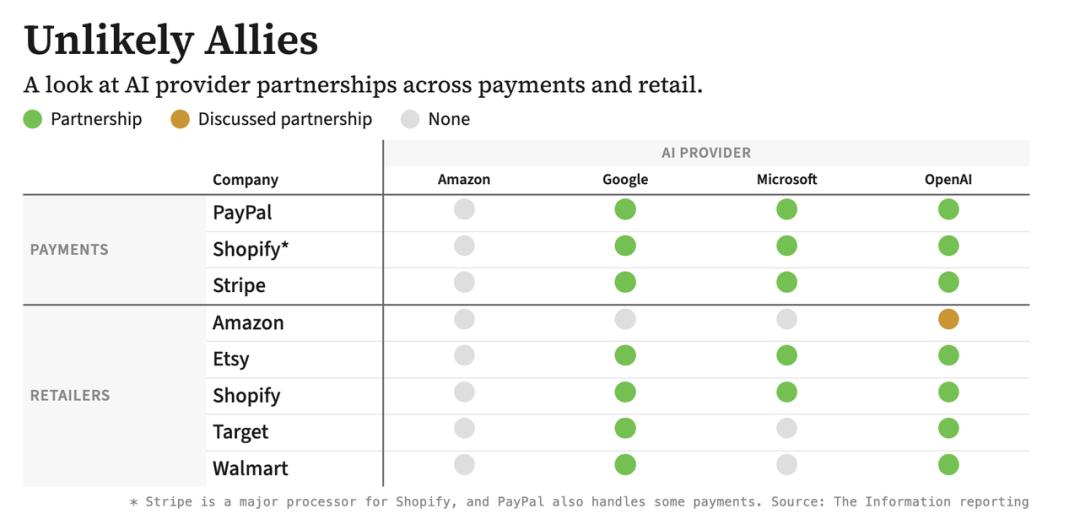
AI对话工具开始变得更像一个新型电商平台,尽管短时间内还未能看到成规模的出单迹象,但已经开始在一定程度上改变用户过往的购物路径。Adobe数 据显示,在2025年假日购物季期间,从AI推荐引流至零售商渠道的流量同比增长近700%。有机构预估,到2030年,AI代理可能会影响15%-25%的电商销 售额。 与此同时,传统电商平台似乎开始警惕了。亚马逊、eBay等,接连出手禁止AI代理爬取并推荐平台上的商品(注:目前eBay唯一接入了ChatGPT),关起 门做自己的站内AI购物助手,势要守住现有流量。 继上一次出现"独立站 vs 第三方平台"的路线分野后,跨境电商行业似乎又走到了一个分水岭:以ChatGPT和Gemini为代表的AI对话工具,和以亚马逊、 eBay为代表的传统电商平台,或许将在AI电商时代迎来一场新的流量入口大战。 AI入口大战的开端:"开放网络"对决"围墙花园" 围绕AI购物,主流玩家们呈现出迥然不同的倾向:一方走向彻底开放;一方则是先筑起围墙,观望后再下手。 前者以OpenAI和Google为代表,选择拥抱所有生态,能够跨平台、跨渠道地接入商品信息与购物场景,通过自然语言交互、智能推荐等方式 ...

春节AI混战,千问杀出重围,DAU逼平第一
3 6 Ke· 2026-02-12 12:33
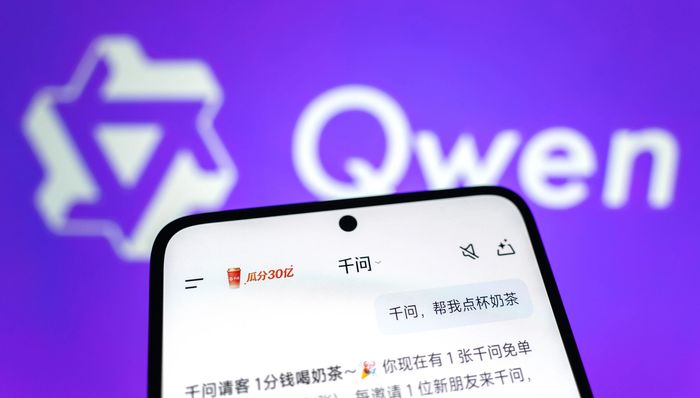
Core Insights - The article highlights the significant impact of AI in consumer interactions during the 2026 Spring Festival, with a record of 1.2 billion orders processed by AI, marking a milestone in AI's real-world application and commercialization [3][4][9] Group 1: AI Performance and User Engagement - The AI system "Qianwen" achieved 1.2 billion completed orders in just six days, demonstrating a successful execution of AI in real-world tasks [2][3] - Daily active users of Qianwen surged to 73.52 million, nearly matching the industry leader, indicating a strong user engagement [2] - Nearly half of the orders came from county-level cities, and 1.56 million users aged 60 and above experienced ordering through AI for the first time, showcasing a broadening user base [6][8] Group 2: Technological Advancements and Ecosystem Integration - Qianwen successfully integrated the entire process from AI model to ecosystem, payment, and fulfillment, creating a positive feedback loop [5][6] - The underlying technology includes the "Zhenwu 810E" chip and a robust cloud computing infrastructure, enabling efficient handling of high order volumes [8] - Alibaba's extensive experience in e-commerce and logistics supports Qianwen's backend capabilities, enhancing its service offerings in various sectors [8] Group 3: Competitive Landscape and Future Implications - The current AI competition has shifted focus from model parameters to building executable and scalable task-oriented ecosystems, with Qianwen leading this transition [5][9] - The successful implementation of Qianwen during a high-traffic consumer period may redefine user interaction with AI, potentially establishing new habits in AI-assisted shopping and daily life [7][9] - As global competitors like Google test new features, Alibaba's Qianwen has already demonstrated a practical application of AI in consumer markets, positioning China at the forefront of AI model validation [9]

思科季度毛利率低于预期 盘前交易中下跌7%
Xin Lang Cai Jing· 2026-02-12 12:28
专题:聚焦美股2025年第四季度财报 网络设备供应商思科系统(CSCO)周三公布,经调整后的季度毛利率低于市场预期,原因是该公司正 受到全球存储芯片价格上涨的冲击,这导致其股价在周四盘前交易中下跌 7%。 OpenAI、 Alphabet、微软等美国科技企业对人工智能基础设施的快速建设,消耗了全球大量存储芯片 供应。芯片厂商优先为高毛利的数据中心供应组件,而非消费电子设备,从而推高了芯片价格。 该股在 2025 年大涨 30% 后,今年迄今已上涨超 11%,因华尔街押注其数据中心网络产品将从 AI 领域 的强劲支出中显著受益。 思科为运行 AI 应用的数据中心提供关键的高速网络基础设施,包括搭载多种存储芯片的交换机和路由 器。 Direxion 资本市场主管杰克・贝汉表示:"本季度思科需求强劲、收入加速增长,这些都是明显利好, 但毛利率受压确实让这份财报打了折扣。思科将积压订单转化为实际收入的速度,将是今年下半年的关 键关注点。" 根据伦敦证券交易所集团(LSEG)数据,这家网络设备制造商第二季度经调整毛利率为67.5%,低于 分析师平均预期的68.14%。 思科首席执行官查克・罗宾斯在与投资者的电话会议中表 ...

硅谷“赌”AI最狠的基金:非原生AI公司要么进化,要么消失
3 6 Ke· 2026-02-12 12:27
Core Insights - a16z is a leading venture capital firm heavily invested in the current AI wave, with a portfolio that includes major players like OpenAI and SpaceX, reflecting the commercialization path of AI over recent years [1] - The firm emphasizes not just what they invest in, but how they interpret changes in the AI industry, highlighting significant trends and signals [1] Group 1: AI Company Growth and Efficiency - AI companies are achieving faster growth with fewer resources compared to traditional SaaS companies, with revenue growth rates approximately 2.5 times higher than non-AI software companies, and some top firms experiencing year-over-year growth close to 700% [2][8][6] - A new efficiency metric, ARR per FTE (Annual Recurring Revenue per Full-Time Employee), is gaining attention, with leading AI companies achieving ARR of $500,000 to $1 million per employee, compared to $400,000 in the SaaS era, indicating a significant increase in organizational efficiency [3][10] Group 2: Transformation of Non-AI Companies - Non-AI native companies face two options: transform or be eliminated, with successful transformations often led by CEOs who actively drive change and focus on areas like customer support and operations [4][11] - Effective AI adaptation requires a fundamental rethinking of product design and organizational structure, moving beyond simply adding AI features to existing systems [12][14] Group 3: Demand and User Engagement - The demand for AI products is described as "crazy," with strong user engagement and participation, as seen in legal and medical sectors where AI tools enhance productivity without reducing workforce size [19][21] - Companies like Harvey and Abridge illustrate how AI can increase user engagement and efficiency, with lawyers reporting doubled usage time on AI products [20][21] Group 4: Financial Implications and Market Dynamics - The current capital expenditure in AI is substantial, but unlike previous bubbles, it is supported by profitable companies, with major players like Microsoft and NVIDIA maintaining controllable capital structures [25][26] - The potential for AI to generate significant revenue is highlighted, with estimates suggesting that AI could account for 1% of global GDP by 2030, necessitating a revenue target of around $1 trillion to justify the investment [31]
OpenClaw 启示录:Agent 的扩散速度取决于入口与社区 | Jinqiu Select
锦秋集· 2026-02-12 12:25
Core Insights - OpenClaw has gained significant traction since its launch in early 2026, achieving high visibility in the global developer community, including over 180,000 stars on GitHub, and leading to the emergence of social experiments like Moltbook, showcasing a new trend in interactive AI agents [3][15] - The creator, Peter Steinberger, emphasizes that the success of OpenClaw is not solely due to technology but rather its community engagement and low entry barriers, allowing users to modify the software easily [6][9] - The project has sparked discussions about the future of AI agents, the redefinition of traditional applications, and the evolution of human-agent interactions, which many entrepreneurs have yet to fully grasp [5][6] Project Origin - The inception of OpenClaw began with Peter's personal need for an AI assistant in April 2024, leading to a series of early experiments that culminated in the project's creation due to frustration over its absence [9][10] - The first working prototype was developed in just one hour, demonstrating the core functionality of interacting with a computer through a chat application [11][12] - The project experienced viral growth after an unexpected feature emerged, showcasing the agent's ability to autonomously handle tasks without prior instruction [12][13] Technical Architecture - OpenClaw's architecture includes several sophisticated components, such as a chat client gateway for decentralized access, a core decision engine, and a skills system for functionality expansion [16][17] - The agent's self-awareness allows it to read and modify its own source code, which is a significant advancement in software engineering [17][18] - The project has faced challenges related to security and brand protection, particularly after its rapid rise in popularity, highlighting the need for integrated security measures [6][27] Community and Social Impact - MoltBook, a social network for AI agents, has emerged as a phenomenon, where agents interact in a Reddit-like environment, leading to discussions that sometimes cause public concern [27][28] - The term "AI psychosis" was coined by Peter to describe the mix of genuine concern and sensationalism surrounding AI developments, reflecting societal fears about AI's role in the digital age [28][29] - OpenClaw represents a balance between freedom and responsibility, as users gain control over their data while also being accountable for its security [30][31] Business Model and Future Outlook - Despite the project's popularity, Peter has chosen to reject significant funding offers, prioritizing the open-source ethos and community engagement over commercial pressures [32][33] - The current financial status shows monthly revenues between $10,000 and $20,000, with ongoing discussions for partnerships with major tech labs, provided the project remains open-source [33][34] - Peter envisions a future where traditional applications may be replaced by AI agents, fundamentally altering the app market landscape [39][40]

年末 AI 回顾:从模型到应用,从技术到商战,拽住洪流中的意义之线(上)
Xin Lang Cai Jing· 2026-02-12 12:12
Group 1: Models - The current AI wave is still in its early stages, with technological changes being the primary driving force behind product forms and business landscapes [4][56] - The Agentic Model supports agent capabilities, which include reasoning, coding, multimodal understanding, tool usage, and memory [5][58] - The rise of reasoning models is marked by the success of DeepSeek-R1, which is the first to replicate OpenAI's o1 model at a large parameter scale [7][59] Group 2: Applications - 2025 is seen as the year of large-scale explosion for agent applications, with two main lines: General Agents centered on coding capabilities and vertical agents [29] - General Agents utilize coding as a means to execute various tasks in the digital world, with products like Claude Code and Claude Cowork leading the way [30][32] - The emergence of mobile agents is notable, with ByteDance's Doubao phone preview enabling automated tasks like replying to WeChat messages [35] Group 3: AI Giants' Competition - Major players like ByteDance, Alibaba, and Tencent are engaged in a fierce competition in the AI space, focusing on collaborative optimization and infrastructure development [13][14] - Alibaba's Qianwen team has begun recruiting its own infrastructure talent to enhance agility in development [14] - Tencent's new AI head emphasizes the importance of co-design to streamline iterations and reduce internal friction [14] Group 4: Startups - A new ecosystem of startups is emerging around agent tools, driven by the demand for automation in personal and professional tasks [29][32] - Companies like Lovart and others are focusing on multimedia content production agents, aiming to redefine creative processes [37] Group 5: AI in Science - AI is accelerating scientific discoveries, with applications in first-principles calculations and generative AI for solving complex scientific problems [49][50] - The trend of AI agents capable of automating the entire research process is gaining traction, indicating a shift towards AI-driven scientific inquiry [51]




Loblaw advances AI in Canadian retail with first-of-its-kind shopping app in ChatGPT
Globenewswire· 2026-02-12 12:00
Core Insights - Loblaw Companies Limited has launched a new shopping app integrated with ChatGPT, aimed at enhancing the shopping experience for Canadians by making it simpler and more efficient [3][7] - The partnership with OpenAI allows Loblaw to leverage advanced AI technology to provide personalized shopping experiences and improve operational productivity [9][10] Group 1: Product and Service Innovation - The PC Express app in ChatGPT enables Canadians to explore meal ideas, curate ingredients, and select products from local stores, enhancing the grocery shopping experience [7] - Loblaw is also implementing ChatGPT Enterprise for its employees to boost productivity and innovation across various business functions [8] Group 2: Strategic Positioning - Loblaw aims to position itself as a leader in AI innovation within the North American retail sector, focusing on digital customer experience and technology adaptation [9] - The collaboration with OpenAI is intended to bridge the gap between AI capabilities and the value delivered to customers, making shopping more personal and efficient [9]

X @Bloomberg
Bloomberg· 2026-02-12 11:44
Artificial intelligence has made a lot of noise in the stock market lately, but one name has been conspicuously absent from the chatter: OpenAI https://t.co/n6QvYsnWOh ...