
先导智能

Search documents
锂电设备——锂电扩产周期叠加固态创新周期带来β机遇,差异化发展路径深挖α潜力 | 投研报告
Zhong Guo Neng Yuan Wang· 2025-10-15 01:12
Core Insights - The report highlights a significant growth trajectory for global battery shipments, with projections indicating that by 2025, global power battery shipments are expected to reach 1285 GWh and energy storage battery shipments are anticipated to reach 481 GWh. By 2030, the combined total is projected to reach 5154 GWh, approximately three times the 2025 figure [1][2]. Group 1: Lithium Battery Market Growth - The lithium battery shipment volume is expected to continue its upward trend, with a long-term growth potential. By 2030, power batteries are projected to reach 3754 GWh and energy storage batteries 1400 GWh [1][2]. - The global lithium battery equipment industry is expected to see a recovery, with significant order peaks anticipated in 2025 and 2026. The estimated market size for the lithium battery equipment industry is projected to reach 497 billion, 810 billion, and 832 billion yuan for the years 2025, 2026, and 2027 respectively, reflecting year-on-year growth rates of +12%, +63%, and +3% [2]. Group 2: Solid-State Battery Innovations - The innovation cycle for solid-state batteries is expected to accelerate, with over 10 billion yuan in investment planned in China. Solid-state batteries are projected to transition from sample production to trial lines starting in 2024, with mass production expected to begin in 2027 [3][4]. - The solid-state battery equipment market is anticipated to have a high value, contributing significantly to the overall lithium battery equipment market. By 2030, if solid-state batteries achieve a 5% penetration rate, the market size for lithium battery equipment could reach approximately 1180 billion yuan, with solid-state equipment contributing an incremental market size of about 515 billion yuan [4]. Group 3: Differentiation in Lithium Battery Equipment Companies - Companies in the lithium battery equipment sector are diversifying their development strategies, including cross-industry expansions, platform development, and product line extensions. For instance, companies like Winbond Technology and Xinyu Ren are expanding into related fields and enhancing their product offerings [5]. - There is a recommendation to focus on small and mid-cap companies that are likely to expand their applications in the solid-state battery sector, as well as those that are advancing platform development and diversifying their business models [5].

高端材料出口遇管制,多家锂电企业回应
2 1 Shi Ji Jing Ji Bao Dao· 2025-10-15 00:23
Core Viewpoint - China's export control on lithium batteries and key materials is set to take effect on November 8, 2025, targeting products with energy density ≥300Wh/kg, which includes critical production technologies and materials [1][12]. Industry Impact - The announcement has led to significant market reactions, with major companies like CATL and Yiwei Lithium Energy experiencing stock declines of 6.82% and 10.96% respectively on October 10 [3]. - The Shenwan Battery Index fell over 4% after three consecutive trading days of decline following the announcement [3]. Company Responses - Companies like Siengda Intelligent and Liyuanheng stated that the new policy's impact on their overall business is minimal, as their overseas orders primarily come from domestic battery manufacturers, which are not subject to the new controls [5][6]. - Rongbai Technology emphasized that the policy is a regulation rather than a prohibition, and it mainly affects products related to semi-solid and solid-state batteries, which do not significantly impact their supply [6][11]. - Companies such as Dingsheng Technology noted that their exports mainly consist of multi-element positive materials, which are not included in the control scope [7]. Market Dynamics - The Chinese lithium battery industry is projected to produce 1170 GWh in 2024, with a total industry output value exceeding 1.2 trillion yuan, reflecting a 24% year-on-year growth [9]. - China supplies approximately 90% of the global lithium battery market, making exports a crucial part of capacity digestion [9]. Long-term Outlook - The export control is expected to reshape the global lithium battery industry landscape, shifting focus from capacity to high-end technology [11]. - The policy may lead to increased emphasis on the domestic market and accelerate the application of high-end battery technologies within China [12].




高端材料出口遇管制,多家锂电企业回应
21世纪经济报道· 2025-10-15 00:14
Core Viewpoint - China's export control on lithium batteries and key materials is set to take effect on November 8, 2025, targeting high-energy-density batteries and critical production equipment, which reflects a shift towards high-end technology in the lithium battery industry [1][10]. Industry Impact - The new regulations have triggered a market reaction, with significant declines in stock prices for major lithium battery companies, including a 6.82% drop for CATL and a 10.96% drop for EVE Energy on October 10 [4][6]. - The Shenwan Battery Index fell over 4% after three consecutive trading days of decline, indicating market concerns about the impact of export restrictions [4][9]. Company Responses - Several companies, including Siengda Intelligent and Rongbai Technology, have stated that the new policy will have a minimal impact on their operations, as their primary overseas orders do not fall under the restricted categories [6][7]. - Companies like Dingsheng Technology emphasized that their exports mainly consist of materials not affected by the new regulations, suggesting a focus on domestic markets moving forward [7][9]. Market Dynamics - The Chinese lithium battery industry has a significant production capacity, with a total output expected to reach 1,170 GWh in 2024, a 24% increase year-on-year, and an industry value exceeding 1.2 trillion yuan [9]. - China supplies approximately 90% of the global lithium battery market, making export a crucial aspect of capacity utilization [9]. Long-term Outlook - The export control is seen as a strategic move to maintain China's leading position in high-end battery technology, potentially reshaping the global supply chain and encouraging domestic market focus [10]. - Analysts suggest that while there may be short-term market adjustments, the long-term implications could favor Chinese companies in the high-end battery sector [10].
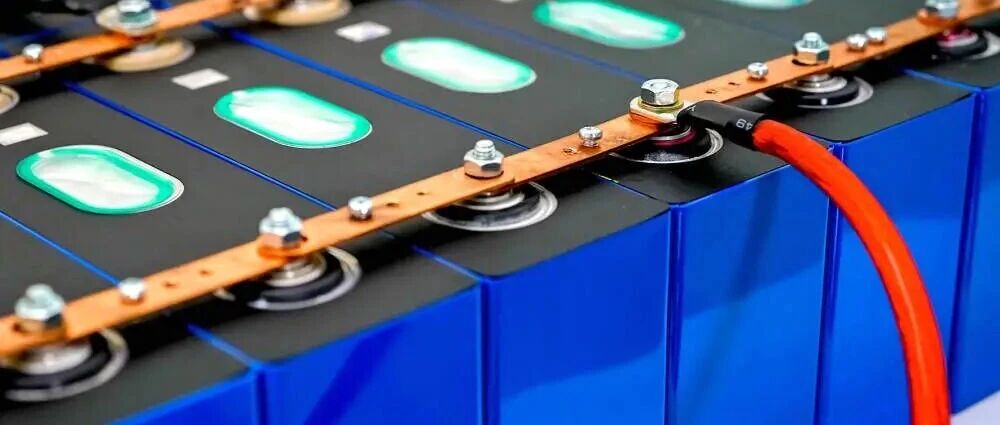
高端材料出口遇管制 多家锂电企业回应
2 1 Shi Ji Jing Ji Bao Dao· 2025-10-14 23:13
Core Viewpoint - China's export control on lithium batteries and key materials is set to take effect on November 8, 2025, targeting products with energy density ≥300Wh/kg, which includes critical production technologies and materials [1] Group 1: Export Control Announcement - The Ministry of Commerce and the General Administration of Customs announced the export control measures, emphasizing the dual-use nature of the targeted items and aligning with international practices to safeguard national security [1] - The measures are not aimed at any specific country or region, and legitimate export applications will be reviewed and potentially approved [1] Group 2: Market Reactions - On October 10, several listed companies in the lithium battery sector experienced significant stock declines, with CATL down 6.82%, EVE Energy down 10.96%, and other second-tier leaders dropping over 8% [2] - The Shenwan Battery Index fell for three consecutive trading days, closing down over 4% on October 14 [2] Group 3: Company Responses - Companies like Siengda Intelligent stated that the policy's impact on their overall business is minimal, as their overseas orders primarily come from domestic battery manufacturers, which are not subject to the export control [3] - Li Yuanheng, a lithium battery equipment supplier, mentioned that they have established a robust R&D and manufacturing base overseas to mitigate potential trade policy changes [3] - Rongbai Technology held an investor communication meeting, clarifying that the export policy is a control rather than a ban, and it mainly affects products related to semi-solid and solid-state batteries [4] Group 4: Industry Insights - The lithium battery industry in China has developed a vast capacity and complete supply chain, with a projected total production of 1170GWh in 2024, representing a 24% year-on-year increase [5] - China supplies approximately 90% of the global lithium battery market, with domestic sales of power and other batteries reaching 920.7GWh in the first eight months of the year, including 173.1GWh in exports, a 48.5% increase year-on-year [6] - The recent export control is seen as a shift in the lithium battery competition from capacity to high-end technology, potentially reshaping the global industry landscape [7]
我国科研团队攻克固态电池领域关键难题
Mei Ri Jing Ji Xin Wen· 2025-10-14 13:18
Core Insights - Recent advancements in solid-state battery research in China, particularly by a team led by Huang Xuejie from the Chinese Academy of Sciences, have introduced an anion regulation technology that addresses the interface contact issues between the electrolyte and lithium electrode, crucial for practical applications [1][2][10] - The solid-solid interface problem has been a significant barrier to the commercialization of all-solid-state lithium batteries, and the new findings are seen as a key technological support for their practical use [1][2] Research Breakthroughs - The research team has developed a method to introduce iodine ions into the electrolyte, which migrate to the electrode interface during battery operation, forming a lithium-rich interface that fills gaps and maintains tight contact between the electrode and electrolyte [3][4] - This innovation allows for a self-repairing interface that can function effectively under low pressure and without external force, addressing a critical challenge in solid-state battery engineering [3][5] Industry Reactions - The research has garnered significant attention within the industry, with many battery company executives congratulating Huang Xuejie on the breakthrough, indicating its potential impact on the sector [2][6] - Companies are actively researching solid-state battery materials, including iodine-containing lithium salts, to enhance lithium ion conductivity and address engineering challenges [5][6] Market Opportunities - Solid-state batteries have not yet achieved mass production, and their adoption in applications like drones and robots is expected to grow due to their advantages in energy density and performance [8][9] - The solid-state battery supply chain is characterized by domestic manufacturers leading in mass production while foreign companies control core technologies, indicating a competitive landscape [8][9] Future Prospects - The breakthrough in solid-state electrolyte technology is anticipated to accelerate the practical application of all-solid-state batteries, although challenges remain in scaling production and reducing costs [10] - The development of solid-state battery materials and technologies is seen as a critical area for future investment and innovation within the industry [10]
高端材料出口遇管制 锂电企业释放积极应对信号
2 1 Shi Ji Jing Ji Bao Dao· 2025-10-14 10:45
(原标题:高端材料出口遇管制 锂电企业释放积极应对信号) 21世纪经济报道记者费心懿 实习生余名伟 中国锂电出口管制升级,直指高端材料及关键生产设备。 10月9日,商务部与海关总署联合发布第58号公告,宣布自2025年11月8日起,将对能量密度≥300Wh/kg的锂电池、关键材料及设备实施出口管 制,涉及正负极材料生产工艺等核心技术领域,需通过许可程序出口。 商务部新闻发言人表示,此次列管的相关物项具有明显的军民两用属性,中国依法依规实施出口管制措施,符合国际通行做法,更好地维护了国 家安全和利益,更好地履行了防扩散等国际义务。 相关措施不针对任何国家和地区,对于合法合规的出口申请,中方将在审查后予以许可。 这并非国内首次针对锂电池相关产品实施出口管控措施,而此次新升级规一经发布,也引发了市场连锁反应。 10日当天,宁德时代(300750.SZ)单日跌幅6.82%;亿纬锂能(300014.SZ)跌10.96%;国轩高科(002074.SZ)、欣旺达(300207.SZ)等行业二 线龙头跌幅均超8%;设备环节利元亨(688499.SH)、先导智能(300450.SZ)跌幅均超10%;负极材料龙头璞泰来(6036 ...
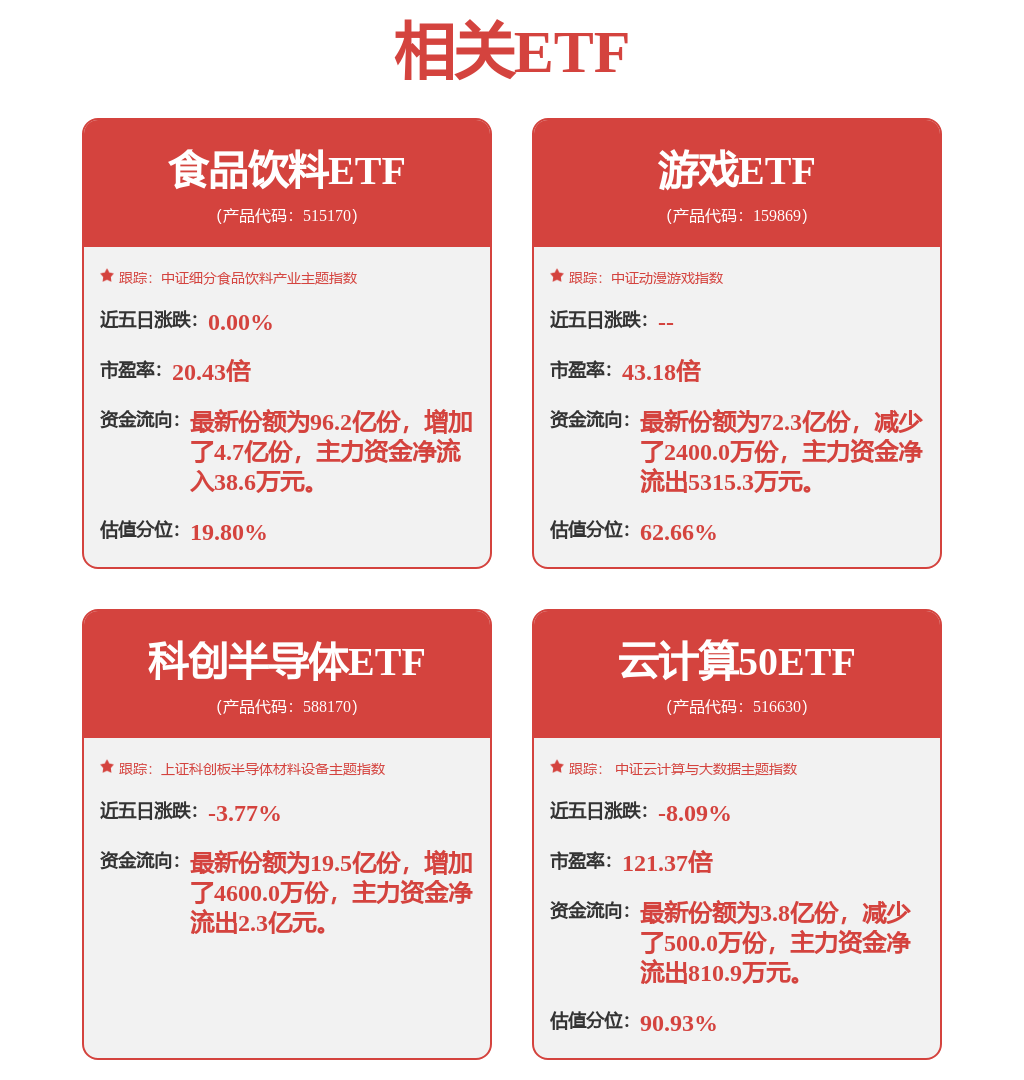
解密主力资金出逃股 连续5日净流出658股
Zheng Quan Shi Bao Wang· 2025-10-14 09:39
Core Insights - As of October 14, a total of 658 stocks in the Shanghai and Shenzhen markets have experienced a net outflow of main funds for five consecutive days or more [1] - The stock with the longest continuous net outflow is Dayu Ming, with 21 days, followed by Tianma Technology with 20 days [1] - The largest total net outflow amount is from Luxshare Precision, with a cumulative outflow of 9.453 billion yuan over 8 days [1] Summary by Category Main Fund Outflow Duration - Dayu Ming has the longest net outflow duration at 21 days [1] - Tianma Technology follows with 20 days of net outflow [1] Total Net Outflow Amount - Luxshare Precision leads with a net outflow of 9.453 billion yuan over 8 days [1] - Xian Dao Intelligent follows with a net outflow of 7.699 billion yuan over 10 days [1] - Dongfang Wealth has a net outflow of 7.521 billion yuan over 5 days [1] Proportion of Net Outflow to Trading Volume - *ST Weihe has the highest proportion of net outflow to trading volume, with a recent decline of 7.27% [1] - Other notable stocks with significant net outflows include Zhongcai Securities and Zhongke Shuguang, with respective outflows of 4.607 billion yuan and 4.470 billion yuan [1]


机械设备锂电设备:锂电扩产周期叠加固态创新周期带来β机遇,差异化发展路径深挖α潜力
Tianfeng Securities· 2025-10-14 09:14
Investment Rating - The industry investment rating is maintained at "Outperform" [1] Core Viewpoints - The lithium battery equipment sector is experiencing a recovery phase, with significant growth expected in the coming years due to the lithium battery expansion cycle and solid-state battery innovation [3][10] - Global lithium battery shipments are projected to grow significantly, with total shipments expected to reach 1,766 GWh by 2025 and 5,154 GWh by 2030, indicating a robust long-term growth potential [9][35] - The capital expenditure for leading domestic lithium battery manufacturers has shown a positive trend, with a notable increase in spending expected in 2024 and 2025 [14][17] Summary by Sections Lithium Battery Equipment Sector - The global lithium battery equipment market is expected to reach 497 billion CNY in 2025, 810 billion CNY in 2026, and 832 billion CNY in 2027, with a compound annual growth rate (CAGR) of 29% from 2025 to 2027 [3][13] - The solid-state battery innovation cycle is anticipated to accelerate, with significant investments exceeding 10 billion CNY in domestic solid-state battery capacity planned [3][9] - The production processes for solid-state batteries are evolving, with new equipment and technologies being developed to enhance production efficiency [3][9] Market Dynamics - The global lithium battery shipment volume is expected to grow from 209 GWh in 2020 to 1,766 GWh in 2025, reflecting a CAGR of 53% [9][35] - The domestic leading lithium battery manufacturers are expected to see their capital expenditures increase, with a total of 167 billion CNY in capital expenditure recorded in Q4 2024, marking a 4% year-on-year growth [14][17] - The penetration of solid-state battery technology is projected to create a new market segment, with potential revenue contributions of 54 billion CNY in 2026 and 515 billion CNY by 2030 [3][9] Competitive Landscape - The report highlights various development paths for lithium battery equipment companies, including cross-industry expansion, platform development, and product line diversification [3][9] - Companies such as Delong Laser, Xinyuren, and Qiaocheng Ultrasonic are recommended for their potential in the solid-state battery sector, while others like Xian Dao Intelligent and Liyuan Heng are noted for their platform development strategies [3][9]
机械行业2025年三季报业绩前瞻:板块盈利修复进行时,推荐价值反转+科技赋能
Shenwan Hongyuan Securities· 2025-10-14 07:46
Investment Rating - The report maintains a positive outlook on the machinery industry, indicating an "Overweight" rating, suggesting that the industry is expected to outperform the overall market [5]. Core Insights - The report forecasts significant growth in the performance of 23 key tracked machinery companies for Q3 2025, with notable increases in net profit for companies like Huari Precision (721%), Xian Dao Intelligent (202%), and Ri Lian Technology (95%) [5][6]. - The robotics and components sector is highlighted for its ongoing industrialization, with a focus on humanoid robots and various applications, driven by major players like Nvidia and Huawei entering the market [5]. - Railway investment is projected to remain high, with fixed asset investment expected to approach 900 billion yuan in 2025, supported by strong passenger demand [5]. - The engineering machinery sector is anticipated to benefit from both domestic and international demand, with a focus on large equipment and electric devices [5]. - The laser technology segment is experiencing rapid growth, particularly in general laser applications, driven by technological advancements and increased export demand [5]. Summary by Sections Machinery Companies Performance Forecast - The report provides detailed revenue and net profit forecasts for key companies, with significant year-on-year growth expected for several firms [6][7]. Robotics and Components - The humanoid robot industry is progressing with ongoing testing in factories, and the report suggests a focus on three main lines of development [5]. Railway Equipment - Strong growth in railway fixed asset investment and passenger volume is noted, with recommendations for companies like China CRRC and Siwei Control [5]. Engineering Machinery - The report anticipates a rebound in demand for engineering machinery, driven by domestic infrastructure projects and international capital expenditure increases [5]. Laser Technology - The general laser market is expected to grow rapidly, with specific recommendations for companies involved in new technology developments [5].
先导智能股价跌5.04%,建信基金旗下1只基金重仓,持有7.16万股浮亏损失20.19万元
Xin Lang Cai Jing· 2025-10-14 06:12
Group 1 - The core point of the news is that Xian Dao Intelligent Equipment Co., Ltd. experienced a decline in stock price by 5.04%, with a current trading price of 53.18 CNY per share and a total market capitalization of 832.89 billion CNY [1] - The company specializes in the research, design, production, and sales of automation equipment, with its main business revenue composition being 68.76% from lithium battery intelligent equipment, 15.76% from other sectors, 8.04% from photovoltaic intelligent equipment, 6.44% from intelligent logistics systems, and 0.95% from 3C intelligent equipment [1] - The trading volume for the stock was 53.41 billion CNY, with a turnover rate of 6.25% [1] Group 2 - According to data from the top ten heavy stocks of funds, one fund under Jianxin Fund has a significant holding in Xian Dao Intelligent, specifically the Jianxin Guozheng New Energy Vehicle Battery ETF, which increased its holdings by 200 shares in the second quarter, now holding 71,600 shares, accounting for 3.15% of the fund's net value [2] - The Jianxin Guozheng New Energy Vehicle Battery ETF was established on January 7, 2022, with a latest scale of 56.40 million CNY, and has achieved a year-to-date return of 62.97% [2] - The fund manager, Gong Jiajia, has been in position for 6 years and 237 days, with the fund's total asset scale at 606 million CNY, and the best return during the tenure being 44.21% [3]