
SpaceX

Search documents
AI Data Centers in Space: Why a SpaceX IPO Could Change Everything
Yahoo Finance· 2026-03-05 10:26
Core Insights - SpaceX is targeting an IPO that would value the company at $1.75 trillion, marking the highest valuation for an IPO in history [1] - The company recently merged with Elon Musk's AI business, xAI, in an all-stock deal that valued the combined entity at $1.25 trillion [1] Financial Performance - Prior to the xAI acquisition, SpaceX generated approximately $8 billion in annual profit on revenues between $15 billion and $16 billion [2] - Between 50% and 80% of this revenue was derived from the Starlink satellite internet service [2] Starlink Success - SpaceX's Starlink service has become highly profitable, potentially generating over $10 billion annually in revenue since its test satellite launches began in 2018 [3] - The rapid scaling of Starlink has exceeded many industry experts' expectations [3] Industry Disruption - SpaceX has significantly disrupted the satellite internet industry within a few years, and plans for further aggressive expansion of the Starlink service are underway [4] Starship Rocket Testing - SpaceX is set to resume testing of its Starship rocket, which can theoretically carry payloads of 100 to 150 metric tons, compared to the Falcon 9's capacity of 22 metric tons [5] - Successful testing of the Starship could lower costs for launching payloads into low-earth orbit, facilitating faster scaling of the Starlink service and increasing net profits [5]
2026胡润全球富豪榜发布:中国10亿美元企业家达1110位超过美国
证券时报· 2026-03-05 09:12
Core Insights - The 2026 Hurun Global Rich List reveals a record high of 4,020 billionaires from 2,914 companies across 73 countries, marking a 17% increase from last year, with total wealth rising by 28% [1][2]. Group 1: Billionaire Rankings - China has surpassed the United States to become the country with the most billionaires, boasting 1,110 billionaires, an increase of 287 from last year, while the U.S. has 1,000 billionaires, up by 130 [2]. - The threshold to enter the top ten of the Hurun Global Rich List has doubled every five years, reaching 1.1 trillion RMB this year, compared to 240 billion RMB ten years ago [3]. - Elon Musk retains his title as the world's richest person for the fifth time in six years, with a wealth increase of 89% to 5.5 trillion RMB, driven by the soaring valuations of SpaceX and Tesla [3]. Group 2: Wealth Growth Drivers - Jeff Bezos ranks second with a wealth of 2.1 trillion RMB, a 13% increase, attributed to Amazon's dominance in AI cloud computing and e-commerce [4]. - Larry Page and Sergey Brin, with wealth of 1.9 trillion RMB and 1.7 trillion RMB respectively, benefit from Alphabet's market capitalization exceeding 4 trillion RMB, fueled by the success of the Gemini 4 AI model and rapid growth in Google Cloud [4]. - The AI wave is identified as the strongest engine for wealth creation, with significant contributions from companies like Nvidia and emerging AI startups [7][8]. Group 3: Chinese Entrepreneurs - Zhang Yiming, founder of ByteDance, becomes China's richest person with a wealth of 550 billion RMB, marking a 32% increase [6]. - The industrial products sector shows remarkable performance, with over 80 new billionaires, while the semiconductor industry adds 18 new billionaires, reflecting China's push for chip self-sufficiency [6]. - Shenzhen leads in new billionaire additions, followed by Shanghai, Hangzhou, and Suzhou [6]. Group 4: Sector-Specific Wealth Increases - The AI sector has seen substantial wealth growth, with figures like Huang Renxun's wealth rising by 34% to 1.2 trillion RMB, and Brett Adcock's wealth skyrocketing over tenfold to 110 billion RMB due to his company's valuation [8]. - The consumer electronics industry also experiences significant wealth increases, driven by AI data center demands, with notable figures like Wang Weixiu's wealth reaching 1.05 trillion RMB [9].


SpaceX官宣:2027年推出第二代Starlink移动系统
阿尔法工场研究院· 2026-03-05 08:34
Core Insights - SpaceX announced the first generation of Starlink Mobile at MWC 2026, highlighting its value in global connectivity and emergency services [1] - Elon Musk shared a post indicating that the next generation of Starlink satellites will provide 5G speeds from space, with data density 100 times that of the current V1 satellites [1] - The upcoming V2 satellites will seamlessly support streaming, web browsing, high-speed applications, and voice calls, akin to being connected to a ground network [1]

SpaceX is poised to raise more money in its IPO than was raised in last year’s 90 IPOs combined
Yahoo Finance· 2026-03-05 08:00
Core Insights - SpaceX is planning an IPO that could raise $50 billion, potentially making it the largest IPO in history, surpassing Nippon Telegraph & Telephone's $44 billion in 1987 when adjusted for inflation [1][4] - The anticipated market cap of SpaceX at debut is $1.5 trillion, making it the second-most-valuable IPO after Saudi Aramco [2] - Despite its high valuation, SpaceX has not generated net earnings after 23 years, raising concerns about its ability to justify such a market cap [3] Fundraising and Valuation - The IPO aims to raise $50 billion, which is more than the total raised through 90 IPOs last year, indicating a significant impact on Wall Street profits [6] - Analysts suggest that SpaceX's valuation could reach $1.75 trillion due to its growth opportunities, particularly with its Starlink satellite service [4] Underwriting and Fees - Investment banks are expected to earn substantial fees from the IPO, with estimates suggesting around $1 billion in underwriting fees based on a 2% charge for the $50 billion offering [7][11] - The lead underwriters could collect approximately 35% of the fees, amounting to around $350 million, with the remaining fees distributed among other syndicate members [8] Market Dynamics - Underpricing is common in IPOs, with shares typically jumping 19% on the first trading day, which could result in a one-day paper gain of $9.5 billion for institutional investors [10] - The structure of the IPO may favor large institutional investors, creating an artificial shortage that benefits investment banks [9] Strategic Options for SpaceX - SpaceX has options to retain more capital, such as pursuing a direct listing or using limit order book building, which could reduce underpricing and fees [14][15] - A direct listing would allow market forces to set the opening price, potentially leading to a higher valuation for the company [14] - The threat of alternative listing methods could incentivize underwriters to offer better terms [16]
NASA Eyes Boeing-Lockheed Rocket Component For Moon Mission As Costs Skyrocket: Report - Boeing (NYSE:BA)
Benzinga· 2026-03-05 03:59
Group 1 - NASA is seeking rocket components from Boeing and Lockheed Martin's joint venture, United Launch Alliance (ULA) [1] - The Exploration Upper Stage of NASA's Space Launch System, built by Boeing, has faced delays and costs have exceeded $2.8 billion [2] - NASA plans to potentially use ULA's Vulcan rocket's Centaur V for lunar missions, which shares the same propellant as the SLS, although this plan is not finalized [2] Group 2 - NASA has delayed the launch of the Artemis II vehicle due to issues with the rocket, specifically an "interrupted flow of helium" observed by engineers [3]


【申万宏源策略】敢问梦想价值几何?——构建申万宏源策略“未来产业定价体系”
申万宏源证券上海北京西路营业部· 2026-03-05 02:12
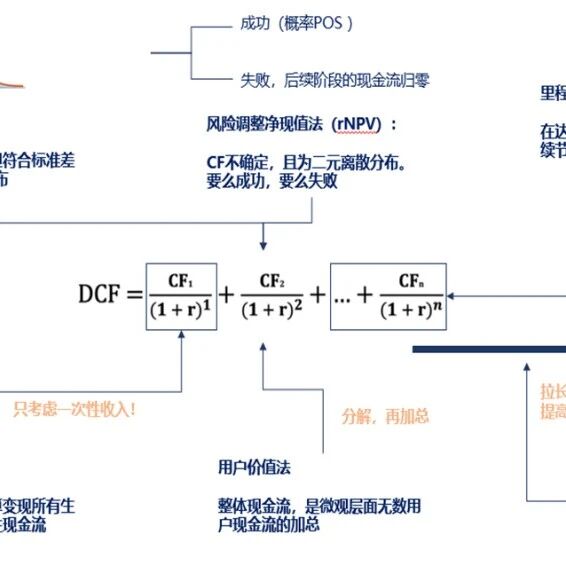
Core Viewpoint - The article discusses the ineffectiveness of traditional DCF models for valuing early-stage technology companies that are not yet profitable and have high uncertainty, proposing a "future industry pricing system" to standardize and replicate valuation methods for such firms [1]. Group 1: Future Industry Pricing Foundation - The foundation of future industry pricing consists of seven valuation sub-models, including absolute valuation models like real options, risk-adjusted NPV, milestone method, user value method, ecological niche valuation, and cost-based valuation, along with a relative valuation model [2]. - Each absolute valuation model has different implicit assumptions about future cash flows, with methods like real options assuming a continuous probability distribution of cash flows over time and space [3]. Group 2: Investor Behavior and Market Dynamics - The article categorizes investors into three types: industrial investors using cost-based methods for valuation during downturns, institutional investors focusing on high-frequency data with rNPV and user value methods, and visionary capitalists valuing long-term potential through real options and ecological niche methods [3]. - The fluctuation in stock prices reflects the varying valuation models employed by different investors, with market dynamics shifting between reality-based and dream-based valuations [3]. Group 3: Future Industry Pricing System Steps - The proposed pricing system involves three steps: selecting conservative, neutral, and optimistic valuation sub-models based on the company's context, setting pricing weights according to market temperature and investor behavior, and calculating the final valuation through weighted averages [4]. - The market temperature is categorized into nine levels, with investor risk appetite influencing the weight assigned to each model, particularly during market extremes [4][10]. Group 4: Case Studies - The article illustrates the application of the pricing system using SpaceX and OpenAI as examples, emphasizing the need for multi-faceted valuation approaches that consider different business lines and their respective life cycles [5][6]. - For SpaceX, the valuation of its Starlink business was anchored at $429.1 billion using comparable valuation methods, while its space computing business was valued at approximately $312.1 billion through real options, and the long-term Mars vision was assessed using cost-based methods [5]. - OpenAI's valuation was calculated using conservative, neutral, and optimistic models, resulting in a final valuation of $780.8 billion, closely aligning with its reported market valuation [6].
SpaceX“星链一强”正改变全球安保格局
日经中文网· 2026-03-05 01:54
Core Viewpoint - SpaceX's Starlink satellite network has established a dominant position in low Earth orbit satellite communications, surpassing competitors and major countries, which is reshaping global security dynamics [2][5][6]. Group 1: Starlink's Dominance - SpaceX's Starlink currently has 9,419 satellites in orbit, significantly outpacing competitors like OneWeb and Amazon, and far exceeding the satellite counts of China, Japan, and Russia [6]. - The company plans to expand its satellite fleet to 42,000, with the Starship rocket capable of launching over 50 satellites at once, aiming for deployment by mid-2027 [6]. - Starlink's low latency and wide coverage are increasingly utilized in defense applications, including missile defense and drone operations [6]. Group 2: Geopolitical Implications - Starlink has been used as a countermeasure against Iran's internet shutdowns, providing support to anti-government forces and highlighting the risks of national defense systems relying on a private company [7][10]. - Since the Russian invasion of Ukraine in 2022, Starlink has been critical for Ukrainian military operations, with Musk indicating that halting service could jeopardize frontline efforts [10]. Group 3: Global Responses - In response to reliance on SpaceX, Europe is investing €10.6 billion in the IRIS2 project to launch 290 autonomous low Earth orbit satellites by 2030, with support for Ukraine included in the plan [11]. - China aims to launch over 50,000 low Earth orbit satellites by 2030, positioning itself as a competitor to the U.S. in space capabilities [12]. - Other competitors, such as Iridium Communications, are focusing on secure military communications, while Italy's Leonardo plans to establish a defense system independent of Starlink by 2030 [14][15].

2025年中国商业卫星行业概览中国商业卫星的崛起、博弈与未来(精华版)
Tou Bao Yan Jiu Yuan· 2026-03-05 00:30
Investment Rating - The report does not explicitly state an investment rating for the industry Core Insights - The Chinese commercial satellite industry is experiencing rapid growth, with the market size projected to increase from approximately 180.7 billion yuan in 2020 to 592.9 billion yuan in 2024, representing a compound annual growth rate (CAGR) of 34.6% [30][31] - By 2030, the market size is expected to reach 7,346.3 billion yuan, with a CAGR of 52.1% [30][31] - The industry is driven by three main factors: supportive government policies, increased capital investment, and reduced costs in satellite manufacturing and launch services [30][31] Summary by Sections Industry Chain Composition - The commercial satellite industry chain consists of upstream components focusing on general platforms and payload parts, midstream satellite manufacturing led by state-owned enterprises and private companies, and downstream applications including satellite communication, navigation, and remote sensing [8][10] Market Size and Growth - The market has shown consistent growth since 2020, with a significant increase in demand for commercial satellites driven by policy support and technological advancements [30][31] - The market is expected to grow significantly, with the satellite internet sector emerging as a key area of expansion [30][31] Competitive Landscape - The Chinese commercial satellite market is characterized by high concentration, with state-owned and private enterprises sharing dominance [8][10] - Globally, the market is led by a few key players, with SpaceX's Starlink holding a substantial market share [8][10] Satellite Classification - Commercial satellites are categorized into communication satellites, remote sensing satellites, and navigation satellites, with communication satellites contributing the most to industry revenue [9] Downstream Applications - Satellite internet is identified as a core application area, offering advantages such as low latency, low cost, and wide coverage, making it a competitive field among major space-faring nations [26][29]
马斯克频繁为中国AI站台,真相被忽略了
虎嗅APP· 2026-03-05 00:19
Core Viewpoint - The article discusses Elon Musk's recent praise for Chinese AI models, particularly in the context of his business interests and competitive strategies in the AI sector. It highlights the implications of Musk's comments for both Tesla's operations in China and the broader AI landscape. Group 1: Musk's Interest in Small Models - Musk's excitement about small AI models, such as Qwen3.5, stems from their efficiency and ability to operate locally, which is crucial for applications like Tesla's Optimus robot and FSD (Full Self-Driving) technology [10][12][14]. - The Qwen3.5 models, with parameters ranging from 0.8B to 9B, can perform complex tasks while being lightweight enough for mobile and embedded devices, making them suitable for real-time applications [12][15]. Group 2: Business Implications for Tesla - Tesla's sales in China account for over one-third of its global sales, and the Shanghai factory is its largest production base. The company plans to invest over $20 billion in AI capabilities and autonomous vehicle production by 2026 [20]. - Tesla is reportedly using Chinese AI models for its in-car voice assistant, indicating a strategic shift to leverage local technology due to challenges faced by its own AI model, Grok [21][22]. Group 3: Competitive Dynamics - Musk's criticisms of competitors like Anthropic are intertwined with his business interests, as he aims to position his company, xAI, favorably in the market while undermining rivals [28][34]. - The article suggests that Musk's public support for Chinese AI serves a dual purpose: to enhance his own business prospects and to critique the limitations of American AI infrastructure [39][41]. Group 4: Broader Narrative and Strategy - Musk's comments about China's AI capabilities reflect a strategic narrative aimed at highlighting the need for reform in the U.S. energy and AI sectors, emphasizing the importance of power supply for AI development [38][40]. - By framing Chinese AI as a model of accessibility and efficiency, Musk seeks to position himself against perceived monopolistic practices in the AI industry, aligning with his long-standing anti-establishment persona [41][42].

X @Cathie Wood
Cathie Wood· 2026-03-04 22:03
RT ARK Invest (@ARKInvest)SpaceX + Tesla merger in 2026?The real question: does Tesla need to appreciate first as the market prices in robotaxi autonomy before any share swap?@skorusARK, @wintonARK, and @GrousARK discuss the timing, structure, and valuation in "The Brainstorm." https://t.co/YwMK0GzKh4 ...