星尘智能

Search documents
那些敢于破风的具身技术一号位们......
具身智能之心· 2025-09-16 00:03
Core Viewpoint - The article emphasizes the rapid development and commercialization of embodied intelligence, highlighting key figures and companies driving innovation in this field globally [2]. Group 1: Key Figures in Embodied Intelligence - Wang Xingxing, CEO and CTO of Yushu Technology, has over 10 years of experience in quadruped robot development, leading the launch of multiple products and holding over 100 related patents [4]. - Zhao Xing, an assistant professor at Tsinghua University, has made significant contributions to embodied intelligence and multimodal learning, including the development of the first mass-produced autonomous driving large model [6]. - Xu Huazhe, also an assistant professor at Tsinghua University, focuses on visual deep reinforcement learning and has published over 60 papers in top journals and conferences [9][10]. - Wang He, founder of Galaxy General, specializes in embodied intelligence and 3D vision, leading the development of a versatile wheeled robot [12][13]. - Luo Jianlan, chief scientist at Zhiyuan Robotics, has developed a system achieving 100% success in real-world reinforcement learning tasks [16][18]. - Wang Hao, co-founder and CTO of Zihuan Robotics, led the development of the world's largest parameter scale embodied intelligence model, WALL-A [20][21]. Group 2: Companies in Embodied Intelligence - Yushu Technology focuses on high-performance humanoid robot hardware, utilizing advanced motor drives and motion control solutions [46]. - Galaxy General aims to create versatile humanoid robots, with significant data accumulation for simulation and real-world applications [12][13]. - Zhiyuan Robotics is dedicated to solving challenges in reinforcement learning for precise robotic assembly tasks [16][18]. - Zihuan Robotics is working on integrating large models with embodied intelligence, emphasizing cost-effective solutions for advanced capabilities [20][21]. - Physical Intelligence, co-founded by Sergey Levine, has raised significant funding to develop advanced AI models for various robotic applications [36]. Group 3: Trends and Future Directions - The industry is witnessing a shift towards flexible, adaptive, and highly interactive embodied intelligence systems, driven by diverse technological paths [46]. - Companies are focusing on local needs and practical applications, aiming to create systems that are more aligned with everyday life [46]. - The collaboration between academia and industry is crucial for advancing embodied intelligence technologies and achieving commercial viability [46].


π0.5宣布开源!这下机器人泛化难题有解了?
机器人大讲堂· 2025-09-14 04:06
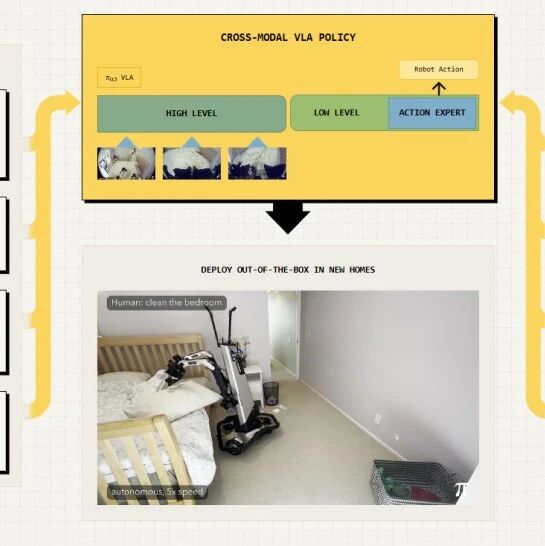
Core Viewpoint - The recent open-source release of the π0.5 model by Physical Intelligence enhances robotic capabilities through heterogeneous data collaborative training and multi-modal data fusion, enabling robots to understand task semantics and execute complex tasks accurately in real-world scenarios [1]. Technical Highlights of π0.5 - π0.5 employs heterogeneous data collaborative training, integrating data from various sources such as multiple robots, advanced semantic predictions, and network data, which enhances the model's generalization ability for real-world robotic tasks [2]. - The model fuses multi-modal data examples, including image observations, language commands, target detection, semantic sub-task predictions, and low-level actions, allowing robots to respond more accurately to instructions [4]. - Built on a general visual language model (VLM), π0.5 optimizes network structures to reduce information loss and improve multi-modal data processing efficiency, utilizing efficient convolutional neural networks for visual information and enhanced structures for understanding long text commands [6]. Addressing Generalization Challenges - Generalization has been a significant challenge for robots, but π0.5 improves performance as the number of training environments increases, achieving performance close to baseline models trained directly in test environments after approximately 100 training environments [7]. Practical Applications - π0.5 successfully completes tasks such as "organizing items in a drawer," "arranging laundry," and "cleaning dishes in a sink" in new real-world home environments, demonstrating its ability to handle complex and time-consuming tasks that require understanding task semantics and interacting with the correct objects [8][9]. Knowledge Transfer and Training Efficiency - The model enhances knowledge transfer from language to strategy through joint training of different modalities, creating a richer and more efficient training scheme for robotic learning systems, allowing for more flexible generalization [11]. Related Companies - Three companies closely associated with π0.5 include: 1. **Guanghe Tong**: Launched the Fibot platform, which integrates high-performance robotic domain controllers and multi-sensor fusion systems for real-time data capture [13]. 2. **Ark Infinite**: Provides hardware support for Physical Intelligence, demonstrating π0.5 in unfamiliar environments [16]. 3. **Stardust Intelligence**: An early partner of Physical Intelligence, contributing to the initial model training with their robots [18].
国泰海通|数字经济:全球首款全频6G芯片发布
国泰海通证券研究· 2025-09-07 14:33
Semiconductor Sector Dynamics - The world's first full-band 6G chip has been released [1] - OmniVision Technologies has launched the high-voltage isolation driver chip ORD110x [1] - AMD has officially released the Ryzen 5 9500F [1] Automotive Electronics Sector Dynamics - Hesai has secured a global exclusive lidar order from Motional [1] - Pony.ai has reached a strategic cooperation with Qatar National Transport Company [1] - Qualcomm and BMW Group have jointly launched a driver assistance system [1] AI Sector Dynamics - UBTECH has won the largest global contract for humanoid robots [1] - XianGong Intelligence has partnered with Stardust Intelligence to promote the large-scale application of humanoid robots in industrial and logistics scenarios [1] - The first large-scale reinforcement learning framework for embodied intelligence has been open-sourced [1] Metaverse Sector Dynamics - Oculens is set to unveil multiple new smart glasses [1] - Rivet has secured a $195 million contract with the U.S. Army to provide XR technology support for command systems [1] - VITRUE has raised a total of $100 million in two rounds of Series B financing [1]

AI周报|9月起AI生成合成内容必须添加标识;Anthropic融资130亿美元
Di Yi Cai Jing· 2025-09-07 02:00
Group 1: Anthropic's Valuation and Funding - Anthropic completed a Series F funding round of $13 billion, bringing its valuation to $183 billion, making it the fourth highest-valued unicorn globally, following SpaceX, ByteDance, and OpenAI [2] - The high valuation is supported by the performance of its AI model, Claude, which has shown leading capabilities in programming and mathematics [2] - Anthropic's annualized revenue is projected to reach approximately $10 billion by early 2025, increasing to over $5 billion by August 2025 [2] Group 2: AI Content Regulation - The "Artificial Intelligence Generated Synthetic Content Identification Measures" came into effect on September 1, requiring all AI-generated content to be clearly labeled [3] - Companies like DeepSeek and Tencent have implemented identification systems for AI-generated content to prevent public confusion and misinformation [3] Group 3: Broadcom's AI Chip Orders - Broadcom received over $10 billion in AI chip orders from a new customer, significantly improving its AI revenue outlook for fiscal year 2026 [4] - In the third quarter, Broadcom's AI-related revenue reached $5.2 billion, a 63% year-over-year increase, with expectations of $6.2 billion in the fourth quarter [4] Group 4: Nvidia's Investment in Quantum Computing - Nvidia's venture capital arm invested approximately $600 million in quantum computing company Quantinuum, which is valued at $10 billion [5] - Nvidia is actively collaborating with quantum computing companies and has established a quantum computing research lab [5] Group 5: DeepSeek's Advanced AI Model Development - DeepSeek is reportedly developing a more advanced AI model with agent capabilities to compete with U.S. rivals like OpenAI [6] - The new model aims to perform multi-step tasks with minimal user instructions and learn from past actions [6] Group 6: Lenovo's AI Product Launch - Lenovo unveiled multiple AI-enabled products at the IFA 2025 event, including high-performance PCs and smart devices [7] - The company emphasizes the importance of balancing innovation with commercial viability in product development [7] Group 7: Salesforce's Workforce Reduction - Salesforce has cut approximately 4,000 customer support positions, attributing the reduction to AI's ability to handle tasks previously performed by humans [8] - The CEO noted that AI now manages up to 50% of the company's workload [8] Group 8: Apple's Collaboration with Google - Apple has reportedly partnered with Google to evaluate the Gemini AI model and has shelved plans to acquire Perplexity [9] - This collaboration indicates a shift towards leveraging existing technologies rather than pursuing acquisitions for AI development [9] Group 9: UBTECH's Robot Procurement Contract - UBTECH secured a procurement contract worth 250 million yuan for humanoid robots, marking one of the largest contracts in the global humanoid robot sector [10] - This contract is part of a trend of increasing commercial applications for humanoid robots [11] Group 10: Stardust Intelligence's Robot Order - Stardust Intelligence announced a strategic cooperation for a thousand-unit order of humanoid robots, aimed at automating tasks in industrial settings [12] - This collaboration represents one of the earliest large-scale commercial deployments of humanoid robots in the industrial sector this year [12]




2.5亿!全球人形机器人最大单诞生,深圳公司拿下
36氪· 2025-09-05 11:18
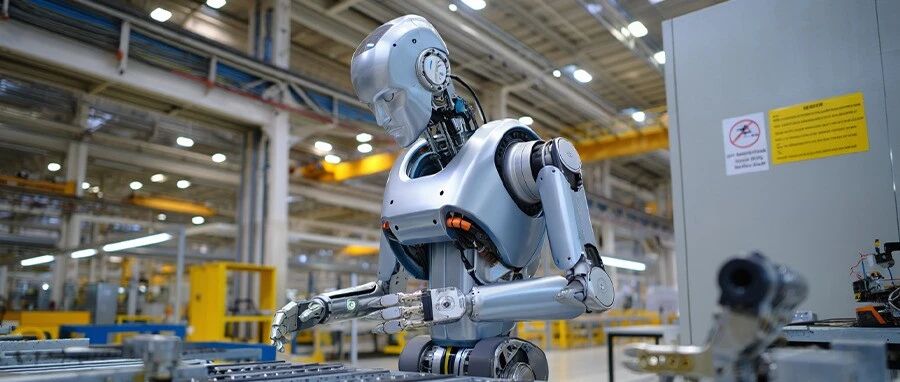
Core Viewpoint - UBTECH has secured the largest global contract for humanoid robots, amounting to 250 million yuan, marking a significant milestone in the humanoid robotics industry [6]. Group 1: Contract Achievements - UBTECH announced a procurement contract for humanoid robot products and solutions with a well-known domestic enterprise, valued at 250 million yuan, which is currently the largest contract in the global humanoid robot sector [6]. - Previously, UBTECH also secured a major contract worth 90.51 million yuan with MiYi (Shanghai) Automotive Technology Co., indicating its strong market position [7]. Group 2: Product Details - The latest contract focuses on the Walker S2 humanoid robot, which features an innovative autonomous hot-swappable battery system, allowing for continuous operation 24/7 [8]. - The Walker S2, launched in July, utilizes the BrainNet 2.0 technology for autonomous and collaborative operations, with plans to deliver 500 units this year for the smart manufacturing industry [8]. Group 3: Strategic Partnerships - On August 31, UBTECH signed a strategic partnership agreement with Infini Capital, involving a financing credit line of 1 billion USD to support funding and industrial collaboration [10]. - The partnership aims to invest in the humanoid robot supply chain and expand into the Middle East market, including plans for a joint venture and the establishment of a super factory and R&D center in the region [10]. Group 4: Market Trends - The demand for humanoid robots is increasing, with several large orders reported this year, indicating a shift from pilot projects to bulk procurement in industrial applications [12]. - This trend suggests that downstream companies are beginning to incorporate humanoid robots into their long-term production plans, potentially leading to cost reductions and expanded applications in the future [12].
港城大等团队突破连续体机器人控制难题,让柔性臂实现毫米级精准定位!
机器人大讲堂· 2025-09-04 11:23
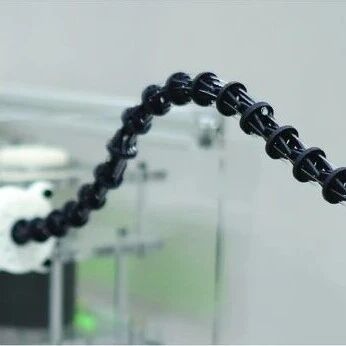
Core Viewpoint - Continuous robots exhibit great potential in fields such as robotic surgery and narrow space detection, but precise control remains a significant challenge. Recent breakthroughs by research teams from City University of Hong Kong and Hefei University of Technology have applied Kalman filtering technology to enhance the online control precision of these robots [1][2]. Group 1: Continuous Robots and Control Challenges - Continuous robots possess infinite degrees of freedom and adaptability, making them difficult to control accurately due to their deformable nature, akin to controlling a cooked noodle [4]. - Traditional rigid-link robots have simpler control mechanisms, while continuous robots face challenges from large deformations, friction effects, and inherent non-linear characteristics [4][5]. - The research team designed a lightweight robot with a complex internal structure, consisting of three flexible segments, each with five spacer disks and one drive disk, weighing only 8.4 grams [5]. Group 2: Control Methodology - The team utilized a piecewise constant curvature (PCC) model for initial control, which, while computationally efficient, resulted in position errors exceeding 1.6 mm and angle errors over 1.4 degrees, unacceptable for high-precision applications [7]. - Instead of developing a more complex model, the team innovatively employed the Kalman filter to allow the robot to self-correct during motion, estimating and compensating for errors in real-time [8][9]. - The control system operates at a frequency of 20 Hz, integrating steps such as obtaining end pose, calculating model Jacobians, estimating and compensating for Jacobian errors, and generating control commands [11]. Group 3: Experimental Validation - The research team conducted three trajectory tracking experiments and two disturbance resistance tests, demonstrating the effectiveness of the new method [12]. - In the first experiment, the root mean square error (RMSE) in the x-direction improved from 1.6 mm to 1.1 mm, and in the y-direction from 2.3 mm to 2.1 mm, showcasing significant enhancements in tracking precision [12][14]. - The second experiment focused on attitude control, achieving a reduction in RMSE from 2.1 degrees to 1.5 degrees, while maintaining position accuracy [14]. - The robustness of the method was further validated through disturbance tests, where the robot maintained performance even under significant load changes [15]. Group 4: Innovation and Future Prospects - The research combines model-driven and data-driven approaches, leveraging the strengths of both to enhance control precision while maintaining computational efficiency [17]. - The method's advantages include no need for offline data collection, high computational efficiency, and robustness against external disturbances, indicating strong potential for practical applications [17]. - Future research directions include incorporating dynamic effects and expanding to three-dimensional motion to improve estimation accuracy and applicability [17].
四大证券报精华摘要:9月3日
Xin Hua Cai Jing· 2025-09-03 02:18
Group 1 - Foreign institutions are diversifying their investments through ETFs, focusing on sectors like gold, innovative pharmaceuticals, and semiconductors, with significant returns reported [1] - Private equity firms have increased their research activities, conducting over 6000 A-share company investigations in August, reflecting a positive outlook and a focus on "hard technology" and "big health" sectors [2] - The polyester filament industry has shown strong performance with a 10.15% increase in the polyester index since August 1, indicating a favorable investment opportunity as demand peaks [4] Group 2 - Leading companies in various sectors are optimistic about the second half of the year, predicting a sales peak driven by market demand and supportive policies [5] - The optical switch market is expected to grow rapidly, with a projected market size of $2.02 billion by 2031 and a compound annual growth rate of 16.3% [7] - Oil service companies are poised for growth as international oil prices remain stable, with several firms reporting solid performance in their recent half-year reports [8] Group 3 - The demand for energy storage solutions has surged, leading to a significant increase in orders for domestic battery manufacturers, with some companies reporting full production capacity [11] - A new tax policy has been introduced to support the management of state-owned equity and cash income for social security funds, which may impact investment strategies [12][13] - Institutional investors, including public funds and social security funds, have shown a consensus on 145 stocks, particularly in the new productivity sector, indicating a shared outlook on policy and industry trends [14] Group 4 - Stardust Intelligent has secured a large order for humanoid robots, marking a significant step in the commercialization of AI robots for various industrial applications [15]
星尘智能与仙工智能签订千台级工业机器人订单
Xin Jing Bao· 2025-09-02 09:33
Core Insights - Stardust Intelligence has signed an order for over a thousand industrial robots with Xian Gong Intelligence, aiming for large-scale deployment in various sectors over the next two years [1] - The collaboration will also focus on joint research and development of industrial AI robot products, exploring advanced technology themes such as robot control, rope drive transmission, and the synergy between AI and robot hardware and software [1] Summary by Categories Company Developments - Stardust Intelligence and Xian Gong Intelligence have entered into a significant partnership involving the deployment of over a thousand AI robots [1] - The partnership emphasizes the commitment to innovation through joint R&D efforts in industrial AI robotics [1] Industry Trends - The deployment of AI robots is expected to enhance efficiency in industrial, manufacturing, warehousing, and logistics sectors [1] - The focus on advanced technologies indicates a trend towards greater integration of AI in robotics, which may drive future developments in the industry [1]

星尘智能与仙工智能达成人形机器人千台级合作
Mei Ri Jing Ji Xin Wen· 2025-09-02 08:45
Group 1 - The core point of the article is that Stardust Intelligence has announced a strategic partnership with XianGong Intelligence to fulfill an order of over a thousand humanoid robots [1] - The deployment of these AI robots will occur in various sectors including industrial, manufacturing, warehousing, and logistics [1] - The partnership aims for large-scale and phased deployment of the robots over the next two years [1]
锦秋基金领投的星尘智能达成千台级人形机器人合作 | Jinqiu Spotlight
锦秋集· 2025-09-02 08:35
Core Viewpoint - Jinqiu Fund has invested in Astribot, a company specializing in AI robots, indicating a strong belief in the potential of AI-driven automation in various industries [1][4]. Investment and Financing - Jinqiu Fund led the Series A financing for Astribot in 2024 and continued to invest in the A+ round in 2025, showcasing its commitment to long-term investment in breakthrough technologies [1][4]. - The A+ round financing included participation from Ant Group and other existing shareholders, highlighting the growing interest in Astribot's innovative approach [4]. Company Overview - Astribot, founded in late 2022, is the first company in the industry to mass-produce AI robots using a unique rope-driven design that mimics human tendon movement, allowing for high dynamic response and dexterous operation [3][8]. - The company aims to make AI robotic assistants accessible to billions, promoting human-robot coexistence and collaboration [3]. Product Development - Astribot has developed the Astribot S1 AI robot, which can perform complex tasks such as cooking, sorting, and cleaning, demonstrating expert-level intelligent planning and operation [5][8]. - The company has established partnerships with leading organizations, including JD.com and Shenzhen Nursing Home, to accelerate the application of its robots in various sectors [8]. Strategic Collaboration - Astribot has formed a strategic partnership with Xiangong Intelligent to deploy over a thousand AI robots in industrial, manufacturing, warehousing, and logistics settings over the next two years [1][10]. - This collaboration aims to automate repetitive and hazardous tasks in manufacturing, thereby enhancing productivity and safety [5][10]. Industry Impact - The partnership between Astribot and Xiangong Intelligent is seen as a significant step in the commercialization of AI robots in the industrial sector, marking one of the earliest large-scale collaborations in 2025 [10]. - The integration of advanced control systems with AI robots is expected to provide scalable deployment experiences and drive the growth of China's intelligent robotics industry [6][10].