DeepMind

Search documents
Forward Future Live | 12.19.25 | Guests from Google, Deepmind, SemiAnalysis, and Robinhood
Matthew Berman· 2025-12-19 17:57
Guest Lineup: Doug O'Laughlin (President, SemiAnalysis), Koray Kavukcuoglu (Chief AI Architect, Google), Logan Kilpatrick (Group Product Manager, Google Deep Mind), Abhishek Fatehpuria (Vice President of Product, Robinhood) Download Humanities Last Prompt Engineering Guide (free) 👇🏼 https://bit.ly/4kFhajz Download The Matthew Berman Vibe Coding Playbook (free) 👇🏼 https://bit.ly/3I2J0YQ Join My Newsletter for Regular AI Updates 👇🏼 https://forwardfuture.ai Discover The Best AI Tools👇🏼 https://tools.forwardfut ...



Forward Future Live | 12.19.25 | Guests from Google, Deepmind, SemiAnalysis, and Robinhood
Matthew Berman· 2025-12-19 17:27
Guest Lineup: Doug O'Laughlin (President, SemiAnalysis), Koray Kavukcuoglu (Chief AI Architect, Google), Logan Kilpatrick (Group Product Manager, Google Deep Mind), Abhishek Fatehpuria (Vice President of Product, Robinhood) Download Humanities Last Prompt Engineering Guide (free) 👇🏼 https://bit.ly/4kFhajz Download The Matthew Berman Vibe Coding Playbook (free) 👇🏼 https://bit.ly/3I2J0YQ Join My Newsletter for Regular AI Updates 👇🏼 https://forwardfuture.ai Discover The Best AI Tools👇🏼 https://tools.forwardfut ...

美国「曼哈顿计划」启动,OpenAI谷歌等24巨头打响「科技珍珠港之战」
3 6 Ke· 2025-12-19 07:54
Core Insights - The United States has officially launched a national AI initiative named the "Genesis Mission," likened to the Manhattan Project, aimed at integrating top AI technologies with national laboratory research capabilities [1][5][25] - This initiative involves major tech companies such as Microsoft, Google, NVIDIA, OpenAI, DeepMind, and Anthropic, marking a significant collaboration in advancing scientific research [1][5][19] - The goal is to create the first AI-driven research platform to accelerate scientific discoveries in areas like controlled nuclear fusion, energy materials, climate modeling, and quantum computing algorithms [1][14] Group 1: Initiative Overview - The Genesis Mission is a historic national strategy initiated by the U.S. government, with a focus on transforming AI into a default tool for scientific research [1][13] - The plan aims to unify national laboratories, supercomputers, and data assets into a single AI platform, enhancing the efficiency of scientific discovery processes [1][13] - The initiative is led by the U.S. Department of Energy, which oversees critical research areas such as nuclear energy, materials science, and climate modeling [18][19] Group 2: Collaboration and Participation - A total of 24 leading tech companies are participating in the Genesis Mission, representing a comprehensive integration of the U.S. AI industry into the national research framework [19][20] - Notably, OpenAI and Google, traditionally competitors, are collaborating to address national scientific and energy challenges [6][7] - Companies like Microsoft and Google will provide cloud computing infrastructure and AI development platforms to support national laboratories [21][22] Group 3: Strategic Goals and Implications - The initiative aims to double U.S. scientific productivity by 2030 through the integration of AI and supercomputing capabilities [7] - The Genesis Mission is expected to revolutionize traditional research processes, shifting from lengthy cycles to AI-driven hypothesis generation and experimentation [25][26] - This strategic move positions AI as a national capability rather than merely a commercial tool, emphasizing the importance of embedding AI into the scientific research ecosystem [28][30]



DeepMind掌门人万字详解通往AGI之路
量子位· 2025-12-19 07:20
Core Viewpoint - Achieving AGI requires a balanced approach of technological innovation and scaling, with both aspects being equally important [2][55]. Group 1: Path to AGI - Demis Hassabis outlines a realistic path to AGI, emphasizing that 50% of efforts should focus on model scaling and 50% on scientific breakthroughs [5]. - The success of AlphaFold demonstrates AI's potential to solve fundamental scientific problems, with ongoing research expanding into materials science and nuclear fusion [5][9]. - Current AI models rely heavily on human knowledge, and the next goal is to develop autonomous learning capabilities similar to AlphaZero [5][27]. Group 2: AI Performance and Limitations - AI exhibits a "jagged intelligence" phenomenon, performing well in complex tasks like the International Mathematical Olympiad but struggling with basic logical problems [5][19]. - The need for models to improve self-reflection and verification capabilities is highlighted, as current systems often provide incorrect answers when uncertain [5][57]. - The introduction of confidence mechanisms is necessary to address the hallucination problem, where models generate plausible but incorrect responses [5][56]. Group 3: World Models and Simulation - World models enhance understanding of physical dynamics and sensory experiences, which language models struggle to convey [5][69]. - The use of simulation environments for training AI agents can lead to infinite task generation and complex behavior training, potentially aiding in the exploration of life and consciousness origins [5][80]. - The Genie project exemplifies the potential of interactive world models, which could be applied in robotics and general assistance [5][70]. Group 4: Commercialization and Social Risks - The commercialization of AI poses social risks, and there is a need to avoid the pitfalls of social media's focus on user engagement [5][101]. - Building AI personas that support scientific reasoning and personalized feedback is essential to prevent echo chambers [5][105]. Group 5: Scaling and Innovation - Despite discussions of scaling challenges, the release of Gemini 3 indicates that significant progress continues to be made [5][50]. - The combination of top-tier research capabilities and infrastructure, such as TPUs, positions the company favorably for ongoing innovation and scaling [5][54]. Group 6: Future of AI and AGI - The integration of various projects, including Gemini and world models, is crucial for developing a unified system that could serve as a candidate for AGI [5][114]. - The potential societal impacts of AGI necessitate proactive planning for labor transitions and economic adjustments, similar to lessons learned from the Industrial Revolution [5][118].

Science发布2025十大科学突破,中国占据半壁江山——可再生能源、龙人头骨、异种器官移植、耐高温水稻
生物世界· 2025-12-19 04:08
Group 1: Renewable Energy Development - China's rapid development in renewable energy has been recognized as the top scientific breakthrough of 2025, with significant contributions in solar and wind energy [4][5][9] - Global renewable energy generation has surpassed coal, with solar and wind energy growth covering the entire increase in global electricity consumption from January to June 2025 [6] - China plans to reduce carbon emissions by up to 10% over the next decade, primarily through the expansion of wind and solar energy rather than reducing energy usage [6][8] Group 2: Genetic Editing and Rare Diseases - A customized lipid nanoparticle-based base editing therapy successfully treated a rare genetic disorder in a child, demonstrating significant advancements in gene editing for rare diseases [12][14] Group 3: Antibiotics for Gonorrhea - Two new antibiotics, gepotidacin and zoliflodacin, have been approved by the FDA for treating gonorrhea, addressing the growing antibiotic resistance of Neisseria gonorrhoeae [15][17] Group 4: Cancer Research - Research has revealed a new biological signaling axis involving neurons and cancer cells, providing insights into cancer metastasis and potential new treatment targets [18][23] Group 5: Astronomy and Data Collection - The Rubin Observatory will conduct continuous scans of the visible sky every three days for ten years, generating unprecedented amounts of data and detailed 3D maps of the universe [24][26][28] Group 6: Human Evolution - A study successfully extracted ancient DNA from the "Dragon Man" skull, linking it to Denisovans and enhancing understanding of East Asian human diversity and evolution [29][31][33] Group 7: AI in Scientific Research - Large language models (LLMs) have shown exceptional capabilities in various scientific fields, leading to significant advancements and a shift in research paradigms [34][37] Group 8: Particle Physics - A breakthrough in calculating the magnetic properties of the muon particle using lattice gauge theory has provided new insights into particle physics, despite ruling out certain new physics possibilities [38][41] Group 9: Xenotransplantation - Milestones in xenotransplantation have been achieved with genetically modified pig kidneys surviving in human patients for extended periods, moving closer to addressing organ shortages [42][44][45] Group 10: Heat-Resistant Rice - Research has identified a natural gene switch in rice that enhances heat tolerance, significantly improving yield under high-temperature conditions [46][48][50]

白春礼:国际竞争加速向基础前沿前移,企业创新角色正在升级
2 1 Shi Ji Jing Ji Bao Dao· 2025-12-18 11:56
Core Viewpoint - The integration of basic research into corporate strategy is essential for enhancing national competitiveness and sustaining industrial advantages, as highlighted by the rapid evolution of technology and international competition [1][2]. Group 1: Importance of Basic Research - Basic research is increasingly recognized as the "first move" in industrial competition and a source of national competitiveness [1]. - The boundary between technological innovation and industrial innovation is becoming blurred, with companies transitioning from being mere "applicators" of technology to "creators" of science [1][2]. Group 2: Changes in Corporate Attitudes Towards Basic Research - Companies are shifting their perception of basic research from an "external supply" to a "core competitive asset," leading to systematic management of research [2]. - Leading international firms are making original contributions to "new paradigm basic research," significantly altering the research landscape [2]. Group 3: Challenges Faced by Domestic Companies - Basic research funding in China is relatively low, with only about 6.9% of total R&D expenditure allocated to basic research in 2024, compared to over 12%-20% in leading countries [3]. - Corporate spending on basic research is minimal, constituting only about 1% of total R&D expenditures, indicating a weak role as funders of basic research [3]. - Companies face multiple barriers in conducting basic research, including unstable expectations, financial pressures, and insufficient interdisciplinary capabilities [3]. Group 4: Recommendations for Enhancing Basic Research - Integrate corporate basic research into national strategic tasks to create stable support and long-term arrangements [4]. - Develop effective incentives and risk-sharing mechanisms to ensure long-term investments yield returns [4]. - Establish collaborative platforms between research institutions and companies to facilitate innovation in basic research [4]. - Reform talent supply and evaluation systems to foster an environment conducive to corporate basic research [5].

世界模型是一种实现端到端自驾的途径......
自动驾驶之心· 2025-12-18 03:18
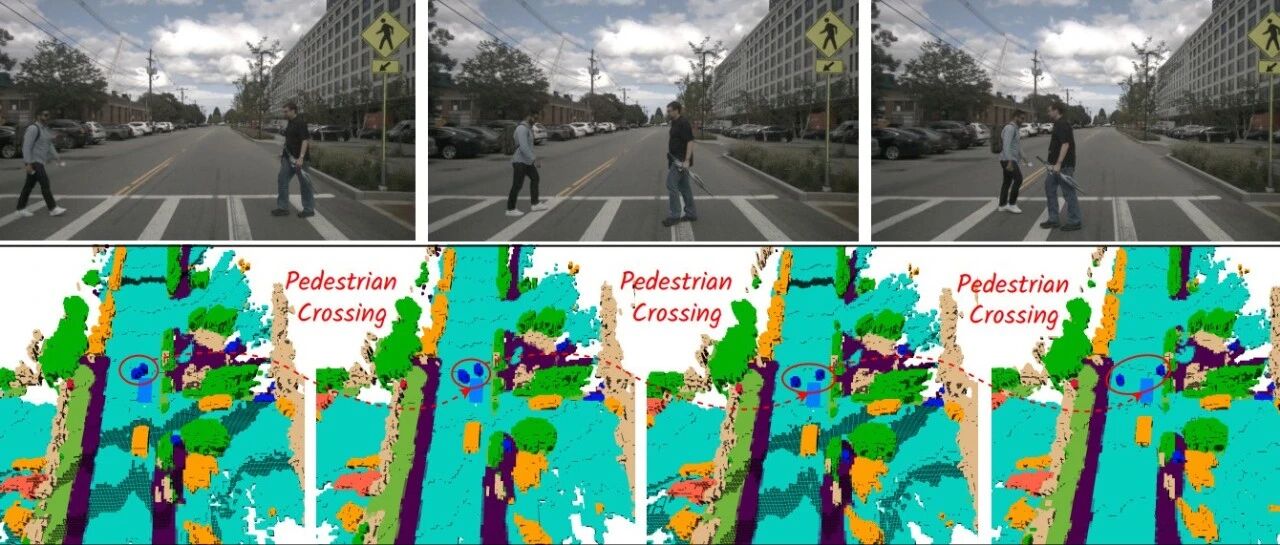
Core Viewpoint - The article discusses the distinction between world models and end-to-end models in autonomous driving, clarifying that world models are not end-to-end but serve as a pathway to achieve end-to-end autonomous driving [2][3][4]. Group 1: Definitions and Concepts - End-to-end autonomous driving is defined as a model that processes information input on one end and outputs decision results without explicit information processing and decision logic [3]. - World models are defined as models that accept information input and internally establish a complete understanding of the environment, capable of reconstructing and predicting future changes [4]. Group 2: Course Introduction - A new course on world models has been launched, focusing on general world models, video generation, and OCC generation algorithms, including applications from Tesla and the Li Fei Fei team [5]. - The course aims to enhance understanding of end-to-end autonomous driving and is designed for individuals looking to enter the autonomous driving industry [15]. Group 3: Course Structure - Chapter 1 introduces world models and their relationship with end-to-end autonomous driving, covering historical development and current applications [10]. - Chapter 2 provides foundational knowledge on world models, including scene representation and relevant technologies like Transformer and BEV perception [10][16]. - Chapter 3 discusses general world models and popular algorithms such as Marble and Genie 3, explaining their core technologies and design philosophies [11]. - Chapter 4 focuses on video generation world models, detailing significant works and advancements in this area [12]. - Chapter 5 covers OCC generation models, discussing their applications and potential for trajectory planning [13]. - Chapter 6 shares industry insights and interview preparation tips for roles related to world models [14]. Group 4: Learning Outcomes - The course aims to elevate participants to the level of a world model autonomous driving algorithm engineer within approximately one year, covering key technologies and enabling practical application in projects [18].
Gemini 3 Flash: Renders faster and efficiently
Google DeepMind· 2025-12-17 16:00
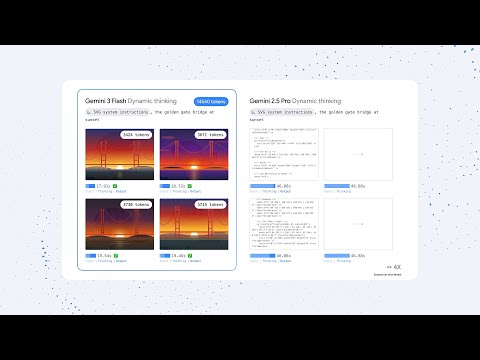
Gemini 3 Flash excels in speed and efficiency by coding SVG images, HTML, and three.js side-by-side between 3 Flash and 2.5 Pro. 3 Flash generates the imagery better, faster and with fewer token usage. Learn more at https://deepmind.google/models/gemini/flash/ ___ Subscribe to our channel https://www.youtube.com/@googledeepmind Find us on X https://twitter.com/GoogleDeepMind Follow us on Instagram https://instagram.com/googledeepmind Add us on Linkedin https://www.linkedin.com/company/deepmind/ ...
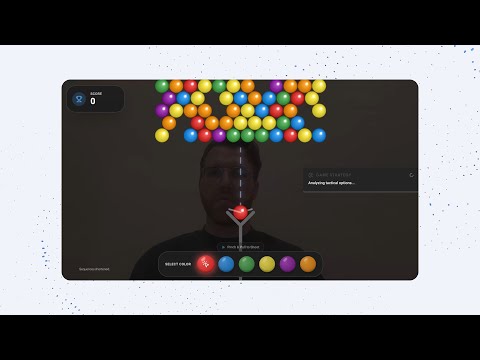
Gemini 3 Flash: Assist in real-time game play
Google DeepMind· 2025-12-17 16:00
Gemini 3 Flash specializes in capabilities critical for live assistance, including complex geometric calculation, velocity estimation, and multimodal processing. It can also simultaneously analyze video and hand-tracking inputs to provide strategic, real-time guidance in this slingshot game. Learn more at https://deepmind.google/models/gemini/flash/ ___ Subscribe to our channel https://www.youtube.com/@googledeepmind Find us on X https://twitter.com/GoogleDeepMind Follow us on Instagram https://instagram.co ...
Gemini 3 Flash: Visual context in an instant
Google DeepMind· 2025-12-17 15:59
Product Features - Gemini 3 Flash enhances image generation with a contextual UI, showcasing strong multimodal capabilities [1] - The system demonstrates understanding of visual input and reasons to describe image content interactively [1] Company Information - Google DeepMind promotes its Gemini Flash model [1] - Google DeepMind encourages users to learn more via a provided link [1] - Google DeepMind directs users to its social media channels (X, Instagram, LinkedIn) and YouTube channel [1]