圆通速递

Search documents
2025 年 6 月中国快递市场分析-China Express Market Analysis for June 2025
2025-07-24 05:04
Key Takeaways from the Conference Call Industry Overview - The report focuses on the **China Express** industry, specifically analyzing the performance of major express delivery companies in the Asia Pacific region for **June 2025** [1] Core Insights - **Volume Growth**: - SF Express led the market with a **32% YoY volume growth**, followed by YTO at **19% YoY**. - Both STO and Yunda experienced lower growth rates at **11%** and **7% YoY**, respectively, resulting in a loss of market share of **0.5ppt** and **1.0ppt** [2] - **Revenue Performance**: - SF Express achieved a **14% YoY revenue growth**, outperforming YTO and STO, which recorded **11%** and **10% YoY growth**, respectively. - Yunda's revenue growth slowed significantly to **3% YoY**, down from **9% YoY** for the industry, marking a decline from **7% YoY** in May [3] - **Average Selling Price (ASP)**: - SF's ASP decreased by **13% YoY**, while YTO, Yunda, and STO saw decreases of **7%**, **4%**, and **1%**, respectively. - On a month-over-month basis, SF and STO's ASPs improved by **4%** and **2%**, while YTO and Yunda's ASPs fell to new lows in 2025 [4] Financial Metrics - **June 2025 Financials**: - SF Express: Revenue of **Rmb 19,962 million**, YoY growth of **14.2%**, volume of **1,460 million**, YoY growth of **31.8%**, ASP of **Rmb 13.67** [5] - Yunda: Revenue of **Rmb 4,149 million**, YoY growth of **2.8%**, volume of **2,173 million**, YoY growth of **7.4%**, ASP of **Rmb 1.91** [5] - STO: Revenue of **Rmb 4,341 million**, YoY growth of **10.1%**, volume of **2,184 million**, YoY growth of **11.1%**, ASP of **Rmb 1.99** [5] - YTO: Revenue of **Rmb 5,527 million**, YoY growth of **11.4%**, volume of **2,627 million**, YoY growth of **19.3%**, ASP of **Rmb 2.10** [5] Market Share Dynamics - SF Express's market share increased by **1.1ppt** to **8.7%**, while Yunda's market share decreased by **1.0ppt** to **12.9%**. - STO's market share remained stable at **12.9%**, and YTO's increased by **0.5ppt** to **15.6%** [5] Strategic Insights - SF Express's strong performance is attributed to robust intra-city delivery demand and the implementation of the "Activating Operations" strategy. - The company achieved **10% YoY revenue growth in 1H25**, aligning with its guidance [12] Additional Observations - The report indicates that ZTO and YTO gained a total of **0.7ppt** in market share in **2Q25**, compared to a **0.4ppt** drop in **1Q25**, suggesting a trend of accelerated segment consolidation [12] Conclusion - The express delivery industry in China is experiencing significant shifts, with SF Express maintaining a strong lead in both volume and revenue growth, while Yunda faces challenges in sustaining its market position. The overall market dynamics indicate a consolidation trend among the major players, which could present both opportunities and risks for investors in the sector.



2025国际低空经济博览会盛大开幕!
第一财经· 2025-07-24 03:19
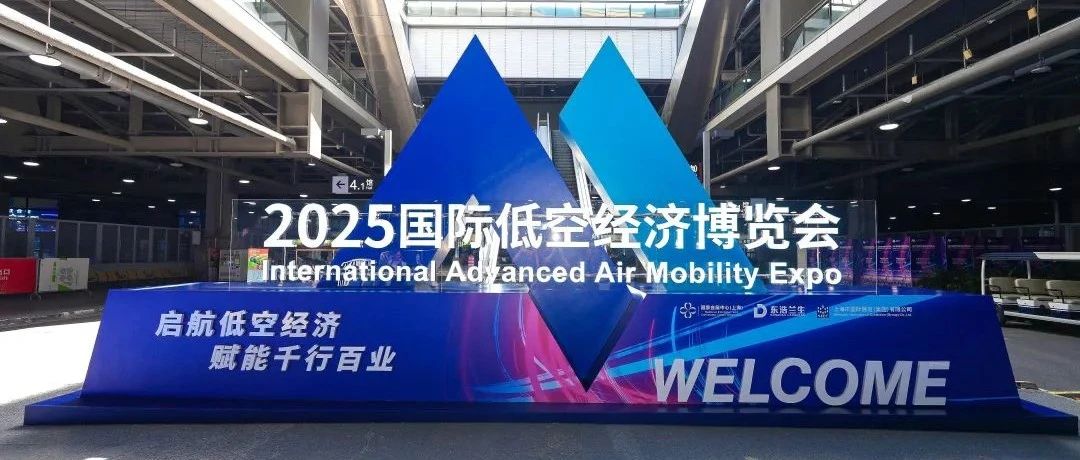
Core Viewpoint - The 2025 International Low Altitude Economy Expo, held in Shanghai, aims to showcase advancements in low altitude economic development and foster collaboration among industry stakeholders [1][12]. Group 1: Event Overview - The expo officially opened on July 23, 2025, at the National Exhibition and Convention Center in Shanghai, covering an area of 60,000 square meters with nearly 300 exhibitors and over 30 forums [1]. - The opening activities included three major events: the Future Air Traffic International Forum, the Low Altitude Economic Infrastructure Development Conference, and the Shanghai Low Altitude Economic Industry Innovation Conference [4][10]. Group 2: Key Participants and Speakers - Notable speakers at the Future Air Traffic International Forum included Dr. Alistair Wood from the Royal Aeronautical Society and representatives from various international aviation authorities [5][6]. - The Low Altitude Economic Infrastructure Development Conference featured prominent figures such as Wang Ruiping, Chairman of the China Civil Airport Association, and Wu Guanghui, Chief Designer of COMAC [8]. Group 3: Exhibitor Highlights - The expo showcased innovative products in the low altitude economy, including drones and electric vertical takeoff and landing aircraft (eVTOL), with participation from companies like DJI and China Postal Express Logistics [12]. - Exhibitors also included traditional general aviation leaders and companies focusing on new materials and technologies, such as China Telecom and China Mobile [12]. Group 4: Market Impact and Opportunities - The event attracted professional visitor groups from 23 countries and regions, facilitating precise order matching and market expansion for exhibitors [14]. - The expo aims to inject new momentum into the low altitude economy by addressing homogenization competition and enhancing brand influence [14]. Group 5: Forum and Conference Activities - A total of 14 forums were held on the opening day, focusing on topics such as low altitude flight service innovation and the annual forum of the Civil Unmanned Aerial Vehicle Industry Technology Innovation Strategic Alliance [16]. - The forums aimed to gather essential elements for low altitude economic development, including finance, talent, technology, standards, and policies [17]. Group 6: Community Engagement and Future Directions - The expo included various public engagement activities, such as the National Aerospace Model Championship and a low altitude carnival, to promote the low altitude economy among the general public [20][23]. - The event is positioned as a bridge between technological advancements and public needs, transitioning the low altitude economy from conceptualization to practical implementation [23].






策略对话交运:交运反内卷行情展望
2025-07-23 14:35
Summary of Conference Call Notes Industry Overview - **Aviation Industry**: The aviation sector has experienced significant losses since 2020, totaling nearly 500 billion. This has led to a drastic decline in supply, with the compound annual growth rate dropping from 12% to less than 3% [1][4]. - **Express Delivery Industry**: The express delivery sector has seen an escalation in price wars since 2024, with both single ticket prices and profitability entering a downward trend [3][8]. Key Insights and Arguments Aviation Industry - **Price Dynamics**: Airline ticket prices are increasingly reflecting supply and demand realities rather than expectations. As of May 2024, ticket prices have shown signs of recovery, primarily driven by supply-demand relationships [1][2]. - **Demand Recovery**: Although demand has rebounded quickly, business travel remains weak, with a 10% month-on-month decline in June due to factors like the alcohol ban [1][4]. - **Profitability Outlook**: The aviation sector is expected to return to profitability in 2024 after five years of significant losses. Current expectations for profitability are low, indicating limited risk in buying airline stocks with a high probability of upside [1][5][6]. - **Recommended Stocks**: High-elasticity airline stocks are recommended, including major Hong Kong carriers (Air China, China Eastern, China Southern) and A-share companies (HNA, Spring Airlines, and Juneyao Airlines) [1][5]. Express Delivery Industry - **Regulatory Environment**: The National Postal Administration has initiated anti-involution measures, with expectations for specific details to be implemented soon. Key production areas like Yiwu and Guangdong are already taking steps to stabilize prices [1][7]. - **Market Dynamics**: The express delivery market is currently facing intense competition, with a significant impact on franchise operations. The first quarter of 2024 showed mixed results, and the second quarter is expected to see a decline across the board [3][8]. - **Recommended Companies**: Leading express delivery companies such as YTO and ZTO are recommended due to their ability to regain market share amid price wars. Companies like Jitu and Shentong are also highlighted for their potential to improve governance and performance [3][10]. Additional Important Points - **Historical Context**: The aviation industry has never faced large-scale supply issues before, with the current situation being unprecedented. The historical context suggests that supply-side reforms can lead to improved stock performance [4]. - **Previous Anti-Involution Success**: The express delivery sector previously experienced a successful anti-involution campaign in 2021, which stabilized prices and improved profitability. The current environment shows similarities, but the competitive landscape has shifted [9][10]. - **Future Projections**: The express delivery sector may see a repeat of past recovery patterns if regulatory measures are effectively implemented and if companies can enhance their core capabilities [9][10].
Q2机构持仓分析+反内卷下交运机会讨论
2025-07-23 14:35
Summary of Key Points from the Conference Call Industry Overview - The conference call discusses the transportation industry, specifically focusing on the performance of various segments including express delivery, shipping, and aviation in Q2 2025 [1][3][4]. Core Insights and Arguments - **Overall Fund Holdings**: In Q2 2025, the total market value of fund holdings in the transportation industry reached 25.8 billion, a 17% increase quarter-over-quarter. Despite a decline in overall market fund allocations, the transportation sector ranked 14th among 31 industries, with a fund holding ratio of 1.97%, up by 0.32 percentage points from Q1, but still underweight by 1.08% [1][4]. - **Express Delivery Segment**: The express delivery sector showed significant growth, particularly with SF Holding, whose institutional holdings doubled. The company benefited from strong fundamentals, a recovery in timely delivery growth, and contributions from e-commerce and fresh produce businesses. Cost reduction and efficiency improvements were also noted [1][5]. - **Shipping Sector Recovery**: The shipping sector saw a rebound in Q2 2025, with notable increases in holdings for China Shipbuilding Industry Corporation and China State Shipbuilding Corporation, with the latter's holdings doubling and the former increasing by 2000% [1][6]. - **Aviation Sector Performance**: The aviation sector's holdings reached 9.5 billion, a 9% decrease from the previous quarter. However, it remains a core allocation within the transportation sector, with private airlines gaining market share. The sector is expected to benefit from a reduction in oil prices, improving cost structures [1][9][10]. - **Impact of Anti-Competition Measures**: The concept of "anti-involution" is reshaping the competitive landscape in the transportation industry, particularly in express delivery and aviation. This shift is expected to enhance long-term valuation and profitability across various segments, including rail and shipping [2][21]. Additional Important Insights - **Market Sentiment on Price Wars**: There are concerns regarding excessive expectations of price wars in the express delivery sector, leading to conservative profit forecasts. However, the market is viewed as having a clean slate for institutional holdings, suggesting potential for significant price and profit elasticity [1][7]. - **Airport Sector Developments**: The airport sector is experiencing stable passenger flow and pricing, with Meilan Airport positioned to benefit from policy changes related to the Hainan Free Trade Port, which is expected to enhance profitability [1][11]. - **Rail and Road Transport Trends**: The rail transport sector is projected to see a 10.6% increase in passenger volume for the year, with expectations of recovery in ticket prices and volumes following the end of price wars. The highway sector faces challenges due to slowing vehicle ownership growth and trade constraints [12][13]. - **Commodity Market Influence**: The high levels of commodity prices are positively impacting the freight sector, with expectations of increased transport volumes and prices if the anti-involution trend leads to normalized pricing [16][18]. - **Future Outlook for Shipping**: The shipping market is expected to benefit from improved profitability across the supply chain, with recommendations for specific stocks in the sector due to anticipated positive developments following restructuring efforts [19][20]. This summary encapsulates the key points discussed in the conference call, highlighting the performance and outlook of the transportation industry in Q2 2025.
快递反内卷如何选股
2025-07-23 14:35
Summary of Conference Call on the Express Delivery Industry Industry Overview - The express delivery industry is currently facing pressure from price wars, with no room for further reductions in delivery fees. Companies are implementing cost-cutting measures at their network points to cope with this pressure [1][4] - Regulatory requirements are pushing brands to address network exit issues to ensure stability, with common strategies including short-term subsidies or larger networks absorbing smaller ones [1][5] - The focus for the future will be on improving end-service quality and controlling costs, with technologies like autonomous vehicles being utilized to reduce expenses [1][6] Key Points and Arguments - The "anti-involution" policy aims to prevent excessive competition that could lead to performance downgrades. It is expected that there will be no large-scale price cuts in Q3 2025, although significant price increases are also unlikely [1][7] - Capital expenditure in the express delivery industry is projected to increase in 2025, but growth rates are expected to slow to around 15%. Some brands are underperforming and facing cost pressures, necessitating measures to ensure volume growth [1][8] - Management challenges include ensuring consistent pricing control from headquarters, the impact of automation on capacity utilization, and the complexities introduced by franchise pricing strategies [1][9] Regional Pricing Trends - Recent price increases have been noted in various regions, such as a 0.1 yuan increase in the base price in Yiwu, with similar adjustments expected in Guangdong starting in August [1][10][11] - The self-initiated price hikes by franchisees indicate a response to the need for recovery before peak seasons, with headquarters not capitalizing on these increases [1][12] Investment Recommendations - It is recommended to focus on leading companies like YTO and ZTO, which have low valuations, increasing growth rates, and strong market shares. These companies are seen as having robust risk resistance and potential for commercial growth [2][14] - J&T Express has exceeded expectations in its international business, particularly in Southeast Asia, with a growth rate of 66% in Q2, leading to an upward adjustment of its target price to 15 yuan [2][15] Future Outlook - The overall performance trend for the e-commerce express delivery industry in 2025 can be assessed based on the first half's performance, with leading companies like Zhongtong showing strong fundamentals and low valuations [1][13] - The future of the e-commerce express delivery industry appears promising, with expectations for continued high growth in international markets and potential positive impacts from the anti-involution policy in the domestic market [1][18]
快递行业6月数据解读:顺丰增速继续领跑,关注“反内卷”后续落地效果
Minsheng Securities· 2025-07-23 12:00
Investment Rating - Investment recommendation: Outperform the market (maintained) [7] Core Viewpoints - In June, the national express delivery business volume reached 16.87 billion pieces, a year-on-year increase of 15.8%; express delivery revenue totaled 126.32 billion yuan, up 9.0% year-on-year; the average price per ticket in the industry was 7.49 yuan, down 5.85% year-on-year. Under the "anti-involution" policy's soft constraints, the overall competition intensity in the industry is expected to be controllable, and the price decline in the off-season may stabilize. The current valuation of the sector has returned to a relatively low historical level, providing a sufficient margin of safety, suggesting attention to investment opportunities in the sector under the "anti-involution" policy [4][12]. Summary by Sections Business Volume - In June, the national express delivery business volume reached 16.87 billion pieces, a year-on-year increase of 15.8%. The growth rate has slowed down due to the earlier start of the 618 promotion, which brought some volume forward to May [9][17]. - In June, SF Express, YTO Express, Yunda Express, and Shentong Express completed business volumes of 1.46 billion, 2.63 billion, 2.17 billion, and 2.18 billion pieces, with year-on-year growth rates of 31.77%, 19.34%, 7.41%, and 11.14% respectively, with SF Express continuing to lead in growth [20]. Ticket Price - The average ticket price in June was 7.49 yuan, with a year-on-year decline of 5.85%, but an increase of 0.24 yuan compared to May. The average ticket price for the first half of the year was 7.52 yuan, down 7.74% year-on-year [10][28]. - The ticket prices for major express companies in June were 13.67 yuan for SF Express, 2.10 yuan for YTO Express, 1.91 yuan for Yunda Express, and 1.99 yuan for Shentong Express, with year-on-year changes of -13.32%, -6.69%, -4.50%, and -1.00% respectively [36]. Industry Structure - The brand concentration index (CR8) in June was 87.0, unchanged from May and up 1.7 from the same period in 2024. The market shares for SF Express, YTO Express, Yunda Express, and Shentong Express were 8.65%, 15.57%, 12.88%, and 12.95% respectively, with year-on-year increases of 1.05%, 0.46%, -1.00%, and -0.54% [11][46]. Investment Suggestions - The industry demand remains high, and the intensity of price competition is controllable. The report suggests focusing on investment opportunities in the sector under the "anti-involution" policy, as the current valuation has returned to a relatively low historical level, providing a sufficient margin of safety. Specific companies to watch include SF Express, Zhongtong Express, and YTO Express, which are expected to benefit from their operational strategies and market positions [12][49].
跨境电商空中通道持续加密 南京空港口岸再添国际货运新航线
Nan Jing Ri Bao· 2025-07-23 02:35
Core Insights - The Nanjing-Luxembourg air route has increased from two flights per week to three, enhancing cross-border e-commerce logistics channels [1] - The Nanjing Lukou International Airport has become a significant hub for cross-border e-commerce exports, with a strong growth trend observed since April [1] - The Nanjing airport customs has implemented a "7×24 hours" green channel for customs clearance to support the expansion of air cargo routes [2] Group 1 - A full cargo flight carrying 80.3 tons of goods departed from Nanjing to Luxembourg, with nearly 70 tons consisting of cross-border e-commerce products, primarily clothing and footwear [1] - The Nanjing-Luxembourg route has become a stable export channel to Europe, with the customs office enhancing operational efficiency since the trial run of the core international mail hub on April 18 [1] - The customs office has improved the core hub function, allowing more provinces to export mail through Nanjing instead of transferring to Beijing or Shanghai [1] Group 2 - A new full cargo flight route from Nanjing to Incheon, South Korea, has been established, initially planned for two flights per week, with a future increase to three [2] - Nanjing Lukou International Airport now operates seven international cargo routes covering Europe, Oceania, and Asia, making it a key export hub for cross-border e-commerce [2] - The customs office reported a total cargo volume of 44,000 tons from January to June, reflecting an 18.23% year-on-year increase [2]
无人车开进公交站,深圳两大公交企业同日签约 “公交+物流” 逐渐成规模
Shen Zhen Shang Bao· 2025-07-22 16:50
Core Viewpoint - Shenzhen Bus Group and Shenzhen Eastern Bus have signed cooperation agreements with logistics companies to explore the integration of public transport and logistics, aiming to enhance urban automatic delivery systems and address the "last mile" delivery challenges [1][2]. Group 1: Cooperation and Innovation - The collaboration involves utilizing Shenzhen Bus Group's extensive bus station network to transform these stations into efficient and economical "supply stations" and "regional transfer hubs" for unmanned logistics vehicles [1][2]. - The partnership aims to create a nationwide leading model that integrates public transport, logistics, and unmanned systems, enhancing operational efficiency and resource utilization [1][2]. Group 2: Roles and Responsibilities - Shenzhen Bus Group will take on six key roles: route planner, service manager, safety guardian, smart escort, government liaison, and resource provider, to ensure smooth cooperation and maximize social and economic benefits [2]. - The company will leverage big data and network knowledge to optimize delivery routes and establish a unified customer service window for efficient public response [2]. Group 3: Expansion and Market Development - Shenzhen Eastern Bus has also signed a strategic cooperation agreement with YTO Express and New Stone Technology to develop a "public transport + logistics" unmanned delivery model, aiming for scalable applications of autonomous driving in urban logistics [2][3]. - The bus companies are actively expanding their market-oriented diversified businesses, with Shenzhen Bus Group's market-oriented revenue share increasing from 4% in 2023 to 11% in 2024, indicating successful growth in new business areas [4].
交通运输行业2025年上半年快递行业跟踪点评:反内卷背景下行业竞争放缓
Dongguan Securities· 2025-07-22 12:04
Investment Rating - The industry investment rating is "Overweight" with an expectation that the industry index will outperform the market index by more than 10% in the next six months [7]. Core Insights - The express delivery industry experienced high growth in package volume in the first half of 2025, with a total of 956.4 billion packages delivered, representing a year-on-year increase of 19.3%. However, the revenue growth lagged behind, with total industry revenue reaching 718.78 billion yuan, a year-on-year increase of 10.1% [2][3]. - The average revenue per package continued to decline, with a June average of 7.49 yuan, down 5.85% year-on-year, although the rate of decline has slowed due to seasonal demand [2][4]. - The competitive landscape among leading companies remains intense, with significant changes in market share observed in June 2025. The concentration index (CR8) for express delivery services remained stable at 87.0, indicating a slight easing of competitive pressure [4][5]. Summary by Sections Industry Performance - In the first half of 2025, the express delivery business volume accounted for 74.0% in the eastern region, 15.5% in the central region, and 10.5% in the western region. The eastern region saw a slight decline in both revenue and volume share compared to the previous year, while the central and western regions experienced increases [3]. Competitive Dynamics - Major express delivery companies such as SF Express, Yunda, Shentong, and YTO reported varying growth rates in package volume, with SF Express leading at 14.60 billion packages, a year-on-year increase of 31.77%. However, average revenue per package for these companies showed a decline, reflecting ongoing competitive pressures [4]. Investment Strategy - The report suggests a positive outlook for the express delivery industry amid regulatory changes aimed at reducing "involution" competition. It is anticipated that the continued tightening of regulations will lead to a reduction in price declines and a release of profit elasticity for express delivery companies. Recommended stocks include SF Holding, YTO Express, Shentong Express, and Yunda [5].
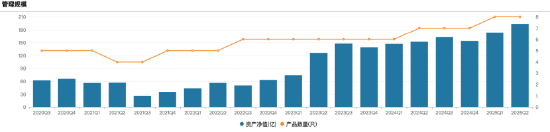
在管规模近200亿!百亿基金经理徐彦坦言:二季度更关注股价波动 而非企业价值
Xin Lang Ji Jin· 2025-07-22 10:11
Group 1 - The core viewpoint of the article highlights the significant changes in fund manager Xu Yan's portfolio and performance amid a challenging market environment, with a focus on balancing short-term gains and long-term value [1][6][9] - As of the end of Q2, Xu Yan managed eight funds with a total scale of 19.367 billion yuan, an increase of 2.046 billion yuan from the previous quarter [1] - The representative product, Dachen Competitive Advantage A, demonstrated strong performance with a year-to-date increase of 12.18%, significantly outperforming its benchmarks [2] Group 2 - Xu Yan's portfolio saw notable changes in Q2, with new additions including Prologis, Meituan-W, and YTO Express, while Alibaba-W and Huayu Automotive were removed from the core holdings [4] - The report indicates that Xu Yan faced operational challenges, achieving only modest positive returns and underperforming peers for the second consecutive quarter [6][9] - Xu Yan emphasized the shift in market dynamics compared to 2020, noting that the current environment presents greater difficulties in managing fund size and maintaining performance [8][9]