
李宁

Search documents
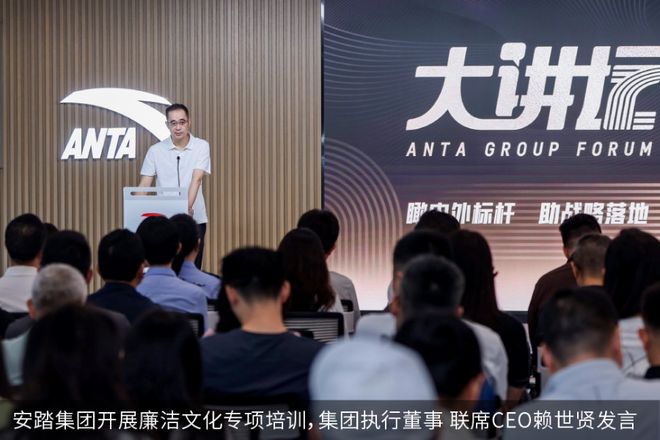
安踏强势反腐背后:毛利率下滑,营销、采购是重灾区
2 1 Shi Ji Jing Ji Bao Dao· 2025-09-17 14:31
Core Viewpoint - Anta Group is intensifying its anti-corruption efforts, focusing on systemic improvements and strict enforcement of compliance measures to combat corruption within the organization and its supply chain [1][4][16]. Group 1: Anti-Corruption Measures - As of August 2025, Anta has dismissed 74 employees for serious misconduct and transferred 46 individuals to judicial authorities for criminal offenses, including one executive at the president level [1]. - The company has established a "career tracing mechanism" to hold employees accountable for misconduct regardless of their employment status [1]. - Anta has created a list of 10 suppliers banned from future cooperation due to violations, indicating a proactive stance against corrupt partners [2][5]. Group 2: Systemic Improvements - Anta is enhancing its internal control systems by revising core policies, including the anti-corruption system and supplier compliance management [4]. - The company has implemented a "three-line defense" system covering 58 risk modules and 208 risk responsibilities to ensure accountability among management [4]. - Regular compliance training is being conducted for supply chain partners, along with the establishment of a blacklist for non-compliant suppliers [4][5]. Group 3: Financial Performance and Market Context - In the first half of the year, Anta's revenue increased by 14.3% to 38.544 billion yuan, while net profit decreased by 8.9% to 7.031 billion yuan [10]. - The competitive landscape is challenging, with other major brands like Li Ning and Adidas also experiencing revenue growth but facing profit declines [12]. - Anta's gross margin has been under pressure, declining by 0.7 percentage points to 63.4%, attributed to increased online sales and discounting strategies [13][14]. Group 4: Strategic Focus - Anta is prioritizing investments in existing business areas, particularly in innovation, digital transformation, and retail, to enhance profitability [14]. - The company is also exploring high-quality acquisition opportunities to strengthen its multi-brand strategy [14]. - The ongoing anti-corruption campaign is seen as a necessary response to the current market pressures and is expected to lead to a more refined competitive environment [16][17].
安踏强势反腐背后:毛利率下滑,营销、采购是重灾区丨消费一线
2 1 Shi Ji Jing Ji Bao Dao· 2025-09-17 14:20
Core Viewpoint - Anta Group is intensifying its anti-corruption efforts, focusing on systemic improvements and strict enforcement of compliance measures to combat corruption within the organization and its supply chain [1][3][4]. Group 1: Anti-Corruption Measures - As of August 2025, Anta has dismissed 74 employees for serious misconduct and transferred 46 individuals to judicial authorities for criminal offenses, including one at the president level and 14 at the director level [1]. - The company has established a "career tracing mechanism" to hold employees accountable for misconduct regardless of their employment status [1]. - Anta has published a list of 10 suppliers banned from future cooperation due to violations, indicating a proactive stance in managing supplier integrity [1][4]. Group 2: Systemic Enhancements - Anta is enhancing its internal control systems through organizational restructuring, management system improvements, and employee education [3]. - The establishment of the "Integrity and Ethics Committee" and the revision of six core regulations, including anti-corruption and supplier compliance management, are part of the systemic reforms [3]. - A "three-line defense" system has been created to cover 58 risk modules and 208 risk responsibilities, ensuring accountability at all management levels [3]. Group 3: Supply Chain Compliance - Anta is conducting regular compliance training for supply chain partners and implementing a tiered management system to enhance supplier compliance [4]. - The company has identified procurement, engineering, and marketing as high-risk areas for corruption, leading to stricter oversight in these domains [4]. - Notable cases of corruption within the procurement department have been highlighted, emphasizing the need for ongoing vigilance [4]. Group 4: Financial Performance Context - In the first half of the year, Anta's revenue grew by 14.3% to 38.544 billion yuan, while net profit decreased by 8.9% to 7.031 billion yuan [7]. - Compared to competitors, Anta's performance is relatively strong, although it faces challenges in maintaining profit margins amid a competitive market [9][10]. - The company's gross margin has declined by 0.7 percentage points to 63.4%, with specific brands experiencing more significant drops [10]. Group 5: Market Environment and Strategic Focus - The current market environment is challenging, with increased competition and pressure on profit margins, prompting Anta to prioritize profitability and operational efficiency [10][11]. - Anta's strategic focus includes investing in existing businesses, particularly in innovation and digital transformation, while also seeking high-quality acquisition opportunities [11]. - The ongoing anti-corruption efforts are seen as a necessary response to the pressures of the competitive landscape, indicating a shift towards more refined operational practices [11].

【对话机器“人”】人形机器人,闯入运动装备领域
Zhong Guo Zheng Quan Bao· 2025-09-17 13:04
Group 1 - The collaboration between sports brands and humanoid robots is emerging as a new trend, with companies like Anta and Li Ning establishing research bases to focus on sports data collection and intelligent equipment development [1][2] - Li Ning's research center utilizes the "Embodied Tian Gong Ultra" robot for product testing, significantly reducing testing time and improving efficiency by directly collecting data through the robot's joint sensors [2][3] - The research center aims to build a comprehensive product database using robots to evaluate new running shoes across multiple performance dimensions, such as cushioning and stability [3] Group 2 - Future applications of humanoid robots may include testing in sports like badminton and basketball, as well as assisting in product sales in retail environments [4][5] - The potential for robots to assist in retail involves using visual systems to assess consumer characteristics and recommend suitable products, although this application will require further development [5] - The partnership between humanoid robots and sports brands is expected to create mutual benefits, enhancing both product development and the capabilities of the robots [5]

2025中国羽毛球大师赛:丹麦选手安赛龙首轮晋级
Zhong Guo Xin Wen Wang· 2025-09-17 12:25
9月17日,在广东深圳举行的2025李宁·中国羽毛球大师赛进入第二个比赛日。在男单比赛中,丹麦选手 安赛龙战胜中国选手王正行,晋级下一轮。中新社记者 陈骥旻 摄 9月17日,在广东深圳举行的2025李宁·中国羽毛球大师赛进入第二个比赛日。在男单比赛中,丹麦选手 安赛龙战胜中国选手王正行,晋级下一轮。中新社记者 陈骥旻 摄 9月17日,在广东深圳举行的2025李宁·中国羽毛球大师赛进入第二个比赛日。在男单比赛中,丹麦选手 安赛龙战胜中国选手王正行,晋级下一轮。中新社记者 陈骥旻 摄 9月17日,在广东深圳举行的2025李宁·中国羽毛球大师赛进入第二个比赛日。在男单比赛中,丹麦选手 安赛龙战胜中国选手王正行,晋级下一轮。中新社记者 陈骥旻 摄 ...

贝莱德在李宁的持股比例于9月12日从4.66%升至5.31%

Mei Ri Jing Ji Xin Wen· 2025-09-17 09:23
Group 1 - BlackRock's stake in Li Ning increased from 4.66% to 5.31% as of September 12 [1]
纺织服装2025中报总结暨三季报前瞻品牌趋势企稳,制造订单预期改善
Guoxin Securities· 2025-09-16 15:02
Investment Rating - The investment rating for the textile and apparel industry is "Outperform the Market" [2] Core Insights - The textile manufacturing sector shows growth while the apparel and home textile sectors face performance pressure. In the first half of 2025, textile manufacturing and apparel/home textile revenues grew by 7.8% and declined by 6.4% year-on-year, respectively. The gross margin for textile manufacturing remained stable at 19.4%, with a net margin increase of 2.2% to 8.5%. In contrast, the apparel/home textile sector saw a slight gross margin increase of 0.1% to 46.1%, but a net margin decline of 1.1% to 8.5% [3][12][15] Summary by Sections 1. Sector Summary: Textile Manufacturing Growth, Apparel/Home Textile Performance Pressure - In the first half of 2025, textile manufacturing revenue increased by 7.8% while apparel/home textile revenue decreased by 6.4%. The gross margin for textile manufacturing was 19.4%, and the net margin improved to 8.5%. The apparel/home textile sector's gross margin was 46.1%, with a net margin of 8.5% [3][12][15] 2. Sports Apparel: Industry Maintains Growth, Brand Differentiation - Sports brands continued to see revenue growth around 10%, while non-sports apparel brands mostly experienced revenue declines. The online channel outperformed offline, with some brands maintaining growth in direct sales [3][5] 3. Casual Home Textiles: Demand Under Pressure, Online Channels and New Business Models Leading Growth - The casual home textile sector continues to face demand pressure, but online channels and new business models are driving some growth [3][5] 4. Contract Manufacturing: Revenue Steady Amid Tariff Policy Impact, Profitability Stable - The textile manufacturing sector maintained steady revenue growth despite tariff policy disruptions. Major contract manufacturers like Huayi and Shenzhou reported full orders, with revenue growth exceeding 10% [3][5][20] 5. Textile Materials: Tariff Policy Affects Client Order Caution, Profitability Varies - The textile materials sector is experiencing varied profitability due to cautious ordering from clients influenced by tariff policies [3][5] 6. Q3 Report Outlook: Brand Trends Stabilizing, Manufacturing Order and Shipment Improvement - The apparel/home textile sector is expected to see improved revenue growth in Q3 compared to Q2, while the textile manufacturing sector anticipates better order and shipment performance following tariff policy stabilization [3][5] 7. Investment Recommendations - Focus on fundamentally sound, undervalued leaders in the market. For sports apparel, brands like Anta Sports, Xtep International, Li Ning, and 361 Degrees are recommended. In textile manufacturing, companies like Shenzhou International and Huayi Group are highlighted for their resilience and potential for profit improvement [5][6]




纺织服装海外跟踪系列六十四:露露乐蒙二季度收入低于指引,中国市场持续引领增长
Guoxin Securities· 2025-09-16 14:43
Investment Rating - The investment rating for the textile and apparel industry is "Outperform the Market" [2][32]. Core Insights - The second quarter revenue of Lululemon was below guidance, but profits exceeded expectations. The Chinese market continues to lead growth and has accelerated sequentially, while management has lowered full-year revenue and profit guidance [4][6]. - For FY2025 Q2, revenue grew by 6.5% year-on-year (6.0% at constant currency) to $2.525 billion, which was below the guidance of 7.0-8.0%. Gross margin declined by 110 basis points to 58.5%, outperforming the guidance of a 200 basis point decline [3][9]. - The management has adjusted the full-year revenue guidance to a growth of 2-4% due to increased tariffs and the cancellation of small package tariff exemptions, with Q3 revenue expected to grow by 3-4% and operating profit margin expected to decline by 560 basis points [4][21]. Summary by Sections Financial Performance - In FY2025 Q2, Lululemon's revenue was $2.525 billion, with a year-on-year growth of 6.5%. The operating profit margin decreased to 20.7%, and diluted EPS was $3.10 [3][9]. - The online channel revenue grew by 9.1% year-on-year, while the offline direct channel revenue increased by 3.2% [10]. Regional Analysis - Revenue in China (excluding Hong Kong and Taiwan) grew by 25.1% year-on-year, with management expecting a full-year growth of 20-25%. The U.S. and Canadian markets are experiencing a decline in consumer spending on apparel [15][24]. - The Americas accounted for 69.6% of total revenue, with the U.S. market showing stagnant growth due to insufficient innovation in leisure categories [15][16]. Management Guidance - The full-year revenue guidance has been lowered to $10.85-11.00 billion, reflecting a growth of 2-4%. The gross margin is expected to decline by 300 basis points [21][24]. - Management remains optimistic about the Chinese market, expecting continued strong growth and plans to open new stores primarily in China [26][27]. Tariff Impact - The cancellation of the small package tariff exemption in the U.S. is expected to pressure gross margins, with an estimated negative impact of 170 basis points. The company plans to adjust its warehousing and distribution strategies to maintain operational efficiency [5][26]. Investment Recommendations - The report recommends focusing on leading companies in the Chinese sportswear supply chain, such as Shenzhou International and Huayi Group, as well as domestic brands like Anta Sports and Li Ning for long-term growth prospects [5][27].
2025鼓浪屿论坛|李宁:能源创新与数字赋能助力ESG及产业升级
Guan Cha Zhe Wang· 2025-09-16 09:32
Core Viewpoint - The forum focused on "creating digital product passports to support sustainable trade development," highlighting the importance of energy innovation and digital empowerment in achieving ESG goals and industrial upgrades [1][3]. Group 1: Energy Structure and Challenges - The global energy structure is still dominated by fossil fuels, accounting for 80% of the total energy mix, with significant regional disparities in energy reliance [3]. - Non-OECD countries in regions like Asia-Pacific and the Middle East continue to heavily depend on fossil fuels, resulting in high carbon intensity, while OECD countries have lower carbon intensity due to decreasing coal usage [3]. - The upcoming EU Carbon Border Adjustment Mechanism (CBAM) and Digital Product Passport (DPP) regulations will pose significant challenges for developing countries outside the EU [3]. Group 2: Opportunities in Energy Transition - Historical data shows that global wind and solar power installations have increased by tens of thousands to hundreds of thousands of times over the past 30 years, with China nearing a 500,000-fold increase by 2024, showcasing a new low-carbon development path [3][4]. - Achieving net-zero emissions by 2050-2060 requires an annual growth rate of over 8%-10% in zero-carbon energy or faster growth in negative carbon technologies [3]. Group 3: AI and Energy Innovation - The synergy between AI and energy is seen as a major trend for energy innovation, focusing on clean, low-carbon, and efficient energy solutions [4]. - The "AI + Energy" action plan released by the National Energy Administration and the National Development and Reform Commission is a response to the growing energy demands of AI data centers [4]. Group 4: Trade and Investment Opportunities - The EU's CBAM and DPP should be viewed as opportunities rather than just challenges, as China's green products like photovoltaics, lithium batteries, and electric vehicles can provide significant carbon reduction benefits during their usage phase [5]. - The DPP can transform invisible environmental benefits into visible, inclusive real-world assets, attracting investment and financing to create a new paradigm for development in the Global South [5].
纺织制造台企公布2025年8月营收数据,8月营收普遍下滑
Shanxi Securities· 2025-09-16 09:11
Investment Rating - The report maintains an investment rating of "Synchronize with the market - A" for the textile and apparel industry [1]. Core Insights - The textile and apparel industry has shown mixed performance in recent months, with a slight increase in textile exports but a decline in clothing exports. Specifically, from January to August 2025, China's textile yarn, fabric, and products exports increased by 1.6%, while clothing and accessories exports decreased by 1.7% [2][18]. - Major Taiwanese textile manufacturers reported a decline in revenue for August 2025, with significant year-on-year decreases for companies like Yuanyuan Group and Laiyixing, while some companies like Laiyixing still showed growth in the first eight months of the year [19][20]. Summary by Sections 1. Recent Observations - Taiwanese textile manufacturers reported a general decline in revenue for August 2025, with Yuanyuan Group's revenue down by 9.7% year-on-year, and Laiyixing down by 23.11% [19][20]. 2. Market Performance - The SW textile and apparel sector rose by 0.67% this week, lagging behind the SW light industry sector, which increased by 1.88% [20][21]. - The PE-TTM for SW textile manufacturing is 22.05 times, while for SW apparel and home textiles, it is 30.57 times, indicating varying levels of valuation across sub-sectors [24]. 3. Industry Data Tracking - From January to August 2025, China's textile and apparel exports totaled $945.13 billion and $1,027.61 billion, respectively, with a slight increase in textile exports and a decrease in clothing exports [48]. - The domestic retail sales in July 2025 reached 3.88 trillion yuan, showing a year-on-year growth of 3.7% [55]. 4. Industry News - Stone Island opened a new flagship store in Hangzhou, showcasing its commitment to innovation and sustainability [67][68]. - Jiangnan Buyi Group reported a 4.6% increase in revenue for the fiscal year ending June 30, 2025, driven by online sales growth and an expansion of its offline store network [70][71].
旧衣服、旧床单去哪了?纺织业铺展循环发展新图景
Jing Ji Ri Bao· 2025-09-16 01:01
Core Viewpoint - The textile industry in China is actively exploring and implementing circular economy practices, with significant achievements in energy efficiency and recycling of waste textiles, aiming to transform discarded materials into new products for the market [1][2][3]. Group 1: Industry Achievements - From 2005 to 2024, the energy consumption per unit of output in the textile industry has decreased by over 65%, and the annual growth rate of recycled textile materials has reached 12%, with the usage of regenerated fibers exceeding 3 million tons [1][2]. - The total amount of waste textiles generated in China each year is substantial, and the industry is under pressure to transition from "waste clothing" to "new raw materials" through high-quality recycling [2][3]. Group 2: Technological Innovations - A new chemical recycling technology has been developed to address the challenges of separating polyester and cotton from mixed fabrics, which has traditionally been difficult and inefficient [2][5]. - Companies like Zhejiang Jiarun New Materials Co., Ltd. are focusing on chemical recycling technologies, with an annual capacity of 30,000 tons and the ability to process approximately 40,000 tons of waste textiles each year [3][5]. Group 3: Policy and Future Goals - The year 2025 is identified as a critical year for the recycling of waste textiles in China, with a target recycling rate of 25% and a regenerated fiber production target of 2 million tons [3][4]. - The establishment of the China Resource Recycling Group Green Fiber Co., Ltd. aims to promote specialized and large-scale development in the recycling of waste textiles [3]. Group 4: Challenges and Opportunities - Despite advancements, the textile industry's circular economy still faces challenges, including low recycling rates and the need for improved infrastructure [4][5]. - The global textile and leather industry contributes to 0.6% of total carbon emissions, highlighting the importance of sustainable practices in reducing environmental impact [4]. Group 5: Digital Tools and Industry Transformation - The introduction of the Product Digital Passport (DPP) aims to enhance transparency and traceability throughout the textile product lifecycle, facilitating a shift from linear to circular economy models [7][8]. - Major brands and manufacturers are participating in the DPP initiative, which is seen as a key tool for driving significant changes in the industry [7].