
美的集团

Search documents
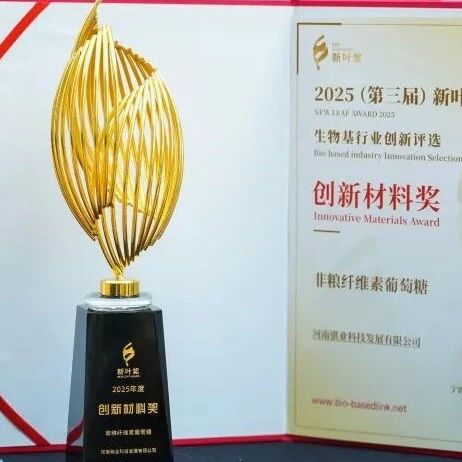
首轮报名2月10日截止 | “生物基行业的奥斯卡”——新叶奖报名进行中
合成生物学与绿色生物制造· 2025-12-30 02:54
Core Viewpoint - The New Leaf Award is a prestigious global award focused on innovation in the bio-based industry, aimed at recognizing and showcasing outstanding products and companies in this sector, often referred to as the "Oscar of the bio-based industry" [2][17]. Group 1: Award Structure - The New Leaf Award features four main categories: Innovation Material Award, Innovation Application Award, Innovation Industry Solution Award, and Most Commercially Valuable Award [6][2]. - Over 100 innovative bio-based products have been recognized through this award, highlighting its significance in the industry [2]. Group 2: Application Timeline and Process - The application process for the 2026 New Leaf Award has commenced, with key dates including: - Application period: December 1, 2025, to March 13, 2026 [11]. - Online voting (pre-selection): March 16 to March 22, 2026 [11]. - Online competition and expert review (final selection): March 23 to March 27, 2026 [11]. - Award ceremony: May 21, 2026, during the Bio-based 2026 conference [3][11]. Group 3: Evaluation Criteria - The evaluation criteria for the awards include: - Innovation in technology and application, functionality, commercial value, and sustainability, with varying weightings for each category [9]. - For the Innovation Material Award, the criteria weightings are: 30% technical innovation, 10% application innovation, 25% functionality, 20% commercial value, and 15% sustainability [9]. Group 4: Benefits of Participation - Participating companies can benefit from free publicity, leveraging a platform with over 100,000 industry followers and 100+ communication groups [10]. - Award-winning companies will receive a high-end trophy and certificate, along with the opportunity to celebrate their achievements at a grand award ceremony attended by industry leaders [13].

科陆电子:2026年度日常关联交易预计总额3.93亿元
2 1 Shi Ji Jing Ji Bao Dao· 2025-12-30 02:47
Core Viewpoint - Kelu Electronics (002121.SZ) announced an expected total amount of daily related party transactions for the year 2026 to be 393 million yuan [1] Group 1: Related Party Transactions - The company plans to purchase raw materials and goods from related parties, including Midea Group, Huitong New Materials, Yingfeng Environment, and Chedian Network, totaling 91 million yuan [1] - The company expects to sell products and provide electrical engineering services to the aforementioned related parties, amounting to 285 million yuan [1] - Kelu Electronics will receive software development services from Midea Group valued at 8 million yuan [1] - The company will provide leasing and property services to Midea Group and Chedian Network, totaling 9 million yuan [1]




从关键词读懂2025丨锚定新质生产力 产业发展开启多元“融合”
Xin Hua She· 2025-12-30 02:30
Core Insights - The article emphasizes the acceleration of new productive forces and the deepening of industrial transformation and upgrading, with "integration" becoming a prominent theme in industrial development [1] Group 1: Industrial Growth and Trends - The expected growth rate of industrial added value for the year is 5.9%, while digital industry revenue is projected to increase by 9% [1] - The core scale of the artificial intelligence industry is anticipated to exceed 1 trillion yuan [1] - The integration of traditional and emerging industries is breaking down barriers and fostering a more resilient and vibrant modern industrial system [1] Group 2: Cross-Industry Collaboration - Companies like ByteDance and ZTE are collaborating to launch new products, such as the "Doubao phone," reflecting a trend of cross-industry terminal creation [2] - In agriculture, traditional practices are evolving into smart agriculture through partnerships with emerging industries, enhancing efficiency and reducing costs [2] - In the automotive sector, companies like Dongfeng Motor are collaborating with tech firms like Huawei to innovate in areas such as intelligent driving systems and semiconductor production [3] Group 3: Digital and Real Economy Integration - Ulanqab in Inner Mongolia is becoming a key node in the "East Data West Computing" project, with significant investments in data centers and computing power [5] - National data shows a 10.2% year-on-year increase in enterprise spending on digital technologies, indicating a strong push towards digital integration in traditional industries [6] - The establishment of leading smart factories marks a significant leap towards intelligent manufacturing, with high application rates of AI technologies [6] Group 4: Innovation and Policy Support - The integration of technological and industrial innovation is being prioritized in national policy, with a focus on enhancing productivity and fostering new growth spaces [8] - Collaborative efforts between research institutions and industries are driving a comprehensive "two-innovation integration" practice across various sectors [8] - The rapid development of technology in areas like low-frequency technology for air conditioning and autonomous driving platforms showcases the vibrant innovation landscape in China [9]
从关键词读懂2025丨锚定新质生产力 产业发展开启多元“融合”
Sou Hu Cai Jing· 2025-12-30 02:16
Core Insights - The article emphasizes the acceleration of new productive forces and the deepening of industrial transformation and upgrading, with "integration" becoming a prominent theme in industrial development [1] Group 1: Industrial Growth and Trends - The expected growth rate of industrial added value for the year is 5.9%, while digital industry revenue is projected to increase by 9%, and the scale of the core artificial intelligence industry is anticipated to exceed 1 trillion yuan [1] - The integration of traditional and emerging industries, as well as the precise alignment of digital technology with the real economy, is highlighted as a key driver for breaking down industry barriers and enhancing growth potential [1] Group 2: Cross-Industry Collaboration - The collaboration between ByteDance and ZTE to launch the "Doubao Phone" and the introduction of AI glasses by Li Auto and Alibaba exemplify the trend of cross-industry terminal creation, reflecting the broader wave of industrial integration expected in 2025 [2] - In agriculture, traditional practices are evolving into smart agriculture through partnerships with emerging industries, showcasing the role of technology in enhancing efficiency and reducing costs [2] Group 3: Automotive Innovations - The rapid development of new energy vehicles is creating an inclusive innovation ecosystem, with companies like Dongfeng Motor collaborating with Huawei and others to advance intelligent driving systems and semiconductor production [3] Group 4: Multi-Dimensional Integration - The pearl industry in Zhejiang is merging with digital and green economies, creating a comprehensive ecosystem with a market scale exceeding 50 billion yuan, while Harbin is developing a composite business model around its ice and snow theme [4] - Experts predict that ongoing breakthroughs in artificial intelligence will further expand the scope of industrial integration, fostering new business models and driving economic growth [4] Group 5: Digital and Real Economy Fusion - In Ulanqab, the establishment of data centers and a significant investment in computing power are enhancing the integration of digital and real economies, with a computing power scale reaching 120,000 P [5] - The procurement of digital technology by enterprises has increased by 10.2%, indicating a solid advancement in the fusion of digital and real sectors [6] Group 6: Intelligent Manufacturing - The announcement of the first batch of 15 leading intelligent factories marks a significant leap in the intelligent transformation of manufacturing, with these factories achieving deep integration of new information technologies and advanced manufacturing [6] - The intelligent factory of Zoomlion showcases high efficiency with an 80% application rate of AI technologies, setting new records in the construction machinery sector [6] Group 7: Future Prospects - The Ministry of Industry and Information Technology forecasts a 9% growth in telecommunications and software business revenue, with the artificial intelligence industry expected to exceed 1 trillion yuan [7] - The integration of technology and industry is seen as a key catalyst for driving digital upgrades in the real economy, reshaping industrial development models [7] Group 8: Innovation and Policy Support - The integration of technological and industrial innovation is being actively promoted by government policies, indicating a clear path for practical exploration across various sectors [8] - The collaboration between academia and industry is yielding significant technological advancements, enhancing the competitiveness of various sectors [9]
从关键词读懂2025|锚定新质生产力 产业发展开启多元“融合”
Xin Hua Wang· 2025-12-30 01:53
Core Insights - The overall industrial added value is expected to grow by 5.9% year-on-year, with digital industry revenue increasing by 9%, and the core AI industry exceeding one trillion yuan by 2025, indicating a significant transformation and upgrade in industries driven by new productivity and integration [1][7]. Group 1: Cross-Industry Integration - ByteDance and ZTE launched the "Doubao Phone," while Li Auto introduced its first AI glasses, Livis, and Alibaba released six Quark AI glasses, reflecting a trend of cross-industry terminal creation as part of the broader industrial integration wave expected in 2025 [2]. - Traditional agriculture is evolving into smart agriculture through collaboration with emerging industries like low-altitude economy and new materials, exemplified by the use of agricultural drones for precision farming [2]. - In the automotive sector, companies like Dongfeng Motor are collaborating with Huawei and other firms to develop intelligent driving systems and innovative technologies in solid-state batteries and hydrogen energy [3]. Group 2: Multi-Dimensional Integration Trends - The pearl industry in Zhejiang is integrating with the digital and green economies, creating a comprehensive ecosystem with a market size exceeding 50 billion yuan [4]. - Harbin is developing a composite business model around its ice and snow theme, promoting collaboration across various sectors, including equipment manufacturing and cultural tourism [4]. - Experts predict that ongoing breakthroughs in AI and other technologies will further expand the scope of industrial integration, fostering new business models and driving economic growth [4]. Group 3: Digital and Real Economy Integration - In Ulanqab, the "Grassland Cloud Valley" has become a key node in the "East Data West Computing" project, hosting 67 data centers with a total investment exceeding 260 billion yuan and a computing power scale of 120,000 P [5]. - The latest tax data indicates a 10.2% year-on-year increase in corporate spending on digital technologies, with traditional industries seeing a 7.6% rise in digital equipment purchases [6]. - The first batch of 15 leading smart factories has been announced, marking a significant leap in the intelligent transformation of the manufacturing sector [6]. Group 4: Innovation and Integration - The Chinese Academy of Sciences is working on projects that translate laboratory innovations into industrial applications, emphasizing the importance of integrating technology and industry [8]. - Recent government policies highlight the strategic importance of integrating technological and industrial innovation, guiding practical explorations across various sectors [8]. - The rapid pace of technological innovation in China is enhancing industrial competitiveness and accelerating the commercialization of scientific achievements [9]. Group 5: Future Outlook - By 2025, AI is expected to play a crucial role in transforming industries, acting as a catalyst for the transition from laboratory innovations to market applications [10]. - AI is evolving from a mere tool to a central component of industrial ecosystems, driving structural optimization and guiding future industry development [10].
期指:风偏受挫,震荡整固
Guo Tai Jun An Qi Huo· 2025-12-30 01:47
Group 1: Investment Rating - No investment rating provided in the report Group 2: Core Viewpoints - On December 29, all four major stock index futures contracts for the current month declined. IF dropped by 0.5%, IH by 0.41%, IC by 0.46%, and IM by 0.32% [1] - On this trading day, the total trading volume of stock index futures decreased, indicating a cooling of investors' trading enthusiasm. Specifically, the total trading volume of IF decreased by 22,687 lots, IH by 11,586 lots, IC by 36,757 lots, and IM by 53,242 lots. In terms of positions, the total positions of IF decreased by 12,050 lots, IH by 5,602 lots, IC by 17,385 lots, and IM by 19,963 lots [2] - The trend intensity of IF and IH is 1, and that of IC and IM is also 1 [6] Group 3: Summary by Relevant Catalogs 1. Stock Index Futures Data Tracking - **CSI 300 and Related Futures**: The closing price of CSI 300 is 4,639.4, down 0.38%. The closing prices of IF2601, IF2602, IF2603, and IF2606 are 4,630.8, 4,620.8, 4,610.2, and 4,567.4 respectively, with declines of 0.50%, 0.43%, 0.56%, and 0.47%. Their trading volumes decreased by 6,620, 289, 12,369, and 3,409 respectively, and their positions decreased by 3,726, increased by 261, decreased by 8,066, and decreased by 519 respectively [1] - **SSE 50 and Related Futures**: The closing price of SSE 50 is 3,034.6, down 0.35%. The closing prices of IH2601, IH2602, IH2603, and IH2606 are 3,036, 3,036.8, 3,038, and 3,033.2 respectively, with declines of 0.41%, 0.36%, 0.48%, and 0.39%. Their trading volumes decreased by 2,169, 66, 7,117, and 2,234 respectively, and their positions decreased by 2,404, decreased by 110, decreased by 2,558, and decreased by 530 respectively [1] - **CSI 500 and Related Futures**: The closing price of CSI 500 is 7,430.6, down 0.38%. The closing prices of IC2601, IC2602, IC2603, and IC2606 are 7,421.6, 7,379, 7,336.6, and 7,157.6 respectively, with declines of 0.46%, 0.51%, 0.67%, and 0.76%. Their trading volumes decreased by 10,673, increased by 763, decreased by 20,731, and decreased by 6,116 respectively, and their positions decreased by 6,224, increased by 1,008, decreased by 10,791, and decreased by 1,378 respectively [1] - **CSI 1000 and Related Futures**: The closing price of CSI 1000 is 7,594.2, down 0.15%. The closing prices of IM2601, IM2602, IM2603, and IM2606 are 7,572.2, 7,500.2, 7,439, and 7,206 respectively, with declines of 0.32%, 0.48%, 0.51%, and 0.59%. Their trading volumes decreased by 15,720, increased by 639, decreased by 29,817, and decreased by 8,344 respectively, and their positions decreased by 7,157, increased by 4,723, decreased by 12,285, and decreased by 975 respectively [1] 2. Top 20 Member Positions in Stock Index Futures - For IF2601, long positions decreased by 2,419, and short positions decreased by 2,639. For IF2602, long positions decreased by 9,611. For IF2603, long positions decreased by 6,158, and short positions decreased by 6,771. For IF2606, long positions decreased by 1,034, and short positions decreased by 742 [5] - For IH2601, long positions decreased by 1,714 with a net change of -4,414, and short positions decreased by 1,956 with a net change of -4,742. For IH2603, long positions decreased by 2,168, and short positions decreased by 2,270. For IH2606, long positions decreased by 532, and short positions decreased by 516 [5] - For IC2601, long positions decreased by 4,226, and short positions decreased by 5,047. For IC2603, long positions decreased by 7,318 with a net change of -13,116, and short positions decreased by 8,625 with a net change of -14,790. For IC2606, long positions decreased by 1,572 [5] - For IM2601, long positions decreased by 5,380 with a net change of -13,183, and short positions decreased by 6,072. For IM2602, long positions increased by 83, and short positions increased by 747 with a net change of -15,394. For IM2603, long positions decreased by 7,886, and short positions decreased by 10,069 [5] 3. Market Conditions - **Precious Metals Market**: On Monday, the spot silver price in the Asian market hit a record high of over $80 per ounce and approached $84, with a nearly 6% increase. However, the market then reversed sharply, and in the New York market, it dropped by over 11%. The decline in silver also dragged down other precious metals, with spot palladium dropping by 17%, spot platinum by 15%, and spot gold by over 5%. In the domestic market, platinum and palladium hit the daily limit down, and the Shanghai silver futures price dropped at the end of the session, erasing all the 10% intraday gains and further dropping by 8.74% at night. The Shanghai gold futures price closed down nearly 1% and further dropped by 4% at night. COMEX gold futures closed down 4.45% at $4,350.2 per ounce, and COMEX silver futures closed down 7.2% at $71.64 per ounce [6] - **A - Share Market**: The A - share market showed a divergence between large and small - cap indices. The Shanghai Composite Index recorded nine consecutive positive days, while the ChiNext Index declined. The commercial aerospace and humanoid robot sectors performed well. The Shanghai Composite Index closed up 0.04% at 3,965.28 points, the Shenzhen Component Index down 0.49%, the ChiNext Index down 0.66%, the Northbound 50 down 0.45%, the STAR 50 up 0.04%, the Wind All - A down 0.29%, the Wind A500 down 0.46%, and the CSI A500 down 0.48%. The total A - share trading volume was 2.16 trillion yuan, compared with 2.18 trillion yuan the previous day. The carbon fiber concept rose as Toray Industries announced a price increase for carbon fiber products. The brain - computer interface concept was active, the commercial aerospace concept remained strong, the humanoid robot concept continued to heat up, and the stablecoin index rose in the afternoon. The lithium - battery industrial chain adjusted significantly, and the Hainan Free Trade Zone concept declined [6] - **Hong Kong Stock Market**: The Hong Kong stock market rose first and then fell. The Hang Seng Index closed down 0.71% at 25,635.23 points, the Hang Seng Tech Index down 0.30% at 5,483.01 points, and the Hang Seng China Enterprises Index down 0.26% at 8,891.71 points. The market trading volume was HK$224.508 billion. Among the Hang Seng Index constituents, JD Health fell 3.42%, Cheung Kong Holdings fell 3.35%, BYD Co., Ltd. rose 3.74%, and Geely Automobile rose 3.43%. Among the Hang Seng Tech Index constituents, Horizon Robotics - W fell 3.20%, Midea Group fell 3.05%, NIO - SW rose 4.89%, and XPeng Motors - W rose 3.88% [7] - **US Stock Market**: The three major US stock indices closed down. The Dow Jones Industrial Average fell 0.51% to 48,461.93 points, the S&P 500 Index fell 0.35% to 6,905.74 points, and the Nasdaq Composite fell 0.5% to 23,474.35 points. Goldman Sachs Group and American Express fell by over 1%, leading the decline in the Dow. Profit - taking put pressure on AI - related stocks. The Wind US Tech Giants Index fell 0.6%, Tesla fell by over 3%, and NVIDIA fell by over 1%. Most Chinese concept stocks declined, with Dingdong Maicai falling by over 7% and Hecla Mining falling by nearly 7% [7] 4. Automobile Market - Cui Dongshu, the secretary - general of the Passenger Car Association, said that the growth of the auto market in 2026 is complex. The most important factor at the beginning of the year is the late Spring Festival, and this year, combined with the early implementation of national subsidies, the effect will be significant. It should achieve positive growth in January, but there will be more pressure in February [8]
王建国亲自“救火”! 美的整合新能源“双子星”:一个表面光鲜,一个债台高筑 | 能见派
Xin Lang Cai Jing· 2025-12-30 01:12
Core Viewpoint - Midea Group has made significant adjustments to its renewable energy sector by establishing a new "Renewable Energy Division," indicating a heightened focus on solar and energy storage businesses [2][10]. Group 1: Organizational Changes - Midea Group has announced the formation of a "Renewable Energy Division," which will integrate its renewable product companies and energy technology companies, with Wang Jianguo, the Group's Executive President, appointed as the division's president [2][10]. - The establishment of the Renewable Energy Division signifies the increased importance of solar and energy storage businesses within Midea Group, as indicated by internal sources from Hekang New Energy [2][3]. Group 2: Performance of Subsidiaries - Both subsidiaries under Midea's Renewable Energy Division, Hekang New Energy and Kelu Electronics, have recently turned profitable but face significant challenges [2][10]. - Hekang New Energy reported a revenue of 4.776 billion yuan and a net profit of 10.2961 million yuan in 2024, achieving profitability, but its net profit margin remains low at 0.16% [4][12]. - Kelu Electronics has faced continuous losses from 2021 to 2024, totaling 4.64 billion yuan in losses, although it reported a net profit of 232 million yuan in the first three quarters of 2025, driven by a booming overseas energy storage market [5][14]. Group 3: Financial Challenges - Hekang New Energy's overall gross margin is only 8.91%, down 7.13 percentage points from the previous year, with significant declines in gross margins across its main business segments [4][12]. - Kelu Electronics has a high debt ratio exceeding 90%, with short-term debts amounting to 3.3 billion yuan, creating substantial short-term repayment pressure [6][14]. - Midea Group provided a guarantee of 2.3 billion yuan for Kelu Electronics and its subsidiaries to address overseas business performance issues due to the company's precarious financial situation [7][14]. Group 4: Market Dynamics - Kelu Electronics' reliance on the high-margin overseas energy storage market raises concerns about its sustainable profitability, as domestic market conditions may lead to declining margins [15]. - The company has faced operational challenges, including being barred from participating in bidding activities by a major client, Southern Power Grid, due to quality and compliance issues [16][17].

广东:十大新突破,锻造发展“顶梁柱”
Xin Lang Cai Jing· 2025-12-30 00:29
Core Viewpoint - Guangdong is committed to high-quality development through the implementation of the "Ten New Breakthroughs" strategy, focusing on various sectors including the Guangdong-Hong Kong-Macao Greater Bay Area, manufacturing, education, technology, and cultural development [1][2]. Group 1: Greater Bay Area Development - Guangdong has made significant strides in building the Guangdong-Hong Kong-Macao Greater Bay Area, with the "Shenzhen-Hong Kong-Guangzhou" innovation cluster ranking first globally in innovation index [2]. - Infrastructure connectivity has improved, with major projects like the Guangzhou-Shenzhen-Hong Kong high-speed rail and the Hong Kong-Zhuhai-Macao Bridge completed, creating a "1-hour living circle" [2][3]. - The region has implemented 262 "Bay Area Standards" to facilitate cross-border cooperation in various sectors, enhancing the ease of movement for residents [2]. Group 2: Manufacturing Sector - Guangdong maintains its position as China's largest manufacturing province, with a GDP projected to reach 14.16 trillion yuan by 2024, marking 36 consecutive years at the top nationally [5]. - The province's advanced manufacturing and high-tech manufacturing sectors are expected to grow by 5.4% and 6.4% respectively, contributing significantly to the overall industrial output [5]. - Strategic emerging industries, particularly in the electric vehicle sector, are rapidly expanding, with major projects from companies like GAC Honda and BYD driving growth [5][6]. Group 3: Innovation and Talent Development - Guangdong is enhancing its innovation ecosystem by integrating research, technology development, and talent support, aiming for sustained leadership in innovation capabilities [6][7]. - The province's investment in R&D and the number of high-tech enterprises continue to lead the nation, with significant increases in patent applications and technological outputs [7]. - The "Million Talents Gather in South Guangdong" initiative has attracted over one million graduates to the region, bolstering the local talent pool [7]. Group 4: Urban-Rural Coordination - The "Hundred Counties, Thousand Towns, and Ten Thousand Villages High-Quality Development Project" aims to address urban-rural disparities and promote coordinated regional development [8][9]. - The project has shown positive results, with GDP growth in 57 counties outpacing the provincial average, and urbanization rates improving significantly [9]. Group 5: Marine Economy - Guangdong's marine economy is projected to exceed 2 trillion yuan by 2024, but challenges remain in optimizing the industrial structure and enhancing innovation capabilities [10]. - The province has initiated comprehensive marine spatial planning and regulatory frameworks to support sustainable development in marine industries [10]. Group 6: Ecological Development - Guangdong is prioritizing ecological construction, with a goal of maintaining a forest coverage rate above 53% and improving air and water quality [11][12]. - The province is advancing green energy initiatives, including offshore wind and solar power projects, to support its carbon neutrality goals [12]. Group 7: Cultural Development - Guangdong's cultural industry has been the largest in China for 22 consecutive years, with significant contributions to tourism and cultural heritage preservation [13]. - The province has implemented policies to enhance cultural production and infrastructure, resulting in increased tourism and cultural engagement [13]. Group 8: Social Welfare and Livelihood - Guangdong is focusing on improving living standards through initiatives targeting education, healthcare, and elderly care, addressing the needs of its aging population [14][15]. - The province has launched various social programs, including free prenatal screenings and increased funding for special education, to enhance public welfare [15]. Group 9: Legal and Safety Framework - Guangdong is enhancing its legal framework to create a favorable business environment, with significant legislative activity and improved judicial efficiency [16][17]. - The province has achieved high public satisfaction regarding safety and security, with crime rates declining and community safety initiatives being implemented [18]. Group 10: Party Leadership and Governance - Strengthening the leadership of the Communist Party is emphasized as crucial for guiding Guangdong's development and ensuring effective governance [19][20]. - The province is committed to fostering a clean and efficient political environment to support its modernization efforts [20].
深夜,史诗级暴跌!数字货币,重磅!人民币,破7!商业航天,大牛股预警
Sou Hu Cai Jing· 2025-12-30 00:27
Market Overview - US stock indices experienced slight declines, with the Dow Jones down 0.51%, Nasdaq down 0.5%, and S&P 500 down 0.35% due to volatility in commodity prices and limited progress in Ukraine ceasefire talks [1] - International oil prices rose over 2%, with WTI crude futures up 2.36% to $58.08 per barrel and Brent crude futures up 2.14% to $61.94 per barrel [1] - Precious metals saw significant declines, with COMEX gold futures down 4.45% to $4,350.2 per ounce and COMEX silver futures down 7.2% to $71.64 per ounce [1] Currency and Investment Outlook - Offshore RMB against USD broke 7, rising 0.06% as foreign institutions expressed positive expectations for the Chinese market, anticipating an "upward opportunity period" for Chinese assets by 2026 due to liquidity and policy support [2] - The People's Bank of China announced a plan to enhance the digital RMB management service system, set to be implemented on January 1, 2026, marking a transition to a "digital deposit currency" era [2] Corporate Announcements - Tianjian Technology issued a major risk warning, predicting a negative net profit for 2025 due to military product price adjustments, which may lead to a delisting risk warning [3] - Shenjian Co., a commercial aerospace stock, announced severe abnormal stock price fluctuations, indicating a potential rapid decline in stock value [3] Stock Market Dynamics - As of December 26, 2025, the total market capitalization reached 109 trillion yuan, with a record trading volume exceeding 400 trillion yuan for the year, and an average daily trading volume of 1.72 trillion yuan, up 62% year-on-year [4] - The A-share market in 2025 exhibited a pattern of "policy-driven + event-catalyzed + industry landing," with significant activity in AI hardware and commercial aerospace concepts [4] Fund and Investment Trends - Southbound funds recorded a net sell of 3.414 billion HKD, with major sell-offs in China Mobile and Alibaba, while China Merchants Bank saw net buying [5] - As of November 2025, the total scale of public funds in China reached 37.02 trillion yuan, marking the eighth record high this year, with significant growth in money market funds [5] Industry Developments - The first domestically produced 300 MW heavy-duty gas turbine project was officially put into operation, marking a significant milestone in China's gas turbine industry [13] - Intel completed the sale of 214.8 million shares to Nvidia for $5 billion, indicating ongoing strategic movements in the semiconductor sector [14] Corporate Strategies - JD.com and Yushutech launched their first offline store, marking a significant step in their collaboration in the smart robotics sector [6] - Guizhou Moutai plans to maintain its market supply of Moutai 1935 while focusing on the mass consumer market with Moutai Prince liquor, aiming for a sales target of 10 billion yuan [6]





AI驱动中国智造跃升
Xin Lang Cai Jing· 2025-12-29 23:10
Core Insights - China's manufacturing industry is rapidly transitioning into a new era driven by artificial intelligence (AI), with significant advancements in smart manufacturing and industrial models [1][10] - The integration of AI is reshaping the manufacturing landscape, enhancing efficiency and enabling a shift from scale advantages to intelligent advantages [1][16] Group 1: Smart Manufacturing Developments - Over 35,000 basic-level, 7,000 advanced-level, and 230 excellent-level smart factories have been established in China since the start of the 14th Five-Year Plan [1][10] - Smart manufacturing is evolving from isolated production lines to comprehensive value chain integration, exemplified by Haier's COSMOPlat system that allows for large-scale personalized customization [2][11] Group 2: AI and Robotics Integration - Human-like robots are increasingly being utilized in factories, with significant advancements in their capabilities, such as precise handling and complex assembly tasks [13][14] - The application of robots in various manufacturing scenarios has led to notable improvements in production efficiency, such as a 20% increase in output and a 90% improvement in changeover efficiency [13][14] Group 3: Digital Transformation and Sustainability - The integration of digital technologies, including AI and 5G, is enhancing manufacturing flexibility and sustainability, with companies like Lenovo implementing zero-carbon factories [6][14] - The shift towards intelligent manufacturing is not only improving production efficiency but also contributing to sustainable development goals [6][14] Group 4: Global Integration and Policy Support - Chinese manufacturing is increasingly integrating into global supply chains, with companies establishing R&D centers abroad and adapting to local standards [7][15] - Continuous policy support from the Ministry of Industry and Information Technology is driving the digital transformation of the manufacturing sector, emphasizing the importance of AI in all aspects of production [16][17]