创想三维

Search documents
增值税发票数据勾勒深圳“新质生产力”
Zhong Guo Jing Ji Wang· 2025-11-12 06:55
Core Viewpoint - Shenzhen is experiencing robust growth in its manufacturing, high-tech industries, and digital economy, contributing to the formation of a resilient and dynamic modern industrial system [1] Manufacturing Industry - Shenzhen's manufacturing sales revenue increased by 7.8% year-on-year from January to September, providing significant support for economic growth [2] - Shenzhen Jingtai Technology Co., Ltd. announced a pipeline cooperation agreement with US biopharmaceutical company DoveTree, totaling nearly $6 billion, setting a record for outbound orders in China's AI pharmaceutical sector [2] - The company has developed the world's largest automated biopharmaceutical robotics platform, becoming the leading AI pharmaceutical stock in China [2][3] High-Tech Industry - The sales revenue of Shenzhen's high-tech industry grew by 13.8% year-on-year from January to September, with significant increases in the production of civilian drones, industrial robots, and 3D printing equipment [4] - Shenzhen companies, such as Creality 3D Technology Co., Ltd., dominate the global entry-level 3D printer market, holding a 90% market share [4] - Creality's R&D expenses have grown at an annual rate of over 14% in the past three years, with 613 domestic and international patents obtained [4][5] Digital Economy - The core industry value added of Shenzhen's digital economy is expected to exceed 1 trillion yuan in 2024, with a year-on-year sales revenue growth of 11.8% from January to September [7] - The AI digital employee "Phantom AI" developed by Phantom Future Information Technology Co., Ltd. showcases the integration of advanced technologies in various service scenarios [7][8] - The company has benefited from tax incentives, with over 3 million yuan in R&D expense deductions, significantly reducing its R&D burden [8]
首届消费电子创新大会CEIC深圳闭幕,未来科技可触、可感、可体验
Sou Hu Cai Jing· 2025-11-09 11:05
Group 1 - The first Consumer Electronics Innovation Conference (CEIC 2025) attracted 52,200 attendees globally, showcasing the growing interest in consumer electronics [1] - The event featured innovative technologies such as AI pets and dynamic photo frames, emphasizing the tangible impact of future technologies on daily life [3] - The conference aims to establish a complete closed-loop from technology to orders, positioning itself as a platform for defining global consumer electronics trends [5] Group 2 - Shenzhen's consumer electronics companies demonstrated strong competitiveness in traditional sectors like smartphones and computers, while also showcasing innovation in emerging fields such as AI technology and 3D printing [6] - Industrial Fulian, a leading company in the consumer electronics sector, reported record revenue and net profit in the first half of the year, driven by strong demand for AI servers [6] - The consumer electronics industry is expected to evolve towards smart, ecological, and sustainable development, with AI becoming the core engine driving industry growth [6]



高瓴美团联手,疯抢3D打印
3 6 Ke· 2025-11-09 07:31
Core Insights - The 3D printing industry is experiencing a resurgence, particularly in the consumer segment, driven by advancements in AI technology that lower the barriers to entry for users [1][7][10] - Investment activity in the 3D printing sector has reached a five-year high, with significant funding rounds for companies like Snapmaker and Chuangxiang Sanwei [2][4][9] Company Highlights - Shenzhen Snapmaker Technology Co., Ltd. recently completed a Series B funding round led by Meituan and Hillhouse Capital, marking a significant milestone since its last funding announcement in 2021 [1][2] - Snapmaker's product, Snapmaker U1, raised $22,020 in crowdfunding on Kickstarter, setting a record for 3D printer crowdfunding and attracting over 20,000 supporters [3][4] - Chuangxiang Sanwei, another Shenzhen-based company, is aiming to become the first publicly listed consumer 3D printing company in China, having achieved annual revenue of 1 billion yuan in 2020 [5][6] Market Trends - The consumer 3D printing market is seeing a compound annual growth rate (CAGR) exceeding 30% over the past three years, with major brands in Shenzhen reporting annual revenues surpassing 1 billion yuan [4][6] - The price of consumer-grade 3D printers has decreased by 60% over the past three years, making them more accessible to a broader audience [8] Technological Advancements - The integration of generative AI modeling tools has significantly reduced the complexity of 3D modeling, allowing users to create 3D models with minimal technical knowledge [7][8] - Snapmaker's U1 addresses key industry pain points, such as low efficiency in color switching and material waste, enabling faster and more efficient multi-color printing [4][10] Investment Landscape - The 3D printing sector is attracting increased attention from investors, with over 40 financing events reported this year, indicating a strong interest in consumer hardware [2][4] - Companies like拓竹科技 (Tuozhu Technology) have achieved unicorn status, with valuations exceeding 30 billion yuan, prompting investors to seek similar opportunities in the market [9][10]

银行配债有哪些指标约束
GOLDEN SUN SECURITIES· 2025-11-07 00:06
Group 1: Fixed Income and Banking - The report discusses the increasing mismatch in the duration of bank assets and liabilities, leading to pressure on liquidity indicators and constraints on asset allocation behavior [5] - It highlights that the increase in long-duration bond holdings raises interest rate risk indicators [5] Group 2: Beauty and Personal Care - The company, founded in 2001, has become the third-largest domestic cosmetics group in China, with flagship brand "Natural Hall" consistently ranking among the top two domestic brands from 2013 to 2024 [6] - Revenue has shown a steady growth trend, with figures of 4.29 billion, 4.44 billion, and 4.60 billion yuan for 2022, 2023, and 2024 respectively, and adjusted net profits of 139 million, 313 million, and 203 million yuan [6] - The company primarily relies on online channels, with 68.8% of revenue from online sales in the first half of 2025, and has over 37.7 million registered members [6] Group 3: Agriculture, Forestry, Animal Husbandry, and Fishery - As of the end of Q3 2025, the heavy allocation in agriculture, forestry, animal husbandry, and fishery stocks decreased to 0.78%, down 0.58 percentage points from the previous quarter [8] - The report indicates a significant reduction in allocations for the breeding and feed sectors, with breeding at 0.31% and feed at 0.40% [9] - Investment suggestions include focusing on leading companies in the breeding sector and stable profitability in the planting sector, with specific recommendations for stocks like Muyuan Foods and New Hope [10] Group 4: Light Industry Manufacturing - The company is recognized as a leader in the global consumer-grade 3D printing equipment market, with a strong competitive advantage through its product offerings and technology [12] - It has established a comprehensive sales system covering approximately 140 countries and regions, with a network of 2,163 distributors [12] Group 5: Electronics - The company has achieved significant revenue growth, with a reported revenue of 6.676 billion yuan in the first half of 2025, marking a 54.5% year-on-year increase [15] - The report emphasizes the explosive demand for AI computing power, predicting that the global AI chip market could reach $400 billion by 2027 [16]




创想三维:3D打印龙头企业,产品+技术+渠道驱动行业领先
GOLDEN SUN SECURITIES· 2025-11-06 10:44
Investment Rating - Maintain "Buy" rating for the company [5] Core Insights - The company, Chuangxiang Sanwei, is a leading player in the 3D printing industry, with a comprehensive product matrix and a strong market presence, holding a global market share of 27.9% in consumer-grade 3D printers [1][11] - The 3D printing industry is experiencing rapid growth, driven by advancements in generative AI technology and improvements in printer performance, with the market expected to reach USD 4.1 billion in 2024 and grow to USD 16.9 billion by 2029, representing a CAGR of 33.0% [2][36] - Chuangxiang Sanwei has established a unique competitive advantage through its diverse product offerings, technological innovations, and a robust global sales network, making it difficult for competitors to replicate [3][48] Company Overview - Chuangxiang Sanwei is recognized as China's leading 3D printing company, continuously expanding its product offerings, which include 3D printers, consumables, and related services [1][11] - The company was founded in 2014 and transitioned to a joint-stock company in 2021, marking a significant expansion and capitalization phase [1][11] - As of 2024, the company is the largest consumer-grade 3D printing company globally by cumulative shipment volume, with a market share of 27.9% [1][46] Industry Analysis - The consumer-grade 3D printing industry is characterized by a significant reduction in entry barriers, allowing for broader user participation and creativity [2][29] - The market is projected to grow rapidly, with the global consumer-grade 3D printing market expected to reach USD 41 billion in 2024 and USD 169 billion by 2029, driven by technological advancements and increased consumer demand [2][36] - The industry is witnessing a shift towards personalized and on-demand manufacturing, supported by advancements in AI and materials science [41][44] Competitive Advantages - Chuangxiang Sanwei has built a strong competitive advantage through its comprehensive product matrix, which includes consumer-grade 3D printing, scanning, and laser engraving [48] - The company invests heavily in R&D, holding over 840 patents, which supports its technological advancements and product performance [49][61] - A well-established global sales network, with over 2,163 distributors and stores across approximately 140 countries, enhances the company's market reach and customer engagement [3][48]
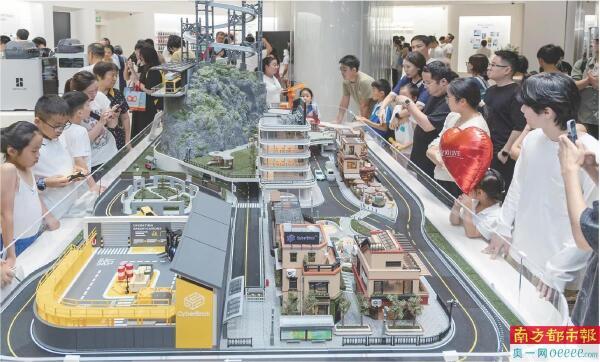
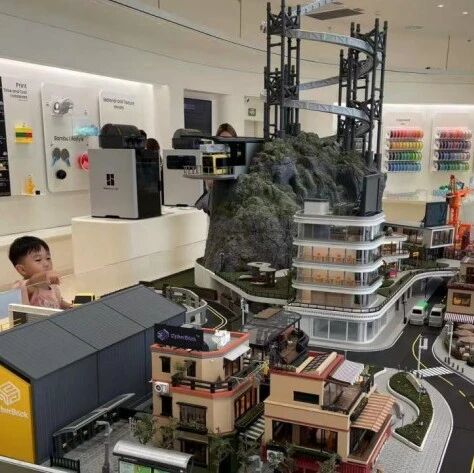
大疆离职员工,「打印」出一个百亿独角兽
创业邦· 2025-11-05 03:18
Core Insights - Bambu Lab, a Shenzhen-based tech unicorn, has captured nearly 30% of the global consumer 3D printing market within four years of its establishment, with a valuation exceeding 100 billion RMB [6][7][12] - The company’s revenue surged from 2.7 billion RMB in 2023 to 6 billion RMB in 2024, marking a year-on-year growth of approximately 33 billion RMB [7][12] - Bambu Lab's products have been recognized for their industrial-grade performance at consumer prices, gaining significant attention from influencers and media [6][12] Company Overview - Founded in 2020 by former DJI core team members, Bambu Lab aims to revolutionize the 3D printing industry, which was previously dominated by "farmers" operating multiple machines [6][10][12] - The company’s first product, the Bambu Lab X1, launched in 2022, was well-received, generating nearly 50 million RMB in crowdfunding within a month [12][13] - Bambu Lab has shifted its strategy from targeting niche enthusiasts to attracting new users by offering affordable and user-friendly 3D printers [13][14] Market Position and Growth - In 2024, Bambu Lab's sales volume reached approximately 1.2 million units, achieving a market share of 29% in the global consumer 3D printing segment [16][21] - The company benefited from government subsidies and influencer promotions, significantly boosting its domestic sales [16][21] - Bambu Lab's rapid growth has led to a substantial increase in its workforce, expanding from 139 to 571 employees between 2022 and 2024 [20][21] Technological Advancements - Bambu Lab's competitive edge lies in its innovative technology and product development, with a focus on creating high-quality, user-friendly machines [18][19] - The company has maintained a strong emphasis on product perfection before market release, contrasting with industry norms of relying on user feedback for improvements [19][20] - Bambu Lab's latest H2D printer integrates laser engraving and cutting capabilities, showcasing its technological leadership [19] Challenges and Competition - As Bambu Lab grows, it faces increasing pressure in customer service and product support, particularly as the user base expands [25][26] - The company is also encountering competition from other established players in the 3D printing market, which are launching similar products at competitive prices [26] - Legal challenges have emerged, including a patent infringement lawsuit from Stratasys, which could impact Bambu Lab's revenue in the U.S. market [26]
大疆离职员工,「打印」出一个百亿独角兽
3 6 Ke· 2025-11-03 10:45
Core Insights - Bambu Lab, a Shenzhen-based tech unicorn, has rapidly captured nearly 30% of the global consumer 3D printing market within four years, with a valuation exceeding 100 billion RMB [1][2][3] - The company was founded by former DJI core team member Tao Ye, who aimed to revolutionize the 3D printing industry by making it more accessible and user-friendly [5][12] - Bambu Lab's products have gained significant recognition, including being named one of Time magazine's best inventions of the year [7][12] Company Overview - Bambu Lab was established in November 2020 by a team of former DJI employees, including Tao Ye, who previously held various leadership roles at DJI [5][13] - The company focuses on consumer-grade 3D printers, with its first product, the Bambu Lab X1, launched in 2022, achieving remarkable sales and popularity [7][12] - The company has expanded its product line to include models aimed at beginners, such as the P1S and A1 series, priced between 2000 to 4000 RMB [9][11] Market Performance - In 2024, the global consumer 3D printing market reached a size of 4.1 billion USD, with Bambu Lab contributing significantly to this growth [2][11] - Bambu Lab's revenue surged from 2.7 billion RMB in 2023 to 6 billion RMB in 2024, marking a year-on-year increase of approximately 33 billion RMB [2][11] - The company achieved a market share of 29% in 2024, with total shipments of around 1.2 million units, surpassing the global annual growth in consumer 3D printer shipments [11][12] Competitive Landscape - Bambu Lab is often compared to DJI due to its innovative approach and strong leadership team, which includes several former DJI executives [12][13] - The company faces increasing competition from other 3D printing firms, which have begun launching similar products at competitive prices [22][23] - Legal challenges have emerged, including a lawsuit from Stratasys over patent infringements, which could impact Bambu Lab's revenue in the U.S. market [23][24] Innovation and Technology - Bambu Lab emphasizes a user-centric approach, focusing on product perfection before market release, and has developed proprietary technology to enhance user experience [15][16] - The company has maintained a strong technical edge through rigorous hiring practices, ensuring a highly skilled workforce [16][18] - Bambu Lab's manufacturing facilities are strategically located in Shenzhen, benefiting from the region's advanced supply chain and manufacturing capabilities [18][20]

龙华为瞪羚独角兽企业授牌
Sou Hu Cai Jing· 2025-10-26 01:14
Group 1 - The Longhua District recently held a meeting and award ceremony for "Gazelle" and "Unicorn" enterprises, highlighting the support for high-growth companies in the region [2] - According to the "Shenzhen Unicorn and Gazelle Enterprises Research Report," Longhua District has 2 unicorn enterprises, 13 potential unicorns, 10 seed unicorns, and 27 gazelle enterprises, ranking third in Shenzhen with a 13% share of the city's total [2] - During the meeting, representatives from 22 gazelle and unicorn enterprises discussed their current development status, challenges, and future plans, while also expressing various demands for policy support, funding subsidies, and talent attraction [2] Group 2 - The Longhua District Industrial and Information Technology Bureau has been focusing on the growth of quality enterprises, enhancing services throughout their lifecycle, and innovating enterprise service mechanisms [3] - This year, the bureau has integrated resources to establish the "1+2+3+8" enterprise service system, which includes a tiered service mechanism, two empowerment platforms, and three key service brands for enterprises [3] - The bureau aims to provide customized services by addressing various needs such as space, policies, talent, funding, and technology for enterprises [3]
5个大疆离职员工,把3D打印带回风口
量子位· 2025-10-24 07:50
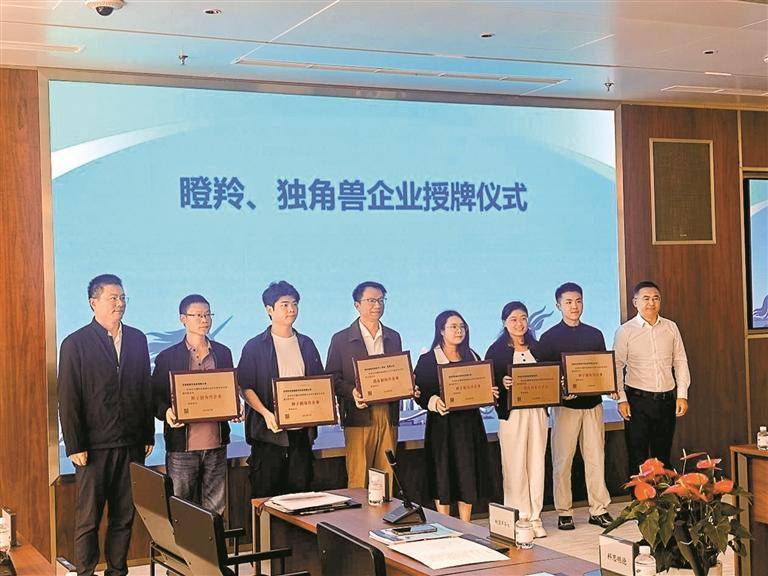
Core Insights - The resurgence of 3D printing is characterized by its transition from a concept to practical everyday products, with a notable increase in street vendors selling 3D printed items like dragon eggs and jointed toys [2][3] - The business potential is significant, with some vendors reporting earnings exceeding 10,000 RMB in just half a month [4] - The popularity of 3D printing is amplified by social media platforms, where numerous influencers are promoting a specific 3D printing brand, leading to millions of views [7][8] Market Dynamics - According to market research firm CONTEXT, global shipments of entry-level 3D printers are expected to surpass 1 million units by Q1 2025, marking a 15% year-on-year growth, with Chinese suppliers contributing 95% of this volume [10] - Among the manufacturers, TuoZhu Technology stands out with a remarkable 64% year-on-year increase in shipments, rapidly gaining popularity [11] Company Overview - TuoZhu Technology, founded in Shenzhen in 2020, focuses on using robotic technology to innovate desktop 3D printing [13] - The company's first product, the X1, launched in 2022, achieved nearly 50 million RMB in global orders within a month, setting a record for Kickstarter [16] Software and Community Engagement - The launch of TuoZhu's UGC platform, MakerWorld, in 2023 has been pivotal in driving the 3D printing craze, offering an open-source community for 3D models with integrated printing parameters [18][19] - MakerWorld's unique points system incentivizes users to upload models, allowing them to earn points that can be redeemed for TuoZhu products, enhancing user engagement [23][24][26] Technological Advancements - The integration of AI in 3D modeling has lowered the entry barrier for users, enabling them to create printable models from simple photo uploads [30] - TuoZhu's shipment volume reached approximately 1.2 million units in 2023, capturing 29% of the domestic market share, surpassing its main competitor [31] Retail Strategy - TuoZhu has expanded its reach by opening a physical store in Shenzhen, allowing customers to print models on demand, which serves as a marketing strategy to elevate brand awareness [38][44] - The store's design showcases 3D printed components, reinforcing the brand's identity as a lifestyle choice rather than just a tool [41][44] Historical Context - The 3D printing industry has evolved significantly since its inception, with early developments in the 2000s primarily serving research institutions due to high costs [47][48] - The RepRap project initiated in 2005 marked a turning point, making 3D printing accessible to the public and sparking a wave of commercialization [51][52] Competitive Landscape - The current market is characterized by improved cost-effectiveness and technological advancements, with entry-level 3D printers now available for as low as 1,000 RMB, significantly enhancing their appeal [61][62] - The shift towards personalized and creative uses of 3D printing has attracted a younger demographic, positioning 3D printers as essential tools for creativity [63][66]

3D打印版权战打响 拓竹指控多企业侵权
Nan Fang Du Shi Bao· 2025-10-23 23:11
Core Viewpoint - The ongoing copyright dispute involving MakerWorld highlights the escalating competition in the domestic 3D printing ecosystem, emphasizing the importance of model design and intellectual property as core competitive strengths for manufacturers [2][3]. Group 1: Company Developments - MakerWorld, a platform under拓竹科技, has initiated legal actions against Creality Cloud, Nexprint, and MakerOnline for copyright infringement, including unauthorized use of exclusive models and violation of licensing terms [2]. - As of October 22, 2023, Maker Online has not responded to the infringement claims, and related content remains online, while legal proceedings against Creality Cloud and Nexprint are ongoing [2]. -拓竹科技 has invested significantly in creator incentives, distributing hundreds of millions annually, with top creators earning over 500,000 yuan per year, contributing to MakerWorld's rapid growth to become the largest 3D model community globally within two years [3]. Group 2: Industry Trends - The 3D printing market is transitioning from industrial applications to consumer-level markets, with new growth opportunities in personal, educational, and entertainment sectors, supported by government policies encouraging innovation in digital consumption [4]. - The desktop 3D printer segment is emerging as a new category in digital consumption, with forecasts indicating a global market size of $7.1 billion by 2028, reflecting a compound annual growth rate of 19.2% [4]. -拓竹科技 has quickly established itself as the leading consumer-grade 3D printer company globally within five years, expanding its presence in markets such as the US, Japan, Germany, the UK, and Singapore [4].