海富通基金

Search documents
服务金融强国建设助力资本市场高质量发展
Shang Hai Zheng Quan Bao· 2025-12-30 19:26
Group 1 - The core viewpoint emphasizes the importance of high-quality development in the public fund industry, with a focus on enhancing investor experience and optimizing product structures to meet diverse investor needs [3] - The company is committed to building a "platform-based, team-oriented, integrated" investment research ecosystem, enhancing asset pricing capabilities, and applying advanced technologies like AI in investment research [2] - The company aims to strengthen risk management and compliance through intelligent and information-based approaches, focusing on liquidity and credit risk prevention [2] Group 2 - The company actively participates in the construction of pension pillars and aims to help preserve and increase the value of pension assets [1] - The company has been involved in various public welfare activities, donating approximately 600,000 yuan in materials and funds over the past five years, reflecting its commitment to corporate social responsibility [3] - The company plans to continue deepening its asset management business and enhancing investor satisfaction, contributing to the high-quality development of the industry [3]
服务金融强国建设 助力资本市场高质量发展
Shang Hai Zheng Quan Bao· 2025-12-30 19:26
Core Viewpoint - The article emphasizes the importance of the public fund industry in contributing to the construction of a financial power and the high-quality development of the capital market, aligning with national strategies and the spirit of the 20th National Congress of the Communist Party of China [1][2][3]. Group 1: Industry Development and Strategy - The public fund industry should adhere to the comprehensive leadership of the Party and implement the "Five Musts and Five Must Nots" of Chinese financial culture, transforming the "financial patriotism" concept into actionable strategies [2]. - The industry is encouraged to focus on serving the real economy, particularly in supporting technological innovation and optimizing economic structures, which are crucial for national development [3]. Group 2: Product Innovation and Research Capability - Public funds are expected to enhance product innovation and research capabilities, directing social capital towards key areas supported by national policies and emerging industries [3]. - The company aims to optimize its research and investment system, exploring differentiated development paths and enhancing the allocation of financial resources to critical sectors [4][5]. Group 3: Professional Capability and Digital Transformation - The public fund industry is constructing a "platform-based, team-oriented, integrated" research and investment ecosystem, focusing on long-term assessment mechanisms to improve asset pricing capabilities [4]. - The company is accelerating its digital transformation, applying advanced technologies like big data and artificial intelligence across core business areas to enhance operational efficiency [5]. Group 4: Investor Engagement and Social Responsibility - Enhancing investor satisfaction and trust is central to the high-quality development of public funds, with the company committed to optimizing product structures to meet diverse investor needs [6]. - The company actively engages in social responsibility initiatives, conducting various public welfare activities and promoting financial literacy among investors [6].


重磅!公募“顶流”齐聚这场大会
Xin Lang Cai Jing· 2025-12-30 17:06
12月30日下午,由中国证券报主办的"改革与重构——2025公募基金高质量发展大会暨第22届基金业金牛奖颁奖典礼"在上海市虹口区举行。站在"十四 五"圆满收官、"十五五"即将开启的历史节点,各方代表齐聚一堂,纵论中国公募基金行业以改革破局、以重构赋能的战略新机遇。 长江证券党委副书记、总裁刘元瑞认为,资管行业的使命是"受人之托、代客理财",投资者付费购买的是"专业投资能力"。在降佣降费一系列的改革落地 之后,基金公司的商业模式需要重塑。在他看来:"公募基金行业最终要对投资者长期结果负责,能够长期为投资者创造回报的基金,亦是行业真正需要 的基金。 " 中泰证券总经理冯艺东表示,券商需锚定"研究+投顾"双核心,构建客户中心型服务体系。作为行业实践代表,中泰证券始终秉持以客户为中心的服务理 念,积极践行专业价值,全力打造公募基金销售主渠道。以深度研究为根基构建投研支撑体系,实现从"卖产品"到"做配置"的转型;以买方投顾为核心重 塑服务模式,通过持续陪伴管理客户预期;以客户需求为导向精准匹配服务,为不同类型客户提供精准服务,并依托金融科技提升服务效率。 高质量发展以"恒心"谋"恒产" 大会上,第22届基金业金牛奖评选 ...

ETF 谋势:科创ETF冲量成色几何?
SINOLINK SECURITIES· 2025-12-29 09:41
1. Report Industry Investment Rating No relevant content provided. 2. Core View of the Report Last week (12/22 - 12/26), bond - type ETFs had a net capital inflow of 54.515 billion yuan. The net unit value of bond ETFs showed marginal recovery. There was no new issuance of bond ETFs. The trading volume and turnover rate of various bond ETFs showed different changes, and the performance of different types of bond ETFs also varied [2][12]. 3. Summary According to Relevant Catalogs 3.1 Issuance Progress Tracking - No new bond ETFs were issued last week [3][16]. 3.2 Stock Product Tracking - As of December 26, 2025, the circulating market values of interest - rate bond ETFs, credit - bond ETFs, and convertible - bond ETFs were 152.6 billion yuan, 426.4 billion yuan, and 60.9 billion yuan respectively, with credit - bond ETFs accounting for 66.6% of the total scale. The circulating market values of Haifutong CSI Short - term Financing ETF and Boshi Convertible - bond ETF ranked top two, at 65.1 billion yuan and 52.3 billion yuan respectively [18]. - Compared with the previous week, the circulating market values of interest - rate bond ETFs, credit - bond ETFs, and convertible - bond ETFs increased by 1.586 billion yuan, 31.621 billion yuan, and decreased by 2.768 billion yuan respectively. Products with significant scale growth last week included Yinhuakongchuangzhai ETF, Harvest CSI AAA Science and Technology Innovation Corporate Bond ETF, and Huatianfu CSI AAA Kechuang Bond ETF, with a year - on - year scale growth of over 6 billion yuan [20]. - Among credit - bond ETFs, the circulating market values of benchmark - market - making credit - bond ETFs and science - innovation bond ETFs were 124.8 billion yuan and 340.5 billion yuan respectively, increasing by 7.262 billion yuan and 56.694 billion yuan compared with the previous week [22]. 3.3 ETF Performance Tracking - Last week, the cumulative net unit values of interest - rate bond ETFs and credit - bond ETFs closed at 1.18 and 1.03 respectively [23]. - As of December 26, based on February 7 as the base date, the average cumulative return of benchmark - market - making credit - bond ETFs rose to 0.89%; based on July 17 as the base date, the cumulative return of science - innovation bond ETFs marginally recovered to 0.22%, returning to the positive range [29]. 3.4 Premium/Discount Rate Tracking - Last week, the average premium/discount rates of credit - bond ETFs, interest - rate bond ETFs, and convertible - bond ETFs were - 0.11%, - 0.06%, and - 0.10% respectively. The average trading price of credit - bond ETFs was lower than the fund's net unit value, indicating low allocation sentiment. Specifically, the weekly average premium/discount rates of benchmark - market - making credit - bond ETFs and science - innovation bond ETFs were - 0.25% and - 0.07% respectively [36]. 3.5 Turnover Rate Tracking - Last week, the turnover rate was in the order of interest - rate bond ETFs > credit - bond ETFs > convertible - bond ETFs. The weekly turnover rates of the three types of products all increased marginally, reaching 136%, 102%, and 84% respectively. Specifically, products such as Huaxia Shanghai Stock Exchange Benchmark - Market - Making Treasury Bond ETF, Southern CSI AAA Science and Technology Innovation Corporate Bond ETF, and Yongying Science - Innovation Bond ETF had relatively high turnover rates [41].
南方碳中和A今年涨71%也清盘?年内超280只产品离场,业绩好坏均难逃规模“生死线”
Xin Lang Cai Jing· 2025-12-29 08:07
Core Insights - The public fund industry is experiencing a normalization of fund liquidations, with over 280 funds entering liquidation procedures by December 29, 2025, which is comparable to the 293 funds liquidated in 2024, indicating a trend of survival of the fittest within the industry [10][1][3] Fund Liquidation Structure - Among the 281 funds liquidated, mixed funds accounted for the largest share with 127 funds, representing over 45% of the total; followed by bond funds (53) and equity funds (51), with 36 FOF funds also liquidated [3][12] - The distribution of liquidated funds shows significant differentiation among fund management companies, with Bosera Fund leading with 16 liquidations, followed by Haifutong, Huaan, Huabao, and Nanfang Funds, each with 9 liquidations [3][12] Fund Age and Performance - The liquidated funds include both long-standing funds, such as those over ten years old, and newly established funds, with some funds like Huabao Yuan Shi A being liquidated within six months despite achieving a positive return of 11.35% [4][14] - A total of 235 out of 281 liquidated funds triggered termination clauses primarily due to asset sizes falling below 50 million yuan, highlighting that both performance and size are critical for fund survival [5][14] Performance Insights - Notably, some funds with strong performance, such as Nanfang Carbon Neutral A with a return of 71.03% this year, still faced liquidation due to not meeting asset thresholds, indicating a trend where investors redeem funds after achieving returns, leading to rapid size declines [6][15] - Conversely, funds with poor performance, such as Huabao Zhongzheng 1000 A, which has a cumulative return of -63.95%, also faced liquidation, reflecting a lack of sustainable operational capability [6][15] Industry Implications - The trend of liquidations is seen as a natural outcome of market evolution, with industry experts suggesting that investors should prioritize funds of moderate size and avoid those with high institutional ownership [8][17] - The reduction in the "shell" value of funds, due to lower approval and issuance thresholds, has led to a market environment where underperforming funds are not maintained, indicating a shift from a focus on initial launches to ongoing operational sustainability [8][17]
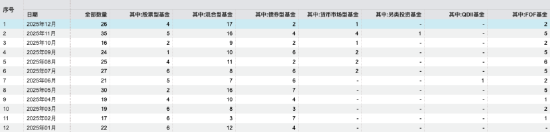
年内超280只基金清盘!混合型127只占半壁江山,博时基金共16只成“清盘王”,多只绩优基金亦难幸免
Xin Lang Cai Jing· 2025-12-29 07:56
Core Insights - The public fund industry is experiencing a normalization of fund liquidations, with over 280 funds entering liquidation by December 29, 2025, which is comparable to the 293 funds liquidated in 2024, indicating a trend of survival of the fittest in the industry [12][10][20] Fund Liquidation Overview - Among the 281 liquidated funds, mixed funds lead with 127 funds, accounting for over 45%, followed by bond funds (53) and equity funds (51) [3][14] - The distribution of liquidated funds shows significant differentiation among institutions, with Bosera Fund having the highest number of liquidations at 16, followed by several others with 9 and 8 liquidations [3][14] Fund Age and Performance - The liquidated funds include both long-standing funds over ten years old and newly established funds under one year, highlighting a diverse age range [4][15] - Notably, some funds, despite achieving positive returns, were still liquidated due to insufficient asset size, such as Huabao Yuanxi A, which had a return of 11.35% but was terminated due to net asset value falling below 50 million [6][16] Reasons for Liquidation - A significant majority of the liquidated funds, 235 out of 281, were forced to liquidate due to triggering contract termination clauses, primarily because their size remained below 50 million [7][17] - Even high-performing funds like Southern Carbon Neutral A, which had a return of 71.03%, faced liquidation due to not meeting asset size requirements, indicating a trend where investors redeem funds after achieving returns, leading to rapid size decline [8][18] Industry Implications - The trend of fund liquidations reflects a shift in the industry from a focus on initial launches to an emphasis on sustained performance, with investors encouraged to select funds with moderate sizes and avoid those with high institutional ownership [10][20] - The reduction in the "shell" value of funds, due to lower approval and issuance thresholds, has led to a market environment where underperforming funds are not maintained, resulting in a natural selection process within the industry [10][20]
寒武纪股价涨5.06%,海富通基金旗下1只基金重仓,持有200股浮盈赚取1.32万元
Xin Lang Cai Jing· 2025-12-29 02:25
Group 1 - The core viewpoint of the news is that Cambricon Technologies has seen a stock price increase of 5.06%, reaching 1369.88 yuan per share, with a total market capitalization of 577.66 billion yuan as of the report date [1] - Cambricon Technologies, established on March 15, 2016, and listed on July 20, 2020, specializes in the research, design, and sales of artificial intelligence core chips for various cloud servers, edge computing devices, and terminal equipment [1] - The company's main business revenue composition is as follows: cloud products account for 99.62%, other (supplementary) 0.32%, edge products 0.05%, and IP licensing and software 0.00% [1] Group 2 - From the perspective of fund holdings, Haifutong Fund has one fund heavily invested in Cambricon, specifically the Haifutong Quantitative Stock Mixed A (021655), which held 200 shares, representing 2.24% of the fund's net value, making it the fifth-largest holding [2] - The Haifutong Quantitative Stock Mixed A (021655) has achieved a year-to-date return of 33.76%, ranking 2716 out of 8159 in its category, and a one-year return of 31.63%, ranking 2719 out of 8147 [2] - The fund manager, Li Ziw, has been in charge for 2 years and 319 days, with the fund's total asset size at 3.69 million yuan, achieving a best return of 83.32% and a worst return of -21.29% during his tenure [3]

哪些基金公司还在冲量?
Xin Lang Cai Jing· 2025-12-29 01:36
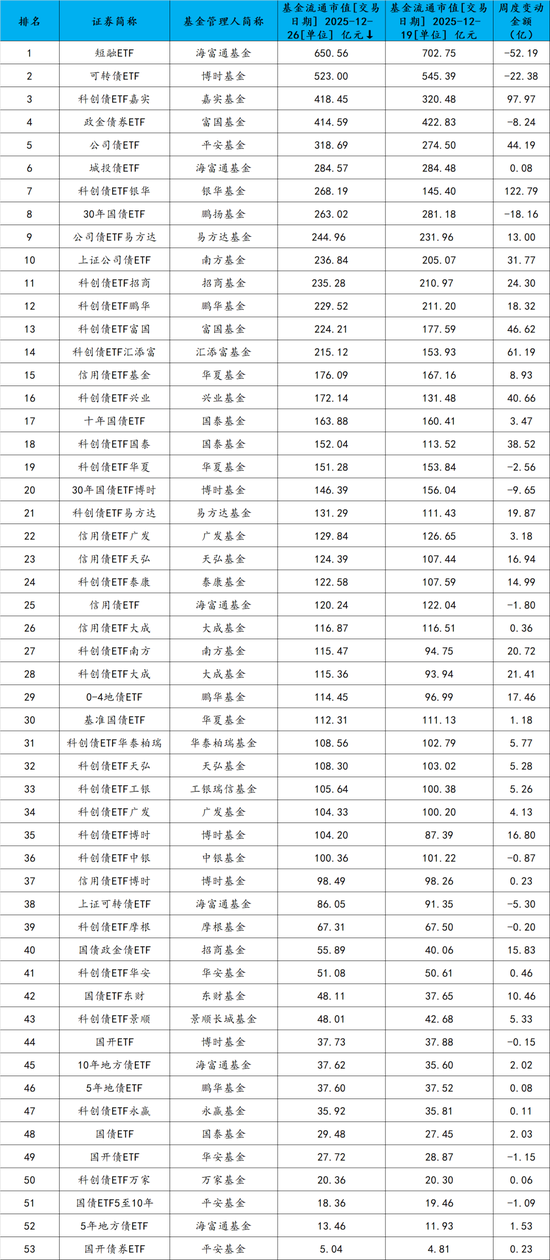
Core Insights - Despite the industry's focus on high-quality development, many fund companies are still pushing for year-end performance boosts, which contradicts the principles of quality growth [1][10] - The management scale remains a crucial metric for fund companies to secure resources, influence industry rankings, and attract talent, especially at year-end [1][10] Fund Performance - A500 ETF products saw significant growth in scale within a week (December 19 to December 26): - Southern A500 ETF increased from 35.714 billion to 47.339 billion, a rise of 11.625 billion - Zhongzheng A500 ETF (Guotai) grew from 26.761 billion to 38.299 billion, an increase of 11.538 billion - The top five A500 ETFs all experienced growth exceeding 7 billion [10] - The Sci-Tech Bond ETF also showed a "sprint" trend: - Silver Hua Sci-Tech Bond ETF grew by 12.279 billion (from 14.540 billion to 26.819 billion) - Jia Shi Sci-Tech Bond ETF increased by 9.797 billion (from 32.048 billion to 41.845 billion) - A total of 14 bond ETFs saw growth exceeding 1 billion [10] Bond ETF Rankings - The top bond ETFs by scale as of December 26 include: 1. Short-term Bond ETF (Hai Futong) - 65.056 billion, down by 5.219 billion 2. Convertible Bond ETF (Bosera) - 52.300 billion, down by 2.238 billion 3. Sci-Tech Bond ETF (Jia Shi) - 41.845 billion, up by 9.797 billion 4. Government Bond ETF - 41.459 billion, down by 0.824 billion 5. Corporate Bond ETF - 31.869 billion, up by 4.419 billion [11][12]
上周单周增超2000亿元,ETF总规模首次突破6万亿元
Xin Lang Cai Jing· 2025-12-28 18:23
Core Viewpoint - The A-share market is experiencing a significant upward trend, with major indices showing substantial weekly gains, particularly in the ETF market, which has reached a new milestone of over 60 trillion yuan in total scale [1][3]. Group 1: Market Performance - From December 15 to December 19, the CSI 300 index rose by 1.95%, and the CSI A500 index surged by 2.75%, while the ChiNext index increased by 3.90% [1]. - The total scale of domestic ETFs increased by 200.4 billion yuan in one week, marking the first time it surpassed 60 trillion yuan [3]. - The stock-type ETFs accounted for a significant portion of this growth, attracting 133 billion yuan, with broad-based indices contributing 85% of the inflow [3]. Group 2: ETF Growth - The CSI A500 index-linked ETF saw a remarkable increase of 1.066 billion yuan in December, entering the 300 billion yuan club [1][5]. - The total number of listed ETFs reached 1,381, with a total scale of 6.03 trillion yuan as of December 27 [3]. - Year-to-date, the total scale of ETFs has grown by 22.947 billion yuan, with stock-type ETFs nearing a growth of 10 trillion yuan [4]. Group 3: Fund Management - The top seven fund management institutions have significantly increased their ETF scales, with six of them surpassing 10 billion yuan in weekly growth [2][7]. - Southern Fund led the charge with a weekly increase of 34.3 billion yuan, accumulating over 50 billion yuan in three weeks [2][7]. - The competition between major fund houses, such as Huaxia Fund and E Fund, continues to intensify, with both showing substantial year-to-date growth [8].
新能源主题基金回暖机构研判新一轮景气周期已至
Shang Hai Zheng Quan Bao· 2025-12-28 13:28
Core Viewpoint - The performance of new energy theme funds has significantly rebounded after a period of adjustment, with an average net value increase of 41.33% over the past year, indicating the start of a new economic cycle in the sector [2]. Group 1: Fund Performance - New energy theme funds have shown an average net value increase of 41.33% over the past year, with several products exceeding a 60% increase [2]. - Specific funds such as GF Carbon Neutral Theme Mixed Fund A, Huafu New Energy Stock Fund A, and others have reported net value increases above 60% [2]. Group 2: Investment Opportunities - Fund managers are optimistic about structural opportunities in sub-sectors like energy storage and wind power, suggesting a long-term investment perspective focused on leading companies with core competitiveness [2][3]. - Two types of companies are highlighted for investment: leading firms with strong competitive advantages and growth capabilities, and core material companies facing critical supply-demand turning points [3]. Group 3: Sector Insights - The energy storage sector is expected to see performance realization due to an improving supply-demand landscape, driven by global energy transition and AI development [4]. - The wind power sector is experiencing strong global installation demand, with potential for growth in China's wind power supply chain and improved profitability as bidding prices for new projects rise [4]. Group 4: Investment Strategy - Investment in the new energy sector should consider long-term growth potential and clear industry trends, while avoiding linear extrapolation and focusing on key contradictions in supply-demand dynamics [5]. - Diversification is recommended to manage risks associated with new technologies, such as solid-state batteries, which have significant uncertainties [5].