
LVMH

Search documents
Uniqlo and Coach are opening cafes — joining longtime coffee players Ralph Lauren and Capital One. Here's why it's become a retail trend
CNBC· 2026-01-06 16:00
Core Insights - Retailers are increasingly integrating cafes into their stores to enhance customer experience and engagement, leveraging the concept of the "Experience Economy" [1][9] Group 1: Retail Trends - Post-pandemic, brands like Uniqlo are expanding their cafe concepts, with Uniqlo opening its first coffee bar in the U.S. in March, aiming to attract more customers [2][3] - Luxury brands such as LVMH have opened cafes in collaboration with Michelin-starred chefs, including locations for Dior, Louis Vuitton, and Tiffany [4] - Coach has seen significant sales growth, reporting double to triple-digit increases in stores with cafes, and has opened multiple locations internationally [5][6] Group 2: Brand Strategies - The cafes serve to create a sense of belonging and cultural immersion, particularly for brands like Uniqlo, which aims to spread Japanese culture through its offerings [3] - Capital One and Ralph Lauren have also entered the cafe space, with Capital One operating 65 cafes and Ralph Lauren over 40 globally, both planning further expansions [8] - Companies are focusing on unique designs and experiences to differentiate their cafes, as noted by industry experts [10] Group 3: Customer Engagement - The integration of cafes is seen as a way to enhance the shopping experience, with Uniqlo emphasizing customer service and convenience [13] - The cafes are not just profit centers but also serve to increase brand awareness and customer loyalty, as highlighted by Capital One's approach [11][12]



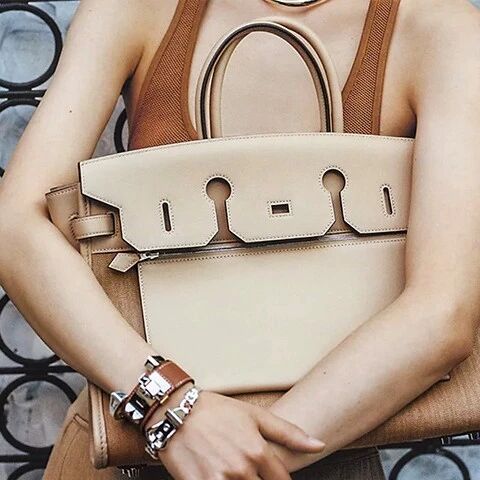
爱马仕们开始给不买奢侈品的年轻人寄「催款函」了
36氪· 2026-01-05 13:35
Core Viewpoint - The luxury brand Hermès has implemented a price increase of up to 10% at the end of December, with the most popular items seeing moderate price hikes, reflecting a strategic response to market conditions and consumer behavior in China [4][5][6]. Price Increase and Sales Performance - Hermès raised prices by approximately 10%, with specific items like the "Platinum Bag" increasing by 10,000 yuan and the Kelly bag by 5,000 to 10,000 yuan, while jewelry prices rose by only 1% [5]. - The third-quarter financial report indicated satisfaction with the performance in the Greater China region, attributed to a slight recovery in foot traffic and increased sales of high-value items like jewelry and watches [5][22]. - Despite the price increases, Hermès has seen a reduction in the difficulty of acquiring bags, with the allocation ratio for certain styles improving from 1:2 or 1:3 to 1:1, indicating a shift in consumer purchasing dynamics [16][18]. Market Dynamics and Consumer Behavior - The luxury goods market in China has faced challenges, with a reported reduction of approximately 50 million consumers over the past two years, leading to a more cautious spending environment [7][16]. - The financial performance of Hermès shows a significant reliance on leather goods, which accounted for 44.35% of total revenue in the first three quarters of 2025, while other categories like ready-to-wear and accessories have shown slower growth [18][20]. - The competitive landscape reveals that other luxury brands, such as Chanel, have also experienced sales declines, with Chanel's revenue dropping by 5.3% in 2024, raising concerns about the sustainability of their growth strategies [21]. Regional Insights - In the Asia-Pacific region, Hermès reported revenues of 5.163 billion euros, a 4% increase, with the Greater China market showing notable performance, although still lagging behind other regions [23]. - The overall luxury market in China is expected to contract by 3% to 5% in 2025, indicating a shift towards domestic entry-level brands and experiential categories [24][26]. - Local brands are gaining traction, with significant sales in the Tmall Double Eleven shopping festival, highlighting a structural change in consumer preferences [25][26].
继加拿大鹅后,贝恩资本收购Andar母公司
2 1 Shi Ji Jing Ji Bao Dao· 2026-01-05 09:03
Group 1 - Saks Global is facing bankruptcy due to a debt crisis, leading to the resignation of its CEO and a search for emergency financing or asset sales [3][4] - The company reported a 13% year-over-year decline in revenue for the second quarter, totaling $1.6 billion, and has lowered its annual forecast [4] - The luxury retail sector is seeing a shift as brands reduce reliance on third-party department stores, moving towards direct sales and e-commerce [5] Group 2 - Bain Capital announced the acquisition of EcoMarketing, the parent company of the South Korean sportswear brand Andar, for approximately $344 million [2] - The acquisition involves a two-step process, with Bain first acquiring a 43.66% stake and then making a tender offer for the remaining shares at a 49.5% premium [2] - Andar has seen record sales in Q1 2025 and is expanding into international markets, indicating strong growth potential [2] Group 3 - LVMH has expanded its media portfolio by acquiring Les Editions Croque Futur, which includes three major magazines, to enhance its cultural influence [5][6] - This acquisition aligns with LVMH's strategy to promote high-quality information and scientific culture, further integrating media into its luxury brand narrative [6] Group 4 - LK Bennett has filed for bankruptcy management for the second time in six years, facing significant financial losses and debt pressures [7] - The brand reported a loss of £3.2 million and debts of £22 million, with a 13.5% decline in revenue to £42.1 million [7] Group 5 - Shenzhen Ge Li Si appointed a new general manager, Wang Dusen, to focus on profitability and operational efficiency [8] - The company reported a 6.22% decline in revenue for the first three quarters of 2025, but a significant increase in net profit of 427.34% [8] Group 6 - Lin Qingxuan, a domestic skincare brand, successfully listed on the Hong Kong Stock Exchange, becoming the first high-end domestic skincare stock [9] - The stock price rose by 9.3% on its debut, reflecting strong market confidence in its differentiated product strategy [9][10] Group 7 - Salvatore Ferragamo will not renew its shareholder agreement with its long-term partner in Greater China, aiming to regain full control over company decisions [11] - The company has faced a 10.5% revenue decline in 2024 and is undergoing a strategic transformation to address performance issues [11] Group 8 - Brunello Cucinelli's family holding company has upgraded its corporate structure to support future growth and capital operations [12] - The company reported total assets of €202 million and a net profit of €25 million as of July 31, 2025 [12] Group 9 - Under Armour appointed Jillian Gorman as the new digital experience head for the Americas, as part of its transformation strategy [14] - The company is focusing on product, storytelling, service, and team as core pillars for its operational overhaul [14] Group 10 - The opening of MIXC VILLAGE in the Greater Bay Area attracted significant attention, with 120,000 visitors on its first day [15] - This project aims to redefine commercial spaces by catering to cross-city consumers and integrating into the lifestyle of the Bay Area [15][16]
2026年的实体商业,会不会更难?
3 6 Ke· 2026-01-05 03:03
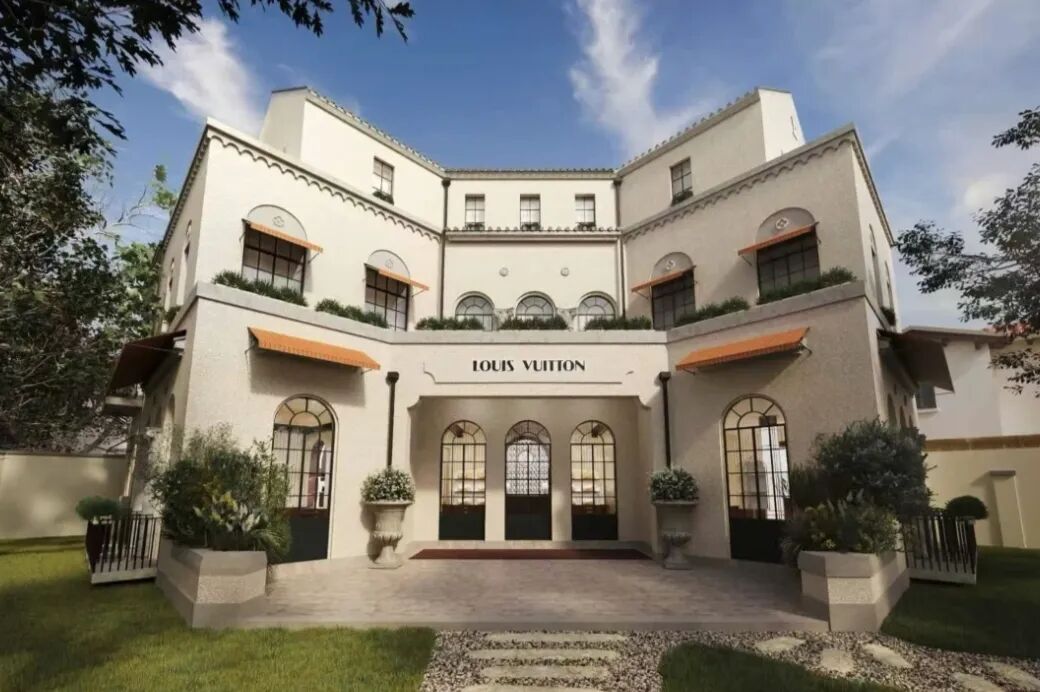
Core Insights - The article discusses the challenges facing the retail and consumption sectors in China, predicting that while a collapse is unlikely, conditions will become more difficult for most businesses in 2026 [3][30]. Group 1: Market Trends - The overall retail sales in China grew by 4% year-on-year from January to November 2025, indicating a positive trend in consumption [4]. - However, the growth is not perceived as strong by many, as it does not follow familiar patterns [5]. - The growth rate in the first half of 2025 was higher than in the second half, with monthly data since June showing a decline [6]. Group 2: Regional Disparities - Rural areas and smaller cities are experiencing higher growth rates compared to urban centers, with urban retail growth lagging behind the national average since July 2025 [7]. - Provinces like Hainan and Henan are leading in growth, while wealthier provinces like Guangdong and Jiangsu are underperforming [8]. - Beijing has been in a negative growth zone, with a year-on-year decline of 3.1% as of November 2025 [9]. Group 3: Consumption Patterns - Retail growth is outpacing dining, and online sales are growing faster than offline, indicating a shift in consumer behavior [11]. - The top three categories for retail sales above designated limits are communication equipment, cultural and office supplies, and furniture, driven by government subsidies [12]. - The growth is concentrated in areas where many businesses are not adept at operating, leading to increased pressure on traditional commercial projects [10][14]. Group 4: Investment Opportunities - Despite the challenges, some investors are successfully identifying opportunities in sectors with strong price-performance ratios and emotional consumption [17][18]. - A report by Nielsen IQ indicates that 50% of consumers expect their financial situation to improve by early 2026, up from 45% in 2024, suggesting a growing optimism [20]. - The luxury goods sector is seeing a resurgence, with brands like LVMH expanding aggressively in major cities [21][23]. Group 5: Consumer Behavior - The article highlights a trend where consumers are willing to spend money for experiences and value, leading to a more fluid consumption pattern [25]. - Projects that fail to attract consumer interest risk being overlooked or failing entirely [26]. - The importance of creating emotional value for consumers is emphasized, as happiness becomes a more scarce commodity in a competitive market [28][29].
全球十大富豪,去年财富增近6000亿美元
财联社· 2026-01-04 12:07
Core Insights - The total wealth of the world's top 10 billionaires has surpassed the market value of Amazon, reaching over $2.5 trillion, with an increase of $579 billion in 2025 [1] Group 1: Billionaire Wealth Growth - Elon Musk experienced the largest wealth increase last year, adding $187 billion to reach a net worth of $619 billion, solidifying his position as the world's richest person [3] - Musk's wealth surge is attributed to the significant rise in the value of his holdings in Tesla and SpaceX, with Tesla's stock increasing by 11% last year [4] - SpaceX's valuation doubled to $800 billion by the end of 2025, compared to $400 billion in August [5] Group 2: Notable Billionaire Rankings - Larry Page and Sergey Brin, co-founders of Google, ranked second and fourth respectively, with wealth increases of $101 billion and $92 billion, driven by a 65% rise in Google's stock [5] - Jeff Bezos saw a wealth increase of $15 billion but dropped from second to third place due to Page's rise [6] - Larry Ellison's wealth grew by $55 billion, but he fell from fourth to fifth place on the billionaire list [7] Group 3: Other Billionaire Wealth Changes - Mark Zuckerberg's wealth increased by $26 billion, but he dropped from third to sixth place [8] - Bernard Arnault, head of LVMH, saw a wealth increase of $31.6 billion, ranking seventh [9] - Steve Ballmer's wealth grew by $22 billion, moving him from ninth to eighth place [10] - Jensen Huang, CEO of Nvidia, increased his wealth by $40 billion, rising from twelfth to ninth place [11] - Warren Buffett's wealth increased by $9 billion, maintaining his position at tenth [12] Group 4: Centibillionaires Club - The number of centibillionaires remains at 18, with a total wealth increase of $708 billion in 2025, surpassing Visa's market value of approximately $677 billion [13][14] - The total wealth of this group is close to $3.6 trillion, equivalent to the size of Microsoft [14] - Elon Musk alone accounts for 17% of the total wealth of the centibillionaires, contributing 26% of the group's overall wealth increase [14]





设计趋同、高价低质、假货泛滥……山下有松的“虚火”还能撑多久?|贵圈
Xin Lang Cai Jing· 2026-01-04 00:46
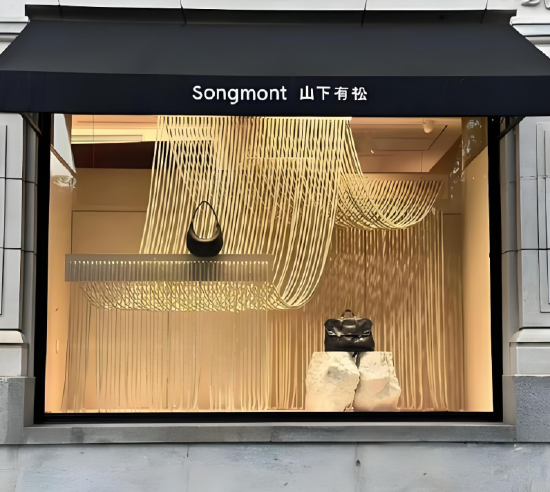
Core Insights - The brand Songmont, also known as "山下有松," has rapidly gained mainstream attention, with significant milestones including LVMH chairman Bernard Arnault purchasing products and the brand's participation in Paris Fashion Week [1][17] - Despite impressive growth, the brand faces challenges such as rampant counterfeiting, consumer complaints about design similarities and high prices, and quality control issues [1][4][11] Sales Performance - In the first three quarters of this year, Songmont's online sales in China increased by approximately 90%, while competitors like Gucci and MK saw declines of 50% and 40% respectively [17] - Songmont has consistently improved its ranking in the Tmall Double Eleven sales event, moving from third place in 2023 to first place in 2024, surpassing Coach with an annual GMV of around 500 million yuan [17][21] Consumer Sentiment - Consumer feedback is polarized, with loyal fans praising the brand's unique design and quality, while critics highlight issues such as design uniformity, high prices, and frequent price increases [18][19] - A specific product, the "菜篮子" bag, saw its price rise from 880 yuan in 2021 to 1380 yuan in 2025, reflecting a nearly 60% increase [4][19] Market Positioning - Songmont is positioned among mid-to-high-end domestic brands, with some products priced over 4000 yuan, and has tested the high-end market with items exceeding 10,000 yuan [21] - The brand's pricing strategy considers multiple factors, including material costs, craftsmanship, and market positioning, as stated by customer service representatives [21] Expansion Strategy - The brand has expanded its physical presence, increasing its number of stores from 11 to 20 within a year, primarily in first-tier and new first-tier cities [22] - Despite the expansion, many stores are not yet profitable, with online sales currently supporting offline operations [22] Product Diversification - Songmont is diversifying its product offerings, launching a clothing line in November 2024 and a fragrance line in November 2025, with prices comparable to luxury brands [24][10] - The brand aims to create a cohesive aesthetic experience, integrating bags, clothing, and fragrances to attract a specific consumer demographic [24] Counterfeit Issues - Counterfeiting has become a significant issue, with a complete supply chain for fake products emerging, often sold at prices 1/5 to 1/10 of the original [25][11] - The brand is actively working to combat counterfeiting, with legal teams addressing the issue both domestically and internationally [27] Brand Challenges - The brand faces a paradox where increased visibility leads to more counterfeiting, complicating the maintenance of its unique identity and high-end perception [27] - Experts suggest that to build a stronger brand moat, Songmont should enhance its product innovation, establish technical barriers, and improve copyright protection [27]
爱马仕开始寄“催款函”了
阿尔法工场研究院· 2026-01-04 00:06
Core Viewpoint - The luxury brand industry, particularly high-end brands like Hermès, is facing challenges despite traditional price increases, with a notable shift in consumer behavior and market dynamics in China [3][9][32]. Price Increase and Sales Performance - Hermès implemented a price increase of up to 10% on various products, with the most sought-after "Birkin bag" seeing a price rise of 10,000 yuan and the "Kelly bag" increasing by 5,000 to 10,000 yuan [5][7]. - The sales performance in the Greater China region showed a recovery, with a slight increase in customer traffic and higher sales of luxury items like jewelry and watches [7][30]. - Despite the price hikes, Hermès has seen a decrease in the difficulty of acquiring bags, with the allocation ratio improving from 1:2 or 1:3 to 1:1 for some styles [23][24]. Market Dynamics and Consumer Behavior - The luxury goods market in China is undergoing a transformation, with a reported reduction of approximately 50 million consumers in the luxury segment over the past two years [22][30]. - The marketing strategies of luxury brands, such as sending promotional materials to past customers, have been perceived as pressure tactics to encourage spending, leading to mixed reactions from consumers [11][18]. - The rise of domestic luxury brands and a shift in consumer spending towards local brands have been noted, with significant growth in the sales of entry-level luxury products [30][31][32]. Financial Performance of Competitors - Other luxury brands like Chanel and Van Cleef & Arpels are also experiencing challenges, with Chanel reporting a 5.3% decline in sales for 2024, despite previous growth [28]. - The financial results for Hermès indicate a strong reliance on leather goods, which accounted for 44.35% of total revenue in the first three quarters of 2025, while other product lines showed slower growth or declines [24][27]. Future Outlook - The luxury market is expected to continue its weak recovery into 2026, with brands needing to adapt to changing consumer preferences and economic conditions [33].
Behind glam luxury brands Michael Kors and Jimmy Choo lurks a troubled holding company losing millions
Yahoo Finance· 2026-01-02 09:13
Core Insights - Capri is struggling significantly, with a reported loss of $1.18 billion in fiscal 2025 and a 21% revenue decline from $5.6 billion to $4.4 billion over the past two fiscal years [2] - The company is facing intense competition from Tapestry, particularly its Coach brand, which has seen substantial revenue growth [1][19] - Capri's transformation plan has failed to resonate with consumers, leading to a decline in brand perception and sales [15][16] Financial Performance - Capri's revenues fell from $5.6 billion in fiscal 2025 to $4.4 billion, marking a 21% decrease [2] - The Michael Kors brand, which constitutes nearly 70% of Capri's revenues, experienced a sales drop of $864 million since 2023 [2] - Versace's revenue declined from $1.1 billion in fiscal 2023 to $821 million in fiscal 2025 [13] Strategic Moves - Capri announced the sale of Versace to Prada for $1.375 billion, a significant loss for the company [2] - The company aims to stabilize its business by using proceeds from the Versace sale to repay debt and strengthen its balance sheet [14] - Capri plans to target $4 billion in revenue from Michael Kors and $800 million from Jimmy Choo in the future [22] Market Context - The luxury market is experiencing its first contraction in 15 years, with a 2% decline, as consumers shift towards experiential indulgence rather than conspicuous consumption [12] - The number of luxury customers decreased from 400 million in 2022 to approximately 340 million in 2025 [12] Brand Strategy - Capri is refocusing on its core brands, Michael Kors and Jimmy Choo, and plans to renovate 50% of its retail spaces over the next three years [21] - A new marketing campaign, "Hotel Stories," aims to enhance brand perception and connect with consumers [21] - The company is also emphasizing a "renewed focus" on Jimmy Choo, targeting growth in accessories and casual footwear [22]
华尔街的“影子军团”:家办下场,与黑石、KKR抢地盘
3 6 Ke· 2025-12-31 03:35
当"亿万富豪"遇见"职业PE",一场重塑全球资本版图的权力迁徙正在发生。 如今,家办已不再仅仅是低调的"财富管家",而是进化为华尔街最凶猛的捕 猎者。 从迈克尔·戴尔到比尔·盖茨,顶级富豪们正绕开传统基金,化身"永久资本"直投产业,在AI、深科技等赛道与黑石、KKR、红杉同台角力。 其规模庞大、行事低调,甚至带有神秘色彩,对华尔街与"主街"经济的影响持续上升。银行与各类资管机构也开始加码相关服务,创业者与基金管理人则 争相进入其"交易雷达"。随着家办走向机构化,不少资金开始以直投、并购等方式更深介入产业。 据德勤估算,拥有家办的家族目前管理约5.5万亿美元财富,较五年前增长67%。预计今年升至6.9万亿美元,2030年突破9万亿美元,并有望在未来几年超 过对冲基金管理规模。 如今,设立家办也从少数顶级富豪扩散至"准超富裕"家庭。 除长期管理数十亿美元资产的头部家办外,许多拥有数千万至数亿美元财富的家族也开始自建,或转向联合家办。 德勤称,全球单一家办已超8000家,较2019年的6130家增约三分之一,并预计2030年超过10000家。 这不仅是5.5万亿美元资产的机构化博弈,更是一场关于身份与影响力的"俱乐 ...
奢侈品市场复苏,消费价值观重塑
2 1 Shi Ji Jing Ji Bao Dao· 2025-12-30 23:14
Group 1 - The luxury goods market is showing signs of moving towards a new balance after experiencing structural adjustments, with total sales remaining stable at approximately €1.44 trillion, and projected growth to €2.2 trillion to €2.7 trillion by 2035 [1][2] - The Greater China region is viewed as the core engine driving the recovery of luxury brands like LVMH and Burberry, with significant improvements in their performance since Q3 2025 [2][3] - Consumer demand is shifting towards personalized, diversified, high-quality, and cost-effective products, indicating a change in purchasing logic among younger generations [1][3] Group 2 - The luxury goods market is gradually recovering from post-pandemic consumption fatigue, with major luxury groups reporting positive trends in the Greater China market, leading to reduced revenue declines or positive growth [2][3] - Nearly half of luxury consumers believe that brand prices are inflated and are unwilling to pay for frequently increasing prices, indicating a shift towards value and experience over brand logos [3][4] - Discount channels are experiencing significant sales growth, with platforms like Vipshop reporting a 30% year-on-year increase in luxury goods sales from January to September [3][4] Group 3 - Trust issues regarding discounted luxury goods are prevalent, as consumers question the reliability of purchasing from discount channels [4][5] - The establishment of a third-party inspection agency, such as China Inspection, is crucial for building consumer trust in discounted luxury products, as it provides authoritative verification [5][6] - The luxury market is entering a more complex and healthier phase, balancing brand aspiration with the need for a trust system and pricing pathways to meet increasingly discerning consumer demands [5][6]