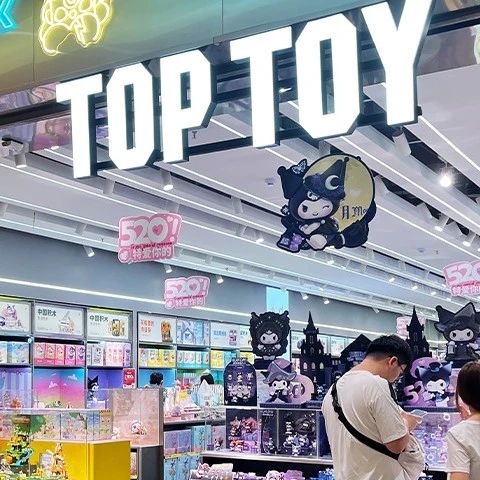
TOP TOY

Search documents
内地消费企业扎堆赴港上市
Shen Zhen Shang Bao· 2025-05-06 16:44
Group 1: Market Trends - Several mainland consumer companies are pursuing IPOs in Hong Kong, with over 10 companies aiming for listings this year, indicating a preference for Hong Kong over the US market [1][2] - Notable companies like Mingming Hen Mang, Sanquan Foods, and Dongpeng Beverage have already listed or are in the process of listing in Hong Kong [1] Group 2: Company Performance - Mingming Hen Mang reported a GMV of 55.5 billion RMB and over 1.6 billion transactions last year, making it the largest leisure food and beverage retail chain in China by 2024 GMV [1] - The company operates 14,394 stores across 28 provinces in mainland China [1] Group 3: IPO Activity - Hu Shang A Yi, a tea beverage company, has initiated its IPO process, planning to issue 2.41134 million H-shares, with a listing date set for May 8 [2] - The Hong Kong Stock Exchange currently has over 130 companies in the IPO queue, reflecting a robust interest in capital raising among consumer brands [2] Group 4: Strategic Insights - Analysts suggest that the recent trend of mainland consumer companies listing in Hong Kong is driven by improved liquidity and a faster approval process from the Hong Kong Stock Exchange [3][4] - The shift towards Hong Kong is also attributed to the limited number of consumer companies going public in A-shares recently, prompting firms to seek alternative financing avenues [4]
从短期爆发到生态常青:对IP商品化可以更乐观些
2025-04-15 00:58
Summary of the Conference Call on the Japanese IP Toy Industry Industry Overview - The Japanese IP toy industry is primarily dominated by Bandai and Tomy, with a rich history and significant market presence. Bandai specializes in character-based toys, achieving annual sales of 20 million to 30 million units, with peak sales of 60 million units for its second-generation products. Tomy is known for its original toys, such as vehicles and dolls [3][3]. Key Points and Arguments - **Market Challenges and Consolidation**: The industry faced challenges in the late 1990s due to demographic and economic downturns, leading to a significant consolidation in 2005-2006, resulting in the formation of Bandai and Tomy. Bandai integrated its supply chain through the acquisition of Bandai Namco, while Tomy expanded its product line [3][5]. - **Bandai's Competitive Advantage**: Bandai's core competitive advantage lies in maximizing IP value through close collaboration with Toei Animation, monopolizing the Japanese boys' toy market. Their strategy includes diversifying revenue streams across toys, mobile games, and PC games [3][6]. - **Gundam's Revenue Structure**: Gundam, as Bandai's most profitable IP, shows a balanced revenue contribution from both games and toys, indicating long-term growth potential for mech-building products. Bandai enhances operational efficiency through copyright acquisitions and rapid product design approvals [3][7]. - **Tomy's Recent Developments**: Tomy faced difficulties pre-pandemic due to a lack of localized IP resources, relying heavily on American collaborations. Post-pandemic, Tomy leveraged the global toy market's beta effect, transitioning to online marketing and expanding into adult entertainment products [3][9]. - **Sanrio's Business Model**: Sanrio exhibits cyclical development, with significant profit growth through IP licensing, particularly in the Chinese market, where partnerships with Alibaba Sports have yielded profit margins exceeding 40% [3][12]. - **Valuation Trends**: The valuations of Bandai, Tomy, and Sanrio differ significantly. Pre-pandemic, Tomy and Bandai were valued at 15-20 times earnings, while Sanrio maintained around 20 times. Post-pandemic, Sanrio's valuation surged to 50 times due to successful global licensing and a focus on adult consumer trends [3][13]. Additional Important Insights - **Potential in China's IP Toy Market**: The potential for China's IP toy market is substantial, with the children's market estimated to be over three times that of Japan. The overall market for all ages also shows similar growth potential [3][18]. - **Investment Opportunities**: Notable companies to watch in the investment landscape include Brook (leading in building toys), Kayo (card game leader), TOP TOY (rapid revenue growth), and Guangbo (capitalizing on the two-dimensional IP economy) [3][19][20]. - **Global Card Game Market Trends**: The global card game market has seen a resurgence post-pandemic, driven by increased demand for collectible cards, revealing significant potential in the domestic IP commercialization market [3][14][15].
为让名创优品叶国富搞潮玩,做了很完整的商业计划书 | 对话TOP TOY孙元文
36氪· 2025-04-02 10:17
Core Viewpoint - The article discusses the competitive landscape of the collectible toy market, focusing on TOP TOY's strategies and growth in comparison to its competitor, Pop Mart. It highlights TOP TOY's unique approach of leveraging existing popular IPs for product development rather than creating its own IPs, which has proven to be a more viable business model. Group 1: Company Performance - Pop Mart has reported a revenue exceeding 10 billion yuan, with profits increasing by over 180%, achieving a market capitalization of over 200 billion HKD [4] - TOP TOY, under Miniso, opened its first flagship store in Shanghai and plans to expand globally, targeting 1,000 stores in 100 countries over the next five years [4] - TOP TOY's revenue reached 980 million yuan last year, marking a 45% year-on-year growth, and the number of stores increased from 148 to 276 [6] Group 2: Business Strategy - TOP TOY's founder, Sun Yuanwen, emphasizes that the company does not view Pop Mart as a direct competitor, as they operate in different segments of the market [8] - The company initially attempted to develop its own IP but faced significant losses, leading to a strategic pivot towards creating products based on established IPs [9][12] - TOP TOY aims to become a global brand by expanding its store presence worldwide, similar to its parent company Miniso [9][10] Group 3: Market Positioning - Sun believes that the uniqueness of an IP is less important than its design, focusing on reimagining popular IPs rather than using original designs [19][21] - The company has shifted its product sourcing strategy from a 70-30 split (self-developed vs. sourced products) to a 50-50 split, with plans to move towards a 70-30 model favoring self-developed products in the future [36][37] - TOP TOY's approach is likened to an Android model, allowing for a diverse range of products, while Pop Mart is compared to an iOS model with a closed ecosystem [40][47] Group 4: Future Outlook - The company plans to focus on store openings and product development, continuously engaging with consumers to explore new IP opportunities [52] - There is a shared concern within the industry about consumer fatigue towards collectible toys, which could impact future sales [54]



为了「骗」名创优品叶国富的钱,做了很完整的商业计划书 | 对话TOP TOY孙元文
3 6 Ke· 2025-04-02 02:56
Core Insights - The main focus of the article is on the growth and strategic direction of the collectible toy industry, particularly highlighting the performance of Pop Mart and TOP TOY, as well as their differing approaches to market competition. Group 1: Company Performance - Pop Mart has reported a revenue exceeding 10 billion yuan, with profits increasing by over 180%, achieving a market capitalization of over 200 billion HKD [1] - TOP TOY, a brand under Miniso, opened its first flagship store in Shanghai and plans to expand globally, aiming to establish over 1,000 stores in 100 countries within five years [1][2] - TOP TOY's revenue reached 980 million yuan last year, marking a 45% year-on-year growth, and the number of stores increased from 148 to 276 [2] Group 2: Strategic Direction - TOP TOY's strategy focuses on the secondary creation of large IPs, contrasting with Pop Mart's emphasis on proprietary IP development [2][4] - The company aims to become a global brand, similar to its parent company Miniso, by expanding its store presence worldwide [2][4] - TOP TOY has already opened five stores in Southeast Asia and plans for overseas sales to account for over 50% of its revenue [2] Group 3: Competitive Landscape - TOP TOY does not view Pop Mart as a direct competitor, as they operate in different market segments, with TOP TOY focusing on large IP adaptations [2][30] - The founder of TOP TOY believes that the uniqueness of an IP is less important than its design and marketability, which allows for a more predictable business model [7][10] - The company has shifted its product strategy from a 70-30 split of self-developed to externally sourced products to a 50-50 split, with plans to move towards a 70-30 ratio favoring self-developed products in the future [23] Group 4: Market Insights - The collectible toy market is seen as a growing sector, with both companies benefiting from increased consumer interest, particularly in blind box products [22][39] - The founder of TOP TOY acknowledges the potential risk of consumer fatigue towards collectible toys, which is a shared concern in the industry [39] - The competitive landscape is expected to evolve, with the emergence of new brands and products, indicating a dynamic market environment [30][38]
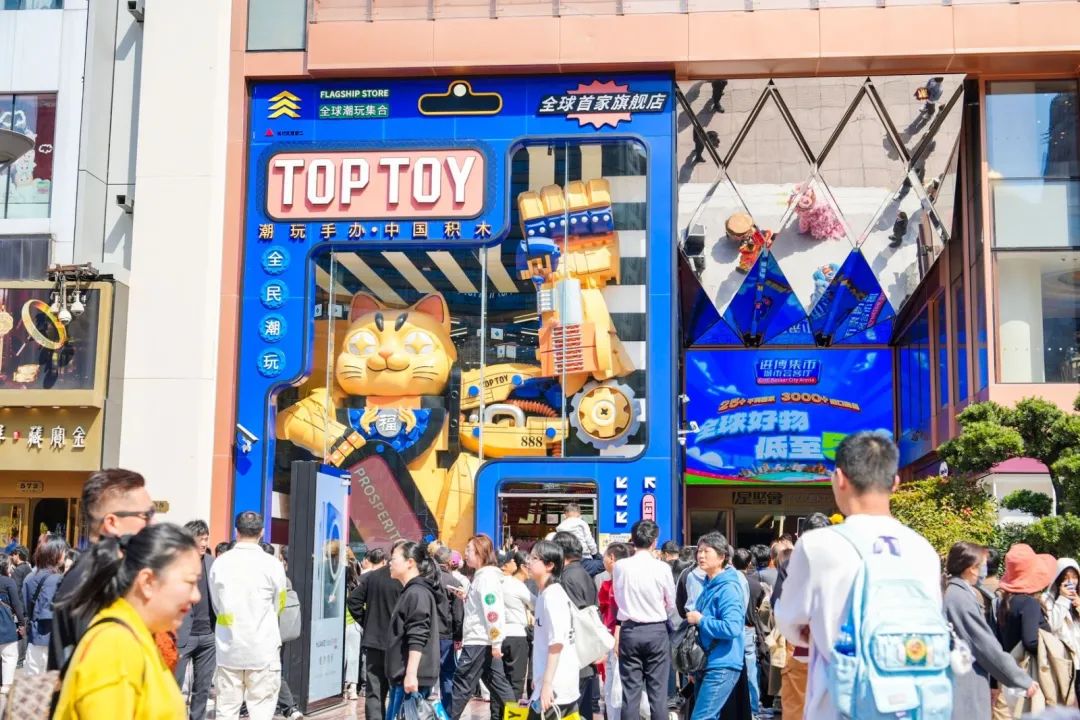
TOP TOY孙元文:我们没有把泡泡玛特当对手|厚雪专访
36氪未来消费· 2025-04-01 12:35
Core Viewpoint - The article highlights the rapid growth and strategic positioning of TOP TOY in the collectible toy market, emphasizing its differentiation from competitors like Pop Mart through a focus on large IP adaptations rather than developing proprietary IPs [3][5][7]. Group 1: Company Performance - Pop Mart reported a revenue exceeding 10 billion yuan, with profits increasing by over 180%, achieving a market capitalization of over 200 billion HKD [3]. - TOP TOY's revenue reached 980 million yuan in the previous year, marking a 45% year-on-year growth, and the number of stores increased from 148 to 276 [5]. - TOP TOY plans to expand its international presence, aiming for over 50% of sales to come from overseas markets [6]. Group 2: Strategic Direction - TOP TOY's founder stated that the company does not view Pop Mart as a direct competitor, as they operate in different segments of the market [7]. - The company initially attempted to create its own IP but faced significant losses, leading to a strategic pivot towards adapting existing large IPs [8][11]. - The focus on large IP adaptations is seen as a more certain path to success, leveraging established user bases and market recognition [8][25]. Group 3: Market Positioning - TOP TOY aims to become a global brand, similar to its parent company, Miniso, with plans to open over 1,000 stores in 100 countries within five years [5][8]. - The company emphasizes the importance of unique design in its products, even when working with established IPs, to differentiate itself in the market [15][17]. - The competitive landscape is viewed as an opportunity for collaboration rather than direct competition, with a desire for multiple brands to thrive in the collectible toy space [41][42]. Group 4: Future Outlook - The company is focused on product development and store expansion as its primary objectives for the next 1 to 3 years [46]. - There is a recognition of the potential risks associated with consumer interest in collectible toys, which could impact the market as a whole [48].
出海周刊138期 | 万亿比亚迪,也有烦恼/9家热门上市公司出海业绩速览
3 6 Ke· 2025-03-29 04:01
Group 1 - Several overseas consumer brands reported impressive growth for the full year of 2024, showcasing the results of their global expansion strategies through localized operations, store and channel expansion, and supply chain optimization [2] - The article highlights the hidden advantages and compliance requirements of establishing a company in the UAE, particularly in Dubai, while also addressing potential pitfalls [3] - The success of Chinese businesses in Japan's funeral industry illustrates a strategic approach to market penetration and cultural adaptation [5][6] Group 2 - The performance of various listed companies, including Mixue Ice City and Pop Mart, is summarized, indicating a trend of overseas expansion in the food and consumer goods sectors [8] - Ba Wang Tea's prospectus reveals aggressive marketing strategies and a focus on international markets, suggesting a shift in narrative towards overseas growth [9] - Pop Mart's overseas single-store revenue exceeds three times that of domestic stores, indicating strong international demand [10] Group 3 - Miniso's Q4 overseas revenue increased by 42.7%, with a record high gross margin of 47%, reflecting its successful international strategy [12] - The company Xiaoma Zhixing reported consecutive revenue growth, although its Robotaxi segment faced challenges, highlighting the complexities of scaling in the autonomous vehicle market [13] - A cross-border enterprise from Fuzhou has received approval for an IPO in the US, indicating a growing trend of Chinese companies seeking international capital markets [14] Group 4 - The article discusses the advantages of Dubai's IFZA free zone for cost-sensitive small and medium-sized enterprises looking to enter the Middle Eastern market, emphasizing low registration costs and quick setup times [26] - The establishment of a digital economy service base in Beijing aims to facilitate Chinese companies' global expansion, contributing to the Belt and Road Initiative [24]

想和泡泡玛特掰手腕,TOP TOY仍在跌跌撞撞中狂奔
3 6 Ke· 2025-03-28 06:39
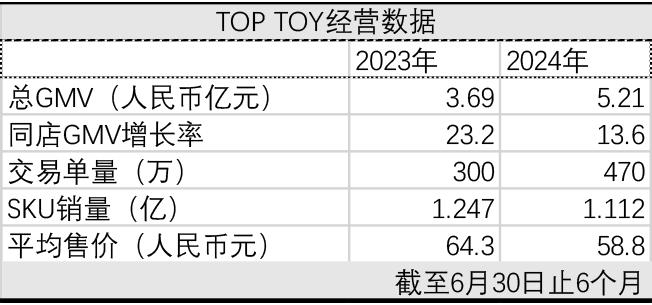
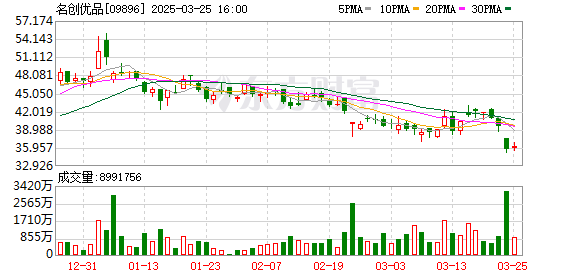
潮玩的高增长和盈利能力吸引大量资本关注,从泡泡玛特重回千亿市值、布鲁可顺利上市, 到TOP TOY、52TOYS的上市传闻。 叶国富2022年的豪言,"希望可以在三年内让TOP TOY实现单独上市",似乎变得更近了。 潮玩赛道的估值逻辑源于"赛道预期+业绩兑现"。在高增长阶段下,业绩不断验证增长,资 本市场也愿意给出高估值,反之则要重估。 站在名创优品的角度,TOP TOY在名创体系内并没有享受到潮玩估值红利,除了品牌推出 短暂提振了名创股价,目前名创优品的市盈率在15.8倍。 若是参考泡泡玛特市盈率108倍,布鲁可22.4亿年营收对应268亿港元市值。TOP TOY独立后 或可享受超百亿估值。这是一个明智之选。 目前全球潮玩市场仍是海阔天空,TOPTOY想以此鱼跃。 名创优品旗下潮玩品牌TOP TOY又开始活跃起来。 3月初,市场传闻名创优品计划分拆旗下潮玩品牌TOP TOY在香港上市,筹集资金约3亿美金。不过截 至目前,名创优品及TOP TOY未作回应。 3月22日下午,TOP TOY召开战略升级发布会,宣布启动全球化,目标是未来5年覆盖全球100个国家核 心商圈,开设超1000家门店。 在名创优品最新财 ...
比亚迪年利润超过400亿元,计划分给股东三成;特斯拉欧洲销量继续下跌,大众汽车受益;AI眼镜出货量今年可能翻倍丨百亿美元公司动向
晚点LatePost· 2025-03-25 13:53
比亚迪年利润超过 400 亿元,计划分给股东三成。 去年比亚迪总营收超过 7771 亿元,其中汽车及相关产品收入占 6173 亿元、同比增长超过 27%。 全年比亚迪净利润大约 402 亿元,他们计划现金分红 120 亿元左右。 特斯拉欧洲销量大幅下跌,大众 ID 系列从中受益。 据媒体援引 Dataforce 数据显示,今年前两个月,在欧洲电动车整体销量增长的情况下,特斯拉欧 洲销量同比大跌 45%,仅卖出了 2.59 万辆电动车。其中 Model Y 销量下跌 53% 至 1.48 万辆, Model 3 销量下跌 26% 至 1.08 万辆。 大众 ID 系列成为特斯拉销量大跌的受益者,欧洲销量排名前 5 的车型,大众 ID 系列就占了 3 款。其中,大众 ID.4 今年前两月的销量为 1.33 万辆,同比增长 172%,紧随 Model Y 之后销量排 名第二。大众 ID.7 以 1.13 万辆的销量位居第三,暂时超过了 Model 3。大众 ID.3 以 1.08 万辆的销 量排在第五,比去年增长了 141%。 智元机器人完成由腾讯领投的新一轮融资,腾讯领投。这轮结束后,智元机器人将以 150 亿元 ...

TOP TOY准备了100亿追赶泡泡玛特
Jie Mian Xin Wen· 2025-03-25 10:14
Core Insights - TOP TOY, a潮玩 brand under Miniso, plans to open over 1,000 stores globally in the next five years, with more than 50% of sales expected to come from overseas markets [3][5] - The company has allocated a reserve fund of 10 billion RMB to support its expansion, with a focus on flagship stores in major global shopping districts [3][4] - TOP TOY aims to position itself as a "super factory" for IP-related products, collaborating with various global and local IPs [4][5] Expansion Plans - The company plans to open 150 new stores in China by 2025, with 100 of those in major cities [3][5] - Currently, TOP TOY operates nearly 280 stores across over 80 cities in China, with plans to expand to 500-700 stores in the country [3][5] - TOP TOY has already opened five stores in Southeast Asia, with some achieving rapid profitability [6] Financial Performance - In the first three quarters of 2024, TOP TOY generated 700 million RMB in revenue, a 42.5% increase year-on-year, contributing approximately 5.7% to Miniso's total revenue [5][6] - The company's revenue for 2023 was 680 million RMB, up from 429 million RMB in 2022 [5][6] - TOP TOY's growth rate is significantly higher than Miniso's overall performance, with a revenue growth rate 2.5 times that of the parent company [5] Market Positioning - TOP TOY's strategy closely mirrors that of Bubble Mart, aiming to capture market share in the潮玩 sector [5][6] - The brand's primary products include blind boxes, building blocks, and plush toys, with a focus on leveraging popular IPs for product development [7][10] - The company has seen a 55%-60% compound annual growth rate over the past four years, with self-owned products experiencing a 150% growth rate this year [7][10] IP Strategy - TOP TOY relies heavily on external IPs for its product offerings, which poses risks related to licensing costs and renewal uncertainties [10][11] - The brand has a limited number of original IPs, with current self-owned IPs accounting for only a small percentage of sales [10][11] - The company is exploring collaborations with designers to enhance its product offerings, but remains focused on leveraging existing major IPs for growth [8][9] Competitive Landscape - TOP TOY faces challenges in differentiating itself from competitors like Bubble Mart, which has a strong portfolio of exclusive designer IPs [10][11] - The brand's reliance on external IPs may hinder its ability to create standout products in a crowded market [11][12] - The company is aware of the difficulties in attracting consumers in unfamiliar markets, particularly in Europe and North America [13] Store Location Strategy - TOP TOY's store location strategy has evolved to include not just first and second-tier cities but also lower-tier cities, reflecting a shift to capture a broader consumer base [15] - The company's same-store sales growth has slowed, indicating a need for strategic adjustments in its expansion approach [15]
9个月狂赚7亿,叶国富正筹备第二家上市公司
36氪· 2025-03-13 13:37
Core Viewpoint - The article discusses the potential spin-off of TOP TOY, a trendy toy brand under Miniso, for an independent listing in Hong Kong, aiming to raise approximately $300 million. This move is seen as timely given the favorable market conditions for the trendy toy industry, which is projected to grow significantly in the coming years [2][5][24]. Group 1: Company Developments - Miniso's founder, Ye Guofu, is reportedly planning to separate TOP TOY and has been in discussions with potential investors since late 2024 [3][4]. - TOP TOY has expanded rapidly, with a total of 234 stores by the third quarter of 2024, marking an increase of 112 stores compared to the previous year [9][11]. - The brand has achieved a total revenue of 700 million RMB in the first three quarters of 2024, reflecting a year-on-year growth of 43% [11][10]. Group 2: Market Environment - The global trendy toy market is expected to reach $44.8 billion by 2024, with China's market projected to grow at a compound annual growth rate of 24% from 2022 to 2026 [5][24]. - TOP TOY's strategy includes targeting Southeast Asia for expansion, capitalizing on the region's young population and growing consumer spending [9][10]. Group 3: Competitive Landscape - TOP TOY faces significant competition from established brands like Pop Mart, which reported a revenue of 4.56 billion RMB in the first half of 2024, growing by 62% [14][19]. - The brand's reliance on licensed IPs for product offerings poses both opportunities and challenges, as it incurs high licensing fees while diversifying its product range [15][17]. - The article highlights the importance of creating unique IPs alongside licensed products to build a sustainable competitive advantage in the crowded trendy toy market [15][25].