中国平安

Search documents
A股成交额3.99万亿元再创新高,沪指翻绿,尾盘集合竞价多只权重股现巨额压单
Mei Ri Jing Ji Xin Wen· 2026-01-14 08:21
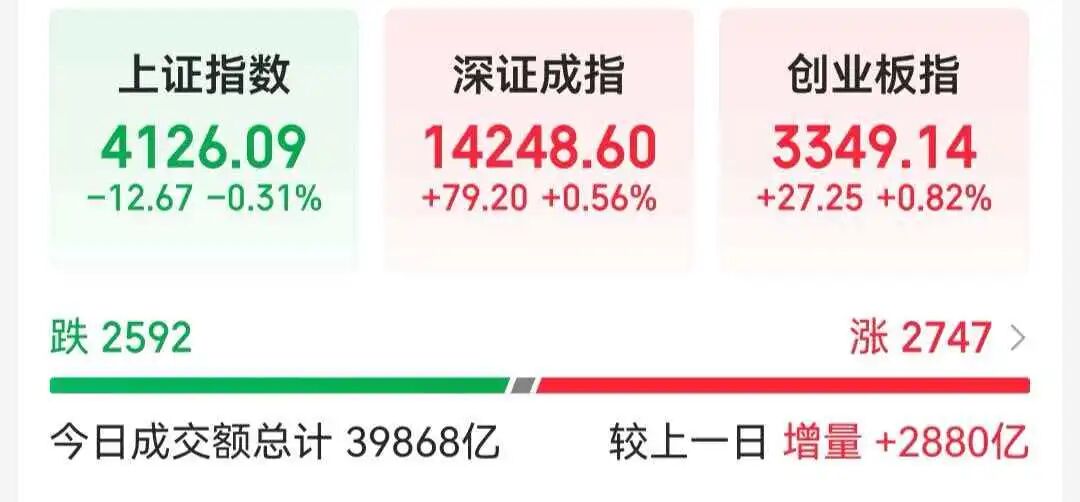
Market Overview - On January 14, the market experienced a pullback after an initial rise, with the Shanghai Composite Index dropping by 0.31% while the Shenzhen Component and ChiNext Index rose by 0.56% and 0.82% respectively [1] - The A-share trading volume reached a record high of 3.99 trillion yuan, an increase of 288 billion yuan compared to the previous trading day, maintaining above 3 trillion yuan for four consecutive days [1] Financing and Margin Trading - The China Securities Regulatory Commission approved an adjustment to the financing margin ratio, increasing the minimum margin for investors from 80% to 100% [3] - In 2025, the number of new margin trading accounts reached 1.5421 million, the highest in nearly a decade, representing an increase of 53.36% from 2024 [3] - By the end of 2025, the total number of margin trading accounts surpassed 15.64 million, with the financing balance rising from 1.85 trillion yuan at the end of 2024 to 2.52 trillion yuan, a growth of over 36% [3] Sector Performance - The AI application sector saw significant gains, with over twenty constituent stocks hitting the daily limit, including Liou Co. and Shengguang Group [5] - The semiconductor sector also performed well, with stocks like Yaxiang Integration reaching historical highs [5] - Conversely, sectors such as energy metals, insurance, and banking faced declines, with lithium mining stocks experiencing significant drops [5] AI Applications and Market Trends - Analysts noted that the recent strength in AI applications is driven by two main factors: the shift from traditional SEO to generative AI in marketing strategies and the government's focus on AI in scientific research [7] - Looking ahead to 2026, there is optimism that AI applications will evolve from usable to highly effective, becoming a core theme in the AI industry [8] - The market's performance showed volatility influenced by news, but the overall trend remains positive, particularly for the Shenzhen Component and ChiNext Index [8]






时隔两年半降杠杆!多只权重股尾盘竞价现巨额压单 发生了什么?
Mei Ri Jing Ji Xin Wen· 2026-01-14 08:13
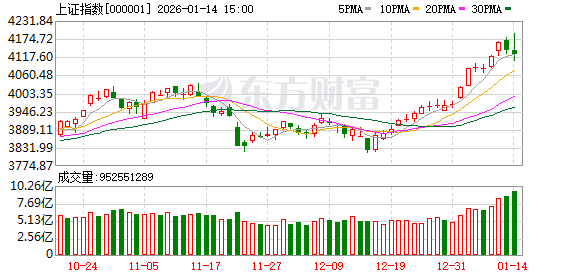
Market Overview - The A-share market showed mixed performance today, with the Shanghai Composite Index reaching a ten-year high during intraday trading. By the end of the day, the Shanghai Composite Index fell by 0.31%, while the Shenzhen Component Index rose by 0.56% and the ChiNext Index increased by 0.82% [2] - The total trading volume in the Shanghai, Shenzhen, and Beijing markets approached 40 trillion yuan, an increase of nearly 300 billion yuan compared to the previous day, setting a new historical record [2] Key Regulatory Announcement - The most significant market impact today was the announcement from the exchanges regarding the increase in the financing margin ratio, raising the minimum margin requirement for investors from 80% to 100% for new financing contracts. This adjustment aims to reduce leverage levels and protect investors' rights [4][7] - The previous reduction of the margin ratio from 100% to 80% in August 2023 had led to increased financing activity and trading volume. The recent adjustment is seen as a measure to moderate the market and prevent excessive accumulation of leveraged funds [4][7] Market Reactions and Implications - The timing of the announcement during the lunch break was strategic, as it coincided with a period of high financing activity, with significant financing buy-ins recorded in the preceding days [7][8] - The adjustment follows a recent trend where the Shanghai Composite Index had experienced a 17-day winning streak, and the timing is perceived as a precautionary measure to prevent potential market overheating [8] - The increase in the financing margin ratio is viewed as a direct tool for regulatory control, especially given the rising importance of leveraged trading in the market [9] Market Dynamics - Despite the regulatory changes, the overall market remains within a healthy range, with the margin financing balance accounting for 2.56% of the A-share market's circulating market value, which is still below historical highs [10] - The market experienced a rapid decline after the announcement, with the Shanghai Composite Index dipping to around 4106 points before stabilizing, indicating a strong underlying demand for stocks [10] Future Outlook - Analysts suggest that the current market conditions may not represent the peak for the Shanghai Composite Index in 2026, as there is a growing demand for equity asset allocation among investors [11] - The potential recovery of the overall return on equity (ROE) in the A-share market is anticipated, which could support further valuation increases and a stable upward trend in the market [11][12] - The regulatory environment is shifting towards a more accommodating stance, aiming to create an attractive capital market while managing risks effectively [12]
今年A股增量资金有多少?华泰:净流入或达1.6万亿,居民存款、散户资金占四成
Hua Er Jie Jian Wen· 2026-01-14 07:39
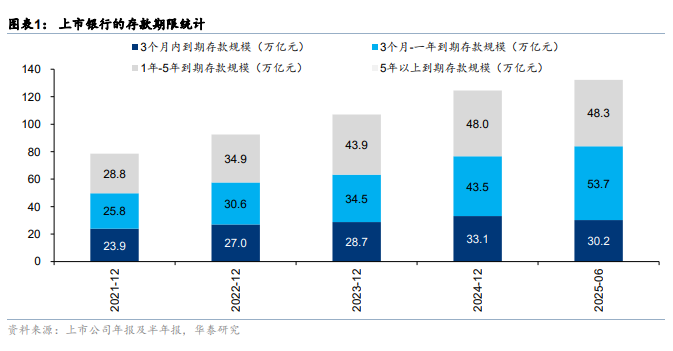
Core Viewpoint - The report from Huatai Securities predicts a net inflow of approximately 1.6 trillion yuan into the A-share market in 2026, driven by significant improvements in the funding supply side, with a total expected inflow of 2.6 trillion yuan after accounting for about 1 trillion yuan in funding needs [1][2]. Group 1: Funding Supply Side - The increase in funding supply is primarily attributed to the accelerated "migration" of household savings and the policy-driven entry of long-term funds [1]. - A historical high of 60 trillion yuan in one-year and above time deposits will mature in 2026, providing a substantial potential liquidity reservoir for the market [3]. - It is estimated that 8% of the maturing deposits will flow into non-monetary asset management products, with about 14% of that amount converting into stock market value, potentially contributing around 650 billion yuan to the A-share market [3]. Group 2: Risk Appetite Recovery - High-risk preference funds are expected to show strong inflow intentions, with an estimated net inflow of approximately 400 billion yuan from retail investors in 2026 [6]. - Leverage and private equity funds are anticipated to remain active, with net inflows of 200 billion yuan and 300 billion yuan respectively, contributing a total of 500 billion yuan [6][9]. - Insurance funds are projected to bring in about 800 billion yuan, as policies encourage leading insurance companies to increase their equity allocation [9]. Group 3: Funding Demand Side - The total funding demand for the A-share market in 2026 is expected to be around 1 trillion yuan, reflecting a relatively moderate growth trend [12]. - The IPO and private placement activities are gradually returning to normal, with an estimated IPO fundraising scale of about 200 billion yuan and private placements of around 500 billion yuan [12]. - Shareholder reduction behavior is expected to remain stable, with a projected net reduction scale of about 300 billion yuan, while the necessity for bottom-supporting buybacks is anticipated to decrease [12].
A股多只权重股尾盘竞价再现巨额压单
Jin Rong Jie· 2026-01-14 07:33
Group 1 - A significant sell-off was observed in the A-share market during the closing auction on January 14, with multiple heavyweight stocks experiencing large sell orders, including China Merchants Bank with over 6.5 billion yuan in sell orders [1] - Other companies such as Zijin Mining, Yangtze Power, China Aluminum, SAIC Motor, Industrial Bank, China Duty Free Group, Ping An Insurance, Heng Rui Medicine, and Kweichow Moutai also had sell orders exceeding 1 billion yuan [1] - Previous instances of sell orders exceeding 1 billion yuan were noted on September 17, October 24, and January 7, 2026, specifically for CITIC Securities [1] Group 2 - China Merchants Bank's order imbalance was reported at -98.78%, indicating a significant disparity between buy and sell orders [2] - The current trading price for China Merchants Bank is 40.07 yuan, with a decline of 2.58% noted [2] - The trading volume for China Merchants Bank was reported at 191.8 million, with a volume ratio of 1.80 [2]
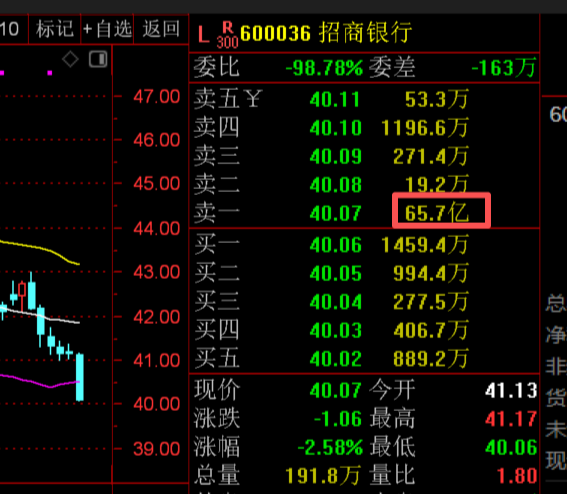
多只权重股尾盘竞价再现巨额压单
财联社· 2026-01-14 07:32
Core Viewpoint - The article highlights significant sell orders in the A-share market, particularly focusing on major stocks like China Merchants Bank, which has a sell order amount exceeding 6.5 billion yuan, along with other companies like Zijin Mining, Yangtze Power, and Kweichow Moutai, each with sell orders over 1 billion yuan [1]. Group 1 - China Merchants Bank has a sell order amount exceeding 6.5 billion yuan, indicating strong selling pressure [1]. - Other companies with notable sell orders include Zijin Mining, Yangtze Power, China Aluminum, SAIC Motor, Industrial Bank, China Duty Free, Ping An Insurance, and Hengrui Medicine, each with sell orders exceeding 1 billion yuan [1]. - Previous instances of significant sell orders from CITIC Securities were recorded on September 17, October 24, 2025, and January 7, 2026, with amounts over 1 billion yuan [2].

持股超10年 “平安系”4亿出售深圳联交所34%股权
2 1 Shi Ji Jing Ji Bao Dao· 2026-01-14 07:19
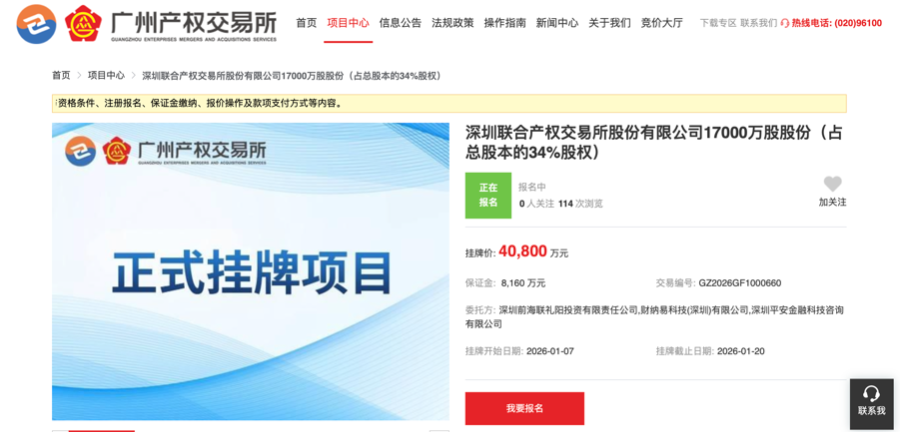
Core Viewpoint - China Ping An is selling a 34% stake in Shenzhen United Property Exchange for 408 million yuan after holding the shares for over ten years, indicating a routine financial investment arrangement [1][3]. Group 1: Share Transfer Details - The stake being sold consists of 170 million shares, representing 34% of the total equity of Shenzhen United Property Exchange [1]. - The selling entities are all part of the "Ping An system," including Fintech Consulting, Qianhai Lianliang Investment, and Fintech Technology, with ownership stakes of 15%, 10%, and 9% respectively [3]. - The shares were initially acquired between December 2013 and December 2015, indicating a long-term investment horizon [3]. Group 2: Qualification for Buyers - Potential buyers must meet specific criteria, including being a legally registered entity in China with a net asset of at least 10 million yuan and a clean legal record over the past three years [4]. - The transfer will not change the actual control of Shenzhen United Property Exchange, which remains under the influence of state-owned enterprises [4]. Group 3: Company Financials - As of November 30, 2025, Shenzhen United Property Exchange reported revenues of 142 million yuan, total profits of 76.89 million yuan, and net profits of 61.77 million yuan, with total assets of 3.376 billion yuan and total liabilities of 2.278 billion yuan [6].

成交额超121亿,A500ETF基金(512050)多股涨停,机构称市场中期仍有空间
Xin Lang Cai Jing· 2026-01-14 05:37
Group 1 - The core viewpoint of the news highlights the performance of the CSI A500 Index and its associated ETF, indicating a positive market trend with significant gains in specific stocks and overall market activity [1][2] - As of January 14, 2026, the CSI A500 Index (000510) increased by 0.82%, with notable stock performances including Longxin Zhongke up 13.27%, Junzheng Group up 10.10%, and others showing similar gains [1] - The A500 ETF Fund (512050) saw a trading volume of 121.80 billion yuan with a turnover rate of 28.7%, indicating active market participation [1] Group 2 - The CSI A500 Index is designed to reflect the overall performance of the 500 largest and most liquid securities across various industries, showcasing the most representative listed companies [2] - As of December 31, 2025, the top ten weighted stocks in the CSI A500 Index include Ningde Times, Kweichow Moutai, and China Ping An, collectively accounting for 20.33% of the index [2] - The A500 ETF Fund is closely linked to the CSI A500 Index, with various related funds available for investors, including different classes of the 华夏中证A500ETF联接 [2]
一场跨越万里的救援
Jin Rong Shi Bao· 2026-01-14 02:37
"我摔伤了……想回家。" 日前,一通从瑞士打来的援助电话,打破了中国平安服务网络的日常运转。电话那头,是因疼痛与 无助导致声音微微颤抖的陈女士。一场跨越万里、争分夺秒的守护行动,自此迅速展开。 这场本应充满欢笑的瑞士之旅,在2025年12月4日骤然改变。陈女士因路滑不慎摔倒,致左脚骨 折。剧痛之外,语言障碍与陌生的就医流程,更让身处异国他乡的陈女士倍感焦虑,于是她拨通了一串 并不熟悉的号码——平安24小时全球急难援助热线。 责任编辑:袁浩 从意外发生时的茫然无助,到最终安然归国接受治疗,陈女士的感慨真挚而朴素:"在异国他乡意 外受伤,语言还不通,心里特别着急。没想到仅仅是一个求助电话,平安就派来了专业的守护团队,不 仅关心我的伤势,更如同家人般陪伴全程,令我非常感动。" 此次万里救援是中国平安庞大应急救援网络与专业服务能力的一个缩影。面对全球范围内客户突发 的急难险重事件,中国平安的响应机制总能快速激活。 美国时间2025年5月1日晚,美国黄石国家公园附近发生重大交通事故,造成中国公民5死8伤。中国 平安启动紧急预案,在72小时内完成跨越太平洋的急救协调,协助遇险客户医疗救治与平安返程。2025 年7月30日 ...

2026年险资举牌热度能否延续?
Jin Rong Shi Bao· 2026-01-14 02:37
Core Viewpoint - In 2025, insurance capital's shareholding activities reached a record high of 35 times, driven by regulatory encouragement, the pursuit of higher returns in a low-interest environment, and new accounting standards that help smooth profit fluctuations [1][4]. Group 1: Characteristics of Insurance Capital Shareholding - The number of shareholding activities by insurance capital in 2025 significantly exceeded the average level of recent years, marking the most active year since 2015 [2]. - A total of 14 insurance institutions participated in shareholding activities, including major listed insurance companies, bank-affiliated insurers, and Sino-foreign joint ventures, with Ping An Life being the most active, conducting 12 shareholdings [2]. - Approximately 80% of the shareholding activities were executed through the Hong Kong Stock Connect or continuous purchases in the secondary market, with other methods including agreement transfers and passive shareholding due to mergers [2]. Group 2: Strategic Logic Behind Shareholding - Insurance capital's shareholding activities were not random but followed a clear strategic logic, with a preference for the financial sector, which saw 15 shareholdings involving six banks and two insurance institutions [3]. - Other favored sectors included public utilities, transportation, and environmental protection, indicating a focus on stable, cash-generating industries [3]. - The core demand of insurance capital is for long-term, stable returns, leading to an increased allocation to equity assets as traditional fixed-income returns fail to cover liability costs [3]. Group 3: Factors Driving Shareholding Activities - Regulatory policies have encouraged long-term capital to enter the market, with measures such as increasing the investment limit for insurance companies in equity assets to 50% [4]. - Insurance institutions are responding to downward pressure on interest rates by increasing their allocation to equity assets to enhance long-term investment returns [4]. - New accounting standards impose higher requirements for asset-liability matching, allowing insurance companies to reduce the impact of market value fluctuations on current profits through shareholding [5][6]. Group 4: Future Outlook for Insurance Capital Shareholding - There is optimism that insurance capital will continue to increase equity asset allocations in 2026, with expectations of maintaining high shareholding activity levels [8]. - Analysts suggest that insurance capital's shareholding motivations will focus on stable dividend cash flows and high return on equity (ROE) targets, particularly in sectors aligned with national strategic directions such as high-end manufacturing and technological innovation [8].
开年“瘦身”步履不停 险企渠道转型聚焦精细化服务
Jin Rong Shi Bao· 2026-01-14 02:37
Core Viewpoint - The insurance industry is undergoing a significant transformation characterized by the continuous withdrawal of branch offices, reflecting a shift from extensive expansion to a focus on value and efficiency [5][6]. Group 1: Branch Withdrawals - In early 2026, multiple insurance companies, including China Life and Sunshine Insurance, have received approval to withdraw branch offices, continuing a trend observed in recent years [1]. - Over the past six years, more than 13,000 branch offices have been closed, with the number of withdrawals increasing from 971 in 2020 to over 3,100 in 2025, marking a new high [2]. - The majority of the withdrawn branches are located in third and fourth-tier cities, with over 70% of the closures in 2025 being marketing service departments [2][3]. Group 2: Factors Driving Closures - The closures are driven by three main factors: regulatory policies, changing market conditions, and technological advancements [4]. - Regulatory bodies have pushed for the elimination of "empty" and "inefficient" branches, particularly following the implementation of the "reporting and operation integration" policy [4]. - The competitive insurance market and rising operational costs have made it essential for companies to optimize branch structures and eliminate low-efficiency outlets [4]. Group 3: Industry Transformation - The ongoing withdrawal of branch offices is seen as a necessary process for the industry to abandon extensive expansion and reconstruct channel value [5]. - The industry is at a critical juncture, focusing on high-quality transformation while addressing challenges such as customer service continuity and talent retention [7]. - Companies are shifting from a traditional sales model to a service-oriented approach, integrating insurance products with health management and other value-added services to enhance customer loyalty [8]. Group 4: Future Outlook - The future of insurance branch offices will not be a complete replacement by online channels but rather a transformation of their functions to enhance customer experience and provide specialized services [8]. - The new channel structure will consist of comprehensive service points in major cities, grid-based service units in lower-tier markets, and a blend of online and offline services [8].